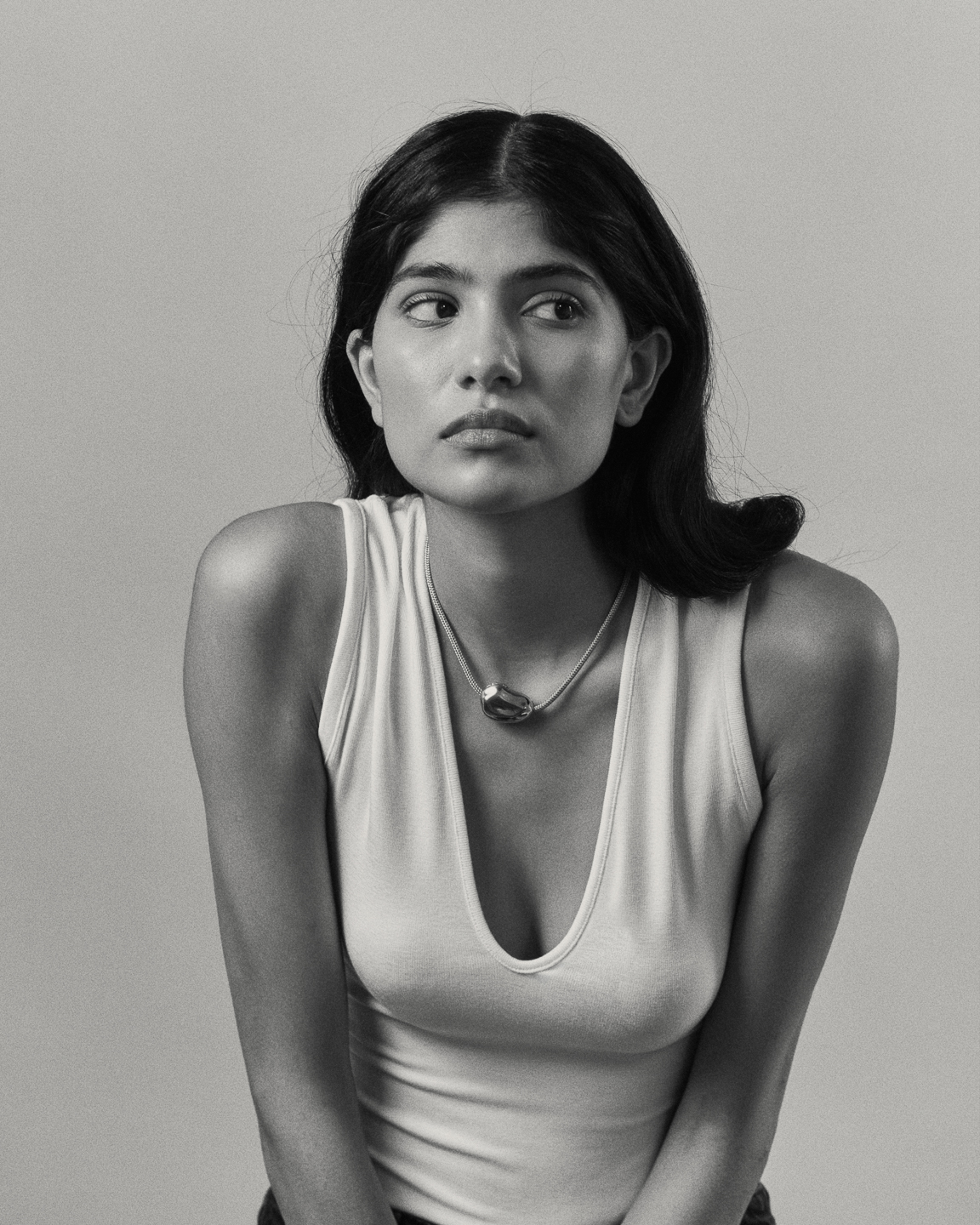
We Have Our Eyes on Saudi Jewellery Brand HEROBJECTS
We love a big necklace at JDEED. Even better when the thing hanging from it has a story. Our latest discovery is HEROBJECTS, the Saudi jewellery brand founded by Nouf Musallam, where chunky 18k gold objects meet freshwater pearls and colourful woven cords, with much of the inspiration coming from the landscapes and little details of Saudi Arabia that Musallam grew up around.
And before you ask, the name is a play on words. HEROBJECTS comes from her hero objects, pronounced her objects, and sums up Musallam's approach quite nicely. She thinks about jewellery as both something you wear and an object in itself: sculptural, tactile and personal.
At the centre of everything is the HERO object, cast in solid 18k gold. It appears throughout the collection, but how you wear it is really up to you.
It Started With Home
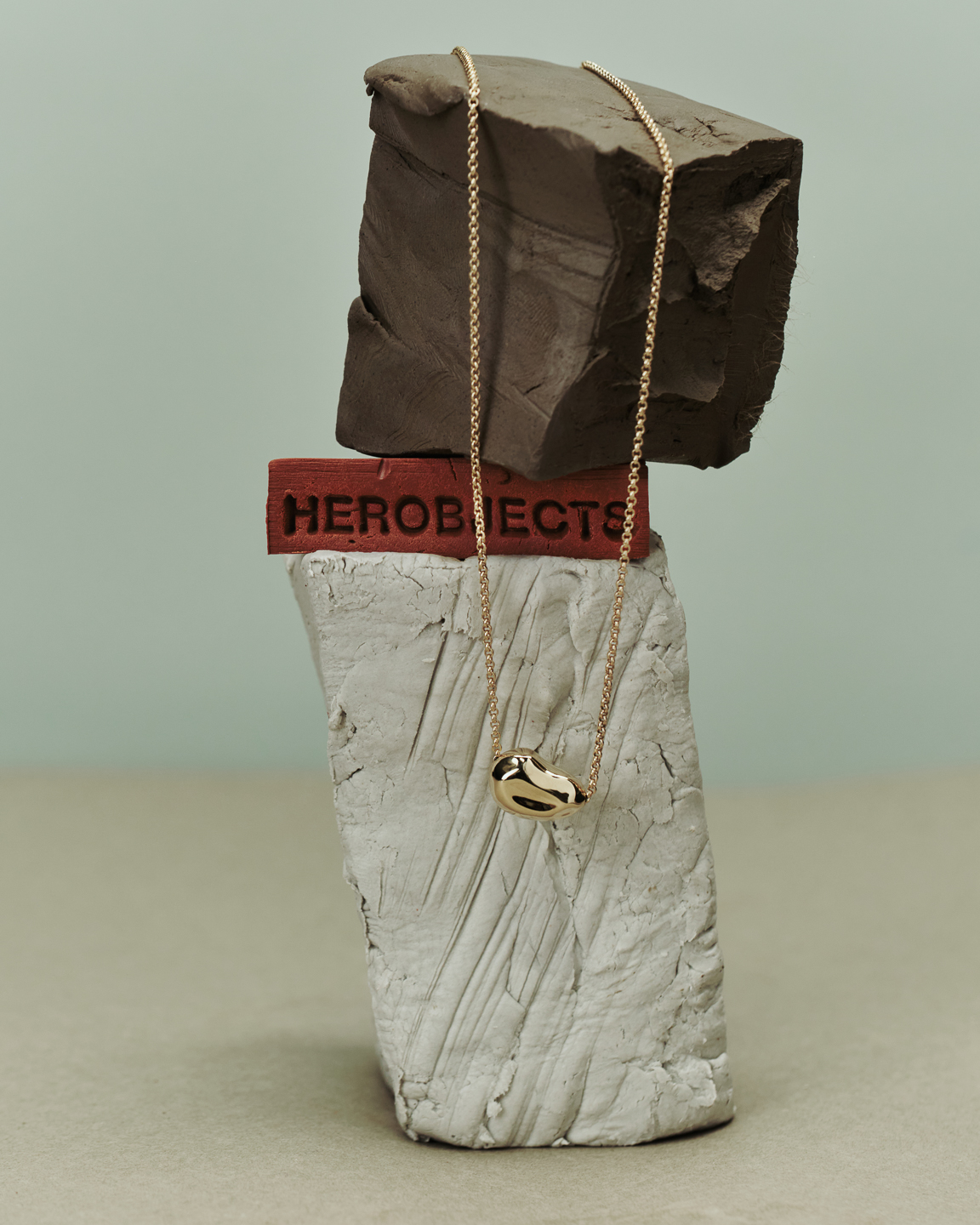
Musallam grew up in Jeddah, and HEROBJECTS feels like a collection of things she has noticed and remembered along the way. There are the desert and wadis, but also shells collected along the Red Sea, the marks left by sand and water, and the way light changes a surface. Elsewhere, you find references to dunes, flora and landscapes seen from above.
One of our favourite references is the pomegranate seed, a form associated with beauty and abundance in Arabic culture. Spirals and curves keep appearing too, giving the jewellery a softness despite the weight of the gold.
It doesn't scream Saudi heritage at you, though, and that's precisely why it works. The references are there if you want to look for them, but otherwise these are simply really good objects to wear.
Before HEROBJECTS, Musallam worked in fashion, styling and editorial, contributing to Vogue Arabia, ELLE and Harper's Bazaar Arabia. Later, she began hosting pop-ups from her studio, sharing designers and pieces she loved and paying attention to how people actually styled them.
You can feel that stylist's eye in HEROBJECTS because the jewellery invites you to play with it.
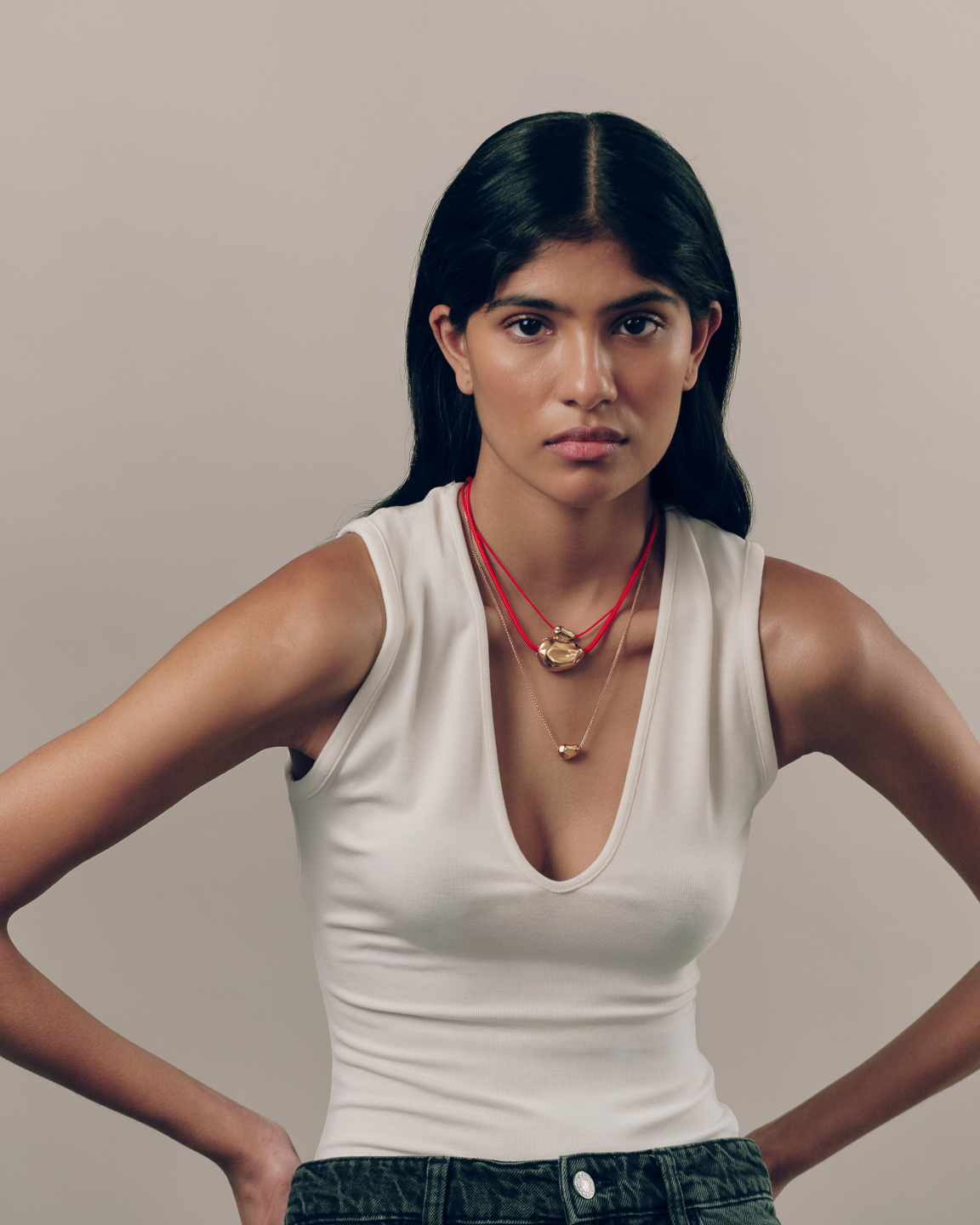
The components are interchangeable. A HERO pendant can hang from pearls one day and a woven cord the next. Wear it alone and it feels cleaner; add pearls and suddenly it's softer and a little more dressed up. Stack several pieces and you've got the kind of necklace situation we would happily build an entire outfit around. The smaller Mini pieces sit closer to the neck for days when you're feeling slightly less maximalist.
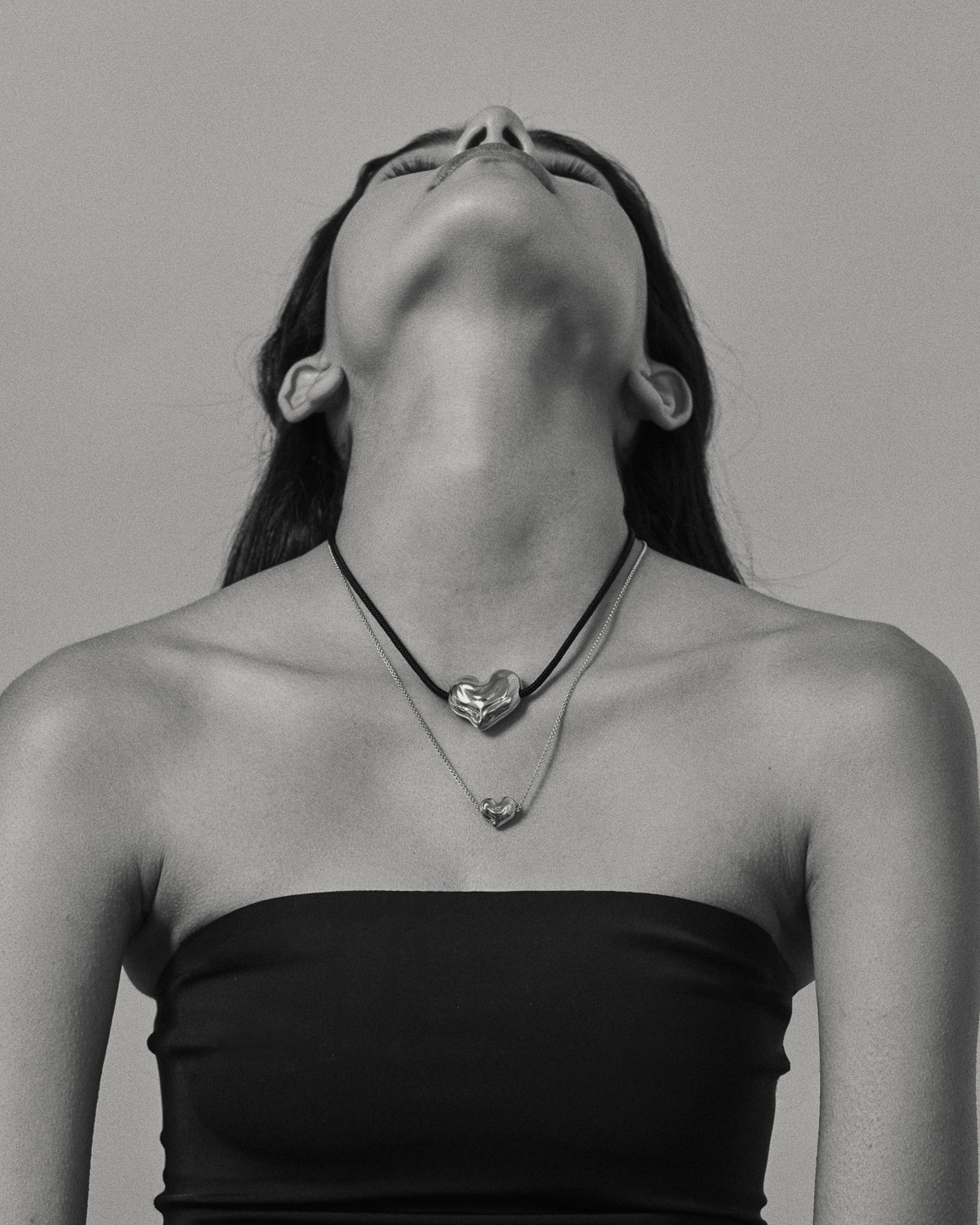
Perhaps our favourite thing about HEROBJECTS is that everything feels slightly imperfect in the best possible way.
The collection is full of rounded shapes, softened edges and surfaces inspired by things that have been changed by time: wind moving across sand, clay drying beneath the Saudi heat and stone slowly being worn smooth. Shells and seeds sit alongside cleaner references to contemporary architecture.
And that's where HEROBJECTS feels particularly current. There is a new generation of designers across the region looking at heritage without feeling the need to reproduce it literally. Musallam doesn't need to put a recognisable Saudi landmark around your neck to tell you where she's from. Sometimes a curve, a texture or the shape of something you once picked up beside the Red Sea says much more.
More on Herobejcts.com

Retreats, Recovery and Really Good Skincare: Our Ultimate Wellness Edit
September has always felt a little like January without the pressure of New Year’s resolutions. Summer is winding down, everyone is returning from somewhere, routines are slowly coming back and suddenly the idea of sleeping properly, moving our bodies and taking care of ourselves feels appealing again (and potentially, you're also preparing one of the region's upcoming HYROX.)
But for the rest of 2026, we’re approaching wellness a little differently. We’re less interested in dramatic resets, impossible routines and trying to become an entirely new person by Monday. What feels more relevant right now is consistency, recovery and understanding what our bodies actually need, whether that means getting back into exercise slowly, paying more attention to hormones (a very hot topic!), treating sleep as part of our beauty routine (the basis of everything, NGL) or simply finding ten minutes to do something nice for our skin.
Here’s what is currently on our wellness radar.
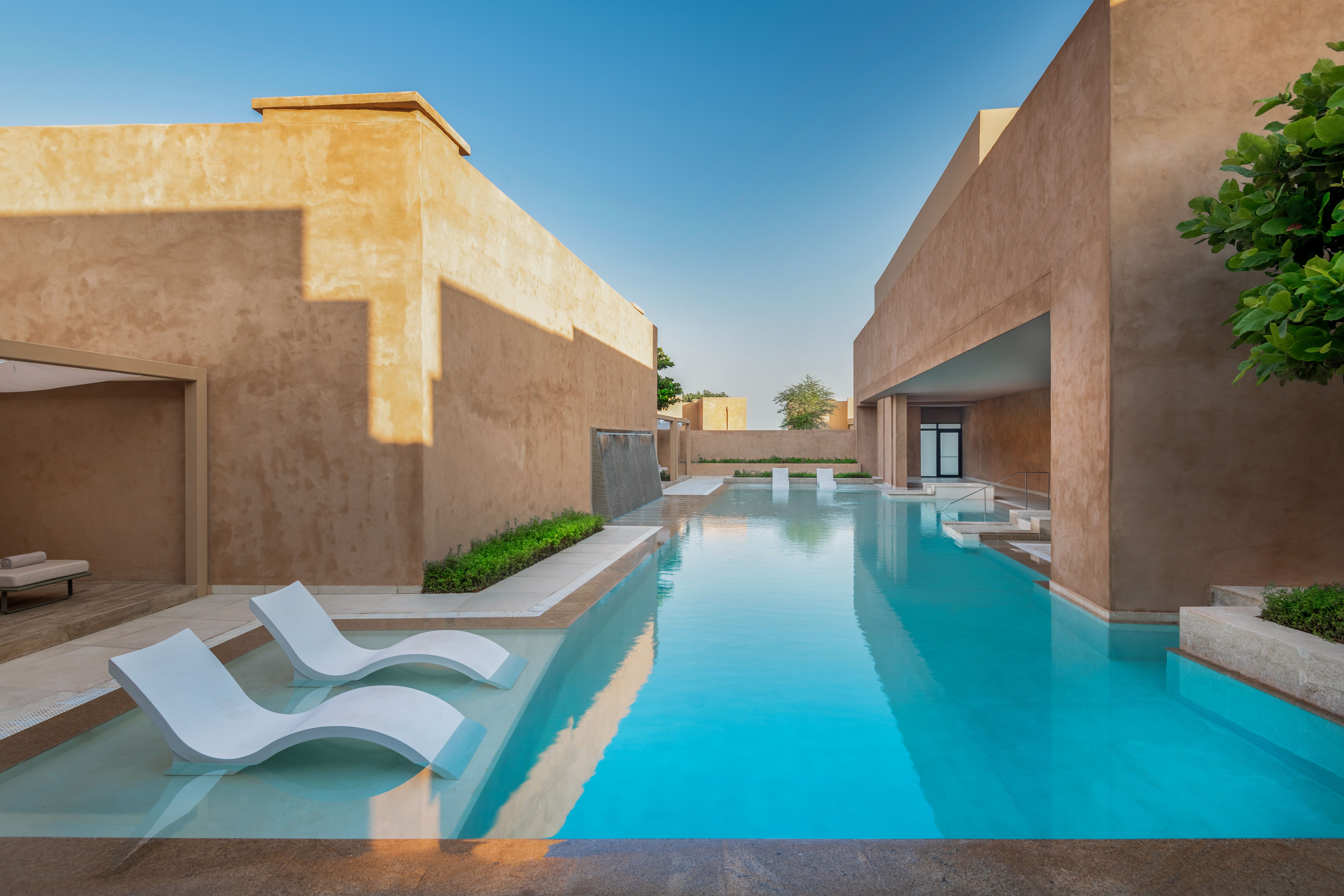
First rule of the September reset: we are absolutely not trying to compensate for everything we ate, drank or didn't do over summer.
For Chloe Minet, Director of DRYP in Dubai, September is a natural moment to reset, but that doesn't mean throwing yourself straight back into the most intense version of your old routine. “September naturally feels like a fresh start.”
Her advice is to begin gradually, listen to your body and focus on consistency rather than intensity. Instead of immediately returning to your old weights, pace or number of weekly sessions, start with something realistic enough that you'll actually maintain it.
Recovery also needs to be part of the equation. Sleep, hydration, mobility and giving your body enough time between difficult sessions all matter, particularly when returning after a summer break.
And perhaps the biggest shift we're taking into the rest of 2026 is moving away from the idea that a workout only counts if it completely destroys you. The goal is to build a routine you can come back to, rather than spend three days recovering from.
We're also leaving the obsession with the scale behind. Strength, energy, sleep, stress relief and simply feeling better in your body are all perfectly valid reasons to move.
New Balance Wants You To Relax, Too
%20(1).jpg)
A new workout routine inevitably gives us an excuse for new activewear, and New Balance is leaning into the September reset with its new AC Bodywear and Ellipse collections.
The AC pieces are designed to move between workouts and everyday life, while the lightweight Ellipse shoe works across gym sessions, light running and yoga. The brand is marking the launch with a Back to Balance Weekend at Palm Jumeirah Mall from September 11 to 13, including yoga with Emirati-founded Gigi Studio, a matcha bar by Tease, a Dyson refresh station and even a flower workshop. You can register your attendance on this link.,
Very September in Dubai, and we're not complaining.
Recovery Is Officially Part of the Workout
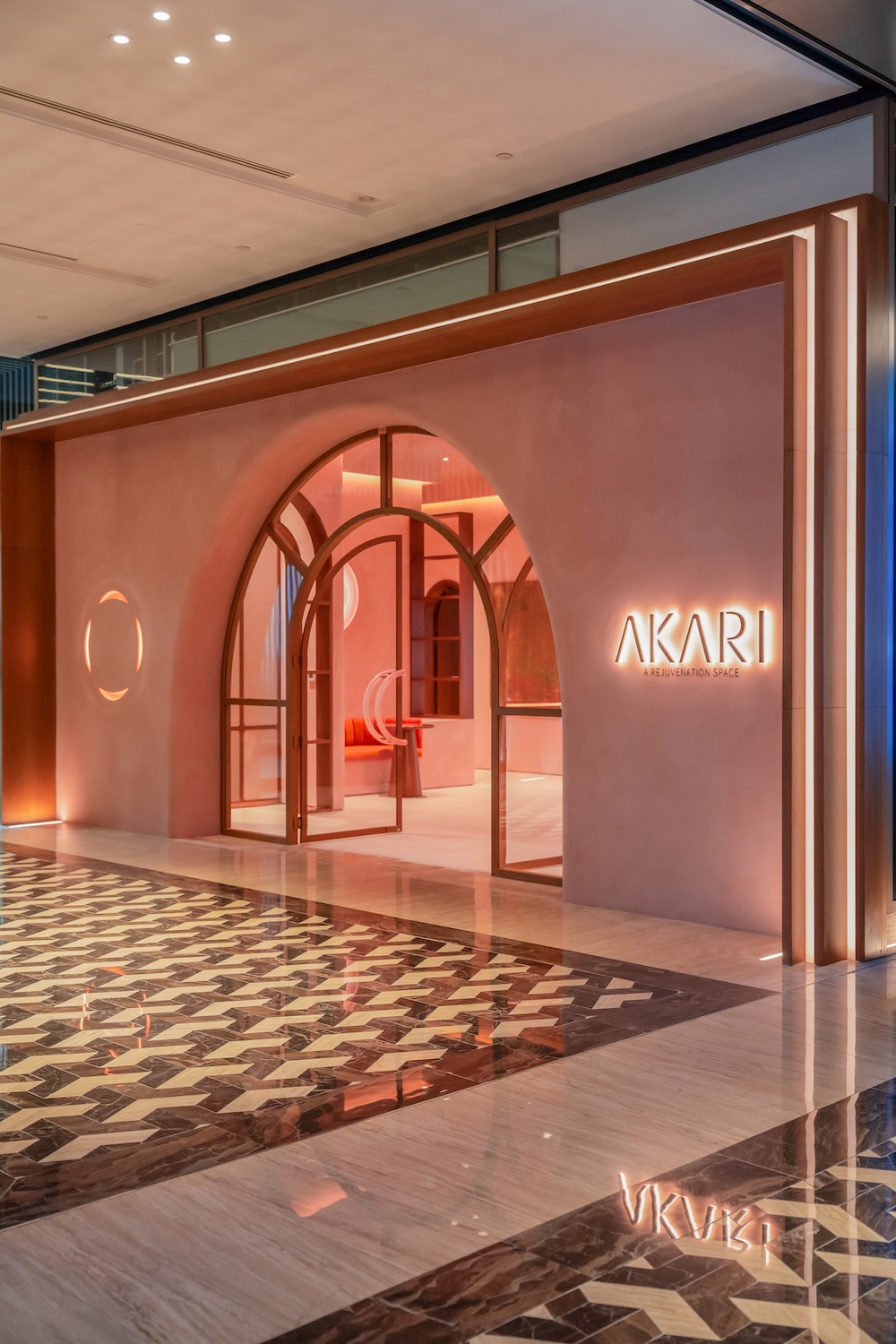
One thing we're taking into the end of 2026 is the idea that recovery shouldn't be something we remember only when our bodies start hurting.
At Dubai's Akari, recovery is being treated as something you can actively build into a routine. Its NovoTHOR Red Light Therapy uses red and near-infrared light as part of an approach focused on circulation, cellular energy and muscle recovery, while IHHT alternates lower and higher oxygen levels through a personalised breathing protocol.
Akari also has a Brain Bar centred on functional nutrition, with drinks incorporating adaptogens, botanicals and superfoods. But what we like most is the philosophy behind the whole thing: rather than another extreme wellness regime, the emphasis is on small choices that can actually survive your real life.
Because if your wellness routine requires waking at 5am, training six days a week, completely changing your diet and never having plans, we already know how that story ends.
See more info, here
We’re Booking Our Facials With The Best In The Game

The line between a facial and a wellness treatment is getting increasingly blurry, and Mandarin Oriental Downtown, Dubai is taking that idea further with a new weekly residency from renowned facialist Rosie Osborne.
Started August 13 and continuing every Thursday until December 2026, the residency is the hotel's first collaboration with a renowned skin expert, bringing Osborne's approach to skin health and longevity to The Spa.
With more than 16 years working across advanced skincare and medical aesthetics in Dubai and London, Osborne combines technology with hands-on techniques, tailoring each treatment to the person in front of her rather than following a one-facial-fits-all formula. And the menu sounds very good.
Using 111SKIN, The Spa's official skincare partner, Osborne has created five 75-minute treatments. The Rosie Glow Ritual combines lymphatic drainage and facial sculpting with LYMA laser technology for radiance and a more lifted appearance, while The Radiance Ritual focuses on hydration using radiofrequency and lymphatic drainage.
Then there's The Skin Architect, Osborne's signature structural facial, which combines fascia release, facial sculpting and EMS muscle toning to work on facial contours and firmness. The Overnight Edit and The Regeneration Ritual complete the treatment menu.
The setting makes the whole thing feel less like popping in for a facial and more like giving yourself an afternoon off. The Spa spans two floors, and guests can continue their visit in its vitality pools, experience showers and relaxation spaces after their treatment. We tried it and cannot wait to book another. Rosie was so kind, and her explanations finally made sense for someone like us who are not exactly knowledgable when it comes to skin.
Rosie Osborne's residency takes place every Thursday from 11am to 7pm at The Spa, Mandarin Oriental Downtown, Dubai, until December 2026. Treatments including The Rosie Glow Ritual, The Radiance Ritual, The Overnight Edit and The Regeneration Ritual are priced at AED 1,700 each. For bookings. click here
Fancying A Trip Somewhere? This Place in Kerala Is Finally Talking About Hormones Properly
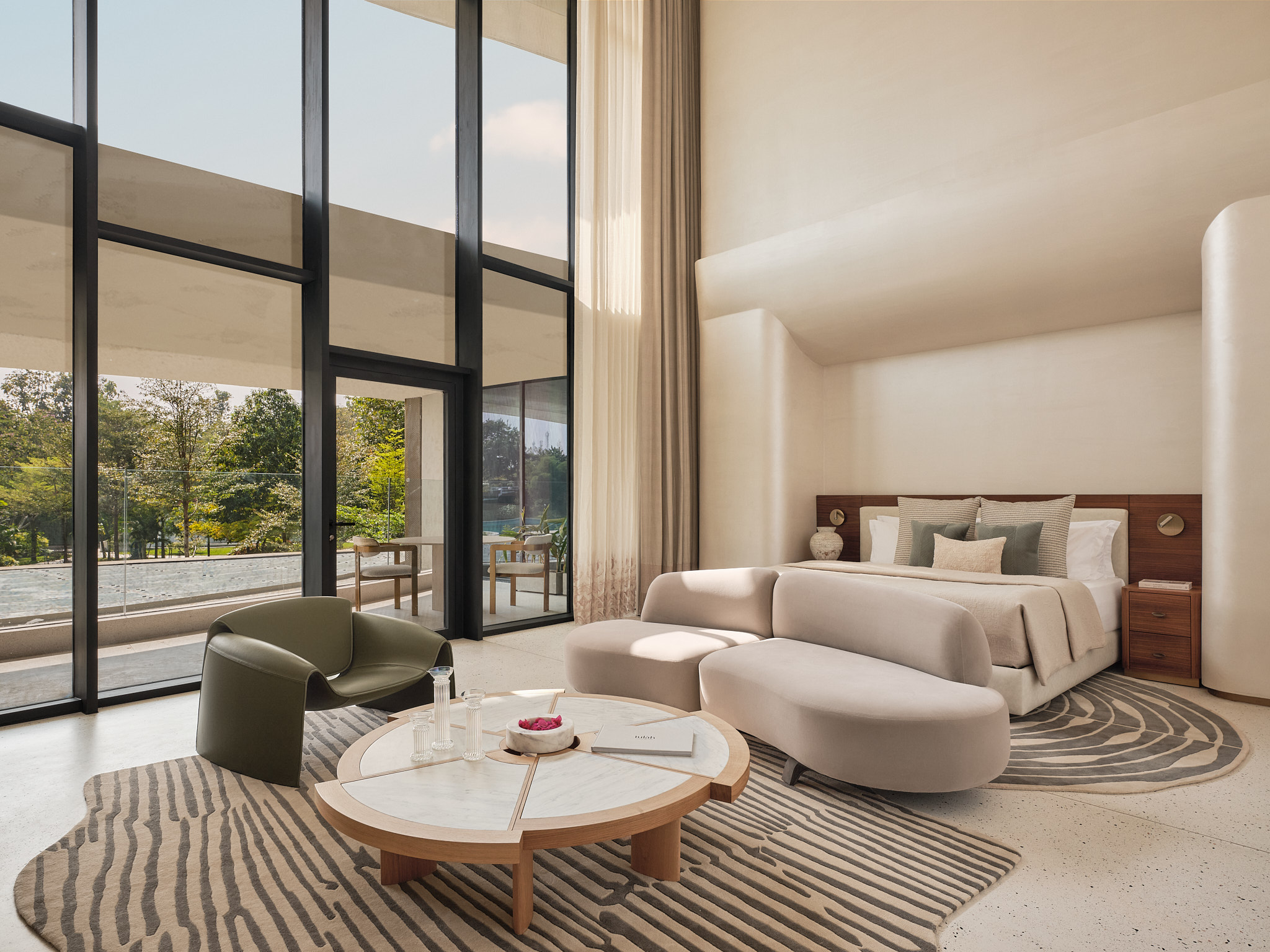
If there is one wellness conversation we expect to keep getting bigger, it's hormonal health, and importantly, for both women and men.
At tulåh Clinical Wellness in Kerala, hormonal health is approached through a combination of modern medicine, diagnostics, Ayurveda, Traditional Chinese Medicine, nutrition, movement and mind-body practices. For women, its programmes look at perimenopause and menopause within the wider context of sleep, metabolism, mood, energy, muscle mass and long-term health rather than treating hormones as an isolated issue.
The same thinking is applied to men. Instead of looking at testosterone as one number to optimise, tulåh considers its relationship with sleep, stress, metabolic health, body composition and nutrition. As Dr Vishnuraj Prakash puts it, “The objective is not a higher number. It is a healthier man.”
That shift feels important. Wellness in 2026 is increasingly less about fixing one visible symptom and more about understanding what else might be happening around it.
More info, here
Thailand's RAKxa Is Also High On Our List
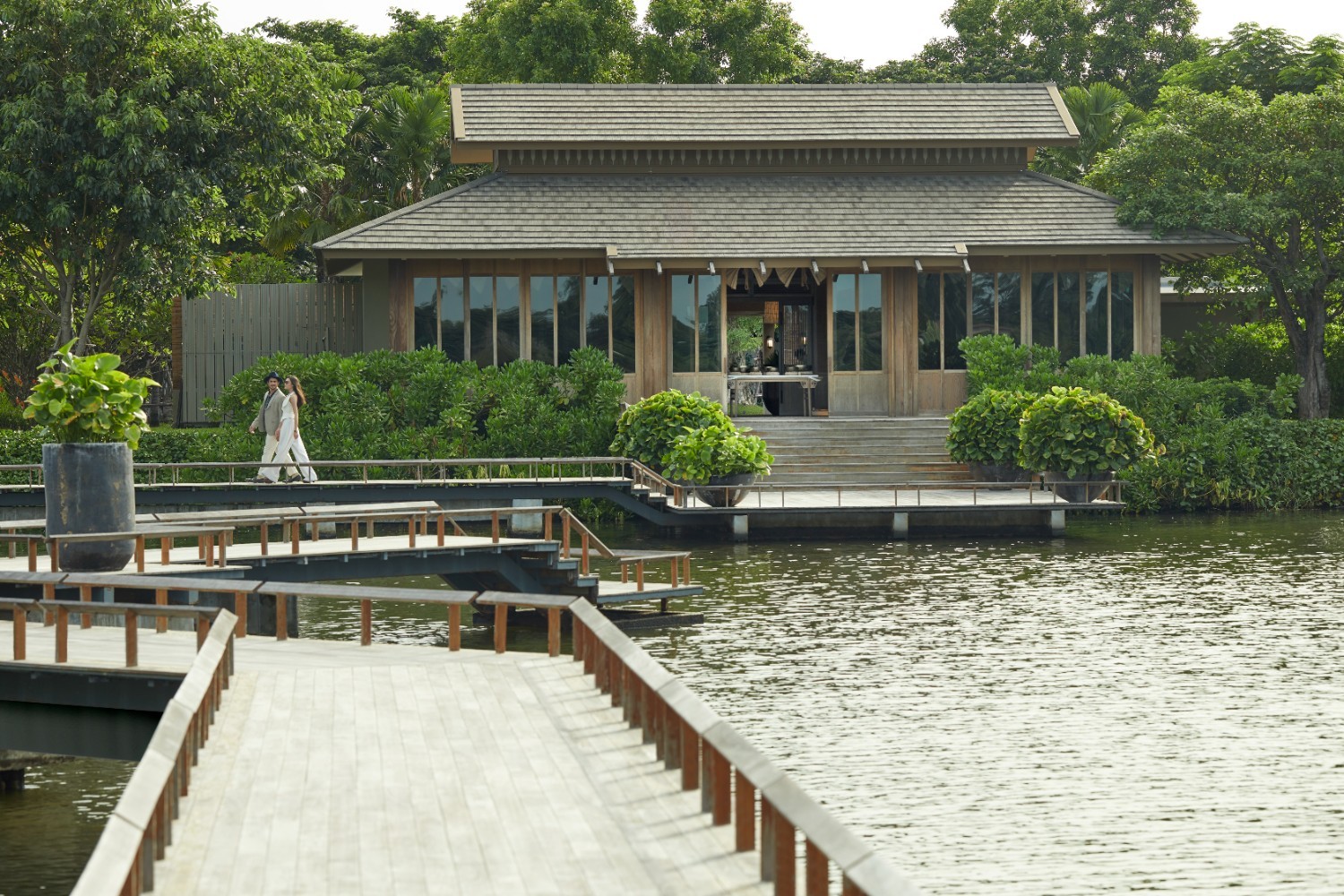
We're also increasingly interested in the point where skincare stops being purely about products and starts overlapping with sleep, stress, nutrition and general health.
At RAKxa Integrative Wellness in Bangkok, its Aesthetic Programme combines medical aesthetics with Traditional Chinese Medicine, nutrition, movement and restorative therapies. Its approach starts with a doctor consultation and facial skin analysis, but can extend into lymphatic drainage, facial acupuncture and other treatments.
More interestingly, RAKxa places hydration, sleep, movement, nutrition and stress management alongside aesthetic treatments as part of maintaining skin health.
We like that idea: skin as something connected to how we're living, rather than another surface to endlessly correct.
More info, here
Now, not everything on our wellness agenda needs to involve a machine, a complicated protocol or an expensive treatment. Sometimes stretching, breathing and spending an hour doing one thing properly is enough.
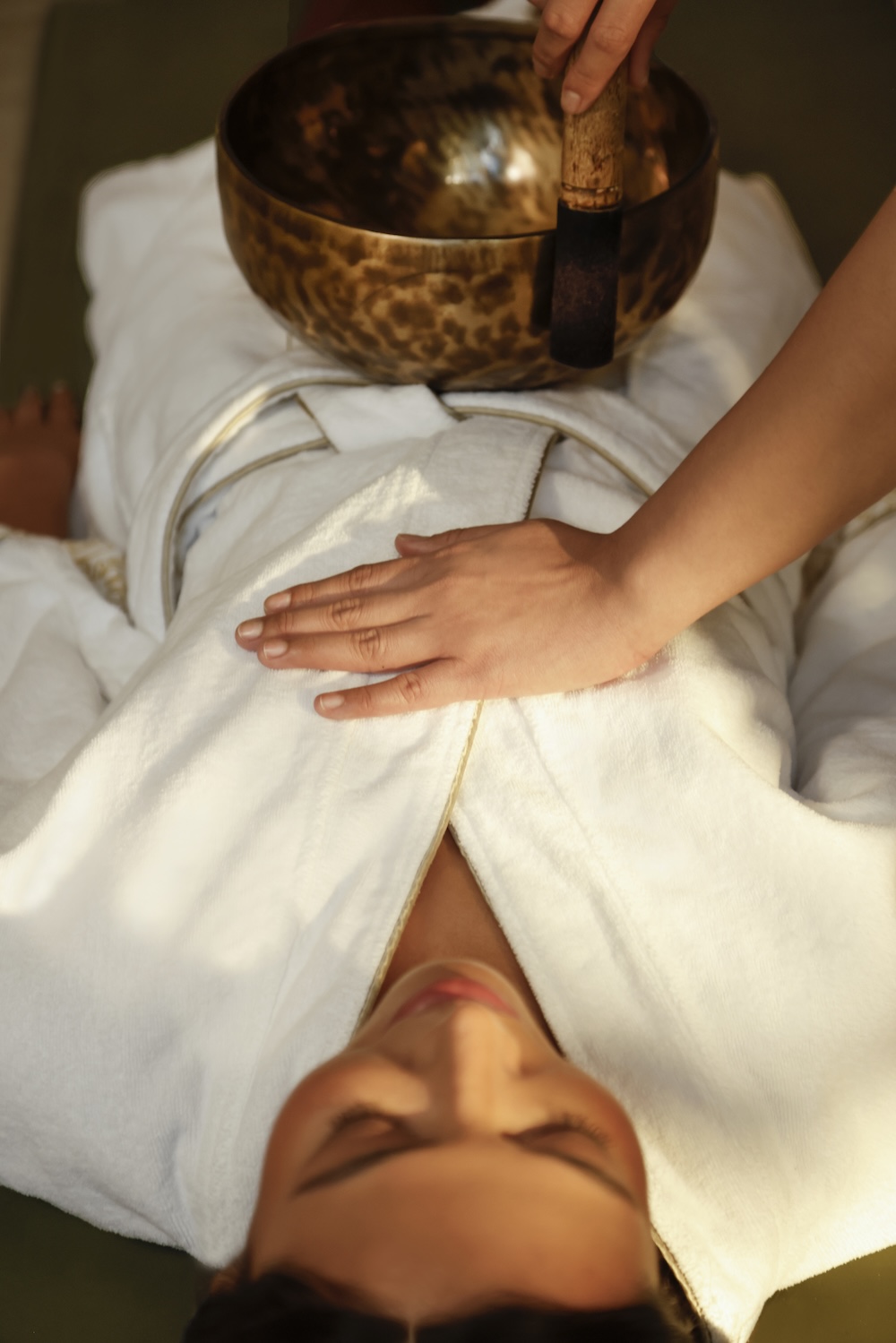
For World Wellness Weekend, Banyan Tree Dubai is opening its Wellbeing Studio to the wider community from September 18 to 20 for three days of complimentary classes centred around movement, mindfulness and skincare.
The programme is refreshingly simple. On Friday, you can learn to make your own body scrub using Banyan Tree Spa's natural exfoliating ingredients, or join an afternoon Mobility Movement class focused on flexibility and body awareness. Saturday brings Guided Meditation followed by Full Body Stretching, while Sunday repeats the meditation and mobility sessions.
We particularly like that the weekend doesn't try to overcomplicate wellness. You can come to meditate, stretch, move or spend some time making something for your skin, and then get on with your day.
It also fits nicely with what we're trying to take into the final months of 2026: wellness doesn't always need to be about fixing or optimising ourselves. Sometimes it can simply mean creating a little more space to feel good.
World Wellness Weekend at Banyan Tree Dubai runs from September 18 to 20, with sessions at 11am and 2pm each day. All classes are complimentary, with advance booking required. More info, here
And Sometimes We Just Want a Very Good Face Mask
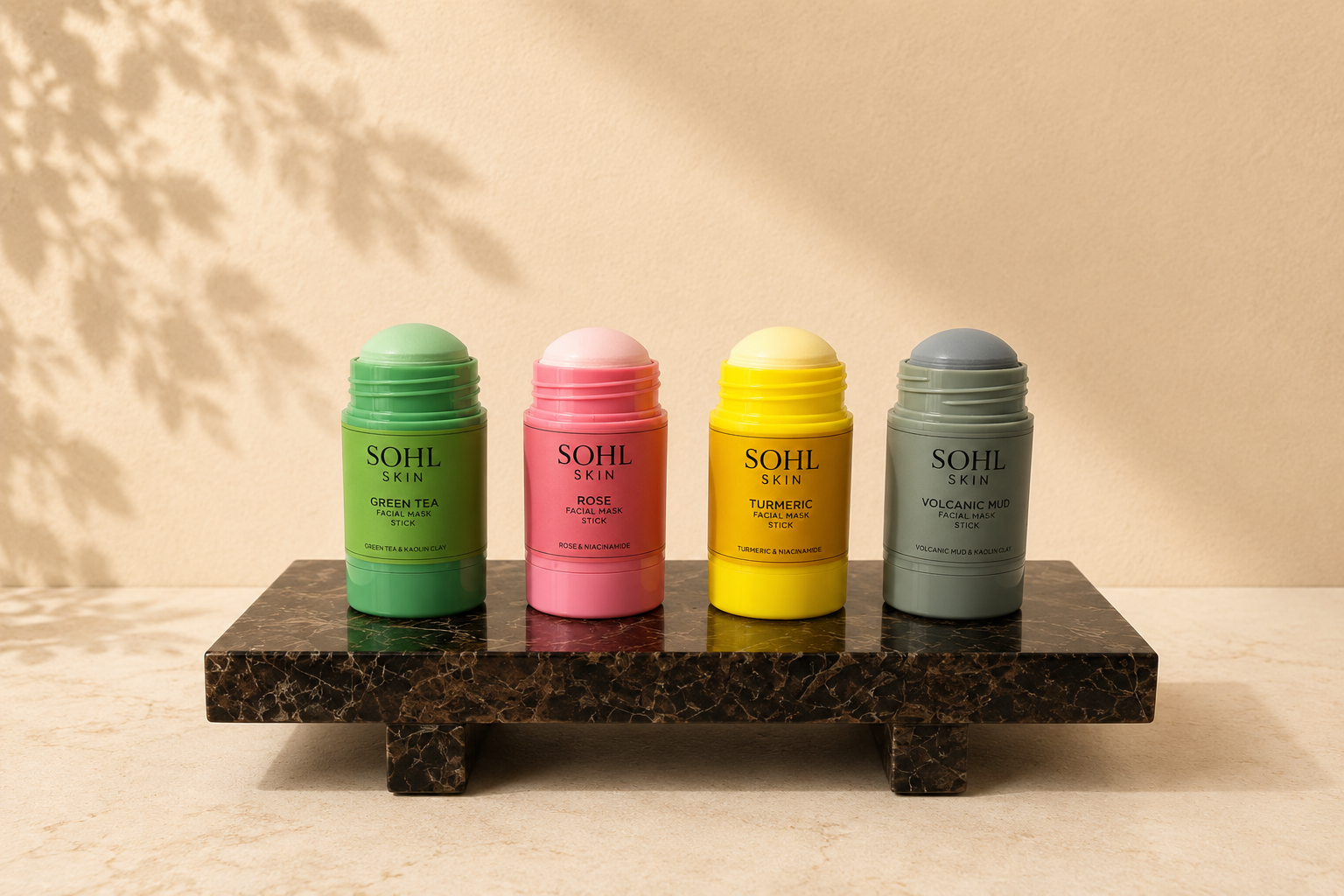
Not every wellness ritual needs to involve diagnostics and a retreat in Thailand.
Dubai-born SOHL SKIN launched this year around a satisfyingly straightforward concept: facial masks in twist-up sticks. There are four formulas, Green Tea, Rose, Turmeric and Volcanic Mud, targeting everything from cleansing and radiance to brightening and oil control. They're designed as an up-to-20-minute reset, and the stick format means considerably less mess in the bathroom and honestly, so much more practical than rinsing it off your fingers.
More info, here
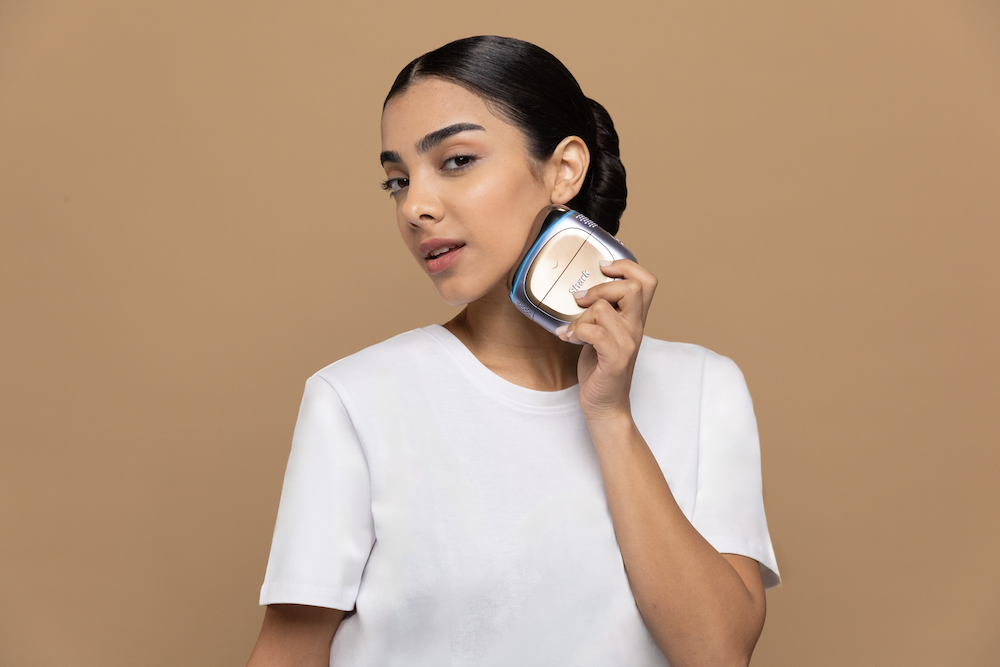
Similarly, Shark Beauty's FacialPro Glow has just arrived in the UAE for those of us slowly turning our bathrooms into treatment rooms (guilty!). The ten-minute system combines exfoliation, cleansing, hydration and depuffing with hydro-powered technology and a hot-and-cold gua sha-inspired attachment.
See more, here
The Beauty Routine Continues While You Sleep
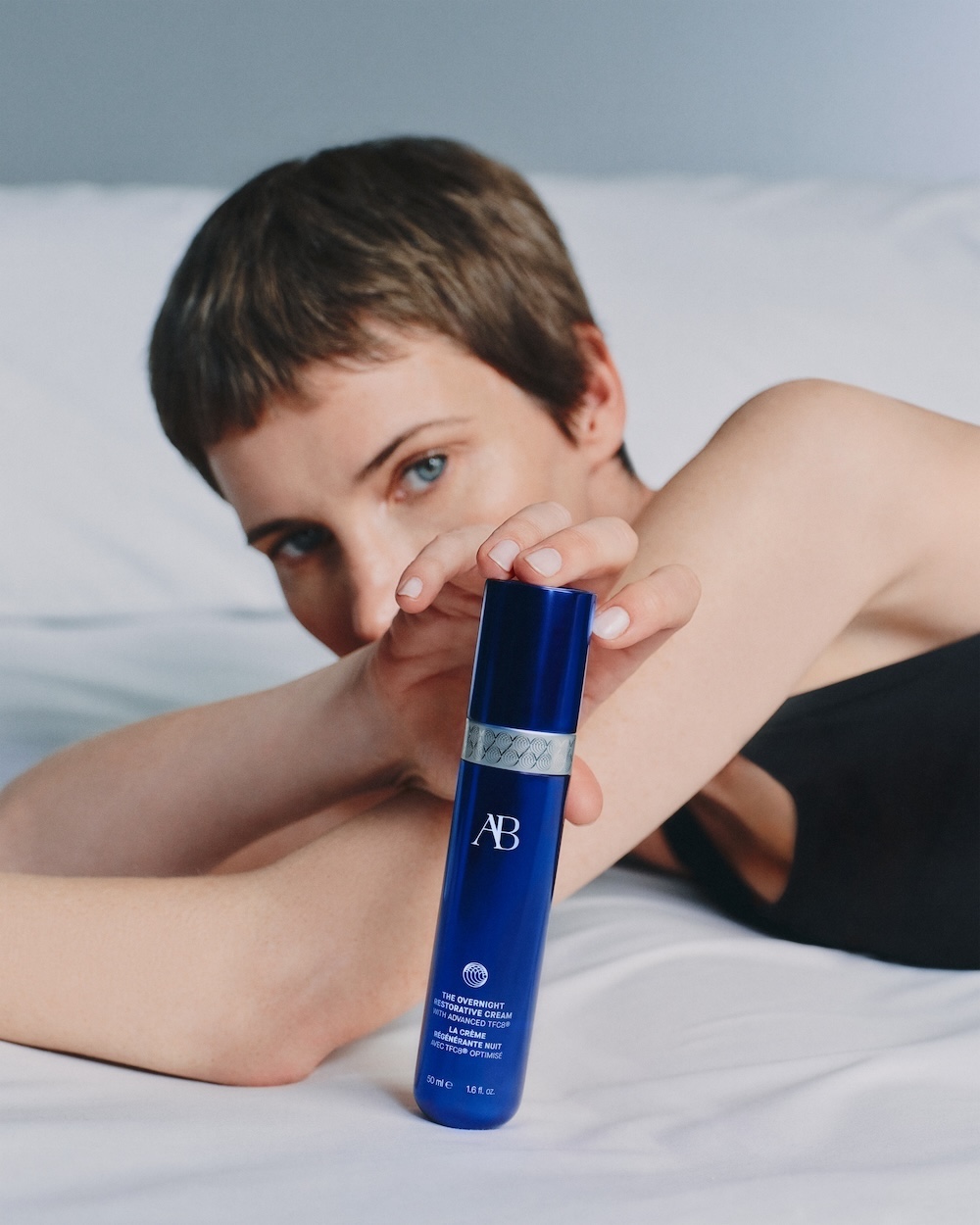
We're also giving nighttime skincare a little more attention. One of our favourite brands, Augustinus Bader, just launched its new Overnight Restorative Cream which is built specifically around overnight use, with the brand positioning its Advanced TFC8 technology around the skin's natural renewal process and circadian rhythm. The formula is designed to lock in moisture overnight while addressing visible signs of fatigue.
Which brings us to a wider 2026 wellness resolution we're very happy to get behind: going to bed. No 14-step evening routine is going to make us feel particularly well if we're answering emails at 1am (we truly need to stop...).
More on AugustinusBader.com
Functional nutrition isn't disappearing either, although we're increasingly drawn to things that can fit into food we already eat.
Dubai-based Mossology, for example, is making sea moss gels in flavours including Original, Mango, Blueberry, Strawberry and Pomegranate. Its sea moss is wild-harvested off Saint Lucia and prepared in Dubai with mineral water and fresh lemon juice.
.PNG)
The practical part is probably why it caught our attention: the gel can simply be stirred into yoghurt or oats, blended into smoothies and juices, added to cooking or even mixed into coffee or tea. The most straightforward, the better.
As with any supplement or functional ingredient, particularly something containing iodine, we'd still rather understand whether it suits our individual needs than assume that because TikTok likes it, our body automatically does too.
More info on Mossology.ae
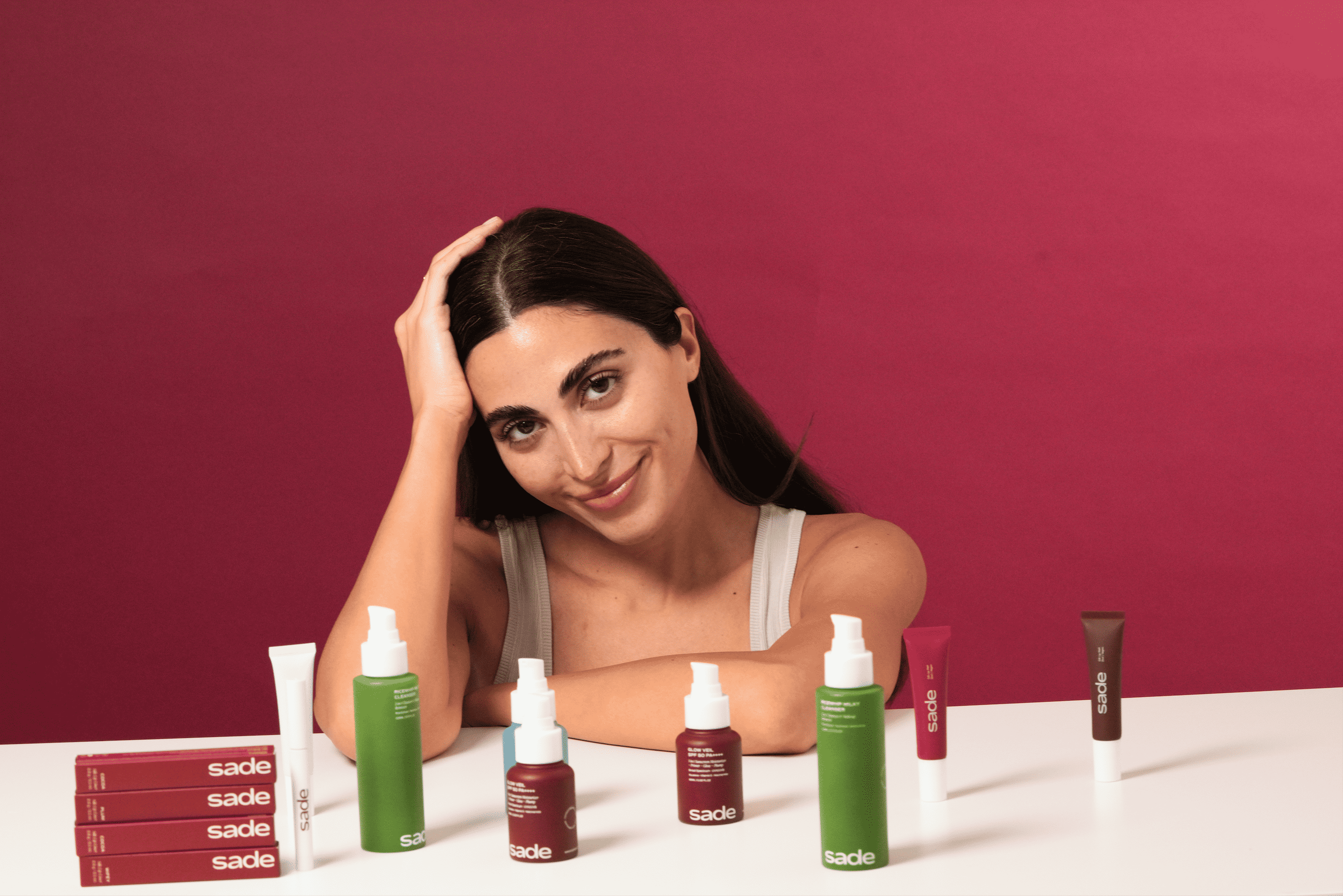
Wellness fatigue is real, and beauty routines seem to be responding. Dubai-born SADE, which has now launched at Ulta Beauty Middle East, is built around a minimalist, climate-conscious approach to beauty, with multifunctional skincare, lip and brow products designed specifically to simplify the routine. Founder Ece Baltacı Mallak puts it nicely: “Beauty doesn’t need to be complicated to be effective.”
We're taking that energy into the rest of the year. Fewer products we don't use. Fewer rules we can't maintain. More things that genuinely make our mornings easier.
And For Our Fav Natural And Heavenly-Smelling Products...
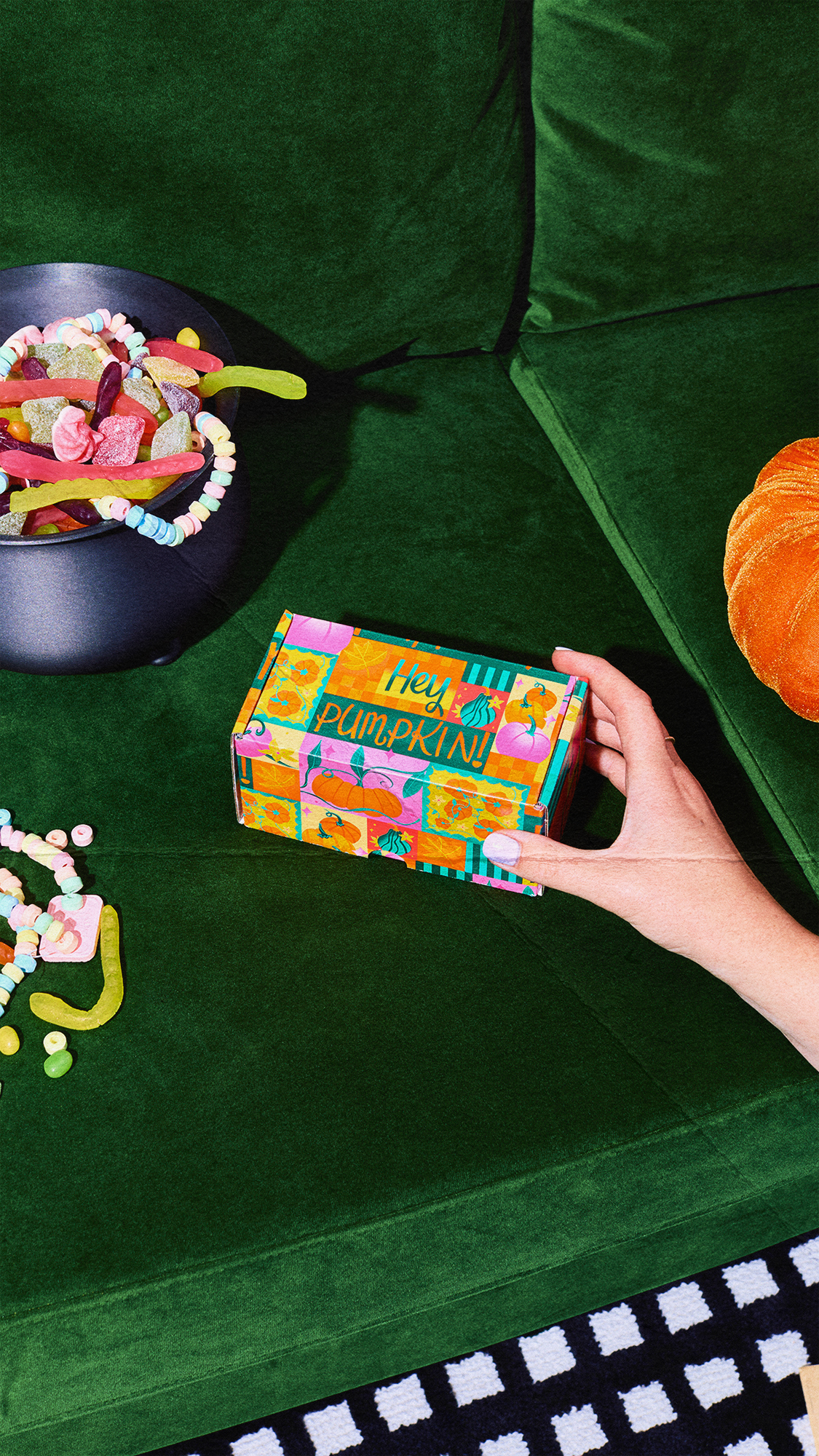
Finally, wellness doesn't always need to optimise something. Sometimes it's a bath, clean pyjamas and a product that smells ridiculously good.
Lush's Autumn Gourmand collection arrives in the UAE and Bahrain this September with fragrances inspired by autumn rituals, from bonfires and spices to warm drinks. There are pumpkin scrubs, Pumpkin Spice soap, Cinnamon Spiced Latte shower gel and the return of the cult Lord of Misrule scent. Pumpkin everything is how we roll this Q4, don't mind us.
More on Lush.com/MENA
Lastly, We’re Actually Putting Self-Care in the Calendar
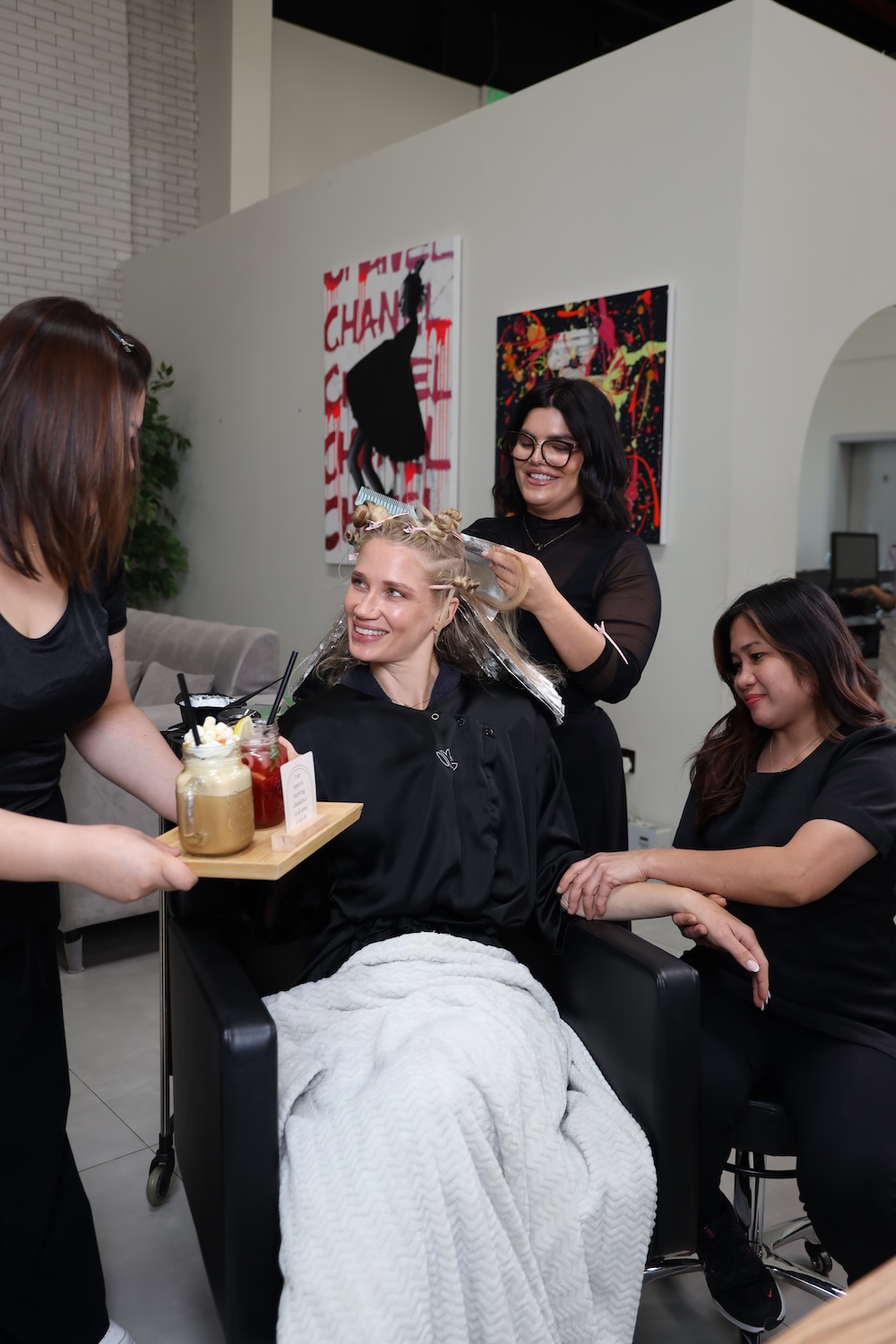
One thing we're leaving behind in 2026? Treating self-care as the first thing to cancel when life gets busy.
Tara Rose Salons has picked up on exactly that with its new Wellness Voucher, essentially a way of pre-planning your salon and self-care spending rather than promising yourself you'll eventually find the time.
The UAE salon has created three prepaid options, starting at AED 1,000 and going up to AED 4,500, with each adding bonus credit and extras depending on the tier. The entry-level Dip Your Toes gives you AED 1,150 to spend for AED 1,000, while Season of You turns AED 2,500 into AED 3,000 in credit. At the top end, the All-In VIP Year gives you AED 5,400 to use across 12 months for AED 4,500.
Credit can go towards eligible haircuts, blow-dries, treatments and colour services, with additional beauty and wellness treatments available depending on the salon. The packages also introduce extras such as birthday treatments, Home Ritual Kits, journals and credits that can be gifted to friends.
By paying in advance, Tara Rose is effectively asking clients to give that time the same permanence as everything else already sitting in the diary.
The Wellness Voucher is available at Tara Rose Salons across the UAE, with separate Dubai and Abu Dhabi vouchers. Dubai credit can be used at Al Quoz and Motor City, while Abu Dhabi credit can be redeemed at Mamsha Al Saadiyat and Khalifa City A. More info, here
And that might actually sum up how we're doing wellness for the rest of 2026. We're moving, but we're recovering. We're paying attention to what happens inside the body as much as what we see outside it. We're curious about new technology without believing every new wellness trend needs to become a personality trait. We're sleeping more, simplifying where we can and leaving room for pleasure. What about you?
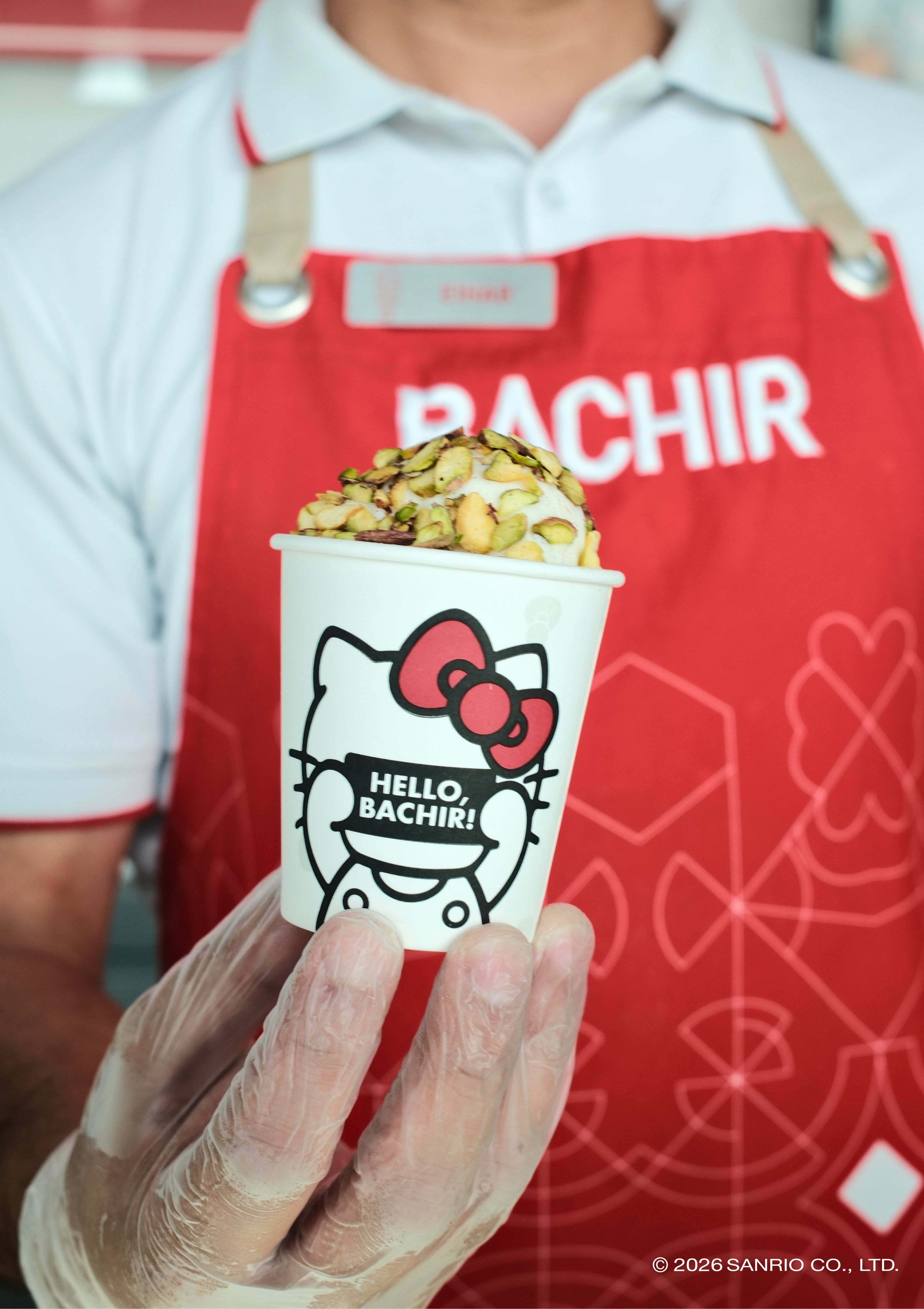
Hello Kitty x Bachir Is Bringing a Little Kawaii to Lebanese Ice Cream
Two icons of our generations that we never expected to see together are coming in hot for what might just be one of the coolest collaborations of the year. Hello Kitty is teaming up with Lebanon’s beloved Bachir Ice Cream, and somehow, it makes perfect sense.
Launching across the UAE from September 7 to October 31, 2026, Hello Kitty x Bachir Ice Cream brings Sanrio’s instantly recognisable character into the very colourful world of one of Lebanon’s most nostalgic ice cream names, complete with limited-edition packaging, merchandise and, naturally, plenty of pistachio-covered Ashta.
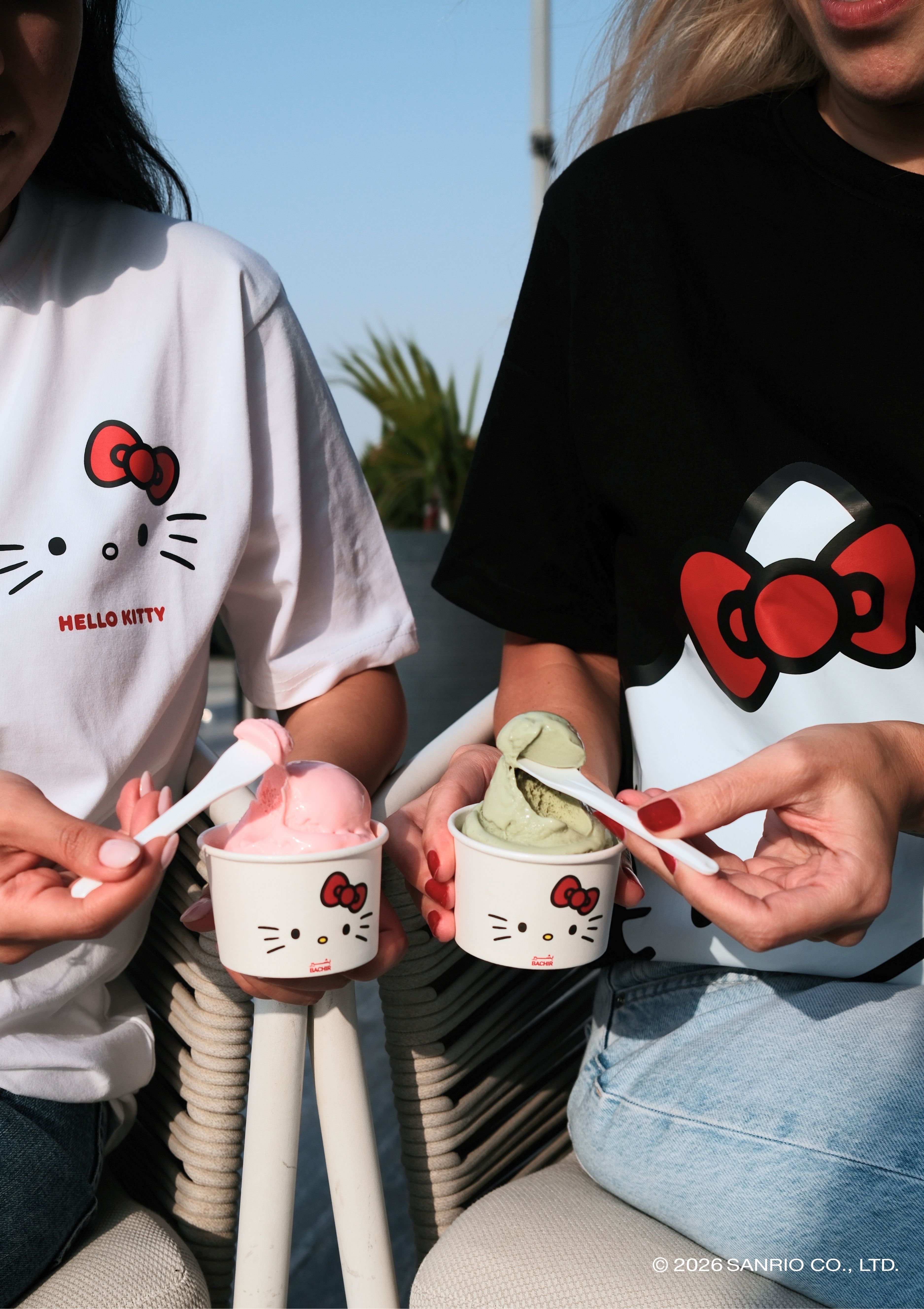
For anyone who grew up with Bachir, the nostalgia is real. Founded in Bikfaya, Lebanon, in 1936, the family ice cream house has been serving traditional Lebanese ice cream for generations.
Its most recognisable order remains the Ashta, a creamy combination of milk cream scented with rose and orange blossom before being generously rolled in roasted pistachios. Then there’s the Mshakkal, Bachir’s gloriously colourful multi-layered creation that can bring together up to eight different flavours in one cone or cup, before getting the signature pistachio treatment.
Now imagine all of that served with Hello Kitty.
Throughout the collaboration, Bachir’s ice cream will come in exclusive Hello Kitty x Bachir packaging, including co-branded boxes for the brand’s newly launched ice cream tubs. It’s cute, nostalgic and almost certainly going to end up photographed before anyone actually eats what’s inside.
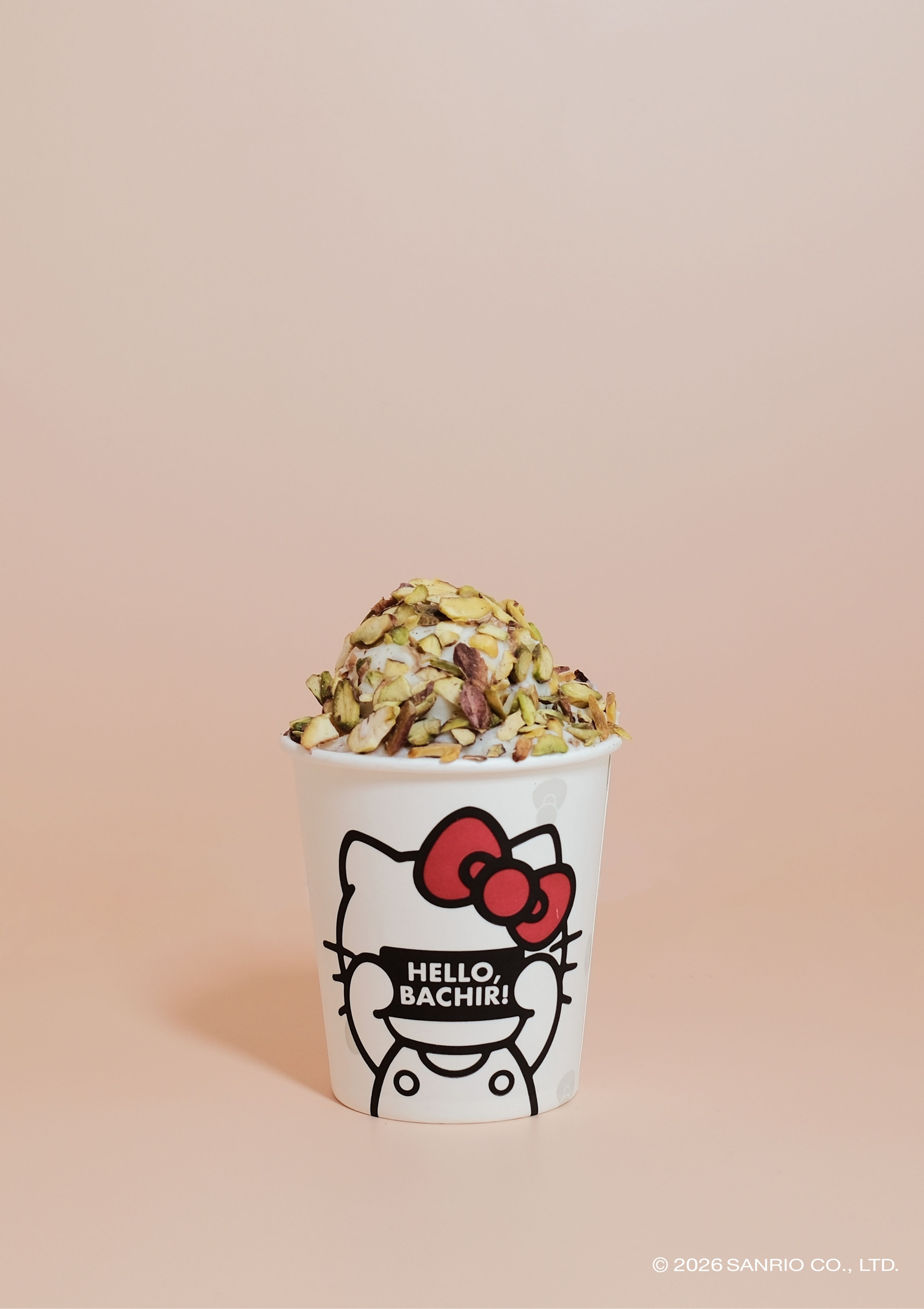
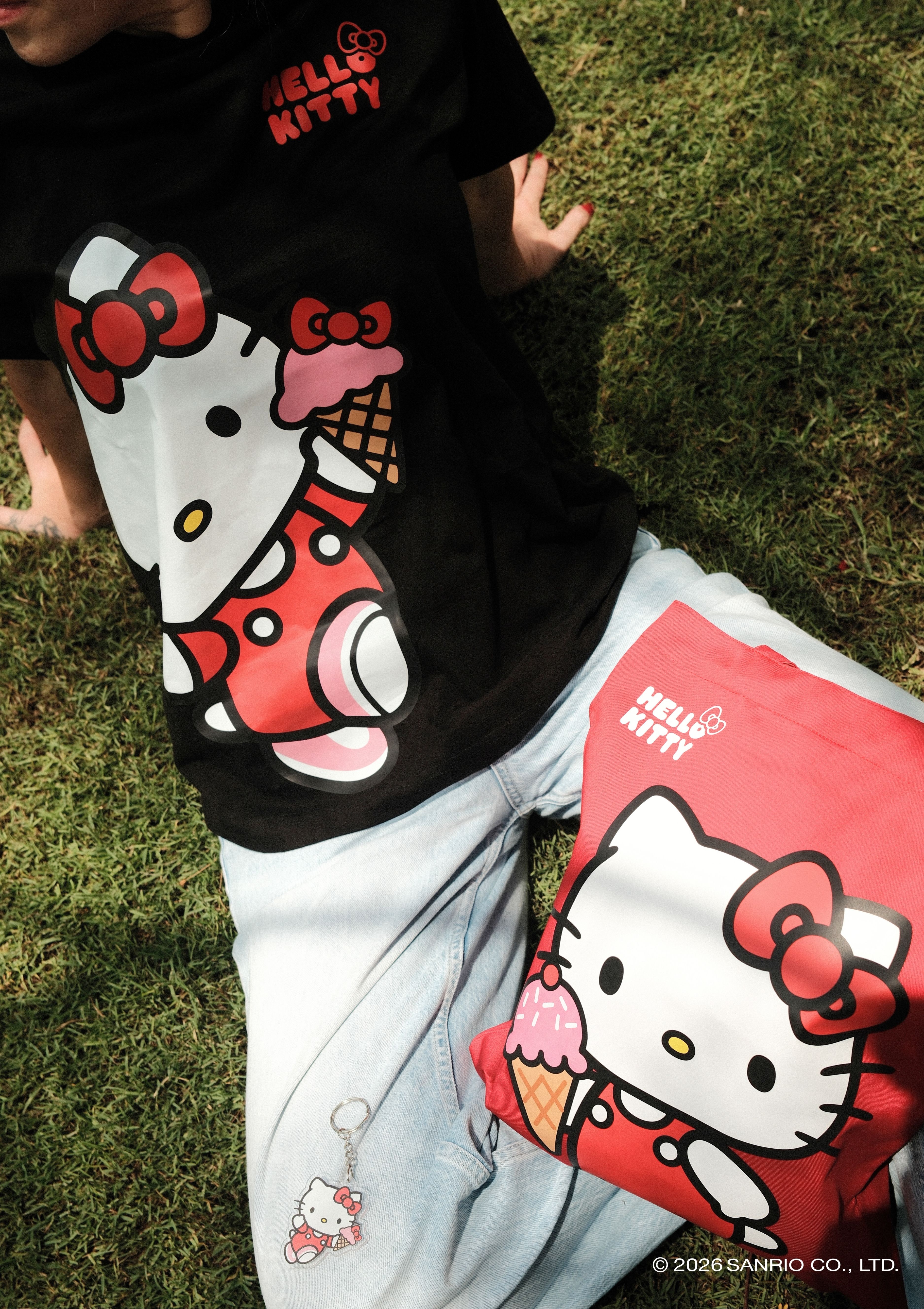
Because it wouldn't really be a Hello Kitty collaboration without something to collect, the partnership goes beyond ice cream.
A limited-edition merchandise collection will include tote bags, black and white T-shirts, keychains and stickers, bringing the two worlds together beyond the cone.
And there is something particularly fun about this pairing. Hello Kitty has managed to remain a cultural icon across generations, appearing everywhere from fashion and beauty to design, while Bachir carries its own kind of cross-generational nostalgia for Lebanese families. One comes from Japan, the other from the Lebanese mountains, and now they're meeting over Ashta in Dubai.
We didn't have Hello Kitty dipped in Bachir pistachios on our 2026 bingo card, but we're very happy it happened.
The Hello Kitty x Bachir Ice Cream collaboration runs from September 7 through October 31, 2026, at Bachir locations in City Walk, City Centre Mirdif and Galleria Mall in Dubai, as well as AlJada in Sharjah. Delivery will also be available across Dubai, Abu Dhabi and Sharjah.
In 'ELSY', Ziad Mazraany Turns His Lens Towards Someone Very Close to Home
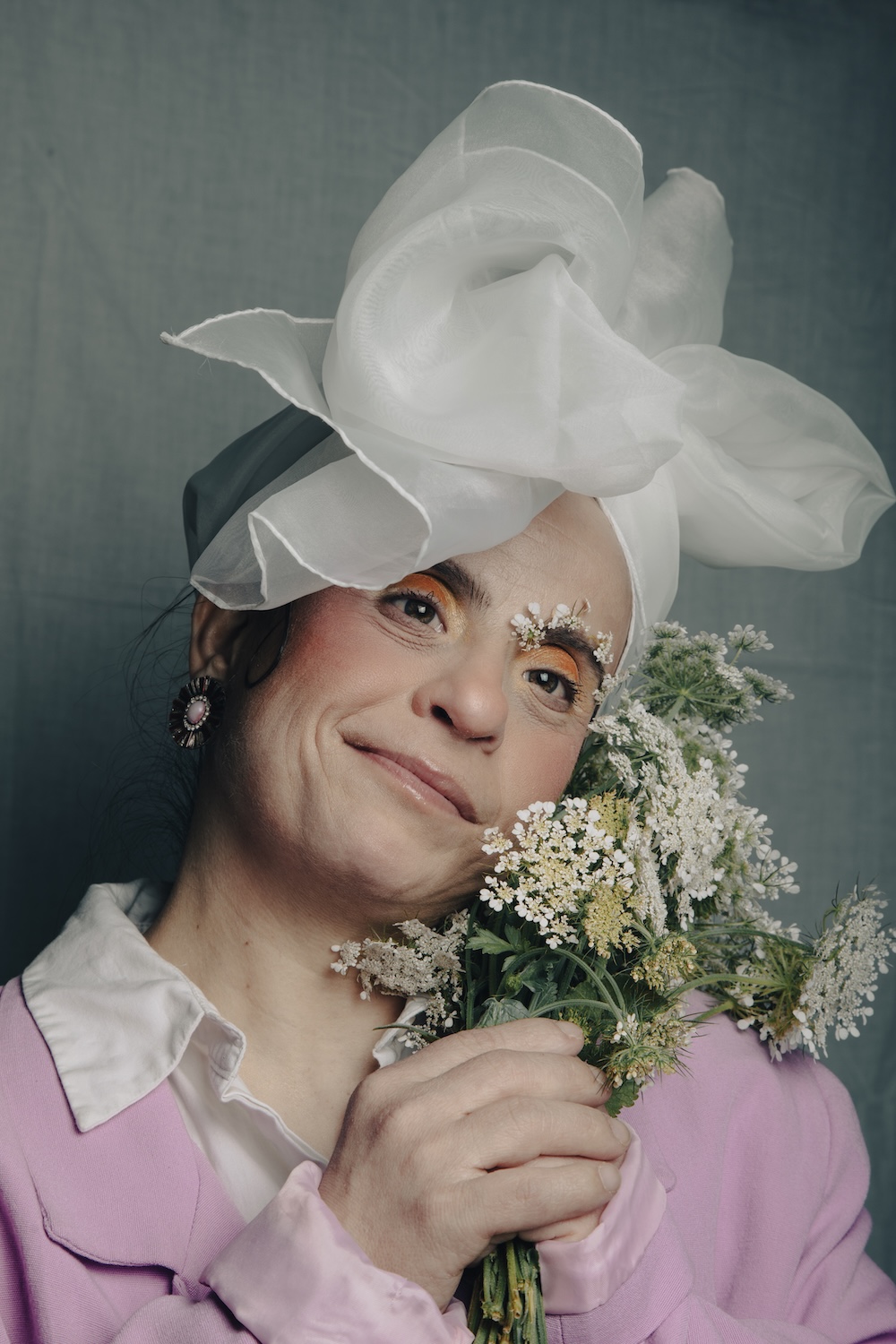
Some of the most personal stories are the ones sitting right in front of us. For Lebanese filmmaker and award-winning photographer Ziad Mazraany, his latest photographic project begins with his cousin Elsy, a 37-year-old artist with Down syndrome who has loved painting, crafting, colour and being in front of the camera since she was a child.
The resulting series, simply titled ELSY, is a collaboration between the two, built around creativity, identity and the freedom to be seen as yourself. It is also deliberately less interested in defining Elsy through Down syndrome than in introducing us to the person in front of the camera: a woman, an artist and an individual with her own character, confidence and creative voice.
“Through ELSY, I wanted to create a visual space where she could simply exist as herself, expressive, creative, confident, and unapologetically present.”
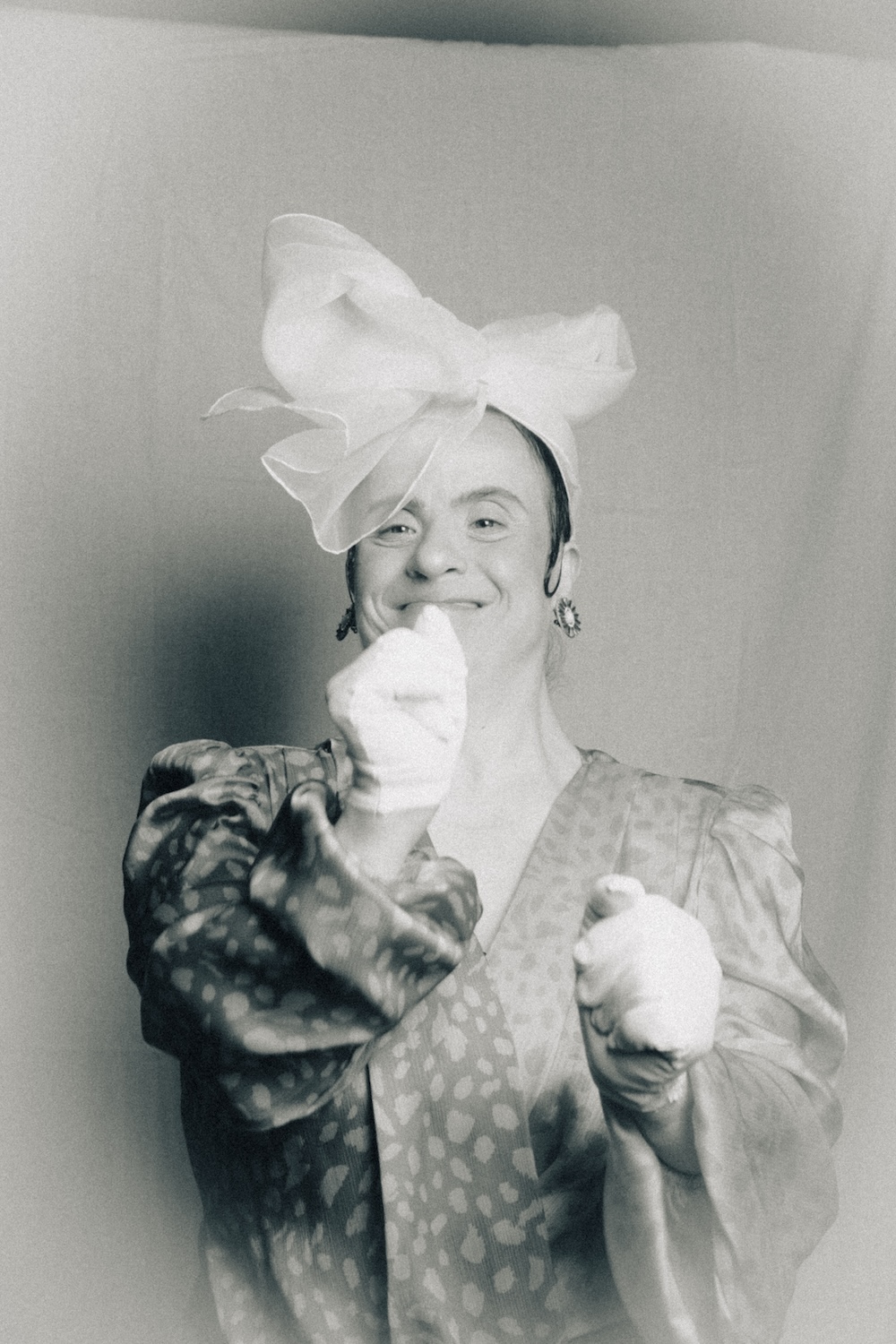
Mazraany grew up watching his cousin find her own language through creativity.
“Growing up, I watched her find her own ways of expressing herself, through painting, crafting, color, and the simple joy of posing in front of a camera,” he explains. “Art has always felt natural to her. It is a space where she can be completely herself, without explanation or limitation.”
That history changes the dynamic of the photographs. Mazraany isn't approaching Elsy as an unfamiliar subject, and Elsy isn't simply being documented. Their existing relationship created a level of familiarity and trust that allowed the project to become a genuine collaboration, resulting in photographs he describes as intimate, playful and honest. For Mazraany, the process also offered a different way of seeing someone he has known all his life.
“Creating this project together became much more than photographing her. It became a collaboration between us and a way for me to see Elsy beyond the familiar role of my cousin.”
“In front of my lens, I witnessed her confidence, sensitivity, humor, and the unique way she sees and responds to the world around her.”
Representation can easily become reductive when a person's disability becomes the entire story told about them. ELSY consciously moves in the opposite direction.

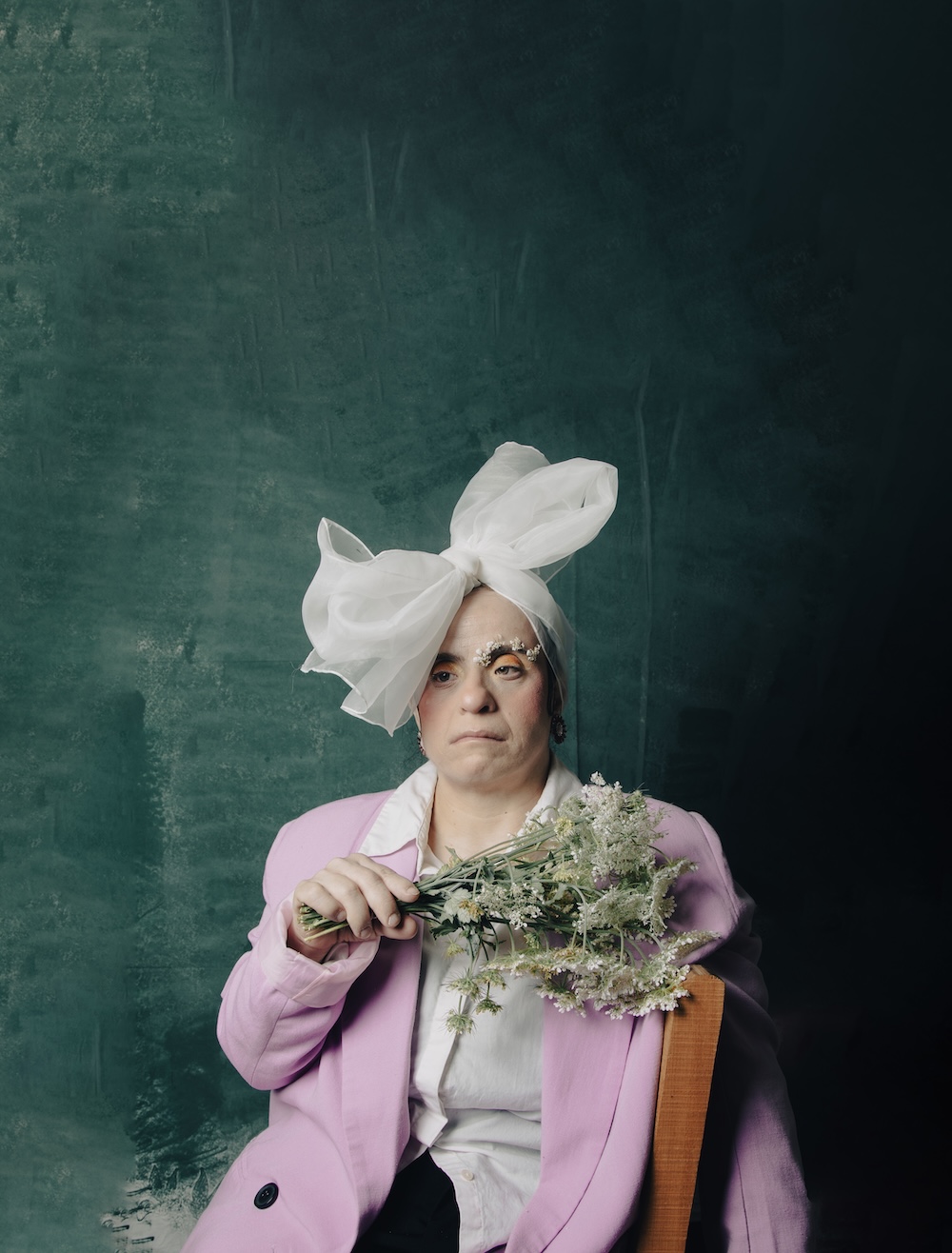
“Every image carries a part of her personality,” Mazraany says. “Nothing is about hiding or defining her through Down syndrome; instead, the project is about celebrating the person, the artist, and the woman in front of the camera.”
“Through ELSY, I wanted to create a visual space where she could simply exist as herself, expressive, creative, confident, and unapologetically present.”
It's an approach that sits naturally within Mazraany's wider practice. Working between photography and film, the Lebanese image-maker has built his work around identity, culture, human connection and personal narratives, often using intimate stories to examine conventional ideas surrounding beauty, representation and belonging. His work has appeared across PhotoVogue Italy, Harper's Bazaar Arabia, Fashion Trust Arabia and other platforms, and in 2025 he received the Tasweer Single Image Award from Qatar Museums. But ELSY brings those questions particularly close to home.
There is a tenderness to the idea behind the series, but Mazraany doesn't want that tenderness to turn Elsy into an object of sympathy. Instead, her creativity and personality are allowed to lead. At its core, he describes ELSY as “a celebration of being seen for who you are,” one that hopes to challenge familiar perceptions of beauty and representation through creative self-expression.
And perhaps the clearest way of understanding the project comes from what Mazraany says Elsy has taught him:
“Elsy reminds me that creativity does not require permission, explanation, or boundaries. It comes from emotion, curiosity, passion, and the freedom to be seen exactly as you are.”
With ELSY, that freedom belongs as much to the woman in front of the camera as it does to the photographer behind it.
Discover more from the artist, here

Beyond the Perfect Smile With Dr. Edoardo Felici of Apa Aesthetic Dubai
For a long time, cosmetic dentistry seemed to be moving towards one very recognisable ideal: straight, symmetrical and extremely white. Spend enough time scrolling through social media and you probably know the smile we mean.
But our relationship with beauty is changing, and for Dr. Edoardo Felici of Apa Aesthetic in Dubai, the future of aesthetic dentistry is much more individual.
Having grown up in a family of dentists before building a career that took him through Madrid, Rome and Milan and eventually to Dubai, Felici has encountered very different ideas of what makes someone beautiful. Today, rather than creating a signature smile that can be recognised as his work, he is interested in something subtler: creating teeth that feel as though they have always belonged to the person wearing them.
We spoke to him about growing up surrounded by dentistry, what different cultures have taught him about beauty, why perfectly uniform veneers aren't necessarily the answer and, yes, whether your lipstick really can make your teeth look whiter.
.jpeg)
Dentistry was part of Felici's world long before it became his profession. “Growing up in a family of dentists, I was fortunate to be surrounded by incredible role models from the very beginning. My father and my older brother were my first mentors, and having the opportunity to learn from them gave me a broad understanding of the profession long before I started building my own career.”
Rather than feeling pressure to simply continue the family profession in the same way, he says he was given room to find his own place within it.
“Rather than feeling obliged to follow a predetermined path, I was encouraged to explore the area of dentistry that brought me the most passion, which ultimately became aesthetic dentistry.”
“Our objective is harmony, not perfection.”
It's also something that informs the advice he gives younger dentists now. “Don’t worry about finding your niche immediately. Build strong foundations, stay curious, seek mentors who genuinely challenge you, and never stop learning. Your career isn’t defined by where you start, but by the commitment you bring to improving every single day.”
Moving between cities gave Felici an interesting education in how differently beauty can be understood. “Every city taught me something different,” he says. “Italy gave me an appreciation for proportion, elegance, craftsmanship and timeless beauty. In Europe, I experienced a more expressive and emotional approach to aesthetics. Dubai introduced me to patients from every continent, each bringing different cultural expectations and personal definitions of beauty.”
That last point is particularly interesting in a city like Dubai, where patients arrive with different cultural references and ideas of what they want to look like. For Felici, it has reinforced a belief that aesthetic dentistry shouldn't be about reproducing the same teeth from one face to another. “There is no universal ‘perfect smile.’ A smile only feels authentic when it belongs naturally to the person’s face and personality.”
“Today, my goal isn’t to create smiles that look recognisable as my work. It’s to create smiles that simply look like they have always belonged to that individual.”
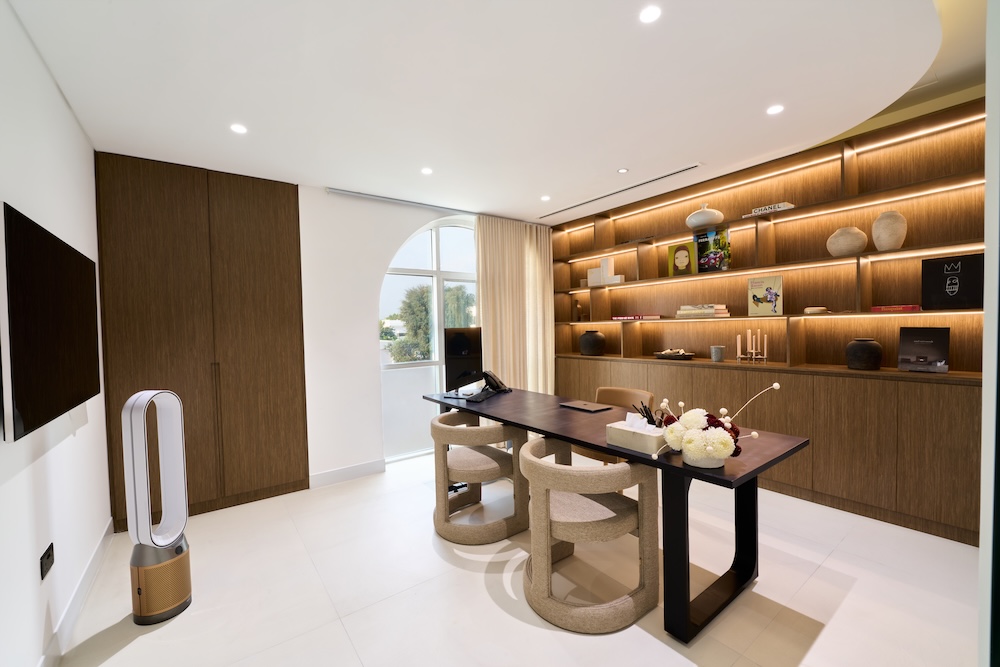
At Apa Aesthetic, that means starting with the entire face rather than immediately looking at individual teeth. “The smile should never be designed in isolation. Teeth are only one element of a much larger composition,” Felici explains.
“Before thinking about veneers or tooth shape, we analyse facial proportions, lip dynamics, age, skin tone, facial movement and the patient’s personality. The same tooth can look completely different on two different faces.”
It's also why he rejects the idea that there is one ideal veneer shape or even one ideal shade of white.
“Sometimes the most beautiful result comes from making the teeth slightly softer, slightly warmer or slightly more textured rather than perfectly white and uniform. Natural teeth have depth, translucency and individuality, and preserving those characteristics is often what makes a smile truly elegant.”
His approach comes down to one simple idea: “Our objective is harmony, not perfection.”
Beauty doesn't stop at the dentist's chair either. The colours we wear around our faces can change the way our teeth are perceived, which brings us to that old beauty trick about red lipstick.
“Yes; it is a genuine optical effect based on colour theory,” Felici confirms. “Lipsticks with cool, blue-based undertones create visual contrast against the natural yellow tones found in enamel, making teeth appear brighter and whiter. Blue-reds, berry shades and cooler pinks tend to produce this effect most consistently.”
Orange, coral and warm brown undertones can have the opposite effect by making naturally warmer pigmentation more noticeable. “The colour of the lipstick isn’t changing the teeth themselves; it’s simply changing the way our eyes perceive them.”
But even here, Felici isn't interested in universal beauty rules. Natural enamel varies in translucency, internal colour, brightness and texture, while veneers themselves can differ according to their material and fabrication. Skin tone and undertones enter the equation too. “The most flattering result always comes from considering the face as a whole rather than following a single beauty rule.”
And perhaps that sentence says more about Felici's approach than any discussion about veneers or lipstick could.
In an aesthetic landscape that has spent years giving us templates for what our teeth, lips, noses and faces are supposed to look like, his philosophy feels refreshingly simple: your smile doesn't need to look perfect. It needs to look like it belongs to you.
Discover more about Apa Aesthetic Dubai and schedule a consultation, click here.
For a perfect cleaning and whitening, we recommend doctor
Bottega Veneta Expands Its Fragrance World With Alta
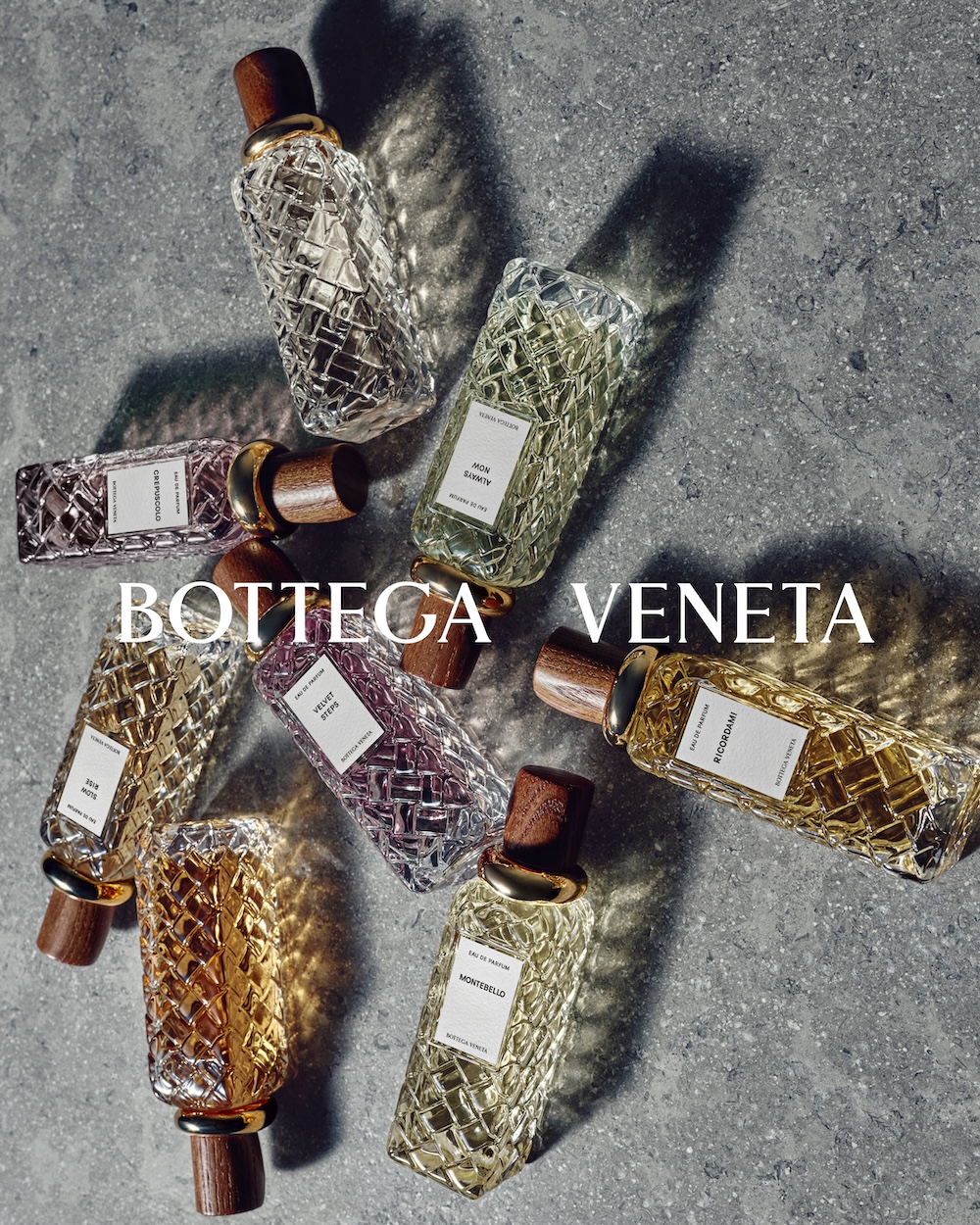
Bottega Veneta has been quietly building a fragrance world that feels very much like the house itself: tactile, considered and a little unexpected. Now, it is expanding that universe with Alta, a collection of ten new Eaux de Parfum inspired by different moments of the day, states of mind and a broader interpretation of Italy.
The concept behind Alta takes its cue from one of Bottega Veneta's most recognisable signatures, Intrecciato. Each fragrance is constructed as an “Intrecciato duo”, pairing an ingredient connected to Italy with another sourced from elsewhere in the world. The result is less about creating a literal scent of Italy and more about imagining Italian ingredients in conversation with other places, cultures and memories.
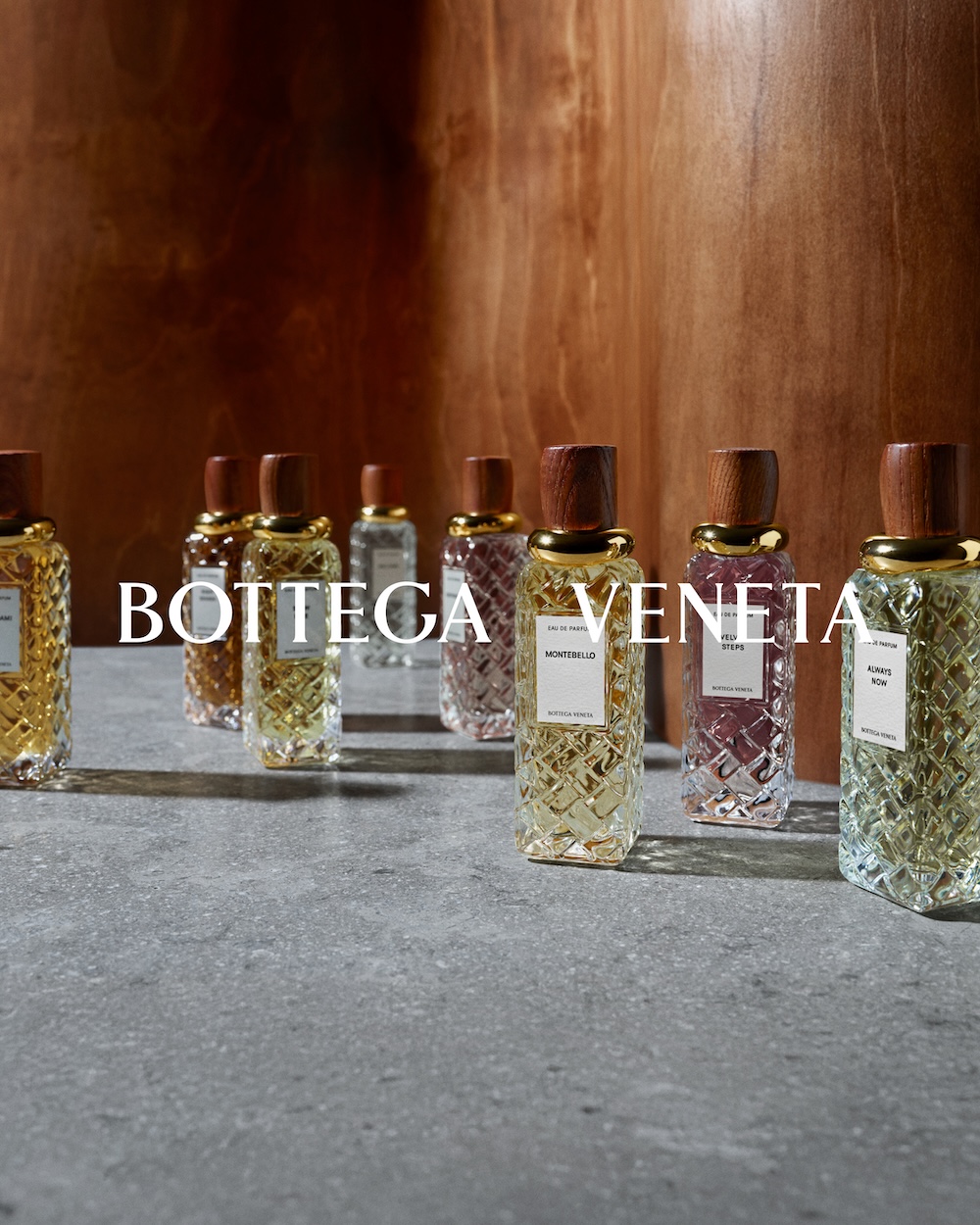
Across the ten fragrances, that idea goes in very different directions. Always Now pairs Italian basil with vetiver Bourbon from Madagascar, while Montebello combines blood orange with North African neroli. Slow Rise moves into roses and French clary sage, while Ricordami might be the collection's most playful proposition, taking the nostalgic smell of stracciatella ice cream, with its milky vanilla and chocolate notes, and grounding it with oakwood.
Then things get darker. Night Sounds brings Italian saffron together with Vietnamese benzoin, Velvet Steps combines plum with Spanish labdanum, and Crepuscolo plays with the contrast between salty Fior di Sale and South Asian oud.
Our favourites came down to three: Crepuscolo, Balliamo and Bare Morning.
Balliamo feels like the fragrance equivalent of an Italian summer evening, built around lush Italian white fig and American cedarwood. Crepuscolo, meaning twilight, is more intriguing and unexpected, with that meeting of saltiness and deep oud creating something that feels warmer and moodier.
But in the end, we went for Bare Morning.
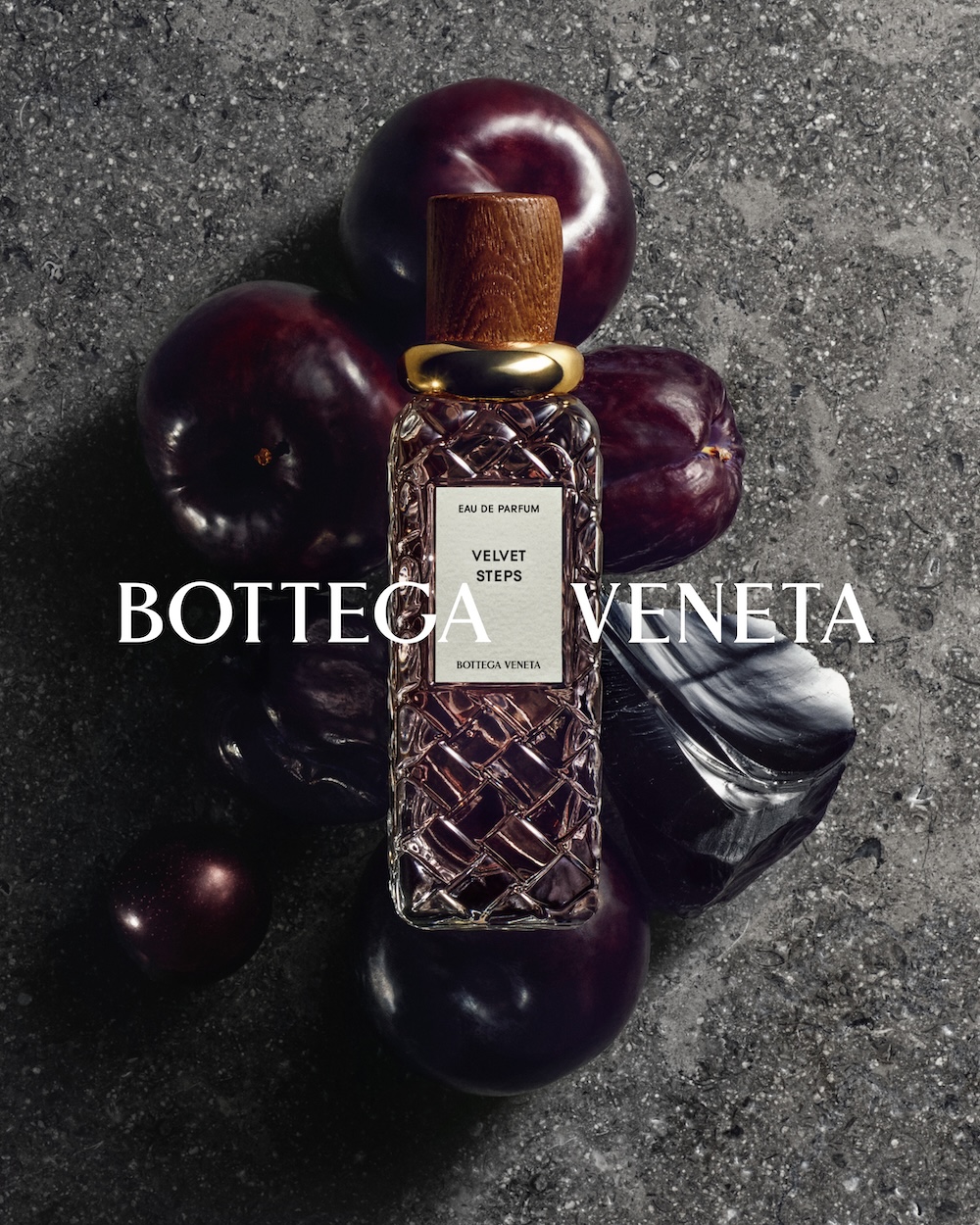
There was something about its simplicity that kept pulling us back. It combines the powdery softness of an Italian talco accord with Oceania sandalwood, creating something intimate, soft and almost skin-like. It doesn't scream for attention, and perhaps that's exactly why we wanted to keep smelling it.
The fragrances themselves come housed in sculptural glass bottles inspired by Bottega Veneta's Intrecciato leather weave, finished with a wooden cap and gold-toned ring. Each is refillable and available in 50ml and 100ml formats, with recycled glass used for the bottles.
Alta will launch across Bottega Veneta boutiques and leading department stores worldwide, alongside a collection of woven leather fragrance accessories. It also marks the house's most expansive fragrance release to date.
Ten fragrances, three favourites, but only one came home with us (for now): Bare Morning.
More on BottegaVeneta.com
Yassmin Saleh’s Pre-Fall 2026 campaign "Everyday Forms" Explores Lebanese Womanhood, From Motherhood To Belonging
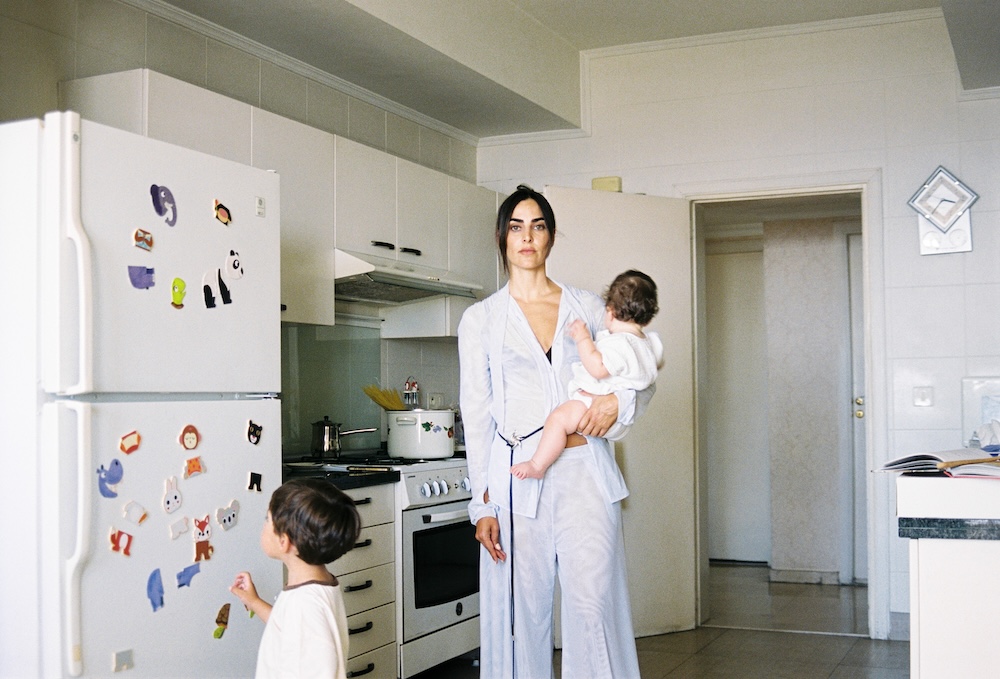
How many versions of yourself are you expected to be at once? That question sits at the heart of YASSMIN SALEH’s Pre-Fall 2026 campaign, Everyday Forms, photographed by Luana Bassil and art directed by Léa Casini. Rooted in the lived experiences of Lebanese women, the campaign begins with a deceptively simple question: what actually defines us as women?
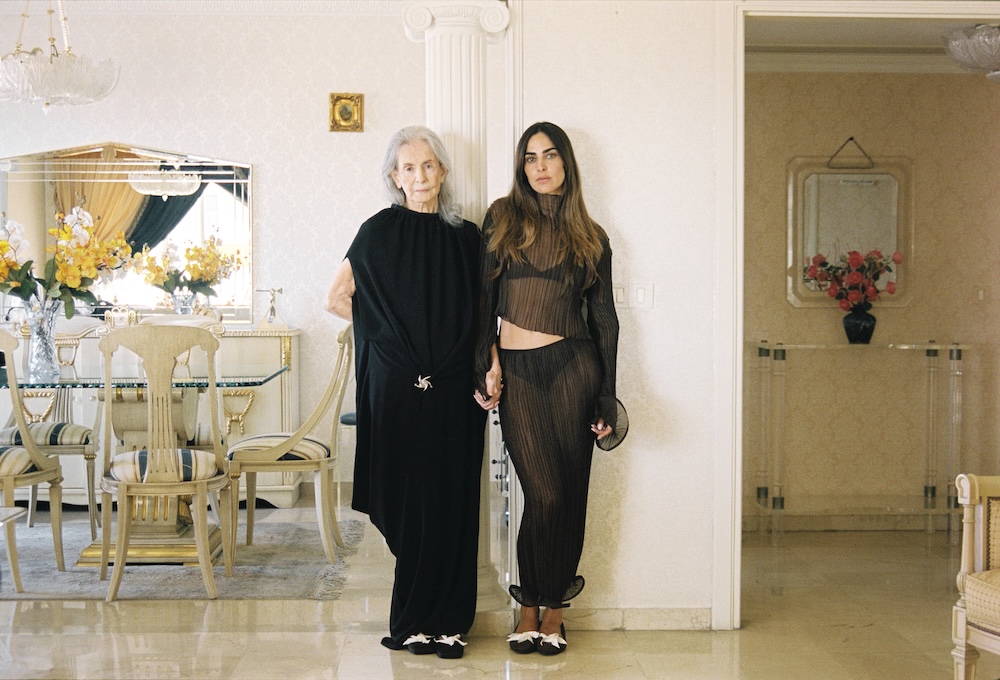
The answer, of course, gets complicated very quickly. Lebanese woman. Mother. Daughter. Professional. Wife. Friend. Individual. The campaign looks at how all of these identities can coexist within one person, alongside the expectations attached to each of them. Have a career, but don't work too much. Be a devoted mother, but remain social. Pursue your ambitions, but perhaps only once your children need you a little less. Be the bent 3ayle, the loving wife and the friend who always shows up, while somehow finding enough space to remain yourself. Rather than treating these pressures as abstract ideas, Everyday Forms brings them into some of the most intimate parts of women's lives.
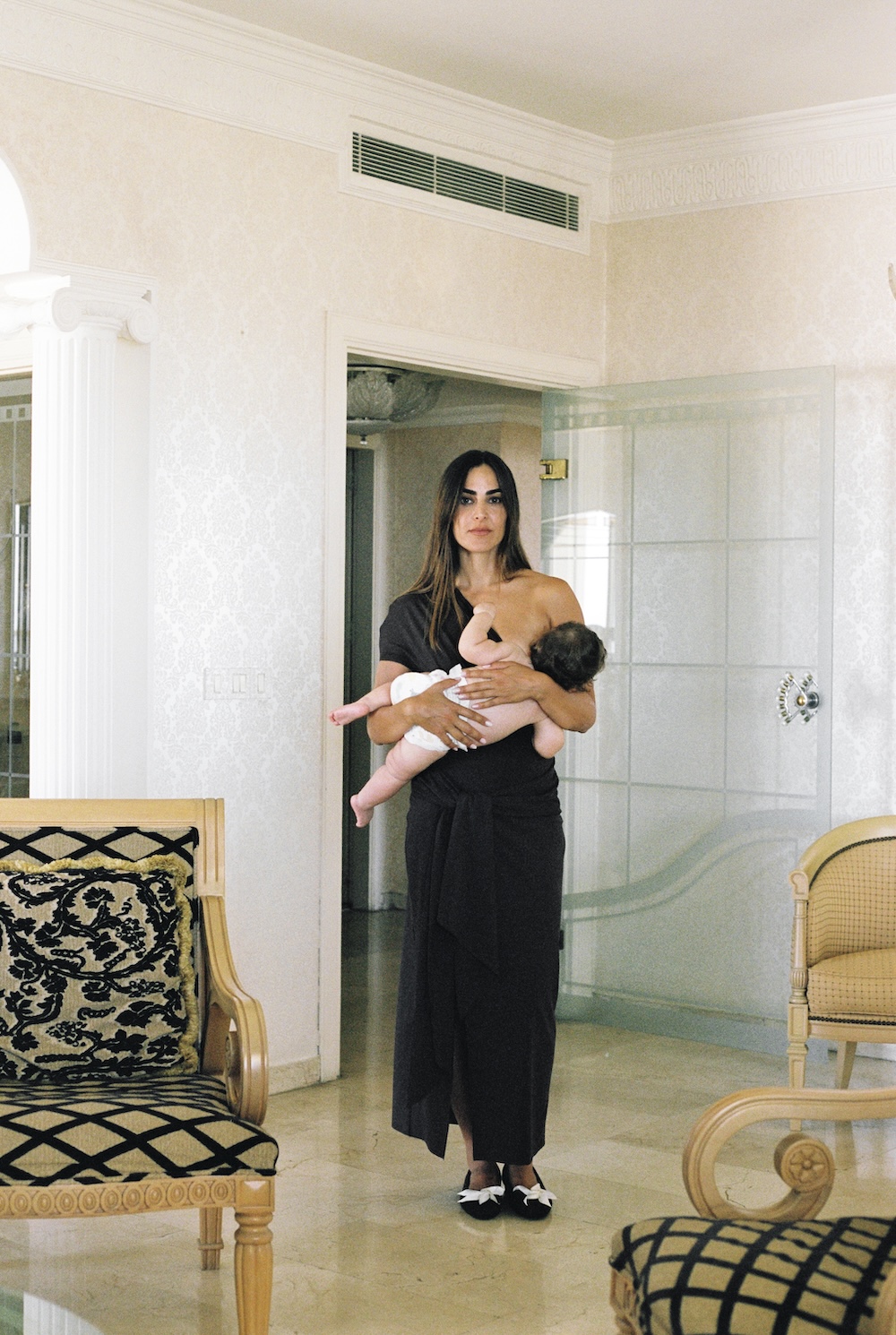
Motherhood is one of them. The campaign uses breastfeeding to explore how even something deeply personal can become open to public scrutiny. Is your milk enough? Are you eating enough? Why do you want to stop? Why are you breastfeeding in public?
Suddenly, feeding your child becomes another decision that requires an explanation.
It's a particularly relatable starting point for a campaign interested in the quiet negotiations women make every day: what they give, what they sacrifice, and how much room they're permitted to keep for themselves.
There is also a generational conversation running through the campaign. YASSMIN SALEH considers the different versions of womanhood not as separate identities, but as layers shaped partly by the women who came before us.
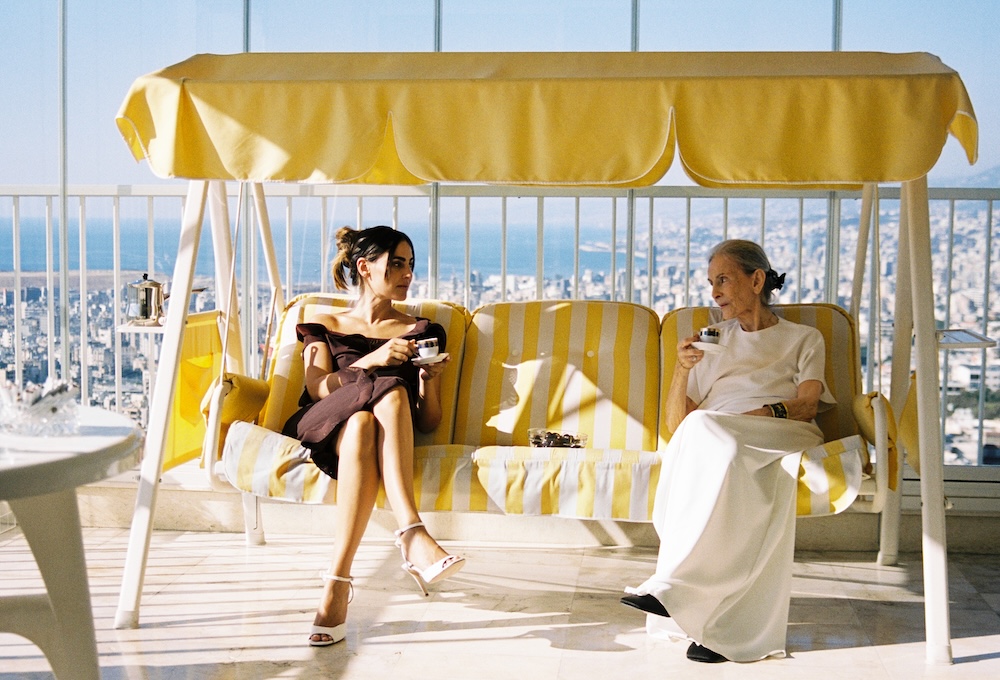
The choices and sacrifices of mothers and grandmothers inevitably enter our own stories, just as the choices women make today will influence the generations that follow.
That idea of inheritance eventually moves Everyday Forms beyond the personal and into something explicitly political. Through a series of visual chapters, the campaign culminates with Lebanon's nationality law, which prevents Lebanese women from passing their nationality on to their children.
It's a powerful place to end because it takes the campaign's original question, what defines us as women?, and turns it into another: who gets to decide?
For YASSMIN SALEH, Everyday Forms ultimately becomes a conversation about identity, belonging and choice, but also about whether the things women inherit must necessarily be the things they pass on.
The Pre-Fall 2026 campaign features Nadine, her children and Coco, with photography by Luana Bassil and art direction by Léa Casini.
More on YassminSaleh.com
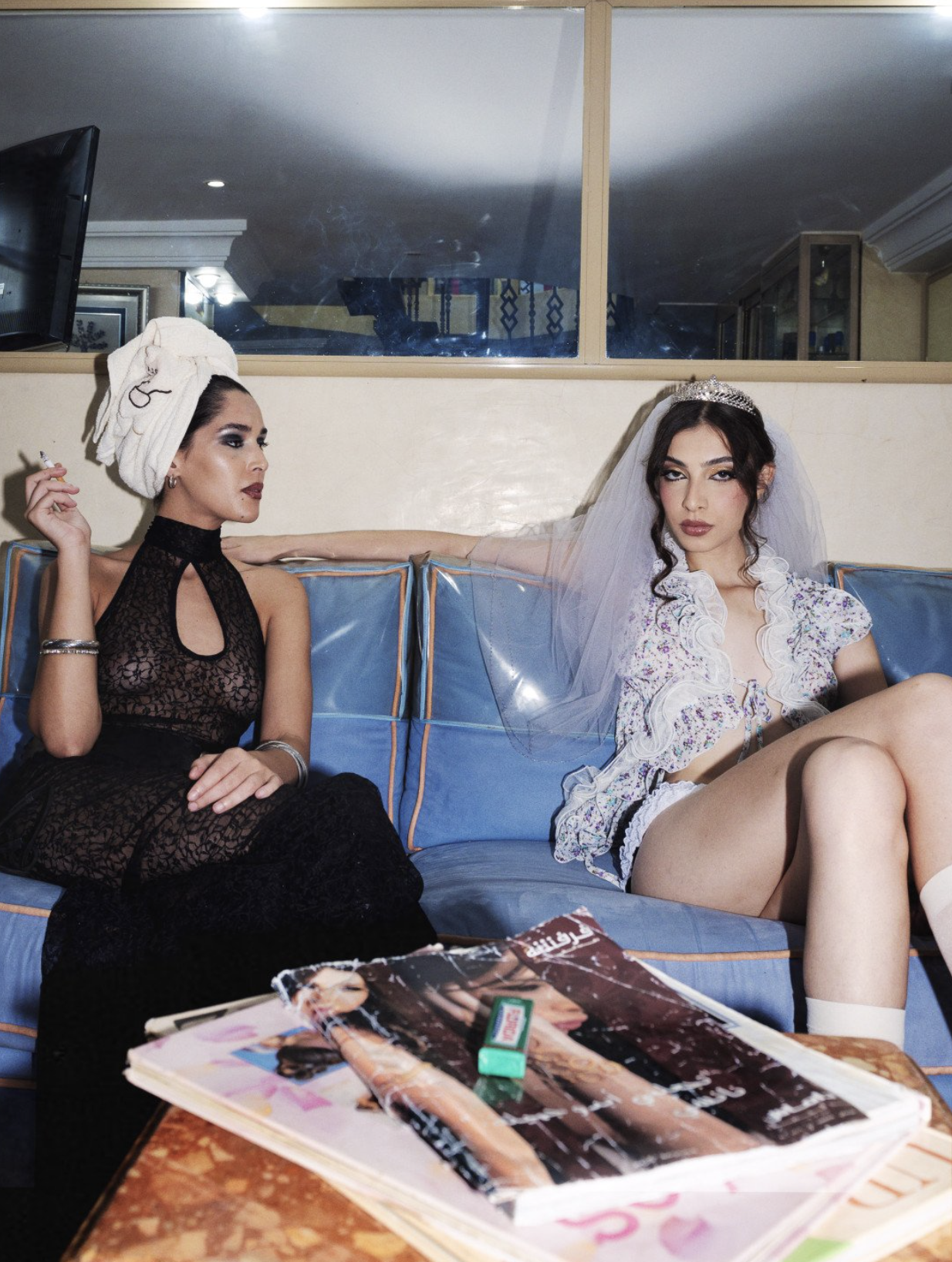
Inside Vive la mariée !, Institut du Monde Arabe’s Love Letter to the Maghrebi Wedding
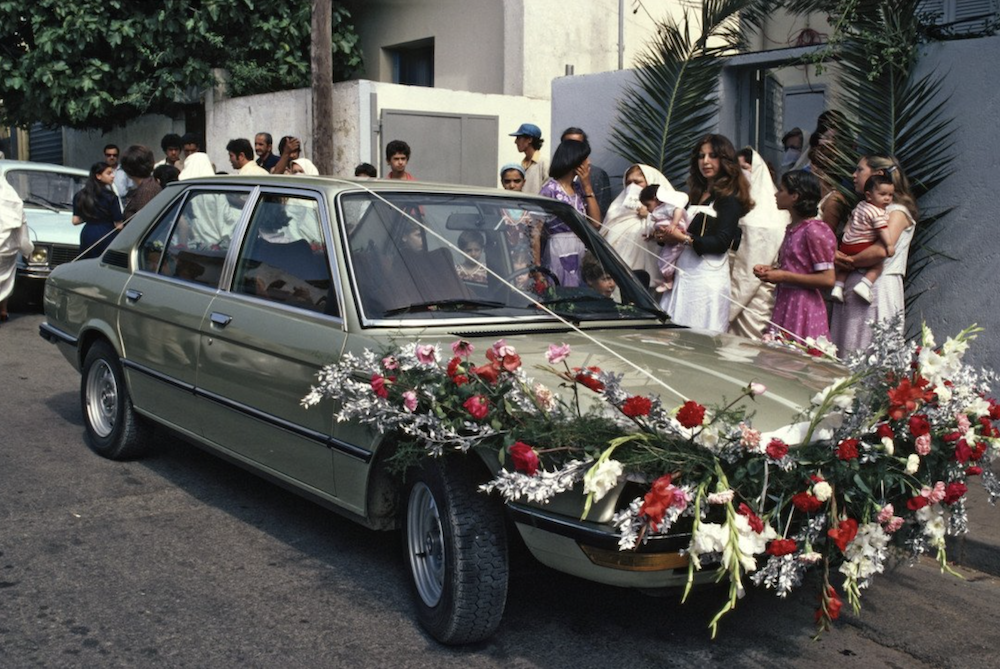
If there is one thing the Maghreb knows how to do, it is a wedding. In fact, one of the Arabic words used for marriage, farah, literally means “joy”, which feels like the perfect starting point for Vive la mariée !, the new exhibition at Paris’s Institut du Monde Arabe exploring weddings across Morocco, Algeria and Tunisia.
Rather than looking at marriage simply as a ceremony, the exhibition considers everything surrounding it: the clothes, jewellery, music, dancing, food, rituals and, perhaps most importantly, the women who make so much of it happen.
The Wedding Wardrobe Alone Is Worth the Visit
At the heart of the exhibition are around 40 historic costumes and pieces of jewellery from Moroccan, Algerian and Tunisian collections, dating from the 19th and 20th centuries and being shown in France for the first time.
Through bridal dress and the clothes worn by the women surrounding the bride, the exhibition traces regional differences as well as traditions shared across communities, including those between Muslims and Jews.
There is also a closer look at the women behind the celebrations, from preparing the bride's trousseau and making garments to accompanying her through the different stages of the wedding itself. What makes Vive la mariée ! particularly interesting is that it doesn't leave these traditions in the past.
Alongside the historical pieces, 27 contemporary artists, predominantly women from Tunisia, Algeria, Morocco and their diasporas, have been invited to look at marriage from their own perspectives.
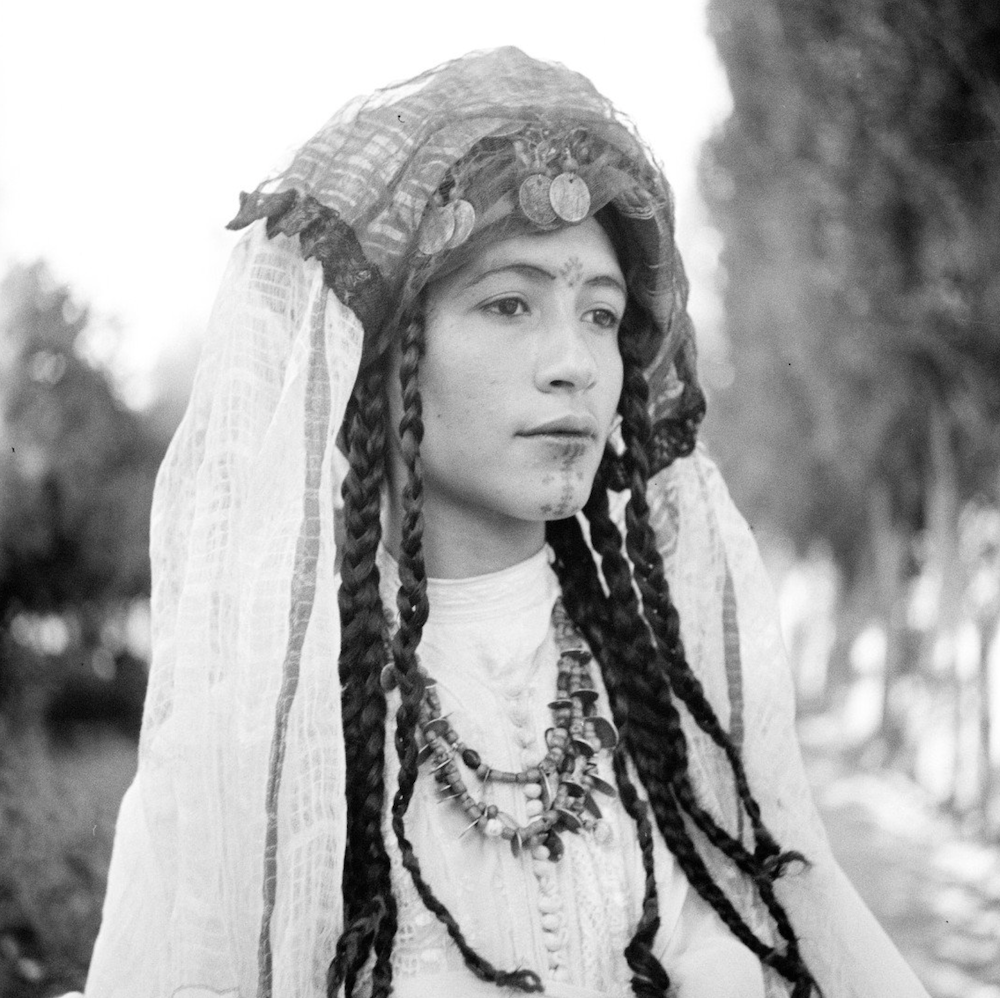
Jean Besançenot, Mariée de la tribu des Béni Mellal, Moyen-Atlas (Maroc),1934-1939, tirage d’exposition. Photothèque de l’Institut du monde arabe. © Adagp, Paris, 2026 / Photothèque de l’IMA
Some celebrate the traditions and collective joy surrounding weddings; others question what these rituals tell us about gender, society, inheritance and the ideologies we continue to carry with us.
It turns the exhibition into something bigger than a display of beautiful wedding clothes. What do we keep? What changes? And what do the rituals surrounding marriage still say about us today? Presented as part of Saison Méditerranée, Vive la mariée ! brings together contemporary art, archival material and historic objects within an immersive scenography incorporating the sounds, movements, clothes and food associated with Maghrebi weddings.
And because you can't really make an exhibition about a Maghrebi wedding without an actual celebration, the accompanying programme will kick off with “Raconte-moi ton mariage,” a large festive procession under the artistic direction of Mohamed Bourouissa. Frankly, we're ready for the farah.
Cover Photo: Ghalia Kriaa, At the Hajema, 2025, vidéo. © Ghalia Kriaa
More on Imarabe.org
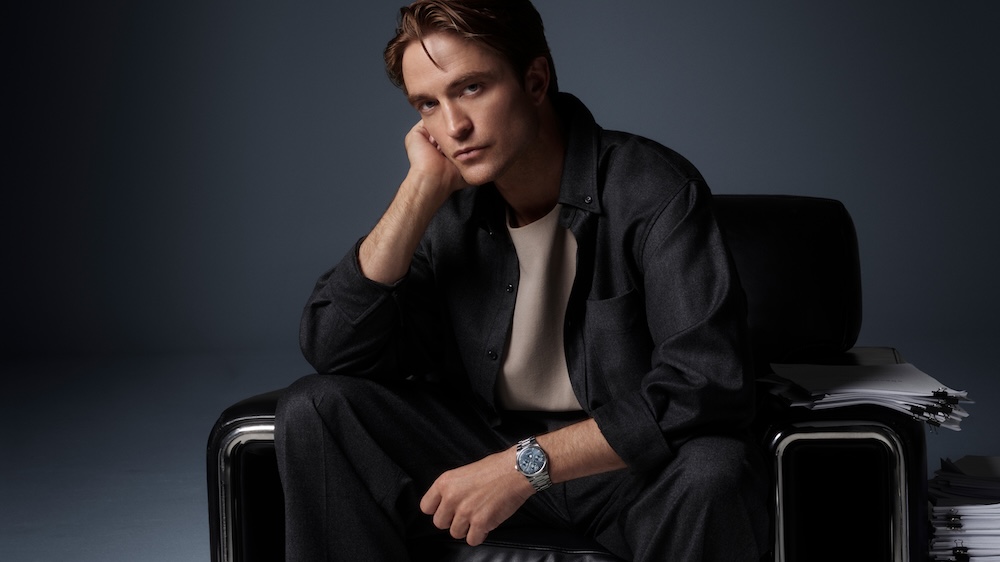
Robert Pattinson Steps Into His New Role As A Jaeger-LeCoultre Global Ambassador
Robert Pattinson has played a vampire, Batman and some of cinema’s stranger leading men. His latest role comes without a script: Jaeger-LeCoultre has named the British actor its newest Global Ambassador.
It is a pairing that actually makes quite a bit of sense. Pattinson has spent much of his post-Twilight career making unexpected choices, moving between major Hollywood productions and films by directors including Robert Eggers, Christopher Nolan, Bong Joon Ho and the Safdie brothers. Jaeger-LeCoultre, meanwhile, has spent almost two centuries balancing tradition with the rather obsessive technical innovation that makes watch people, well, watch people. And Pattinson appears to be one of them.

Apparently, Robert Pattinson Is a Watch Guy
“For me, the most compelling objects are the ones that have real depth to them,” Pattinson says of his appreciation for mechanical watches. “A great watch isn’t just about precision – it’s about character, craftsmanship, and the story behind how it’s made.”
He also points to what he calls the Maison's “quiet mastery”, drawing a connection between Jaeger-LeCoultre's combination of technical innovation and artistic expression and his own approach to creative work. It's an interesting choice of words because “quiet” probably describes the partnership rather well. Pattinson's personal style has rarely felt overly calculated, and Jaeger-LeCoultre isn't exactly the watchmaker you associate with shouting across the room. The appeal of both tends to be in the details.
From Edward Cullen to the Vallée de Joux
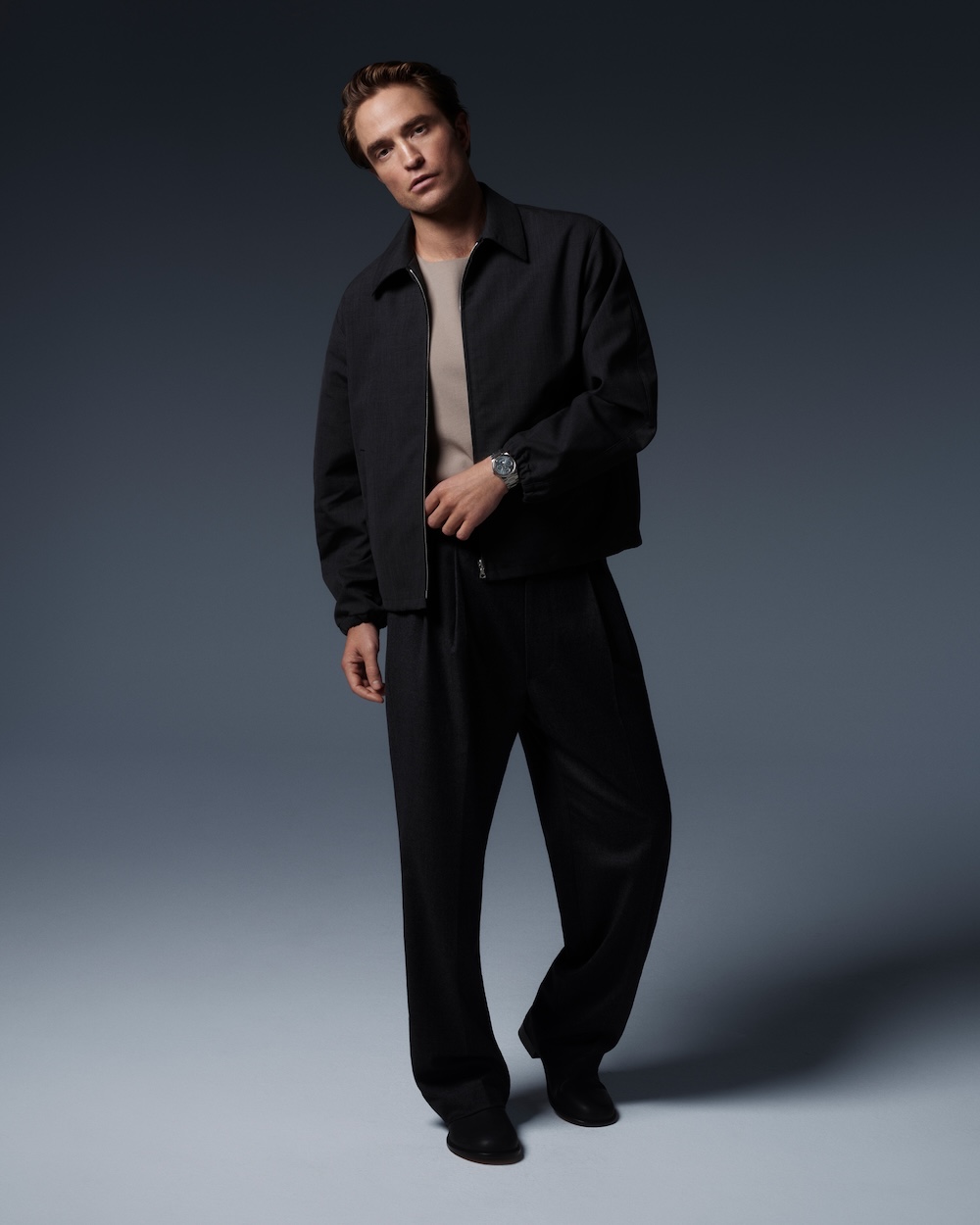
Pattinson's career has become considerably harder to predict since the days when the world knew him primarily as Edward Cullen. Good Time, High Life, The Lighthouse, Tenet, The Batman and Mickey 17 have all followed, alongside collaborations with filmmakers ranging from David Cronenberg and Claire Denis to Matt Reeves and Bong Joon Ho. More recently, he starred in Christopher Nolan's The Odyssey, with upcoming projects including Denis Villeneuve's Dune: Part Three, Lance Oppenheim's Primetime and Fernando Meirelles' Here Comes the Flood. He has also moved behind the camera through his production company, Icki Eneo Arlo.
That constant movement between the mainstream and the unexpected is part of what attracted Jaeger-LeCoultre.
“Robert Pattinson represents a rare combination of artistic depth, curiosity, and authenticity,” says Jérôme Lambert, CEO of Jaeger-LeCoultre. “His journey is defined by a relentless commitment to excellence and an independent spirit that aligns seamlessly with the values of our Maison.”

Pattinson won't simply be appearing on the ambassador roster. His first campaign for Jaeger-LeCoultre is set to debut in mid-September, giving us our first proper look at what the partnership will actually look like.
For a Manufacture founded in 1833, with more than 1,400 calibres and 430 patents behind it, bringing Pattinson into the fold feels like another way of connecting that considerable history with contemporary culture.
And really, Robert Pattinson disappearing down the mechanical-watch rabbit hole feels surprisingly on brand.
More on Jaegerlecoultre.com
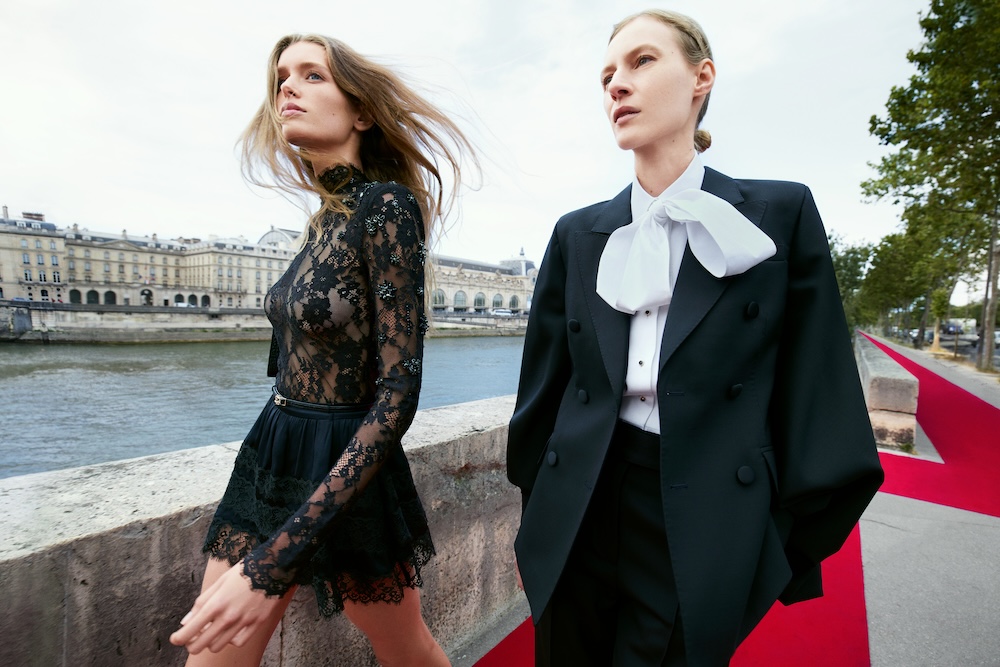
ELIE SAAB x H&M Is Bringing Couture Energy to the High Street
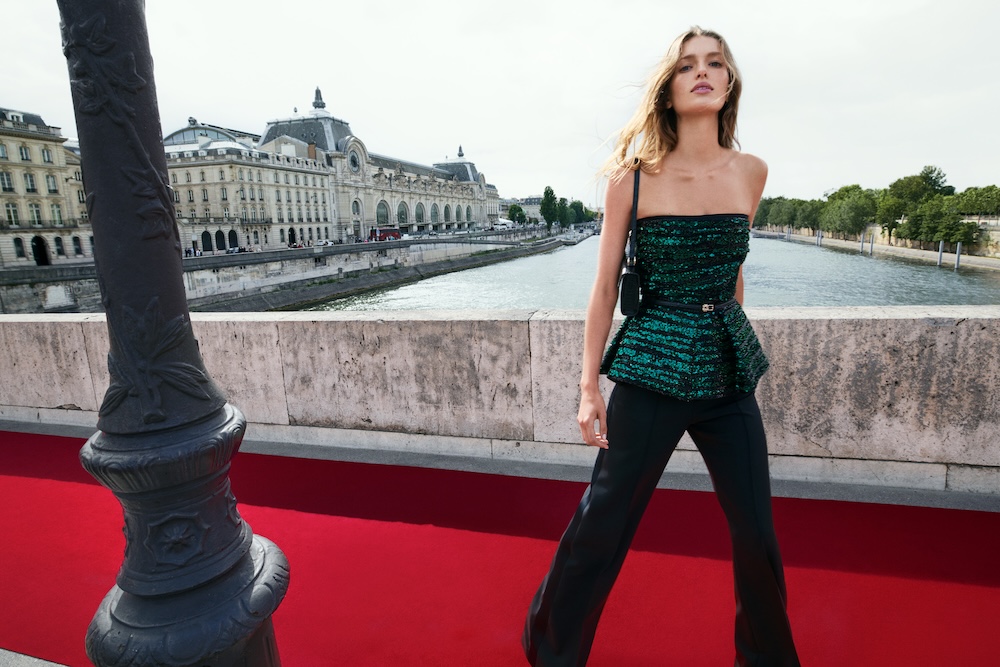
This is a big one. H&M has just announced ELIE SAAB as its next designer collaborator, bringing one of Lebanon’s most celebrated fashion houses to a much wider audience with a collection launching this October.
For anyone who grew up in the region watching Elie Saab gowns appear on red carpets, royal weddings and some of fashion’s biggest stages, the collaboration feels particularly special. Saab founded his house in Beirut, first becoming known for his bridal creations before taking Lebanese couture all the way to Paris and becoming one of the first international members of the Chambre Syndicale de la Haute Couture.

Today, ELIE SAAB is synonymous with a very particular kind of glamour: intricate embellishment, beautiful fabrics, femininity and, of course, the kind of dresses that require an entrance.
So what happens when that world meets H&M?
The ELIE SAAB H&M collection will span womenswear, menswear and accessories, including footwear, and rather than moving too far away from what the house is known for, the collaboration is leaning straight into it.
Expect embellished gowns, shimmering separates and sharply cut tailoring, with fine lace, gradient sequins and ELIE SAAB monograms appearing throughout.
In other words, this doesn't sound like the moment to play it safe.
“We are thrilled to announce this landmark collaboration with ELIE SAAB,” says Ann-Sofie Johansson, H&M Creative Advisor and Head of Design Womenswear. “Mr Saab is a designer we have always respected – the journey from master of bridalwear in Beirut to the centre of Paris fashion is an amazing, rich story and we are so excited to be exploring his world.”
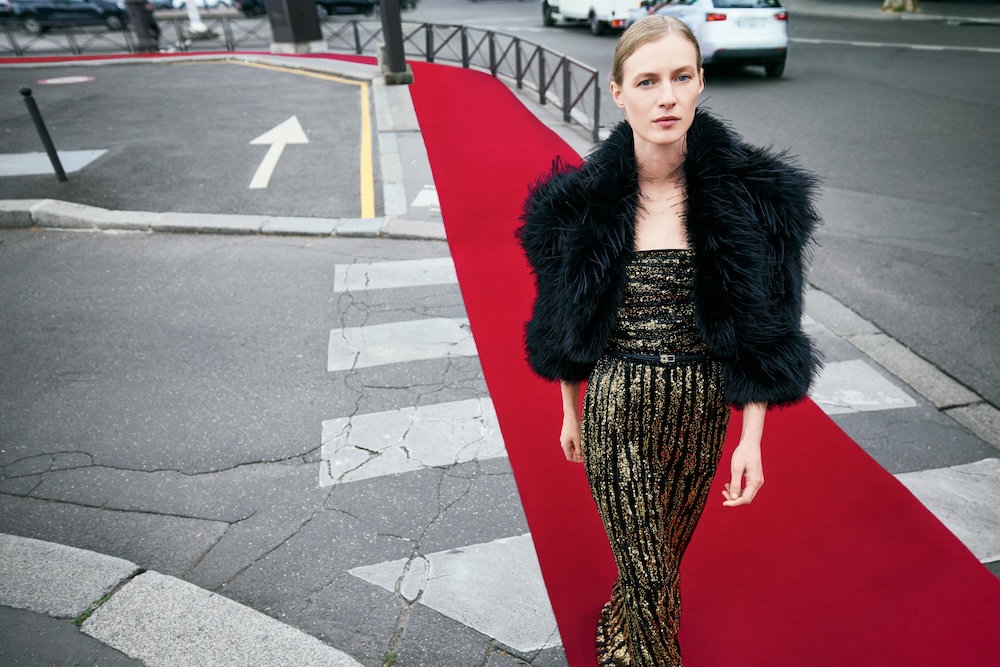
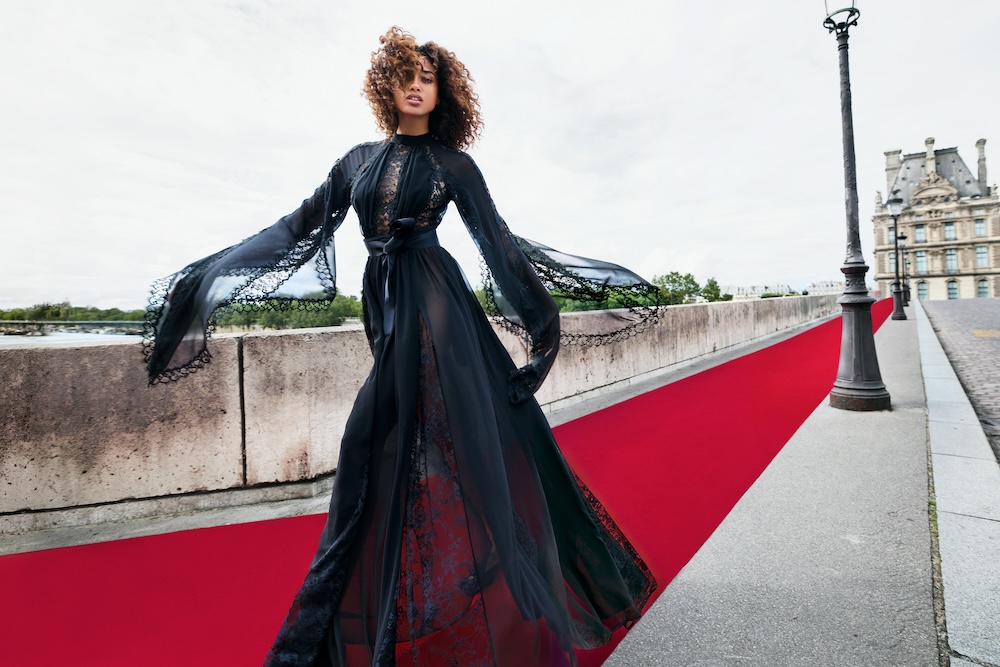
And perhaps most importantly, she promises “a magical, ornate and glamourous collection.” We would expect nothing less.
Just like it has been for Cavalli, Rocha or Versace, there's exciting about seeing a designer so closely associated with haute couture translate that world into clothes that far more people will actually be able to buy.
For Saab, that accessibility seems to be an important part of the collaboration. “This collection is created for all who admire the world of ELIE SAAB, and I hope it will be embraced with the same enthusiasm it was created with,” says Elie Saab, Chairman and Chief Creative Officer.
He describes working with H&M as “a truly collaborative and inspiring process,” adding that the aim was to create “a complete wardrobe that speaks to every moment of a woman's life.”
We’re particularly curious to see how the house's more elaborate codes translate beyond the gowns. The promise of menswear, tailoring, shoes and accessories could make this considerably more interesting than a collection built solely around occasion dressing.
Save the Date
And unlike many global designer collaborations that can be frustratingly difficult to get your hands on in our part of the world, this one is very much coming to the region.
ELIE SAAB H&M launches on October 22, 2026, in select stores across Kuwait, Saudi Arabia, the UAE, Bahrain, Qatar and Egypt, as well as online.
A Lebanese couture house, an H&M designer collaboration and embellished gowns within reach of considerably more wardrobes?
October 22 might require an early alarm.
More om HM.com
LIMÉ Is Having a Very Big Fashion Moment in the UAE
We’ve had LIMÉ on our radar for a while, and Fall ’26 gives us a few more reasons to keep watching. Alongside a new collection filled with great textures, strong tailoring and plenty of red, the brand is expanding its world in the GCC with the arrival of LIMÉ Man and a dedicated UAE app.
The fashion brand has been steadily building its presence across the GCC, but Fall 2026 feels like a particularly big moment. There is a new womenswear collection full of rich autumn textures and a lot of red, LIMÉ Man has officially entered the picture, and UAE shoppers now have a dedicated LIMÉ app bringing Woman, Man and Kids together in one place.
Basically, the LIMÉ universe is getting considerably bigger.
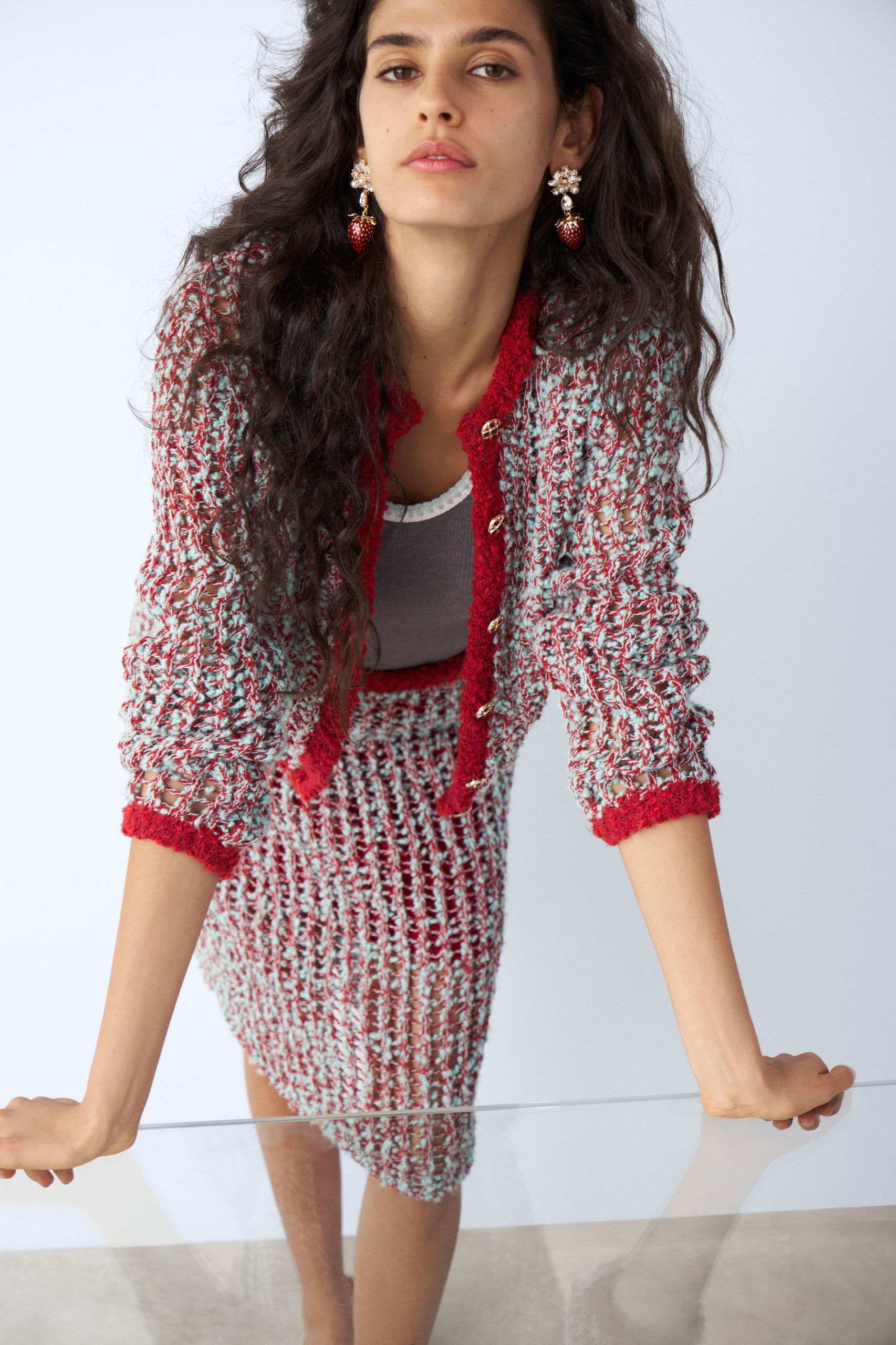
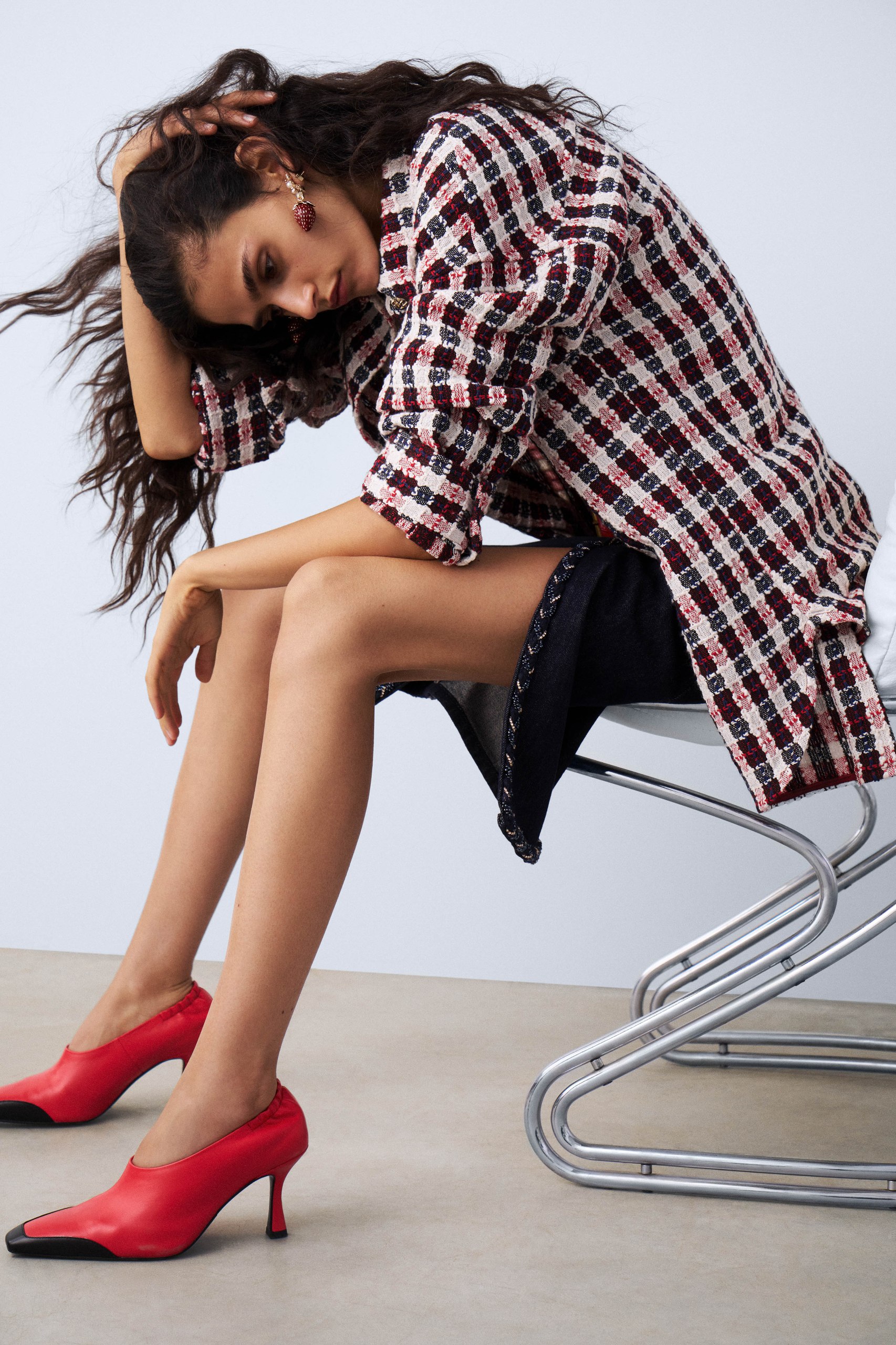
For Fall ’26, LIMÉ looks backwards to move forward, reworking retro references through contemporary silhouettes and an autumn wardrobe that feels polished without becoming overly serious. And the colour of the season? Red.
It runs through the collection from deep burgundy to softer salmon tones, alongside grey, white, black and navy. The real story, however, is texture. Tweed, corduroy, denim, suede, wool and knitwear are layered throughout the collection, giving even relatively simple pieces a richer, more tactile feel.
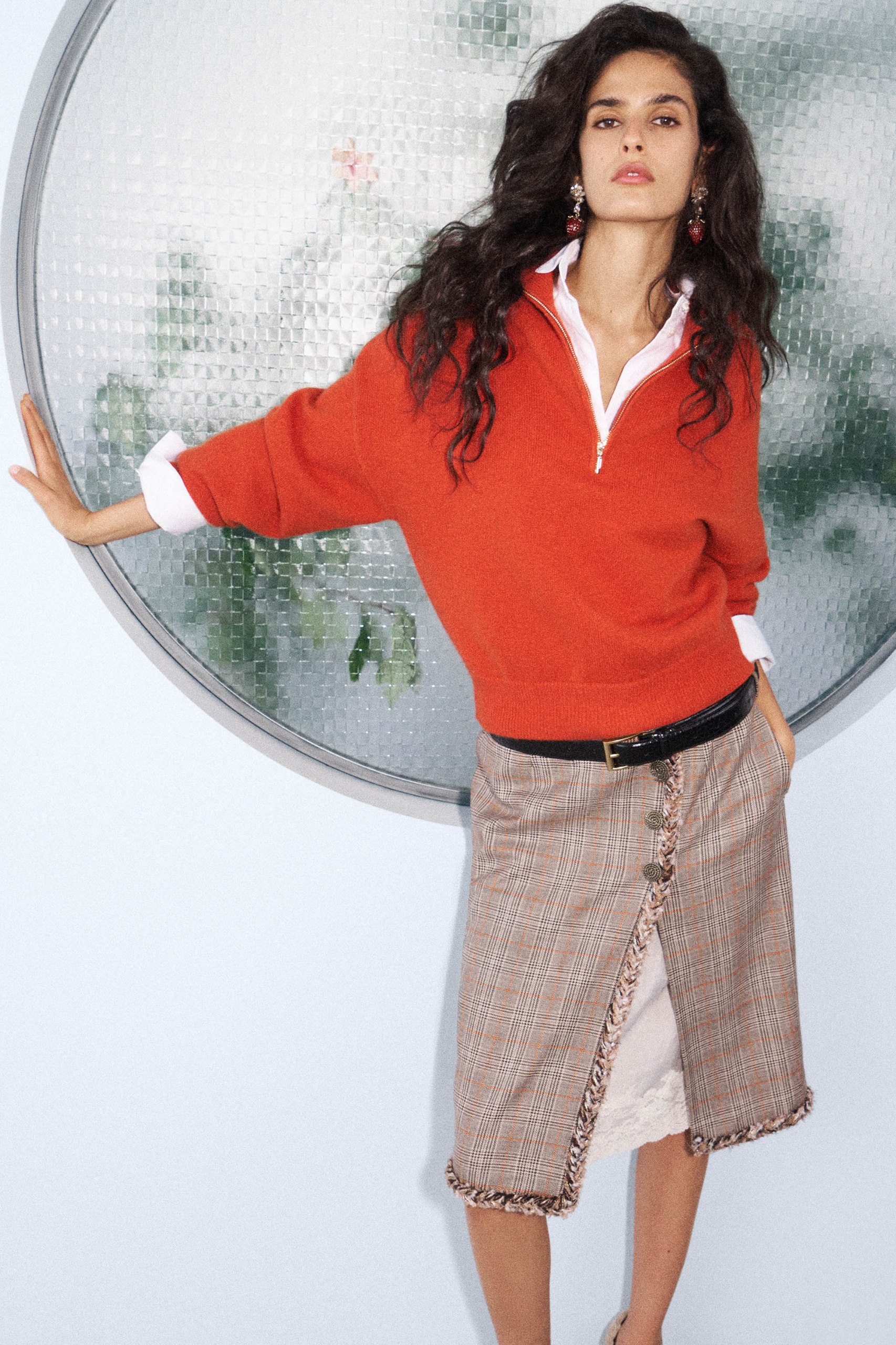
Some of the strongest dresses play with shape and detail: a wool-and-cashmere dropped-waist dress, a lyocell style with a stand collar and fringed hem, and a checked cotton dress finished with a bandana detail at the waist.
Then there are the suits. LIMÉ gives the skirt suit its Fall 2026 treatment in mélange cotton, denim and corduroy, while a checked wool midi skirt, statement shirts and flared corduroy trousers bring more of that slightly retro mood into everyday dressing.
Autumn dressing is ultimately about the outerwear, and LIMÉ seems to know it. A voluminous wool jacket with exaggerated wide lapels is one of those pieces that can essentially become the entire outfit, while a water-repellent cotton-twill trench offers something more classic and practical. The accessories are where things get a little more playful. Contrasting ankle boots, animal-print pumps and over-the-knee boots with patent toes sit alongside embossed belts, croc-effect patent bags, a structured box bag and a suede shopper. It's the kind of collection that makes us slightly impatient for temperatures to drop.
And Now There’s LIMÉ Man
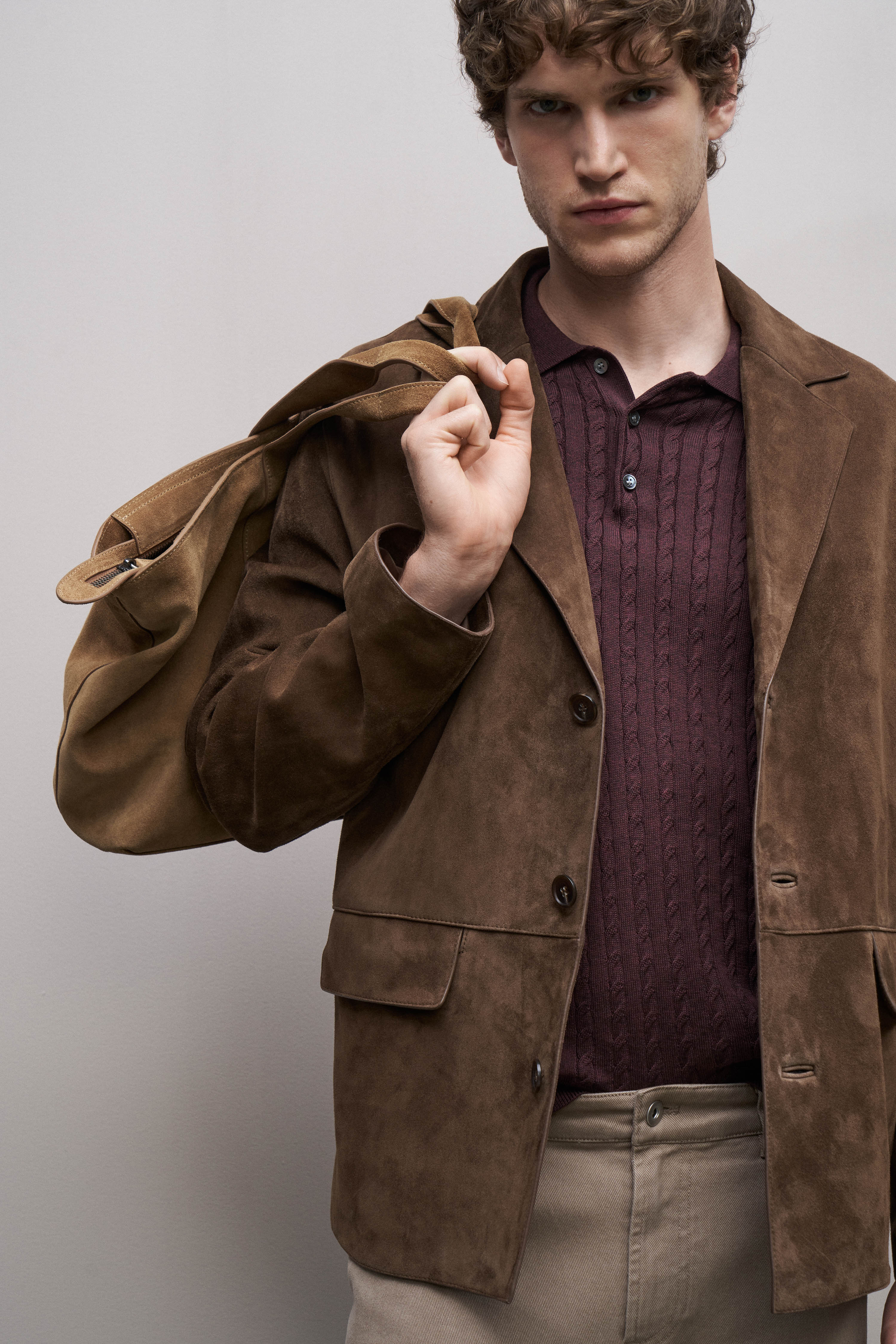
The bigger news for the region is that LIMÉ is no longer just about womenswear.
LIMÉ Man has officially launched as part of the brand's next phase of GCC expansion, with a wardrobe designed to move between work, formal occasions and more casual everyday dressing. The collection combines contemporary minimalism with classic wardrobe staples, moving between cleaner, more directional silhouettes and pieces designed to become everyday essentials. And they really have gone for the whole wardrobe.
There are sharp single-breasted suits alongside cotton T-shirts and polos, jeans, trousers, cotton bomber jackets, leather loafers and lace-up boots. Even the accessories have been considered, including suede shopper bags, while underwear and footwear round out the wider offering.
For anyone who likes the women's LIMÉ aesthetic, the menswear feels like a natural extension of the same world: clean, wearable and just fashion enough.
LIMÉ Is Now on Your Phone Too
The other major arrival is digital. LIMÉ has launched a dedicated mobile app in the UAE, bringing its Woman, Man and Kids collections together in one place. Beyond shopping the latest drops, users can browse looks curated by LIMÉ stylists, save pieces to a wishlist and use an AI-powered Size Assistant to help find the right fit.
It's a smart move for a brand that releases new arrivals weekly and is clearly thinking beyond individual collections towards building a much bigger LIMÉ wardrobe and lifestyle in the region. Between the new Fall collection, the arrival of LIMÉ Man and an easier way to shop everything from your phone, LIMÉ's ambitions in the GCC are becoming pretty clear.
And if Fall ’26 is anything to go by, we have a feeling we're going to be seeing a lot more of it.
More on ae.limestore.com
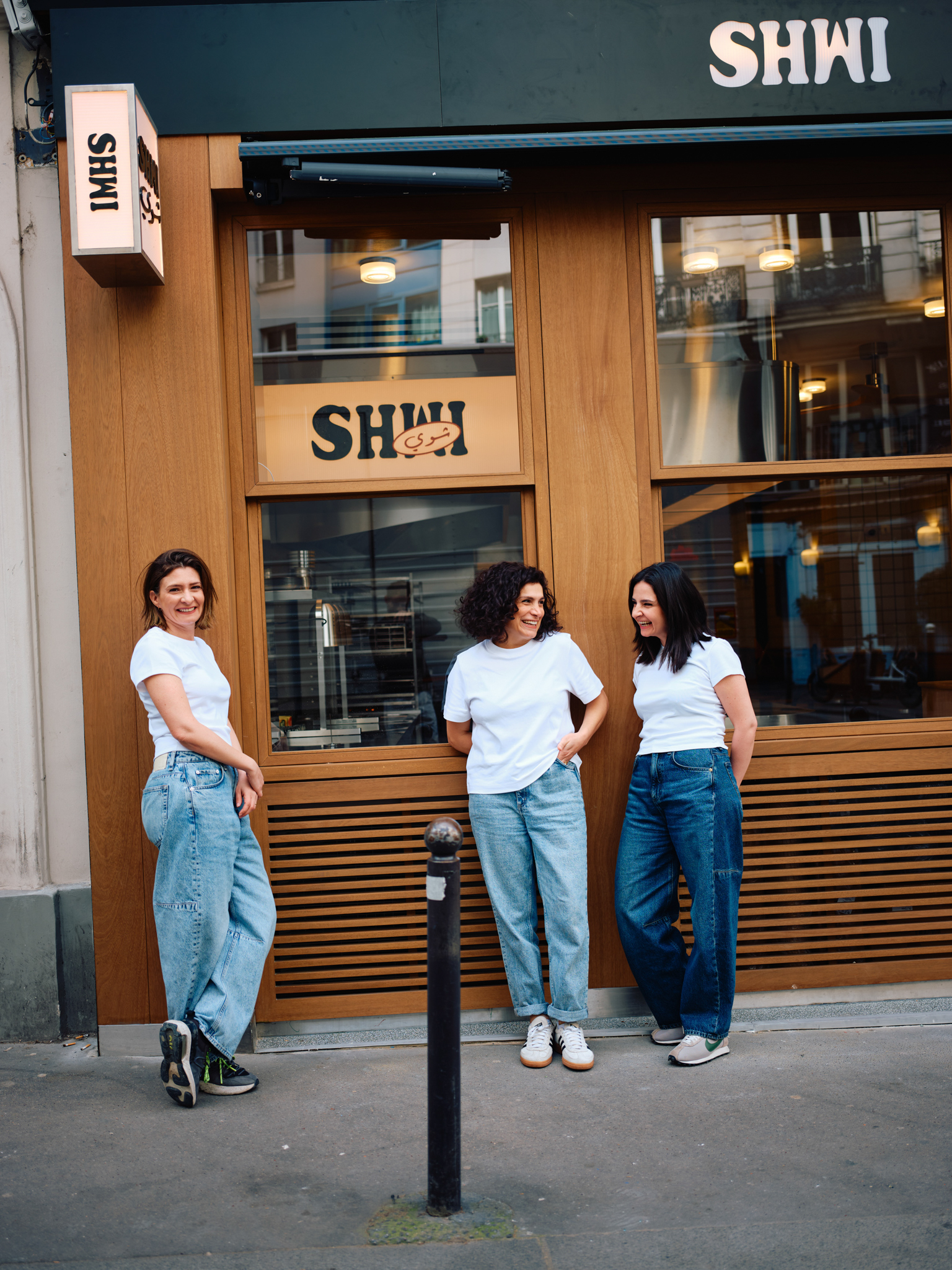
Meet Shwi, Paris’s New Love Letter to the Lebanese Farrouj
Paris doesn't exactly have a shortage of Lebanese food. From institutions that have been around for decades to a new generation of Levantine restaurants, you don't have to look particularly hard to find hummus, tabbouleh or a good shawarma in the city.
But Shwi is interested in something a little different. Following the success of Kubri, its second Paris concept takes something incredibly familiar to anyone who grew up in or around Beirut and builds an entire restaurant around it: farrouj meshwi.
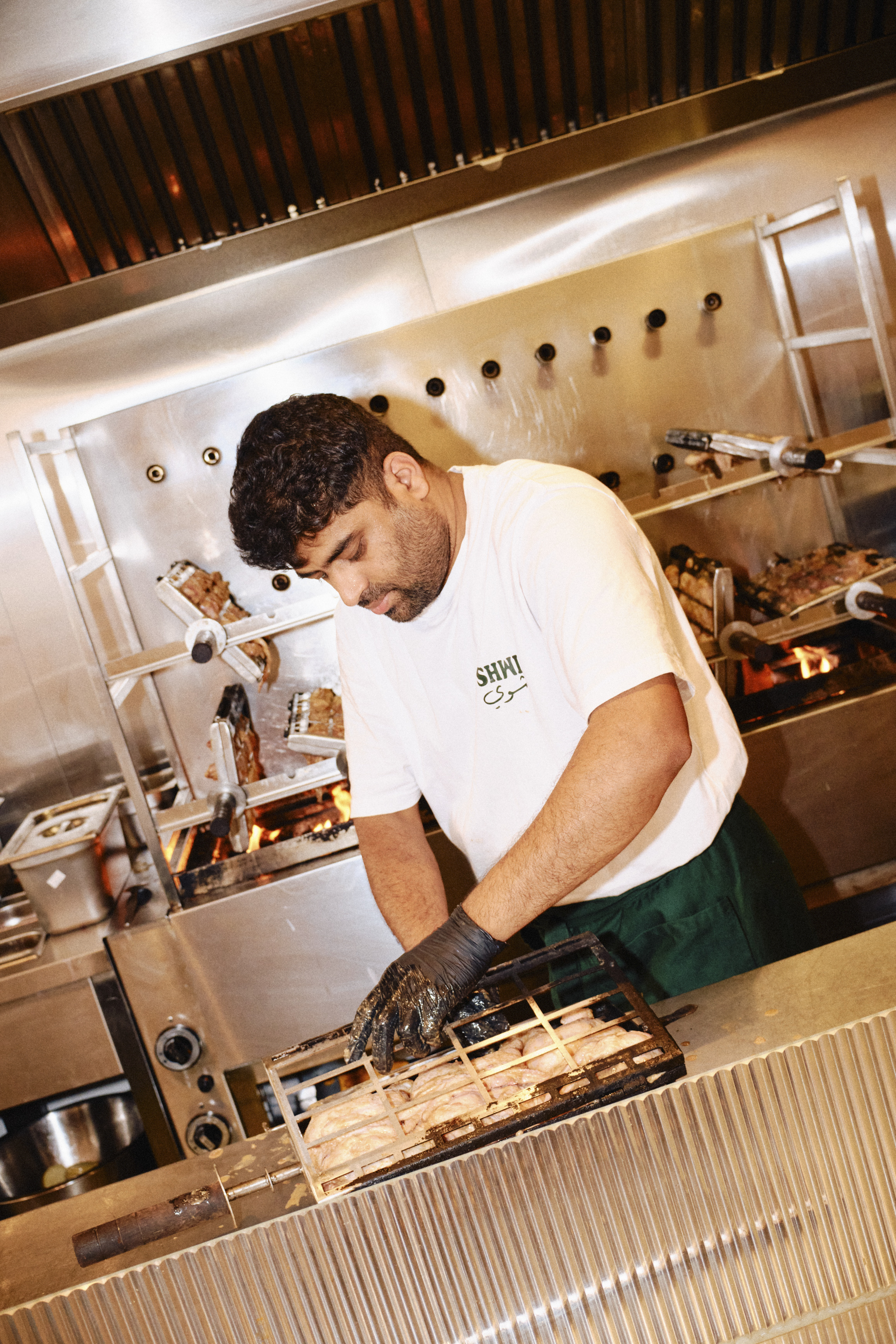
The food isn't being reinvented. In fact, that's precisely the point. The chicken, toum, pickles and flavours are meant to taste exactly as they would back home. Instead, Shwi is rethinking everything around them, replacing the nostalgic, folkloric version of Lebanon often presented abroad with something younger, urban and much closer to the Beirut its founders actually know.
We spoke to Ingrid Chehlaoui, co-founder of Kubri and Shwi, about making Lebanese grilled chicken sexy in Paris, why authenticity doesn't have to mean nostalgia, and the exact order we should all be getting when we visit.
From Kubri to Shwi
Before Shwi, there was Kubri. “Kubri was our first move into the Parisian market, the first time we put Lebanese food forward in a way that was fun and contemporary rather than traditional,” Chehlaoui tells JDEED.
Introducing that idea to Paris took some time. “People needed to understand what ‘creative Lebanese cuisine’ actually meant, and how to place us in a market that didn't really have a reference point for what we were doing.”
Once Kubri found its audience and the team had time to stabilise the restaurant, they were ready to think about what could come next. And according to Chehlaoui, another Lebanese concept was always part of the plan.
“From the beginning, our vision was bigger than one restaurant: we wanted to show Parisians that Lebanese food and culture could be cool, modern, contemporary. A second concept was never really a question of if, it was always going to happen, and it was always going to be Lebanese.”
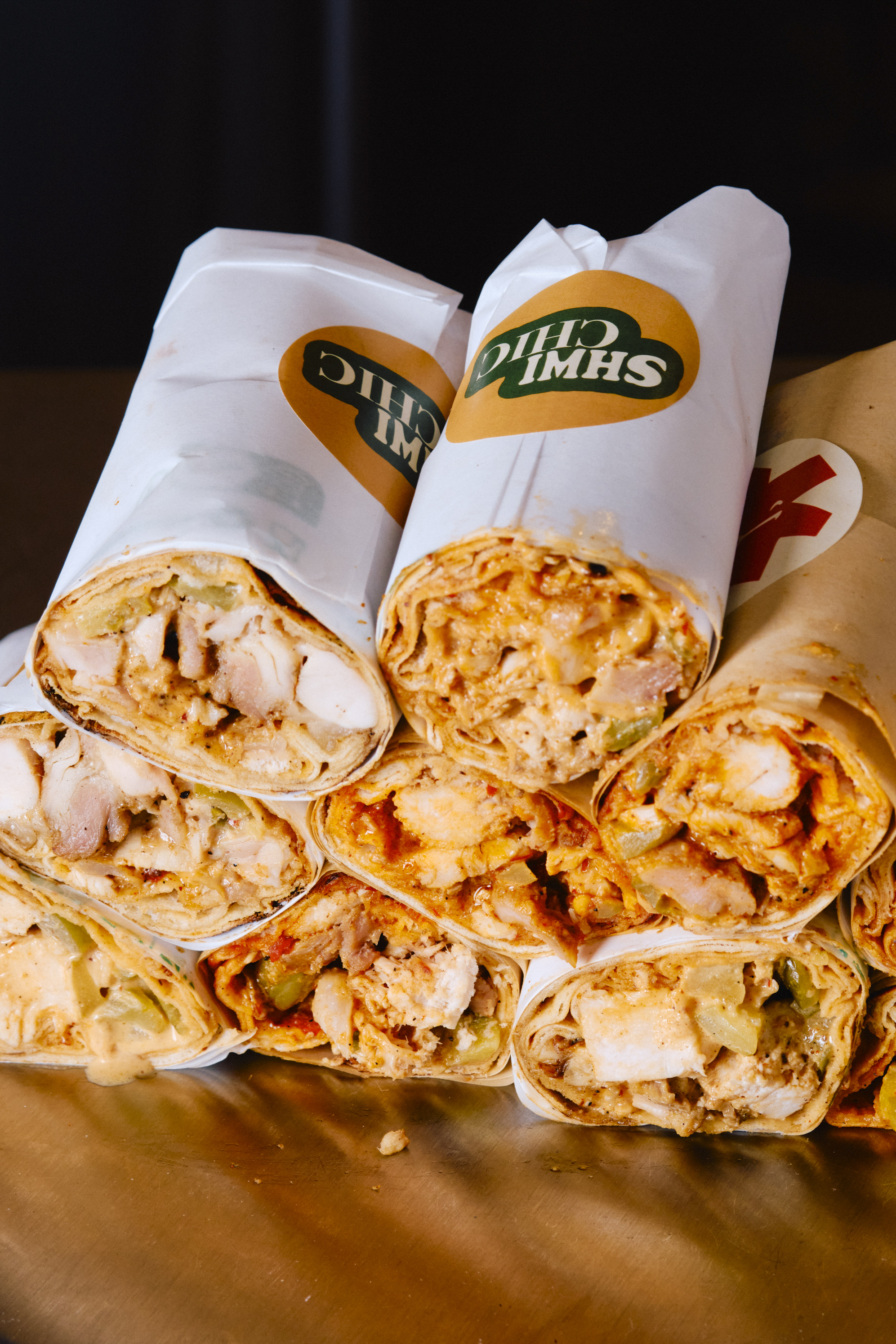
This time, however, they wanted to move away from the restaurant format and towards something quicker and closer to the casual spots found all over Beirut.
“We knew we wanted to explore QSR (quick service restaurants), something closer to the snacks and quick spots you find in Beirut.”
The initial idea was to explore mashawi more broadly, but the conversation kept coming back to one thing.
“At some point it just clicked: Lebanese grilled chicken, Beirut style, simply didn't exist in Paris and chicken is the most consumed protein in the world. It's universal and approachable, it was never going to be a hard sell.”
The hard part? “The real challenge was making Lebanese grilled chicken sexy.” Challenge accepted.
Beirut, Minus the Postcard
Shwi arrives in a Paris where Lebanese and Levantine food is already everywhere, particularly around Canal Saint-Martin.
“Canal Saint-Martin and honestly, plenty of other areas of Paris is already saturated with Lebanese and Levantine addresses,” Chehlaoui says. “It's one of the most consumed, and most popular ‘ethnic’ cuisines in the city at this point.”
But while the food might be good, she felt the way Lebanon was being presented alongside it often looked strangely familiar.
“A lot of those addresses are doing good food, but wrapping it in something very cliché, very folklore. The decor, the ambiance, the whole experience leans hard into a traditional, heritage, postcard version of Lebanon.”
Shwi deliberately strips that away.
“The one thing we kept 100% authentic, untouched, non-negotiable, are the flavors.”
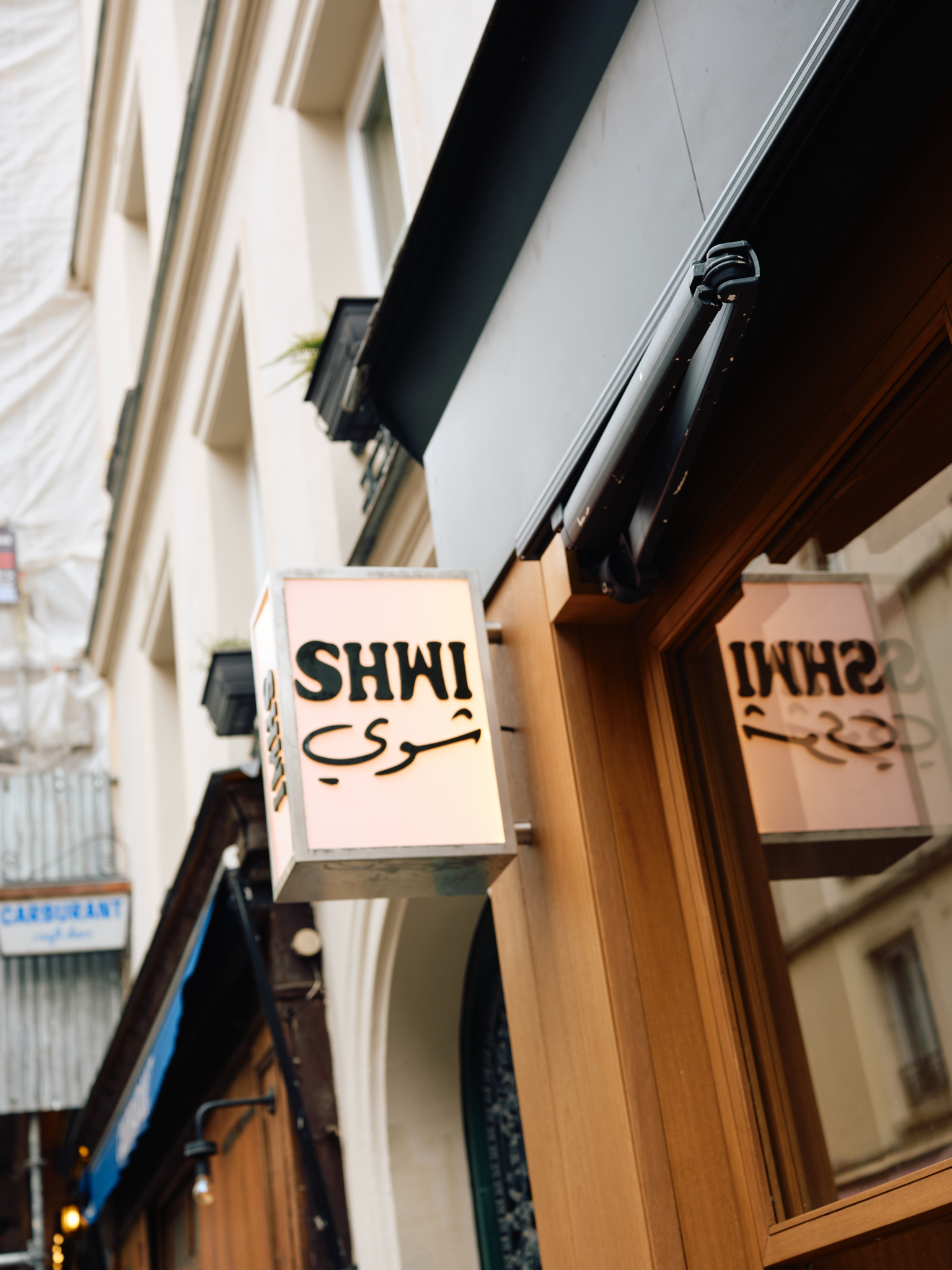
And Chehlaoui is very specific about what that means.
“What you eat at Shwi is exactly what you'd eat off at any farrouj meshwi shop in Beirut, and that’s exactly how we want people to experience it. Everything else, the space, the branding, the energy, we built to feel current, not nostalgic.”
That distinction feels important. Lebanese food doesn't need to be changed to make it contemporary. Sometimes it's simply the way we present our culture that needs catching up.
So What Does a Modern Farrouj Shop Look Like?
For Chehlaoui, “modern” isn't one big gesture.
“‘Modern’ and ‘youthful’ come through in the layers of detail we built into the experience. It's a lot of small, deliberate choices stacking together.”
The music mixes modern Arab and Western hip-hop and R&B tracks, while the interiors borrow from a New York deli sensibility, with Lebanese references kept subtle rather than literal. The grill itself sits directly in front of customers.
“The grilling itself happens right in front of the customer, facing them directly, almost like sitting at a Japanese robata counter.”
Even the branding was designed to avoid falling back on nostalgia.
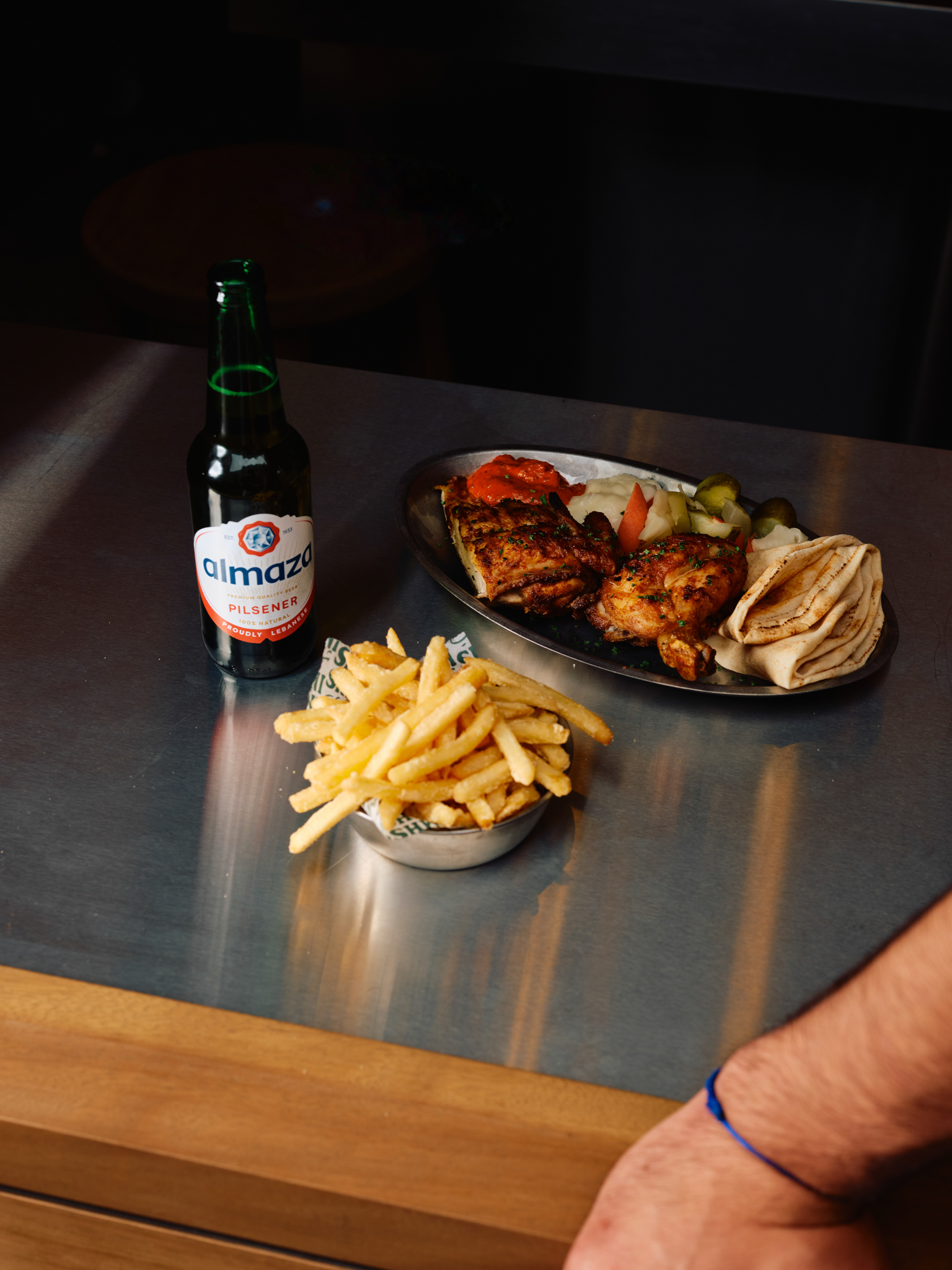
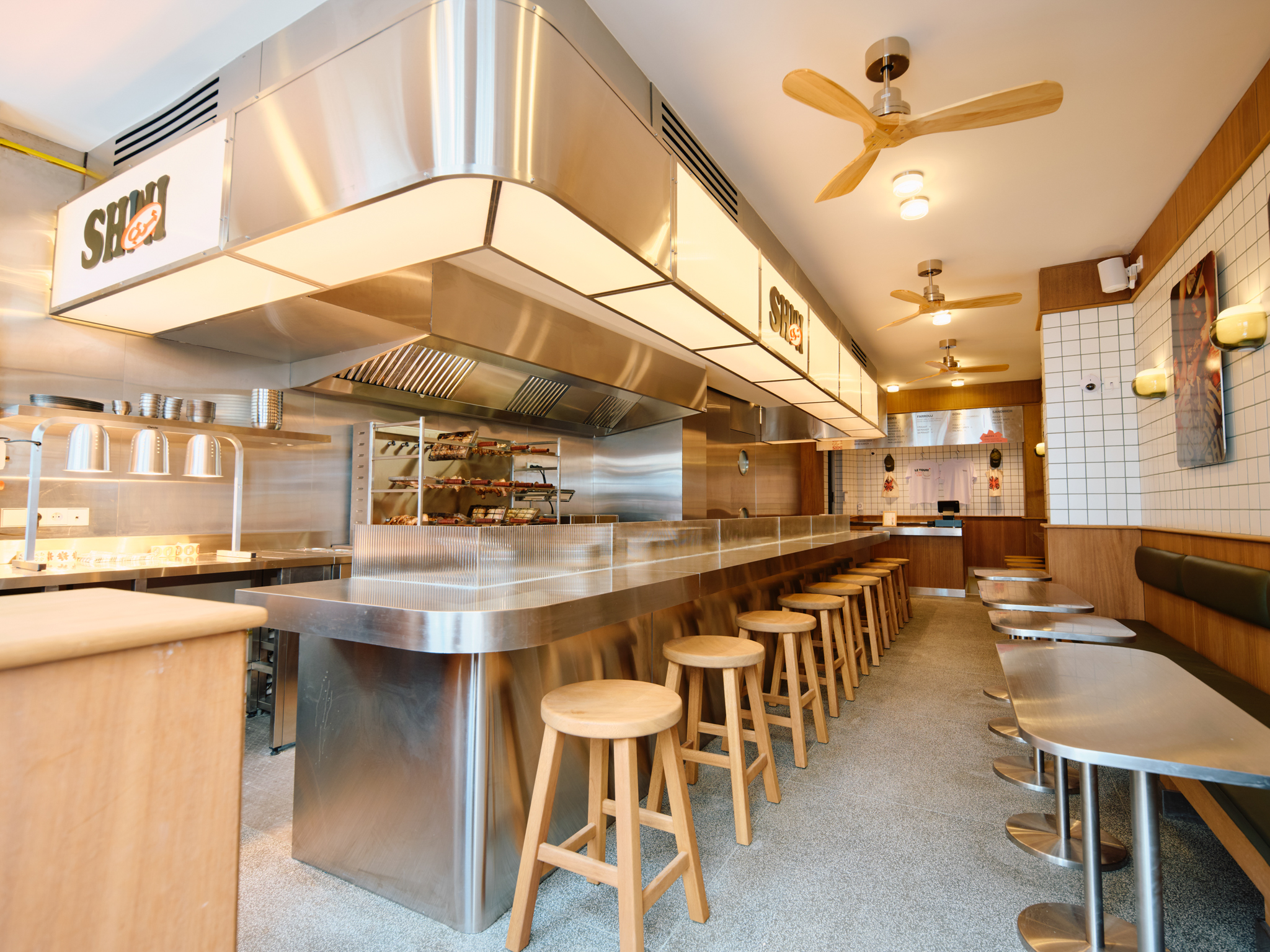
“The branding is built to feel authentic, eclectic without tipping into nostalgia: it's rooted in an urban, street vibe rather than a traditional, classic one.”
There is also something we particularly love about the people behind that visual world: Shwi's brand identity was developed entirely by Lebanese women, with Nour Abou Jaoude leading the artistic direction and Samar Keyrouz designing the interior.
For Chehlaoui, that choice was an important part of creating an identity that genuinely felt like Shwi. “Working with Lebanese creatives wasn't incidental, it’s a big part of why the brand feels as strong and specific as it does.”
So, What's Next?
For a concept that has only been open a few months, Shwi has already had quite the introduction to Paris. “We opened four months ago and got hit with volumes we weren't fully ready for operationally,” Chehlaoui admits. “It's been a rollercoaster.”
So while more locations in Paris or even expansion beyond France might seem like the obvious next move, there isn't a master plan being rolled out just yet.
“We haven't had the opportunity to zoom out and think about the next few years. So we don't have a defined answer yet, we are still discussing.”
What she does know is that whatever happens next won't be rushed. “Whatever we decide, we'll do it as well as we possibly can! We'd rather move deliberately and get it right than rush any decision.”
Fair enough. First, survive the queues.
Naturally, we couldn't talk this much about farrouj without asking Chehlaoui to give us the definitive Shwi order. Quarter, half or whole chicken? Spicy or classic? Toum or Shwi sauce? Thankfully, she didn't make us choose between the sauces.
“Our honest answer: half a chicken, classic (not spicy). Both sauces on the side, toum and Shwi sauce. Pickles, a lot of them. Tabbouleh and batata meshwiyyé.”
And her final piece of advice? “An empty stomach, preferably.” We couldn't agree more.
The Campaigns We’ll Remember From Fall 2026
After years where the cleanest image, biggest celebrity and most perfectly controlled set seemed to win, Fall/Winter 2026 feels noticeably more interested in character. People look like people, clothes are moving, locations actually matter. There is humour, weirdness, sensuality and, thankfully, some really good casting.
From FKA twigs roaming London for Burberry and Teyana Taylor turning her body into sculpture for Alaïa, to LOEWE climbing 3,470 metres up Mont Blanc, these are the campaigns currently filling our saved folders.
LOEWE Goes Very, Very High
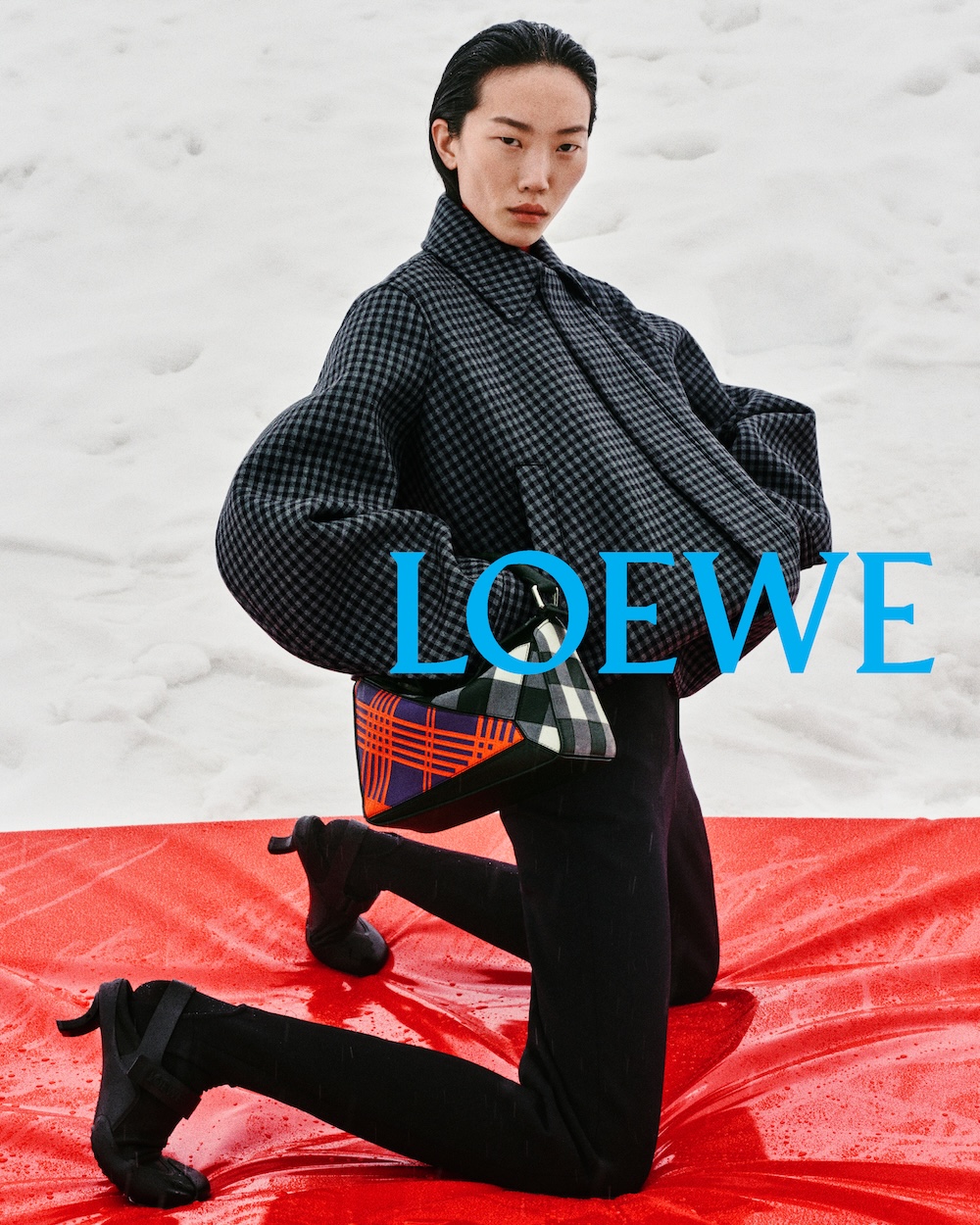
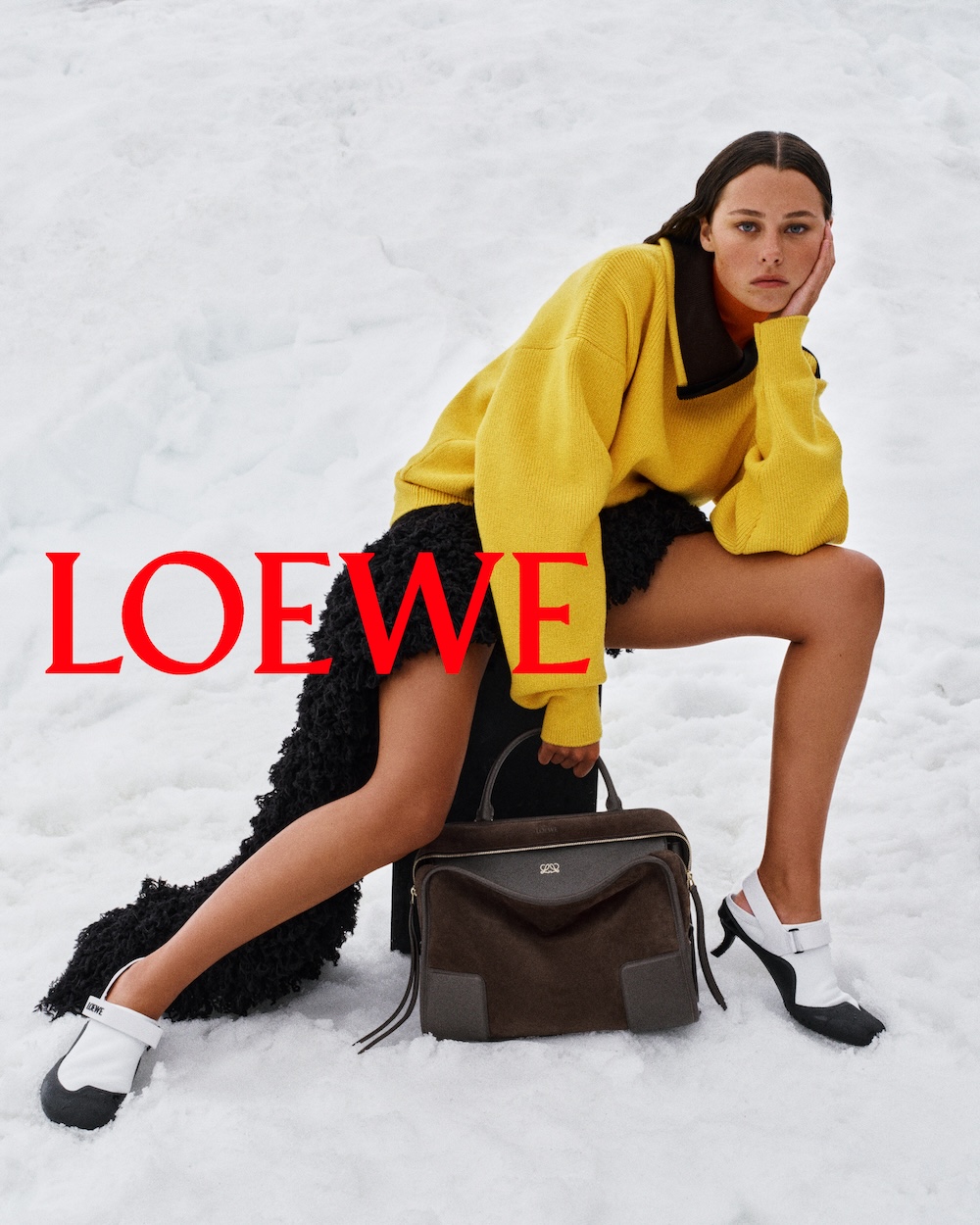
Jack McCollough and Lazaro Hernandez have taken LOEWE to the top of a mountain. Literally.
Photographed by Talia Chetrit at Pointe Helbronner in the Mont Blanc Massif, the Fall/Winter 2026 campaign places the collection against snow, ice and granite at elevations reaching 3,470 metres. And it works. Bright yellow knits, huge shearling mittens, inflatable parkas and the new suede Amazona 180 look even more exaggerated against all that white.
The cast is just as eclectic: Julia Garner, Théodore Pellerin, Lil Yachty, Laïka Blanc-Francard, Beau Gadsdon, Nyawurh Chuol, Carin Herven, Siegfried Blanche and artist Cosima von Bonin. Her work also appears across special Amazona 180, Puzzle and Flamenco bags, bringing lazy animal characters, florals, checks and unexpected colour into LOEWE's leatherwork. Snow, surreal colours, enormous clothes and Lil Yachty on Mont Blanc. We're sold.
More on Loewe.com
Givenchy Celebrates Women as They Are
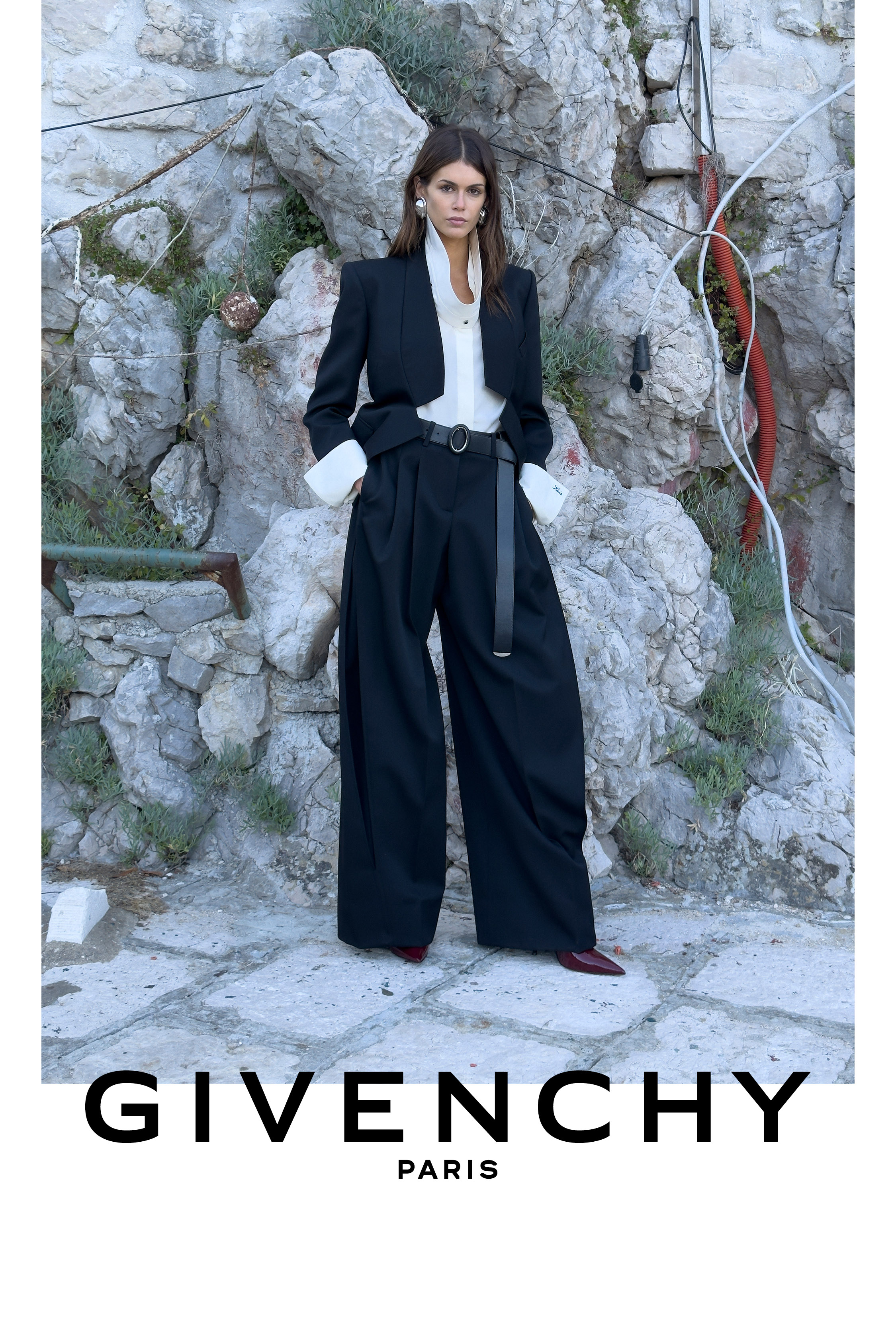
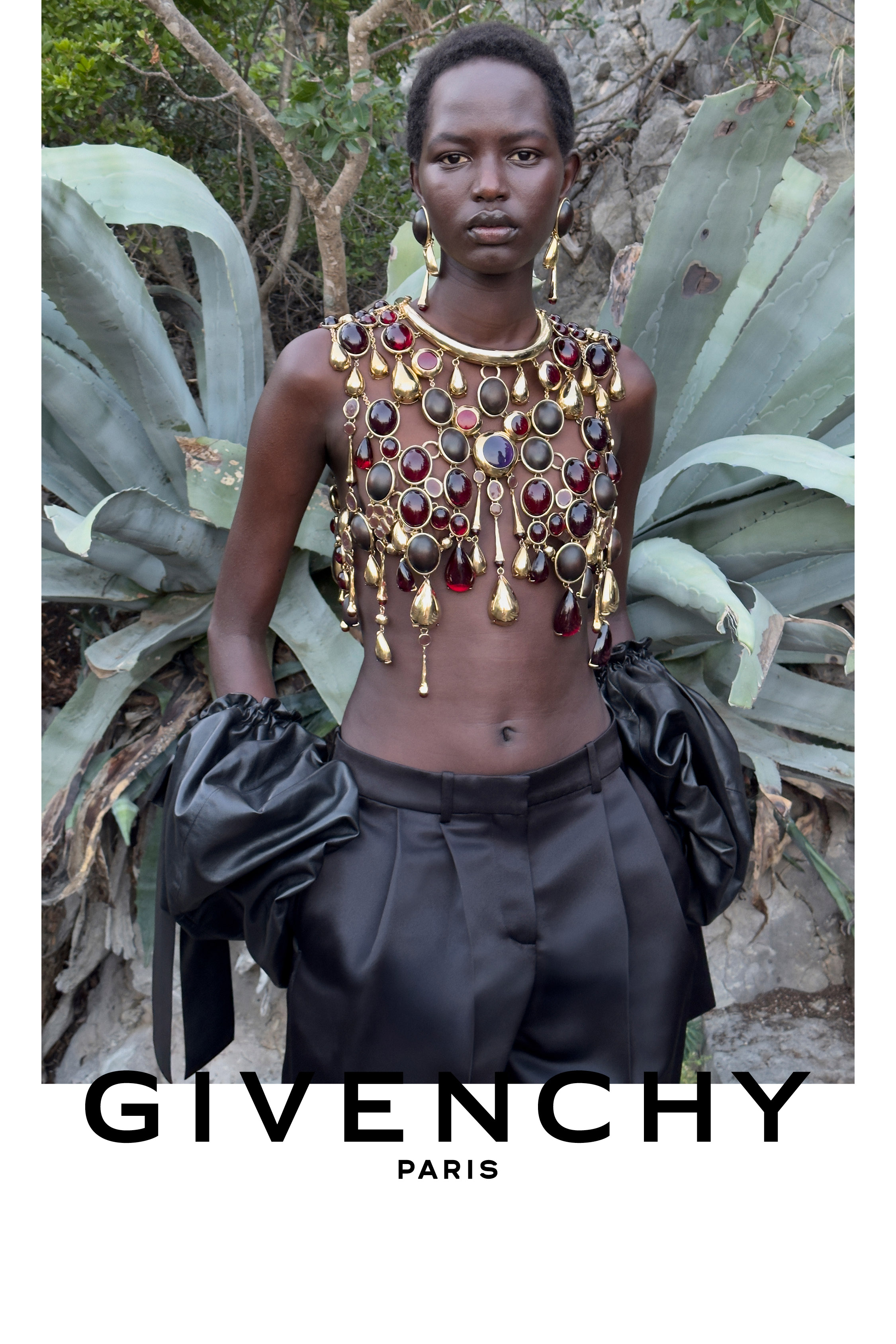
For Sarah Burton's Givenchy, the women are the story. Shot by Juergen Teller in Croatia, the Winter 2026 campaign stars Eva Herzigova, Kaia Gerber, Nyaduola Gabriel, Liu Wen and French writer and former lawyer Constance Debré, all women connected to the wider creative family around Burton's Givenchy.
“There’s a directness about the women in the campaign which speaks to their personality and strength,” Burton explains, adding that her work at Givenchy centres around celebrating “the reality and the brilliance of all kinds of women.”
Against hard Croatian granite, the tailoring, leather white shirts, draped evening dresses and extravagant accessories feel almost secondary to the personalities wearing them. That's precisely why the pictures work.
More on Givenchy.com
Teyana Taylor Is an Alaïa Woman
.jpg)
.jpg)
There are certain castings that require very little explanation. Teyana Taylor for Alaïa is one of them. For Summer Fall 2026, David Sims photographs Taylor in tightly framed black-and-white images that make full use of her background in dance and performance. Her body bends, balances and moves through the clothes, turning Pieter Mulier's sculptural silhouettes into something alive.
There are second-skin knits, anatomical cut-outs and a metallic embellished mini, but it's Taylor's physicality that makes everything click.
Alaïa has a history of working with performers whose bodies are part of their artistic language, from Grace Jones to Tina Turner, and Taylor feels like a natural continuation of that lineage.
As Taylor puts it herself, the collection is “bold” and “feminine,” with a strength she connects with. Very hot. Very Alaïa. No notes.
More on Alaia.com
Burberry Takes FKA twigs Back to London
.jpg)

FKA twigs in Burberry. In London. At night.Sometimes that's enough of a concept.
Daniel Lee's Winter 2026 campaign returns to the British capital, with Glen Luchford shooting cinematic images around the River Thames. FKA twigs, who also provided the soundtrack to the runway show, appears alongside Romeo Beckham and a wider cast against London landmarks and city lights.
The location completes a story that began at the Winter show inside Old Billingsgate Market, where the set referenced Tower Bridge. Now the real city becomes the backdrop. And the clothes are wonderfully British without feeling like costume: trenches become eveningwear, leather appears across coats, jumpsuits, kilts and jogging pants, while checks, rainwear and silk scarves keep the Burberry vocabulary firmly intact.
FKA twigs walking around London in Burberry is also exactly the sort of fashion image we would happily pin to a wall.
More on Burberry.com
CELINE Keeps It Effortlessly Cool
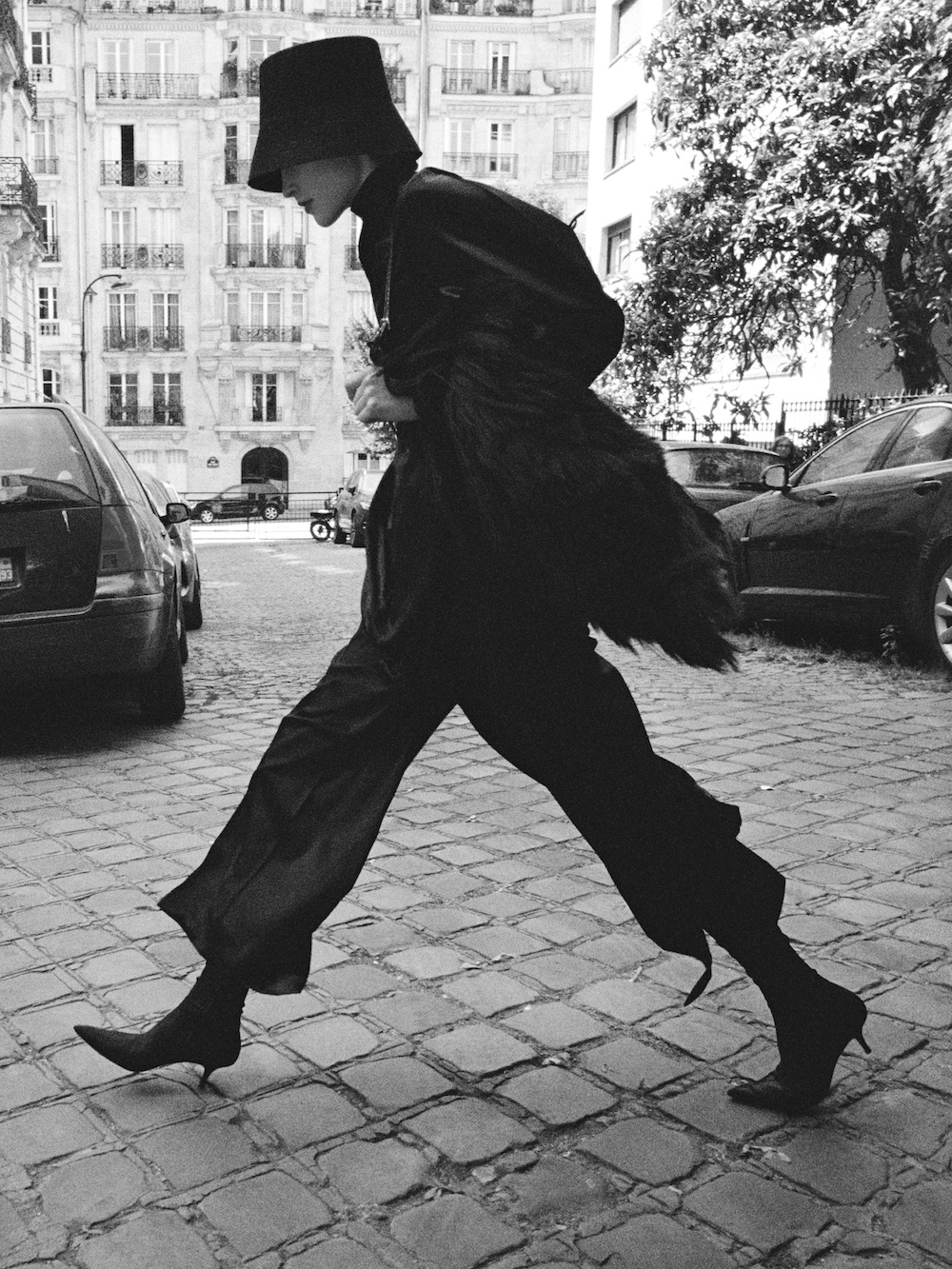
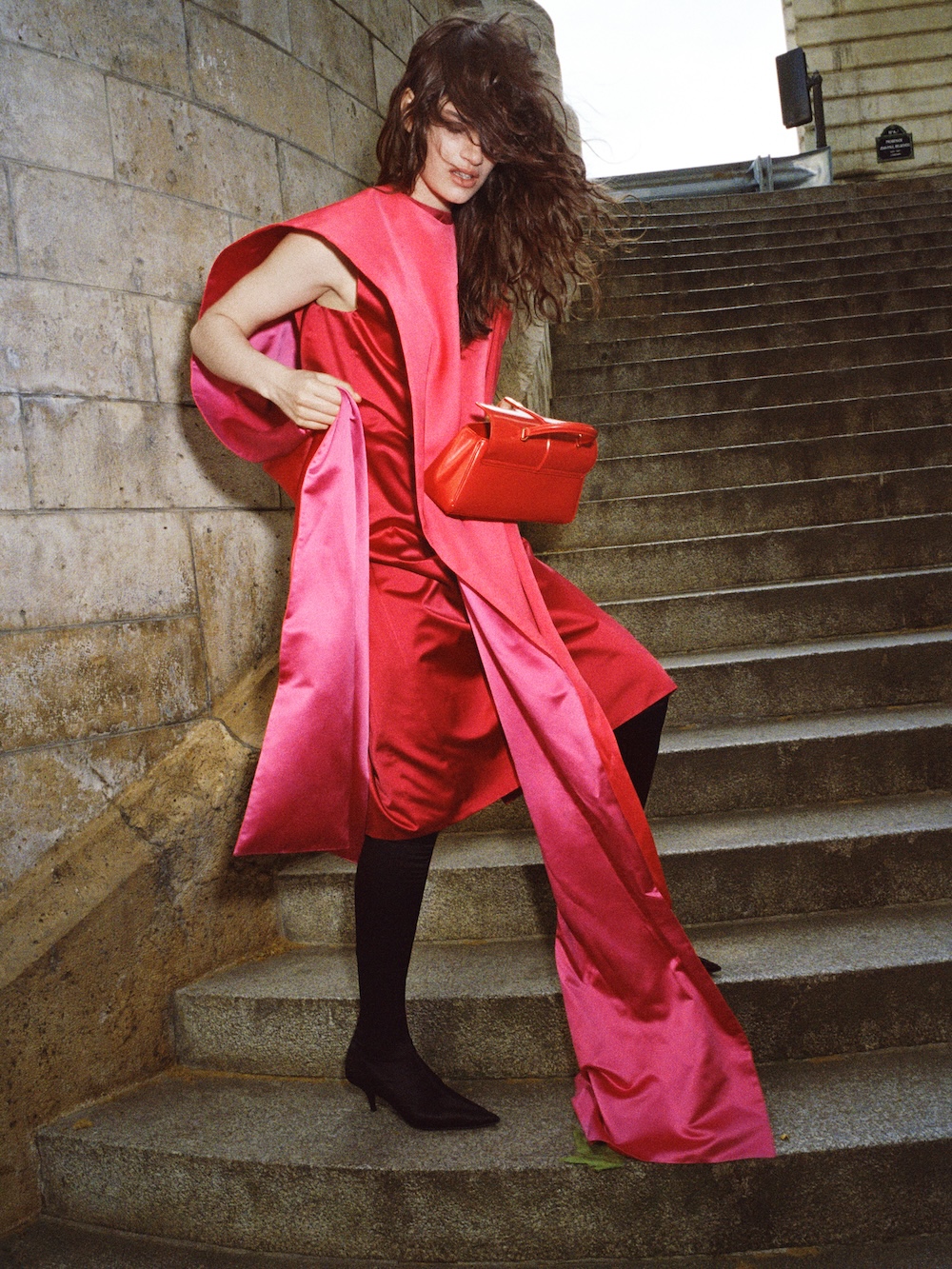
For CELINE Winter 2026, photographer Zoë Ghertner captures the collection with the kind of undone, spontaneous energy that makes you want to immediately copy the entire look. Bold flashes of red and pink meet sharp black and white, oversized scarves, sculptural bags and plenty of attitude. The accompanying film is by Massimiliano Bomba.
It feels polished without being too perfect, and very, very cool.
More on Celine.com
Tom Ford Wants You to Come As You Are
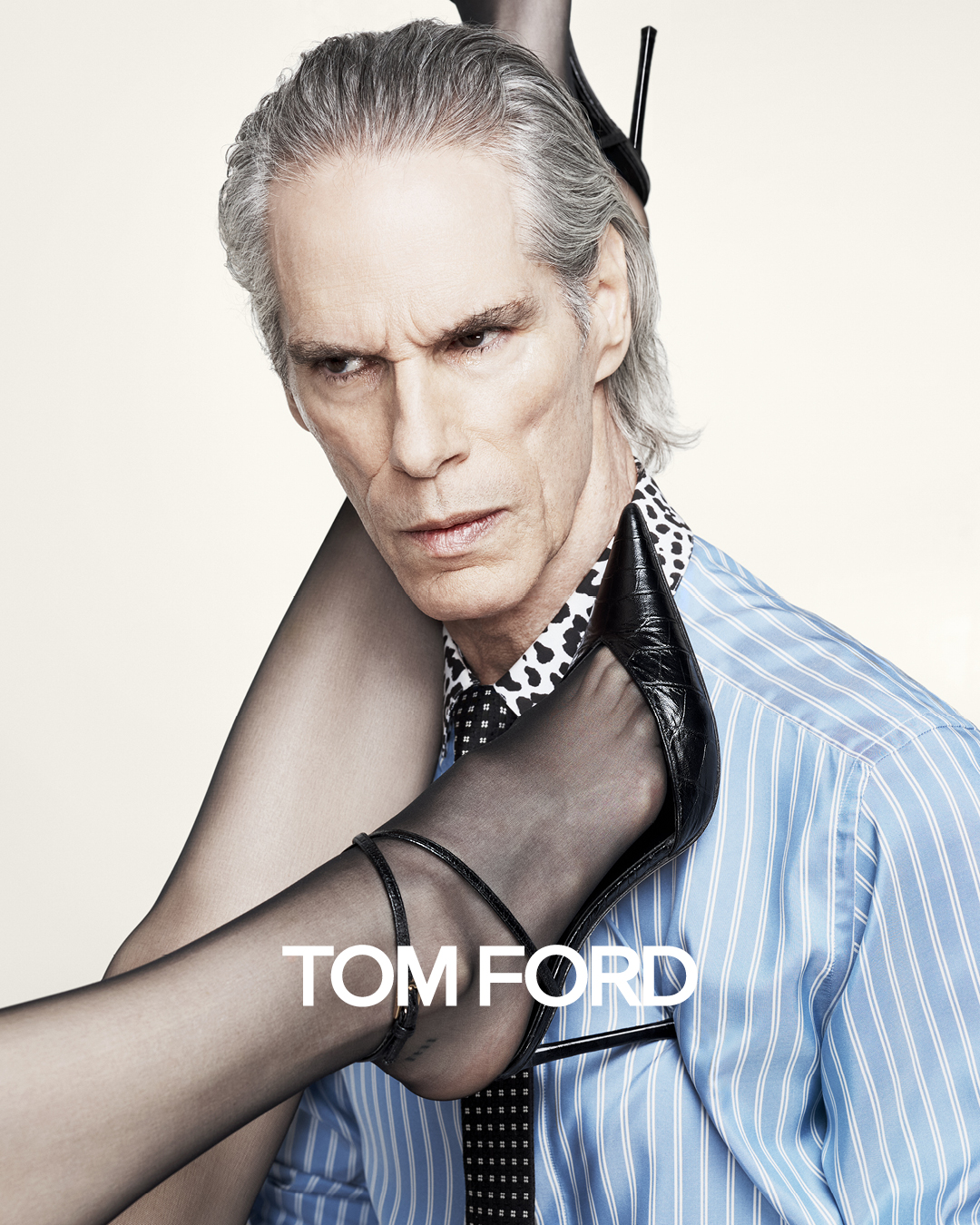
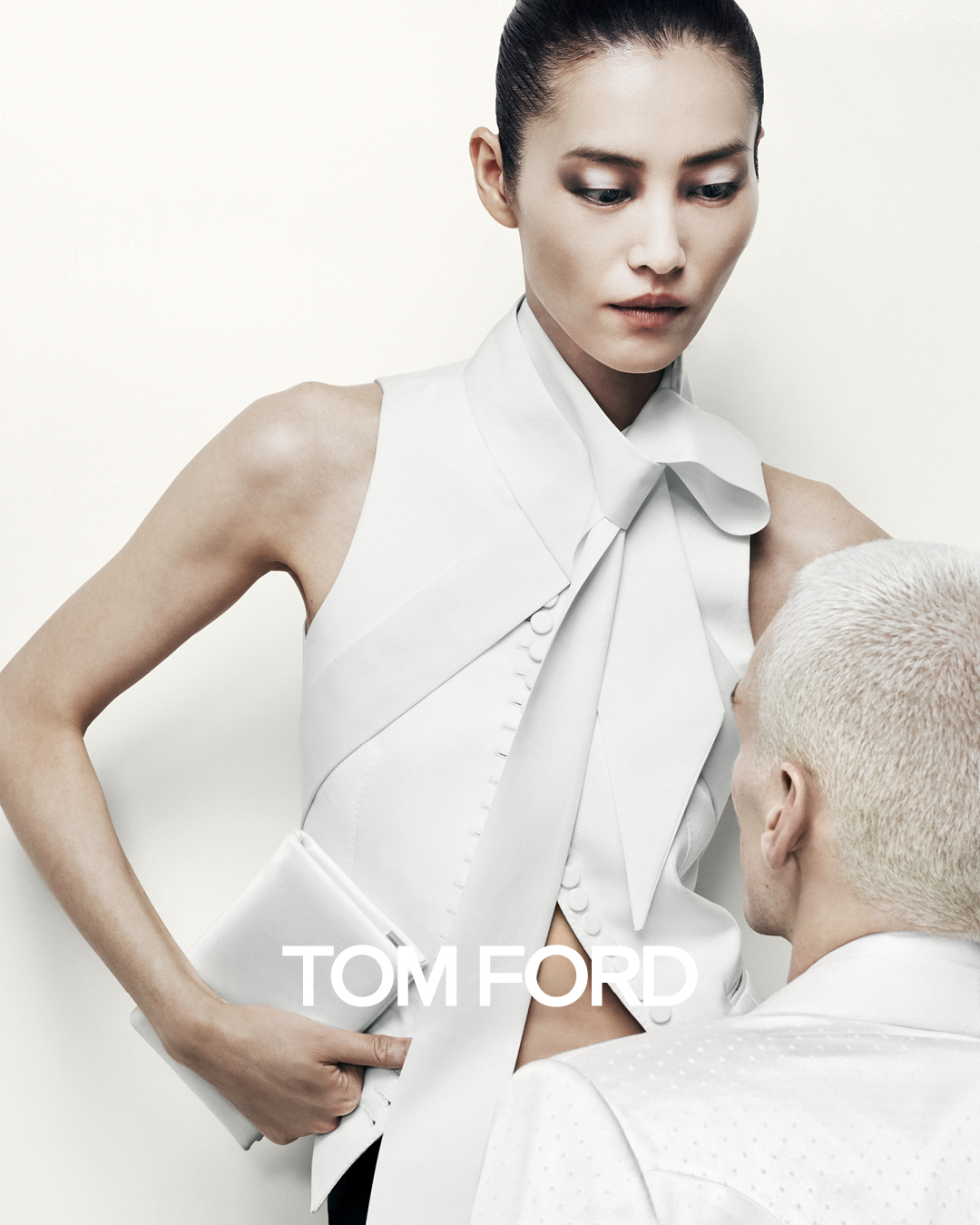
If some campaigns this season are escaping into fantasy, Haider Ackermann's Tom Ford is interested in getting uncomfortably close.
For AW26, Ackermann continues his exploration of seduction through a cast of characters of different ages and walks of life, photographed against a clinical white background in glaring light. There are no elaborate sets or props to hide behind. Just the clothes, the camera and the people wearing them. Ackermann describes them as people marked by lives intensely lived: proud, individual, imperfect and very aware of themselves.
His invitation is simply: “Come as you are.” And then comes the very Tom Ford part. Ackermann imagines these characters as people who have all, in his words, “flirted with debauchery, but now they stand straight.”
We love that. Seduction here isn't about perfection or looking impossibly polished. It's in someone's face, attitude, clothes, age, history and whatever they may have got up to before arriving in front of the camera. Sexy is interesting again.
More on TomFord.com
Valentino Finds Beauty in Things That Shouldn't Belong Together
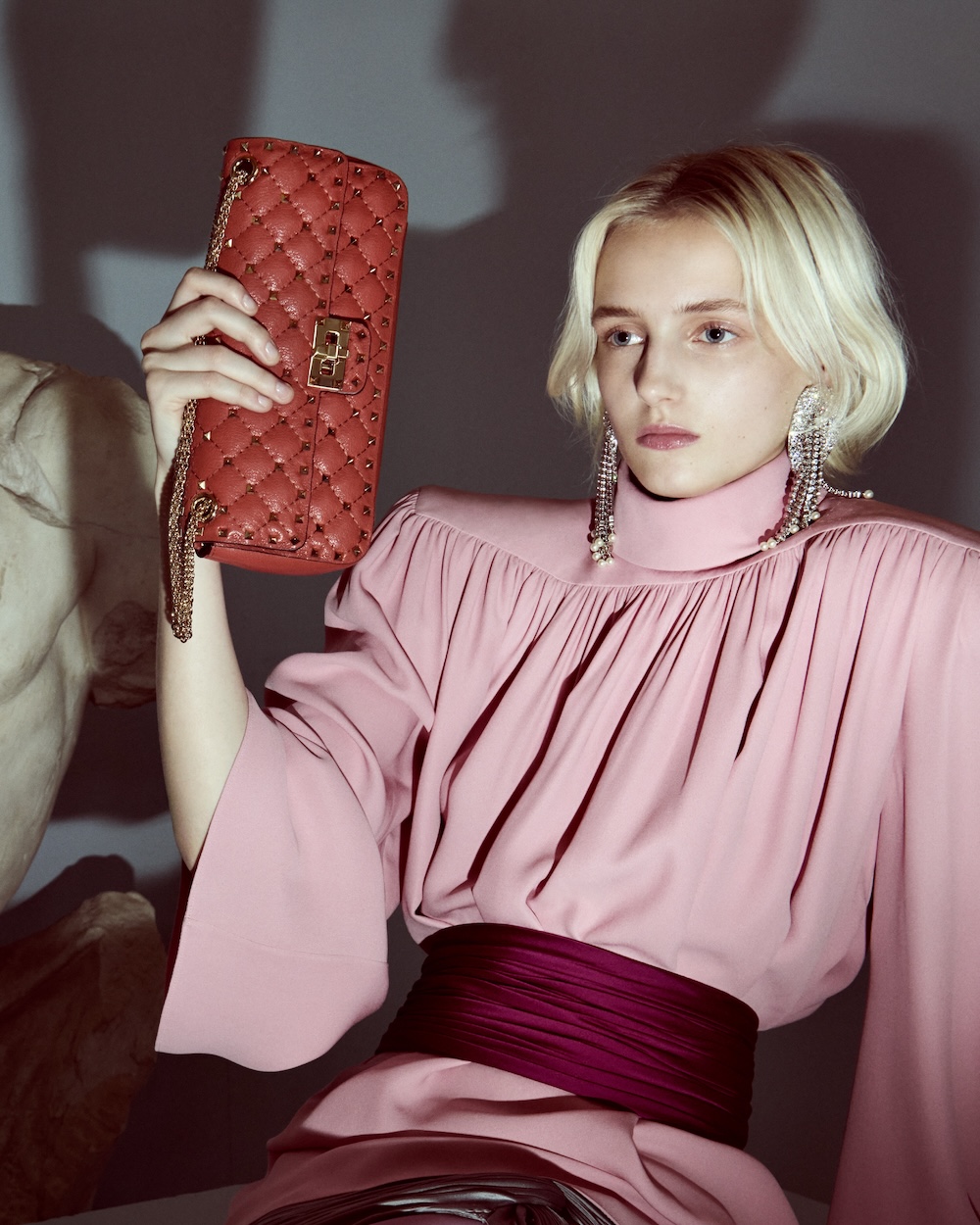
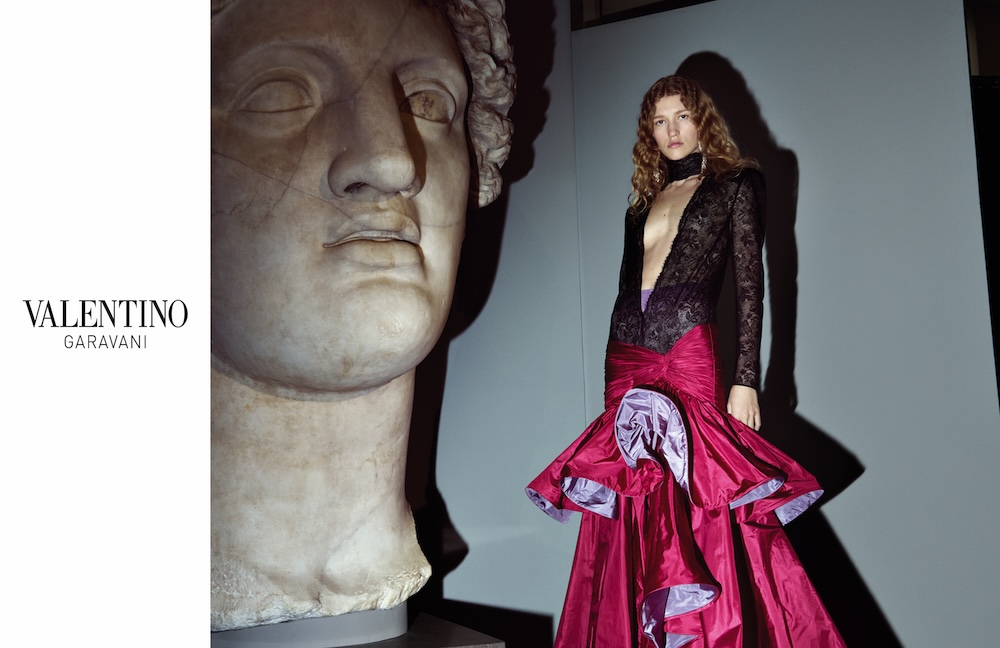
Under Alessandro Michele, Valentino's Interferenze campaign takes us to one of Rome's strangest and most beautiful museums: Centrale Montemartini.
The former electricity plant places ancient Roman sculpture amongst enormous turbines, boilers and industrial machinery. Instead of simply borrowing the location because it looks cool, the campaign builds its entire idea around those collisions: gods and machines, marble and steel, antiquity and modernity.
Photographed by Glen Luchford, bodies and clothes appear amongst statues and machinery as shafts of light cut through the darkness. The softness of the garments meets heavy steel, while living bodies seem to continue gestures begun by figures carved centuries ago.
It's dramatic, slightly strange and unapologetically intellectual. In other words, Alessandro Michele is Alessandro Michele-ing again and we're very happy about it.
More on Valentino.com
On Wants FKA twigs to Slow Down
.jpg)
.jpg)
After exploring training together, On and FKA twigs are slowing things down for Fall/Winter 2026, turning their attention to recovery and the idea that rest is part of movement too.
Creative-directed by twigs and photographed by Sharna Osborne with a grainy '90s VHS feel, the campaign sees her alongside dancers in sculptural, restorative poses. At its centre is the new Cloudmonster 3 Mule, On's first mule silhouette, designed specifically for those slower post-workout moments.
FKA twigs telling us to lie down and recover? Finally, a fitness trend we can fully commit to.
More on ON.com
Calvin Klein Gives Tate McRae a Pair of Jeans and Lets Her Dance
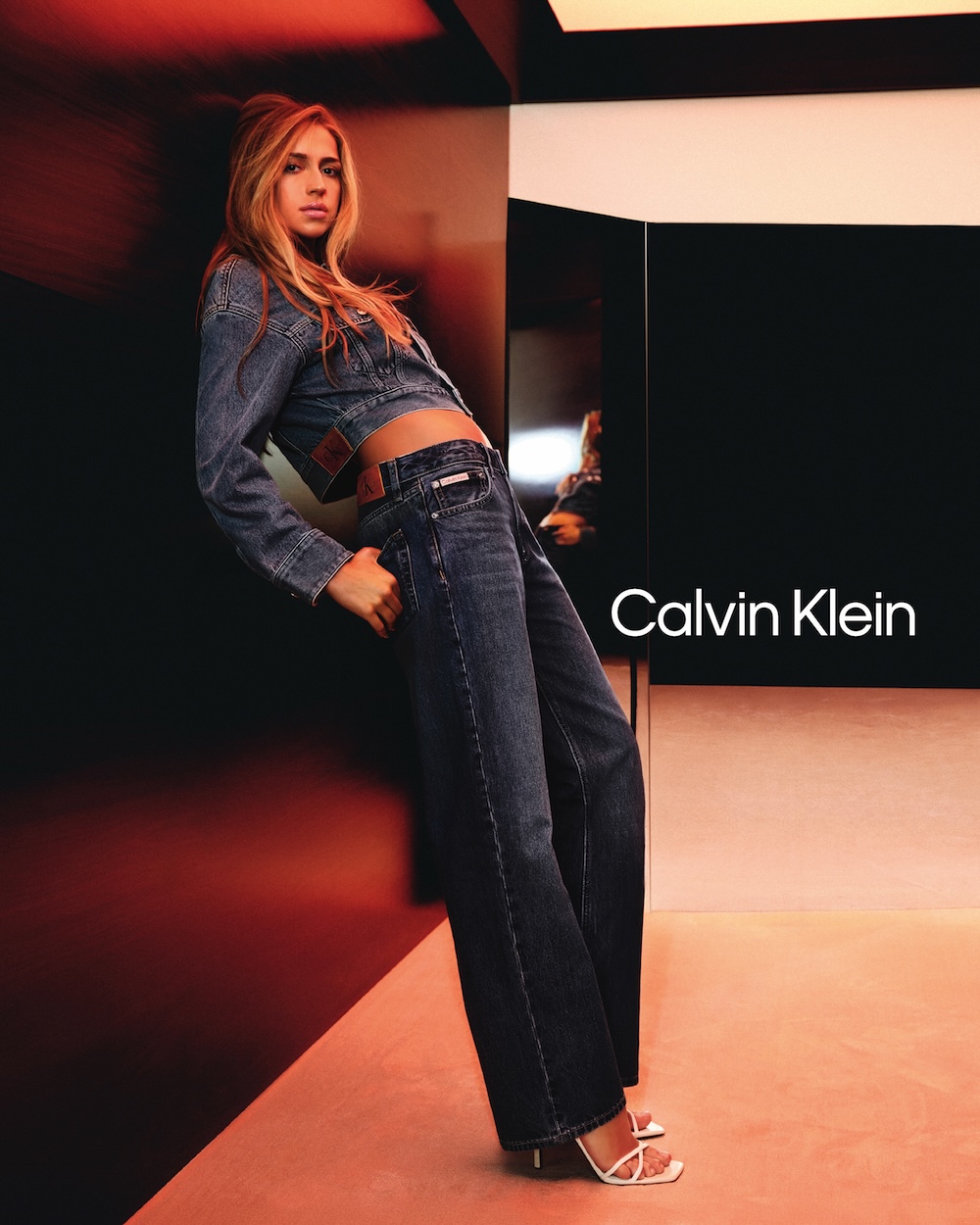
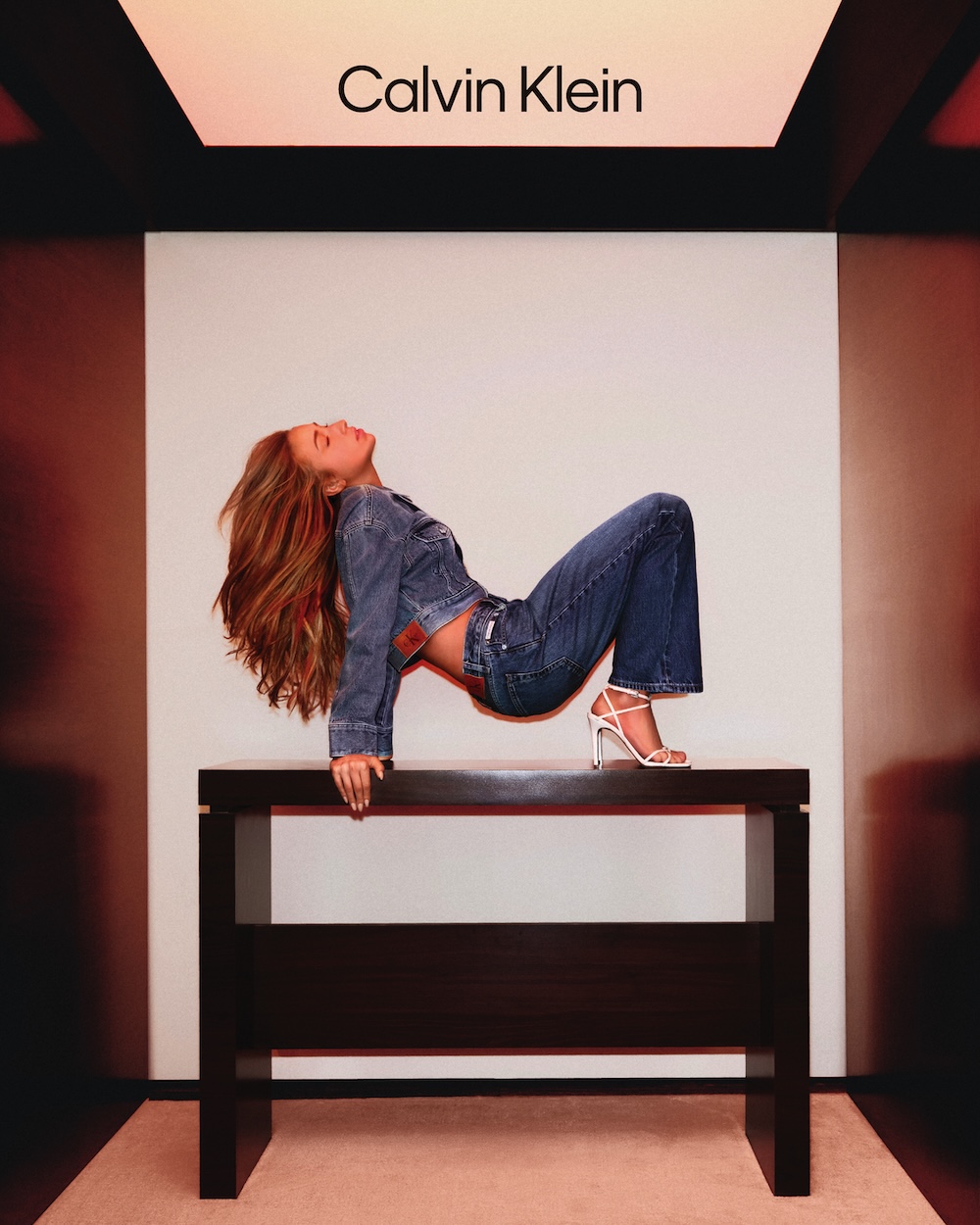
The equation here is beautifully uncomplicated: Tate McRae + Calvin Klein jeans + dancing + “Groove Is in the Heart.”
The first chapter of Calvin Klein's Fall 2026 Feel the Fit campaign is directed and photographed by Carlijn Jacobs, with Tate moving and dancing through ordinary settings as soon as she slips into her jeans. The campaign deliberately plays with the energy of Calvin Klein's '90s imagery, filtered through Tate's own performance style.
The denim itself includes Low Rise Baggy, High Rise Loose and the returning '90s Straight jean. Is reinventing the fashion campaign necessary when you have Tate McRae dancing in jeans? Probably not.
More on CalvinKlein.com
Fendi Makes Walking an Art Form
For Maria Grazia Chiuri's first collection at Fendi, one of the House's familiar shoes gets a rethink.
The Colibrì slingback, first introduced for Spring/Summer 2018, returns as the Very Colibrì, stripped down and reshaped with a slimmer heel and deeper V-shaped vamp.
Photographer Michal Pudelka takes it to Rome's Stadio delle Terme di Caracalla for The Art of Balance, where models are captured in surreal moments of movement and balance. Rather than a straightforward shoe campaign, the imagery turns the act of walking into something closer to choreography.
It's feminine without being precious, elegant without standing still, and an intriguing first glimpse at how Chiuri is approaching the Fendi woman.
More on Fendi.com
Lacoste Goes Back to the Court
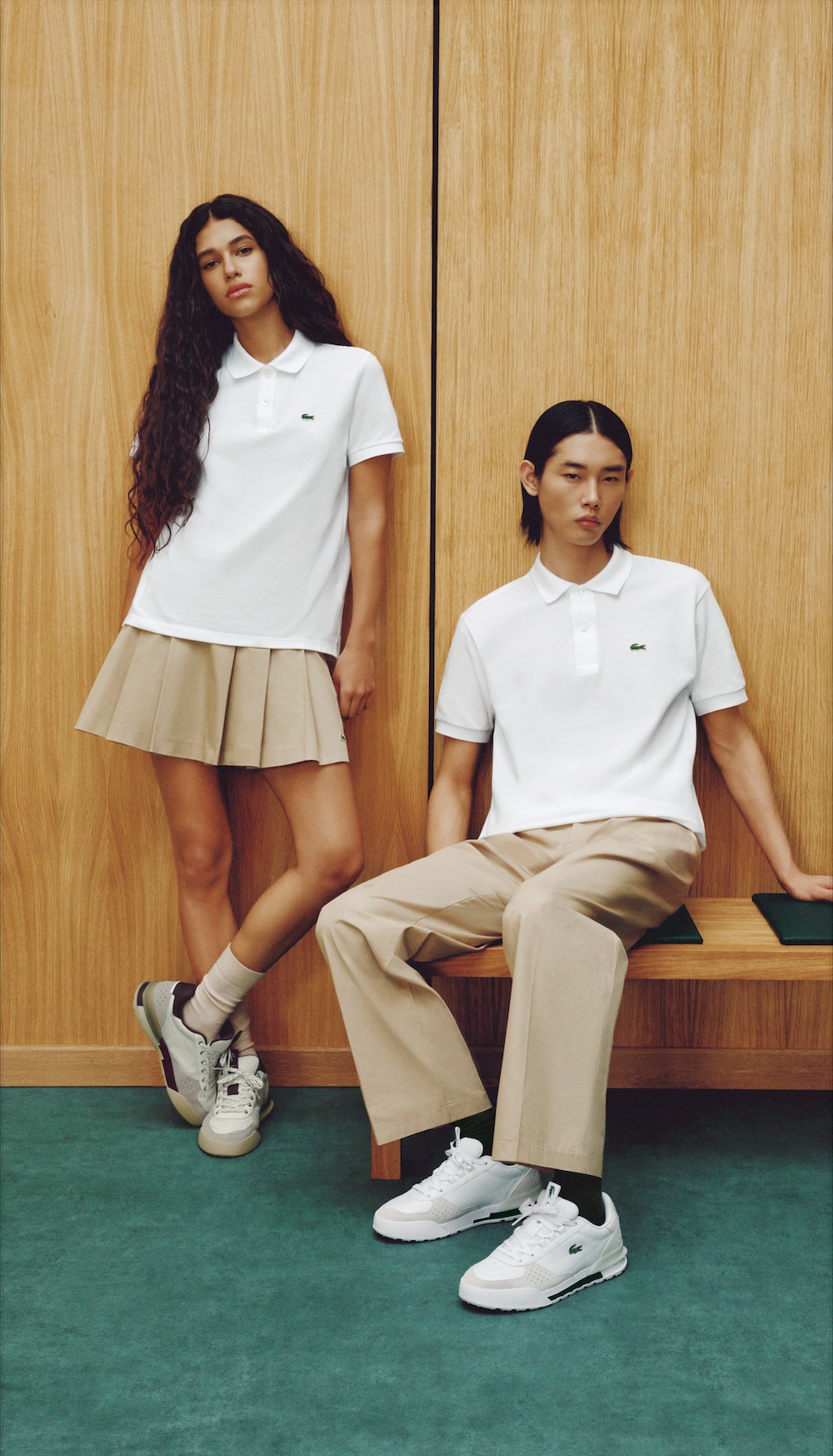
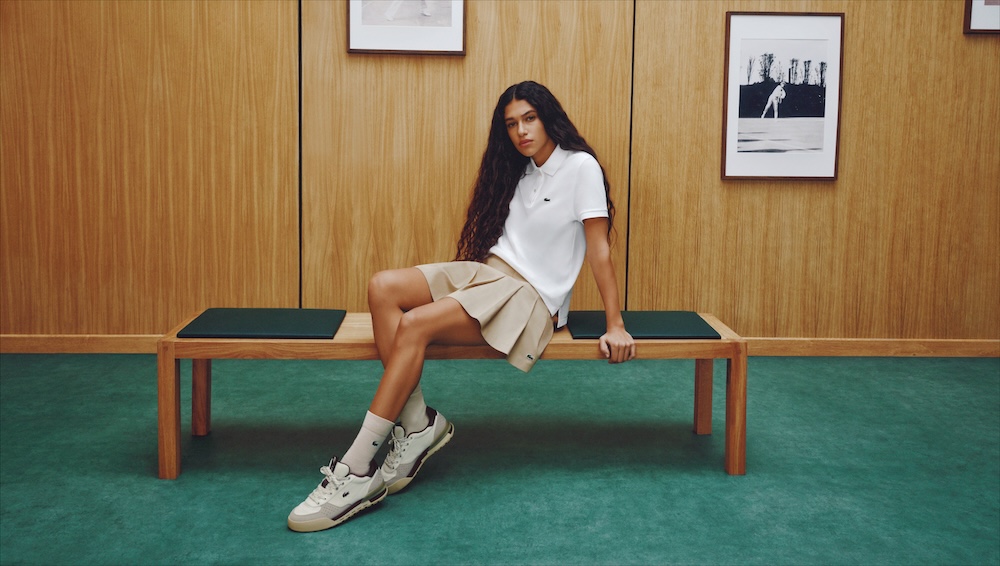
While everyone else is climbing mountains and wandering through Roman power stations, Lacoste is going back to where it all began: tennis.
The new Slam Break sneaker takes elements from the brand's sporting archive and brings them into a lifestyle shoe, including its Absorption De Shock technology originally developed for performance tennis models in the 2000s.
The accompanying campaign moves between a footwear atelier and the tennis court, playing with Lacoste's visual history rather than treating heritage too reverentially. It's clean, slightly retro and playful, much like the shoes themselves. And the colourways are particularly good: classic cream and grass green, chocolate brown and beige, alongside pink, navy, mint and sky blue.
More on Lacoste.com
PUMA Lets the Suede Bloom
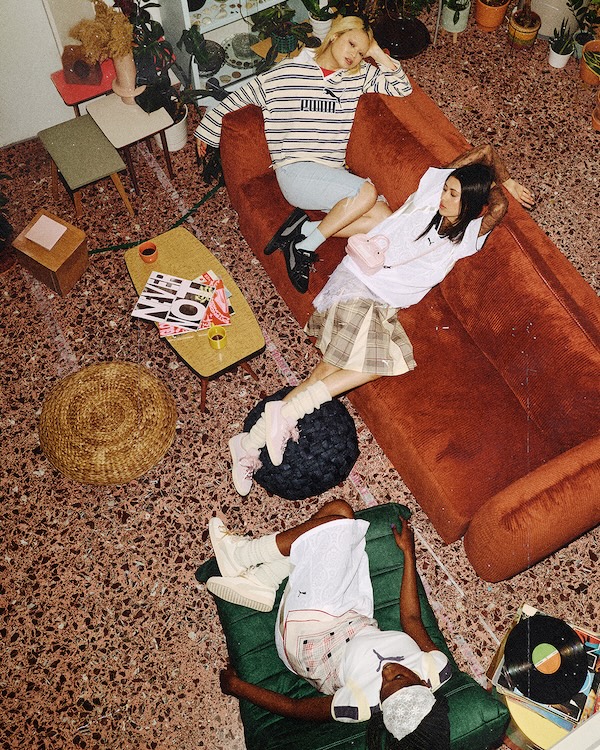
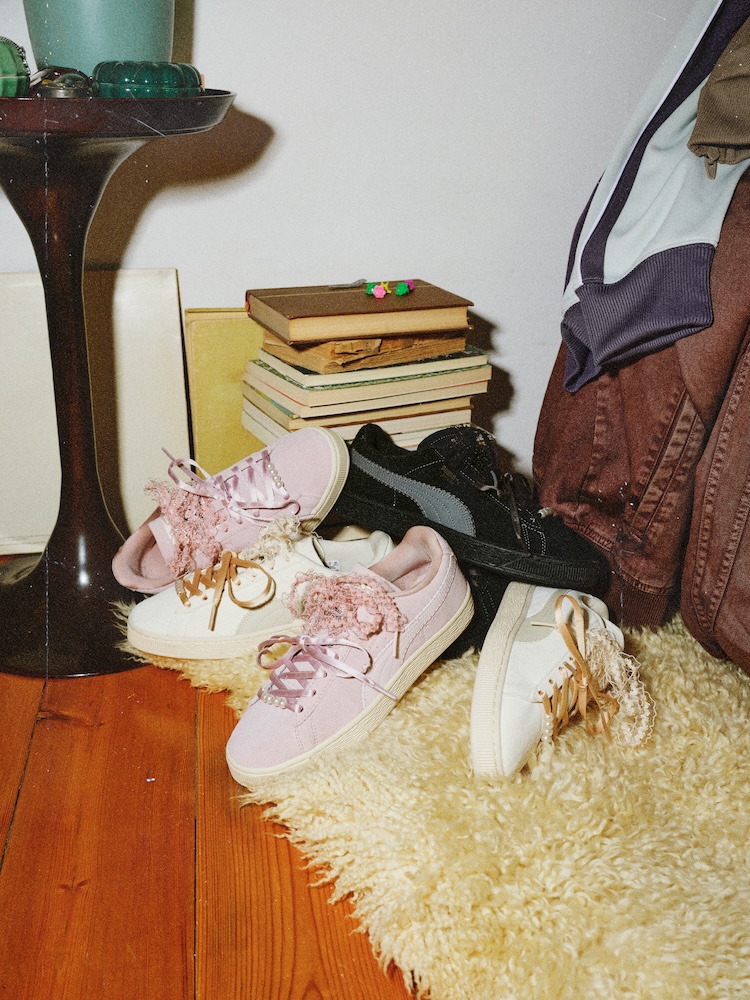
PUMA's iconic Suede gets a very pretty makeover for its latest Middle East campaign. The new Suede Bloom adds faux pearls, satin and frilled laces to the sneaker, with Powder Pink, Vintage Cream and Black colourways.
Regional talents including sisters Rania, Dania and Talia Fawaz front the whimsical campaign, each putting her own spin on a sneaker that has been reinventing itself since the late '60s.
More on Ae.Puma.com
Scalini Dubai Is Back. First Stop? The Parmigiana
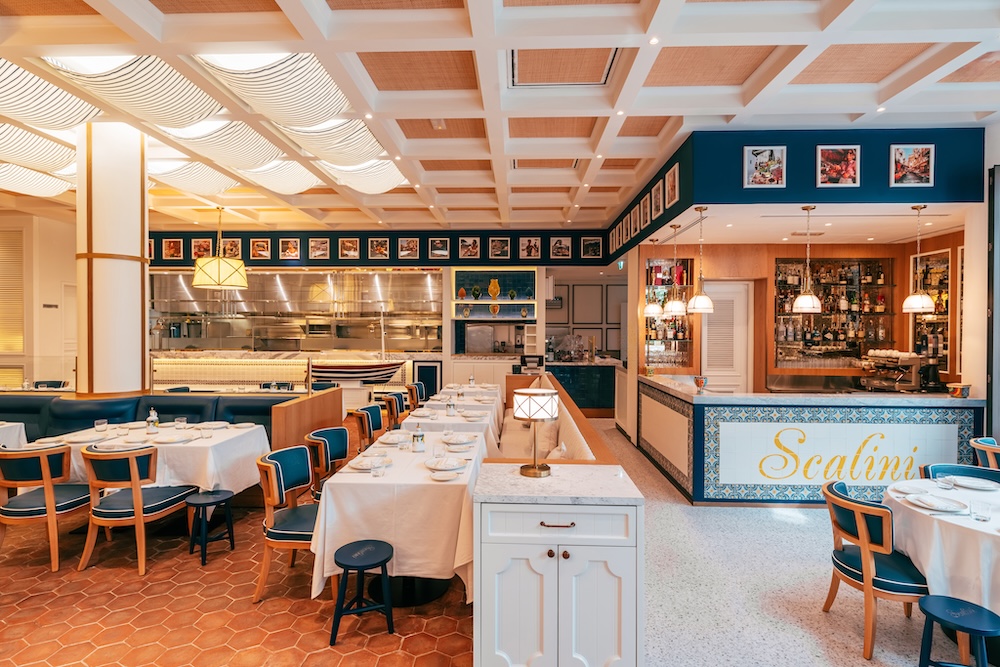
There are restaurants you go to because they're new, and then there are restaurants you go back to because you already know exactly what you want. Scalini Dubai falls firmly into the second category for us. And after temporarily closing its doors for a renovation, the Italian favourite is officially back today September 1, with a new look, a refreshed menu and, most importantly, the same spirit that made us love it in the first place.
And before we get into the interiors, the Amalfi Coast references or what's new on the menu, we need to talk about the Parmigiana.
Because Scalini's Parmigiana is genuinely one of our favourite dishes in the whole world. Not just one of our favourite Italian dishes in Dubai, no. The whole world. Have we been to Italy to say that? My Nonna was from Tuscany. So believe me on that one.
And so yes, we're very happy they're back.
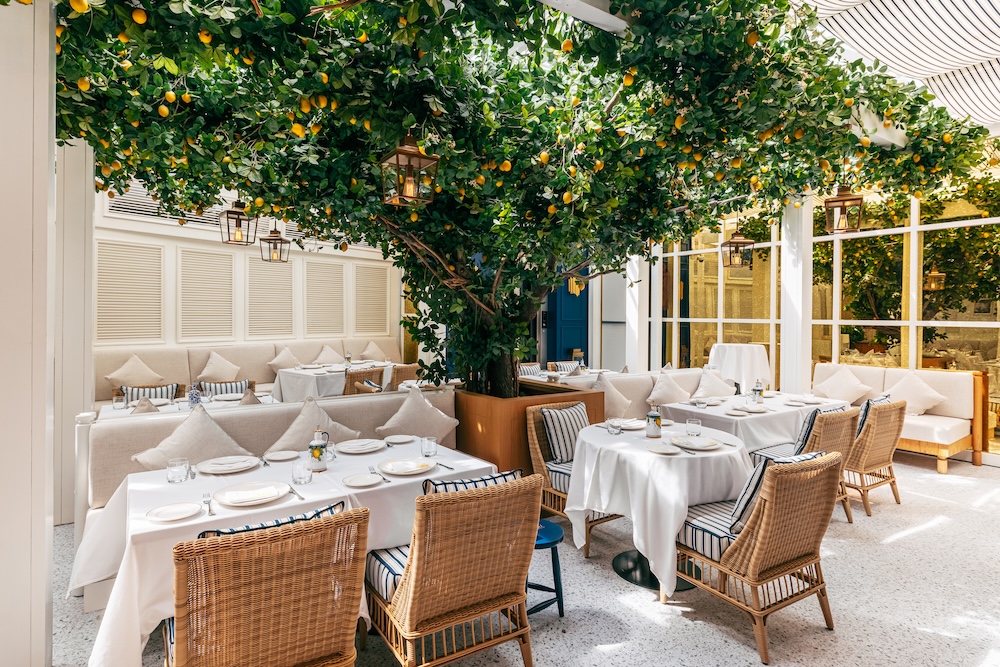
Located at Restaurant Village at Four Seasons Resort Dubai at Jumeirah Beach, Scalini has given its home a Mediterranean refresh while keeping the familiar blue and yellow palette associated with the restaurant. The colours are now joined by ivory, striped fabrics, deep navy, timber and blue velvet, with references to Italy's seaside destinations running throughout the space. The open kitchen remains at the heart of the dining room, keeping that slightly theatrical element of watching the chefs at work.
But it's the veranda that might tempt us to stay particularly long once Dubai's weather starts behaving again (please behave presto, weather.)
Set beneath a white pergola, it's surrounded by citrus trees, traditional lanterns, woven chairs and striped textiles, drawing inspiration from the courtyards and terraces of the Amalfi Coast, Sicily and the Italian Riviera. Sicilian-inspired blue majolica tiles greet you at the entrance, completing the feeling that you've temporarily escaped Jumeirah for somewhere along the Italian coast.
So, What's for Lunch?
The menu continues to focus on the kind of Italian cooking we tend to love most: good ingredients, relatively simple combinations and no need to overcomplicate things.
Executive Chef Francesco Cortorillo has introduced dishes including Crudo di Gamberi Rossi di Mazara, made with raw red prawns from Mazara del Vallo, yellow Datterino tomatoes, Sicilian white grape vinegar, extra-virgin olive oil, basil and fresh chilli. There's also Tartara di Manzo, prepared tableside with two types of mustard, capers, chives and olive oil, bringing back some of the old-school restaurant theatre that makes eating out actually feel like an occasion.
And then there's the Linguine alla Nerano, inspired by the Amalfi Coast and made with gently fried Italian zucchini, basil and Provolone del Monaco, slowly brought together with the pasta until everything becomes silky and intensely comforting. For something fresher, the Insalata di Gamberi e Asparagi combines grilled prawns with white and green asparagus and avocado.
All very tempting (just coming back from Lebanon now and said DIET! but one more meal won't hurt?)
Some Things Don't Need Reinventing
Scalini first opened in London in 1988, eventually becoming known as much for its charismatic atmosphere and A-list following as its Italian food. Dubai carried that DNA over to the UAE, with its open kitchen, tableside preparation and the slightly chaotic warmth that a good Italian restaurant should have.
The new Scalini seems to understand something we wish more restaurant renovations did: if people already love you, you don't need to become an entirely different restaurant. The room can change, the menu can evolve, the chairs can get prettier.
Just don't touch our Parmigiana.
More on Scalini-dubai.com
Coffee, Dua Lipa and a New Vertuo: Nespresso’s Latest Chapter Lands in the UAE
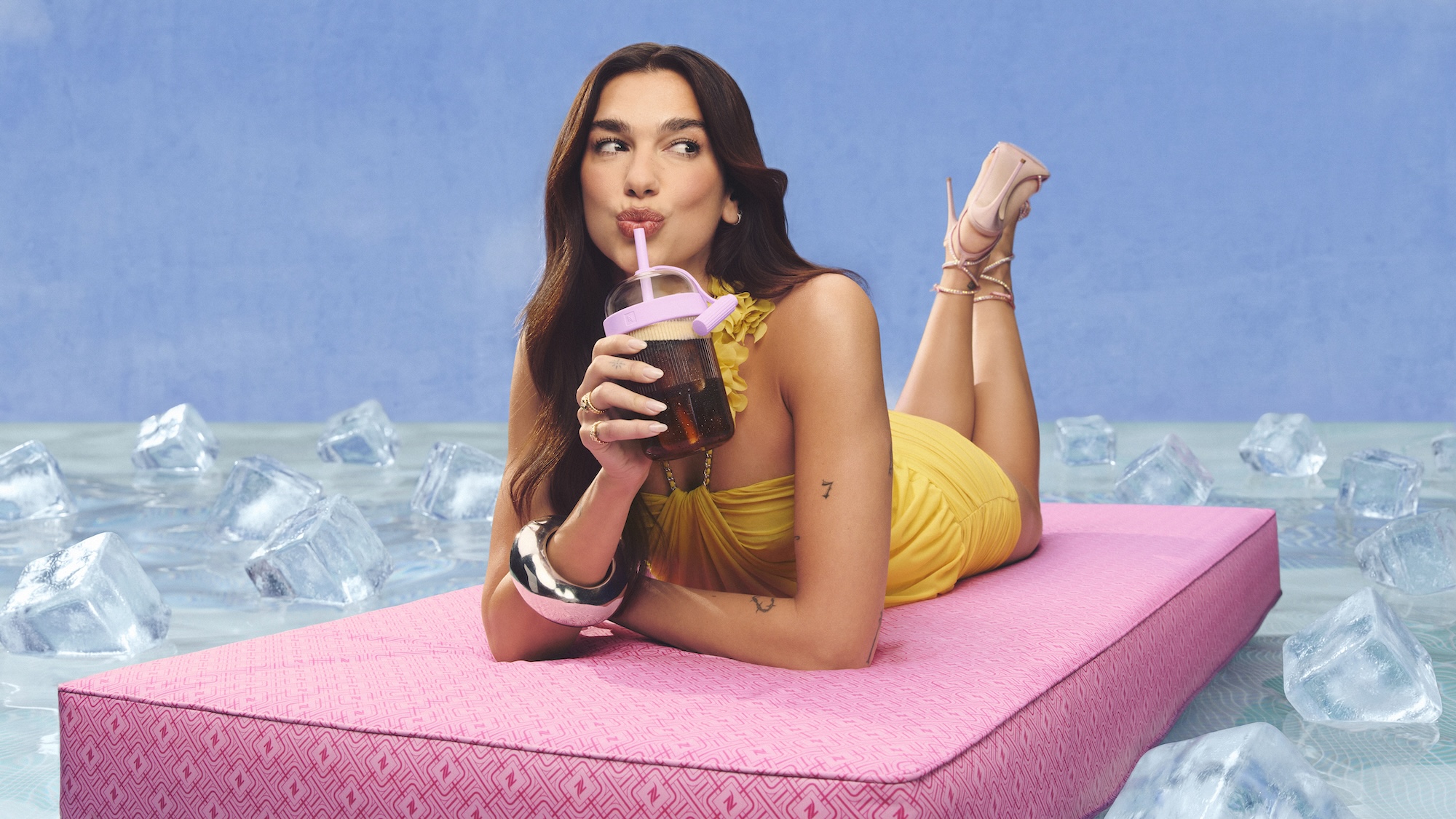
We’ll admit it: put Dua Lipa in a campaign and you already have our attention. Add coffee, New York, Italy, poolside iced lattes and a little George Clooney cameo into the mix, and we’re listening fully.
Today September 1, Nespresso is launching its latest global campaign in the UAE, starring its new Global Brand Ambassador Dua Lipa. And rather than simply giving us another beautiful celebrity coffee ad, the campaign leans into something Dua knows particularly well: jumping between different worlds. The premise is simple: every coffee can take you somewhere else. In a year full of challenges, we don't mind a little fun.
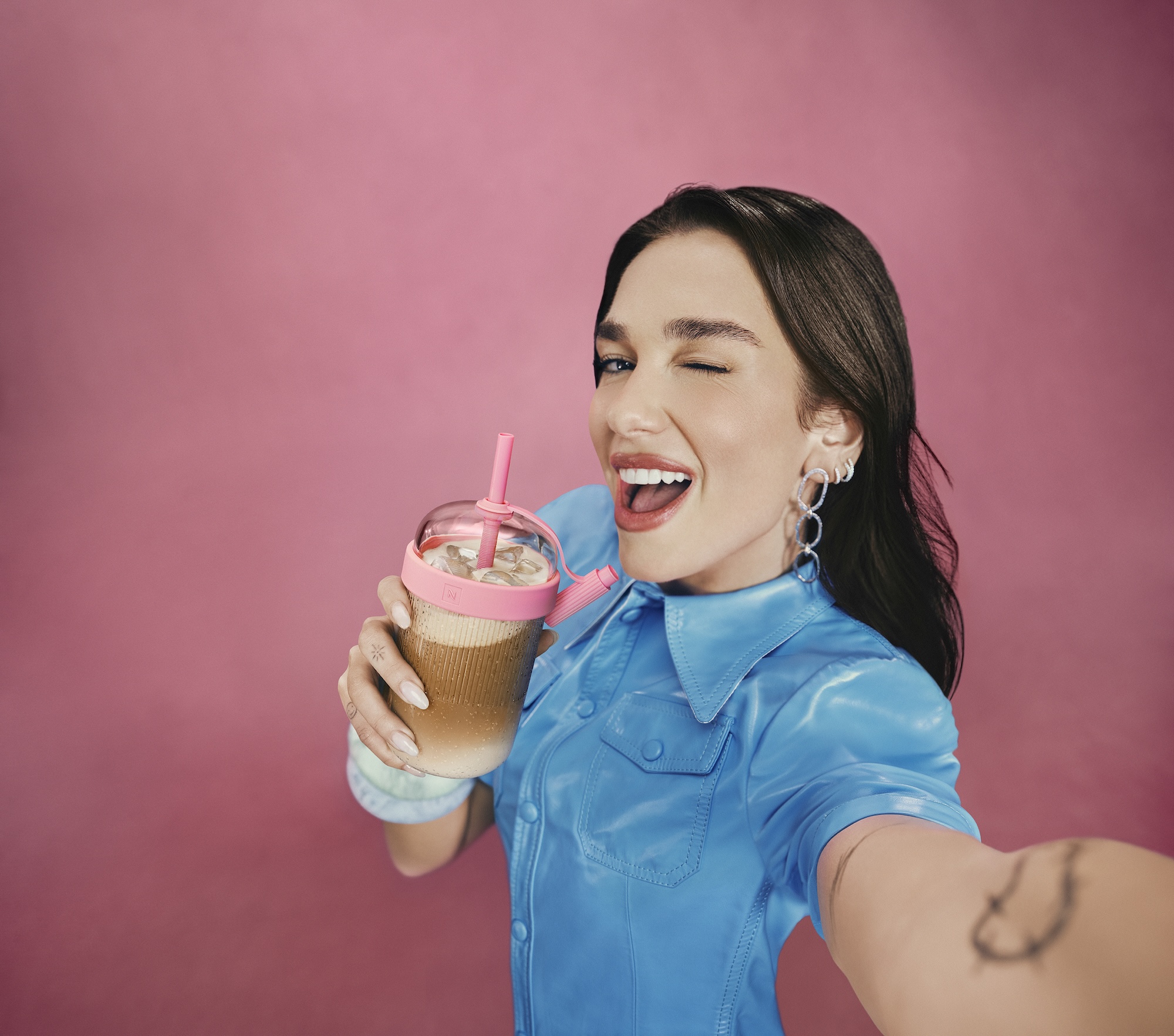
If you follow Dua, you’ll know that the woman is seemingly always somewhere. One minute she’s swimming in the Mediterranean, the next she’s eating her way through a new city, performing to thousands or posting the kind of holiday photo dump that immediately makes you question your own travel plans.
So casting her as Nespresso’s guide to a world built around curiosity, travel and discovery makes a lot of sense. The campaign follows Dua through different moments of the day, with the coffee changing alongside her. There’s a Melozio in New York in the morning, an Altissio espresso in Italy, a Double Espresso Chiaro iced latte by the pool and, later, a French Lavender & Vanilla Decaf (surprisingly, it's one of our fav, especially when we've already exhausted our caffeine threshold for the day.)
There’s also a playful passing of the Nespresso baton. Dua borrows fellow ambassador George Clooney’s famous “What else?” and turns it into a question about what else there is to taste, try and discover. Clooney himself makes a brief appearance, connecting this new chapter to the Nespresso campaigns we all grew up watching.
Meet the Vertuo Up
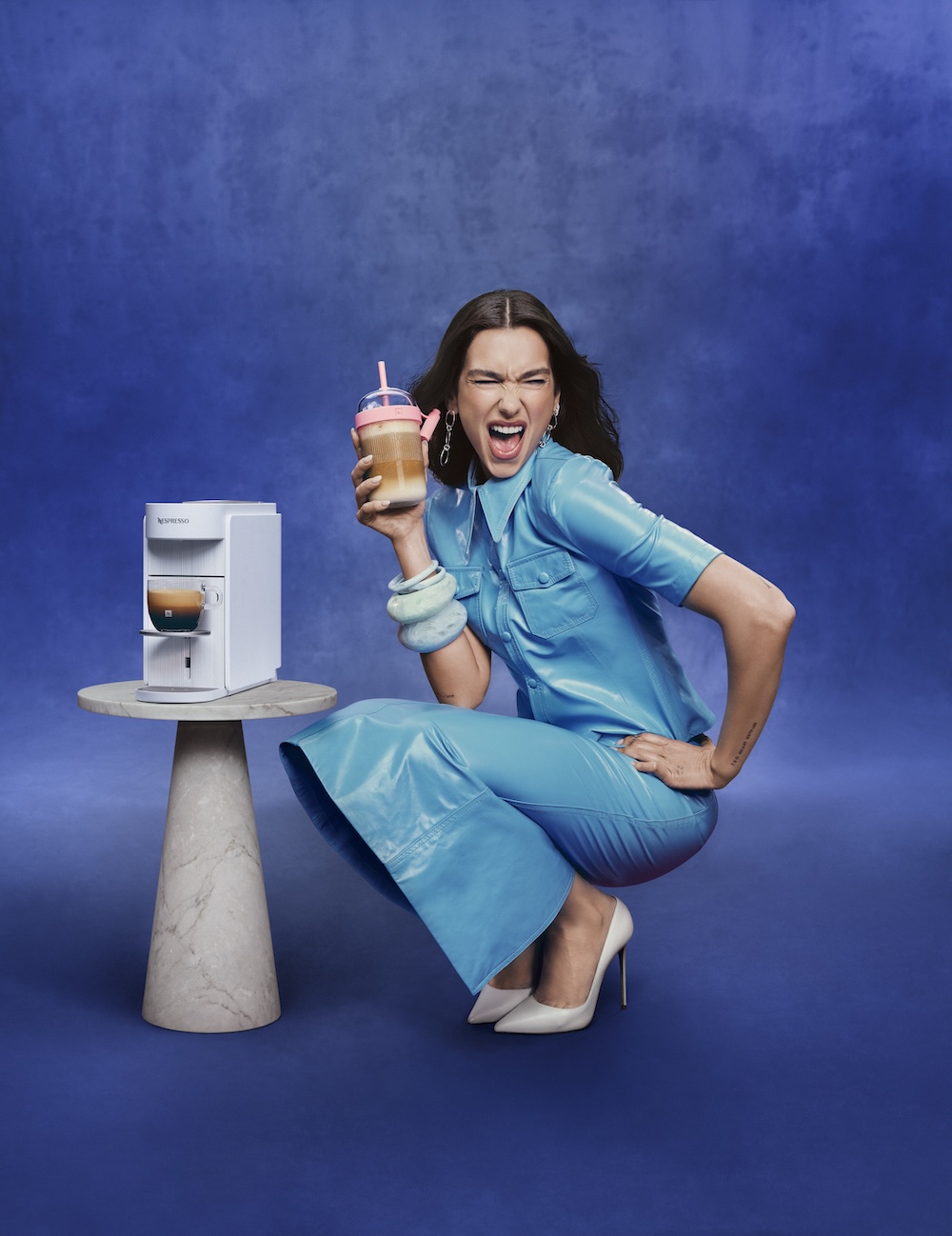
Dua may be the face of the campaign, but there is another new arrival: the Nespresso Vertuo Up.
The new machine heats up in just three seconds and introduces a dedicated Coffee Creation button, designed to produce bolder, more intense extractions for milk-based, plant-based and over-ice drinks. It also gives access to more than 50 coffees, which feels particularly appropriate at a time when ordering “a coffee” can mean anything from a straight espresso to an iced pistachio oat milk situation. Using Nespresso’s Centrifusion™ Technology, the machine recognises each capsule and adjusts the extraction accordingly, while a redesigned lever brings a little more ritual to the process.
And yes, you still get that very satisfying Nespresso crema on top.
The campaign also signals a broader shift for Nespresso, with a new creative identity that feels younger, more playful and considerably more curious (we're here for it!).
Created with Leo Constellation, the new direction introduces updated design codes, including a bespoke typeface, while moving the conversation beyond coffee simply being a morning ritual. Instead, Nespresso is leaning further into the way we actually drink coffee now: iced, hot, flavoured, over milk, plant-based, decaf at night and increasingly influenced by whatever drink has taken over our feeds that week.
French Lavender & Vanilla coffee? Apparently, yes.
And we’re into the fact that the brand isn't treating experimentation as something that needs to be overly serious. Coffee can be excellent and still be fun.
What Else?
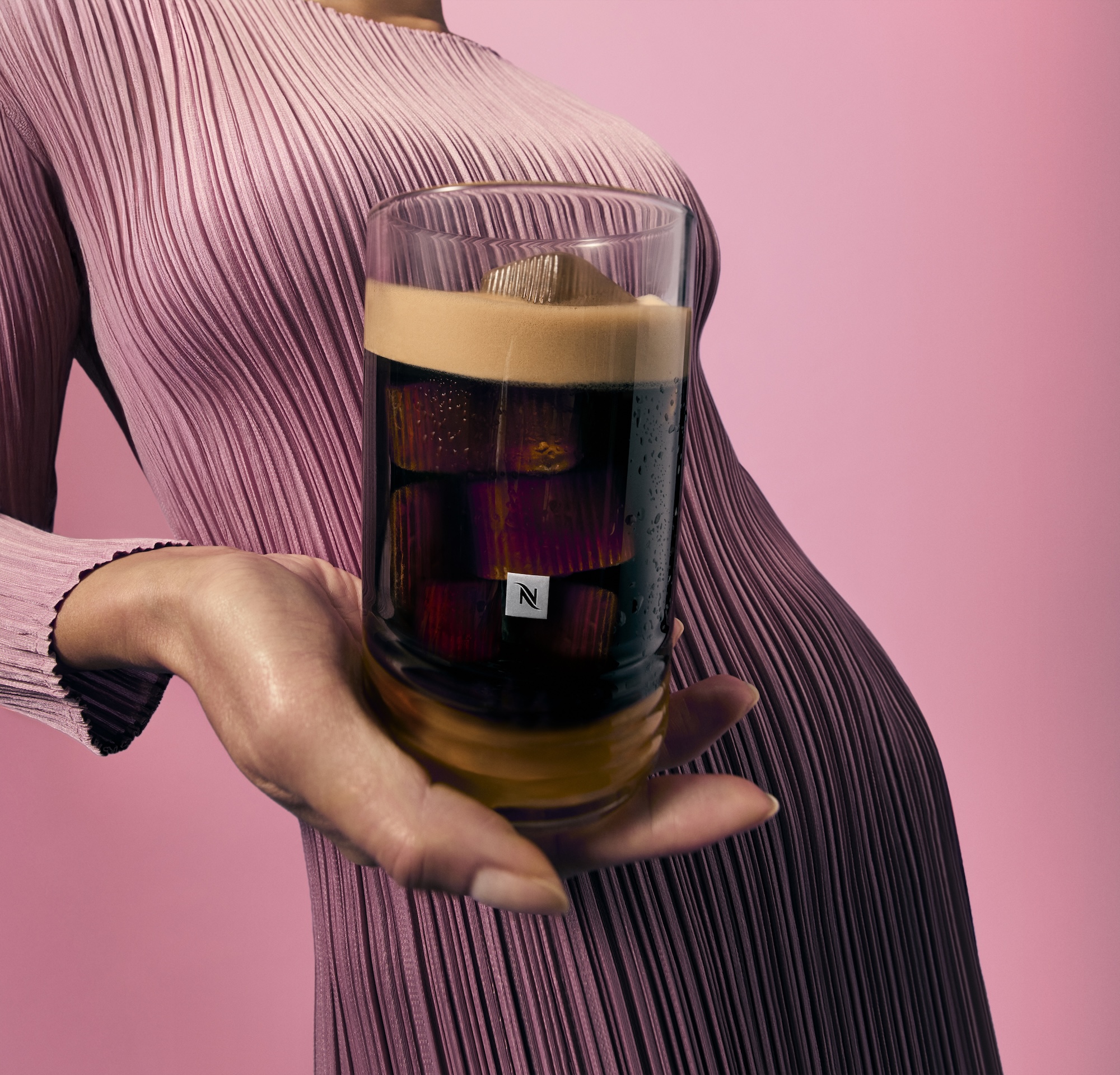
There’s something fitting about Dua Lipa entering the Nespresso universe at this particular moment. Coffee culture has changed dramatically, especially for younger drinkers. Our coffee order has become strangely personal, cafés have become part workspace, part social club, and an iced latte has practically become an accessory. Also we need the caffeine more than ever: we're ti-red.
Nespresso seems ready to play in that world. As for us, we'll happily follow Dua from a morning coffee in New York to an espresso in Italy and an iced latte beside the pool.
Although if Nespresso could also provide the flights, that would really complete the experience (right?)
More on Nespresso.com/ae
Into the Wild: Cartier Brings the Panthère to Istanbul
There are few jewellery motifs as instantly recognisable as the Cartier panther. Elegant, powerful and just a little dangerous, the feline has been roaming through the Maison’s universe for more than a century, appearing across everything from delicate earrings to unapologetically bold high jewellery.
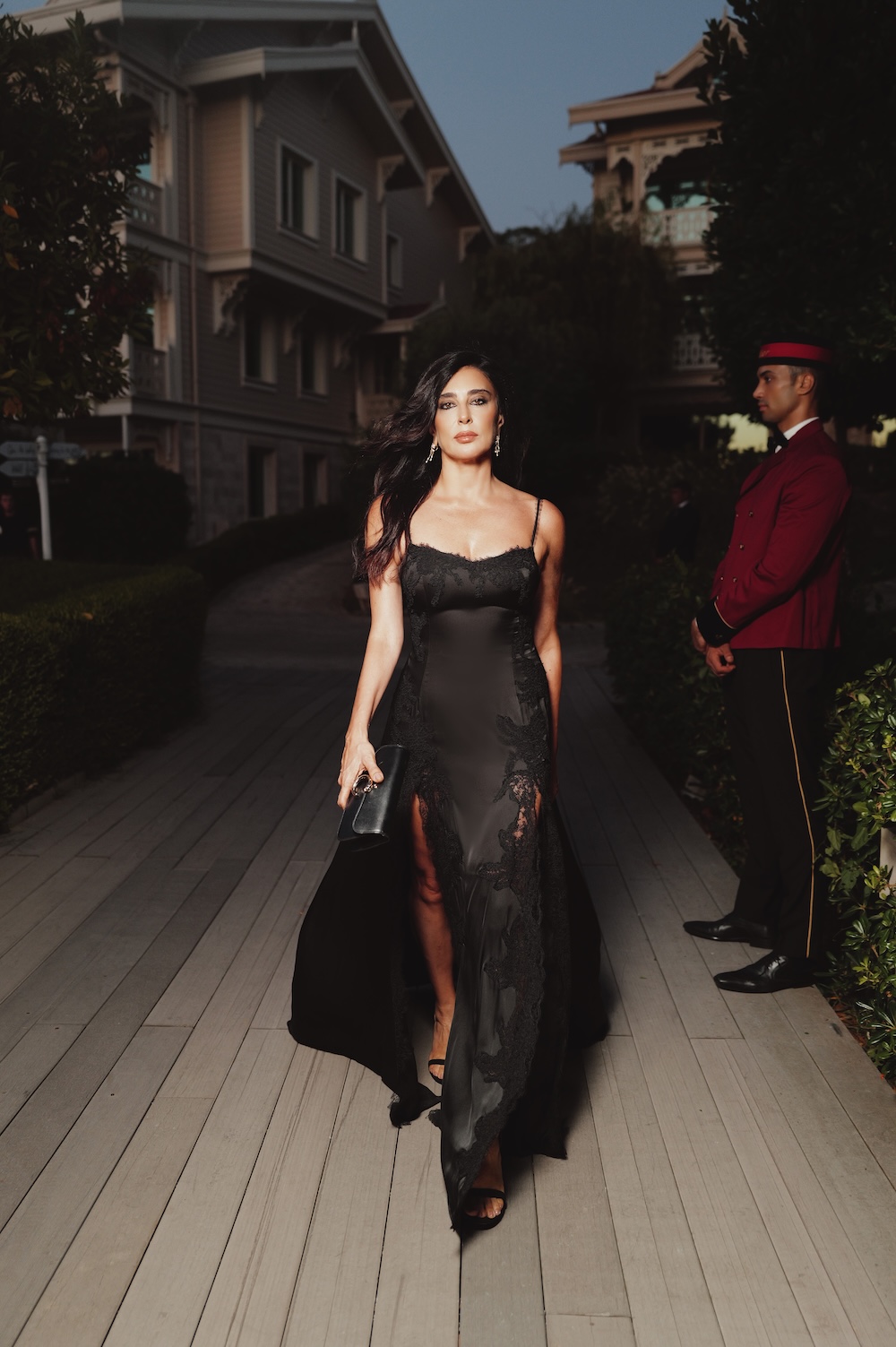
For Cartier’s latest Into the Wild gathering, that universe came to life in Istanbul, bringing together a seriously good line-up of talent from across the region and beyond, all wearing pieces from the Maison. And naturally, the Panthère was everywhere.
A Night of Panthers
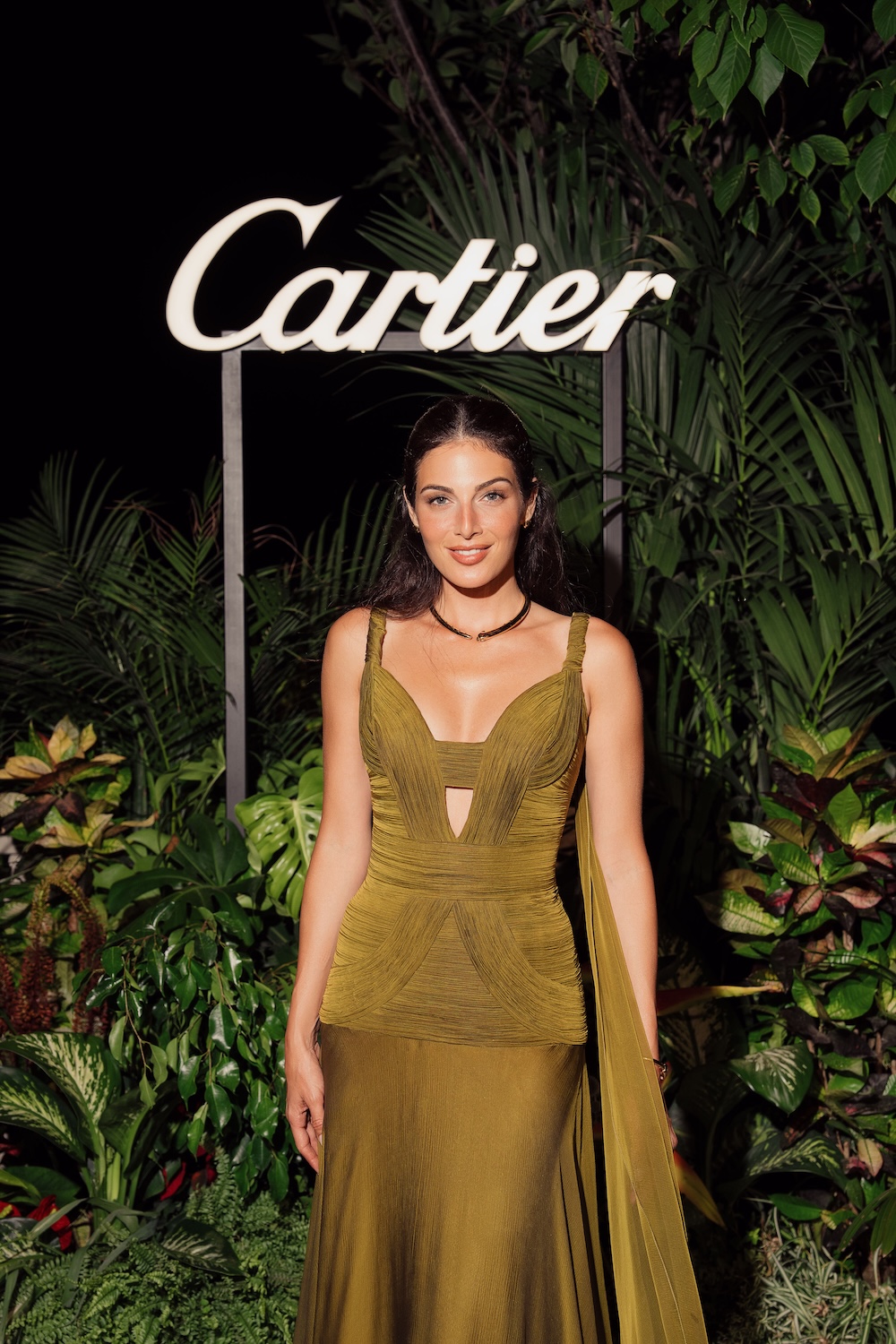
Lebanese actress Razane Jammal opted for one of our favourite looks of the evening, wearing an articulated yellow-gold Panthère torque necklace with lacquer, onyx and tsavorite garnets, alongside matching Panthère stud earrings. Egyptian actress Tara Emad went in a completely different direction, choosing an articulated white-gold Panthère torque covered in diamonds and finished with emerald and onyx details, paired with matching earrings.
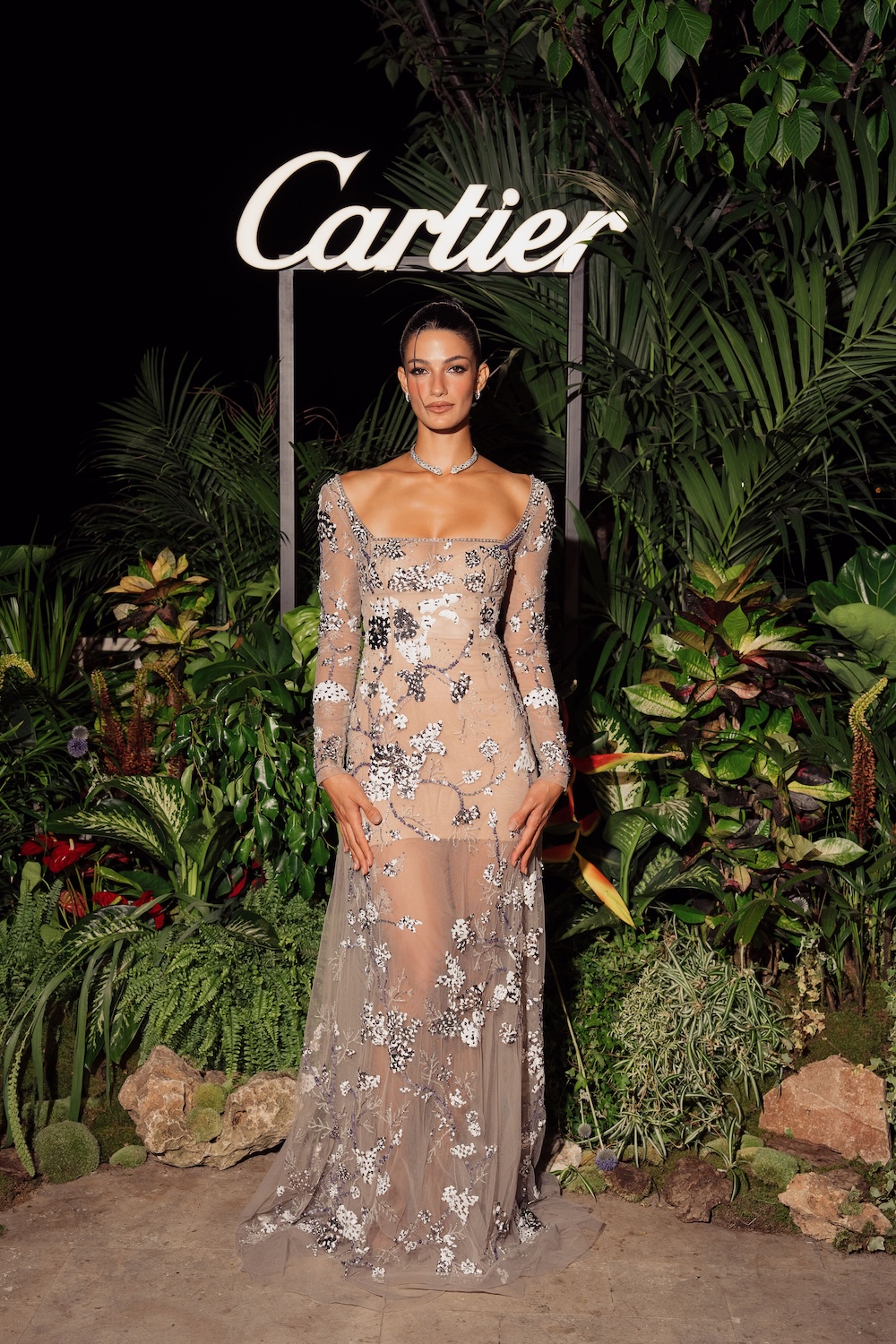
Turkish actress Tuba Büyüküstün also embraced the feline, wearing an emerald Panthère necklace and dramatic earrings set with emeralds, onyx and diamonds. Then there was Yousra, who reminded us why yellow gold will never really disappear. The Egyptian icon wore a full Panthère moment with earrings, necklace and bracelet in yellow gold, punctuated by tsavorite garnets, onyx, black lacquer and diamonds.
Saba Mubarak kept the jewellery focused on a pair of long yellow-gold Panthère earrings with tsavorite garnet, onyx and diamonds, while Raya Abirached added a flash of colour with rubellite Panthère earrings alongside Juste un Clou and Clash de Cartier rings.
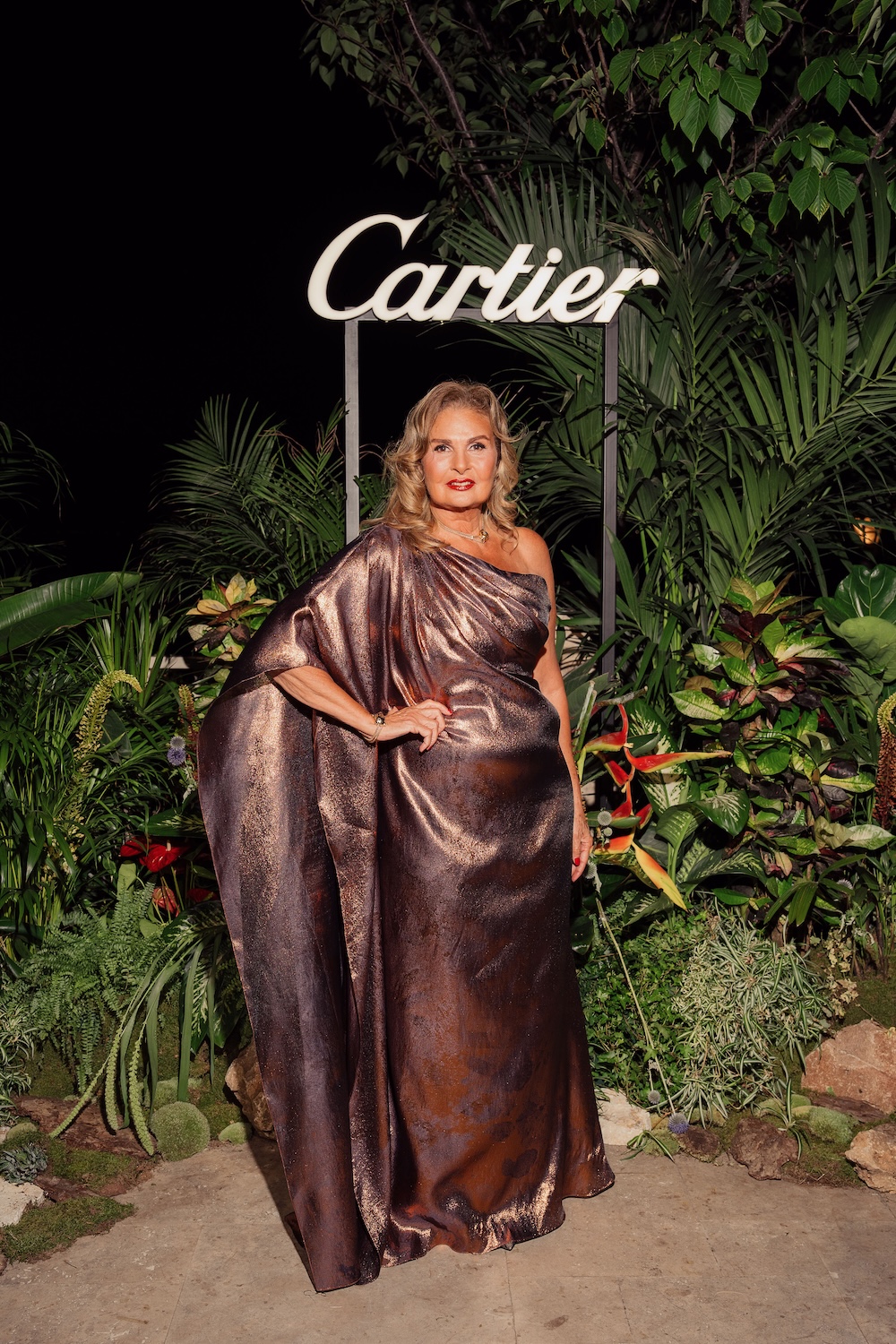
Lebanese filmmaker Nadine Labaki, meanwhile, wore small Panthère earrings in rose gold set with onyx, emeralds and diamonds, proving the panther doesn't always need to roar to get our attention.
The Men Had Their Cartier Moment Too
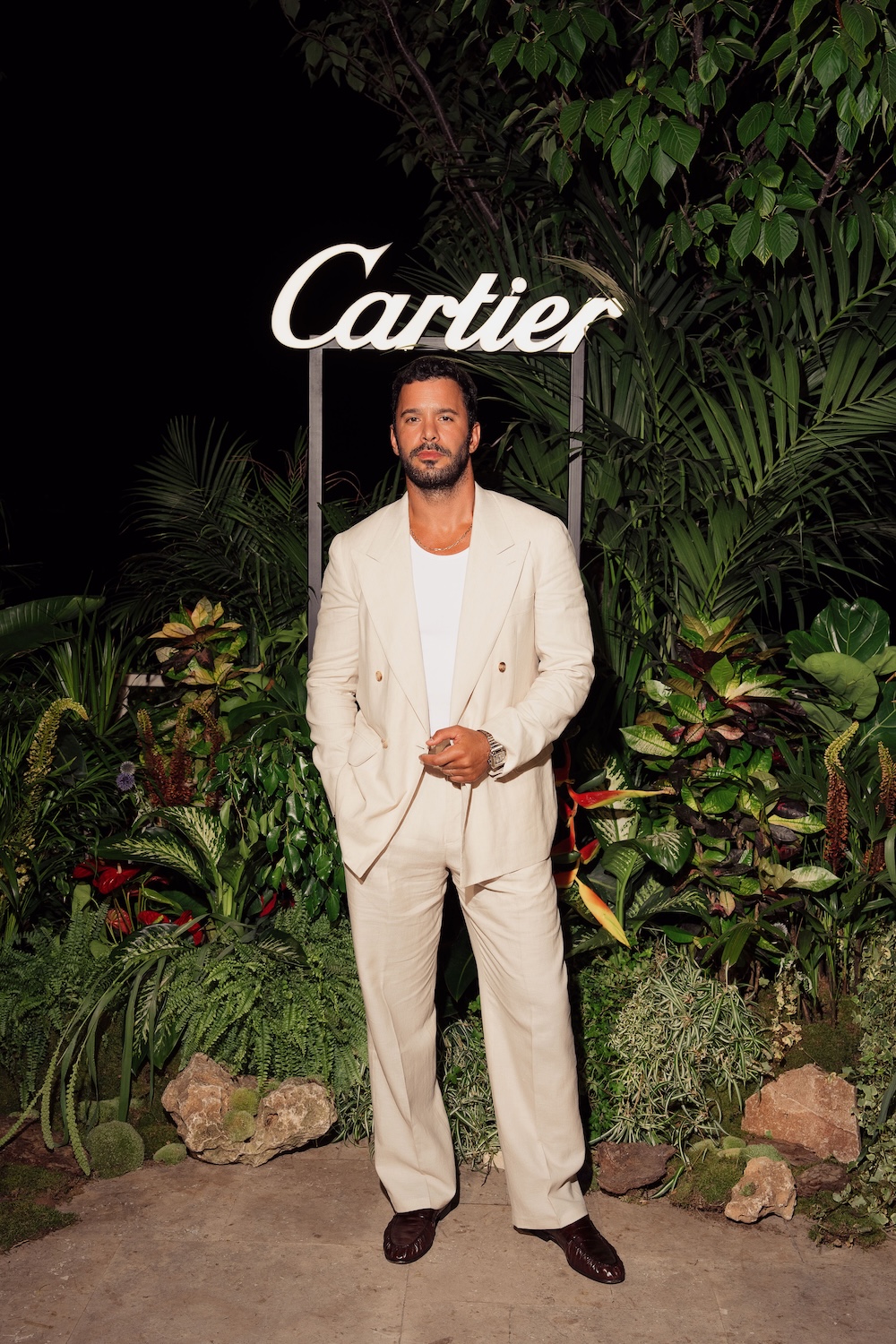
The evening wasn't only about the Panthère.
Turkish actor Barış Arduç paired a large Santos de Cartier watch in yellow gold and steel with a small yellow-gold Santos chain necklace, while Egyptian actor Ahmed Malek wore a Santos-Dumont skeleton watch with a Panthère brooch, Juste un Clou necklace and Panthère sunglasses.
Ishaan Khatter chose the elongated Tank Américaine in platinum alongside an extra-large, diamond-paved Juste un Clou multiwear necklace, while Fady El Sayed went classic with a yellow-gold Tank Louis Cartier and a Faune et Flore de Cartier pin.
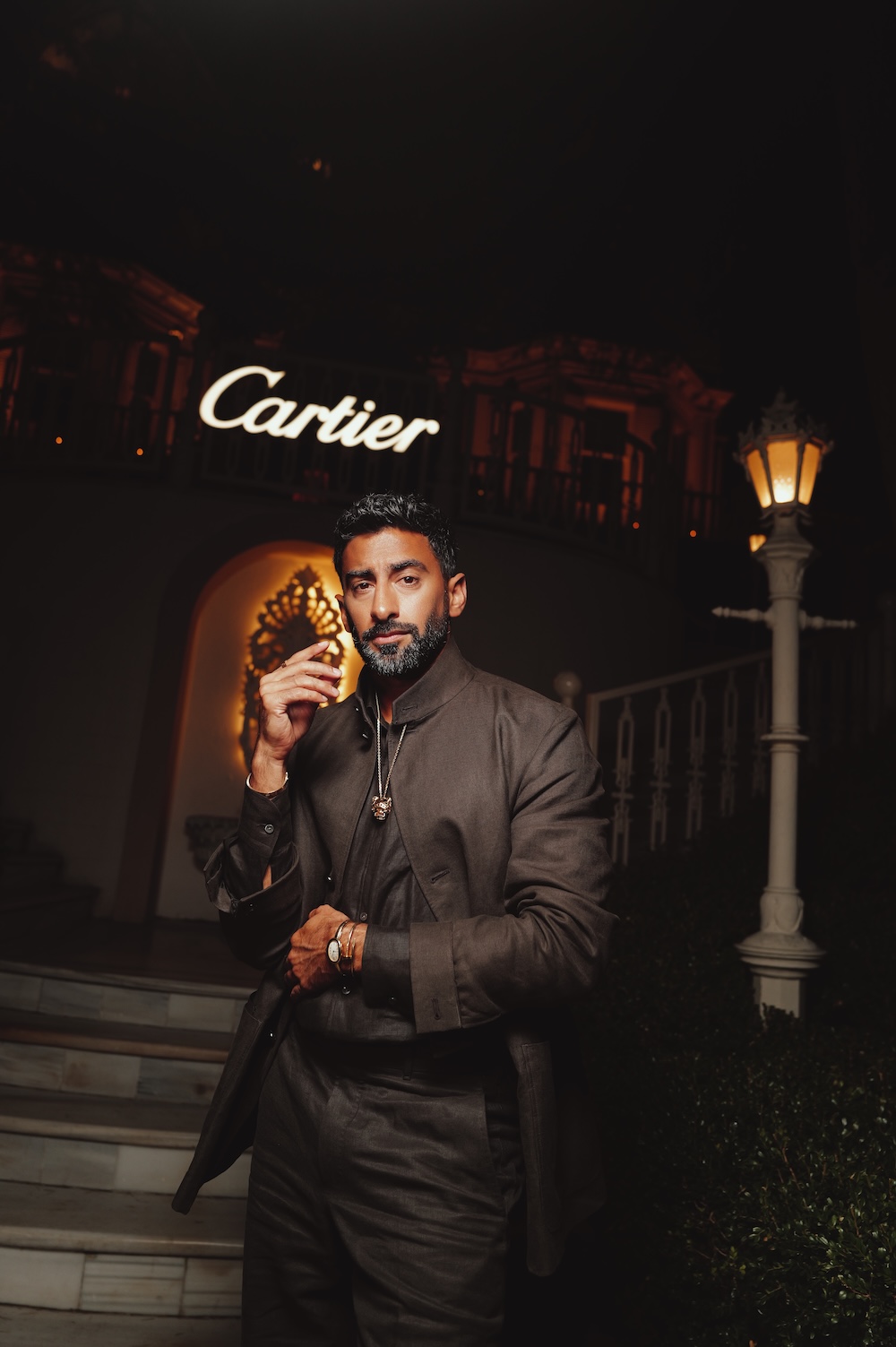
And perhaps one of the more unexpected styling moments came courtesy of Anas Bukhash, who wore the tiny yellow-gold Baignoire watch, a reminder that the arbitrary divide between "men's" and "women's" watches feels increasingly irrelevant.
What we liked most about the night was seeing the same Cartier signatures take on completely different personalities depending on who was wearing them. A Panthère can be a small rose-gold earring on Nadine Labaki, a diamond-covered white-gold torque on Tara Emad or an entire yellow-gold jewellery story on Yousra. The Tank can remain impeccably classic, while the Baignoire suddenly looks surprisingly cool on a man's wrist.
And for us, the pieces that really stood out were naturally the ones with a little more drama: the oversized necklaces, sculptural Panthère torques, emeralds, rubellites and flashes of green tsavorite.
Because if you're going Into the Wild with Cartier, you might as well let the jewellery do some roaring.
More on Cartier.com
Bella Hadid, Dubai Hills and a Major New Flagship: ALO Is on a Roll
It feels like everywhere we look lately, someone is wearing ALO. On the way to Pilates, grabbing coffee, travelling, and increasingly, nowhere near a workout at all.
The Los Angeles-born brand has managed to turn activewear into something closer to a lifestyle uniform, building its world around that now-familiar studio-to-street idea. And if its latest moves are anything to go by, that world is only getting bigger in the UAE.
ALO has just expanded its Dubai presence with a new store at Dubai Hills Mall, which opened on August 28, with another, much bigger opening already around the corner. On September 18, the brand will open its largest UAE flagship at Mall of the Emirates, joining its existing locations at Dubai Mall and The Galleria Al Maryah Island in Abu Dhabi. The expansion comes through ALO's partnership with Alshaya Group.
A New 950-Square-Metre Home
The Mall of the Emirates flagship is the one we're particularly curious to see.
Spanning 950 square metres, the store is designed to bring more of ALO's wellness universe into the retail experience. Alongside its fashion and performance collections, the space will feature luxurious fitting rooms, a dedicated VIP seating area and, perhaps most unexpectedly, an olive tree built directly into the store, a nod to the brand's focus on nature and mindful living.
It makes sense for a brand that has long moved beyond leggings. Founded in Los Angeles in 2007 with yoga and mindfulness at its core, ALO now stretches across performance wear, everyday fashion, wellness products, community experiences and digital fitness.
And Dubai, where a Pilates class can quite easily be followed by lunch, shopping and dinner without anyone ever changing out of their activewear, feels like particularly fertile ground.
The expansion also comes at an interesting moment for ALO globally, as Bella Hadid recently became the new face of the brand's Pre-Fall 2026 campaign.
Photographed around Los Angeles by Mert & Marcus and styled by Mimi Cuttrell, the campaign places Hadid in the kind of performance pieces that have become synonymous with the ALO uniform, but the partnership goes beyond the usual celebrity-in-leggings formula.
Hadid has spoken about how her relationship with wellness has evolved as she has grown older, with slowing down, movement and creating space for herself becoming increasingly important parts of her everyday routine. That makes the partnership feel fairly natural for a brand that has built much of its identity around wellness as a lifestyle rather than simply working out.
It also doesn't hurt that Bella has spent years helping define the very model-off-duty aesthetic that turned leggings, tiny sports bras, oversized jackets and sneakers into legitimate fashion territory.
Perhaps that's the most interesting part of ALO's continued expansion. What began with yoga has become an entire visual language around how wellness looks today.
The gym and the wardrobe have become increasingly difficult to separate, while Pilates, recovery, matcha, supplements and activewear have somehow found themselves living within the same lifestyle universe. ALO has been particularly good at positioning itself right in the middle of it.
With Dubai Hills now open, its biggest UAE flagship arriving at Mall of the Emirates in September and one of fashion's most recognisable faces fronting its latest campaign, ALO clearly sees plenty more room to grow here.
Judging by the number of ALO sets already walking around Dubai, we'd say the feeling is mutual.
More on Alo.com
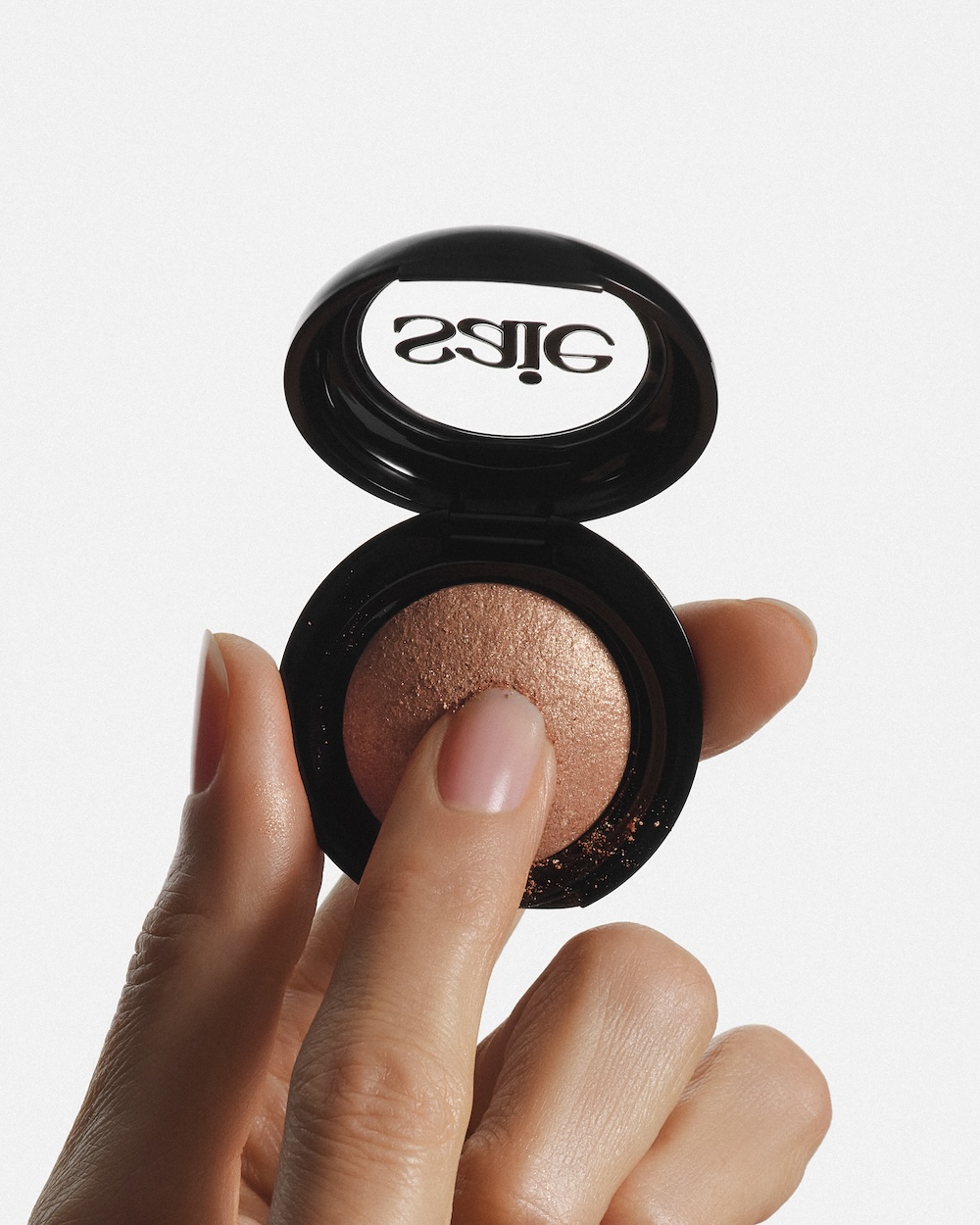
What’s Going Into Our Beauty Bags This September
September has always felt like a reset, whether or not there is actually a classroom involved. New notebooks become new routines, summer skin needs a little recalibrating, and suddenly we want to reorganise our beauty shelves, our bags and, ideally, our entire lives.
This year, our back-to-school beauty edit is less about starting over and more about finding the products that make getting ready easier, and a little more fun. Think one-swipe eyeshadow, a primer that actually keeps everything where it should be, summer skin that survives well beyond summer, deliciously scented body creams and a new fragrance that might just become our autumn signature.
Here’s what is currently making the cut.
e.l.f. Power Grip Primer Niacinamide +4%
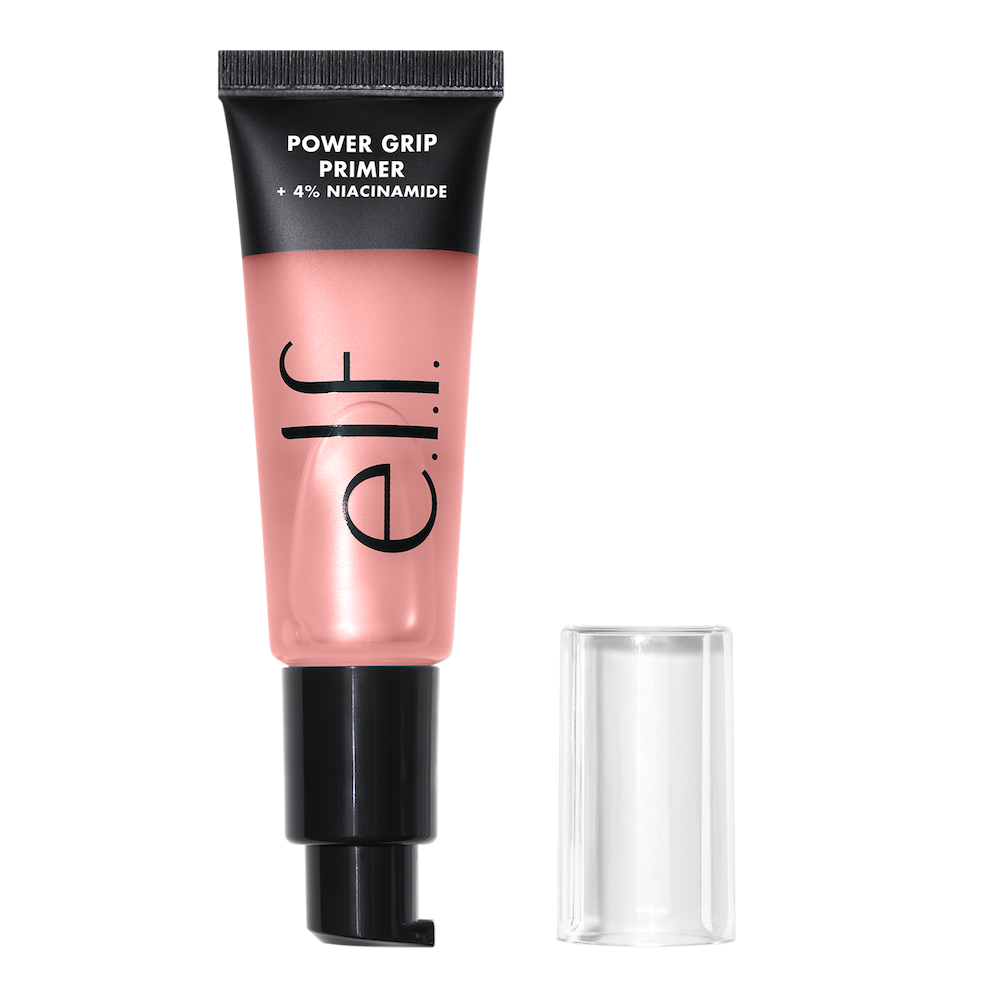
We'll start with the practical one, because September mornings aren't exactly known for giving us unlimited getting-ready time.
The e.l.f. Power Grip Primer Niacinamide +4% takes the brand's cult sticky gel primer and adds 4% niacinamide into the mix. It still gives makeup that grippy base designed to keep everything in place, but now works on the appearance of uneven skin tone and dullness at the same time.
The translucent formula smooths and preps the complexion while leaving behind the kind of dewy finish we generally spend several products trying to achieve. Basically: skincare benefits, glow and makeup that hopefully still looks good by the end of the day.
Why we love it: Because if we're going back to long days, we'd rather not bring midday makeup touch-ups with us.
Available at Sephora Middle East
Saie SuperSuede™ Baked Eyeshadow
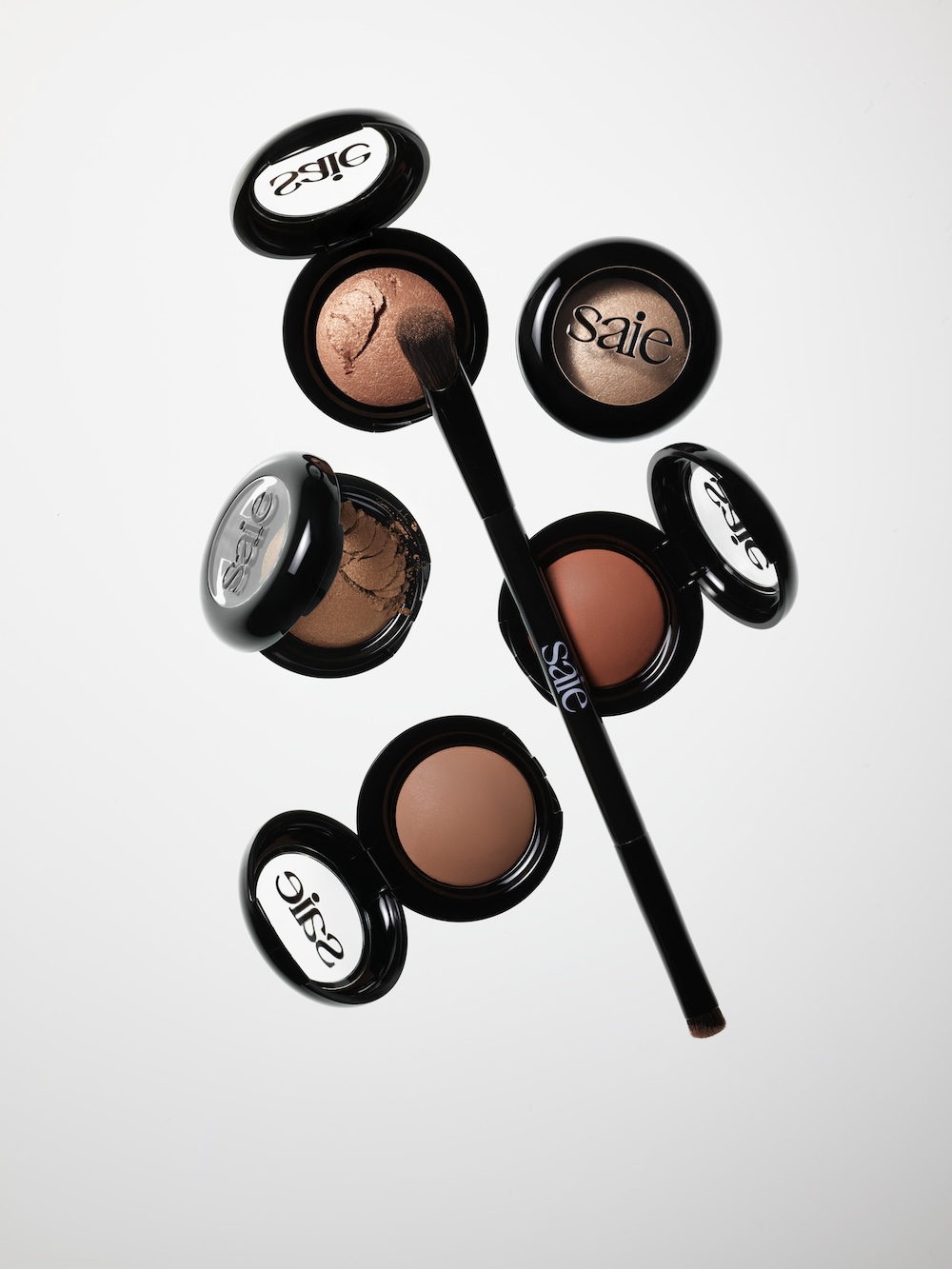
Remember when doing your eyes involved a palette of 15 colours, three brushes and a YouTube tutorial? We're not going back there.
Saie's SuperSuede™ Baked Eyeshadow is essentially the opposite. Inspired by effortless '90s beauty (and Helena Christensen as the star of the campaign), the collection consists of 11 neutral singles spanning demi-mattes and low-lit shimmers, designed to work alone or layered without requiring much expertise. Saie says they wear for up to 16 hours without a primer and are formulated with jojoba esters, ceramides and squalane for a lightweight, comfortable finish.
The shades are exactly the sort of colours we want heading into autumn: Cannoli, Biscotti, Amaretto and Dolce on the matte side, with Gelato, Granita, Affogato and Tartufo bringing the shimmer.
Why we love it: One shade, a finger, a quick swipe and you're basically done. We're particularly into Affogato, a warm bronze shimmer that feels made for the post-summer transition.
More on SaieBeauty.com
Maison Margiela Scentsorium Collection

Maison Margiela is taking fragrance into haute parfumerie with The Scentsorium Collection, six genderless scents inspired by the house’s Artisanal approach to deconstruction and reconstruction.
The names alone have us intrigued: Blaze of Stillness mixes neroli, fig and suede, while Silent Fury goes darker with leather, spices and tobacco. Elsewhere, expect black rose, liquorice, incense, saffron, patchouli and mineral musk.
Why we love it: The unexpected combinations and the idea of choosing fragrance according to emotion rather than simply a scent family. Very Margiela, and definitely one we want to smell in person.
More on Maisonmargiela-fragrances.us
Dr. Barbara Sturm Everything Bronzing Drops
Just because the holiday is over doesn't mean the holiday face has to be. Dr. Barbara Sturm's Everything Bronzing Drops sit somewhere between skincare and makeup, adding warmth and luminosity while also tackling hydration and the appearance of pores. Hydrolyzed yeast extract and avocado oil support hydration, red clover extract targets the appearance of enlarged pores, while optical pigments create that soft-focus, sun-kissed finish.
You can wear one or two drops directly on the skin, mix them into moisturiser or foundation, or even add them to body lotion.
Why we love it: We are absolutely not emotionally prepared to give up our summer glow just because September says so, and these will come super handy.
More on DrSturm.com
KAYALI Yum Lip & Body Collection
KAYALI has spent years convincing us that one fragrance is never enough. Now Mona Kattan is taking layering beyond perfume altogether.
Launching globally on August 28, the brand's first Yum Lip & Body Collection translates two of its much-loved gourmands—Yum Boujee Marshmallow | 81 and Yum Pistachio Gelato | 33—into Silk Soufflé Body Creams and Cashmere Kiss Lip Balms.
And these sound dangerously edible. The whipped body creams contain hyaluronic acid alongside KAYALI's Dream Elixir, a blend including date seed, sesame, moringa, almond and olive oils, and are designed to provide up to 24 hours of hydration without a greasy finish.
The lip balms, meanwhile, offer up to eight hours of hydration with a soft shine. Boujee Marshmallow comes with pink marshmallow, strawberry and whipped cream notes, while Pistachio Gelato goes into full dessert territory with pistachio, hazelnut, whipped cream and cotton candy.
Why we love it: Because smelling like pistachio gelato from lips to fragrance sounds like our idea of fun—and exactly like something we'd enjoy.
More on Kayali.com
Wardufil Organic Oils
Not everything we're loving comes from a global beauty counter.
Tucked inside a restored Beirut heritage house in Mar Mikhael, Wardufil is the kind of place that immediately makes you slow down. Away from the rhythm of the city outside, its approach is built around calm, restoration and thoughtful rituals of wellbeing.
At the heart of many of those rituals are Wardufil's locally made organic oils, used throughout its massages and body treatments. They add another layer of nourishment to treatments already designed around unwinding, resetting and reconnecting with the body.
And while we love the full Wardufil experience, this time it's the oils we're bringing home with us.
Why we love it: It's local, organic and feels distinctly Beirut. More importantly, it brings a little bit of that post-massage feeling home—which might be exactly what September calls for.
More on Instagram, here
Max Mara Le Parfum
And now for something considerably chic: for its first fragrance, Max Mara has looked to perhaps the most recognisable object in its universe: the coat. More specifically, the house's iconic 101801. The idea behind Le Parfum is essentially an invisible version of it: a fragrance intended to envelop the body with the same warmth and understated confidence as Max Mara cashmere.
Even the bottle borrows from the coat: an architectural glass silhouette is wrapped with a camel-coloured lacquered belt, complete with stitching details and gold accents.
The fragrance itself, created by perfumers Marie Salamagne and Fabrice Pellegrin, combines sandalwood and cedarwood with creamy tuberose, before vanilla and benzoin bring warmth to the base.
Why we love it: September always makes us want a new fragrance, and this one feels like the olfactory equivalent of putting your favourite coat back on after summer.
More on MaxMara.com
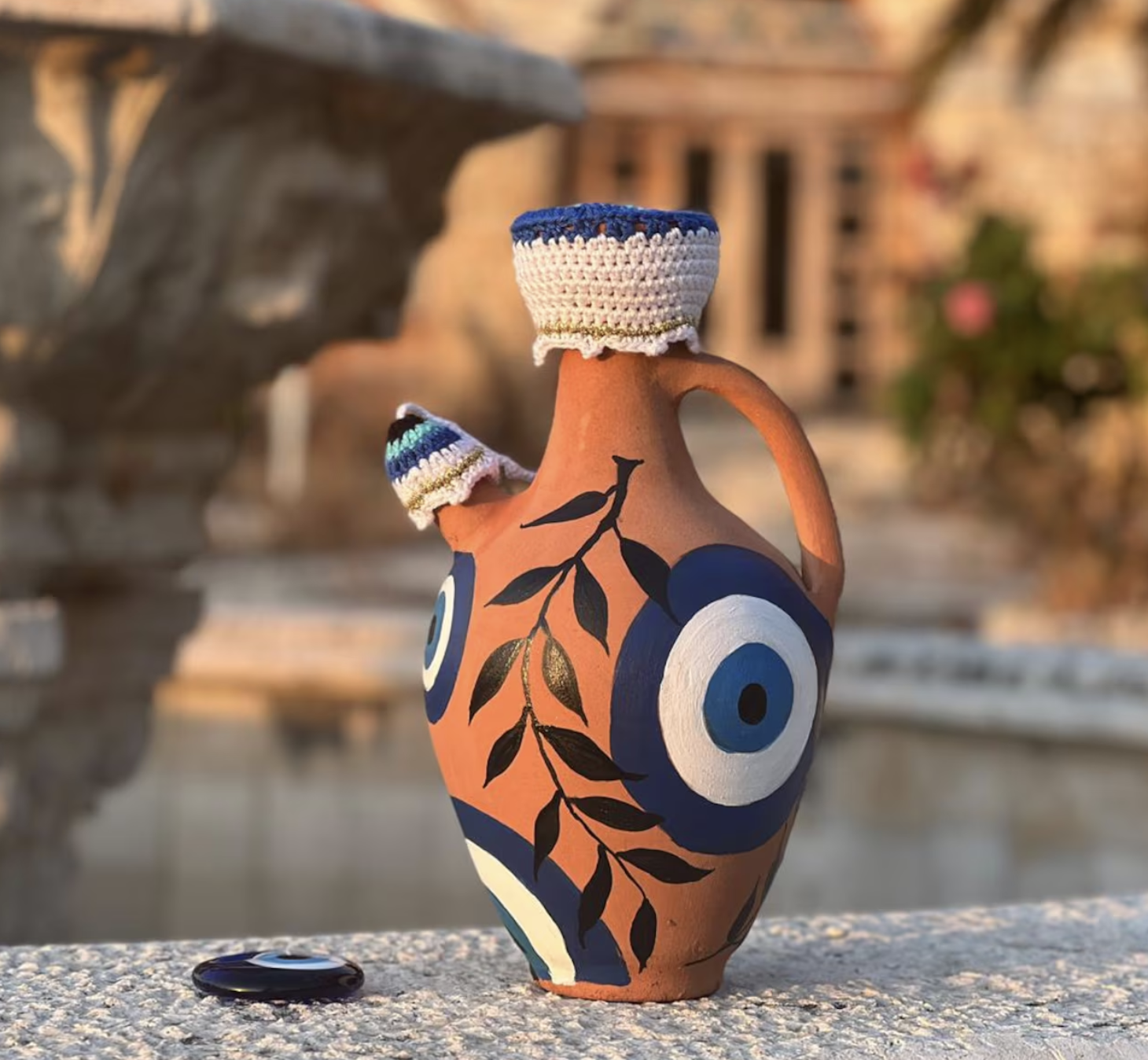
How the Breek Became a Levantine Design Icon
There are certain objects that feel so familiar you never really stop to wonder where they came from, because they were simply always there: in your grandparents’ house, on the table during long summer lunches, somewhere in the village, or sitting on a shelf waiting for someone brave enough to actually use them.
For many Lebanese, the breek is one of them. Your Teta would often reach out to grab it, remove the piece of crochet protecting its top and help you quench my thirst as you'd tilt your head backwards.
You probably remember the shape before you remember the name: the rounded body, the handle, the narrow spout stretching upwards and, if you grew up around one, the slightly chaotic ritual of attempting to drink from it without touching it with your lips—or pouring half of its contents down your shirt.
Because drinking from a breek was never simply drinking water, no: there was technique involved. You started close to your mouth, became increasingly confident, raised it a little higher, and before long someone was inevitably attempting to drink from what felt like half a metre away while everyone else watched.
It is such a distinctly familiar Lebanese image that we started wondering about something we had somehow never really questioned before: where did the breek actually come from? The answer, as is often the case with objects that have existed for generations, is considerably more complicated—and more interesting—than simply calling it Lebanese.
So, What Exactly Is a Breek?
Known as the breek, briq or ibriq (إبريق), the vessel is instantly recognisable for its rounded body and elongated upward-facing spout, which allows water to be poured directly into the mouth without the drinker ever having to touch the vessel with their lips, making it particularly practical at a time when one breek might be shared between several people around a table or out in the fields.
The Arabic word ibriq itself has a much broader history and can refer to different forms of pitchers and jugs across the region, but in Lebanon it became closely associated with this very particular silhouette and, perhaps even more importantly, with this particular way of drinking. It was functional, communal and surprisingly clever, but over time it also became something else: one of those everyday objects so deeply embedded in Lebanese life that we stopped noticing how unusual it actually was.
Until you hand one to someone who has never used it before.
How Far Back Does It Go?
This is where the story becomes fascinating, because the breek is often casually described as a Phoenician invention, and while that makes for a wonderfully neat origin story, history is rarely quite that cooperative.
Archaeological excavations along the Lebanese coast have revealed an extraordinarily sophisticated tradition of pottery and vessel-making stretching back thousands of years, and specialised jugs and spouted vessels appear throughout the material culture of ancient communities in the region. Archaeological research from sites including Sidon and Sarepta has documented the importance and diversity of Phoenician pottery, which was produced locally and circulated throughout the Mediterranean.
Research into the breek itself has also pointed to a vessel illustrated in Patricia Bikai's The Phoenician Pottery of Cyprus, dated to approximately 1050–850 BCE, whose form bears a striking resemblance to the object we recognise today, while other breek-like forms have been associated with material going as far back as the Early Bronze Age.
But resemblance doesn't necessarily prove continuity. We don't know that those ancient vessels were used in precisely the same way, nor can we confidently draw an uninterrupted line between a Phoenician vessel from three thousand years ago and the breek your grandparents kept at home.
So, no, we're not going to tell you that the Phoenicians definitely invented the breek.
What we can say is perhaps more interesting: the shape we recognise belongs to an incredibly old regional language of making, storing and drinking, with forms resembling it appearing in this part of the world thousands of years ago.
Before Glass, There Was Clay
Today, the breek many of us immediately picture is made from glass, often with that slightly greenish tint and tiny imperfections that somehow make it even more beautiful, but for much of its history the object was made from unglazed earthenware, and this wasn't simply because clay happened to be available.
The material actually did some of the work. Unglazed clay is porous, meaning that a very small amount of water can pass through the walls of the vessel and evaporate from its exterior surface; as that evaporation takes place, heat is removed and the water remaining inside stays cooler than it otherwise would.
In other words, long before anyone was opening the refrigerator every five minutes during a Lebanese August, there was the breek.
It's the sort of beautifully simple design solution that feels almost surprisingly contemporary now: local material, no electricity, no plastic and no complicated technology, just an understanding of how a material behaves and a form developed around everyday life. Lebanon's pottery traditions produced a whole vocabulary of vessels for carrying, storing and drinking water rather than one standardised object. In places such as Rashaya, for example, traditional pottery included different forms of ibriq, kuz and dawraq, each responding to slightly different domestic needs. There was also a larger relative of the breek known as the awafi, which could carry more water and was traditionally used by people working in fields and orchards.
Eventually, the breek moved from clay into glass, and this is where we arrive at the version many Lebanese today probably recognise most immediately.
That evolution feels particularly appropriate in Lebanon, because glassmaking itself has an extraordinarily long history along the eastern Mediterranean coast, while artisanal glassblowing traditions continued much later in places including Sarafand and Tripoli, where craftspeople have kept techniques of hand-forming glass alive.
The material changed the breek completely without really changing its identity. Suddenly, water became visible through the vessel. The silhouette became lighter and more delicate. Shades of green, turquoise, blue and amber entered the equation, while the bubbles, variations and imperfections created during traditional glassmaking meant that no two handmade pieces necessarily looked exactly alike.
And for us, this is probably where the breek becomes especially interesting as a design object, because remove it from the context of nostalgia for a second and actually look at it: it's quite strange.
The proportions are unusual. The spout is exaggerated. The handle and neck seem almost sculptural. It doesn't really resemble the anonymous carafes that now populate restaurants and homes around the world, and that distinctiveness is precisely what makes it feel so relevant again today.
We spend an enormous amount of time talking about objects having identity, and the breek has had one all along.
There Was Also an Art to Drinking From It
Of course, none of this is necessarily what you were thinking about as a child. You were mostly thinking about whether you could get the water into your mouth.
The genius of the long spout was that you didn't need to place your lips against it, which meant several people could drink from the same vessel without drinking directly from the same surface, but what began as practicality inevitably became something considerably more entertaining.
You held the breek slightly above your mouth and tilted it until the stream reached you. Once you'd mastered that, you moved it further away. Then higher. And higher again. Accounts of the tradition even recall children competing to see who could drink while holding the breek furthest from their mouths without spilling.
Which feels completely believable.
There is something very specific about memories like these, because they aren't the grand traditions we usually document when we talk about heritage. Nobody necessarily sits you down and explains that drinking from a breek is part of your cultural inheritance. You simply watch someone else do it, try it yourself, probably make a mess, and eventually learn. And then, one day, you realise you haven't done it in years.
From Kitchen Essential to Design Object
The breek isn't as ubiquitous in Lebanese homes as it once was, for fairly obvious reasons. Refrigeration changed the way we cooled water, individual drinking glasses became standard, bottled water became omnipresent and the objects we used every day inevitably changed with the way we lived.
But what is particularly interesting is that the breek didn't simply disappear.
Instead, its meaning changed.
What was once an ordinary utilitarian object slowly became something associated with memory, craftsmanship and identity. Old versions are kept rather than discarded, contemporary glassmakers continue producing them, restaurants use them because of the instant visual connection they create with Lebanon, and designers have returned to the silhouette precisely because it is so recognisable.
Contemporary interpretations have taken the familiar form and played with scale, material and function, turning the breek into something that can sit comfortably within a modern interior without stripping away the characteristics that make it identifiable in the first place.
And maybe that's why we're particularly drawn to it now. At JDEED, we're constantly interested in what happens when heritage stops being treated as something fragile that needs to sit behind glass and instead becomes something we can actually use, reinterpret, wear, eat from, drink from and play with.
The breek feels like exactly that kind of object.
We're increasingly looking back at the things that surrounded us growing up—the fabrics, glasses, chairs, tiles, coffee cups, food packaging and household objects that once seemed completely ordinary—and realising that they tell us as much about where we're from as the monuments and artefacts we're taught to call heritage.
The breek happens to tell that story particularly beautifully: an ancient-looking form that remained useful for generations, changed materials as the world around it changed, developed its own rituals and somehow became unmistakably familiar without most of us ever stopping to ask why. And now that we've properly looked at it again? We kind of want one on our table.
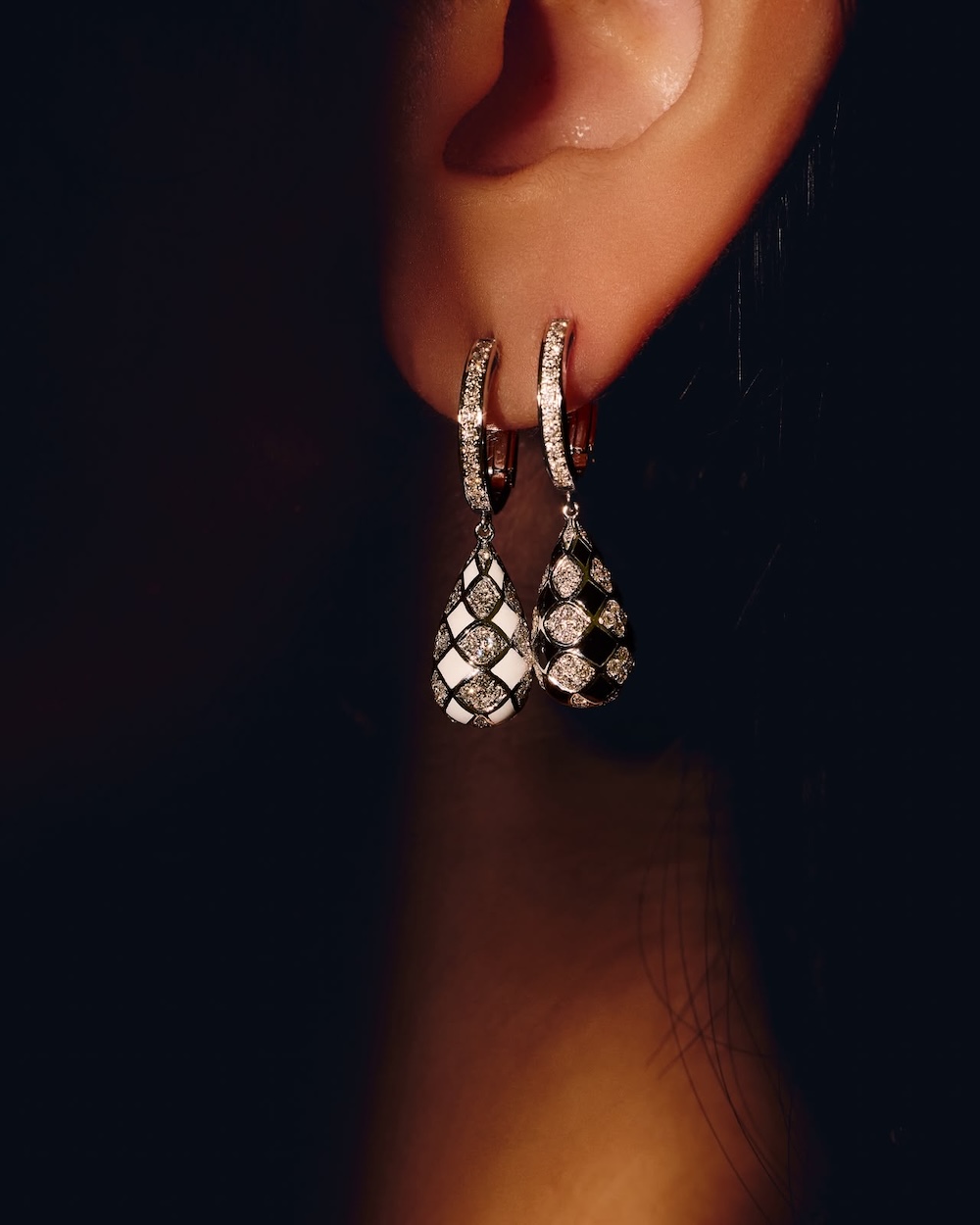
The New Guard: Fine Jewellery, Their Way
There was a time when fine jewellery came with rules. Diamonds belonged to special occasions, precious stones were saved for evening, and the pieces themselves were often bought with a future moment in mind rather than the life happening right now.
Not so much anymore.
Fine jewellery is loosening up. Diamonds are being worn with denim, coloured gemstones have become everyday signatures, and necklaces, rings and bracelets are stacked according to mood rather than convention. Across the Middle East and beyond, a new generation of jewellery houses is holding onto everything that makes fine jewellery special, from craftsmanship and precious materials to technique and storytelling, while letting go of some of the formality surrounding it.
The result feels much more personal. And, thankfully for us, a lot more fun.
Aponine
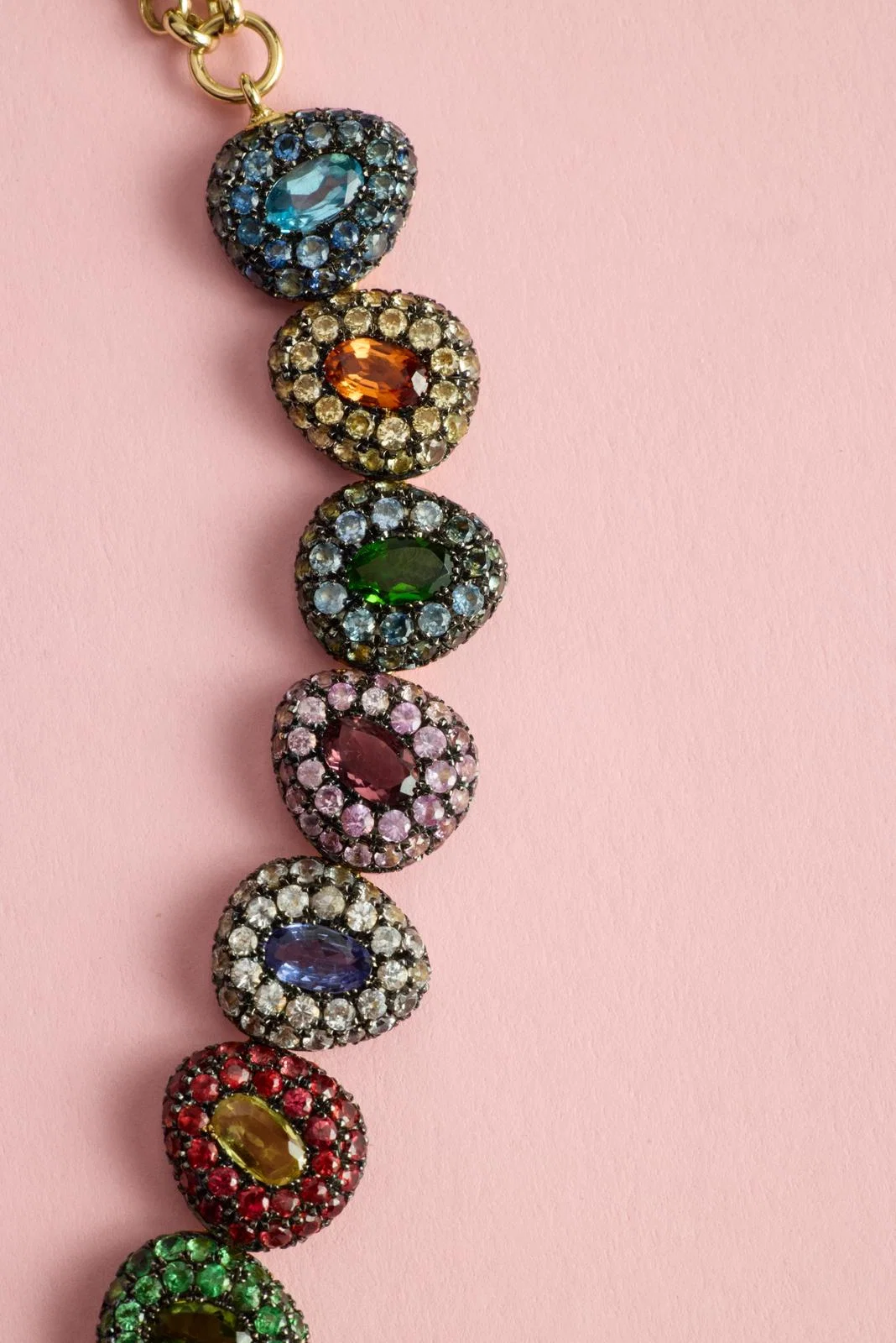
Aponine brings an international perspective to the conversation. Founded in Istanbul, the fine jewellery house builds its universe around an appreciation for gemstones, bringing technical knowledge together with a contemporary eye. Colour plays an important role, as do distinctive stones and considered craftsmanship, resulting in jewellery that feels refined without losing its personality.
What we love most: The colour. Give us unusual gemstones, unexpected combinations and pieces that immediately catch the eye. Aponine feels particularly right for anyone who believes fine jewellery should bring as much personality to an outfit as the clothes themselves.
Endear by S
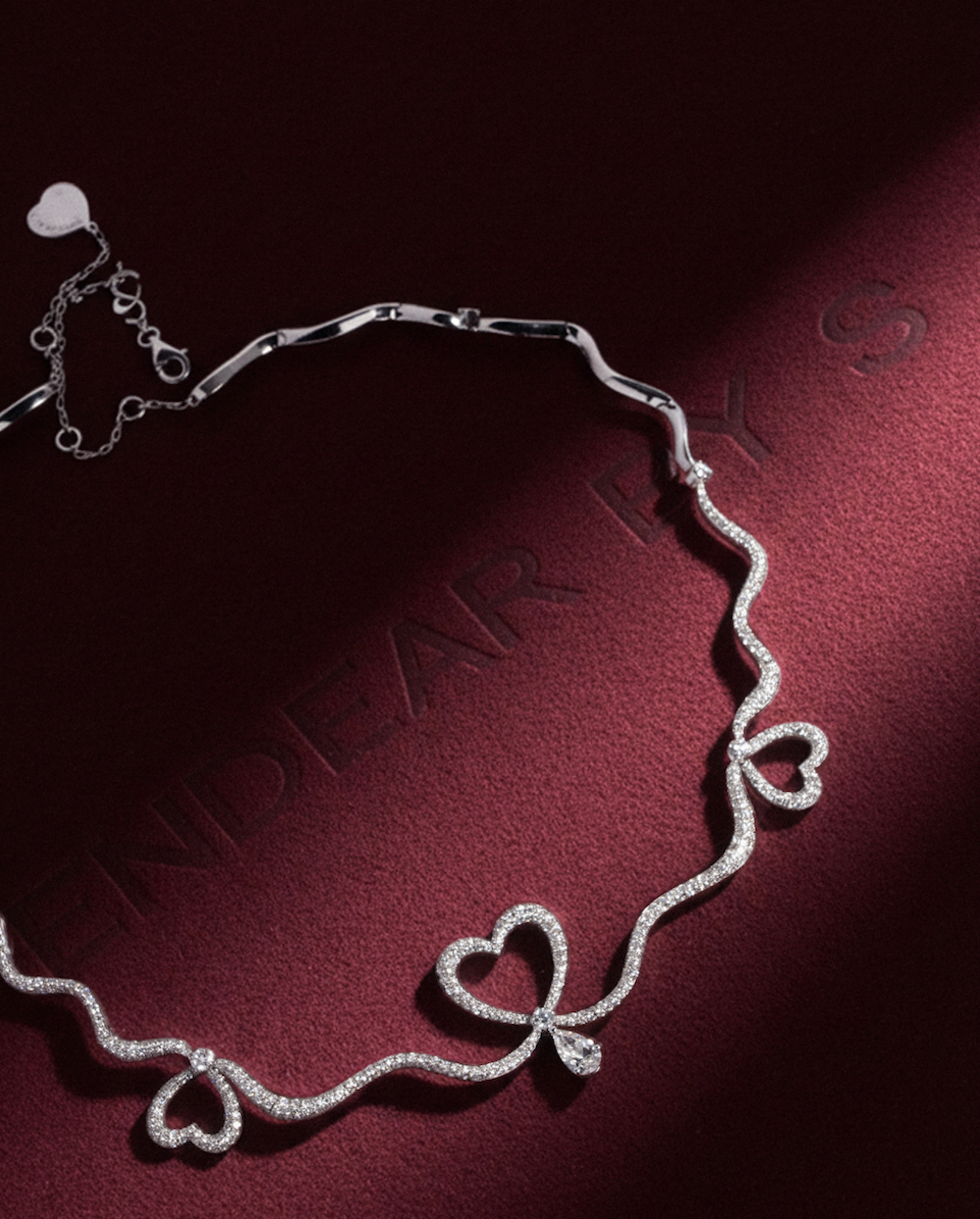
For Endear by S, things get a little more emotional. The Omani fine jewellery brand looks at the relationship we develop with the pieces we choose to keep closest to us. Jewellery becomes less about decoration and more about memory, something capable of marking a person, relationship, place or chapter in your life without necessarily announcing what it means to everyone else.
What we love most: The emotional element. We love statement jewellery, obviously, but we also love when a piece has a reason for existing beyond looking beautiful. Endear by S brings sentiment into fine jewellery without making it feel overly literal.
More on EndearbyS.com
ZEI Jewels
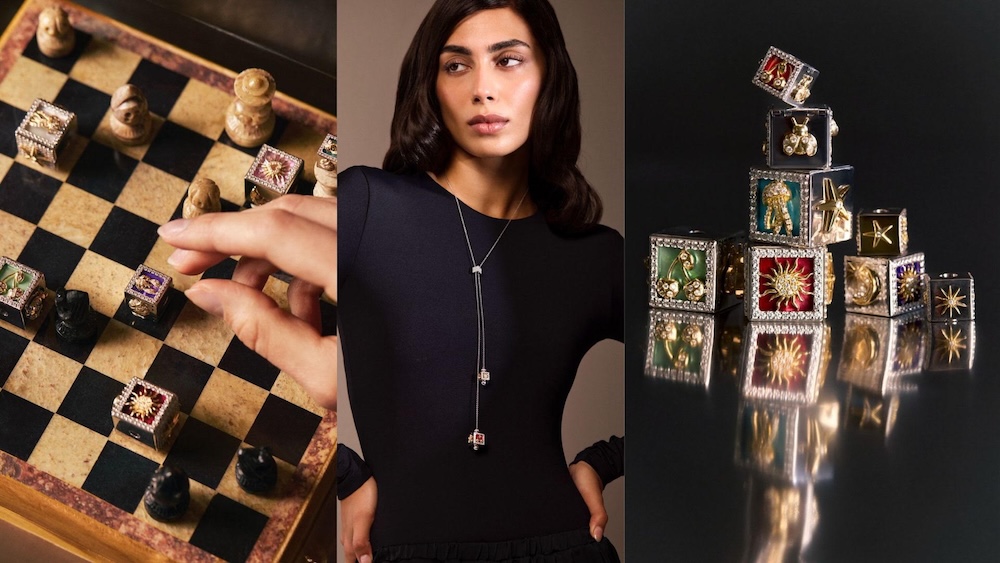
ZEI Jewels thinks about jewellery as something to actually live in. Versatility sits at the heart of its approach, with pieces intended to be styled, mixed and made personal rather than admired from a distance. It's a way of dressing with jewellery that feels increasingly instinctive: there isn't necessarily a right combination, only yours.
What we love most: The styling potential. These are the kinds of pieces that invite experimentation, whether that's stacking several rings, layering necklaces or mixing them with pieces already sitting in your jewellery box. More is more, after all.
More on Zeijewels.com
Khayal
That confidence is also emerging strongly from the UAE. Emirati fine jewellery brand Khayal brings imagination and cultural perspective into a modern design language, representing a generation of regional creatives who no longer need to conform to an established idea of what Middle Eastern jewellery is supposed to look like.
What we love most: The imagination. Khayal feels particularly exciting when it leans into jewellery that is expressive, unexpected and visually strong. We will always choose the piece that starts a conversation.
More on KhayalJewelry.com
Renu Oberoi
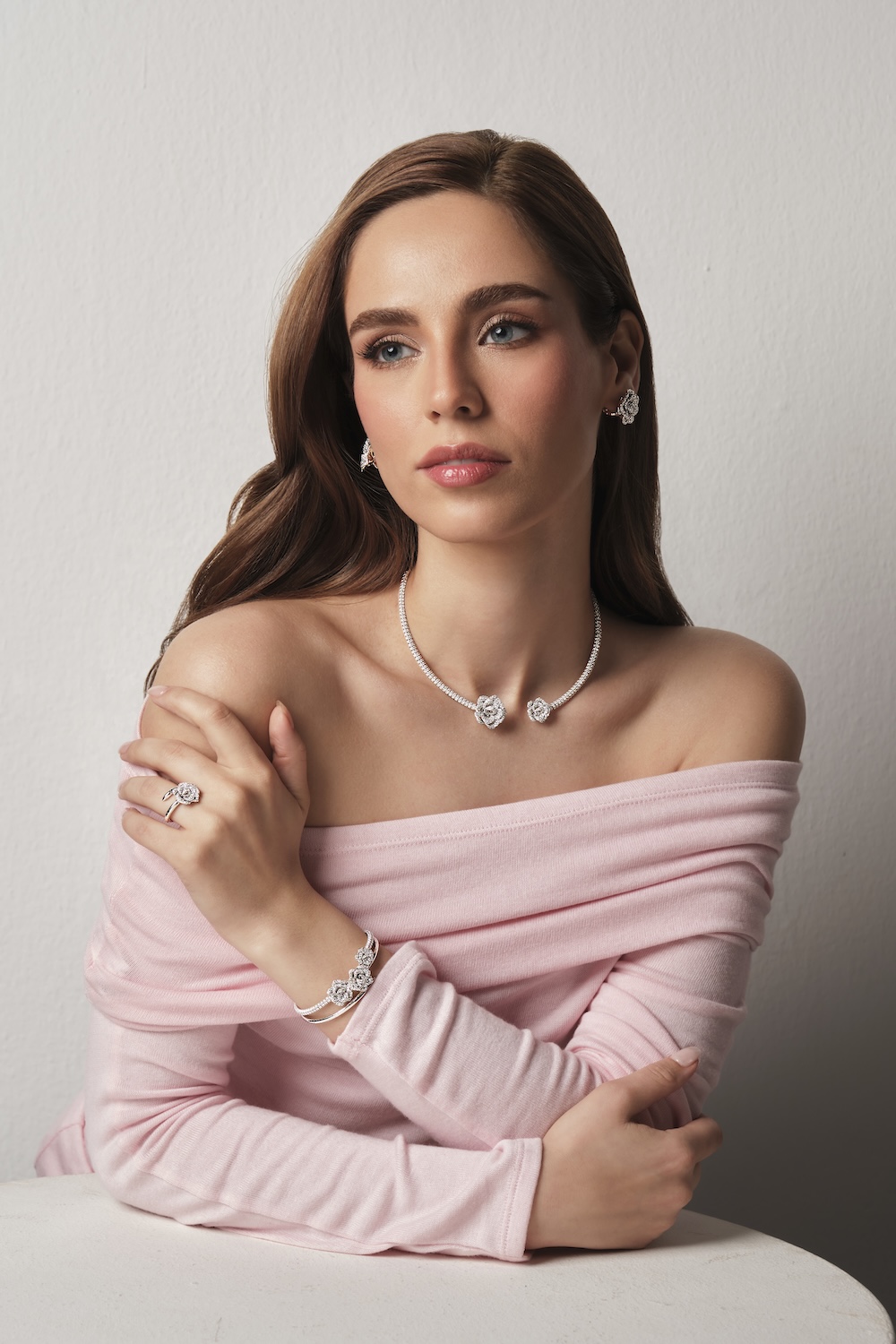
At Renu Oberoi, movement and versatility take centre stage. Collections including La Vie en Rose, Avia, Helios and Florere explore diamonds and gemstones through expressive forms that don't necessarily need an occasion. They're pieces that can move from the everyday to something more dressed-up without ever feeling out of place.
What we love most: The sense of movement and drama. We are always drawn to jewellery with presence, especially pieces that transform an otherwise simple look. Renu Oberoi gives us that preciousness without making it feel overly formal.
More on RenuOberoi.com
Majesta
Majesta takes a polished, distinctly feminine approach. Precious materials meet carefully considered proportions in pieces that feel elegant but very much designed for the way women dress now. Rather than jewellery you save, these are the kinds of pieces that slowly become part of your uniform - by elevating it with class.
What we love most: The elevated femininity. These are the pieces we'd stack, layer and wear repeatedly, using them as the polished foundation before adding something a little louder on top. Pretty sure they would be incredible conversation starters!
More on MajestaOfficial.com
Baguette
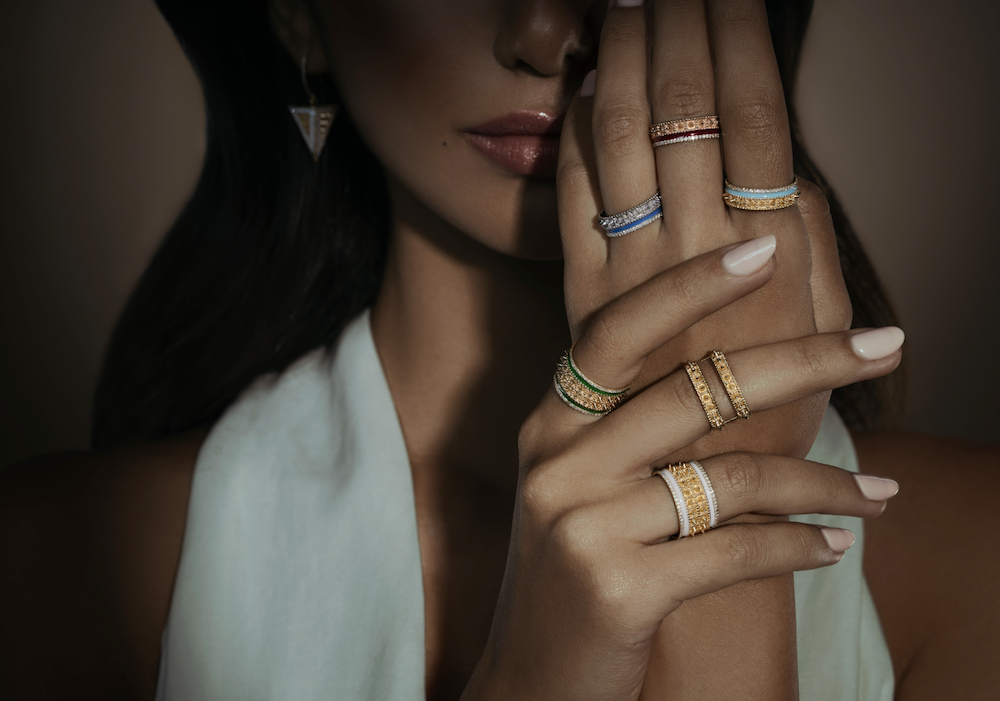
At Baguette, the clean, graphic nature associated with its namesake diamond cut lends itself naturally to something sharper. Precise lines and considered compositions give precious stones a more contemporary attitude, reminding us that timeless doesn't have to mean traditional.
What we love most: The geometry. JDEED loves a strong shape, and there is something about the graphic precision of baguette-cut stones that instantly makes jewellery feel cooler, sharper and almost architectural.
More on BaguetteDesign.com
Elyamm
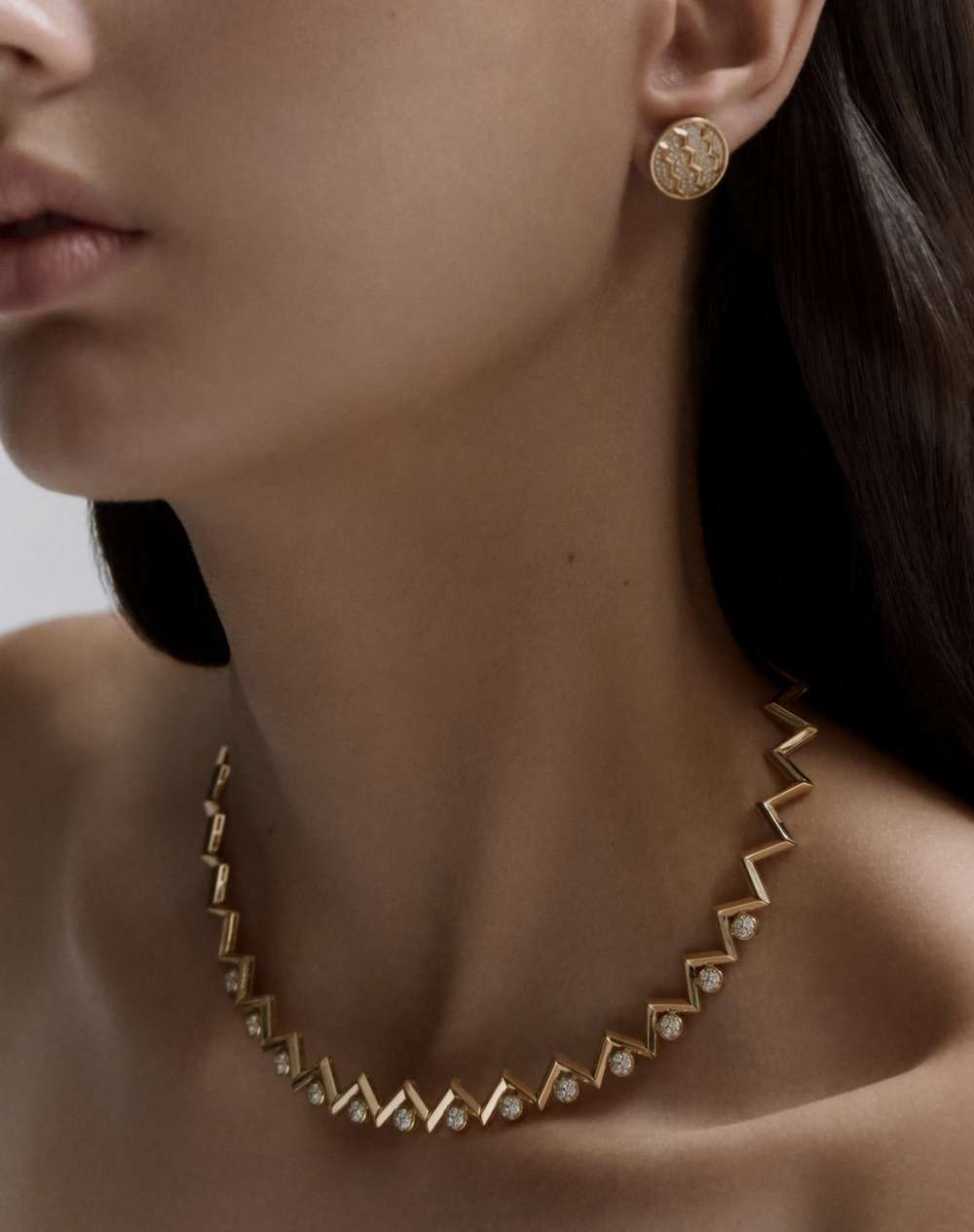
From Oman, Elyamm adds another voice to the growing Gulf jewellery landscape, translating identity, craftsmanship and personal narratives into pieces capable of speaking far beyond the region.
What we love most: The regional point of view. We're always interested in designers who create from where they come from rather than flattening their identity into something globally generic. Give us jewellery with a story, a sense of place and enough personality to hold its own.
More on Elyam.com
Dhyan Diam
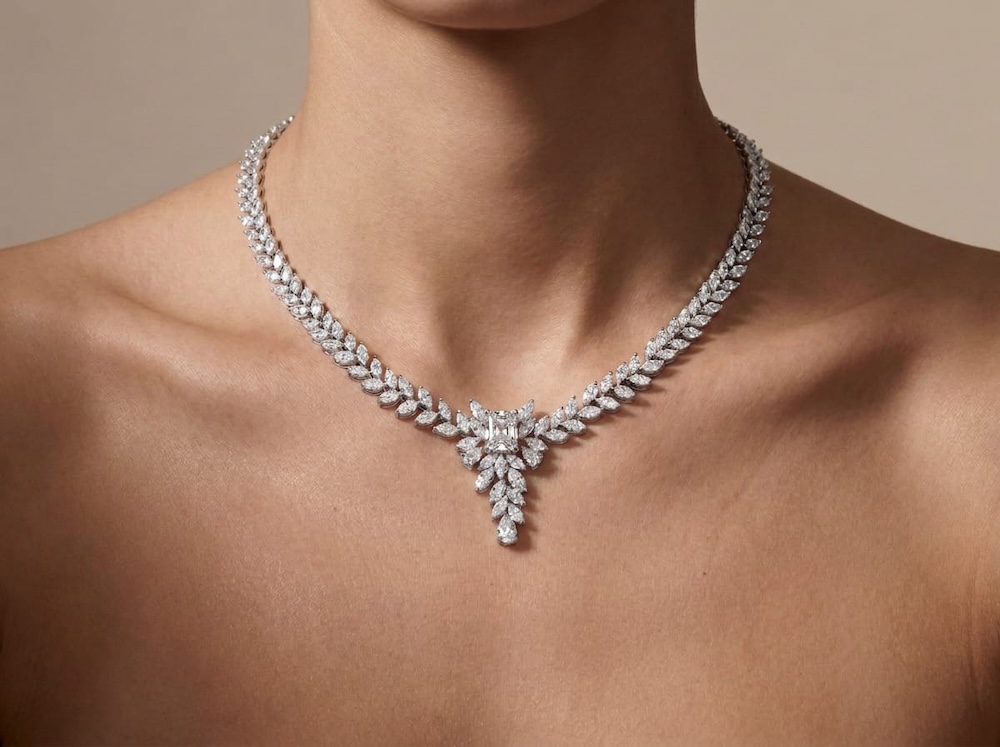
At Dhyan Diam, the story begins with generations of diamond expertise. But heritage doesn't mean looking backwards. The house approaches its pieces as contemporary keepsakes, jewellery that respects the enduring value and beauty of fine diamonds while being designed to remain relevant enough to eventually pass from one generation to another.
What we love most: The idea of the future heirloom. Particularly when diamonds are used with enough scale or design confidence to make them feel fresh today. We want the piece your mother might steal from you now and your daughter will want later.
More on Instagram ,@Dhyan.Diam
Samra Jewellery
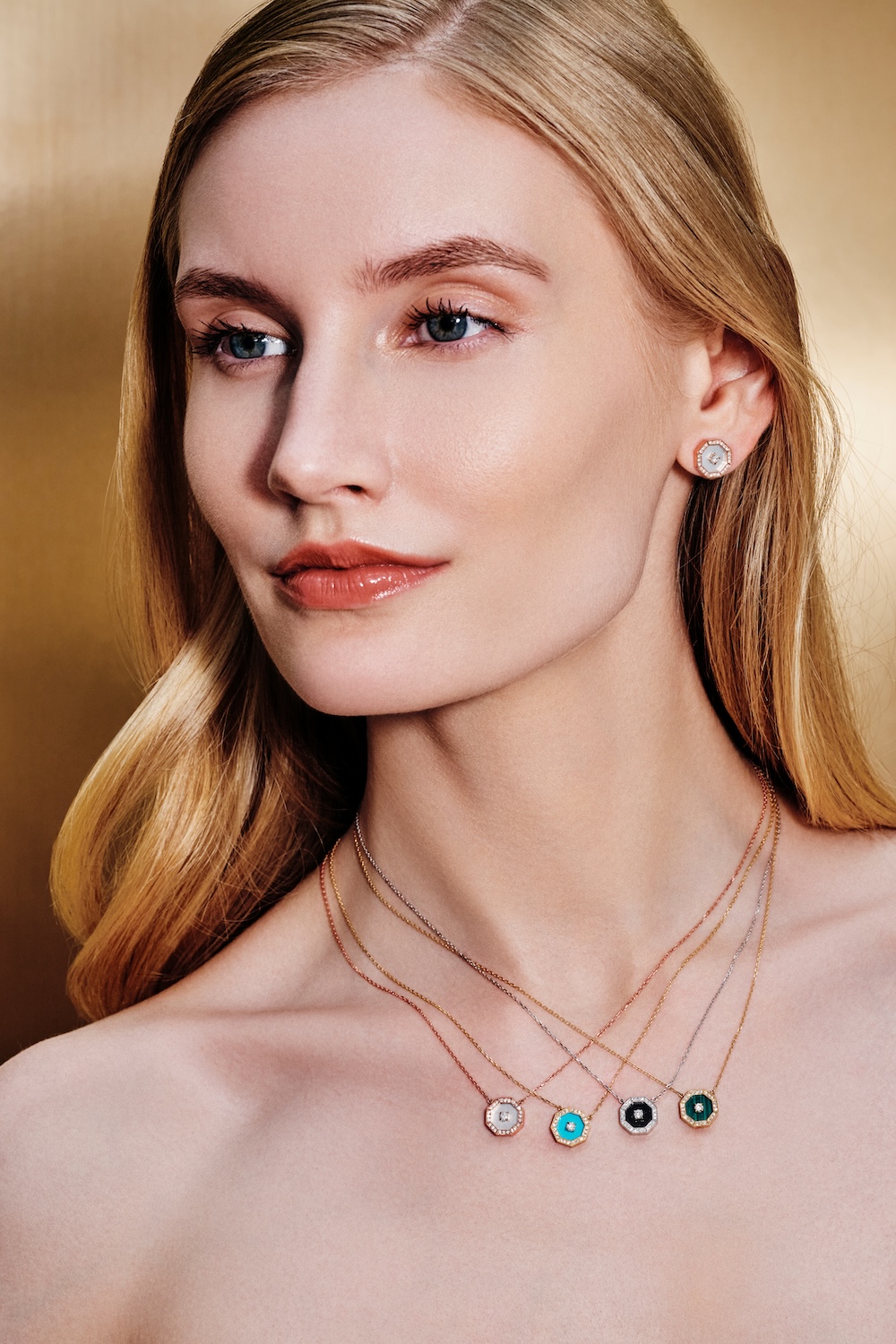
It's a balance Samra Jewellery knows well. The Emirati house has decades of jewellery expertise behind it, yet continues to evolve its vocabulary through geometry, precious stones and contemporary forms. Here, heritage isn't treated as something untouchable. It becomes the starting point for what comes next.
What we love most: Samra's ability to go bold. We're especially drawn to the larger silhouettes, strong geometry and pieces that can carry an entire look on their own. When a necklace makes the outfit, you already know we're interested.
More on Samra.com
Yaz & Co
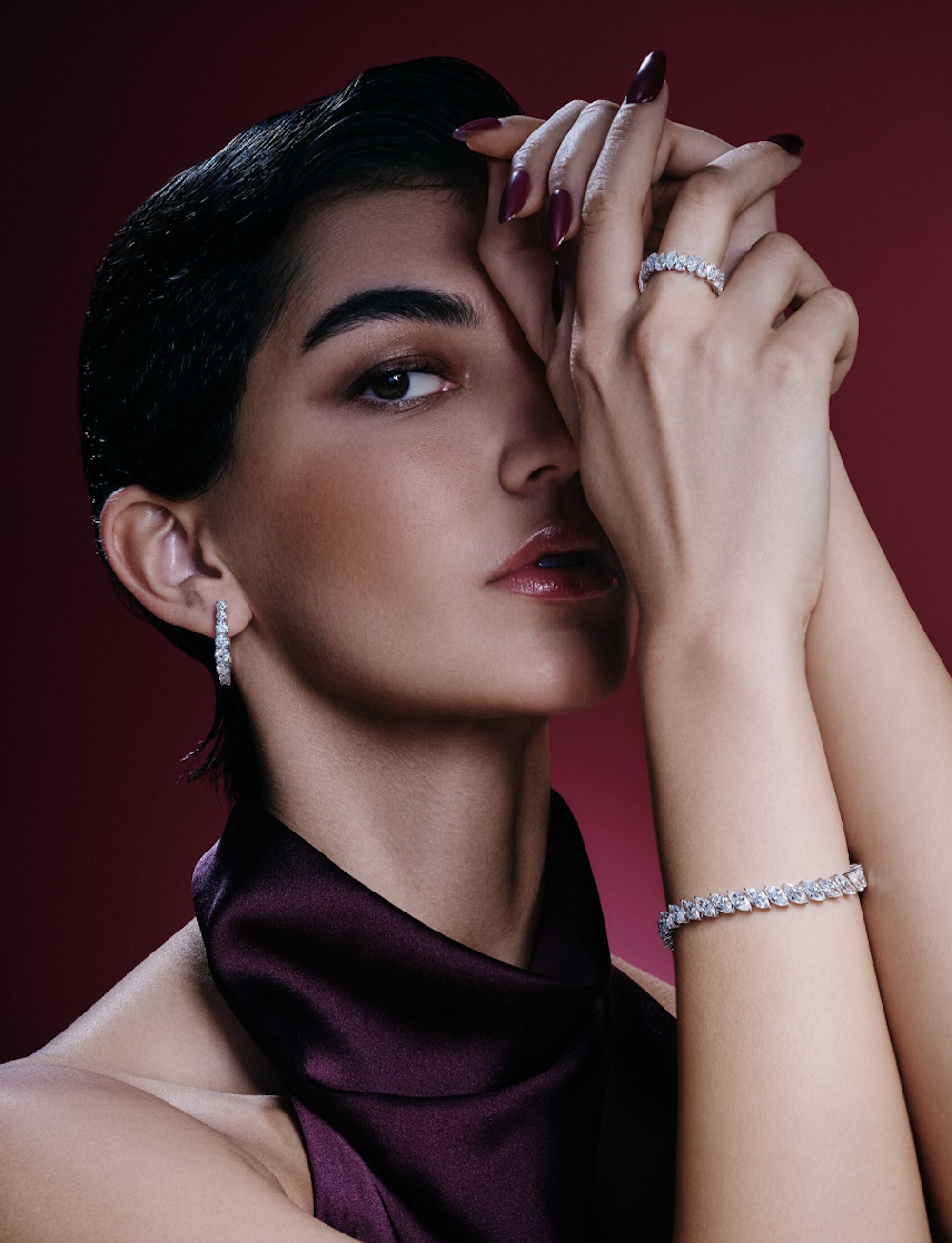
Yaz & Co represents another evolution altogether. The Emirati house puts lab-grown diamonds at the centre of its jewellery universe, spanning everyday diamond pieces and engagement rings with an emphasis on versatility and personalisation. It speaks to a new jewellery customer who wants to understand what they're buying and make their own choices without giving up the emotion or beauty traditionally associated with diamonds.
What we love most: The freedom to play with diamonds. Lab-grown stones open up interesting possibilities around scale, stacking and personalisation, which means more room for the kind of generous, sparkling jewellery we naturally gravitate towards.
More on YazAndCo.com
Charmaleena
.png)
And in Saudi Arabia, Charmaleena turns storytelling into something you can wear. Saudi culture, heritage and symbolism inform its jewellery, but references are interpreted rather than simply reproduced. The result is pieces that carry a very particular sense of place while still feeling unmistakably of the moment.
What we love most: The symbolism, especially when it's translated into a bold, recognisable piece rather than something overly discreet. Charmaleena understands that jewellery can carry culture and still be playful, graphic and incredibly wearable.
More on Charmaleena.com
Different countries, different stories and very different aesthetics, but perhaps that's precisely the point.
There isn't one new definition of fine jewellery emerging from the region. There are many. Some are minimal, others deeply symbolic. Some begin with diamonds, others with colour, culture or emotion. And then there are the pieces we personally can't resist: the oversized necklace, the unexpected stone, the ring that probably doesn't need another ring next to it but gets one anyway.
What connects these houses is a willingness to treat preciousness differently, making jewellery more personal, more wearable and less dictated by old ideas of when, where or how something valuable should be worn.
Fine jewellery isn't becoming less precious. We're simply having a lot more fun with it.
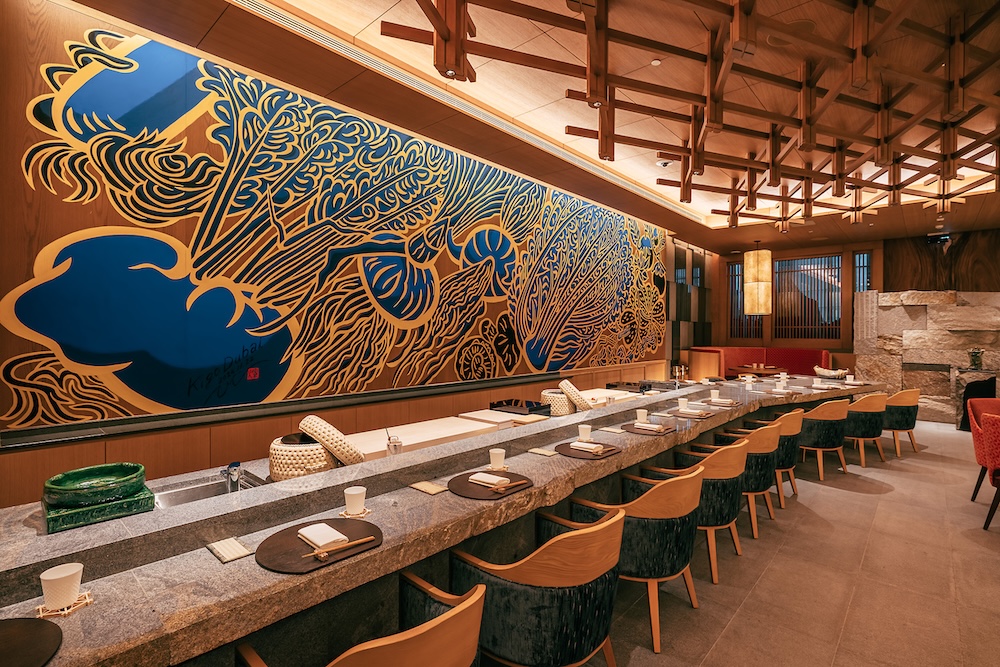
KIGO: The DIFC Omakase Bringing Us a Little Closer to Japan
I’m lucky enough to have been to Japan twice in my life. One of the most—scratch that, the most amazing trip I’ve ever been on.
From the people’s energy to the shopping, and from the landscapes to the food, every bit of those trips was absolutely perfect. And ever since my last visit in 2017, all I’ve been waiting for is the moment I get to go back.
While flying over to Japan isn’t always that easy, sadly, sometimes you need to find ways to bring Japan a little closer to you. And I think I found just that.
Niched away in DIFC, inside the Four Seasons Hotel Dubai International Financial Centre, KIGO is a Japanese dining experience that has somehow managed to bring a little piece of the country of the rising sun to the Gulf.
From the materials used throughout the space to ingredients flown in twice a week and, of course, the chefs themselves, Japan transpires everywhere you look.
By Cynthia Jreige
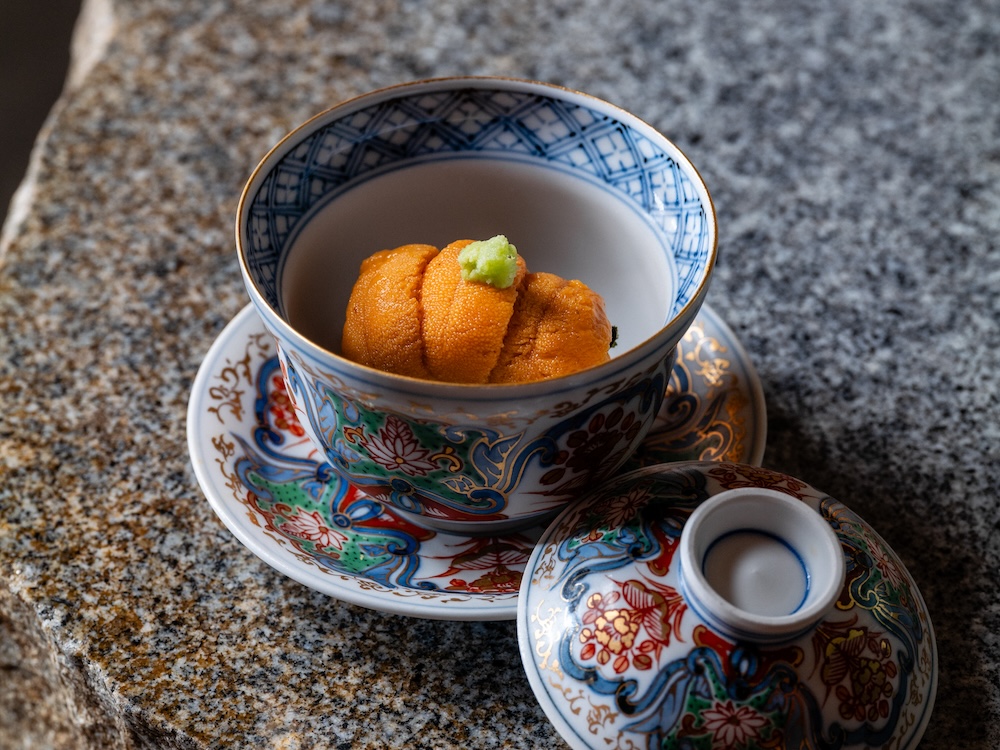
There’s a sobriety and elegance to KIGO that immediately reminded me of those intimate restaurants in Japan where everything feels intentional and where nothing is screaming for attention. There’s no overly elaborate décor, no deafening soundtrack and no need to turn dinner into a spectacle. Instead, there are natural materials, just 12 seats around the sushi counter and an almost obsessive attention to ingredients, technique and storytelling.
KIGO opened in September 2025 as a collaboration between Fundamental Hospitality and Four Seasons Hotel DIFC, with Chef Akinori “Aki” Tanigawa at its helm. His approach sits between two Japanese culinary traditions: the seasonality, progression and precision of Kaiseki, and the more intimate chef-led nature of Omakase.
When we first experienced KIGO, it was through an eight-course omakase that delivered on every level. Every dish felt incredibly refined, mixing flavours we had never tasted before and introducing us to fish we had never even heard of, all prepared right before our eyes by chefs whose passion and technique command immense respect.
Bite after bite, we were transported thousands of kilometres away from our seats, hoping each course would last a little bit longer, and then a little bit longer.
Now, there’s a new reason for us to go back.
A Japanese Summer, Woven Into Six Courses
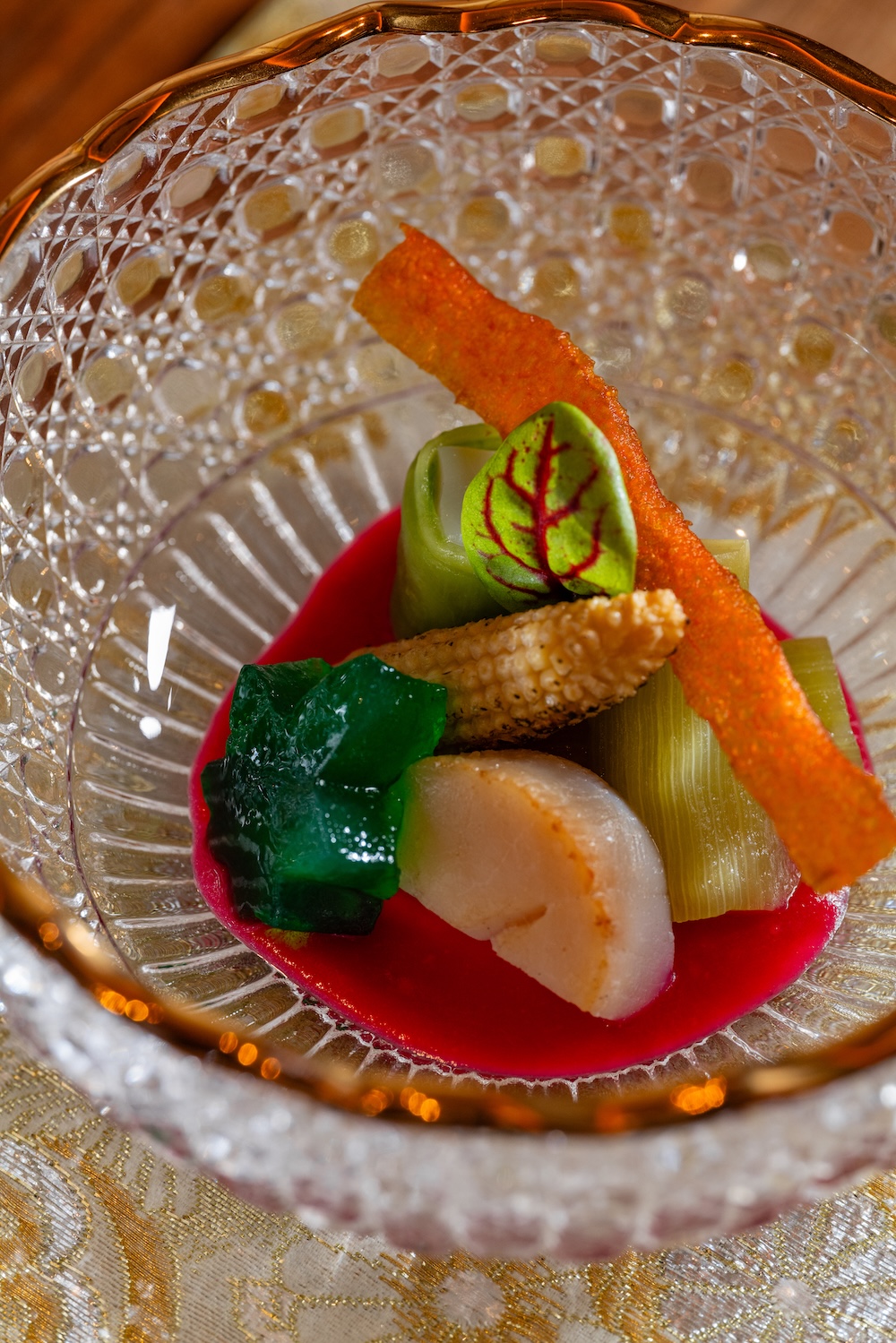
For summer, Chef Tanigawa has reshaped KIGO’s Tsumugi Menu, a six-course seasonal tasting experience available until 6 September.
The name itself says quite a lot about what happens here. Tsumugi is the Japanese word for a woven fabric, where threads from different origins are brought together to create something whole. At KIGO, those threads are Kaiseki and Omakase, woven into one experience that changes according to the season.
And seasonality here isn't simply a menu update every few months.
KIGO's philosophy is rooted partly in the Japanese concept of mono no aware: an awareness of the fleeting nature of things and the beauty that comes precisely from knowing they won't last forever. The menus respond to what the land and sea have to offer at a particular moment, meaning the experience you have now isn't necessarily one you'll be able to repeat later.
For summer, that begins with Scallop and Summer Vegetables with Beetroot Miso Sauce, followed by Chawanmushi with Green Pea Soup.
Then things get particularly interesting: Black Cod covered with Cha Soba noodles and Uni Pâté, before the main course of Charcoal-Grilled Tajima Wagyu Sirloin, Salt Koji Cured.
The experience ends with a Seasonal Sushi Selection with Silken Egg Miso Soup, followed by a selection of premium Japanese fruits.
For those who want to take things a little further, there’s also a Premium Nigiri Selection, including uni and otoro, available for an additional AED 520.
The six-course Tsumugi Summer Menu is priced at AED 980 per person, while a private dining experience including the premium nigiri selection is available for AED 1,500 per person in KIGO's Japanese-inspired private dining room, which accommodates up to 10 guests. Premium beverage pairings can also be added separately.
Not Your Typical Dubai Dinner
What we love about KIGO is also what might make it slightly unexpected for Dubai. KIGO isn’t at all like most restaurants we've been to in the city.
There’s obviously no spicy mayo or truffle wagyu here, the music isn't loud, the atmosphere is a little serious and nobody seems particularly concerned with creating the next viral dish.
Instead, you're being asked to pay attention, to watch the chef. To notice where an ingredient came from. To understand why something is being served at this exact moment of the year. To appreciate the difference between one fish and another, or the amount of technique hiding behind something that can look remarkably simple on the plate.
There is a restraint to it that feels distinctly Japanese, and perhaps that is why it transported us so successfully. You're not just here to enjoy an unforgettable meal. It’s a whole experience.
And until I finally manage to get myself back on that flight to Japan, I'll happily take a seat at KIGO's counter instead.
The Tsumugi Summer Menu is available Wednesday to Sunday, with seatings between 6 PM and 10 PM, until 6 September 2026. The menu is priced at AED 980 per person, with seasonal dishes subject to change.
More on KIGODubai.com
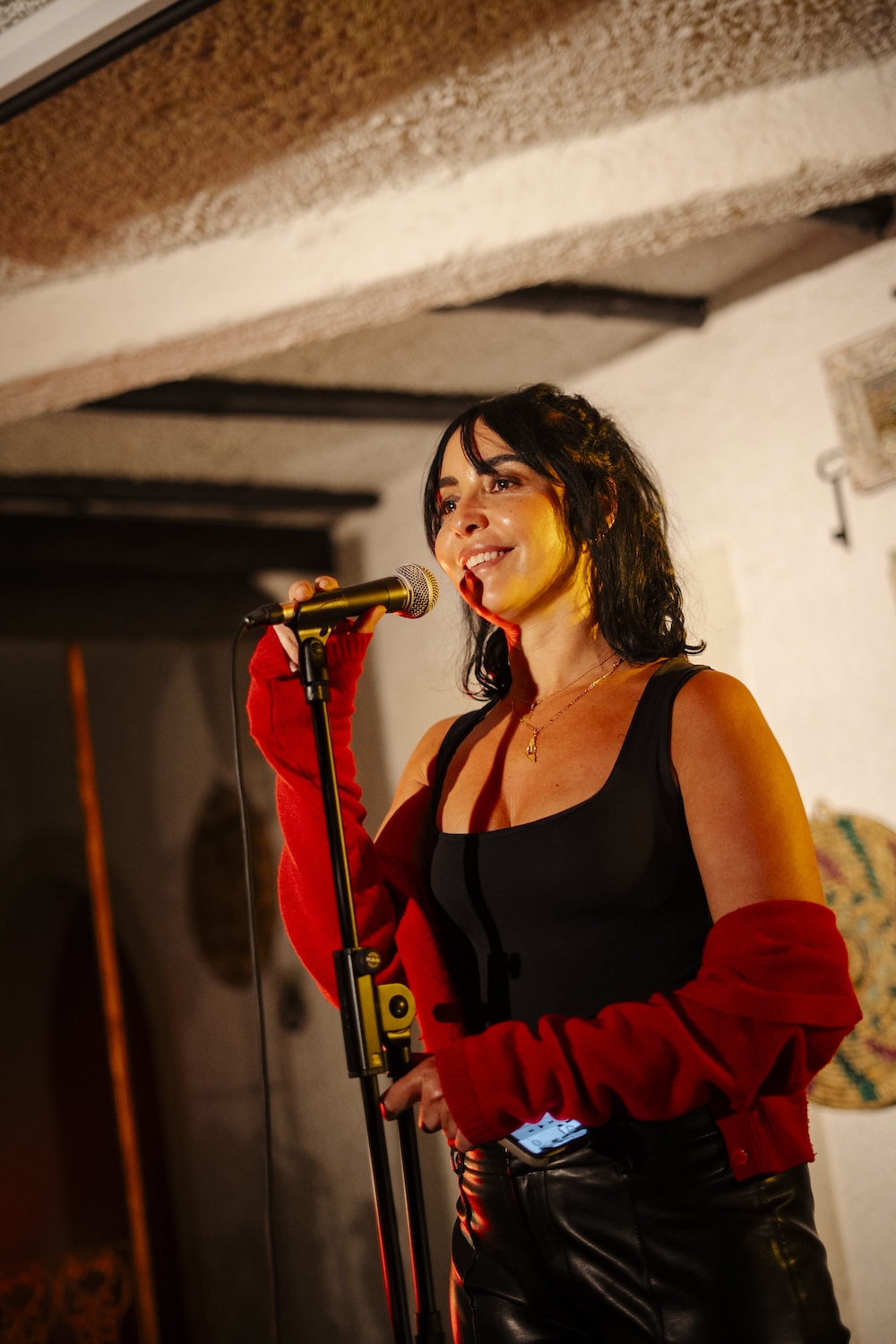
Aswatna Is Creating a Home for Palestinian Artists
For Palestinian artists, being seen is only part of the equation. Having the infrastructure, representation and freedom to build a sustainable creative career on your own terms matters just as much.
That idea sits at the heart of Aswatna, a Palestinian-owned talent agency founded by Nour to represent and uplift Palestinian artists while creating new pathways for their work to reach international audiences. Meaning “Our Voices” in Arabic, Aswatna works across artist management, bookings, branding and cultural programming, with a focus on helping Palestinian creatives grow without disconnecting them from their values or communities.
“Aswatna is about building pathways for Palestinian creativity to thrive with integrity,” explains Nour. Her ambition is ultimately much bigger than representation alone: to see Palestinian art “powerfully positioned on the world stage,” changing perceptions of Palestine through the creativity and imagination of its people. It feels particularly important at a time when Palestinian artists are increasingly present within global cultural conversations, yet the structures supporting those artists don't necessarily evolve at the same pace.
“Palestinian artists hold extraordinary creative power, but too often they have had to navigate industries without the support systems needed to grow,” says Nour. “We created Aswatna to be a home for Palestinian artists, a space where they are supported, represented, and connected to opportunities that honor both their craft and their values.”
That commitment extends to where and how its artists are represented. As a Palestinian-owned and operated agency, Aswatna carefully vets the venues, festivals, cultural institutions and collaborators it works with, ensuring partnerships align with the ethical principles of the artists themselves.
Next Stop: London
That philosophy will soon take physical form with the Aswatna Showcase, an evening dedicated entirely to Palestinian music, visual art, storytelling, food and community, held in the courtyard of Studio 12 in London on August 22nd.
Rather than focusing on one creative discipline, the event brings them together. Live music will sit alongside visual art, Palestinian food, books and independent vendors, creating a space where visitors can discover Palestinian creativity through multiple perspectives. It is an extension of what Aswatna wants to achieve beyond traditional talent representation: curating cultural programmes exclusively featuring Palestinian artists and allowing audiences to encounter Palestinian heritage and contemporary creativity through music, art, storytelling and performance.
At the centre of the visual arts programme will be an exhibition by acclaimed Palestinian artist Malak Mattar, while four Palestinian musicians bring very different sounds and stories to the evening.
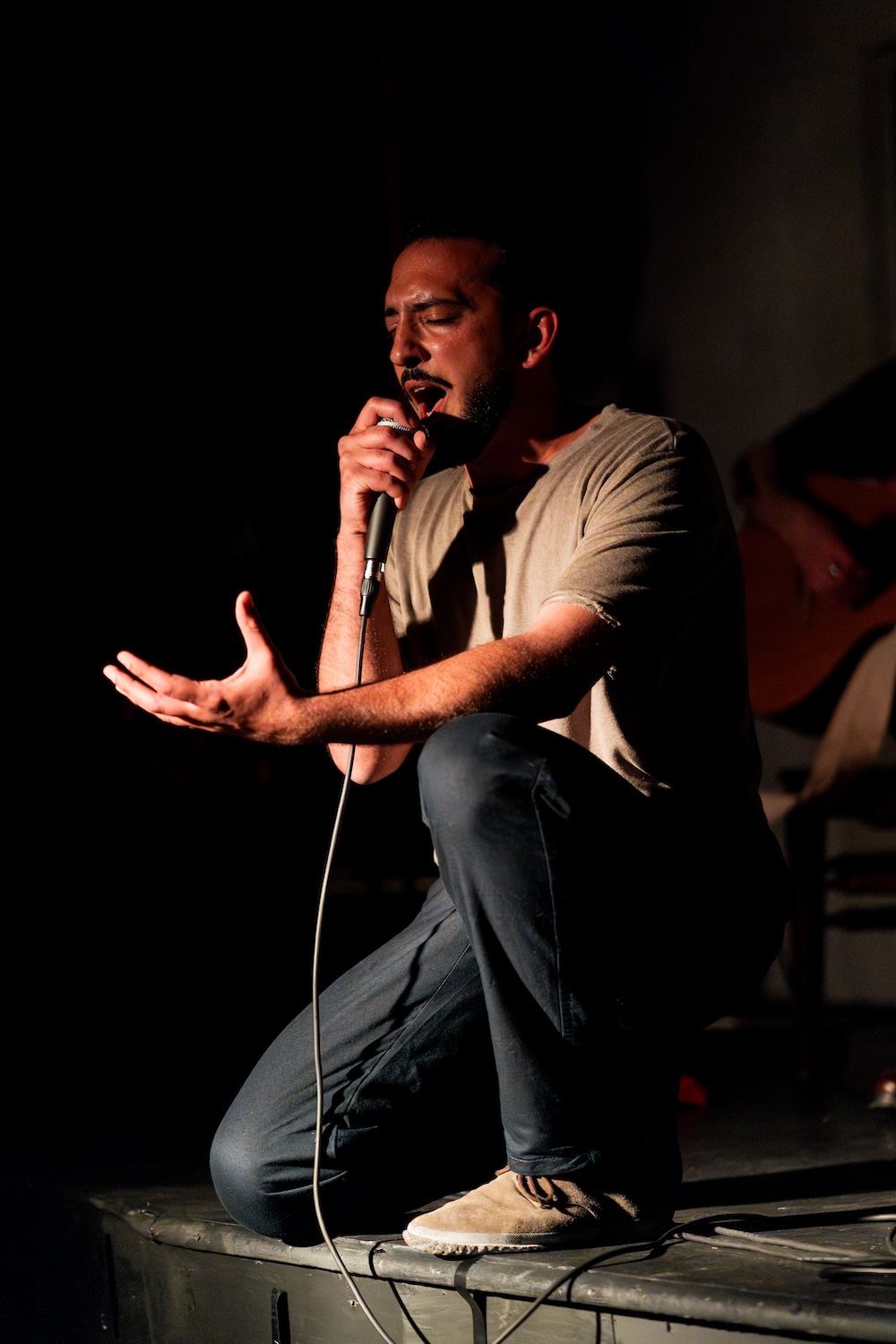
Four Artists, Four Very Different Sounds
Rawan Roshni will present Palestinian Folklore Reimagined, weaving ancient Palestinian chants, revolutionary anthems and tarweedat with contemporary songs of sumoud. Through live looping, vocals and instrumentation, her performance moves through identity and history, but also grief, resilience and empowerment.
Marwan Halabi, meanwhile, crosses musical borders entirely. The Palestinian singer-songwriter brings Middle Eastern maqams into conversation with Indian ragas, blues, alternative rock and spiritual musical traditions, creating a sound shaped by cultural exchange, reflection and connection.
Then there's SAIFAMEE, a Palestinian underground hip-hop artist who has been rapping since he was ten. His music comes directly from lived experience, using deeply personal storytelling to explore justice, spirituality, struggle, motivation and the realities unfolding around him.
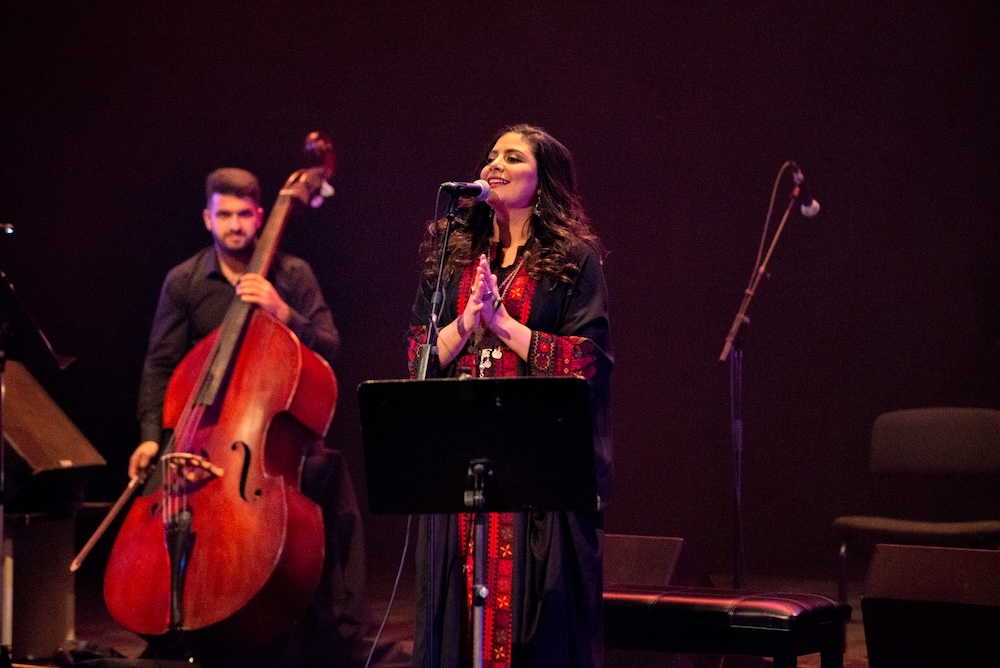
And Yousef Mattar, a Palestinian pianist, arranger and music producer from Gaza, brings a particularly powerful story to the programme. A self-taught musician since childhood, Mattar continued creating while growing up under military blockade and through repeated wars that destroyed his piano and much of the life he had built in Gaza. His music combines Arabic traditions with contemporary influences, exploring identity, resilience, hope and the richness of Palestinian musical culture.
Throughout the evening, the performances and exhibition will be joined by Palestinian food, books and independent vendors, making the showcase as much about gathering and community as it is about watching a performance.
More Than Representation
The agency isn't simply trying to place Palestinian artists within existing cultural structures; its ambition is to help build the support systems around them while simultaneously creating spaces of its own. For Aswatna, representation means “visibility, sustainability, and cultural presence,” with the longer-term vision of Palestinian artists not simply being included in international cultural spaces, but recognised as essential voices shaping them.
The London showcase offers a glimpse of what that can look like: Palestinian culture presented not through one medium, one narrative or one artist, but through a room full of voices, sounds, images, stories and people.
And perhaps the name says it best: Aswatna. Our Voices.
Get your tickets for the London showcase on August 22nd, here

Low Impact, High Burn: The Workouts Taking Over Dubai
Dubai has never exactly struggled when it comes to places to work out. But lately, something has shifted. The traditional gym session is increasingly being replaced by something more considered: Lagree on the Megaformer, reformer Pilates, Microformer classes and workouts performed inside infrared-heated rooms.
The burn is slower, the movements smaller, and somehow our legs are shaking more than ever. For anyone who has found themselves suddenly fluent in phrases like “time under tension” and “Mega Pro,” welcome to Dubai’s latest fitness obsession.
From Al Quoz to d3 and Downtown, these are the studios currently making us want to book another class before we’ve recovered from the last one.
BRRN Barre: Things Are Heating Up in Al Quoz
At BRRN Barre, the clue is very much in the name.
Located in Al Quoz, the women-focused studio describes itself as Dubai’s first infrared-heated Pilates, barre and reformer studio, combining controlled, low-impact movement with rooms heated using infrared technology. Its programme moves between reformer, barre, Pilates and sculpting sessions, with both heated and unheated options.
And while the red-lit rooms certainly make good content, the heat isn't just there for the aesthetic. Infrared training has become one of the UAE's biggest fitness trends, with studios using it alongside low-impact movement to warm the body and add another layer of intensity to already challenging classes.
BRRN somehow manages to make sweating profusely feel rather chic.
What we loved: A different kind of challenge, the intense sweat from the heated room, the space (DISCO BALLS!!)
Villa Boost: Meet the Infrared Micro Burn
If you've already graduated from reformer to Lagree and are wondering how to make those tiny movements hurt even more, Villa Boost may have found the answer.
The Al Safa 2 space offers everything from Reformer Pilates Flow and Dynamic Reformer to Micro Burn and Micro Strength, but we're particularly intrigued by its Infrared Micro Burn.
The 45-minute workout takes Boost's Lagree-inspired Microformer method—slow movements, controlled transitions and plenty of time under tension—and puts it into an infrared-heated environment. The result is a full-body session designed around muscular endurance and that now very familiar Microformer shake.
Founder Rania Zorkot's philosophy is refreshingly straightforward: movement isn't about doing everything faster, but doing it well. It's an approach built around precision, control and intelligent sequencing rather than rushing through repetitions.
Basically, tiny movements. Enormous burn.
What we loved: The most challenging class we tried in a while but the energy was superb. You both want to stop and keep going forever. We can't recommend this for beginners.
Soul MVNT: Lagree in d3
Over in Dubai Design District, Soul MVNT is feeding our current Lagree fixation.
The contemporary fitness and wellness studio offers Lagree on the Mega Pro, bringing together the slow pace and precision that make the method so deceptively difficult. The philosophy here extends beyond pure intensity, with the studio positioning its approach around balancing mind and body while its classes span movement including Pilates and strength-focused training.
It's also a good reminder of why Lagree has become such an obsession. From a distance, everyone appears to be moving extremely slowly. Get onto the machine yourself and suddenly holding a position for a few more seconds feels like a personal crisis.
Exactly what we're currently looking for.
What we loved: the instructors! They're attentive and will push you to your limits. Love the 'Live DJ' class as well as their super cute merch.
Platform Studios: Turn Up the Heat
If your definition of a good workout involves leaving absolutely everything in the room, IGNITE at Platform Studios takes the heated-workout trend somewhere considerably more athletic.
Rather than Pilates or Lagree, IGNITE is a 45-minute heated, full-body training concept combining athletic flow, explosive drills and strength sequences. Functional movement meets rhythm, control and power, with the heated environment adding another dimension to the workout. It's part of Platform's much broader approach to boutique fitness; the studio's line-up currently spans barre, strength, reformer, Pilates Burn, cycling and yoga alongside IGNITE.
So if you've done enough slow lunges on a reformer for one week and want something faster and sweatier, this is where we'd switch things up.
What we loved: The burn, the energy, the room and instructor: a wonderful change from our usual Lagree. bringing us back to the mat in style.
Ikigai: Mat Meets Lagree
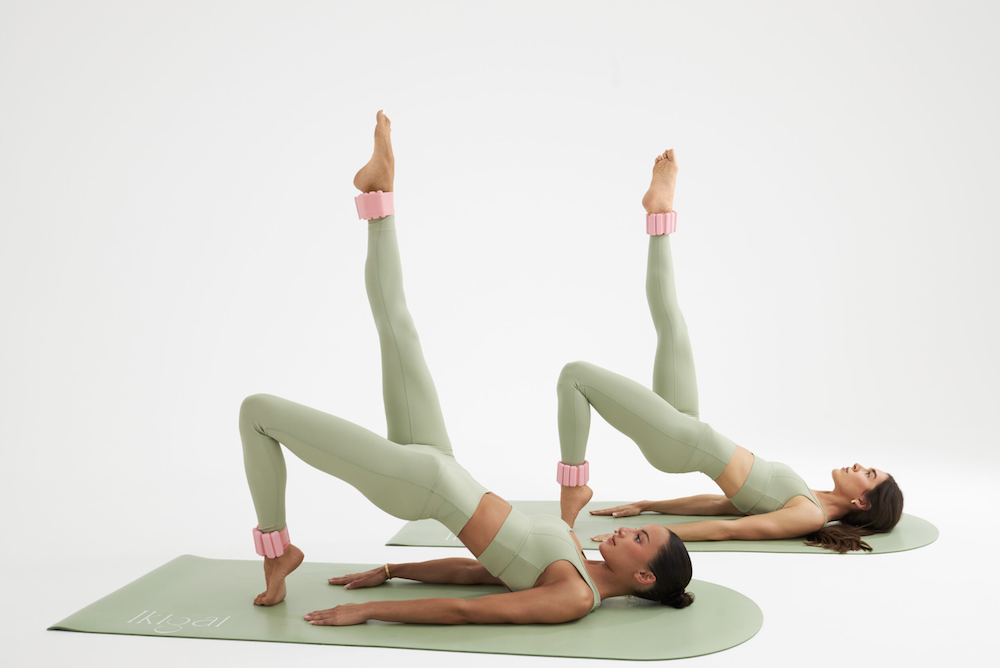
Ikigai Studio in Downtown Dubai offers us the best excuse not to choose sides.
The ladies-only studio takes its name from the Japanese idea of finding purpose and has built its identity around mindful, controlled movement. Alongside mat and reformer Pilates, its current schedule includes Lagree Mega Pro and Lagree Mega Pro Advanced, allowing you to move between traditional Pilates and the considerably more intense Lagree method within the same space.
The atmosphere may lean serene, but don't let that fool you. A Mega Pro class still delivers everything you'd expect from Lagree: control, resistance, endurance and the kind of muscle shaking that makes stairs an interesting proposition afterwards.
What we loved: super cute studio, the machines aren't packed next to one another, great instructor.
GIGI: Lagree, But Make It a Lifestyle
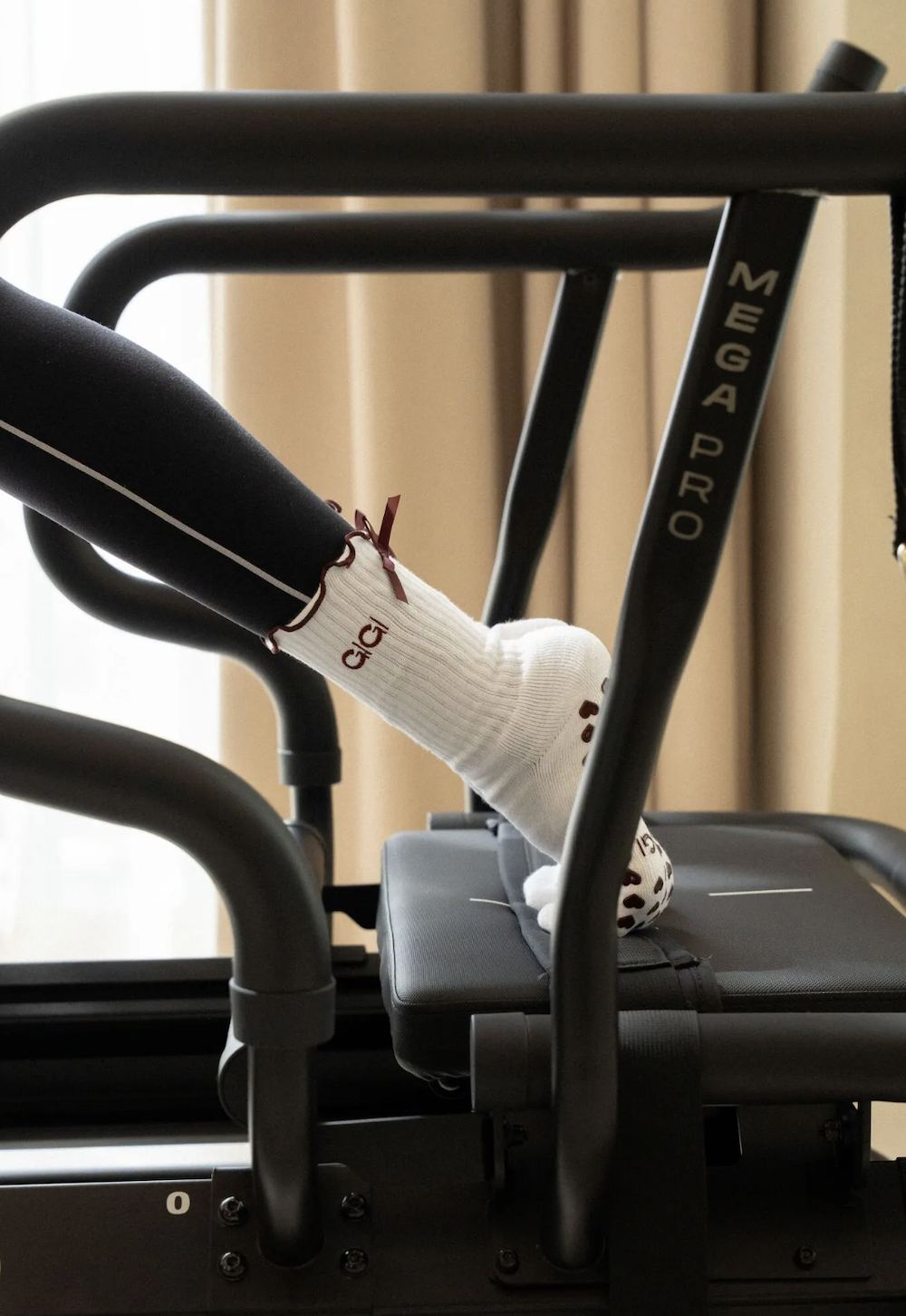
Gigi is another name firmly feeding Dubai’s Lagree obsession. Founded by Emirati entrepreneur Ghaliya Ahli, the concept was designed to be more than somewhere you simply arrive, work out and leave. GIGI brings Lagree, design, wellness and community together, turning the studio into more of a lifestyle destination.
The workout itself centres on the slow, controlled movements Lagree is known for—low-impact, but with enough resistance and time under tension to make your muscles question every decision that brought you there. GIGI has built a loyal following across its Mirdif and Nad Al Sheba locations, while the Mirdif studio also introduced Miniformers, a more compact take on the traditional Megaformer.
What makes GIGI interesting, though, is everything surrounding the workout. Ahli has approached the brand through the lens of community, creativity and considered design, with events and activations helping it feel less like another boutique fitness studio and more like part of Dubai’s evolving wellness culture.
Come for the Lagree shakes; stay because apparently working out is now a social plan.
What we loved: the quiet and lit room, the aesthetic, the ambiance.
So, Why Is Everyone Suddenly Shaking?
Perhaps what's most interesting about Dubai's latest fitness openings isn't any single method, but the direction they're collectively taking.
Low-impact no longer means low-intensity. Reformer Pilates is getting more athletic. Lagree is appearing on more schedules. Microformers are joining Megaformers. Infrared heat is turning an already difficult class into an even sweatier proposition. And the studio itself has become almost as considered as the workout happening inside it.
The common thread is controlled intensity: fewer frantic repetitions and more precision, resistance and time under tension. It's fitness designed to make you slow down while somehow working considerably harder.
Cover Photo: BRRN Room
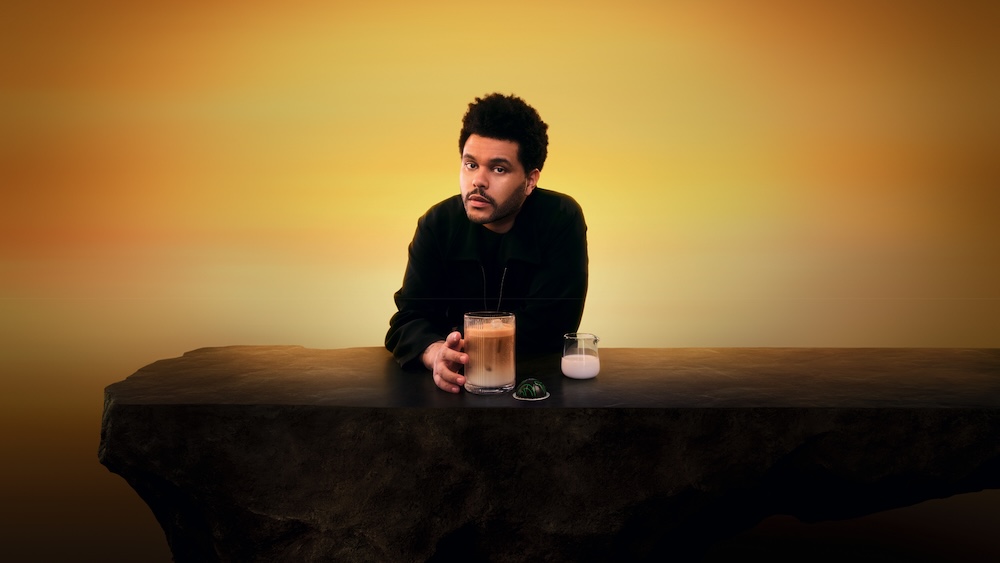
The Weeknd’s Samra Origins Coffee Is Back in the UAE With a New Nespresso Blend
Nespresso and The Weeknd are bringing Samra Origins back to the UAE, and this time the collaboration comes with a new limited-edition coffee, branded machines and accessories designed around something most of us can relate to: the ritual of having coffee together.
Having made a return to the UAE on August 11, the expanded collaboration introduces the Samra Origins Togetherness Blend, created for Nespresso’s Vertuo system and bringing together Nespresso’s coffee expertise with The Weeknd’s creative vision.
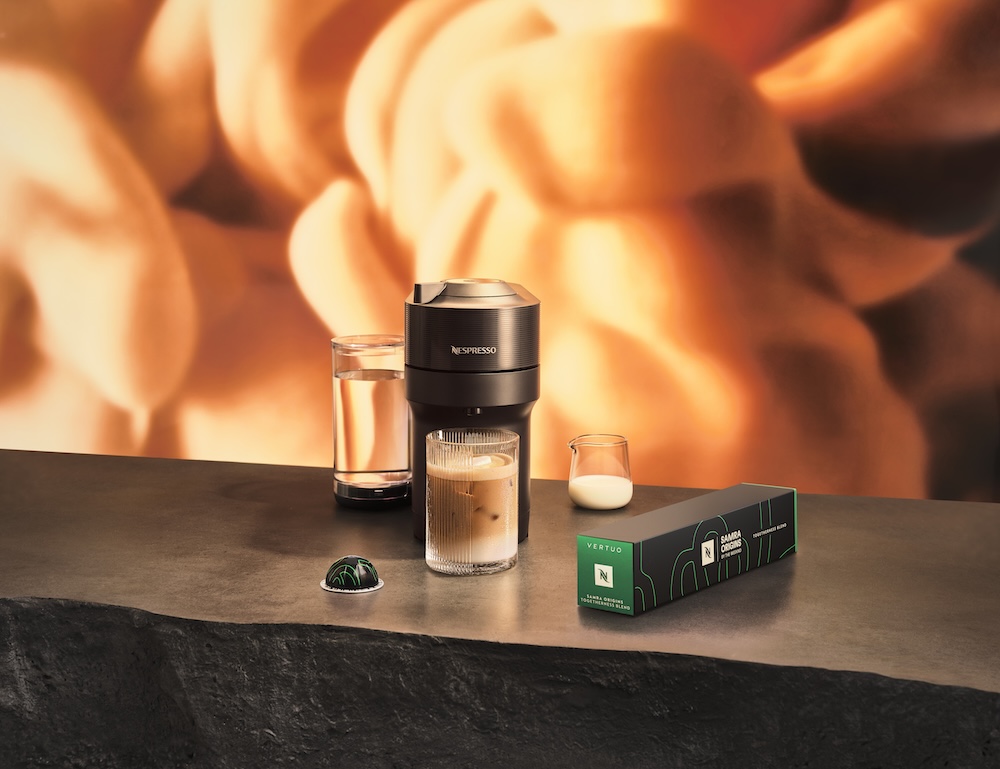
But there is a much more personal story behind Samra Origins than another celebrity coffee collaboration.
Co-created by Abel “The Weeknd” Tesfaye, Samra Origins takes its name from his mother, Samra. The brand is described as a love letter to the woman whose support has played an important role throughout his life and creative journey. That connection also explains why ideas of family, togetherness and ritual sit at the heart of the project. For The Weeknd himself, coffee is something of a constant: “I have a daily coffee ritual that brings me grounding and comfort,” he explains. At home, coffee gives him a moment to reflect, while on tour the familiar process offers “consistency and calm” wherever he happens to be. And his order? Black, either hot or over ice.
The new Togetherness Blend builds on that idea of coffee as something greater than what is inside the cup: a daily ritual capable of creating conversation, connection and even creativity. Nespresso and Samra Origins position coffee here as a catalyst for everything from art and music to culture. And naturally, there is more than coffee involved.
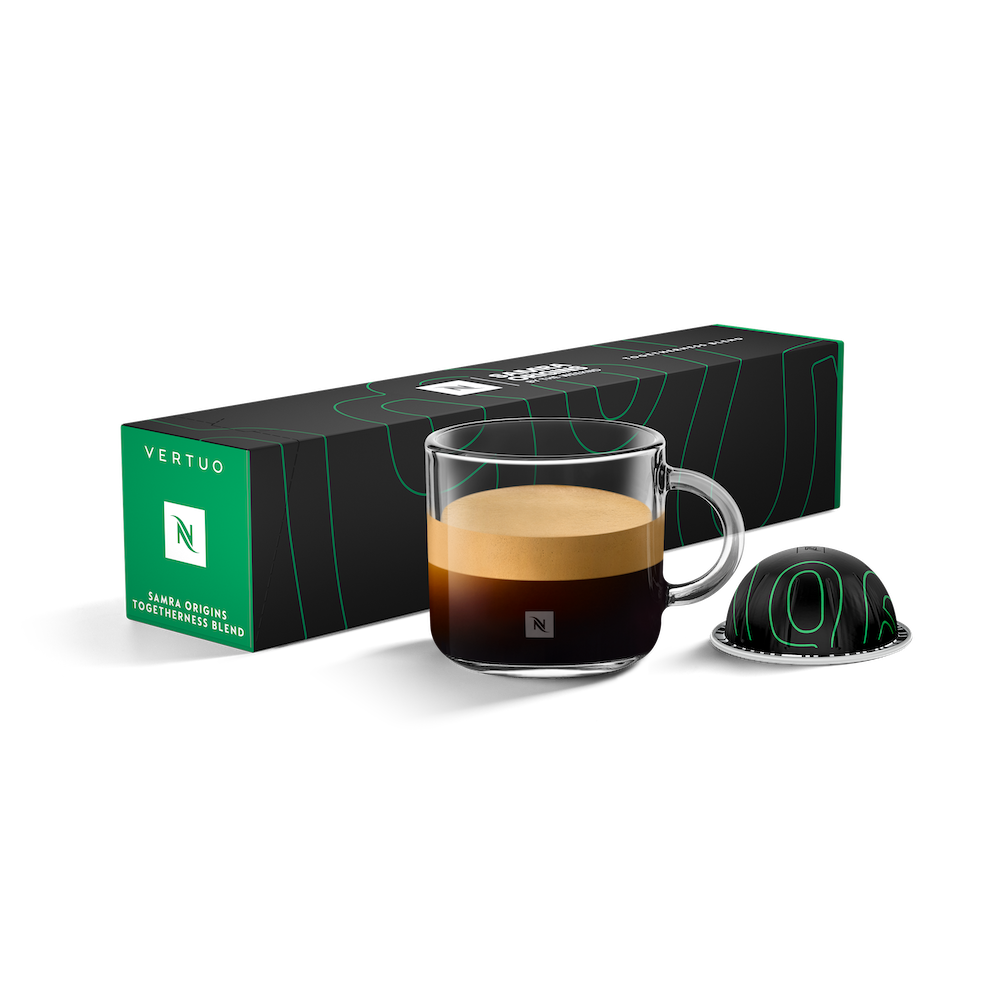
Alongside the new limited-edition blend, the returning collection includes a tumbler, travel mug and Vertuo Pop coffee machines, all finished with Samra Origins branding and a distinctive colour palette.
This isn't the first time the two names have come together. Nespresso and Samra Origins initially launched their collaboration in 2025, united by what they describe as a shared appreciation for craftsmanship, creativity and meaningful everyday rituals. Following that first release, the expanded collection now gives UAE coffee drinkers more ways to bring the Samra Origins universe home.
The Nespresso x Samra Origins Togetherness Blend and collection are available across the UAE since August 11, both online and at Nespresso boutiques.
More on Nespresso.com
The Way They Wear: Manal And Amani Waqi, Co-Founders, Amanqi Consultancy
Some style is taught, some is inherited. For sisters Amani and Manal Waqi, co-founders of The Amanqi Consultancy, it's both:
a wardrobe built on their mother's own clothing label and vintage possessions, local emerging designers and high-end must haves, sharpened by a business-meets-creative instinct, and worn with the kind of ease that can't be bought off a runway. This week on The Way She Wears, we sit down with the duo shaping some of the region's coolest emerging brands from the inside, to talk vintage Prada denim, the one non-negotiable staple in every closet, who their favorite regional designers are right now, and more!
The Way She Wears (TWSW) is our way of spotlighting women whose style feels personal, intuitive, and entirely their own. Not trends, not formulas, just a point of view.
MANAL
Manal Waqi Co-Founder at The Amanqi Consultancy
When did you know you’d be working in fashion/creative industries?
For as long as I can remember, I wanted to be a part of the fashion industry. Initially that was in the space of design, but now
Who are you fashion icons?
I wouldn’t say it’s any one person but I love following people who have an unique sense of style and are true to themselves.
What are 3 brands you could wear forever?
Missoni, The Row, Pucci, Amina Muaddi, Ermanno Scervino
4 staples everyone should own?
A good pair of mules (Amina Muaddi Juliette are an essential), a good everyday gold choker, a denim jacket (mine are always cropped), a good white t-shirt.
What are the regional brands you love right now?
Seam The Label
Your fashion most special possession?
A faded pink Prada denim jacket.
A piece worth investing in?
A good pair of tailored jeans.
Your current favourite song, book or tv show?
Barbaad - Saiyaara
AMANI
Amani Waqi
Co-Founder at The Amanqi Consultancy
Swiss, originally Pakistani
When did you know you’d be working in fashion/creative industries?
I honestly didn’t have one defining moment. My educational background is in business, but I’ve always been drawn to the creative side, so the work we do has become a natural blend of the two.
Who are your fashion icons?
My sister.
What are 3 brands you could wear forever?
Studio T (our mom’s clothing brand) is the only one I’ll always be loyal to! In shoe brands, Jimmy Choo and Casadei.
4 staples everyone should own?
I don’t believe there are universal must-haves in fashion - it depends entirely on your personal style. For me, the four staples I always come back to are blue tinted sunglasses (Rendel are my favourite), silk and linen trousers, and a pair of neutral kitten heels.
What are the regional brands you love right now?
We’re lucky to work with some of the region’s coolest emerging brands, so the list is constantly growing. But beyond our clients, I love many of the region’s couture houses, especially Zuhair Murad and Georges Hobeika.
Your fashion most special possession?
A few pairs of vintage sunglasses passed down to me from my mother. They’re cool, yet incredibly timeless.
A piece worth investing in?
A customised piece of fine jewellery - it is created entirely for you and truly one of a kind. It’s especially precious because it carries meaning beyond its material value and becomes something you keep and cherish forever.
Your current favourite song, book or tv show?
My current favourite song is Akhiyan by Abdullah Maharvi.
Discover more about The Amanqi Consultancy, here
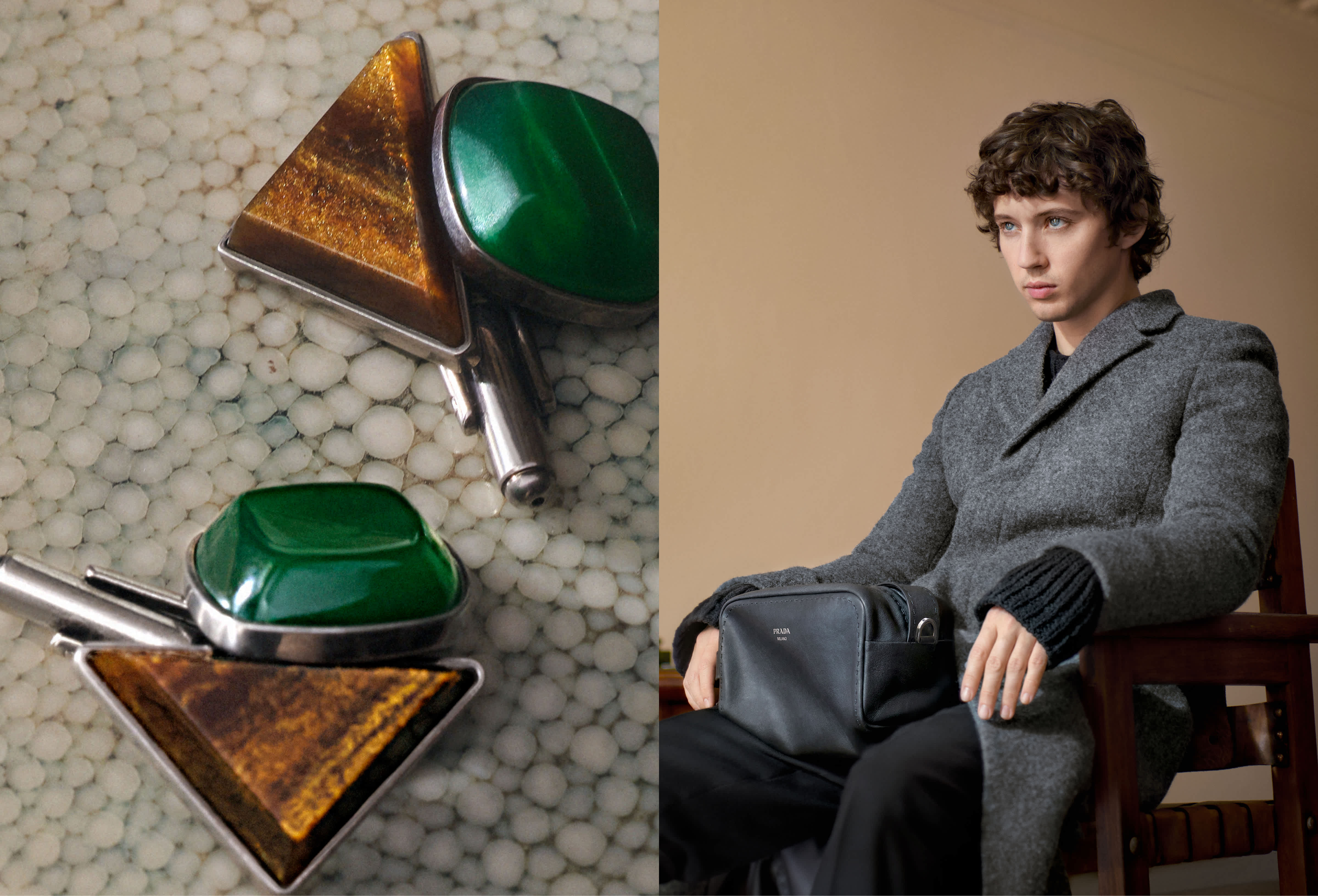
Prada’s Fall/Winter 2026 Campaign Is a Study of the Everyday
Sometimes the most compelling fashion image doesn't need a spectacular location, an elaborate set or an impossible fantasy. Sometimes, it just needs a moment. For its Fall/Winter 2026 campaign, Simple Stories, Prada turns its attention towards exactly that: the intimate, honest and seemingly insignificant fragments of everyday life that become meaningful when someone stops long enough to notice them.
Created around the Fall/Winter 2026 women's and men's collections by Miuccia Prada and Raf Simons, the campaign stars Chen Haoyu, Kelvin Harrison Jr., Hunter Schafer and Troye Sivan, with Academy Award-winning filmmaker Barry Jenkins behind the lens.
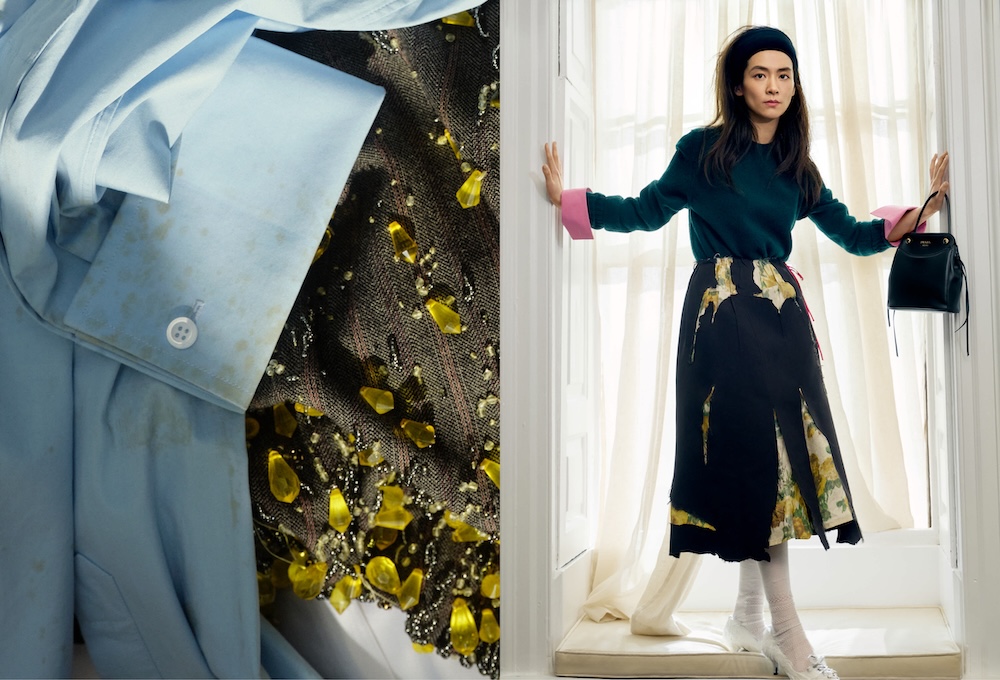
It is a fitting collaboration. Jenkins' cinema has long found power in intimacy; the gestures, silences and human exchanges that can reveal more about a character than dialogue ever could. Here, that sensibility enters Prada's universe, turning scenes of domesticity and normalcy into something worth preserving.
The clothes aren't simply placed within these scenes, either. Prada describes them as becoming "another character, another focus," part of a continuing dialogue between fashion and cinema that has long informed the house's visual identity. Rather than presenting us with complete narratives, Simple Stories offers fragments.
A posture, a private moment, a look that may or may not be aware of the camera. Each still and film short hints at a larger personal world without ever fully explaining it, leaving us to imagine what happened before and what might happen next. The campaign deliberately plays with the boundary between reality and performance: are we watching someone act, or simply react?
That ambiguity also changes the way the clothes are seen. Instead of existing independently from their wearers, they respond to bodies, attitudes and individual gestures. Fashion becomes less about creating a perfect image and more about observing what happens when clothes enter real—or at least apparently real—life.
The casting adds another cinematic layer. Hunter Schafer, whose work moves between acting and art, appears alongside musician and actor Troye Sivan, Chinese actress and vocalist Chen Haoyu, and Kelvin Harrison Jr., whose filmography spans Waves, Elvis, Chevalier and Mufasa: The Lion King.
Jenkins himself brings an extraordinary cinematic history to the project. His 2016 film Moonlight received eight Academy Award nominations and won Best Picture and Best Adapted Screenplay, while If Beale Street Could Talk and The Underground Railroad further established his distinctive approach to character, intimacy and visual storytelling.
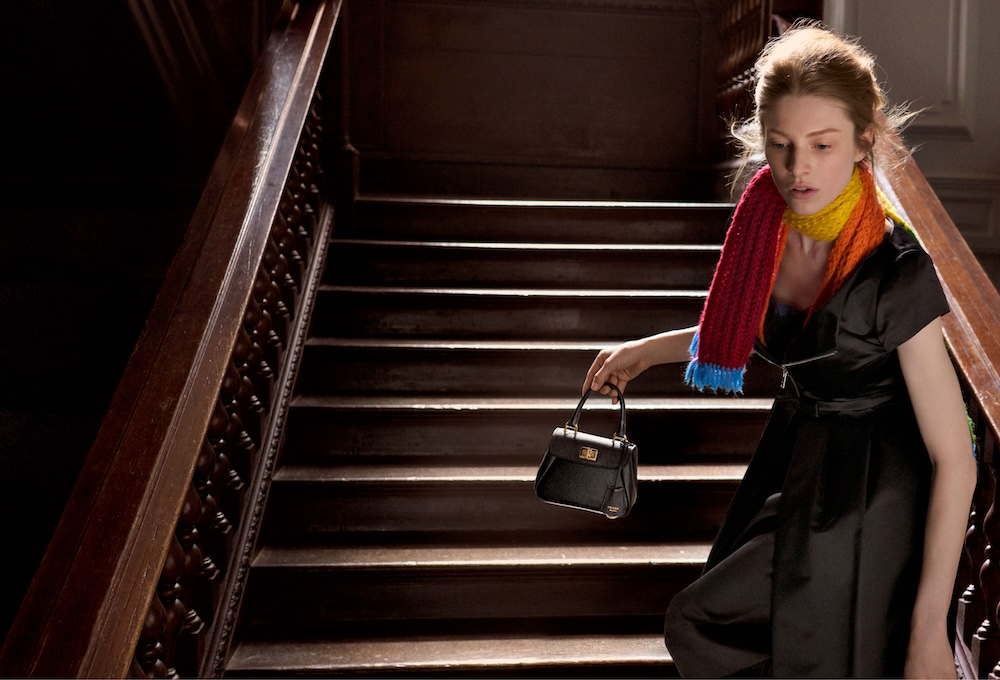
Yet for all the recognisable names involved, Simple Stories is deliberately quiet. Still lifes sit alongside enigmatic portraits. Domestic scenes are given the weight usually reserved for grander gestures. The images don't demand attention so much as invite you to look closer. And perhaps that's the point.
At a moment when fashion imagery can feel increasingly engineered to stop a scroll, Prada does almost the opposite. Miuccia Prada and Raf Simons, together with Jenkins and campaign creative director Ferdinando Verderi, find intrigue in restraint, allowing ordinary gestures to carry the story.
More on Prada.com
Wagyu Meets Japanese Whisky at Sutēki’s One-Night-Only NIKKA Experience
Dubai’s dining calendar has another date worth bookmarking. On Friday, August 14, Sutēki is bringing together two Japanese icons—exceptional wagyu and NIKKA Whisky—for Marble & Malt: The Nikka Wagyu Experience, an intimate, one-night-only dinner celebrating Japanese gastronomy and craftsmanship.
For the evening, Sutēki has created a special four-course menu showcasing its signature approach to Japanese cuisine, with each dish thoughtfully paired with one of NIKKA’s celebrated whisky expressions.
The idea is a simple but very tempting one: explore the richness and marbling of wagyu alongside the complexity of Japanese whisky, with each pairing designed to bring out different elements of both.
With just two limited seatings at 7:00 PM and 9:00 PM, the experience is deliberately intimate, with only a select number of reservations available.
The Details
What: Marble & Malt: The Nikka Wagyu Experience
Where: Sutēki
When: Friday, August 14
Seatings: 7:00 PM & 9:00 PM
Price: AED 390 per person
Includes: Four-course dinner paired with NIKKA Whisky
Reservations are required, click here
For wagyu lovers—and anyone with an appreciation for Japanese whisky—consider your Friday night plans sorted.
The JDEED Guide to Abu Dhabi: Where to Sleep, Eat, Sweat and Play Right Now
Over the years, Abu Dhabi has become one of our favourite cities for a weekend away. Between the beaches of Saadiyat, an increasingly exciting food scene, beautiful hotels, a new generation of wellness concepts and a cultural district that keeps giving us reasons to return, the capital has plenty going on beyond the landmarks everyone already knows.
So, where are we sleeping, eating, sweating and spending our time? Here's the JDEED guide to Abu Dhabi right now.
TO SLEEP
For a classic Abu Dhabi stay, The St. Regis Abu Dhabi puts you directly on the Corniche, pairing old-school luxury with sweeping Arabian Gulf views and easy access to the beach. It's the kind of address that works particularly well when you want to feel connected to the city without sacrificing resort time.
For something decidedly more contemporary, The Abu Dhabi EDITION is our pick. Sitting on the waterfront at Al Bateen Marina, its understated interiors, restaurants and social spaces offer a younger, design-led take on the city's luxury hotel scene.
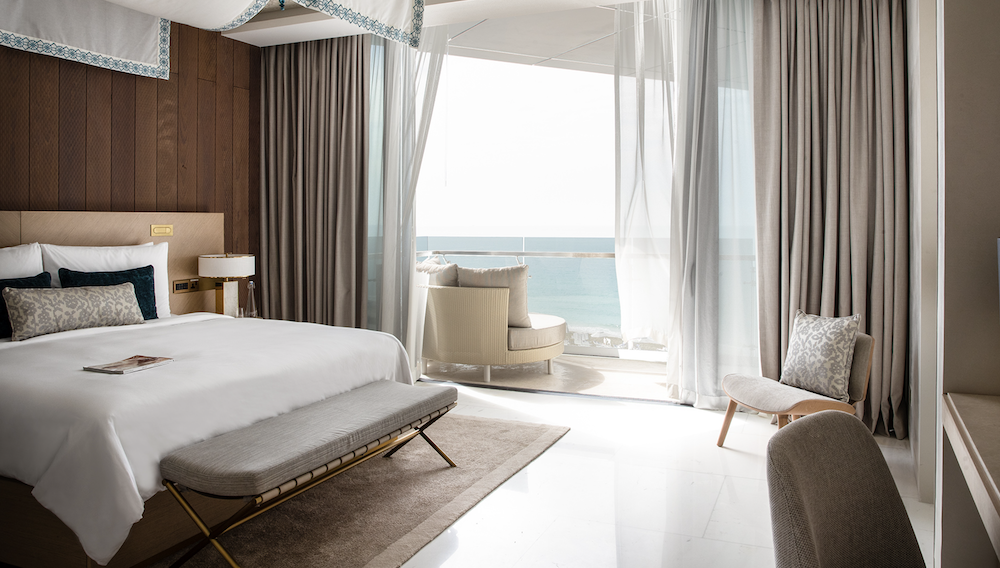
Then there is Emirates Palace Mandarin Oriental, Abu Dhabi, because sometimes you simply want the full Abu Dhabi fantasy. Sitting on its own private beach, the property has 390 rooms and suites overlooking the sea, city or gardens, alongside 12 dining venues, two pools, a private marina and a 1,500-square-metre spa. Trust us, you will reach your 10k steps easily just staying on the hotel premises. The little plus? Book a room with Club Access, it's one of the best ones we've seen.
And if the beach is the priority, Jumeirah Saadiyat Island gives us exactly the kind of barefoot luxury we're after: a resort escape on Saadiyat's beautiful coastline that feels removed from the city without actually being far from it. Ask anyone we know, we've always claimed the beaches in Saadiyat to be the most beautiful in the UAE.
INDEX
The St Regis Abu Dhabi, here
Abu Dhabi Edition, here
Emirates Palace Mandarin Oriental, here
Jumeirah Saadiyat Island, here
TO EAT
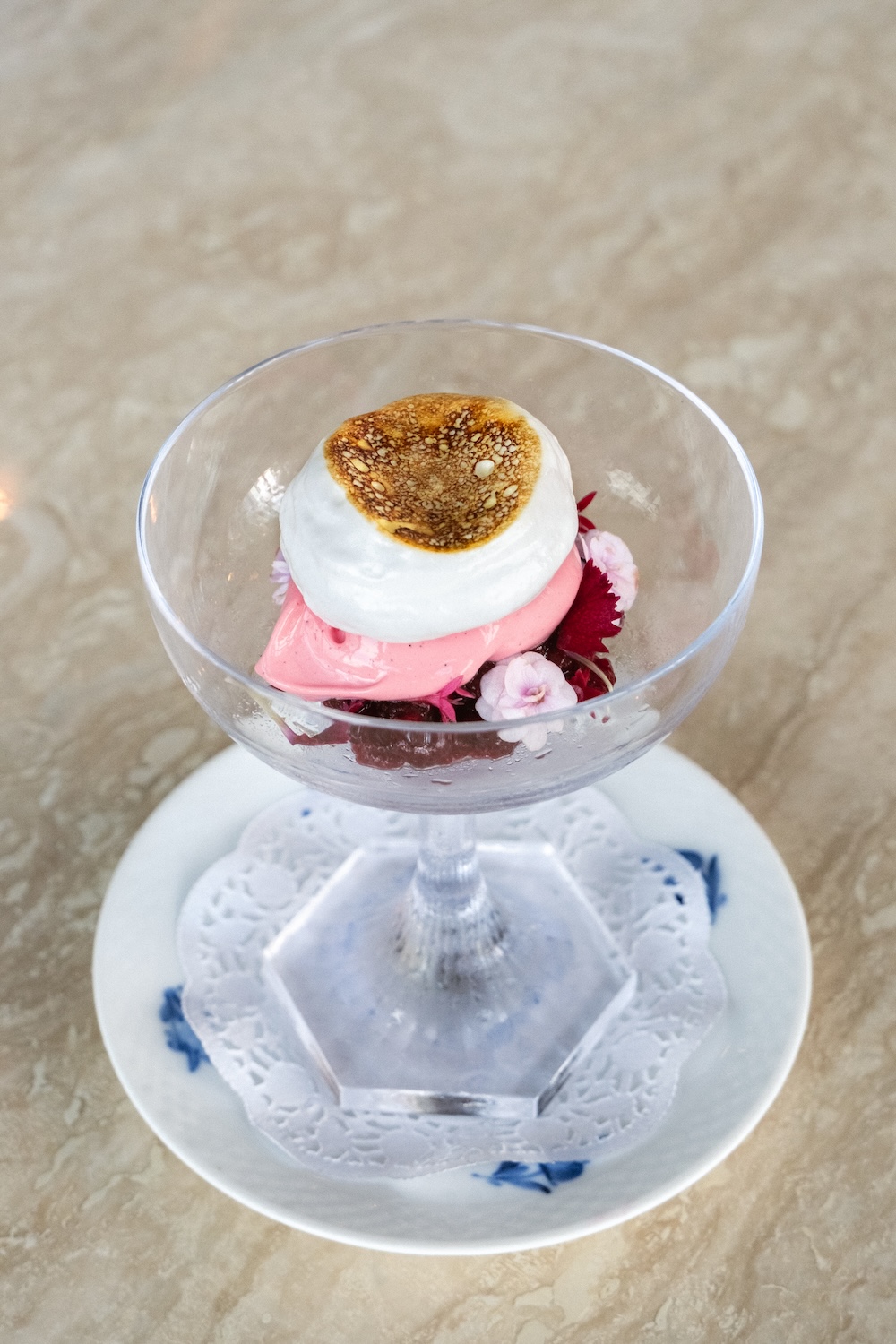
Lunch: Alkalime
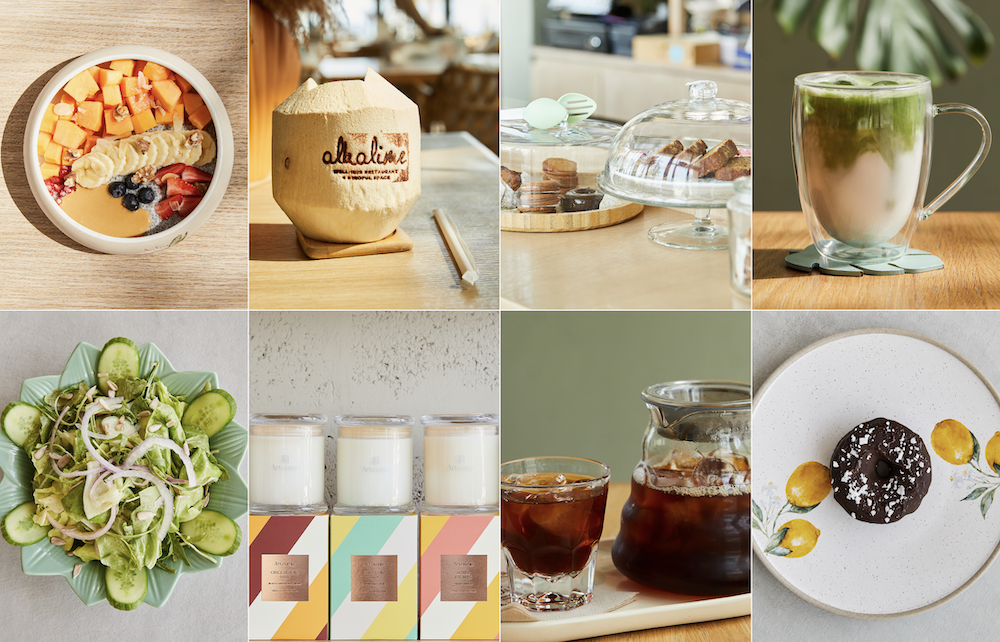
We're starting with something that makes us feel good. Alkalime on Saadiyat is where we're heading for a healthy reset between everything else we're planning to eat.
Think colourful, nourishing, plant-forward food that actually leaves you excited rather than feeling like you've reluctantly ordered the healthy option. From breakfast and smoothie bowls to salads, wholesome mains and plenty of fresh ingredients, it's exactly the kind of lunch that gives you enough energy to keep exploring rather than sending you straight back to the hotel.
Dinner: blue
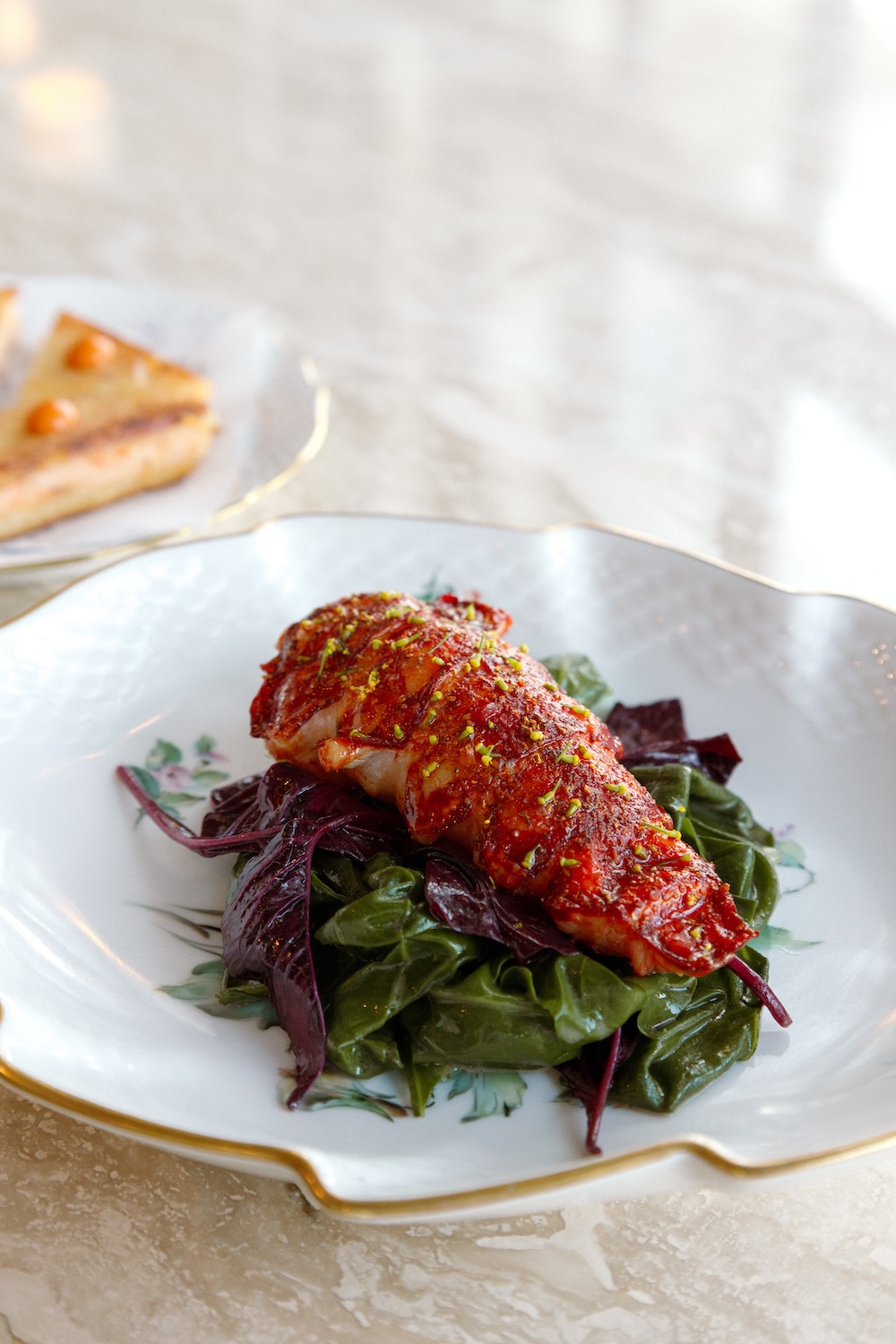
One of the addresses we're particularly excited about is blue, a fine-dining restaurant on Mamsha Al Saadiyat that's shaking up Abu Dhabi's increasingly interesting independent food scene, which you can read more about it in JDEED 12.
The approach is thoughtful, ingredient-led and refreshingly unpretentious, with seasonality and produce playing a central role. It's the kind of restaurant that proves Abu Dhabi's dining scene doesn't need to rely exclusively on international imports or big hotel names to be exciting. If you're interested in seeing where the city's next generation of food is heading, this is one to have on your radar. The plus? The selection of natural wines, still a rarity in the UAE.
Dinner, but make it a night: SUSHISAMBA
And then there's SUSHISAMBA Abu Dhabi.
If you're looking for somewhere that combines seriously good food with an actual night out, put this one very high on the list.
The SUSHISAMBA concept brings together Japanese, Brazilian and Peruvian influences, moving between sushi and sashimi, ceviche, anticuchos, robata dishes and plates designed for sharing. It's colourful, theatrical and unapologetically energetic—the opposite of a quiet dinner you forget about the next morning.
And we're not recommending it simply because it looks good on Instagram. Everything we tried was absolutely phenomenal. The rolls were excellent, the black cod was one of our standouts, and then came a frankly humongous chocolate lava cake that you absolutely need to save room for. We kept saying 'OK LAST BITE' until eventually there were no more bites to be had.
But what really makes SUSHISAMBA work is the combination of food and atmosphere. As dinner progresses, the energy completely shifts, with samba dancers bringing the heat and turning the restaurant into somewhere you genuinely want to stay long after the plates have been cleared.
The service was also great: warm, attentive and on point throughout the evening. SUSHISAMBA manages that difficult balance of being a destination restaurant, an experience and a proper night out all at once. We'd want to come back in the cooler months to sit on their gorgeous terrace overlooking the sea.
INDEX
For Alkalime, see here
For blue, see here
For SUSHISAMBA, see here
TO SWEAT
We've been very into Lagree lately, and Abu Dhabi is giving us increasingly fewer excuses to skip a workout while we're there.
ARC Fitness at Nation Towers is an obvious stop for fellow Lagree converts, with dedicated Pilates and Lagree studios and classes built around the Mega Pro. Expect the slow, controlled, high-intensity movements we love—and the inevitable shaking legs afterwards. We tried it and loved it! It's ideally located in Nation Towers Mall, which is connected to St Regis and is home to a Café Bateel and Organics Foods and Café, ideal for a post work-out pick-me-up.
Then there is The Curve Club, an intimate Pilates destination in Al Manhal. Founded by Emirati entrepreneur Fatma, The Curve Club takes a considered approach to women’s wellness, bringing together innovative movement, beautifully designed spaces and a genuine sense of community. Its Abu Dhabi studio was the first in the region to introduce the Curveformer, a pioneering machine created for a balanced, transformative full-body workout, offered alongside the Classic Reformer.
For Fatma, the vision has always extended beyond the workout itself. “We created The Curve Club to offer women a space that feels empowering, welcoming, and intentional,” she explains. With the concept now expanding to Dubai, the brand is bringing that same philosophy to a wider community while staying rooted in the values that have shaped it from the start.
FORM Studio at Eastern Mangroves is another one we're bookmarking for days when we want movement to feel a little more mindful.
Over at Al Raha Beach, FS8 mixes reformer Pilates with functional strength and yoga-inspired movement. It's a great option if you want something low-impact but still properly challenging, particularly if you like switching between strength, mobility and Pilates rather than committing to one training style. We tried it back in Europe and then in Doha and we're hooked!
But one Abu Dhabi studio we're particularly excited about right now is The Burn Room.
Founded by Emirati entrepreneurs Meerah Al Matrooshi and Alia Al Mazrouei, The Burn Room brings Lagree, Hot Pilates, Hot Yoga and integrated red-light therapy together under one roof. The philosophy goes beyond simply training harder, looking instead at the relationship between performance, strength and recovery.
Recovery isn't something you remember to do after the workout here; it's integrated into the experience itself. And that feels very representative of where wellness is heading generally: less obsession with punishment and quick transformations, and more focus on strength, longevity, recovery and creating routines you can actually sustain.
We spoke to the founders about exactly that philosophy for JDEED in The Burn Room Wants to Change the Way Abu Dhabi Thinks About Fitness, which you can read here.
INDEX
For ARC Fitness, see here
For The Curve Club, see here
For FORM Studio, see here
For FS8, see here
For The Burn Room, see here
FOR A CULTURE FIX
You can't really do Abu Dhabi without giving yourself at least one day for Saadiyat Cultural District. Actually, make that two.
We keep returning to Louvre Abu Dhabi again and again. Jean Nouvel's extraordinary dome alone makes the visit worthwhile, but what keeps bringing us back is that this isn't the kind of museum you tick off once and consider done. The exhibitions change, you notice different works each time, and there is something about walking beneath that geometric dome with the Gulf surrounding you that still feels special no matter how many times you've done it.
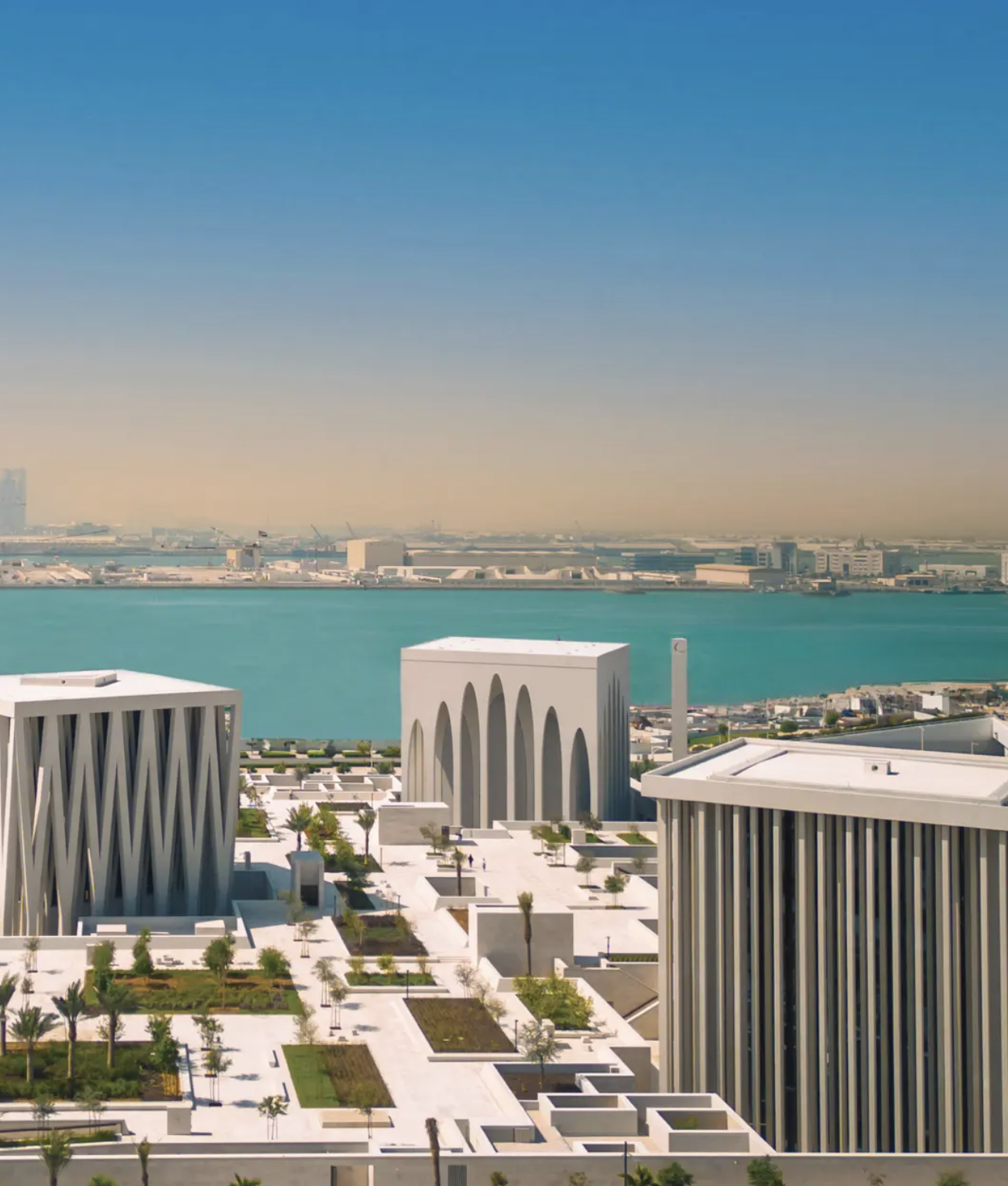
Nearby, the Abrahamic Family House offers a completely different kind of cultural experience. Bringing a mosque, church and synagogue together within the same complex, the space is as much about dialogue, coexistence and understanding as it is about architecture. It's one of those places that feels particularly meaningful within the context of the UAE and the wider region.
And then there's one of Saadiyat's newest reasons to spend an entire afternoon there: Natural History Museum Abu Dhabi.
This one takes us much, much further back. The museum follows the story of our natural world across 13.8 billion years, from the formation of the universe and the evolution of life on Earth to the biodiversity of the Arabian Peninsula. It's immersive, enormous and exactly the sort of museum where you go in thinking you'll spend an hour and suddenly realise half the afternoon has disappeared.
There's an extra reason to head there this summer, too. From 21 August, Natural History Museum Abu Dhabi opens LEGO® SHOWS Natural Brickstory, a world-first, limited-time exhibition that invites visitors to explore those same 13.8 billion years of natural history through creativity, play and hands-on discovery.
The interactive experience brings LEGO® brick building together with the museum's extraordinary specimens and scientific stories. Across themed zones inspired by Earth's history, wildlife and the cosmos, visitors can take part in collaborative builds, experiment and discover together, turning some pretty enormous scientific concepts into something wonderfully tangible. Designed for curious minds of all ages, it might also be the best excuse we've had in a while to play with LEGO® and call it culture.
We explored the Natural History Museum for JDEED when it opened, and it's firmly on our Abu Dhabi cultural rotation now.
Between Louvre Abu Dhabi, Natural History Museum Abu Dhabi and the Abrahamic Family House, Saadiyat has reached the point where we'd genuinely build an Abu Dhabi trip around its cultural offering alone. We're also particularly excited about The Guggenheim opening later this year, on December 11th!
For Abrahamic House, see here
For Louvre Abu Dhabi, see here
For the Natural History Museum, see here
WHAT TO DO RIGHT NOW
Celebrate Emirati Women's Day at Emirates Palace
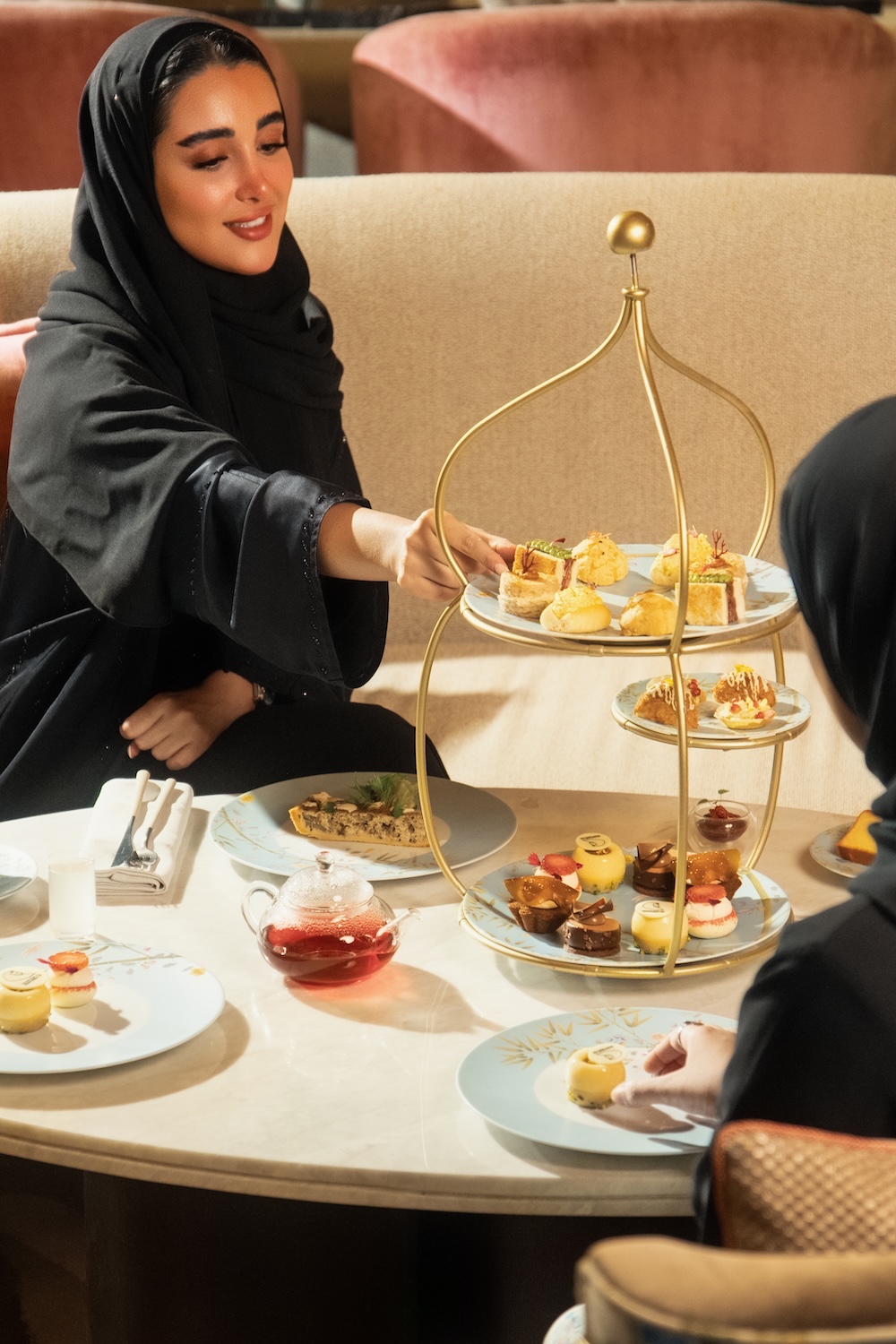
If you're in Abu Dhabi at the end of August, Emirates Palace Mandarin Oriental is hosting a three-day programme for Emirati Women's Day from 28 to 30 August, centred around Emirati heritage, craftsmanship and creativity.
On 28 August, Hind Al Oud hosts its Karat Oud Workshop, taking guests through the role of oud in Emirati culture, fragrance layering and different grades of oud before a creative session decorating authentic oud chips with gold paint and foil.
On 29 and 30 August, Reine de Roses takes over with floral-arrangement workshops designed around creativity and conversation. Guests will create their own arrangements to take home, with complimentary dates and Arabic coffee adding to the afternoon. Best of all? The workshops are complimentary, although advance registration is recommended as spaces are limited. You can register on this link.
There's also an Emirati Women's Day Afternoon Tea at Episodes from 27 to 30 August and a special Sweets Moment running from 27 August through 28 September.
And if you need to unwind afterwards, the hotel's spa is offering an Oriental Rose Hammam, combining rose petal and lavender black soap, traditional Kessa exfoliation and a rose rhassoul treatment, followed by a rose rinse and argan and oud hair oil.
Spritz Your Way Around the Palace
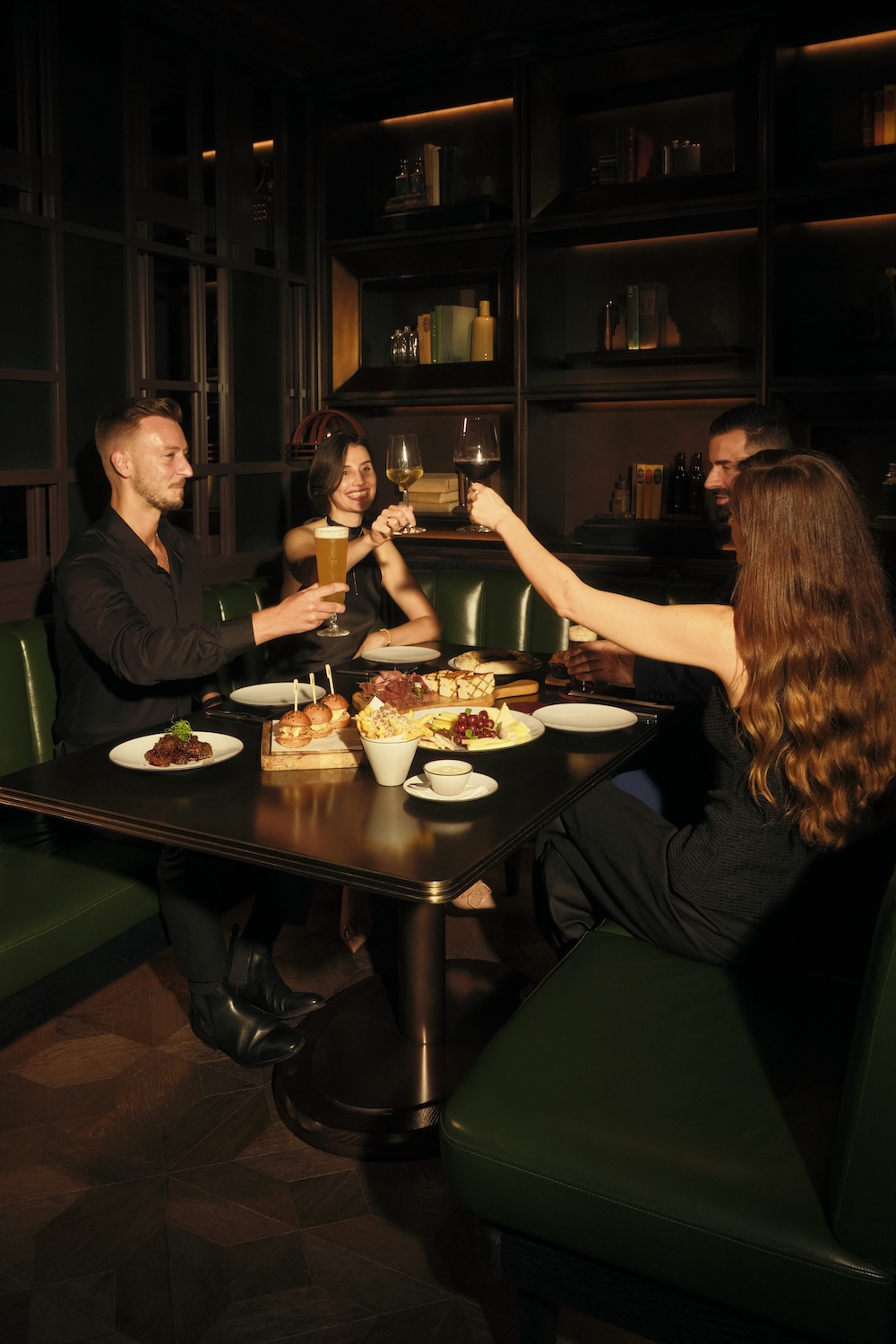
Also happening at Emirates Palace is Spritz & Friends, running until 30 September. Created in collaboration with Aperol, the experience connects four of the hotel's restaurants—Hakkasan, Talea, Broadway and Strawfire—through eight different interpretations of the Spritz.
The combinations are fun: Shiso and Yuzu Spritzes at Strawfire, Il Viaggio and Rosmarino at Talea, La Birra and The Garden at Broadway, and Hakka Lemonade and un YUZUal at Hakkasan. Each restaurant also brings its own bites into the mix, ranging from Wagyu gyoza and Korean fried chicken to arancini, soft-shell crab, dim sum and crispy calamari.
Basically, it's an excuse to drink your way around some of the Palace's best restaurants without having to pick just one. Can you blame us? Woops....
And When You Need Something Sweet...
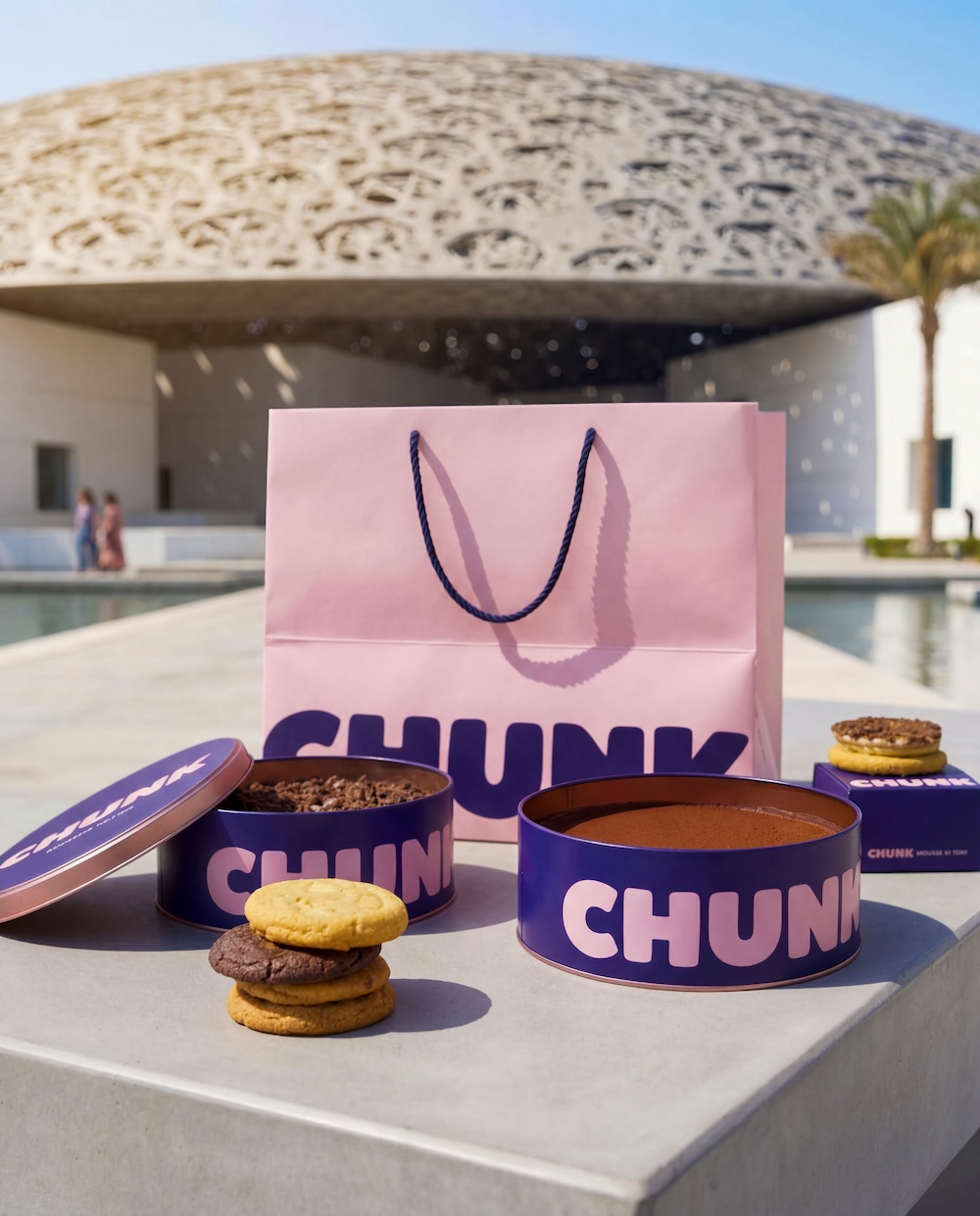
Dubai-born CHUNK Bakehouse has finally landed in Abu Dhabi. It is JDEED tested and approved (don't tell our fitness coach. Or do, he'll probably order some for himself.)
The cult dessert brand now has an Al Reem Island base delivering its full lineup around the capital, including its viral Chocolate Dreamcake, Kinder Choco Dreamcake and Tiramisu Dreamcake, alongside Dreamcookies and those instantly recognisable tins.
Consider that our post-Lagree balance restored.
More info and orders, here
The Cairo We Don't Always See, Through Mustafa Tawfik's Lens
Cairo is a city that rarely stands still. Its streets are loud, layered and endlessly in motion; millions of lives unfolding alongside one another against a backdrop that carries thousands of years of history.
Yet for Egyptian street photographer Mustafa Tawfik, some of the city's most compelling stories are found not in its monuments or its most recognisable scenes, but in the moments almost nobody notices.
In his latest photographic series, Tawfik turns his lens towards the quieter rhythm of everyday Cairo: people passing one another in the street, figures momentarily lost in thought, familiar routines repeated day after day and brief exchanges between strangers. Individually, the photographs capture seemingly ordinary moments. Together, they become fragments of stories we may never fully know.
It is an approach deeply connected to the way Tawfik understands photography itself.
"My practice is grounded in observation," he explains, describing himself as drawn to "the quiet theatre of everyday life, where people reveal themselves through gesture, rhythm, and presence."
Rather than searching for spectacle, Tawfik watches. A glance, a posture, the distance between two people or the way someone occupies a particular corner of the city can become enough to suggest an entire narrative. His interest lies precisely in what remains unsaid: "the unspoken narratives carried in movement and behaviour, and the way personal stories surface in public space."
There is something particularly fitting about applying this gaze to Cairo.
So much of the visual language surrounding the Egyptian capital has historically been dominated by its extraordinary past. The pyramids, mosques, architecture and densely populated streets have become familiar shorthand for the city. Tawfik's photographs propose another way of understanding it. Here, Cairo is shaped as much by its inhabitants as by the history surrounding them.
His images explore this relationship between people and place, documenting a city whose identity is continually being rewritten through ordinary life. The people within the photographs are not performing for the camera. They are simply existing: moving through routines, thinking, waiting, interacting and inhabiting spaces they may have crossed thousands of times before.
That ordinariness is precisely where the beauty lies.
Tawfik describes his photographs as "fragments of untold stories," an idea that leaves space for the viewer to participate. We don't necessarily know where the people pictured are going, what happened moments before the shutter clicked or what will happen afterwards. Instead, we encounter them briefly, much as we encounter strangers ourselves while moving through a city.
Culture inevitably shapes the way Tawfik sees those moments. As an Egyptian photographer documenting his own surroundings, his perspective comes from familiarity rather than observation from the outside.
"Culture shapes my gaze," he says, "acting as a lens through which I interpret shifting urban life and translate fleeting moments into visual form." It is an important distinction. His Cairo isn't presented as something exotic to be decoded. It is lived-in, intimate and constantly evolving.
Street photography has always possessed this ability to preserve what history books rarely do: the mundane details of how people actually lived. Clothes change. Buildings disappear. Neighbourhoods transform. Habits evolve. Yet a photograph can hold onto a fraction of a second that otherwise would have vanished completely.
Tawfik's series feels particularly interested in those fractions.
.jpg)
There are no grand declarations here, nor does there need to be. Instead, his photographs ask us to pay closer attention to what is already happening around us. To the gestures we overlook, the strangers we pass and the countless small human stories playing out simultaneously across Cairo every day.
Because perhaps a city's identity isn't only contained in the landmarks that survive generations, no. Sometimes, it lives in the moments that last only a second.
Follow Tawfik's work on Instagram, here

Ces XC: Connecting The Dots Between The Real And The Imagined
Istanbul-based visual artist Ces XC doesn't just make images, he builds worlds. Over more than a decade behind the camera and inside graphic design, he's developed a visual language fluent in football shirts and Mediterranean sunlight, chrome and VHS grain, luxury and longing, treating each as an emotional code rather than a still life.
In recent years, AI has become part of that language too, not as a shortcut, but as an extension of a photographic instinct built long before the technology existed. Ahead of his latest work across campaigns, editorials, and physical installations, we spoke to Ces XC to talk about where photography ends and generation begins and why, for him, that question stopped mattering a long time ago.

Your work blends original photography with AI-generated elements until the line blurs completely. Where does that boundary actually sit for you creatively — is there a point where "real" versus "imagined" stops mattering?
For me, there isn't really a fixed boundary anymore, but that doesn't mean the origin of an image is unimportant. I spent more than ten years working with photography and graphic design before AI became part of my process, so photography still forms the foundation of how I see. It taught me about light, composition, texture, imperfection, timing, and — most importantly — how an image can carry an emotion. In many of my works, the original photograph is still the skeleton, while AI allows me to extend it into places that would be difficult or sometimes impossible to reach physically.
I don't use AI to escape reality; I use it to stretch reality. Sometimes that means adding something surreal to a photograph, changing the environment around a subject, or combining references that would never normally exist in the same frame. My approach has always been about "connecting the dots", bringing together photography, fashion, sport, music, street culture, cars, architecture, memory, and imagination until they become part of one visual language.
At a certain stage, I stop thinking about which part is photographed and which part is generated. What matters then is whether the final image feels emotionally believable. Something can be completely imaginary and still feel true. At the same time, something can be technically real but emotionally empty. So for me, "real" and "imagined" stop mattering when the image begins to exist as its own world. The final work should not feel like a demonstration of technology. It should feel like a memory from somewhere you may never actually have been.
Identity, youth culture, sport, and luxury all surface across your work, alongside something as physical as Mediterranean life. What's the thread connecting those for you? Is it the tension between the emotional and the material, or do you see them as the same thing?
I don't really see the emotional and the material as separate things. Objects can carry an incredible amount of emotion, especially within youth culture. A football shirt, a pair of sneakers, a car, a motorcycle, a piece of jewellery, or even a certain logo can represent belonging, ambition, status, rebellion, or a specific period in someone's life. These things may be material on the surface, but the relationships we build with them are deeply personal.
Sport is especially powerful because it contains both identity and community. It can tell you where somebody comes from, who they represent, and what they dream about. Luxury functions in a similar way in my work, but I'm not only interested in luxury as wealth. I'm interested in the desire around it — how an ordinary object can become mythological, how chrome, jewellery, a car, or a branded piece of clothing can become part of someone's identity. Mediterranean life gives all of those symbols a physical environment. There is sunlight, heat, salt, concrete, white walls, the sea, scooters, outdoor spaces, summer evenings, and people living very close to the street. That physicality keeps the images from becoming too sterile or purely conceptual. Even when I create something surreal, I want the viewer to almost feel the temperature of the scene.
The connecting thread is desire: the desire to belong, to transform yourself, to escape, to be seen, or to create your own identity. The material objects become emotional codes. That is why a sports jersey, a luxury car, and a Mediterranean sunset can naturally exist in the same image for me, they are all communicating different parts of the same human feeling.

Your images are dreamlike but stay emotionally grounded — a hard balance to strike. How do you know when a surreal world has gone from "striking" to "too far," losing the emotional truth underneath it?
A surreal element works when it intensifies the feeling that is already inside the image. It becomes too much when it starts competing with that feeling. If the first thing the image communicates is simply, "Look what I can generate," then I usually know I have gone too far. Technology or technique should never become more important than the atmosphere. I often ask myself whether the image would still contain something meaningful if the most obviously surreal element were removed. Would the composition, light, character, gesture, or mood still hold my attention? If the answer is no, then the image is probably relying too heavily on the trick. The surrealism has to be supported by an emotional structure underneath it.
I also think imperfection is extremely important. I'm attracted to analogue photography, harsh flash, VHS textures, film grain, low-resolution imagery, and moments that feel accidental because they leave space for memory. A perfectly polished image can sometimes feel more artificial than an impossible image with the right texture and emotional weight. I want the viewer to feel as though the scene was discovered, not simply manufactured.
A lot of it comes down to editing and instinct. The first idea is often the loudest, but not necessarily the strongest. I try to look at the image again after the initial excitement disappears. If the surreal element still feels connected to the world and gives the image another emotional layer, I keep it. If it only looks clever or spectacular, I pull it back. The impossible detail should feel strangely natural, almost as if it had always belonged there.
Istanbul sits at its own cultural crossroads, yet Mediterranean life keeps surfacing in your imagery. How much of that visual language comes from lived geography, and how much is a constructed, imagined version of it?
It comes from both. Istanbul has shaped the way I understand contrast. It is a city where different histories, cultures, social classes, and visual languages constantly overlap. You can see something extremely old next to something completely contemporary, or a luxury car parked beside a worn building. The city can feel European, Asian, Middle Eastern, Mediterranean, traditional, and global at the same time. Growing up around those contradictions taught me that very different symbols can exist naturally within one frame.
The Mediterranean side of my work is connected to lived experiences;, the quality of the sunlight, the sea, the heat, the architecture, the streets, the colours, and the way life happens outside. Those details stay in your visual memory. Even when I'm not consciously trying to create a Mediterranean image, they often return through the light, the atmosphere, or the physical feeling of the scene.
But I'm also not trying to document a single, geographically accurate Mediterranean reality. I construct my own version of it. It may contain Istanbul, the Aegean coast, memories of summer, global youth culture, fashion imagery, cars, music videos, and places that only exist in my imagination. It becomes an emotional geography rather than a specific location on a map.
I sometimes think Istanbul gives my work its contradictions, while the Mediterranean gives it its temperature. One creates the tension, and the other creates the feeling. I'm not interested in producing a perfect postcard version of either one. I want to build a personal mythology from what I have lived, what I remember, and what I wish could exist.
You've moved between campaigns, editorials, installations, and physical spaces for international brands and cultural institutions. What's the biggest misconception people still have about bringing AI into that kind of creative process — versus what it actually adds?
The biggest misconception is that AI is the idea, the execution, and the finished work all at once; that you press a button, receive an image, and the creative process is finished. In reality, the first output is almost never the work. AI can create possibilities, but it cannot decide which possibility belongs to your visual language. That still requires taste, experience, direction, editing, and a clear understanding of what you are trying to communicate.
My background in photography and graphic design is still present in every decision I make. I think about composition, lighting, colour, typography, texture, brand identity, and how a series of images works together. For a campaign, it is not enough to create one interesting visual. You may need ten or twenty images that all feel consistent, while the product, logo, and identity remain accurate. For an installation or physical space, you also have to consider scale, materials, colour reproduction, viewing distance, and how the image interacts with its environment. AI does not remove any of those responsibilities.
What it adds is freedom and speed in exploration. It allows me to test more directions and build worlds that might require enormous budgets or complicated production methods if they were created entirely in-camera. But speed does not mean lowering the quality bar. In some cases, AI actually creates more work, because there are more possibilities to evaluate and refine.
I see AI as another lens — a lens capable of looking beyond the limits of the physical world. It does not replace photography, design, or creative direction; it expands the space in which they can operate. The technology gives me more ways to connect the dots, but it cannot decide which dots are meaningful. That authorship still comes from the artist.
Discover more on cesxcommercial.com

We Checked Into Mandarin Oriental Palace, Luzern and Didn’t Want to Leave
Lake views, a private boat trip, a horse-drawn carriage through town, Swiss comfort food, and a very special anniversary afternoon tea: our stay at Mandarin Oriental Palace, Luzern felt less like a hotel visit and more like stepping inside a postcard we didn't know we'd been waiting for.
The feeling set in before we'd even unpacked. From check-in to the final goodbye, everything unfolded with a kind of effortless warmth that's rarer than it should be at this level of hospitality. This is, unmistakably, a palace — every detail considered, nothing left to chance — and yet nothing about it feels stiff or overwrought. That balance, we suspect, is harder to strike than it looks.

Then, of course, there's the view, the real star of the show. The hotel sits directly on the shores of Lake Lucerne, looking out over still blue water, passing boats, and the Swiss Alps rising beyond. It's the kind of picturesque that ambushes you every few minutes, as the light shifts almost imperceptibly and suddenly demands to be photographed all over again.
The Palace Hotel first opened its doors in 1906, the vision of Swiss entrepreneur Franz Josef Bucher, who imagined a Mediterranean-style retreat improbably nestled in the heart of Switzerland. Following an extensive restoration, the Belle Époque landmark reopened in 2022 as Mandarin Oriental Palace, Luzern, its original architecture intact, layered now with contemporary interiors and quiet nods to the hotel group's Asian heritage.
This year, the property marks its 120th anniversary. After a few days on its shores, it's not hard to understand why people have kept returning to this particular bend of the lake for well over a century.

Our room was incredibly comfortable, but not in the anonymous luxury-hotel way where everything is beige and you could technically be anywhere.
The interiors take cues from the surrounding Swiss landscape, combining muted greens, natural wood, brass accents and warm textures with the building’s original Belle Époque details. Most rooms and suites also come with private balconies or terraces overlooking Lake Lucerne and the mountains.
The result feels elegant without being stiff. There are beautifully made details everywhere, but the room still invites you to unpack, put on a robe and seriously reconsider every plan that involves leaving (but then again, the lake and the promenade will be calling your name.)
It is also extremely quiet, which becomes even more noticeable after a full day outside. The beds are excellent, the bathrooms are spacious and the lake view makes opening the curtains in the morning makes you wonder if you'll ever be able to leave.
A Day on the Lake
Of course, staying beside Lake Lucerne and not getting onto the water would have been slightly criminal.
We spent part of the day travelling by boat, taking in the surrounding mountains, waterfront towns and changing views across the lake. Lucerne is an ideal base for exploring Central Switzerland, with boat cruises connecting visitors to nearby mountains and destinations including Rigi, Pilatus, Stanserhorn and Bürgenstock.
There is something about seeing the landscape from the water that makes everything feel quieter. The mountains seem larger, the villages look almost staged and even the air feels different. After the boat, we continued by horse-drawn carriage, which may sound slightly theatrical because it absolutely was—and we loved it.
Moving through the Swiss countryside at that pace gave us time to actually look around rather than rushing from one stop to the next. As per the food, we indulged in traditional Swiss food comprising of rösti, melted cheese (a lot of it!) and other delicacies that felt warm and generous, exactly what we wanted after a full day outside.
Back at the hotel, one of the clear highlights was its special anniversary afternoon tea, created to mark the Palace's 120-year history. Served inside MOzern, the experience felt like a small edible journey through the hotel's past — tradition layered with the playful precision you'd expect from Mandarin Oriental. Polished, yes, but still fun: the kind of tea where every course makes you curious about what's coming next.

MOzern is the hotel's all-day brasserie and social heart, all high ceilings, chandeliers, and views stretching over the lake and mountains beyond. Alongside its signature afternoon tea, it serves Mediterranean dishes, international breakfasts, sharing plates, and cocktails, built around menus that lean seasonal and locally sourced.
The setting does a lot of the work, admittedly — tea simply tastes better with Lake Lucerne as the backdrop; that's just science. But the anniversary edition felt genuinely tied to the hotel's own story, not staged purely for a photograph. It was celebratory, a little nostalgic, and beautifully executed. And for the confirmed coffee people we are, this was one of the rare times we found ourselves genuinely savouring a cup of tea: bold, properly steeped, full of flavour.
We ate at MOzern more than once during our stay, and the food never wavered. The menu moves through Mediterranean flavours without ever settling into predictable — generous, well-balanced dishes built for sharing. It's the kind of restaurant where you plan for a quick meal and somehow linger for two hours, because the room feels good, the service is unhurried, and another plate always seems like a perfectly reasonable idea. We particulary loved the lobster tagliolini and Mediterranean sea bass.
In warmer months, MOzern spills out onto Quai 10, its seasonal lakeside terrace, where we were lucky enough to land a table. Overlooking the water, it serves the same menu in a relaxed outdoor setting that's welcomed visitors for well over a century.
Even breakfast deserves its own mention. The spread was extensive without tipping into overwhelming, everything tasting fresh and properly considered. More importantly, no one rushed us which is essential when coffee, pastries, and a lake view are all in play. Additionally to the buffet, an à la carte menu will satisfy anyone dreaming of perfectly poached eggs, pancakes and other waffles.
The Luxury of Feeling Looked After
What stayed with us most was not one dramatic gesture, it was how consistently good everything felt.
The welcome was warm, the team remembered the small things. Every activity ran smoothly, meals never felt hurried. Returning to the hotel after a day outside felt genuinely comforting, and even the departure was handled with the same attention as the arrival.
That may sound simple, but it is surprisingly rare.
Mandarin Oriental Palace, Luzern has all the obvious luxury-hotel elements: the historic architecture, the lakefront position, beautifully designed rooms, Michelin-starred restaurants and a Biologique Recherche spa. But what makes it memorable is the feeling it creates around those things. It is luxurious, yes, but also warm, calm and incredibly easy to settle into.
From the lake and carriage rides to the Swiss food, anniversary tea and slow mornings at MOzern, every part of the visit felt special. The only part we did not enjoy was leaving.
More info and booking on www.mandarinoriental.com/en/luzern
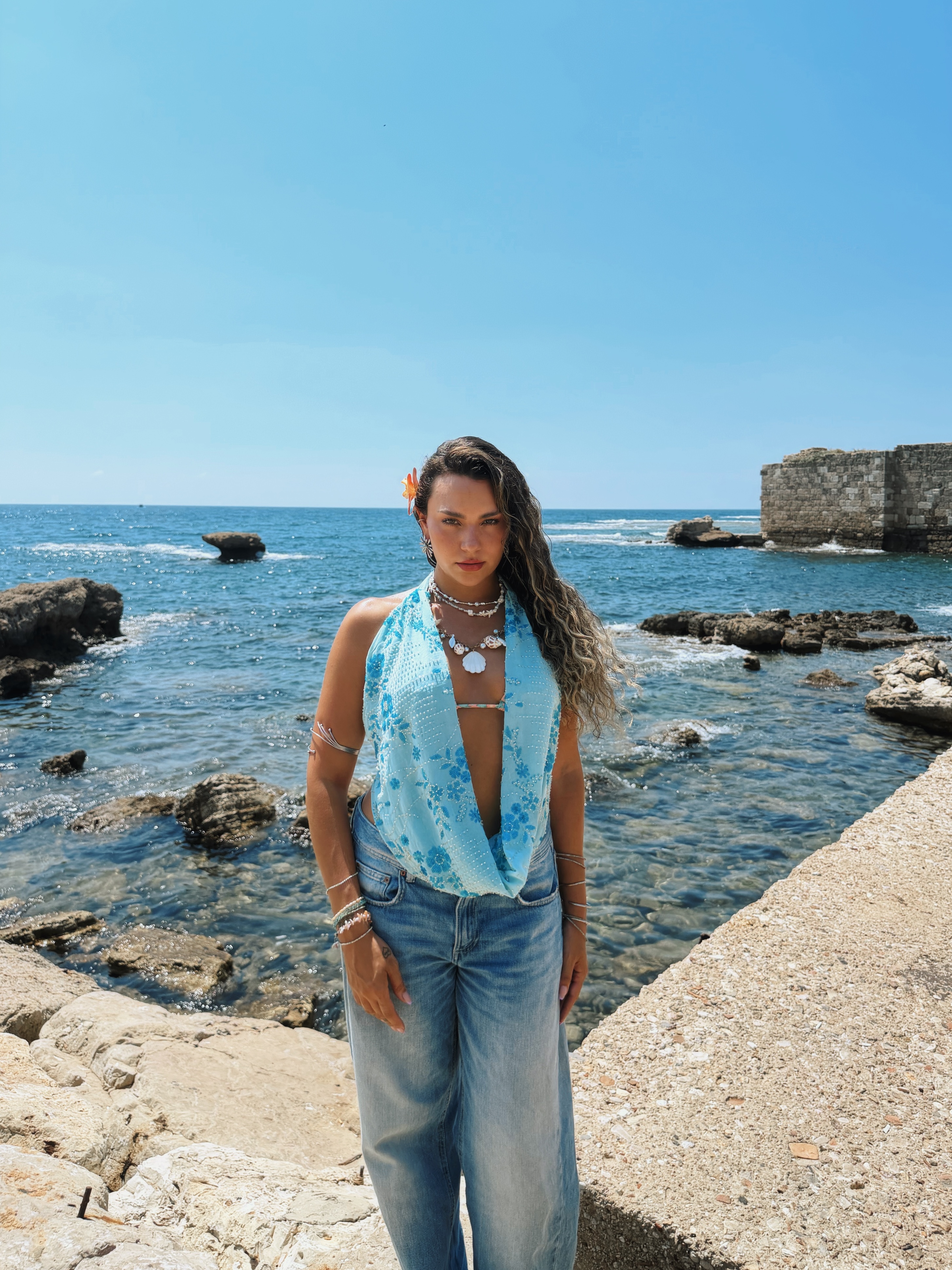
Turn The Volume Up: The Arab Artists' Releases We're Listening to This Week
The region's sound is getting more interesting by the day. This week alone, we got a ride-or-die hip-hop anthem, a Tunisian rap project built to dominate a whole scene, a Jordanian pop return steeped in motherhood and vulnerability, a Cairo trap-shaabi flex shot in red-toned cinema, a Palestinian voice drawing comparisons to Fairuz, and an Egyptian alt-pop statement about living unfiltered.
Six drops, six completely different worlds. Here's what's on repeat.
"PARTY LIFE" — Wingz

Tunisia's hip-hop scene has a new center of gravity, and his name is Wingz. The rapper and songwriter drops his most ambitious project yet on July 27th via Records El'Muttbukh — nine tracks of gritty, unfiltered sound that refuse to sit still inside one genre. That's always been his signature: the same artist who can deliver a hard-hitting street anthem can just as easily turn introspective and melodic two tracks later, and somehow it never feels like whiplash. "PARTY LIFE" isn't a one-off moment either, it's the opening chapter of a bigger run of collaborative releases with Records El'Muttbukh still to come. Wingz isn't riding North Africa's hip-hop wave right now. He's the one generating it.
Listen to the album, here
"Ulli Inno Mafi Minni" — Reina Khoury

Translated, the title means "tell me that I'm special" and that vulnerability is the whole point. Reina Khoury's new single, out of Amman, wraps a tender, romantic melody around one of the most universal needs there is: to be seen, valued, and reassured. It's the sound of motherhood's duality laid bare,. the strength and unconditional love sitting right next to the self-doubt and quiet guilt, a tension Khoury has been threading since her previous single "Bi Alami." Rather than resolve the feeling, the track sits inside it, honestly. It's a plea aimed at whoever you trust most to say the simple thing you need to hear. "Ulli Inno Mafi Minni" arrives ahead of Khoury's long-awaited self-titled debut album, "REINA," landing this September, a comeback built on two years of life, not distance.
Listen to the track, here
"El Filo" — Blu Fiefer & Bea Kadri

Summer romance rarely sounds this self-aware. Blu Fiefer's "Ghalta," turns the emotional push-and-pull of a fling into something sharp, playful, and impossible to sit still through: flirtation, tension, and humor moving in the same breath, delivered with the conversational confidence of an argument you can't stop replaying in your head. Sung across three languages, it's pop built for a generation that codeswitches without thinking twice and feels everything at full volume. Self-directed and self-produced, "Ghalta" is the first single off Fiefer's sophomore album, and it announces a new sonic chapter while staying rooted in the wit and instinctive storytelling that's always defined her. The visual world leans into the colors and nostalgia of Lebanese summers: familiar terrain, seen through a refreshed lens. A confident, danceable reintroduction.
Listen to the track, here
"AFELT EL 3DAD" (قفلت العداد) — Showkey

Translated loosely, the title says he's off the scoreboard — beyond competition. Showkey's new Trap Shaabi anthem is a resilience record dressed as a flex, tracing a path from betrayal and setback straight through to dominance, produced by La Sauce. The video matches the ambition of the sound: Showkey towering over Cairo in striking red-toned visuals, with choreography by Ali Astro giving the whole thing a cinematic, almost theatrical weight. This isn't a survival story anymore, it's a victory lap. And the confidence in every beat says Showkey knows exactly which chapter of his career he's writing now.
Listen to the track, here
"El Basme" — Talia Lahoud (feat. Abdmusik)

Riding the momentum of her debut EP "Gharibi" and her original work before it, Talia Lahoud expands her uplifting Arabic pop world with a new collaboration alongside Syrian singer-songwriter Abdmusik. "El Basme" — meaning "the smile" — is built around confidence, positivity, and the specific kind of energy women give each other when they choose to uplift instead of compete. Abdmusik meets that energy from a different angle, adding a layer of admiration and emotional openness that rounds the track out rather than competing with it. The original "El Basme" had already proven its pull organically, racking up over 20K TikTok creations before this new version even existed, proof the song was never just a moment, but a mood people wanted to keep returning to. This regional collaboration doesn't reset that momentum. It multiplies it.
Listen to the track, here
"Madina" — Aya Samra

Aya Samra's story alone would be worth the listen: a 30-day, on-foot asylum journey from Syria to Germany in 2015 that turned music into her lifeline. Her 2025 beatbox rendition of Asmahan's "Ya Habibi Taala" organically crossed 215 million views across platforms and introduced the world to a voice already drawing comparisons to Fairuz for its restraint and clarity. Her new single "Madina," out of Berlin, folds Arabic Tarab tradition into Spanish flamenco guitar, building a sound with real movement and real tension underneath it. What started as an imagined city, Samra says, revealed itself as something internal: "I wasn't writing about a city. I was trying to find a reason to stay alive. In the end, I realized I was building a place inside myself." Memory, home, and longing, mapped in real time.
Listen to the track, here
"HAYATi FiLM" — HYPE

HYPE's follow-up to his debut EP "DAKHANA" pushes past trap-hop and into wider Egyptian hip-hop and alternative-pop territory; and it's a statement, not a stopgap. "HAYATi FiLM" is a defiant, hook-driven record about refusing to perform a highlight reel of your own life for everyone else's benefit, choosing to actually live it instead. It carries the same raw, unfiltered honesty that pushed his earlier single "KAWASAKI" past 336K streams, proof that HYPE's appeal was never about polish, it's about not flinching. This is an artist widening his lane on his own terms, mid-momentum.
Listen to the track, here
jdeed — meaning "new" in Arabic. Six artists, six cities, one region that refuses to sound like anything but itself. Press play.
Sonos Has a Speaker for Every Version of Your GCC Summer
Summer in the GCC has its own rhythm. Early mornings before the heat fully arrives. Long afternoons by the pool. Rooftop dinners, late drives and at least one friend who insists on taking control of the playlist. If you're anything like us, music is involved in all of it, obviously.
Sonos has three portable speakers designed to move with the day: the compact Roam 2, the new Play and the more powerful Move 2. Each one fits a different kind of plan, from a quiet beach morning to a gathering that becomes considerably louder than expected.
.avif)
Roam 2: For People Who Actually Pack Light
The Sonos Roam 2 is the easiest one to throw into a beach bag and forget about until someone asks where the music is.
It weighs less than a pound, so it does not take over your hand luggage or compete with the seven unnecessary skincare products already inside. It is also waterproof and dustproof, which is important when sand, splashes and questionable poolside decisions are part of the plan.
The battery lasts for up to ten hours, enough to cover a morning by the water followed by a long lunch where nobody seems interested in leaving.
It comes in Black and White for the minimalists, as well as Olive, Sunset and Wave for anyone who wants the speaker to match the towel, sunglasses or general summer mood.
Play: The Staycation Favourite
Sitting between the Roam 2 and Move 2 is the Sonos Play, the newest addition to the line-up. It is compact enough to carry around without turning the journey into a workout, but powerful enough to fill a hotel room, balcony or rooftop. The stereo sound gives it more presence than its size suggests, while the battery runs for up to 24 hours.
That is basically an entire staycation on one charge. The Play can also top up your phone when the battery starts dying halfway through the day, which makes it the kind of friend who arrives prepared instead of asking to borrow your charger (woops, guilty of charge, we are that friend.)
Once home, it sits on its own charging base and works like a regular Sonos home speaker, meaning it is useful even when summer plans become sofa plans.
The Move 2 is for the bigger plan. It is the most powerful of the three, with stereo sound and a tuned woofer designed to fill a room and carry the music outside towards the pool.
There is a handle built into the back, so moving it from the kitchen to the garden does not require a complicated setup or several people giving instructions. The battery also lasts for up to 24 hours, which should outlive even the longest pool day or at least the people who said they were “just stopping by for an hour.”
The useful part is that the speakers are not limited to performing solo. When you are away from Wi-Fi, the Play can group with a second Play or a Move 2 over Bluetooth. Up to four speakers can play together, covering the beach, pool or rooftop without requiring everyone to crowd around one small speaker balanced dangerously close to the water.
Back home, all three connect to the wider Sonos system over Wi-Fi and can be controlled through the Sonos app. The music can move from the bedroom to the balcony without the playlist cutting out or somebody having to reconnect their phone every ten minutes.
So, Which One Are You?
The Roam 2 is for the person with one tote bag and a very organised itinerary. The Play is for the staycation, hotel room, road trip and anyone whose phone battery is permanently at 12%. The Move 2 is for the host - the person who invited six people and somehow ended up with 25 in the living room.
Whichever version of summer you are having, Sonos has clearly accepted one thing: the playlist is not optional.
The Roam 2, Play and Move 2 are available across the UAE and Saudi Arabia.
More info on Sonos.com
Bvlgari Gives Its Most Roman Watch Two Very Different Summer Moods
Is it the ultimate Summer watch? Bvlgari just introduced the Bvlgari Bvlgari, a design that has spent five decades sitting somewhere between Roman jewellery and impeccable Swiss watchmaking.
This season, the Maison is revisiting the icon through two very different ideas of how a warm-weather watch should feel. One is light, technical and unapologetically sporty: the Bvlgari Bvlgari Aluminium, now dressed almost entirely in white, with a second limited edition featuring a vivid blue dial. The other is more precious and distinctly Roman: two 33 mm models with pink or green mother-of-pearl marquetry dials, each assembled from approximately 400 tiny pieces.
Same family, different holiday plans.

The Bvlgari Bvlgari story began in 1975, when Gianni Bulgari created the original Bvlgari Roma as a gift for 100 of the Maison’s most important clients. Gérald Genta reinterpreted the design in 1977, giving rise to the Bvlgari Bvlgari name and the form that would become one of the brand’s clearest watchmaking signatures.
The double engraving around the bezel is often treated as a piece of bold branding, but its origin is more considered than that. The circular inscription refers to ancient Roman coins and the monumental Latin lettering found across classical architecture. It is an idea that feels unmistakably Bvlgari: Roman history turned into something graphic, modern and slightly provocative.
And unlike many logo-heavy designs, it has aged remarkably well.
When Bvlgari introduced the Aluminium in 1998, the decision to combine aluminium with rubber was genuinely disruptive. At the time, luxury sports watches were still largely associated with steel, gold and conventional ideas of permanence. Bvlgari went in the opposite direction, using industrial materials to create something lighter, more informal and more connected to the way people actually dressed.
The engraved rubber bezel, integrated rubber bracelet and aluminium case made it feel almost anti-luxury; except the design was too precise and too recognisable to be anything but luxury. Since 2020, the line has also been powered by an automatic mechanical calibre, giving the material experiment proper Swiss watchmaking substance.
The new summer versions stay very close to that original spirit.
Both arrive in a 40 mm sandblasted aluminium case with a titanium crown and caseback, a white rubber bezel and matching integrated strap. They are water-resistant to 100 metres and powered by the automatic B77 calibre, offering hours, minutes, central seconds, a date display and a 42-hour power reserve.
In other words, these are not simply white summer accessories, they are properly usable watches.

The monochromatic reference is the quieter of the two, although an entirely white Bvlgari Aluminium is hardly anonymous. Its opaline dial is matched with rhodium-plated markers and hands, while the rubber bracelet and bezel keep the entire watch within a controlled white and silver palette.
The effect is cleaner than flashy. White watches can easily drift into novelty territory, but the contrast between rubber, brushed aluminium and titanium gives this one enough texture to avoid looking flat.
It is also the version that best reveals what has always made the Aluminium interesting: the tension between an industrial case, a luxury name and a design that refuses to behave formally.
The Blue One Is the Collector’s Pick

The second version keeps the same white architecture but adds a deep blue sunburst dial, blue indices and hands, and a red-tipped seconds hand.
Only 500 pieces will be produced, which immediately makes it the more collectable reference of the pair. The blue changes the watch more than expected.
Against the white rubber and pale aluminium, the dial becomes the visual centre, shifting in the light while still feeling legible and sporty. The red detail on the seconds hand adds just enough contrast without turning the watch into a flag.
Between the two, the white model is the purist choice. The blue feels more expressive and probably the one enthusiasts will remember from this release.
The two 33 mm Bvlgari Bvlgari models take an entirely different approach. Here, the story is not lightness or technical sport. It is craftsmanship on a scale small enough that you have to look closely to understand what is happening.
The dials are made using mother-of-pearl marquetry inspired by the Roman tradition of polychrome mosaics. Around 400 tiny fragments are individually arranged to create each dial, producing a surface that changes constantly depending on the angle and light. Twelve diamond hour markers sit across the composition without overpowering it. This is where Bvlgari’s jewellery instincts become particularly useful.
Mother-of-pearl dials are hardly new in watchmaking, but these do not rely on one simple sheet of iridescent material. The fragmented construction gives them more depth and irregularity, closer to a miniature mosaic than a conventional decorative dial.
Pink or Green?
While the pink version pairs its mother-of-pearl dial with a rose-gold bezel, rose-gold hands and a crown set with a pink tourmaline cabochon, the green version uses yellow gold for the bezel and hands, while keeping the same pink tourmaline crown detail. Both are housed in polished steel cases and bracelets, creating a two-tone look that feels jewellery-led without becoming overly ornate.
At 33 mm, the proportions are compact and elegant. Both use quartz movements with hours and minutes only, which may disappoint anyone insisting on mechanical watchmaking at every price point, but the movement is not really the main event here.
These pieces are built around dial craft, colour and the way gold, steel and mother-of-pearl behave together on the wrist. The green model is probably the more distinctive of the two. Its dial moves between mint, turquoise and deeper emerald tones, while the yellow-gold bezel adds warmth. The pink is softer, but not overly sweet. The fragmented marquetry keeps the colour from feeling uniform, and the steel bracelet gives it enough structure to stay modern.
These releases truly demonstrate how much flexibility exists inside one very recognisable design. The Aluminium models strip the watch back to rubber, brushed metal and graphic contrast. The mother-of-pearl pieces move in the opposite direction, bringing ancient decorative techniques, diamonds and precious metals into the same circular architecture.
The logo remains where it has always been, the Roman reference is still clear. The watch is still instantly identifiable across a room.
But depending on the version, it can now look equally at home beside a pool, on a boat, at dinner in Rome or under the kind of lighting that makes mother-of-pearl do all the work for you. Bvlgari may be selling two visions of summer here, but watch people will understand the real problem immediately: choosing just one.
More on Bulgari.com
On and SIRO Are Bringing Run Club Energy Indoors
Running in Dubai in July usually requires either an extremely early alarm, a questionable relationship with heat or a treadmill. On and SIRO are betting on the treadmill—but making it considerably more social.
The Swiss performance brand has teamed up with SIRO One Za’abeel to launch the SIRO | On Run Club, a new indoor running concept built around structured training, recovery and the kind of group energy that makes the last interval slightly less painful. Launching at SIRO One Za’abeel this summer, the club has been created specifically with the region’s climate in mind. So instead of putting your running routine on pause until October, you can train indoors, stay consistent and enjoy the highly underrated luxury of air conditioning.

Not Just Running in a Room
The sessions combine speed, incline, duration and recovery in an interval-led format designed to deliver a full workout without expecting everyone to run at the same pace. Each participant can adapt the session to their own level, which means the club works whether you are training for a race, returning after a long break or still negotiating with the idea of becoming “a running person.”
The shared setting matters too. Because let's be real, treadmill running alone can feel suspiciously endless. Add music, coaching and other people suffering beside you, and suddenly it becomes a community activity.
“This experience is about redefining what indoor running can be,” says Jamie Moore, SIRO’s Director of Fitness. The programme, he explains, was designed to give runners enough structure to improve while remaining accessible, engaging and supportive at every stage.
Try the Shoes While Actually Running
One of the more useful parts of the partnership is the dedicated On try-on station, where participants can test the brand’s running shoes during the session rather than walking around a shop for three minutes and pretending they have gathered enough information.
The featured models include the Cloudmonster 3, a cushioned daily trainer designed for a smooth, forward-rolling ride, and the Cloudmonster 3 Hyper, created for more intensive training and longer efforts with extra responsiveness.
Trying them in an actual workout gives runners a better sense of how the cushioning, propulsion and fit respond when speed and incline enter the situation. It also makes the collaboration feel more integrated than a logo placed beside a treadmill. We have personally tried them on several occasions ranging from Hyrox training to weightlifting to simply walking around and it might be our fav all around sneakers we've ever tried.

The SIRO | On Run Club is not built around the idea that a good workout should leave you incapable of using stairs for three days.
Recovery is worked into every session, reflecting SIRO’s broader approach to performance through five pillars: sleep, fitness, recovery, nutrition and mindfulness. The goal is not only to train harder, but to understand when to slow down and how to do both more sustainably.
That philosophy feels particularly relevant now, when wellness culture can easily become another form of pressure (hello the THOUSANDS of Insta posts telling you what to do...) More steps, more classes, more kilometres, more data to check before breakfast: no thank you.
This club still wants you to improve, obviously, but it also acknowledges that rest is not what happens when training fails. And surprise, It is part of the training.
The indoor format will run through Dubai’s hottest months, with plans to expand into outdoor activations as the weather becomes less hostile. It is also the first major activation in a longer-term partnership between SIRO and On, with more experiences expected to follow. It makes sense for both brands.
On has built a global audience by making technical performance products feel relevant far beyond race day. SIRO, meanwhile, approaches hospitality through the routines modern travellers do not want to abandon when they leave home: training, eating well, recovering properly and getting enough sleep.
Together, they are creating a run club that sits somewhere between fitness class, product trial and social plan, which is probably exactly what running needs during a Dubai summer.
See you on the treadmill. We might be the ones pretending the incline is not bothering us.
The SIRO | On Run Club is open to all levels at SIRO One Za’abeel, with sessions available to book through the SIRO app.
Say Hala to HalaPop, the UAE-Made Soda That Wants Your Gut to Be Happy
There are times when water feels too boring, but regular soda feels like a decision you'll regret. This is where HalaPop comes in. Founded in Dubai by Karim Jalloul and Walid Antabli, the homegrown brand is introducing what it calls the Middle East’s first prebiotic soda: a fizzy drink that tastes familiar, comes in genuinely fun flavours and offers a little more than a sugar rush.
The line-up includes Pomegranate Hibiscus, Strawberry Vanilla, Tangerine, Ginger Lemon and Cherry Cola. Each can is made with 15% real fruit juice, contains 6g of prebiotic fibre and comes in at 29 calories, with no added sugar, preservatives, artificial colours, flavours or sweeteners.
In other words, it is still soda but one that has better intentions.
“We were tired of putting down a soda and feeling like we’d done something wrong,” says Jalloul. “So we asked a pretty simple question: why can’t a soda just be good for you?”

Fair question. HalaPop lands at a time when people across the region are looking at wellness a little differently. It is no longer only about supplements, green juices or an overly ambitious routine that lasts three days. The products we reach for every day are expected to do more too, even when all we really want is something cold and fizzy with lunch.
That is where the prebiotic element comes in. The fibre is included to support gut health, but the brand is clearly not trying to turn soda into homework; the cans are bright, the flavours are playful and nothing and it doesn't feel like yet another health trend.
Strawberry Vanilla and Cherry Cola are the nostalgic options, Pomegranate Hibiscus feels very at home in the region, while Tangerine and Ginger Lemon are probably the ones we would reach for on a hot afternoon.
And the price also helps - at under AED 10 per can, HalaPop sits closer to an everyday drink than one of those wellness products you buy once, photograph, and then forget at the back of the fridge.
The response so far suggests people were ready for it. According to the brand, HalaPop sold through its opening stock and exceeded its launch forecast within weeks. It also reached the top of Amazon UAE’s soda category, while Noon described it as one of its strongest CPG launches to date. The company has since raised more than $1 million, signed Emirates Snack Foods as its official UAE distributor and brought a strategic anchor investor on board.

“We didn’t set out to launch a product,” says Antabli. “We set out to start a category and to prove it could be built from this region instead of imported into it.”
That might be the more interesting part of the story.
The better-for-you soda space is already crowded internationally, but HalaPop is not presenting itself as a local imitation of an American trend. It is being built in the UAE, for the region, with plans to expand into Saudi Arabia and the wider GCC over the next six months.
The brand is also making sure it appears outside the usual supermarket setting. A limited can takeover with Benefit Cosmetics brings HalaPop into the beauty world, while a collaboration with Pret A Manger puts it in front of the daily lunch crowd. More partnerships across beauty and food are expected to follow.
It makes sense. HalaPop has the kind of branding that wants to be seen, and the concept is easy to understand without reading crazy explanations at the back of the can.
For now, it is available through Amazon UAE, Noon and Noon Minutes, Careem, Talabat, Calo, Joga and Fit Republik, as well as selected retail and wellness spaces. A broader rollout across Spinneys, Carrefour and other quick-commerce platforms is also underway.
Will it replace the soda you grew up with? That depends on how loyal you are. But five flavours, proper fizz and a gut-friendly reason to open another can is a very convincing start.
More on DrinkHalapop.com
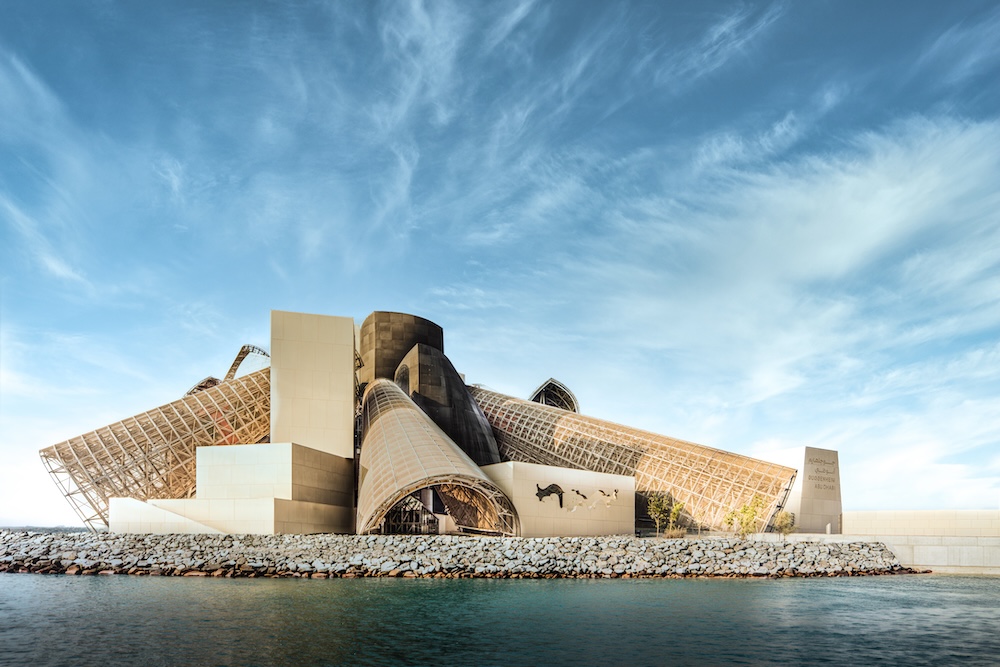
Guggenheim Abu Dhabi Finally Has an Opening Date
Designed by Frank Gehry and years in the making, the museum will officially open on December 11, 2026, on Saadiyat Island.
It is official: Guggenheim Abu Dhabi will open its doors on December 11, 2026. The long-awaited museum of modern and contemporary art is joining Abu Dhabi’s increasingly serious cultural line-up on Saadiyat Island, alongside Louvre Abu Dhabi, Zayed National Museum, Natural History Museum Abu Dhabi and teamLab Phenomena Abu Dhabi.
At this point, Saadiyat Cultural District is becoming a full cultural itinerary.
Part of the wider Guggenheim family, which includes museums in New York, Venice and Bilbao, the Abu Dhabi institution is not being presented as a copy-and-paste version of what already exists elsewhere. Its collection and programming will look at modern and contemporary art through a perspective shaped by the UAE, the region and Abu Dhabi’s long history as a meeting point between different cultures.
The museum will focus on art from the 1960s to today, bringing together painting, sculpture, photography, installation, moving image and new media. Rather than telling one neat, chronological history of art, it will connect artists and ideas across countries, generations and disciplines.
Basically, less “walk from decade to decade” and more “follow the connections and see where they take you.” We're so excited! Are you?
Frank Gehry, But Make It Abu Dhabi

The building itself is, unsurprisingly, a major part of the story. Designed by the late Pritzker Prize-winning architect Frank Gehry, Guggenheim Abu Dhabi sits between land and sea, with a silhouette shaped by the architecture and climate of the Gulf.
Inside, the museum will include 30 galleries connected through a central atrium. Ten sculptural cones rise through the building—nine wrapped in stainless-steel mesh and one finished in onyx and glass, .creating natural ventilation and shade while giving the museum its instantly recognisable form. Some of the cones reach heights of up to 88 metres.
The scale is difficult to ignore: 11,600 square metres of interior gallery space, 23,000 square metres of outdoor exhibition areas and a total built-up area of 80,000 square metres.
So yes, wear comfortable shoes.
A Collection Built Over Time

Although the museum has yet to open, its collection has been developing since 2009. The galleries will explore themes including abstraction, popular culture, land, language and storytelling, looking at how artistic ideas have travelled and changed across different regions. Visitors will be encouraged to create their own routes through the museum rather than follow a single fixed narrative.
That approach feels especially relevant in Abu Dhabi. The city has spent years positioning itself as more than a host for international cultural names, building institutions that bring global conversations into contact with local history and regional perspectives.
Guggenheim Abu Dhabi is designed to sit within that exchange; not simply importing art into the UAE, but asking how the UAE can shift the way that art is seen, understood and discussed.
Dr. Mariët Westermann, Director and CEO of the Solomon R. Guggenheim Foundation, describes the collection as both local and global, centred in the region while featuring work from every continent. Meanwhile, Mohamed Khalifa Al Mubarak, Chairman of the Department of Culture and Tourism – Abu Dhabi, says the museum will create new opportunities for learning, creativity and cultural exchange.
And whileiIt would be easy to focus only on the architecture, the scale or the Guggenheim name, the more interesting question is what the museum will actually add to the region’s cultural landscape.
For younger audiences, it offers access to modern and contemporary art without requiring a trip to New York, London or Paris. For artists and creatives from the region, it creates another major platform where their work can exist within a genuinely international conversation. And for Abu Dhabi, it is another step in becoming a city where culture is not treated as decoration, but as infrastructure.
Details surrounding the opening exhibitions, collection highlights and new commissions will be revealed over the coming months. For now, the date is finally in the diary.
Guggenheim Abu Dhabi opens on December 11, 2026, in Saadiyat Cultural District.

From Our TikTok Feed to the Region: Haruharu Wonder Has Arrived
Like many modern beauty discoveries, ours began with TikTok. The product was Haruharu Wonder’s Black Rice Hyaluronic Toner: a dark, slightly mysterious bottle appearing between skincare routines, glass-skin tutorials and very convincing before-and-after videos. Naturally, we became curious. Then we tried it.
The toner felt hydrating without being sticky, soothing without disappearing into the skin and simple enough to use consistently. It was the kind of product that became part of our routine pretty instantly. From there, one formula led to another, and somewhere between the cleansing oil, barrier essence and sunscreen, we became full-on fans.
Now, the Korean skincare brand has officially arrived in the Middle East, making our recommendations considerably easier to act on.
.jpg)
The Black Rice Hyaluronic Toner is one of Haruharu Wonder’s global cult favourites, formulated with fermented black rice extract, hyaluronic acid and red ginseng. It is designed to soothe and soften the skin while improving moisture retention, leaving it feeling plumper and refreshed. But beyond the ingredient list, its appeal is how uncomplicated it feels.
This toner gives skin that comfortable, hydrated feeling without turning your routine into something too complicated. It also became our entry point into the brand’s wider philosophy: skincare should work day by day, rather than promising a completely new face by next Tuesday.
The name Haruharu literally means “day by day” in Korean, reflecting the brand’s focus on consistency, daily rituals and long-term skin health instead of quick fixes.
Why Black Rice?
Black rice is not simply there because it looks good in the product name. Haruharu Wonder uses fermented black rice, which is naturally rich in flavonoids and antioxidants. The brand combines it with its patented Ultra Deep Technology, a liposome-based delivery system developed to help active ingredients absorb more effectively without overwhelming the skin. Fermentation is central to the brand’s approach. The process is used to amplify the natural potency of plant-based ingredients while keeping the formulas gentle enough for regular use.
This balance—effective but not aggressive—is probably why the products have found such a loyal audience online. Haruharu Wonder does not build its identity around the idea that your skin needs to be constantly corrected, stripped or exfoliated into submission. The emphasis is on maintaining a healthy barrier and giving the skin what it needs consistently.
All of the brand’s products are vegan and cruelty-free, clinically tested for skin compatibility and developed without unnecessary additives.
Haruharu Wonder’s Middle East arrival comes at a particularly appropriate time. Summer skin here is dealing with several personalities at once. There is outdoor heat and humidity, followed immediately by freezing indoor air conditioning. Add sweat, sunscreen, makeup, travel and possibly several hours inside a very dry plane cabin, and the skin can somehow feel oily, tight, dehydrated and congested on the same day.
Instead of suggesting 14 products to solve the problem, Haruharu Wonder divides its summer approach into three realistic steps: protect, hydrate and cleanse properly.
Start With SPF
The brand’s sunscreen selection includes the Black Rice Moisture Airyfit Daily Sunscreen SPF50+/PA++++, a lightweight daily formula with a velvet finish and no white cast. It is designed to sit comfortably beneath makeup rather than creating another layer you spend the day feeling on your face. For sensitive skin, there is the Black Rice Pure Mineral Relief Daily Sunscreen SPF50+/PA++++, while the Black Bamboo Top-to-Toe SPF Veil extends the protection beyond the face with a non-sticky lotion texture and three types of hyaluronic acid.
Also, let's be real; the best sunscreen, after all, is not necessarily the one with the most dramatic marketing claims; it's the one you will willingly put on every morning.
For hydration, the Black Rice Probiotics Barrier Essence has a creamy, milky texture and a formula built around ceramides, fatty acids and cholesterol in a 3:1:1 ratio. Fermented ingredients including Galactomyces and Bifida help support elasticity and hydration.
There is also the Black Rice Probiotics Barrier 2% NAD+ Serum Mist, which works somewhere between a toner, essence and serum. It is an ultra-fine milky mist made with probiotics and a five-ceramide complex, useful when skin needs something during the day but you have no interest in applying another full routine.

The less glamorous part of wearing sunscreen every day is that it also needs to be removed properly. Haruharu Wonder’s Complete Cleansing Duo Kit offers a simple version of the Korean double cleanse. The first step, the Black Rice Moisture Cleansing Oil, melts away makeup, sunscreen and daily build-up using naturally derived oils including rice bran, olive, sunflower, macadamia and jojoba.
It is followed by the Black Rice Moisture 5.5 Soft Cleansing Gel, a gentle, pH-balanced cleanser developed to remove whatever remains without leaving the skin feeling tight or stripped. This is probably the part of the routine we appreciate most: effective cleansing that does not make your face feel as though it has been through a difficult emotional experience.
From TikTok Discovery to Middle East Shelves
%20(1).jpg)
Haruharu Wonder has built a global presence across more than 100 countries, largely through word of mouth, viral consumer recommendations and products that perform consistently enough to keep people repurchasing them.
Its Middle East debut brings the brand exclusively to Ulta Beauty, both online and at Dubai Mall and Mall of the Emirates. The regional launch also includes a Best Glow Mini Trial Kit, containing the cleansing oil, an AHA cleansing gel, the toner that started our obsession and the Probiotics Barrier Essence.
It is a very convenient introduction for anyone who has watched the same black bottle appear on TikTok and wondered whether it is actually worth trying.In our case, the answer was yes.
More info on HaruHaruWonder.com

The Inevitavbe Wasta: Networking, Nepotism, or Something In Between?
You and I have probably been, at some point in our lives, either the victim of a wasta, the facilitator of one, or the person happily receiving it. Sometimes, we have been all three.
In Arabic, wasta—واسطة—refers to using a personal connection, intermediary or position of influence to help someone gain access to an opportunity, service or outcome. It could be the friend of a friend who knows someone, your immediate family, or the cousin of 3amo Khaled, whose address book is somehow larger than an encyclopaedia.
It can mean securing an interview, speeding up paperwork, finding a doctor who will fit you into an impossible schedule or calling someone who can finally explain why your licence application has been sitting untouched for three months.
By Cynthia Jreige
On the surface, it often feels harmless. It is simply a network of people helping one another, right?
Across the Arab world, pulling out the wasta card is almost always a possibility. From your first summer internship to your driving licence, university application or first proper job, there is usually someone who knows someone who might be able to “see what they can do.”
The practice exists everywhere in different forms: networking, referrals and introductions are not exclusively Arab concepts. However, there is something particularly familiar about the way wasta operates in our region: informal, personal and often understood without anyone needing to say too much.
One phone call, one name dropped at the right moment, one reminder that your father once helped his father in 1998. Done. But while sipping coffee one afternoon, I started wondering whether wasta might be more harmful than we like to admit.
When a Connection Is Just a Connection
Not every wasta is corruption, and not every introduction is unfair. Sometimes, a connection simply helps someone get noticed. It's a friend recommending you for a role because they know you would be good at it; it's a former colleague introducing you to someone working in an industry you are trying to enter; it;s a relative putting your CV in front of a hiring manager, but you are still expected to interview, demonstrate your skills and earn the position.
In these cases, wasta does not necessarily replace merit, it just creates access.
And access matters, especially in places where formal systems can feel slow, opaque or difficult to navigate. Knowing the right person can help you understand a process that no one properly explained, reach someone who was otherwise impossible to contact or be considered for an opportunity you may never have heard about.
We are constantly encouraged to network, maintain relationships and build communities. LinkedIn has essentially turned professional introductions into an entire business model. So why does a referral become respectable when it happens at a corporate event, but suspicious when it happens through 3amo Khaled?
Perhaps the discomfort is not always about the connection itself but more about what happens after the connection is made.
When the Little Push Becomes a Shortcut
The problem begins when wasta stops opening the door and starts removing everyone else from the room. It is one thing to help someone secure an interview but it is another to guarantee them the job, regardless of whether they are qualified.
It is one thing to help a person understand a bureaucratic process but another to move their application ahead of people who have been waiting longer.
This is where wasta becomes more than networking and just becomes favouritism. The thing about favouritism it that is inevitably damages the idea of merit. It tells people that working hard may matter, but perhaps not as much as their surname, family network, money or proximity to power.
We grow up being told that we can achieve anything if we work hard enough. But can we, when somebody with more influence can obtain the same thing—or something better—through one well-placed phone call?
The damage is not limited to the person who loses the opportunity, it can affect entire workplaces and institutions.
When people are appointed because of connections rather than ability, everyone around them has to carry the consequences. Teams become less capable, trust disappears. Employees stop believing that performance will lead to recognition because promotions appear to have been decided elsewhere, perhaps over lunch between two families who go back several generations.
Eventually, people either leave or learn to play the same game and the system reproduces itself.
Merit and Wasta Can Exist at the Same Time
Of course, reality is rarely that simple. What happens when someone is both talented and connected?
You may have worked hard, built experience and spent years developing genuine relationships. You are good at what you do, and someone in your network offers to give you a small push. Should you refuse simply because another person may not have access to the same introduction?
Professional success has never been based entirely on skill. Timing, confidence, visibility and relationships have always played a role. Many opportunities come from being remembered by the right person at the right moment.
Networking itself requires effort. Building a reputation, maintaining relationships and making people trust your work can be forms of merit too. But there is an important distinction between a recommendation and a guarantee. A healthy connection says, “You should meet this person. I think they could be right for the role.”
An unhealthy wasta says, “Give this person the role.” One supports consideration while the other determines the result. That difference may sound small, but it changes everything.

Do We Only Hate Wasta When It Is Not Ours?
There is also an uncomfortable hypocrisy in the way we discuss wasta. We criticise it when someone else benefits, but rarely question it when it saves us time.
When another person gets the position through connections, it is deeply unfair. When our mother calls someone to move our appointment forward, it is simply practical.
When an unqualified colleague is promoted, we complain about corruption. When someone offers to send our CV directly to the CEO, we suddenly become very open to “networking.” Perhaps this is why wasta survives so easily. It is difficult to reject a system when we never know when we might need it.
Even people who dislike it may feel forced to participate. Refusing a connection can feel less like taking a moral stand and more like voluntarily putting yourself at a disadvantage while everyone else continues playing by different rules.
Stop or Encore?
So, should wasta stop, or do we accept it as an inevitable part of how society works? Perhaps the answer depends on whether the connection creates access or replaces fairness. A wasta that helps someone discover an opportunity, meet the right person or receive guidance can be harmless and sometimes genuinely helpful. Communities have always survived through people supporting one another.
But when wasta overrides competence, skips established processes or takes something away from someone more deserving, it stops being community and becomes privilege protecting itself.
The goal should not be to eliminate human relationships from professional or public life. That would be unrealistic, and probably undesirable. It should be to build systems strong enough that connections cannot determine outcomes on their own.
Make the introduction. Pass along the CV. Share the contact. Give someone the small push. But let them do the rest. Because a door opened through a connection is one thing but a future decided before anyone else had the chance to knock is something entirely different.

Karen Wazen x Saie: The Sunglasses-and-Lip Combo We’ll Be Wearing Everywhere
Karen Wazen is having a summer. After opening her own beach club in Lebanon and introducing the first men’s collection for Karen Wazen Eyewear, she is now joining forces with Saie for a limited-edition beauty-meets-fashion collaboration.
And considering we have loved Saie’s easy, glowy formulas since discovering the brand a couple of years ago, this one immediately got our attention. Founded by Laney Crowell, Saie has built a loyal following around clean beauty that does not feel complicated or overly serious. Its high-performance formulas are made for effortless glow—the kind of makeup that makes you look fresher without making it seem as though you spent an hour trying.
Karen Wazen Collection, meanwhile, has grown from an eyewear label into a globally recognised lifestyle accessories brand, founded by Lebanese Dubai-based entrepreneur and content creator Karen Wazen. Together, the two female-founded brands are bringing their communities into one very summer-appropriate drop built around confidence, simplicity and elevated everyday essentials.

At the centre of the collaboration is an exclusive co-created frame inspired by the woman who wears both brands: effortlessly chic, naturally radiant and probably moving between three plans in one afternoon. The contemporary cat-eye silhouette is crafted from premium black acetate, finished with subtle gold co-branding and fitted with lenses offering 100% UV protection. It feels classic enough to survive more than one summer, but sharp enough to change the mood of an otherwise very simple outfit.
The sunglasses are paired with Karen’s curated Saie essentials: Glossybounce Hydrating Lip Gloss Oil and Lip Liner 101.
Both products come inside Karen Wazen Collection’s classic pillow pouch, redesigned with subtle co-branding and dedicated compartments for the Saie products. So everything stays together instead of disappearing into the bottom of your bag alongside receipts, tangled headphones and one unidentified lip balm from 2023.
It is the ideal on-the-go combination: sunglasses on, lips lined, gloss added and suddenly you look considerably more put together than you felt five minutes earlier.
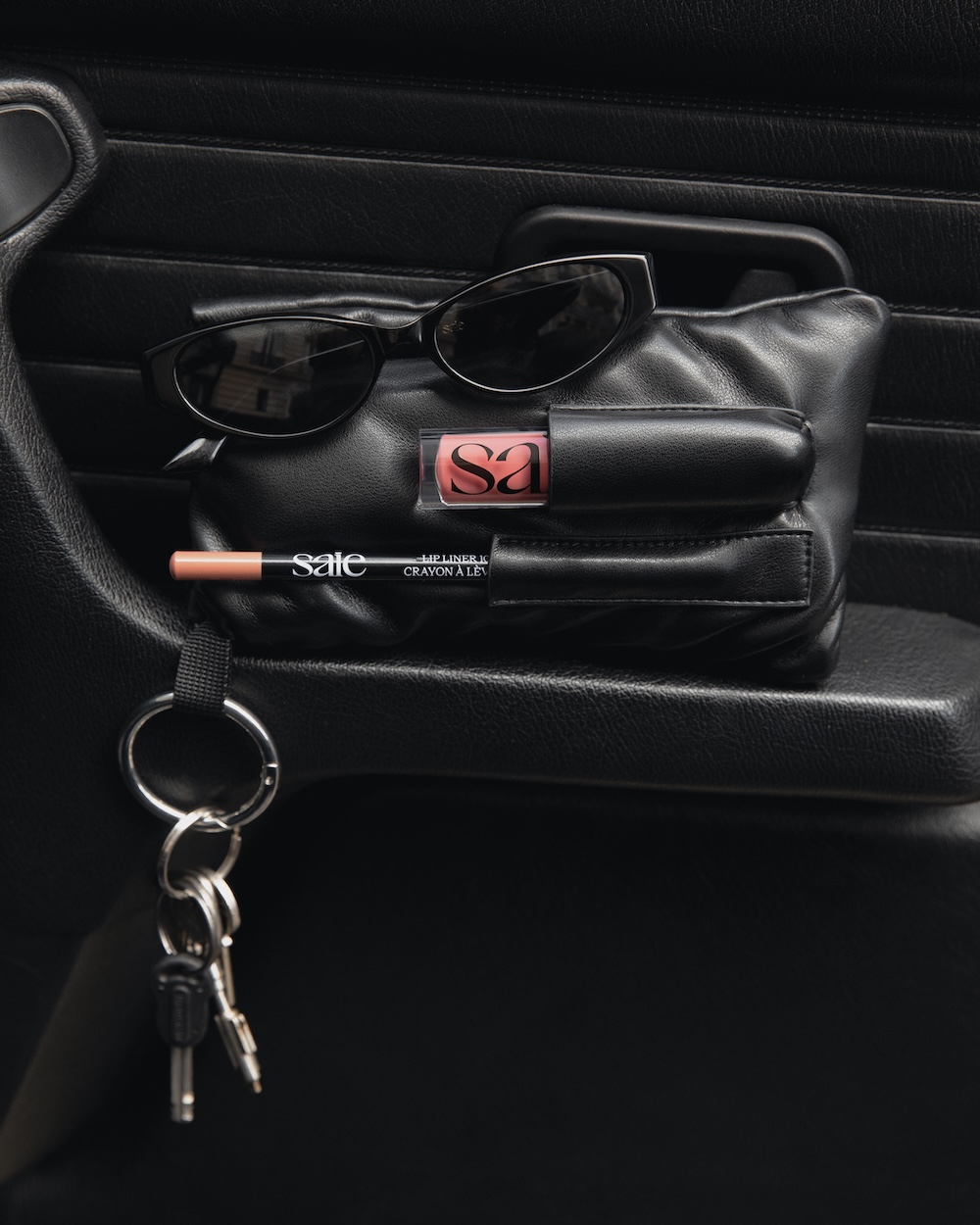
Not every collaboration needs to happen, but to be honest we're kinda excited about this one.
Karen Wazen Collection is about accessories that can elevate a look without demanding too much effort. Saie approaches beauty in much the same way, creating products that enhance what is already there rather than covering it completely.
“This collaboration was inspired by the shared DNA between the Karen Wazen girl and the Saie girl; effortless, confident, and naturally elevated,” Karen explains. “She gravitates towards pieces that enhance rather than overpower, whether it’s a clean beauty routine or a timeless pair of sunglasses.”
Laney Crowell felt the same connection.
“I instantly fell in love with Karen’s designs because they feel effortless while still elevating your look,” the Saie founder and CEO says. “What I love most is how Karen approaches style in the same way we think about beauty at Saie. It’s about enhancing what’s already there, not overpowering it.”
As Crowell got to know Karen and the brand more closely, she says the alignment between their aesthetics and values made the partnership feel natural.
And that shared language is easy to see: the frame makes a statement without becoming a costume and the lip products add definition and shine without turning into a full makeup situation.
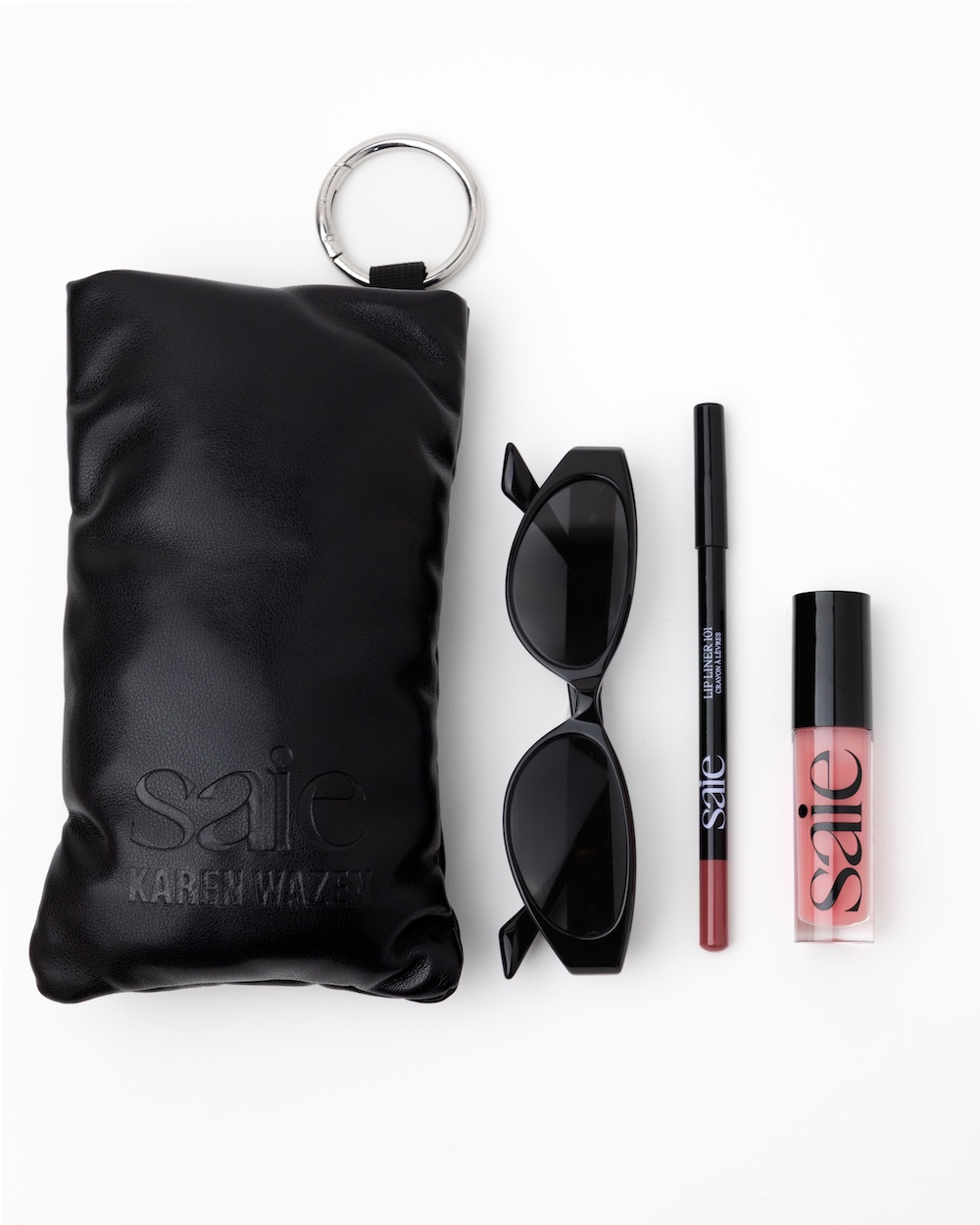
The products are cute, obviously. But we also love what the collaboration represents. Both Karen and Laney have turned a clear personal point of view into businesses with loyal international communities. They understand their customers, know exactly where their brands fit and are not afraid to expand without losing the identity that made people care in the first place.
Karen’s evolution as a business owner has been especially exciting to watch. Karen Wazen Collection has released more than 14 collections and expanded across international retailers, e-commerce platforms and dedicated stores throughout the region. She is also a co-founder of KE Partners, a UNHCR Goodwill Ambassador and a board member of Fashion Trust Arabia.
The beach club, the men’s collection and Now Saie.
She is clearly not interested in staying inside one category, and we love watching a woman from the region continue to build on her own terms. The limited-edition Saie x Karen Wazen collection launches on July 24, 2026, through Saie and Karen Wazen’s websites, as well as Karen Wazen stores. Customers purchasing the collaborative sunglasses in-store will also receive exclusive Saie samples and surprises while quantities last.
It is Karen’s summer. Saie brought the glow. And we will be carrying the pillow pouch everywhere.
More info on Karenwazen.com and SaieHello.com
BIRKENSTOCK and Repetto Meet Somewhere Between the Footbed and the Ballet Barre
The two heritage houses unite for a three-piece collection that pairs BIRKENSTOCK’s anatomical comfort with Repetto’s Parisian sense of movement.
At first glance, BIRKENSTOCK and Repetto may appear to belong to entirely different worlds. One is built around the anatomy of the foot, functional design and a shoemaking history that stretches back to 1774. The other emerged from the discipline and poetry of ballet, creating footwear defined by lightness, movement and distinctly French elegance.

Their first collaboration proves the distance between the two is not quite as wide as it seems. Developed through BIRKENSTOCK 1774, the brand’s Paris-based special projects and collaborations division, the new BIRKENSTOCK x Repetto collection brings the German footbed into dialogue with the codes of the ballet studio. The result is a trio of silhouettes that feels practical, playful and unexpectedly romantic.
The Arizona Gets a Ballet-Inspired Update
The collection begins with a familiar icon: the Arizona. For this release, the classic two-strap sandal is reworked with oversized rounded buckles, giving its instantly recognisable shape a more sculptural finish. It remains unmistakably BIRKENSTOCK, but viewed through Repetto’s softer and more expressive lens.
The Scala introduces a round-toed silhouette finished with two delicate straps and a lace bow. It has the charm of a ballet flat without becoming overly literal, balancing sweetness with a slightly bolder attitude.
Completing the collection is the Opéra, a sabot-style design with long, fluid laces that wrap around the ankle like a dancer’s ribbons. Of the three, it is perhaps the clearest meeting point between both houses: grounded by a substantial footbed, then transformed through gesture and movement.

Each silhouette arrives in three colours drawn from Repetto’s visual universe. Iconic Pink references the delicacy and lightness traditionally associated with dance. Flame Red brings a more dramatic energy, while Profound Black offers the collection’s most timeless and understated option.
A Vichy-check lining appears across the footbeds, introducing a motif associated with effortless Parisian style and linking the three designs through one recognisable detail. The collection is offered in European sizes 35 to 42.
Beyond the visual contrast, the collaboration is held together by a shared interest in how people move. BIRKENSTOCK’s identity is rooted in foot health and its anatomically shaped footbed, while Repetto began with an equally functional purpose. Founded by Rose Repetto in 1947, the house was created after she designed dance shoes for her son, dancer and choreographer Roland Petit.

That original act of care became the foundation for a maison synonymous with ballet flats and French savoir-faire. Repetto later created the Cendrillon for Brigitte Bardot in 1956, while Serge Gainsbourg helped turn the Zizi into another cultural signature.
Both brands have since moved far beyond their original contexts, but neither has abandoned the purpose that shaped it. BIRKENSTOCK continues to frame comfort as a matter of natural movement, while Repetto’s designs remain connected to precision, freedom and the body in motion.
The partnership arrives at a moment when fashion is increasingly interested in unlikely combinations: technical and delicate, practical and theatrical, familiar and slightly strange (and we're not mad at that.)
Rather than disguising the BIRKENSTOCK footbed or turning Repetto’s ballet language into a costume, the collaboration allows both identities to remain visible. Rounded buckles, ankle ribbons, bows and checked linings soften the utilitarian forms, but comfort remains central. Somehow it works, and somehow we kinda want it all.
The collection was conceived in Paris before being produced in BIRKENSTOCK’s German workshops, combining Repetto’s creative vocabulary with the German house’s manufacturing expertise. It launched on July 16, 2026, through 1774.com, Repetto’s channels and selected retailers worldwide.
It may be called a ballet of style, but these are shoes made for more than standing beautifully at the barre. They are designed for moving through the city—with ribbons tied, footbeds grounded and perhaps a little more drama in every step.
More on Birkenstock.com and Repetto.com
Cherryhouse Brings Coffee, Craft and Emirati Hospitality Under One Roof
The new Al Safa destination combines an in-house roastery, an open bakery and all-day dining in a space designed to make the process behind every cup and loaf part of the experience.
Dubai’s café scene has a new address and Cherryhouse is not any other coffee shop. Now open in Al Safa, the concept brings together specialty coffee, artisanal baking and all-day dining within one open, design-led space. Founded by Emirati entrepreneur Mohammed Matar Al Koas Al Falasi, the name behind Saddle and Feels, Cherry House has been created around a simple idea: the craft behind what we eat and drink should not stay hidden.
Named after the vivid red fruit surrounding every coffee bean, Cherryhouse turns preparation into part of the hospitality. Roasting, baking and coffee-making unfold in view of guests, making the rhythm of production as central to the experience as the final result. Deep cherry tones, natural light and an open-plan layout give the venue a warm, contemporary character, while the roastery, bakery and espresso bar remain visible throughout the space.
From Green Bean to Final Cup

At the centre of Cherryhouse is its fully operational in-house roastery, fitted with a Loring machine known for its precision and cleaner roasting process.
The most visually striking feature, however, is the region’s first overhead belting system, which transports freshly roasted beans across the venue through a network of pipes. Functional and theatrical at once, it turns the movement of coffee into part of the interior experience. The green beans are sourced from producers across Colombia, Ethiopia, Brazil, Indonesia, Costa Rica and Panama. Guided cuppings and coffee tours are also planned, offering guests a closer look at the journey from origin to roast and, eventually, the cup in front of them.
For Al Falasi, Cherryhouse is the outcome of years spent studying coffee and bakery cultures around the world.
“My vision was always to create a global destination where Emirati hospitality meets world-class coffee and artisanal baking,” he says. “Every detail, from the green bean to the final cup, from the grain of wheat to the loaf on the table, is shaped by the same belief in delivering only the best.”
As per the bakery, it follows the same transparent approach. Breads and pastries are shaped, proofed and baked in full view, bringing guests closer to the time and technique behind each item. Cherryhouse works with certified organic, French-milled wheat, while its sourdough is fermented for up to 48 hours before reaching the table.

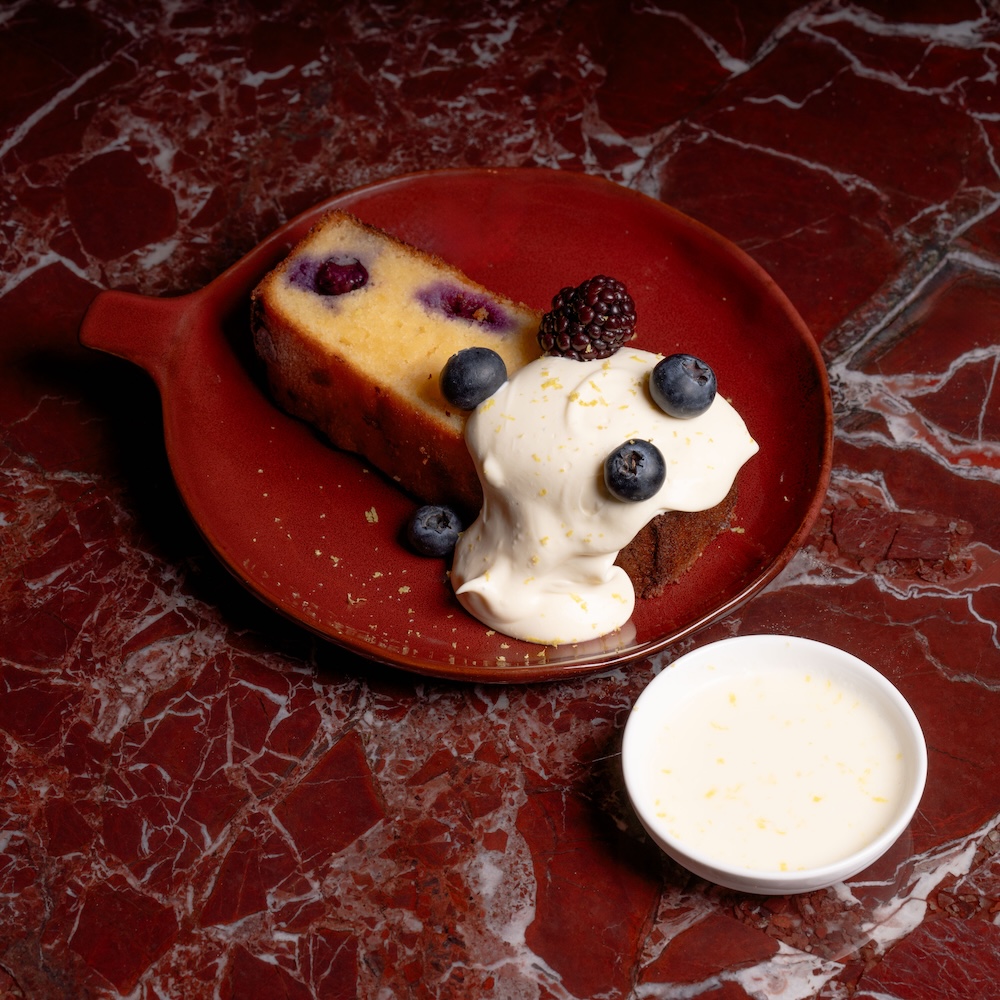
That focus on patience carries through the wider menu, which moves from fresh pastries and breakfast plates to nourishing bowls, sandwiches, salads and larger dishes. Specialty coffee sits alongside matcha and seasonal drinks, allowing the venue to transition naturally from an early-morning bakery visit to a longer lunch or slower evening stop.
A Café Designed for Staying
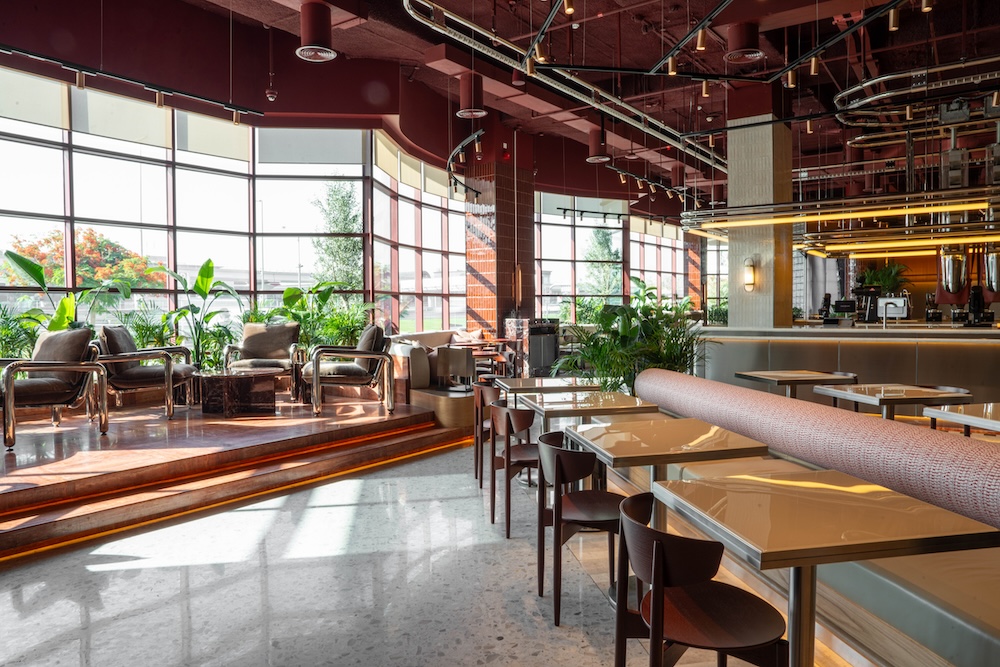
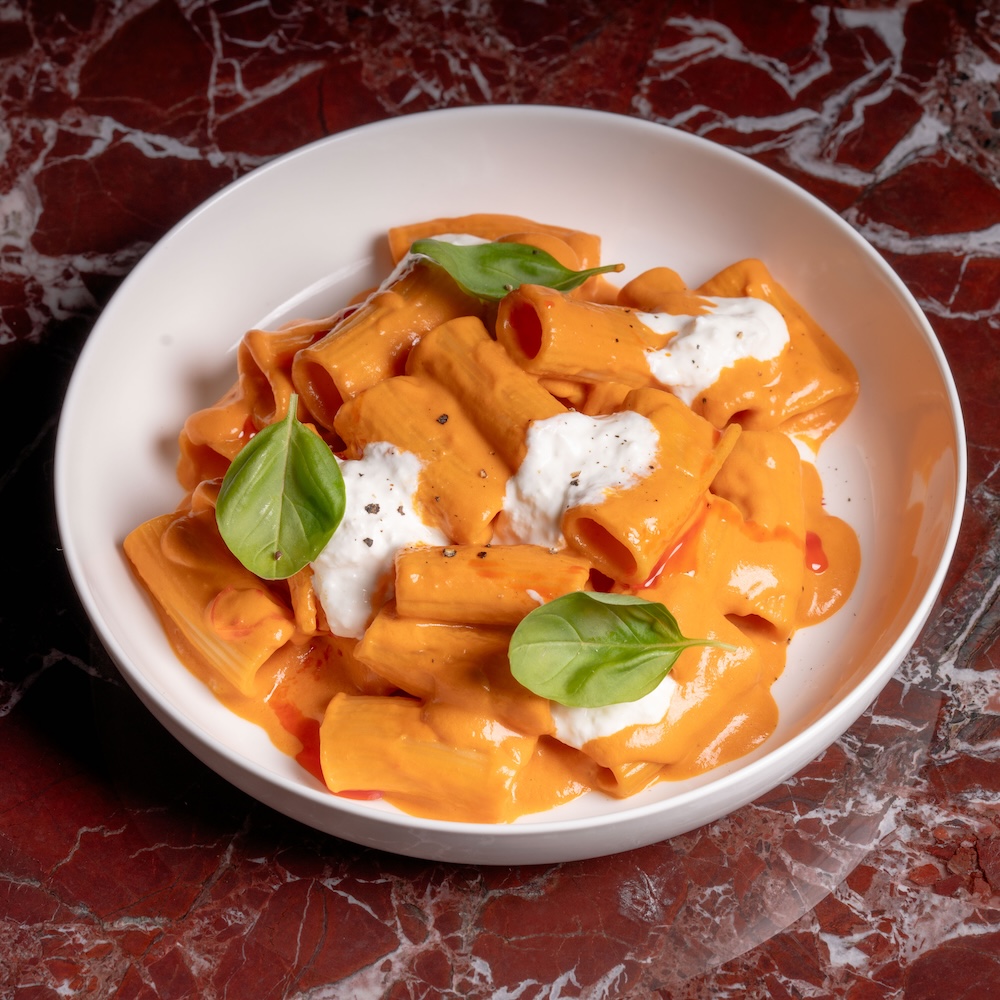
Cherryhouse describes itself as a destination rather than a stop, and its interior reflects that ambition. Natural materials, generous light and the brand’s signature cherry palette create a space that feels polished without becoming formal. The layout is built around lines of sight, keeping the roastery, bakery and bar visible so that movement, conversation and craftsmanship remain present throughout the visit.
It also speaks to a wider shift in Dubai hospitality, where guests increasingly expect more than a beautiful room or a strong menu. They want to understand the story, sourcing and process behind what they are consuming. Cherryhouse brings those elements together without separating them into different concepts. Coffee, baking and dining exist side by side, connected by the brand’s four central values: craft, integrity, ritual and gathering.
The result is a venue where the smallest details become part of the appeal: the sound of bread being prepared, the movement of beans overhead and the possibility of watching a morning coffee take shape from beginning to end.
Cherryhouse
Matloob Building, 22A Street, Al Safa 1, Dubai
Open daily from 7:00 AM to 12:00 AM.
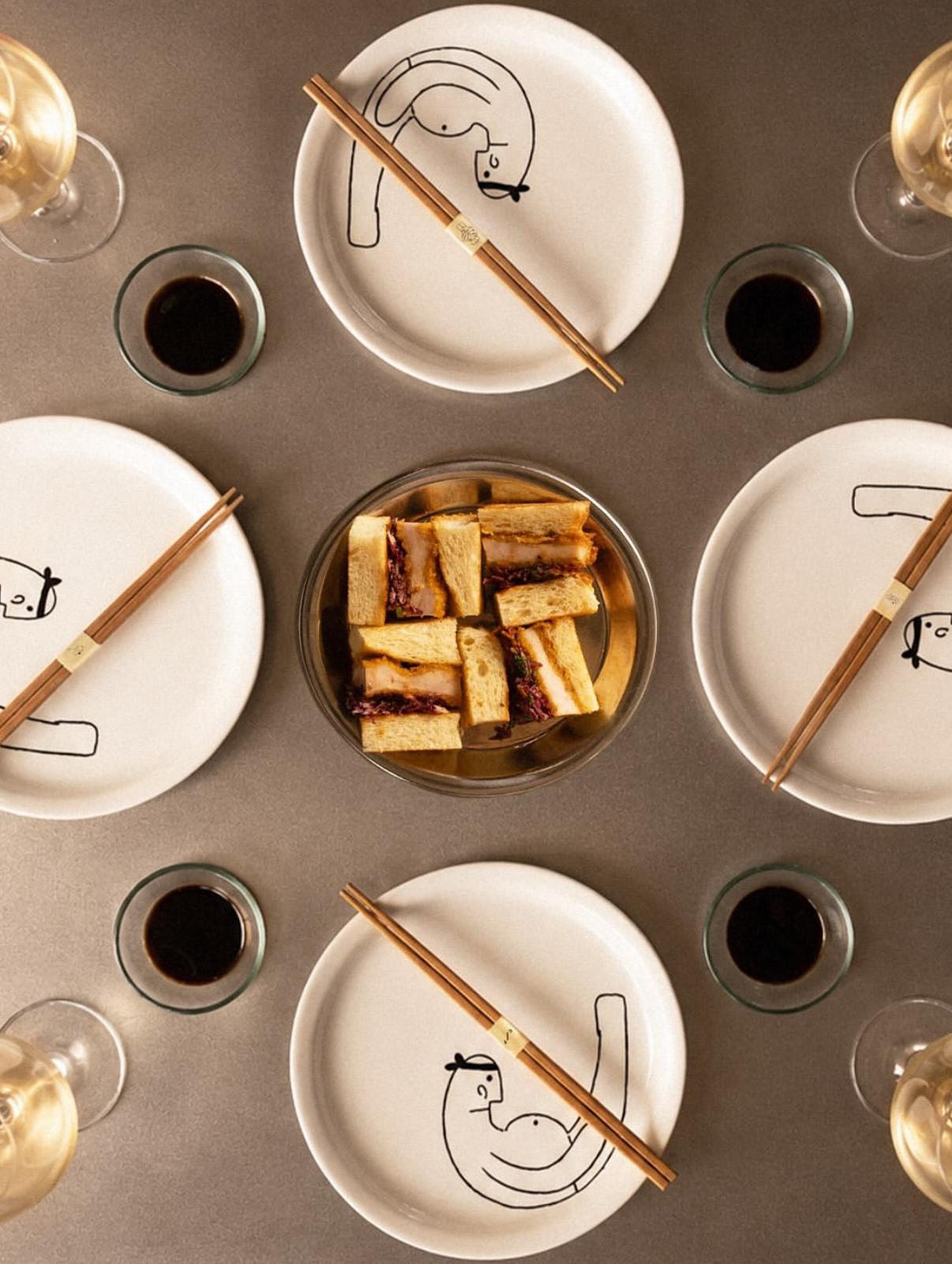
Beirut City Guide: Where to Eat, Drink and Linger By A Local
From miso buns and perfectly salted fries to local wine, vinyl records and post-workout coffee, the Beirut-based communications and social media manager shares the places currently shaping her experience of the city.
Kristy Ayoub notices all the details (and we always loved her style!). A Beirut-based communications and social media manager with a soft spot for good food, considered branding and beautiful spaces (and a JDEED Alumn!), she is always searching for the kind of place that gets more than one thing right. It could be a menu built around exceptional produce, a perfectly made coffee or an atmosphere that makes you stay long after the bill has arrived.
More often than not, she is also the person stopping everyone mid-walk—or mid-meal—after spotting something worth photographing.
Her guide to Beirut moves between bakeries, neighbourhood coffee shops, restaurants, bars and a workout-and-smoothie combination worth building a morning around. Some are established favourites, others are more recent discoveries, and a few are still waiting to be crossed off her list.
Start With Coffee—and Something Sweet

At the top of Kristy’s bakery list is BakeLab, where choosing one thing is part of the challenge.
“The miso bun. The almond croissant. The coconut cake that they just brought back. I could go on,” she says.
The coconut cake, in particular, receives all-caps approval, while the bakery’s combination of familiar pastries and less predictable flavours makes it the kind of stop that easily turns into a recurring ritual.
For a slower brunch, Kristy recommends Mavia—although the lavender shortbread cookies are reason enough to visit on their own.
“Come for brunch, stay for the lavender shortbread cookies. Trust me.”

On Fridays, the space shifts into pizza-night mode, offering another reason to return beyond the morning coffee run.
At Headshell, the appeal extends beyond what is in the cup. Alongside great coffee, the space carries a selection of local brands and vinyl records, turning a caffeine stop into an opportunity to browse Beirut’s wider creative scene.
For somewhere to work, meet a friend or simply settle in for a while, Kristy heads to Levant at Brazzaville.
“One of my favourite spots to get some work done or catch up with a friend,” she says. “Super cute, super chill.”
Then there is Beyond Organic, which combines coffee with the practical pleasure of picking up fresh produce, and perhaps a beautiful bunch of flowers on the way out.
Where Kristy Is Eating Right Now

Beirut’s restaurant scene rewards curiosity, and Kristy’s list moves easily between steak, saj, sushi, tacos and local wine.
Un Peu Fou makes the cut for its new menu, which Kristy describes simply but decisively as “really good.” When she is craving steak, she heads to Smoking Barrels. The restaurant may be her choice for a proper cut of meat, but the burger should not be overlooked.
“Their burger is absolutely killer,” she adds.
At Terrible Prince, the recommendation is reassuringly uncomplicated: you cannot go wrong with anything on the menu.
For a more communal meal, Kristy points to Souk El Tayeb. The visit may begin with saj, but it should not end there. Its new lunch formula is designed for sharing, making it an easy choice for a longer table with friends.
And then there are the fries.
“The fries are salted to perfection—which, if you know me, is a very big deal.”
For local wine and small plates, Aleb offers the right kind of relaxed pairing, while Chubby Fish earns a specific order: the Hamashi roll. Its playlist also receives Kristy’s approval, proving once again that the experience of a restaurant goes far beyond the plate.

Stir is another name on her current rotation, while Los Santos Tacos stands out for both the food and the visual world surrounding it.
“So, so good,” she says. “Really cool identity too.”
For someone working in communications and social media, strong branding is not an afterthought. It becomes part of how a space feels, how it tells its story and whether it stays in your mind after the meal.
Drinks, Pizzas and Late Nights
For drinks, Kristy’s Beirut shortlist includes Ivis & Olea, Riff, Fizz and Internazionale.

At Ivis & Olea, the menu leaves plenty of room to explore, but one order is non-negotiable.
“You can’t go wrong with anything on the menu,” she says. “But whatever you do, don’t skip the pizzas.”
Riff, Fizz and Internazional round out the list for nights when the destination matters just as much as the drink—places to meet, stay longer than planned and let the evening develop without overthinking it.
The Workout-and-Coffee Combination

Kristy’s ideal active morning begins at SOAR Lagree and ends nearby at Alma with a smoothie or coffee.
It is the kind of pairing that feels distinctly Beirut: a workout followed by something social, a quick plan that can easily stretch into the rest of the morning.
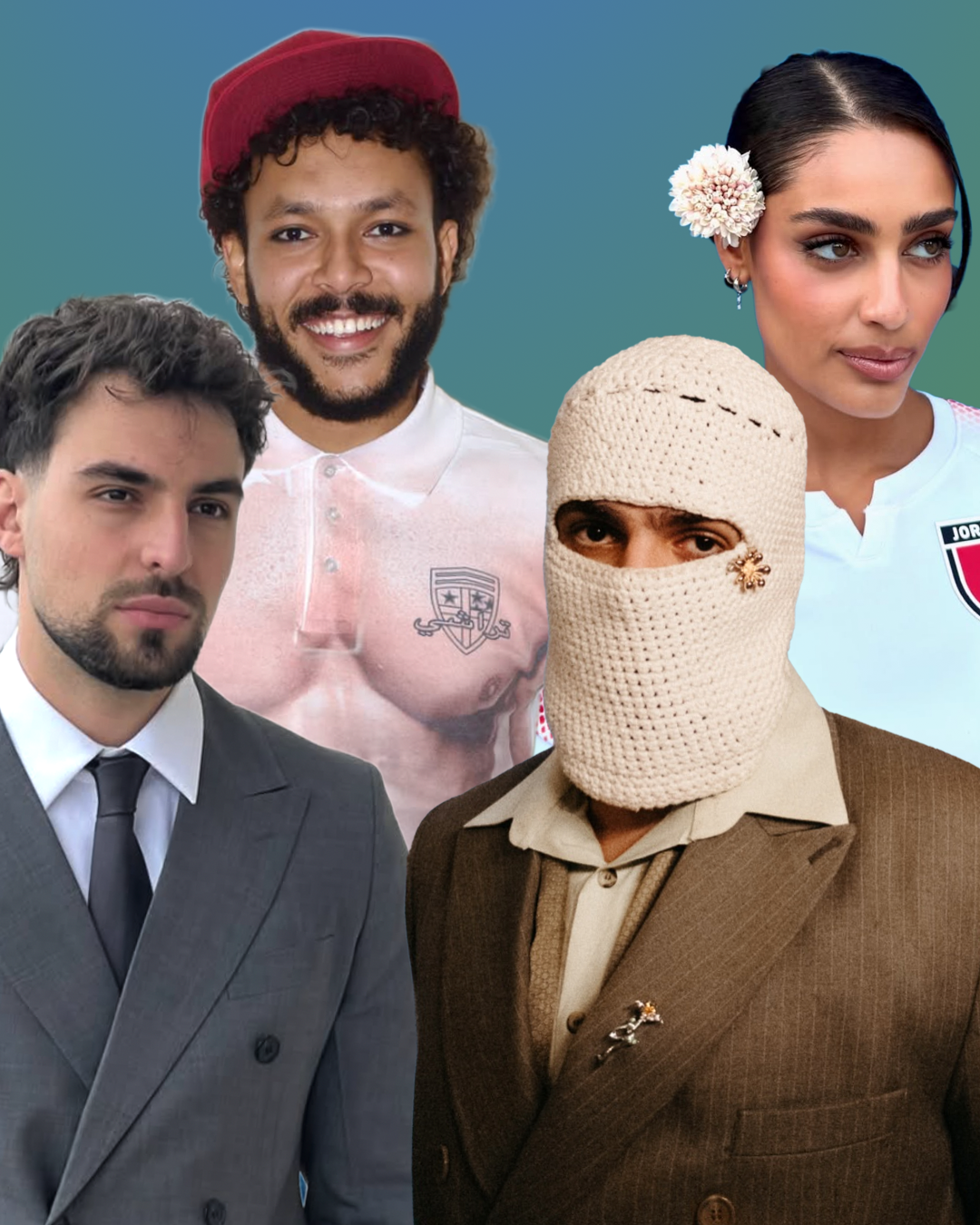
From the Region to the World: Wegz, Saint Levant, Zeyne and TUL8TE Go on Tour
Arab music is moving differently in 2026. Not only across streaming platforms or international collaborations, but through ambitious live shows that are placing artists from the region in venues and festivals across Europe, North America, the Levant and North Africa.
Wegz, Saint Levant, Zeyne and TUL8TE are each taking their music on the road this year, but no two tours look quite the same. One is returning for his second global run, another is transforming a concert into a narrative world inspired by Levantine nightlife, while others are building international audiences through intimate venues, major festivals and newly announced dates.
Together, the four tours reflect a generation of Arab artists no longer treating international stages as occasional stops. They are creating full touring worlds around their music, identities and visual languages.
Wegz Returns for His Second World Tour
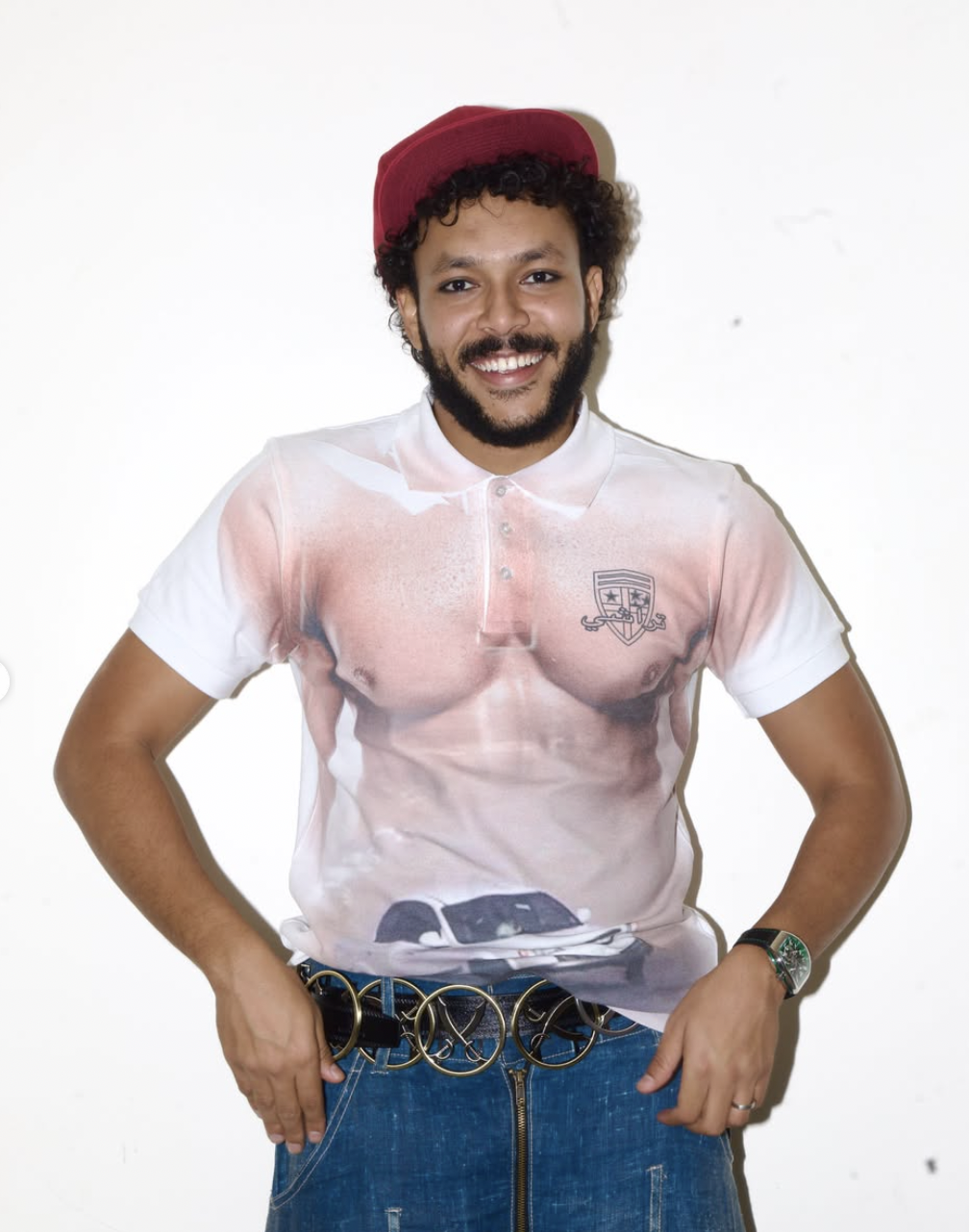
Egyptian rapper Wegz began his second world tour in Jordan on July 17, launching a multi-month schedule spanning North America, Europe and the Middle East.
The North American leg begins in September, with confirmed performances in New York, Washington, Dallas, Tampa and Los Angeles. From there, Wegz is set to head to Europe, with dates announced for Athens and Istanbul, while concerts in London, Milan, Barcelona, Amsterdam, Berlin, Dublin and Vienna are still to be confirmed. The tour will later return to the region for performances in Doha and Saudi Arabia.
The tour follows Wegz’s first major international run in 2023 and arrives after the release of his 2025 debut album, Aqareb. His return to the global circuit feels less like an introduction and more like a continuation of the space he has already created for Egyptian rap abroad.
More info on Instagram: @wegzofficial
Saint Levant Builds the World of Afandi
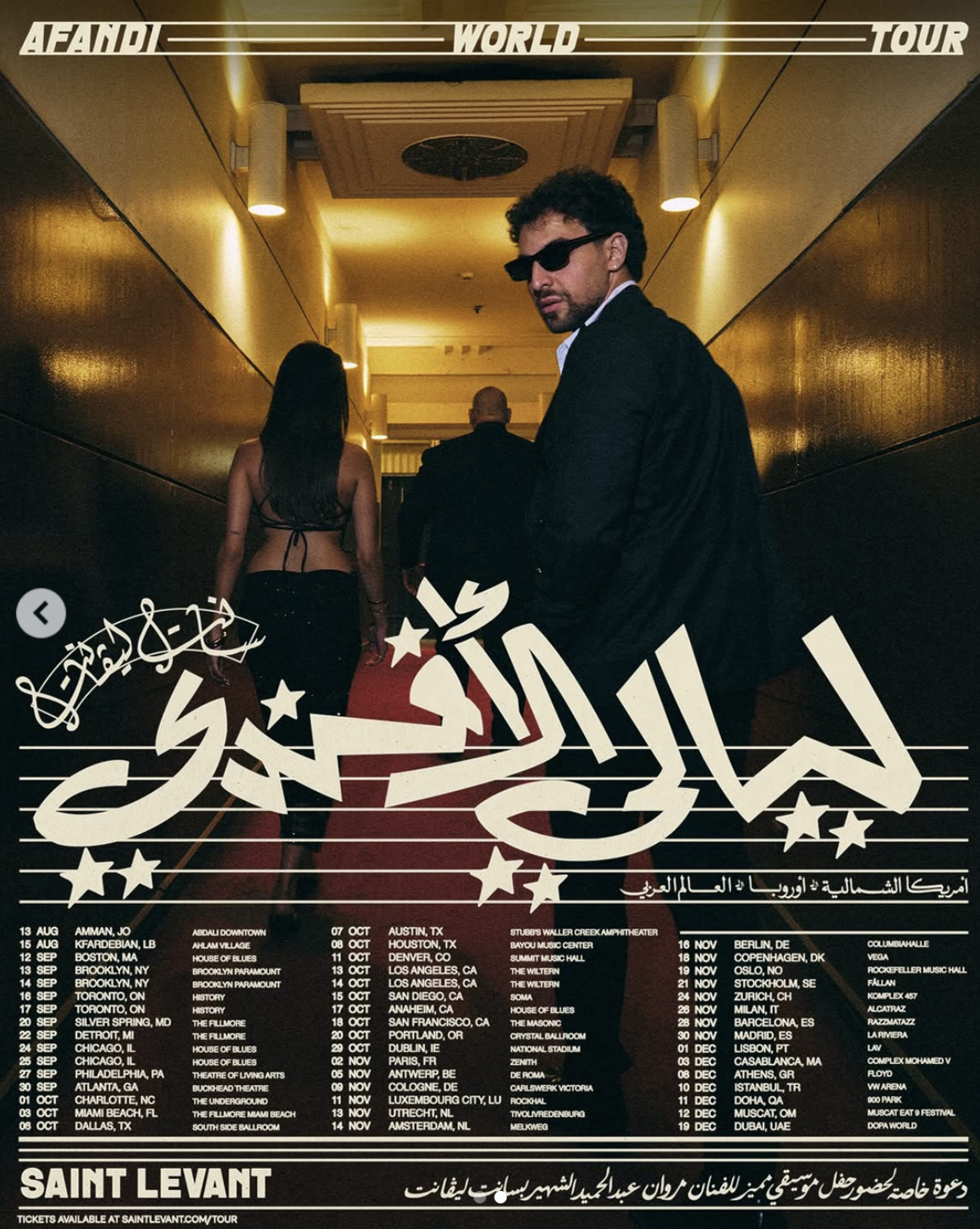
Saint Levant is approaching touring through an entirely different lens. His newly announced 41-date Afandi World Tour will feature Layali Al Afandi, a narrative live production inspired by the Levantine cabarets of the 1990s.
Rather than simply presenting a traditional concert, the show will combine live music, storytelling and stage design, drawing from Beirut’s nightlife and the fashion, sound and artistic energy that shaped Arab popular culture during the period.
The tour begins in the region with performances in Amman on August 13 and Kfardebian, Lebanon, on August 15. Saint Levant will then travel through North America from September, with stops including Boston, Brooklyn, Toronto, Chicago, Miami, Dallas, Austin, Los Angeles, San Francisco and Portland.
The European leg begins in Dublin on October 29, continuing through cities including Paris, Antwerp, Cologne, Amsterdam, Berlin, Copenhagen, Stockholm, Milan, Barcelona, Madrid, Athens and Istanbul. The closing stretch brings him back to MENA for Casablanca, Doha, Muscat and Dubai. Presales begin from July 21, followed by the general ticket release on July 24.
With Afandi, Saint Levant is not only exporting his sound. He is bringing a carefully constructed Arab visual and cultural universe with him.
Zeyne Brings Awda Across Europe and the UK

Zeyne is also deepening her international presence with the Awda EU/UK Tour, moving between summer festivals and a run of headline European shows.
Her 2026 schedule began with festival appearances in Casablanca, Montreux and Bern. Upcoming performances include London’s Mahrajan Festival on August 1 and the Lowlands Festival in the Netherlands on August 21.
The headline portion of Awda begins at KOKO in London on September 1, before travelling to Dublin, Brussels, Paris, Amsterdam, Berlin, Milan, Barcelona and Istanbul. The run concludes on September 18 at Salon IKSV in Istanbul.
The title Awda, meaning “return” in Arabic, gives the tour an emotional weight that goes beyond geography. For Zeyne, movement between cities becomes part of a wider story about belonging, memory and the way contemporary Arabic music can feel deeply local while travelling far beyond the region.
More info on Zeyne.co
TUL8TE Looks Towards the Gulf and North America

After a European run that included Vienna, Paris, London, Dublin, Milan, Berlin and Amsterdam, TUL8TE is continuing his touring momentum with new dates across the Gulf and planned shows in North America.
His upcoming schedule currently includes Kuwait on October 8, with the venue still to be announced, followed by a performance at Desert Garden at the Beyon Al Dana Amphitheatre in Sakhir, Bahrain, on October 23.
The artist’s official tour page also lists forthcoming concerts in Toronto, Montreal, Los Angeles and New York, with the dates and venues yet to be revealed.
TUL8TE’s route reflects how quickly his music is moving beyond its original audience. From Egyptian stages to European venues, the Gulf and an upcoming North American chapter, his live presence is expanding alongside the mysterious visual identity that has become central to his appeal.
More info on Tul8te.com
It's defintely a new live era for arab artists; Wegz is carrying Egyptian rap across a second international run. Zeyne is moving between festivals and more intimate European venues. TUL8TE is expanding into new markets while maintaining the mystery surrounding his image. Saint Levant is taking the concept further, treating the tour as theatre, nightlife, memory and music at once.
Together, their schedules suggest a broader shift in how artists from the region are approaching international success. Global touring is no longer positioned as the final reward after breaking through at home, no - It is becoming part of how Arab artists build their stories from the beginning, meeting diasporic audiences while introducing new listeners to music that does not need to translate or dilute itself to travel. This is an interpretation supported by the artists’ expanding 2026 schedules across MENA, Europe and North America.
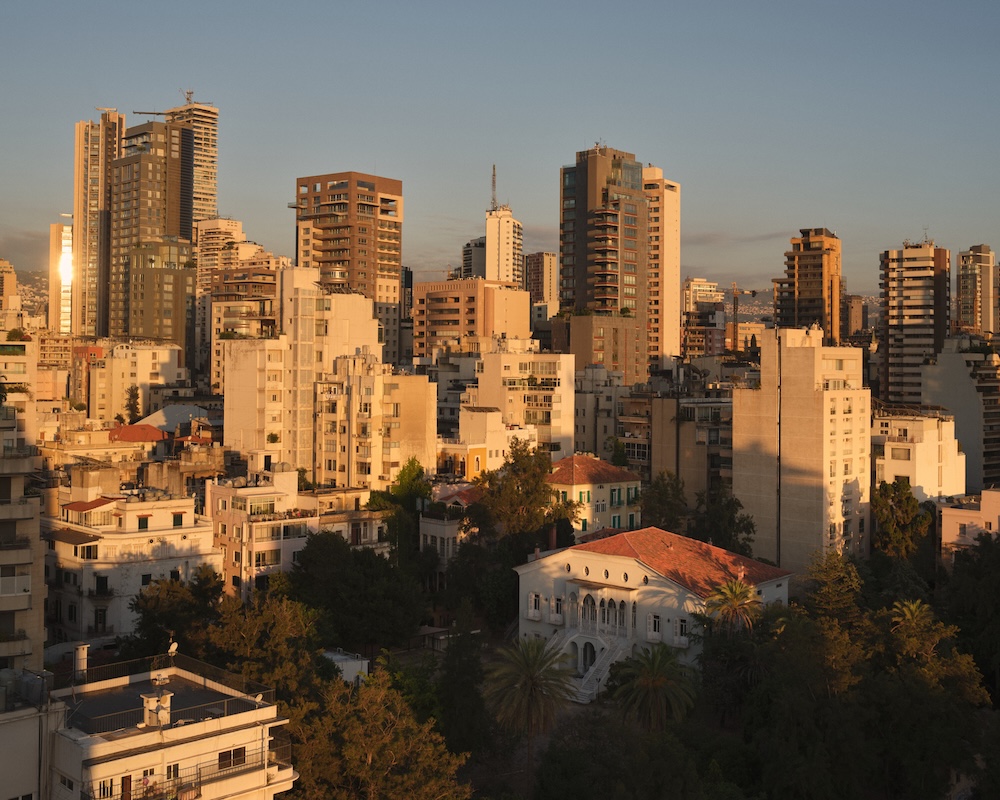
WE Design Beirut Is Coming Back Next May For Its Third Edition, “Love On The Mediterranean”
Returning from May 26 to 30, 2027, the multidisciplinary platform will bring designers, architects, artisans, chefs and cultural voices together across Beirut and beyond.
WE Design Beirut is officially returning for its third edition, taking place from May 26 to 30, 2027, with a new theme that looks beyond borders and towards the waters that have long connected them: “Love On The Mediterranean.”
Since its launch, WE Design Beirut has grown beyond the traditional framework of a design week. It has become a multidisciplinary cultural platform where design, architecture, craftsmanship, heritage and contemporary creativity meet, while creating space for conversation between Lebanon and the wider international community.
For 2027, the Mediterranean is approached not simply as a location on a map, but as a cultural artery. For centuries, its waters have carried people, traditions, ingredients, objects, techniques and ideas between different shores. “Love On The Mediterranean” will explore the emotional, historical and creative connections that continue to link these communities today.
Across five days, the program will unfold through exhibitions, installations, talks, student initiatives and cultural activations. Established and emerging designers will take part alongside architects, artisans, chefs, curators and students from Lebanon and abroad, creating an edition built around collaboration rather than a single discipline.
The upcoming chapter also promises a wider focus on international exchange, education and conversations between different creative practices. While the full list of designers, locations and programming has yet to be announced, the event will once again activate historically and architecturally significant sites throughout Beirut and beyond. This relationship between design and place has become one of WE Design Beirut’s most defining qualities. Rather than presenting work inside anonymous exhibition halls, the platform allows Beirut’s buildings to become part of each story.
During its second edition in 2025, exhibitions unfolded across locations including Villa Audi, the Roman Baths, Burj El Murr, Abroyan Factory and Immeuble de l’Union. Each space carried its own memories, architectural language and relationship to the city, placing contemporary design in direct conversation with Beirut’s past.
The program included eight exhibitions across five locations, alongside panel discussions, workshops, showcases and excursions. Its official recap recorded more than 200 participants, as well as 4.5 million social media views and an organic reach of 207,000 accounts.

The exhibitions moved between materials, generations and cultural questions. At the Roman Baths, designers reimagined marble through the histories of water and communal rituals. At Abroyan Factory, textiles and traditional skills were explored as living archives of labour, memory and resilience. Burj El Murr became the setting for a student exhibition examining conflict as an ongoing system rather than a closed chapter.
These projects reflected the platform’s wider commitment to treating heritage as something active. Not frozen in the past, but continuously questioned, protected and reshaped by new generations.
Launching another edition in Lebanon’s current climate is an ambitious decision, but for founder Mariana Wehbe, that is exactly why it matters.
“This is precisely when culture becomes essential,” Wehbe says, describing WE Design Beirut as a platform centred on continuity, preserving knowledge, supporting creatives and reminding audiences of the cultural richness that continues to exist in Lebanon.


With its third edition, WE Design Beirut is not only inviting the Mediterranean into Beirut. It is placing Beirut back within a larger Mediterranean conversation, one shaped by movement, memory, hospitality, craftsmanship and exchange.
Further announcements surrounding the participating designers, venues and full program will be revealed in the coming months.
WE Design Beirut 03: Love On The Mediterranean
May 26 to 30, 2027
Beirut, Lebanon
More on Wedesignbeirut.com
Cover Photo: Dia Mrad
Coffee Cups, Evil Eyes, and the Things That Keep Us Going
When I was a child, I’d watch my grandmother read my father’s coffee cup, trying to see his future in the dregs inside. She’d tilt it this way and that, the black swirls speaking to her in images only she could decipher. It felt like magic to me - the kind passed down through women who knew things without ever explaining how.
Now, I realise it wasn’t magic at all. It was a man trying to make sense of a future he couldn’t see, and a woman trying to give him a story soft enough to hold. I thought she was telling him what would happen. What she was giving him was really much simpler: a moment of clarity in a life that rarely offered any. A few sentences to hold onto. Whether it came true was beside the point.
By Mariam Shour
This was my first lesson in how people survived uncertainty. A skill we’ve all been forced to practice these past few years. Because when life stops making sense, answers are the last thing you’ll find, but rituals are always right there, waiting to be used again. We trace patterns in cups, hang charms on doorknobs, light incense in the corners of new rooms. We whisper prayers our mothers whispered, and their mothers whispered, that no one remembers even learning. From the outside, these things look like heritage. From the inside, they’re coping mechanisms. Comfort wrapped in centuries-old practice.
Coffee cup readings travelled from Ottoman kitchens into our living rooms. The evil eye has been feared by everyone from the Greeks to the Phoenicians. And bakhoor predates almost every religion here; it blessed ships, soothed spirits, and covered the smell of whatever the neighbours were cooking.
These rituals didn’t survive because they were poetic or sacred. They survived because humans have always needed tools, even imaginary ones, to point at fear, envy, illness, or uncertainty and say, “Okay, I’m doing something. This should help.”
When we moved into our new home, my mum walked in with her little baggie filled with bakhoor stones like an on-call cleanser. She grabbed a bowl, lit the coal, and waved the smoke into every corner, protecting my family and I in the process.
In the West, they call it “cleansing the energy,” buying palo santo kits, and saging their homes. Here, we’ve been doing the same thing forever - only it actually smells good. They talk about manifesting; we read coffee cups. They wear crystals; we wear evil eyes. Different vocabulary, same instinct: everyone is just trying to feel a little safer in their own skin and space.

My mother wasn’t trying to purify the future of the house. She wasn’t trying to guarantee that our next ten years would be blessed and blissful and financially stable (though I wouldn’t have complained). She was simply lightening the present - settling the energy, marking the beginning, making a strange space feel familiar.
And when I’m feeling tired, heavy, or carrying the kind of sadness we sometimes don’t know how to name - she’ll place a hand on my head and start praying. There’s something ancient and comforting about someone speaking the heaviness away. And now, without thinking, I find myself doing the same with my own children.
Maybe this is how heritage actually survives: not through museums or textbooks, but through emotional muscle memory, passed down through generations. A gesture that outlives logic.
Every Arab household has at least one evil eye talisman somewhere. A necklace, a bracelet, a keychain, a giant one hanging in the hallway, one dangling from the car mirror, bouncing dramatically with every pothole. Even the people who swear they don’t believe in any of this still wear one “just in case.” You know, for science.
And if the charm breaks, a small bead snapping off, that’s suddenly proof that something was “too strong.” We joke about it, but replace it immediately. We call them decorative, cultural, aesthetic - but deep down, we know they’re tiny shields. Not for the future. For right now. For the feelings we don’t want to explain, the envy we pretend isn’t there, the heaviness we drag around.
And maybe that’s why these rituals linger. Not because they point us forward, but because they hold us together right now. We like to say our heritage shapes our future, but I think we reach for these old gestures because today is the part no one knows how to manage. The ground keeps shifting. The world keeps asking too much of everyone, especially of our children. And in the middle of all that, we need something older and slower to remind us that people have been overwhelmed before, and still found a way through.
So the rituals continue, not as prophecy but as relief. We light incense not to bless what’s ahead, but to ease what hurts now. We read coffee cups not to see tomorrow, but to feel less lost today. We hang the evil eye because we’re still hoping - stubbornly, irrationally - that we can keep the worst away.
And maybe that’s always been enough.
The Way She Wears: Lana Qatramiz, Creative Director, Stylist, and Founder of LAS CLUB
Lana Qatramiz's style is ecletic, expressive, mixing vintage and very modern references. The Syrian, Dubai-based founder of beauty brand LAS CLUB sees fashion as an intuitive language, building looks that are led by feeling instead of convention.
Creativity has always come naturally to her. From spending her childhood drawing, making crafts and imagining stories to developing an early fascination with photography and visual storytelling, fashion became the natural meeting point for every creative instinct. Today, she approaches styling and creative direction as a way of bringing emotion, identity and aesthetics together, building a career that has seen her work with Farfetch, Threads Styling, Marie Claire Arabia and Haya Magazine.
The Way She Wears (TWSW) is our way of spotlighting women whose style feels personal, intuitive, and entirely their own. Not trends, not formulas, just a point of view.

“Lana’s ID”: name, origin, profession
I’m Lana a Dubai-based creative director, stylist, and founder of LAS CLUB. Originally from Syria, I’ve been living in Dubai for the past 12 years, building my career between fashion, beauty, and creative storytelling. My work has always been about creating emotion and identity through visuals
When did you know you’d be working in fashion/creative industries?
I think creativity was always naturally part of me. As a child, art and crafts were my favorite subjects, and I was constantly drawing, creating, and imagining stories. Later on, I became obsessed with photography I loved taking photos, editing them, creating moods, and even filming little scenarios with my siblings. I was always fascinated by storytelling through visuals.
Fashion eventually became the perfect outlet for all of that. Styling felt like freedom to me because every project, person, and story is different. It combines emotion, aesthetics, movement, and identity all at once. From there, my path naturally evolved into creative direction. Alongside freelancing in fashion, I worked as a personal stylist for Farfetch and Threads Styling, and later as a stylist and art director for Marie Claire Arabia and Haya Magazine.
Who are your fashion icons?
I don’t really have one specific fashion icon. For me, inspiration changes depending on the mood, the story, or the energy I’m drawn to at the time. But I will always come back to the icons and fashion of the ’90s. There’s something about that era that feels timeless to me: the elegance, the confidence, the bold femininity, and the fierceness.
Women like Christy Turlington and Yasmeen Ghauri really embody that energy for me, strong yet effortless, elegant but powerful. That balance is something I’m always inspired by creatively.
What are 3 brands you could wear forever?
Saint Laurent
Prada
Loewe
They all represent very different sides of femininity, but still feel timeless.
4 staples everyone should own?
A strong oversized blazer
A timeless structured jacket
A perfect white shirt or T-shirt
Black sunglasses that instantly elevate a look
What are the regional brands you love right now?
I love seeing regional brands becoming more daring and globally influential right now. Some brands I really enjoy are:
Farah Seif, Hala by Hala Shemmari, Reemami, Mayka and Nora The Label I’m always drawn to brands with a strong identity and point of view.
Your fashion most special possession?
Definitely my jackets. I’m very attached to outerwear pieces because they completely transform the energy of a look. Some of my favorite jackets feel almost like characters on their own — they carry memories, moods, and confidence.
A piece worth investing in?
A beautifully tailored blazer or coat. If the fit is perfect, it becomes timeless and something you can wear in completely different ways for years.

Your current favourite song, book or TV show?
Right now:
Song: Quadris De Ouro - Pale Jay
TV show: Beef
Book: Let them theory
I’m always inspired by things that feel visually strong, emotional, and intentional.
Keep up with Lana on Instagram, here
Hassan Hajjaj Brings His Vibrant World to Sotheby's with My London Rockstars, Ends to Estates
There are few artists whose work is instantly recognisable from across a room quite like Hassan Hajjaj. Defined by bold colour, layered pattern and an unmistakable visual language that sits somewhere between fashion editorial, street photography and pop art, the Moroccan-British artist has spent decades celebrating the richness of multicultural identity through his lens.
This summer, that world arrives at Sotheby's London with Hassan Hajjaj: My London Rockstars, Ends to Estates, a selling exhibition presented in partnership with Vigo Gallery, running from 13 July to 7 August.

Alongside the exhibition, Hajjaj is also taking over Sotheby's Story Café on New Bond Street, transforming the space in his signature style inspired by the vibrant cafés and tea salons he has created in Marrakech and Paris.
The exhibition marks the latest chapter of Hajjaj's long-running My Rockstars series, an ongoing body of work he began in the early 2000s documenting the people who make up his creative universe. Rather than focusing solely on celebrity, Hajjaj's portraits celebrate the communities, friendships and cultural exchanges that have shaped his own artistic journey. As he puts it: "I am so proud to introduce this new creative energy in London, which mirrors the spirit and excitement of my early days in the city."
At the heart of Ends to Estates is a new generation of London's cultural protagonists. The exhibition brings together portraits of artists, musicians and designers who have helped redefine the city's contemporary creative landscape, including Central Cee, Joy Crookes, Jorja Smith, Clint 419, Slawn, Walid Labrim, Buck Betty, Knucks and Seb Tabe. While many of these names now command international recognition, Hajjaj photographed several of them before they reached global prominence, capturing a moment of emergence rather than arrival.
The exhibition's title is equally significant. Ends to Estates references journeys from public housing to cultural influence, reflecting the rise of a generation moving fluidly between underground scenes and mainstream visibility. According to curator, writer and broadcaster Ekow Eshun, what makes these portraits so compelling is Hajjaj's personal connection to his subjects.
"It's a measure of his personal outlook, his commitment to friends and kin, that he saves the term 'Rock Star' only for those he feels a real affinity with."
For Eshun, the series is ultimately about something much larger than portraiture. Hajjaj's photographs become affirmations of multicultural London itself, celebrating a city continually reinvented by the communities that shape it. As Eshun writes, Hajjaj recognises in these figures "the same resourcefulness and hybridity that shaped his own trajectory," insisting that multiculturalism remains one of London's greatest creative strengths.
That perspective is deeply personal.
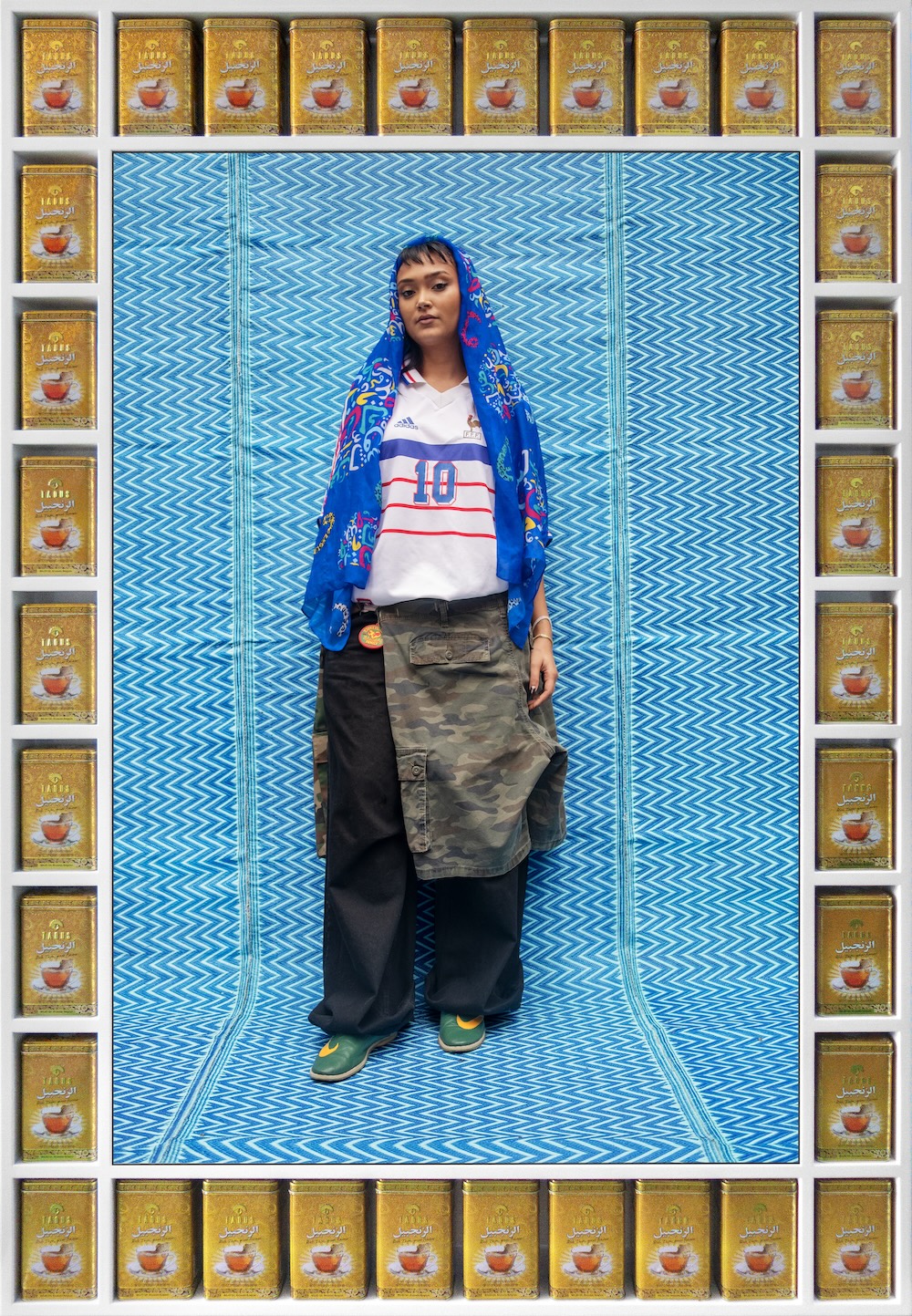
Born in the Moroccan coastal town of Larache, Hajjaj moved to London with his family at the age of twelve. Unable to speak English, he left school at fifteen before forging an unconventional career through Camden Market, underground club culture, fashion and streetwear, eventually launching his own label, R.A.P. (Real Artistic People), in Covent Garden. Immersed in London's creative underground throughout the 1980s and 1990s, he developed the hybrid visual language that would later become synonymous with his work, blending North African street culture, global fashion, music and portraiture into images that feel simultaneously documentary and fantastical.
Whether photographed in Marrakech, London or an improvised studio built around a patterned textile, Hajjaj's portraits have always challenged conventional ideas of identity and representation. Framed by colourful everyday objects and saturated textiles, his subjects appear confident, joyful and unapologetically themselves, reflecting lives shaped by migration, creativity and cultural exchange rather than neatly defined borders.
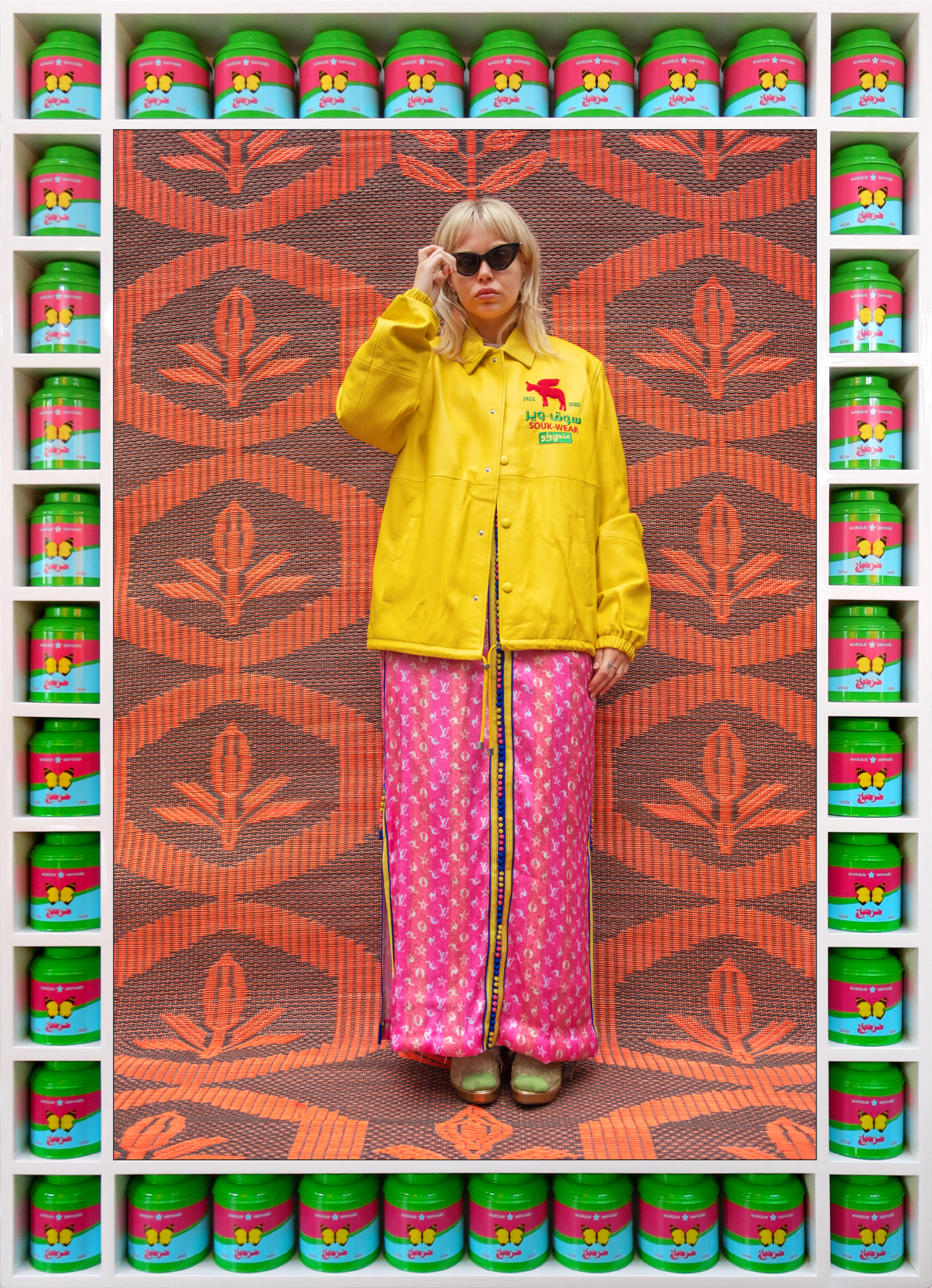
Today, Hajjaj's work belongs to major international collections including the Victoria & Albert Museum, LACMA, the Brooklyn Museum, MACAAL in Marrakech and the Guggenheim Abu Dhabi, among many others. Yet My London Rockstars, Ends to Estates feels less like a retrospective than a continuation of a lifelong conversation about community, belonging and creative possibility.
More than a portrait exhibition, it is a celebration of the people who continue to redefine contemporary culture from the ground up—one vibrant frame at a time.
Cover: Our Motherland Collective, framed photography by ©Hassan Hajjaj, 2023. Courtesy of Our Motherland Collective crew, Vigo Gallery, London and Hassan Hajjaj Studio
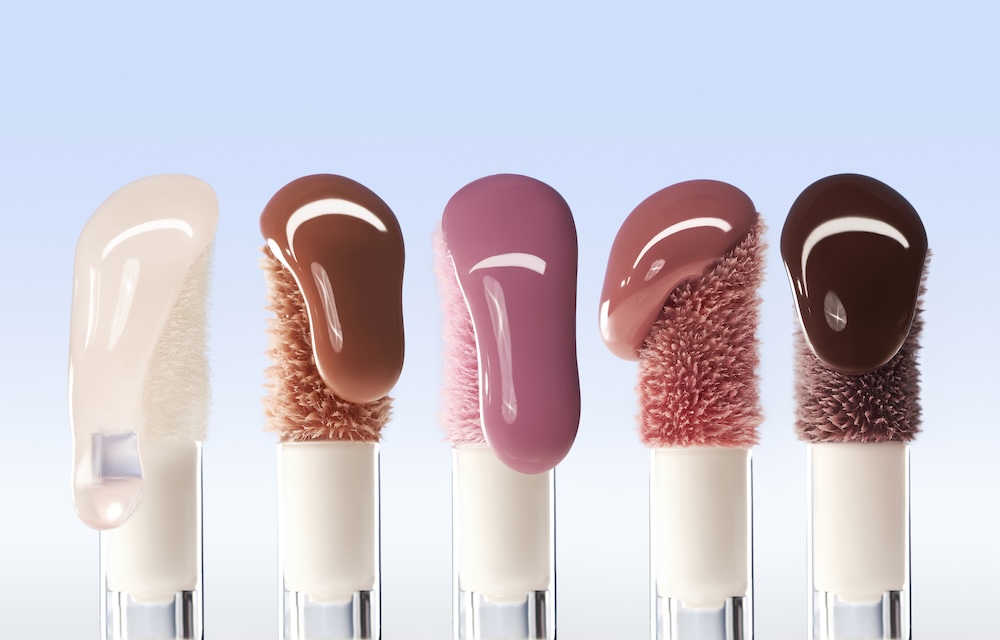
Meet the New Generation of Lip Products
Something interesting is happening in beauty. Across luxury houses, cult favourites and independent brands alike, lips have become the industry's biggest playground. Matte has softened, gloss has evolved, oils now behave like treatments and balms leave behind colour that lasts. The lip category isn't simply growing—it's being completely reinvented.
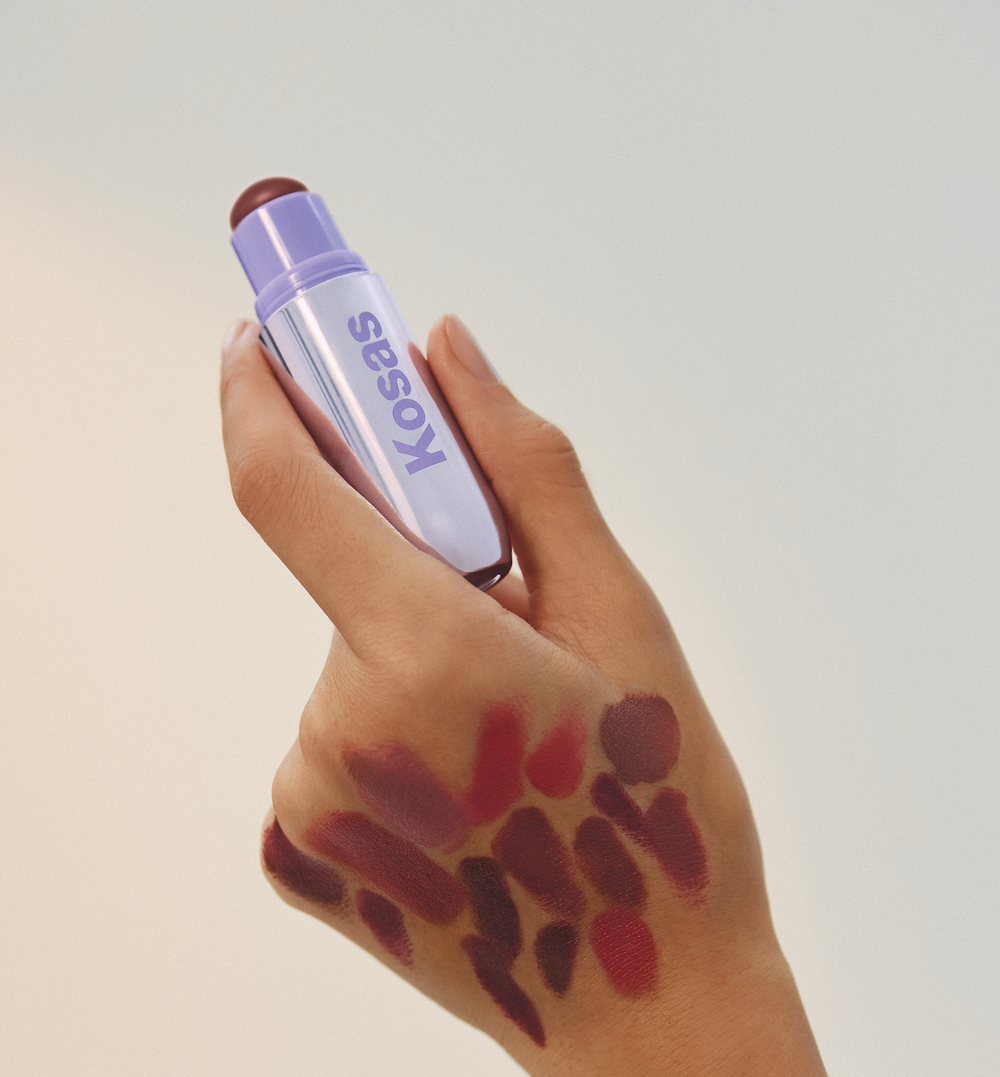
If there is one trend defining beauty right now, it's this: lips are no longer the finishing touch but they're quite literally the focus. As lip-products-addicts we're not complaining (we have 5 lip gloss in our bags at all time.)
The most telling sign is that texture has become just as important as colour. Matte is no longer synonymous with dryness, gloss no longer means sticky, and lip oils have evolved far beyond a sheer wash of shine. Today's formulas blur the boundaries between skincare and makeup, asking why a lipstick can't also hydrate, why a gloss shouldn't visibly smooth fine lines, or why a balm can't deliver lasting colour.
It feels less like a trend and more like an industry-wide reset.
Perhaps nowhere is that evolution clearer than with Huda Beauty, a brand that helped define the liquid matte era a decade ago. Rather than abandoning matte altogether, it has reimagined it for 2026 through Liquid Matte Mousse, a whipped formula that delivers the soft-focus finish matte lovers still crave, while prioritising flexibility, comfort and a blurred effect over flat opacity. The message is clear: matte isn't disappearing. It's simply becoming softer.

Elsewhere, shine is enjoying a renaissance.
More on HudaBeauty.com
ILIA Beauty's Overglaze Hydrating Lip Gloss approaches gloss almost like glazed ceramics, offering dimensional colour alongside clinically proven 24-hour hydration through ingredients such as fenugreek seed extract and sustainably sourced seaweed. Rather than treating gloss as a cosmetic afterthought, ILIA positions it as skincare that just happens to catch the light beautifully. We already adored their mascara, and are definitely adding this product to our collection.

More on IliaBeauty.com
Gucci Beauty arrives at a similar destination through an entirely different route. Its new Glow Oil-In-Water Tint combines the glow of an oil, the nourishment of a balm and the longevity of a tint into a single hybrid formula built around cranberry biopeptides, hyaluronic acid and black rose extract. The finish is luminous, almost water-like, proving that shine can feel refined rather than nostalgic.
More on Gucci.com
Even the humble lip plumper has undergone something of an identity crisis.
For years, fuller lips were achieved through discomfort. Tingling, burning and irritation became almost synonymous with the category itself. Tower 28 questions that assumption with its new ShineOn Plumping Lip Jelly, replacing aggressive actives with vibration-inspired technology and plant-derived ingredients designed to gently stimulate circulation without the sting, making lip plumping accessible even to sensitive skin.
More on Tower28Beauty.com
Regional brands are embracing the same philosophy.
One of our long-time favourite, Saudi beauty label Asteri introduces Maraya Lip Shine, a gloss designed to balance glass-like shine with skincare-inspired ingredients, pairing a mirror finish with hydration and subtle plumping in formulas created for the Gulf climate. It's another reminder that today's gloss is expected to work just as hard as any serum sitting beside it.
Read our interview with Asteri's founder, Sara Al Rashid, here
The trend also extends beyond lips themselves.

With Impressionist Multistick, Kosas blurs the distinction between cheeks and lips entirely, encouraging the same earthy flush across both for a face that feels cohesive rather than overly perfected. Inspired by Impressionist painters, the collection embraces softness over precision, proving that beauty increasingly favours instinct over definition.
More on Kosas.com

Then there's Hourglass, whose new Phantom Blur Balm suggests perhaps the biggest shift of all. Instead of pursuing sharp outlines or heavily lined lips, the formula celebrates diffusion. Soft edges, lived-in colour and nourishing matte textures create what feels like the beauty equivalent of perfectly worn cashmere. It's polished without appearing overly considered, exactly the kind of effortless finish that has come to define modern beauty.
More on HourglassCosmetics.com
Collectively, these launches tell a much bigger story than individual products ever could.

Beauty's fixation with perfection is slowly giving way to something more tactile and intuitive. Lips are becoming expressive rather than overdrawn, hydrated rather than hidden beneath heavy pigment, and defined by texture as much as colour. The most desirable lip today isn't necessarily the boldest one in the room, we kind of just want to have them looking healthy, plumpy and hydrated, don't we?

Everyone Loves Za'atar. But Where Did It Actually Come From?
Whether it's sprinkled over warm manoushe, folded into labneh, scattered across roasted vegetables or whisked into olive oil, za'atar has become one of the world's most beloved seasonings. Hailing from the Levant, it now appears on restaurant menus from New York to Copenhagen, stocked on supermarket shelves alongside spices from every corner of the globe.
But long before it became a pantry staple around the world, za'atar belonged to one place.
Its story begins in 'Bilad-Al-Sham'.
By Cynthia Jreige

The word za'atar originally referred not to the spice blend itself, but to a wild aromatic herb, Origanum syriacum, native to the mountains and hills of present-day Lebanon, Palestine, Syria and Jordan. Closely related to oregano and marjoram, the plant has grown wild across the region for thousands of years, becoming intertwined with its landscapes, traditions and daily rituals.
Over time, the name evolved to describe the spice mixture that most of us know today. While there is no single recipe, the blend typically combines dried za'atar with toasted sesame seeds, sumac and salt. Depending on the village, family or country, it may also include thyme, oregano, marjoram or other herbs, making every version slightly different and deeply personal.
Unlike many recipes that can be traced back to a single inventor or historical moment, za'atar developed organically over centuries. It was passed from one generation to the next, refined in home kitchens rather than royal courts, and shaped by what grew naturally in each region. Even today, asking someone for their family's za'atar recipe is a little like asking for the secret behind a grandmother's favourite dish. There is no universal answer, and that's exactly the point.
The herb itself has an equally fascinating history. Ancient texts from the Eastern Mediterranean reference aromatic plants believed to be related to modern za'atar, although historians remain cautious about drawing direct comparisons to today's blend. What is clear is that wild oregano-like herbs have been valued across the Levant since antiquity, appreciated not only for their flavour but also for their medicinal properties. For generations, za'atar has been associated with strength, wellbeing and memory, a belief that still lives on today in countless households where children grow up eating manoushe bi za'atar before heading to school.

As the spice travelled beyond the Levant through migration and global curiosity, it found new audiences while remaining a powerful symbol of home for those who grew up with it. Few ingredients evoke nostalgia as instantly. The scent of warm olive oil meeting freshly baked bread, the unmistakable tang of sumac and the earthy aroma of wild herbs have become sensory shortcuts to family breakfasts, village bakeries and long summer mornings.
Perhaps nowhere is za'atar's significance more deeply felt than in Palestine, where the wild herb has become inseparable from questions of heritage, identity and land. Harvesting native wild za'atar carries cultural meaning that extends far beyond the kitchen, reflecting generations of connection to the landscape and preserving traditions that have endured despite changing circumstances. Across Lebanon, Syria and Jordan, too, the herb remains a defining part of local food culture, woven into everyday life rather than reserved for special occasions.
Today, chefs continue to reinterpret za'atar in endlessly creative ways. It appears in butter, ice cream, cocktails, pastries and even fine dining tasting menus. Yet its enduring appeal lies in its remarkable simplicity. Long before it became fashionable, za'atar was already doing exactly what great food has always done: bringing people together around the table.
For a seasoning that has become globally recognised, its origins remain profoundly local. Za'atar isn't simply a blend of herbs and spices, it is a taste of the Levant itself, carrying centuries of history, memory and culture in every pinch.
It is perhaps no surprise that the world fell in love with it. After all, the best stories often begin at home.
Cover Photo: Man’oushe Zaatar d'Eats ThymeThe Social Food
Sources:
- Dioscorides – De Materia Medica (1st century CE)
- One of the earliest surviving texts mentioning a plant identified as za'atar (though scholars debate the exact species).
- Good historical context, but should be interpreted cautiously.
- Kew Science – Plants of the World Online
- Entry for Origanum syriacum.
- Confirms the botanical identity and native distribution of the herb throughout the Levant.
- Royal Botanic Gardens, Kew
- Botanical information on oregano species and Mediterranean herbs.
Books
Claudia Roden – The New Book of Middle Eastern Food
Probably the single most authoritative culinary source.
She discusses:
- regional differences in za'atar
- Levantine origins
- traditional preparation
- cultural importance
Anissa Helou – Levant
Excellent on:
- history
- regional recipes
- Palestinian, Lebanese and Syrian traditions
Helou is widely regarded as one of the foremost authorities on Levantine food.
Sami Tamimi & Tara Wigley – Falastin
Especially strong on:
- Palestinian culinary traditions
- wild za'atar
- cultural significance
Huda Beauty and SALT Turn Soft Matte Lips Into This Summer’s Sweetest Collaboration
Dubai has always understood the power of a good crossover, especially when two homegrown brands with strong identities come together. This summer, Huda Beauty and SALT are joining forces for a beauty-meets-food collaboration inspired by Huda Beauty’s new Liquid Matte Mousse and the Soft Matte Core Lips look.
Launching across SALT’s Dubai Mall and Riyadh Park locations, the collaboration transforms both spaces with Huda Beauty branding and a series of immersive moments designed around the new lip launch. At the centre of it all are three limited-edition Softie flavours inspired by shades from the Liquid Matte Mousse range: Honey Nude, reimagined through mango, papaya and cocoa; Baby Pink, translated into strawberry and cotton candy; and Berry Brown, paired with açaí and black vanilla.
The result is playful, highly visual and completely in tune with both brands. Huda Beauty brings its language of colour, innovation and self-expression, while SALT translates those ideas into something edible, social and unmistakably local.
Visitors to the collaboration can discover the new Soft Matte Core Lips look, created using Lip Contour 2.0 and Liquid Matte Mousse, with support from makeup artists on-site. The experience also includes dedicated content moments and ongoing gifting with the purchase of one of the limited-edition Softies.
Sephora Middle East will host the worldwide avant-première of Liquid Matte Mousse, with the product launching exclusively at Sephora Dubai Mall and online from July 10, alongside a limited gift with purchase while supplies last.
Beyond the gloss of the takeover, the collaboration also feels like a celebration of Dubai’s entrepreneurial ecosystem and the strength of women-led brands that have grown from the region into names with global recognition. Huda Beauty, founded by Huda Kattan in 2013, has built one of beauty’s most influential communities through products rooted in accessibility, individuality and innovation. SALT, which began in 2014 with a silver Airstream, a secret location and the hashtag #FindSalt, has since become part of Dubai’s cultural fabric by turning food into a shared experience and building a community around it.
The Huda Beauty x SALT takeover will be available at SALT Dubai Mall from July 10 and at SALT Riyadh Park from July 13 until the end of July.

Dubai's Beat The Heat Returns With Cairokee, DYSTINCT and Rasha Rizk Leading the Line-Up
Dubai's summer concert season is officially back. Returning for its fifth edition as part of Dubai Summer Surprises, Beat The Heat is once again transforming the Dubai World Trade Centre into one of the region's biggest live music destinations.
Running from 11 July to 22 August, this year's programme brings together some of the Arab world's most celebrated artists, spanning rock, Arabic pop, rap and nostalgic favourites that have defined generations.
Opening the series on 11 July is Egyptian rock band Cairokee, whose politically charged lyrics and unmistakable sound have made them one of the Arab world's most influential contemporary bands. Fans can expect a setlist featuring tracks from albums including Matloob Zaeem, Nokta Beeda and Roma, alongside the electrifying stage presence that has earned the group a loyal following across the region.
The following weekend, on 18 July, Belgian-Moroccan artist DYSTINCT joins forces with Palestinian-Jordanian singer-songwriter Issam Najjar for what promises to be one of the season's standout performances. DYSTINCT, one of the Arab world's most-streamed artists, will bring hits including Ghazali, Ya Baba and Yamal, while Najjar, best known for the viral success Hadal Ahbek and as the first artist signed to Universal Arabic Music, adds his signature blend of indie pop and Levantine influences to the evening.
On 25 July, Gulf music takes centre stage as Talal Sam and Sultan Al Murshed perform a seated concert celebrating two of Khaleeji music's most recognisable contemporary voices. With emotional ballads, soaring melodies and audience favourites including Wala Ghaltah, Rahet Ayamoh and Mesh Hahib, the evening promises to be one for fans of modern Arabic pop.
One of the most anticipated evenings of the series arrives on 1 August, when Syrian singer-songwriter Rasha Rizk returns to the stage. For many across the Arab world, Rizk's voice is inseparable from childhood, having performed the Arabic theme songs of beloved series including Detective Conan, Digimon, Remi, Nobody's Girl and Gundam Wing. Alongside those iconic soundtracks, audiences can also expect selections from her original repertoire.
The programme continues throughout August with Al Shami taking the stage on 8 August, followed by Marwan Moussa and Haleem on 15 August, before Leg_cy, Aziz Maraka and Big Sam close the season on 22 August.
With performances spanning multiple genres and generations, Beat The Heat has become one of Dubai Summer Surprises' signature cultural events, offering residents and visitors an opportunity to experience some of the region's biggest names under one roof. Tickets for the announced concerts start from AED 105 and are available through Platinum List.
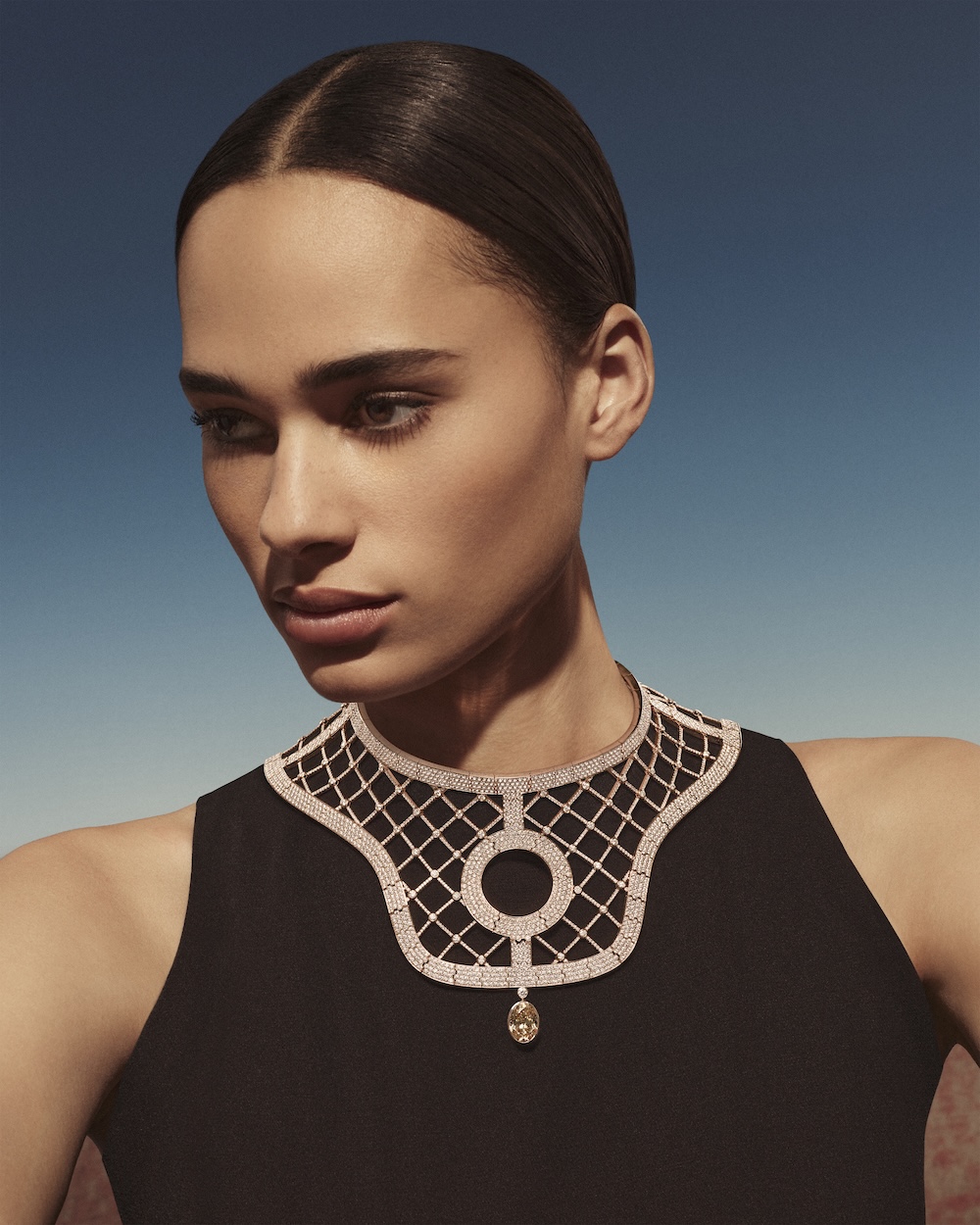
Hermès Reimagines Its Equestrian Legacy Through High Jewellery
For Hermès, the horse has always been more than a logo; it is the house's first language. This season, that language is translated into what may be one of its most poetic high jewellery collections to date.
Into the Horsescape, the ninth Haute Bijouterie collection imagined by Creative Director Pierre Hardy, doesn't rely on literal equestrian motifs. Instead, it transforms the objects, gestures and mythology surrounding the horse into sculptural jewels that blur the line between function and fantasy.
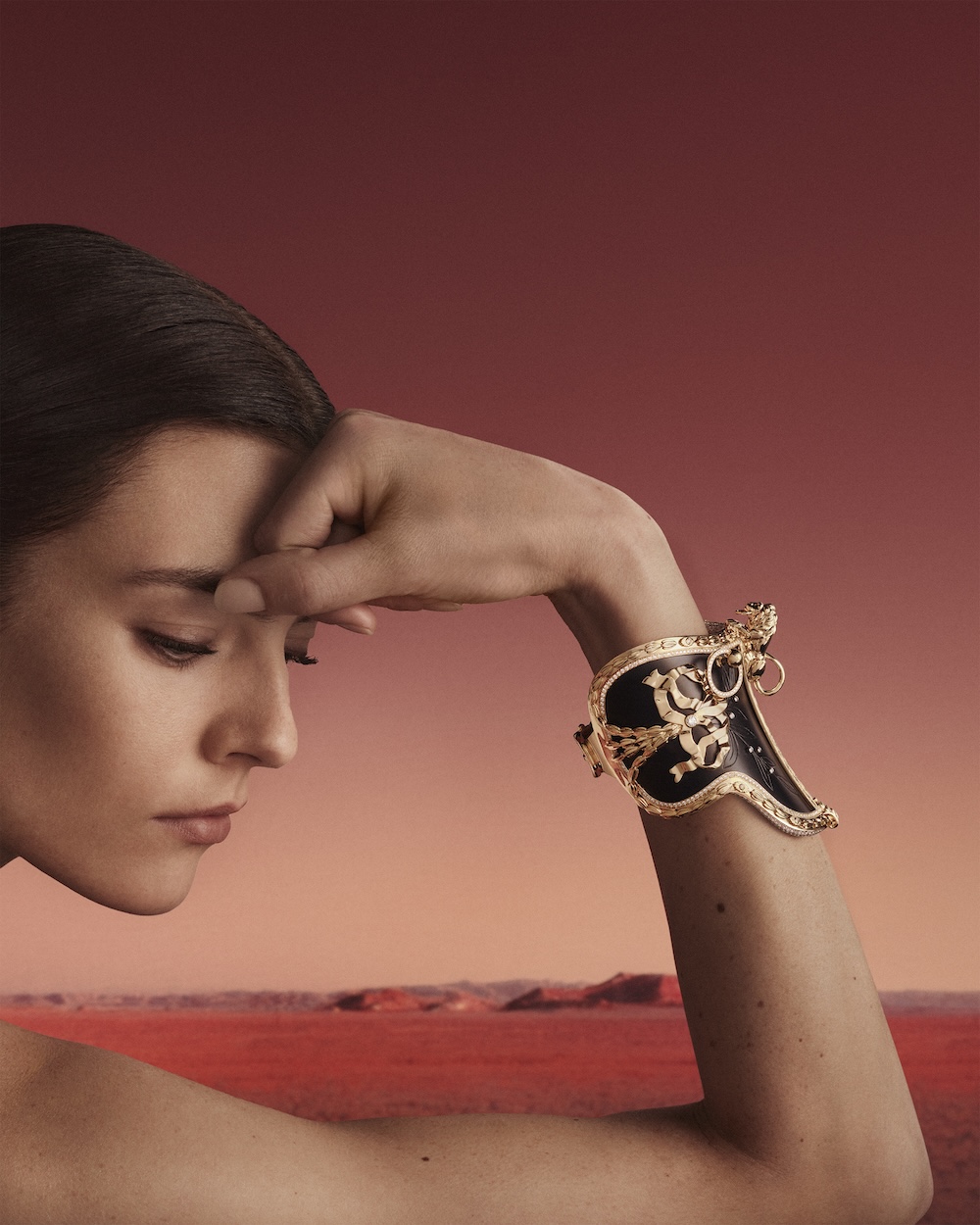
"The horse itself is barely seen," Hardy explains. "But its symbolism lives within each piece." It is an approach that feels quintessentially Hermès: restrained, intelligent and deeply rooted in craftsmanship rather than spectacle.
Rather than recreating horses, Hardy dissects the world around them. Horse bits become fluid diamond necklaces. Stirrups evolve into architectural pendants. Blacksmith's nails transform into radiant earrings and necklaces, while lassos twist around the body in sweeping lines of baguette-cut diamonds. What were once practical tools become extraordinary objects of desire.
That transformation is the essence of Into the Horsescape. The collection takes familiar objects and elevates them through time, exceptional craftsmanship and imagination.
"I implicitly tell Hermès' story, its relationship with time and materials, before drawing on the imagination to transform them into an adornment," says Hardy.
Across ninety one-of-a-kind creations, movement becomes the defining theme. Rather than static displays of precious stones, the pieces are designed to move with the wearer. Hidden articulations allow necklaces to drape like fabric, body jewellery follows the contours of the torso, and cuffs wrap around the wrist with surprising flexibility. Hardy has long been fascinated by the relationship between jewellery and the body, asking not simply how a jewel looks, but how it transforms the person wearing it.
"It took me a long time to fully understand how integral this interaction was to me," he says. "Does it improve us? Does it constrain us? Does it elevate us?"
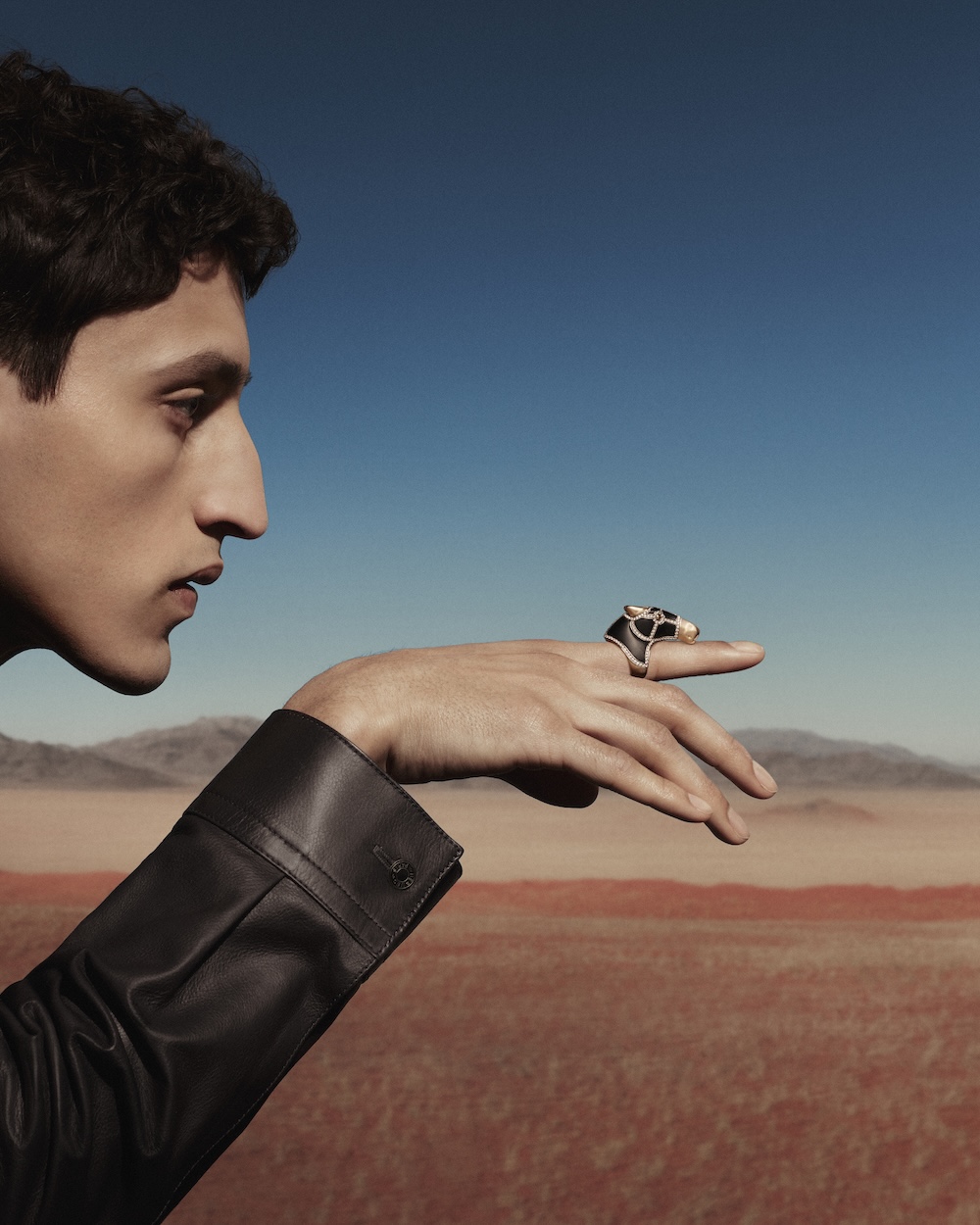
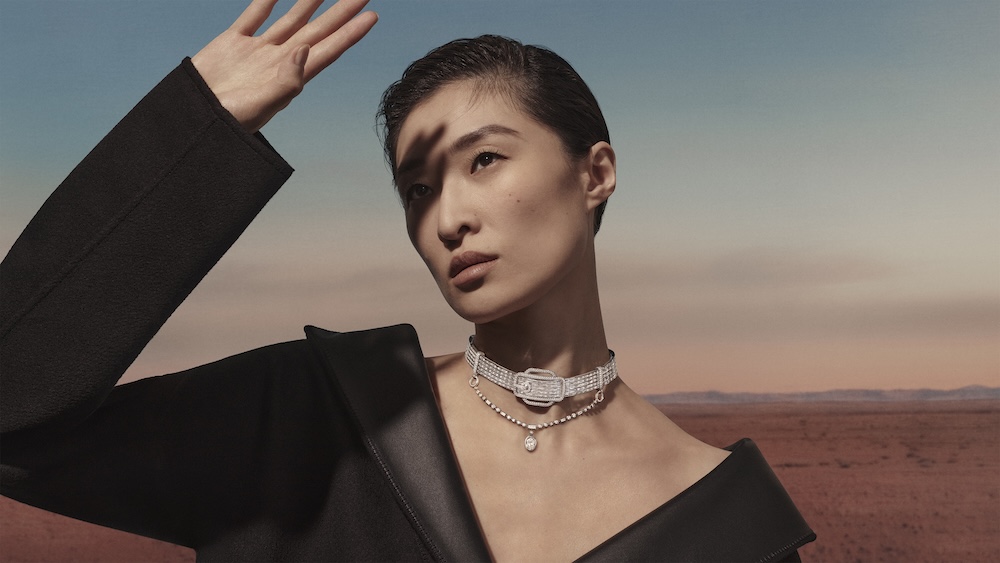
That philosophy explains why the collection feels alive. Diamonds appear to ripple across the skin, emeralds emerge from elongated horse bits like flashes of green light, while warm rose gold and brown diamonds echo the rich tones of a horse's coat. Deep black jade and Tahitian stone recall polished hooves, adding contrast without overpowering the collection's quiet elegance. Colour is never decorative for Hardy. It behaves more like paint on a canvas, with precious and semi-precious stones chosen for the emotion they create together rather than their hierarchy or rarity alone.
The inspiration stretches far beyond Hermès' equestrian archives. Hardy looked across mythology and history, drawing from the horses of Mars and Neptune, Hercules' chariot, the Amazons of Asia Minor and the vast landscapes of the American West. Rather than selecting a single narrative, he allows these references to coexist, united by one shared idea: freedom.
That sense of freedom is echoed throughout the campaign imagery, where jewellery appears against expansive desert horizons, emphasizing space, movement and openness instead of opulence. The landscapes mirror the collection's emotional terrain, where time seems suspended and every jewel feels like an artifact from both the past and the future.
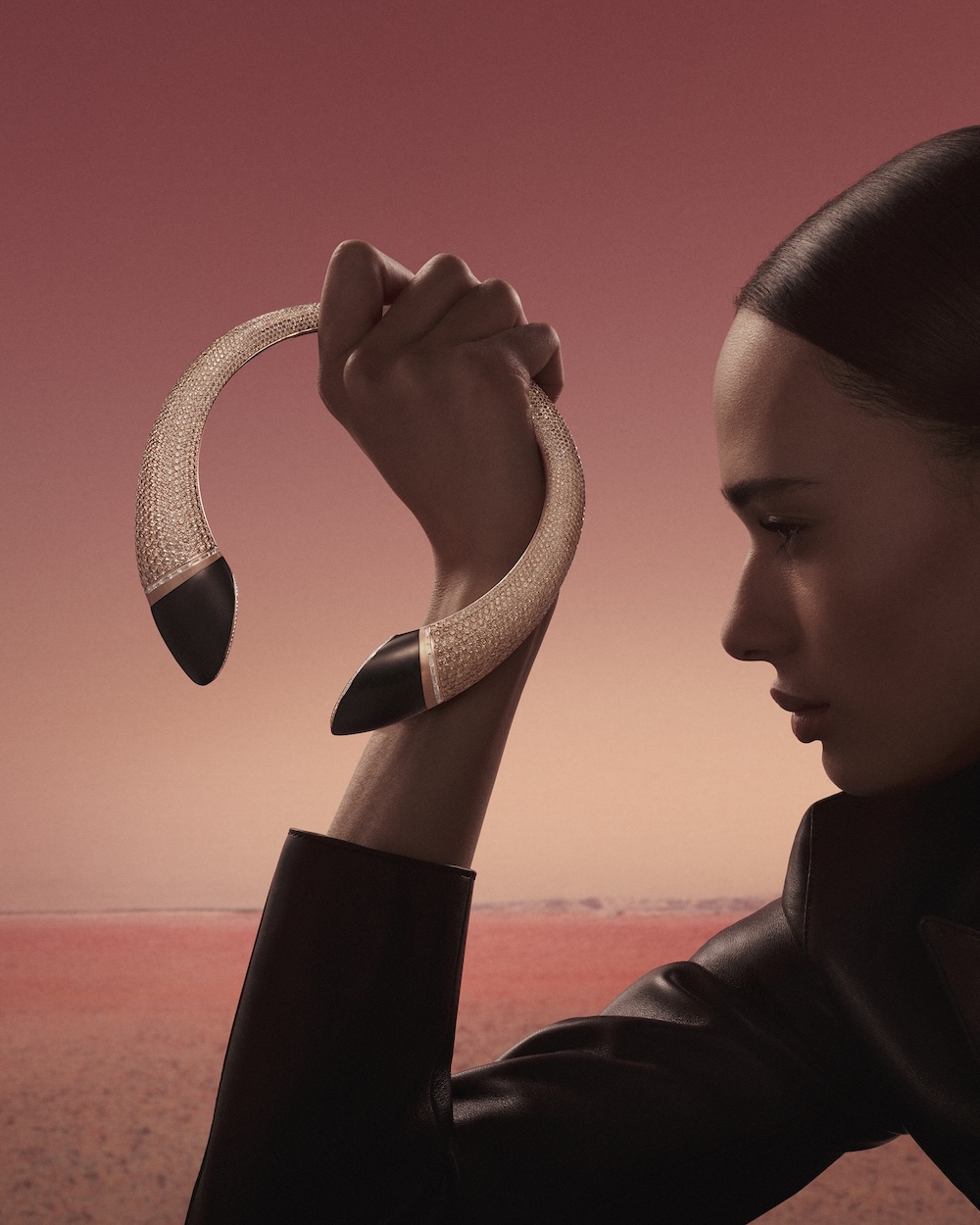
There is also an intimacy to Into the Horsescape. Hardy describes jewellery as more than ornament, calling it "a message of love, power, connection, sometimes even allegiance." Whether through an intricate bib necklace, a body jewel or a horse's head reimagined as a ring beneath a black hood, each creation becomes part of a deeply personal dialogue between object and wearer.
It is perhaps why the collection never feels nostalgic, despite drawing so heavily from Hermès' heritage. Instead of celebrating the horse itself, Hardy celebrates everything it represents: movement, craftsmanship, mythology and transformation.
In Into the Horsescape, Hermès reminds us that true luxury doesn't shout. It whispers through exceptional materials, centuries of savoir-faire and the quiet confidence to let symbolism speak louder than literal design.
More on Hermès.com

How You Can Help Venezuela Right Now
In the early hours of June 24, Venezuela was struck by two devastating earthquakes measuring 7.2 and 7.5 in magnitude, the strongest seismic events to hit the country in more than a century.
Entire neighborhoods across Caracas, La Guaira and surrounding regions have been destroyed, leaving thousands of families displaced, injured, or searching for loved ones amid ongoing aftershocks. As rescue operations continue and the humanitarian crisis deepens, international organizations and local initiatives are working around the clock to provide emergency relief.
The scale of the tragedy is difficult to comprehend. Tens of thousands of people have been displaced, healthcare systems are under immense pressure, and many survivors are sleeping outdoors as aftershocks continue to shake affected regions. Humanitarian organizations warn that immediate support remains critical in the days and weeks ahead.
If you are able to help, here are several trusted organizations currently providing emergency support on the ground.
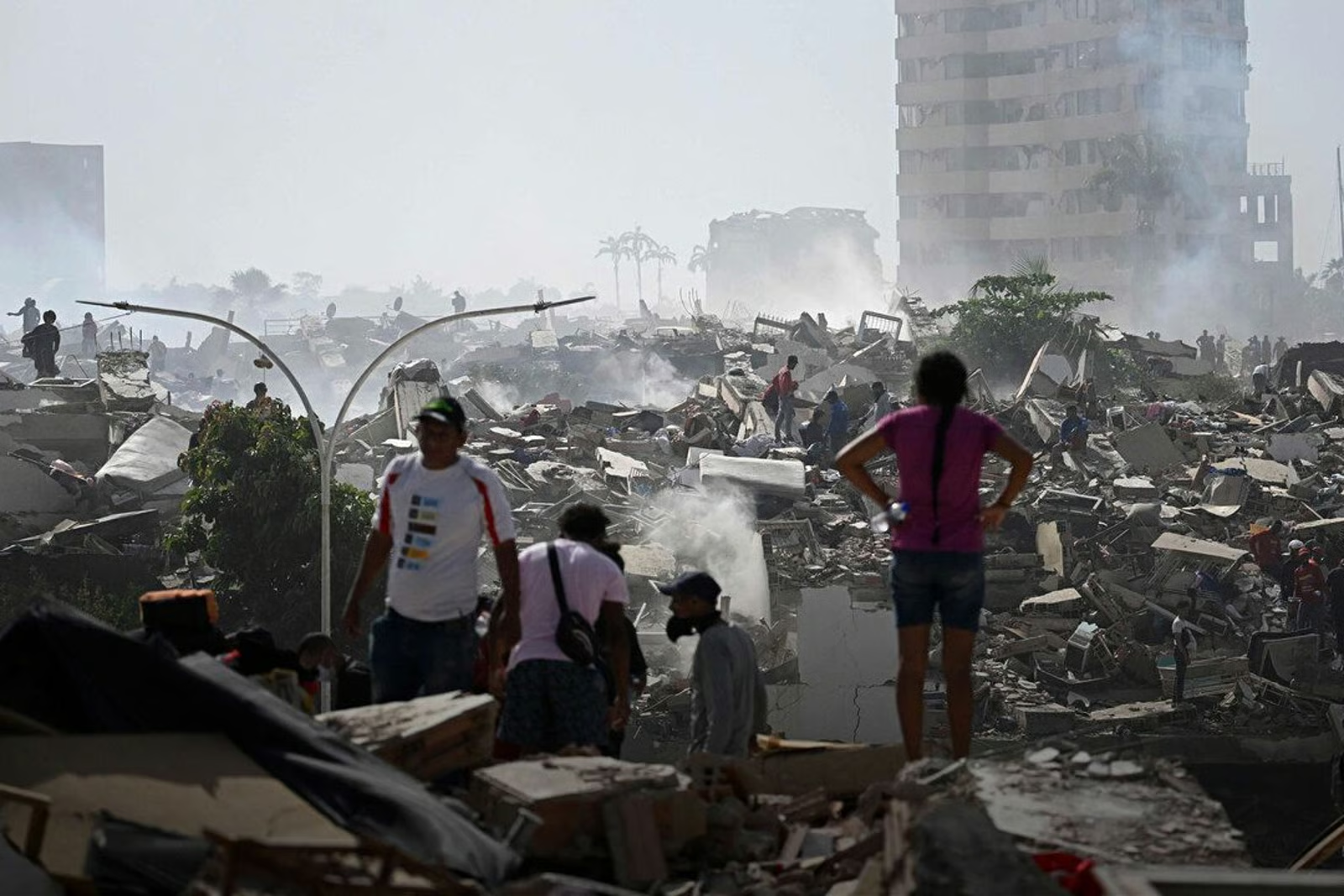
Sun.Risas
Founded by members of the Venezuelan diaspora and working closely with local partners, Sun.Risas has launched an emergency relief campaign focused on delivering immediate humanitarian support to affected communities. Their efforts include emergency supplies, direct assistance and community-led relief initiatives designed to reach those most impacted by the disaster.
Donate here:
Sun.Risas Emergency Relief Fund
We Love Foundation
The We Love Foundation, formerly known as I Love Venezuela Foundation, has mobilized emergency relief efforts in partnership with humanitarian organizations already operating in the country. Their response focuses on providing food, clean water, hygiene kits and essential supplies to families affected by the earthquakes.
Donate here:
We Love Foundation Emergency Appeal
Project HOPE
International humanitarian organization Project HOPE has been operating in Venezuela since 2019 and mobilized emergency teams within hours of the earthquakes. The organization is currently conducting search-and-rescue operations alongside local partners, providing emergency medical care, psychological support, medications and critical health services across affected regions. Project HOPE reports that more than half of surveyed health facilities have lost access to electricity and clean water, making medical assistance one of the most urgent needs.
Donate here:
Project HOPE Venezuela Earthquake Response
DONA X VENEZUELA
This website get updated regularly and donates directly to trusted organisations without taking any additional fee.
Donate here:
Additional Organizations Providing Support
Several international humanitarian organizations have also activated emergency responses, including the International Red Cross, World Central Kitchen, Save the Children, Global Empowerment Mission and Doctors Without Borders. Relief experts continue to encourage donations to established organizations with existing operations and local partnerships in Venezuela to ensure aid reaches affected communities as quickly and effectively as possible.
As with every humanitarian crisis, the news cycle will eventually move on. For the families who have lost homes, loved ones and entire communities, recovery will continue for months and years to come. If you are able to contribute, even a small donation can help provide food, medical care, shelter and dignity to those navigating the aftermath of an unimaginable tragedy.
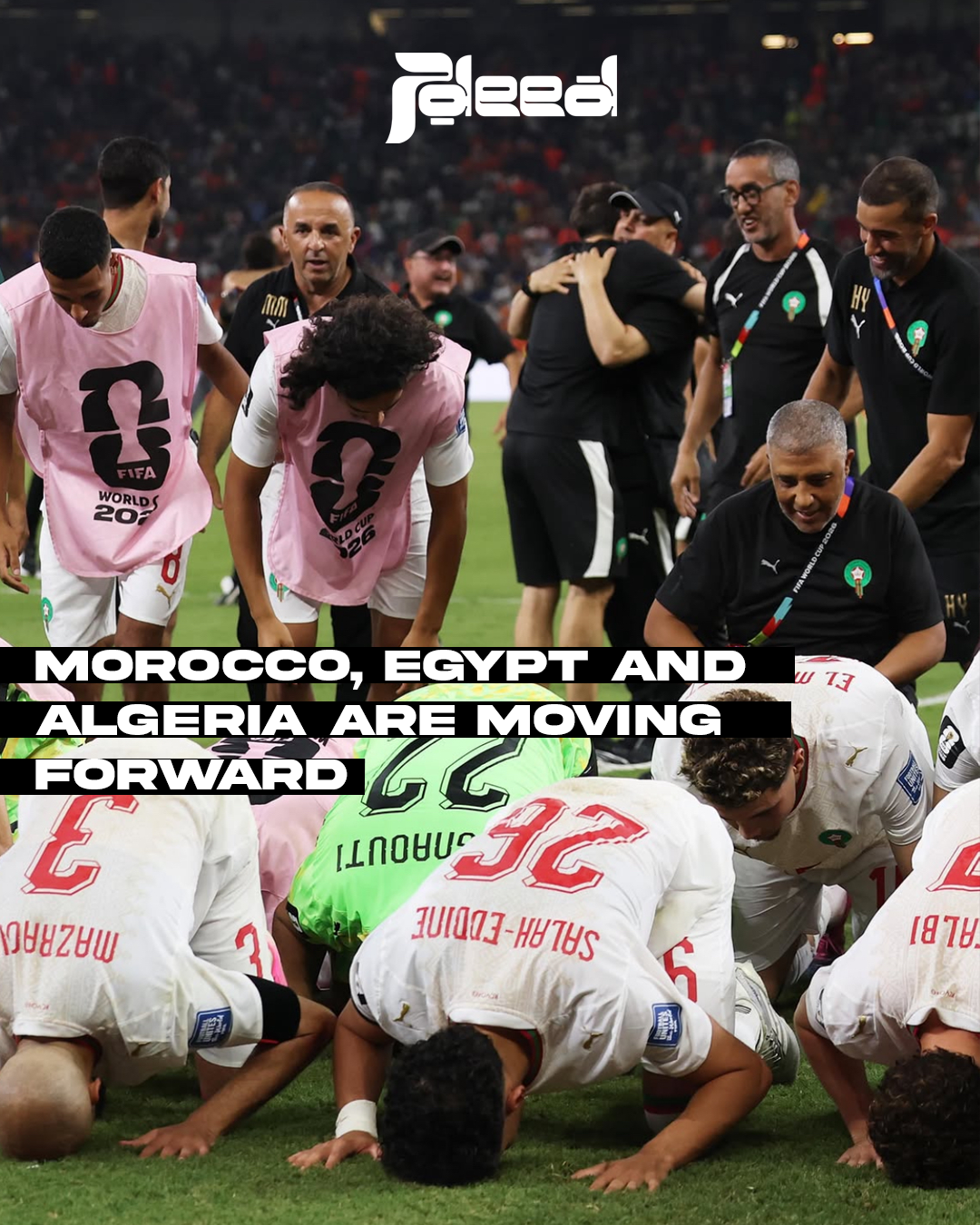
Three Arab Nations Are Keeping The Region's World Cup Dreams Alive
After a dramatic group stage at the 2026 FIFA World Cup, Morocco, Egypt and Algeria have secured their places in the knockout rounds, each carrying a different story, but a shared sense of hope.

Morocco, which made history with its fourth-place finish at the 2022 FIFA World Cup in Qatar, continued its impressive run by finishing the group stage unbeaten and securing qualification with a thrilling comeback victory over The Netherlands. The Atlas Lions will now face Canada in the Round of 16 on Saturday, July 4, at 2:00 p.m.
Egypt has written a new chapter in its football history, reaching the knockout stage for the first time since becoming the first Arab and African nation to participate in the World Cup in 1934. The Pharaohs secured qualification after drawing 1-1 with Belgium, drawing 1-1 with Iran and defeating New Zealand 2-1. They will take on Australia on Friday at 3:00 p.m.
Algeria completes the Arab trio after a dramatic group-stage campaign that saw the Desert Foxes defeat Jordan 2-1, draw 3-3 with Austria, and fall 3-0 to Argentina before advancing as one of the tournament's best third-placed teams. Algeria will now face Switzerland on Friday at midnight, hoping to equal or surpass their memorable 2014 World Cup run.
While Saudi Arabia, Qatar, Tunisia, Iraq and Jordan saw their World Cup journeys come to an end in the group stage, millions across the Arab world now turn their attention to three teams carrying the region's hopes into the knockout rounds.
Wearing, Stacking, Gifting: What's On Our Summer Board
There is something particularly exciting about discovering the brands that will end shaping the way we dress, decorate, gift and celebrate. Beyond seasonal trends and viral moments, these are the labels creating objects and experiences that feel personal and thoughtful.
This summer, we find ourselves gravitating toward brands that prioritize craftsmanship, storytelling and intention, from Emirati floral studios transforming bouquets into emotional landscapes to jewellery designers creating modern heirlooms meant to be worn every day. Whether you're searching for the perfect summer stack, a meaningful keepsake, a versatile wardrobe staple or simply inspiration for the season ahead, these are the homegrown brands currently occupying our mood boards, wish lists and wardrobes.
The Floral Studios Defining Summer Entertaining
Teel Floral Studio
If there is one thing we are leaning into this summer, it is the art of thoughtful hosting. Female-founded Emirati concept Teel Floral Studio has quickly become one of our favorite discoveries for exactly that reason. More than a floral studio, Teel approaches flowers as a language of emotion, memory and storytelling.
Rooted in intentionality, the studio creates arrangements that celebrate color, feeling and personal expression, whether through intimate gifts, tablescapes or large-scale event installations. In an era where florals have become a form of self-expression in their own right, Teel's distinctly contemporary aesthetic positions it firmly among the Emirati creative brands to watch this season.
More info on Instagram.com/teelfloralstudio
Âme Studio
Similarly rooted in experience and emotion, Âme Studio has redefined what a creative studio can be. Combining floral design, event styling, gifting, workshops and curated experiences, the Emirati-founded concept approaches beauty not as decoration, but as atmosphere.
From intimate gatherings to larger celebrations, Âme creates spaces and moments that feel deeply personal and emotionally resonant. In a region increasingly embracing experiential luxury, it is precisely this emphasis on connection and intentionality that makes Âme one of the creative businesses we continue returning to this summer.
More info on ame-studio.com
The Jewellery We're Stacking This Summer
Cullinan Crown

Summer dressing often calls for jewellery that feels romantic without being precious, and Emirati fine jewellery house Cullinan Crown delivers exactly that with its TIE – Duchess Bow collection.
Inspired by vintage bows and reinterpreted through a contemporary lens, the collection's diamond-set silhouettes capture movement, femininity and softness while maintaining a distinctly modern sensibility. The result is jewellery that feels both nostalgic and entirely of the present moment.
More info on CullinanUk.com
Liberté Fine Jewels
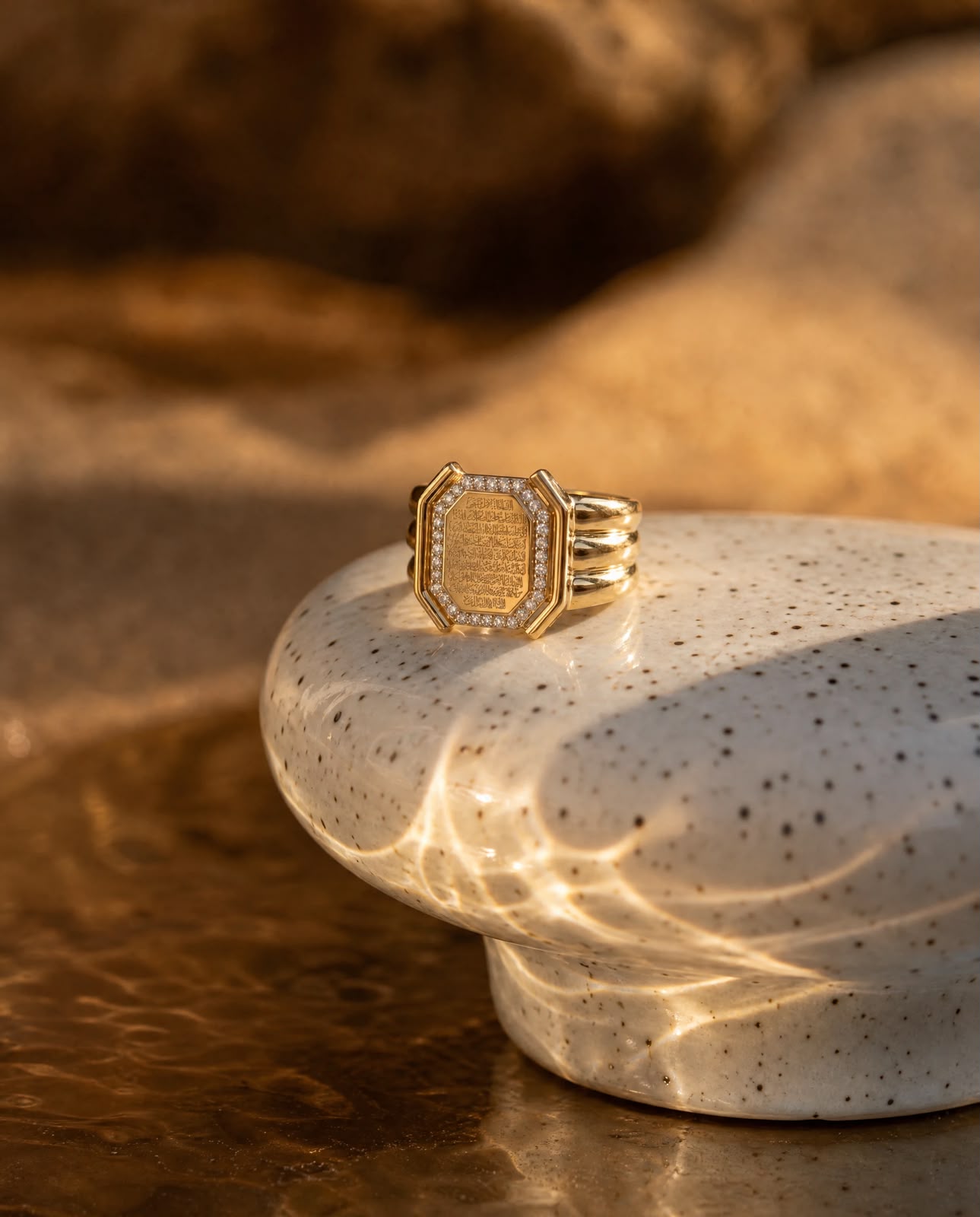
Jewellery has always served as more than adornment. For Dubai-based Liberté Fine Jewels, it becomes a language of identity, intention and personal transformation.
Its latest collection, SAGE ME, explores spirituality, protection and self-discovery through symbolic designs intended to function as modern talismans. These are pieces designed not simply to be worn, but to accompany their owners through moments of growth, change and reflection.
More info on Libertefinejewels.com
Endear By S
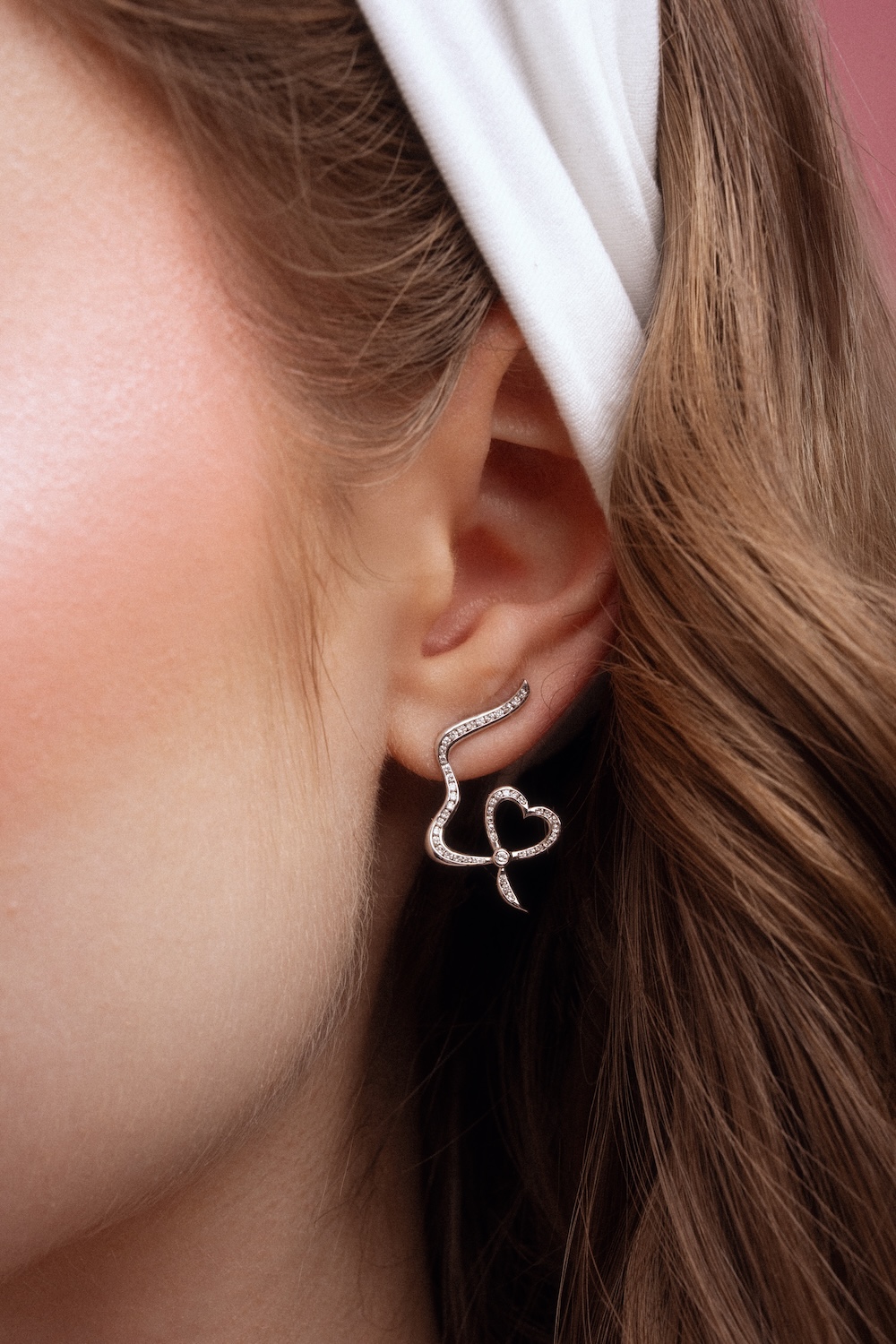
Emerging from Muscat, Endear By S creates fine jewellery that feels deeply intimate and profoundly personal. Crafted in 18-karat gold with natural diamonds and precious gemstones, the Omani brand approaches jewellery as an extension of identity and connection.
Its debut collection, Follow Your Heart, reimagines the classic heart motif through fluid, contemporary forms that feel elegant without becoming sentimental. They are the kind of pieces that naturally become part of everyday rituals and cherished memories.
More info on Instagram.com/Endearbys
YAZ & Co
As the first Emirati fine jewellery brand to incorporate lab-grown diamonds, YAZ & Co represents a new chapter in the region's luxury landscape. Founded in Abu Dhabi, the brand balances innovation with timeless elegance through collections designed around the philosophy of "The Extraordinary Ordinary."
Crafted in 18-karat gold, its pieces range from delicate daily essentials to elevated statement jewellery, offering a fresh perspective on modern luxury that feels simultaneously contemporary and enduring.
TRYYST
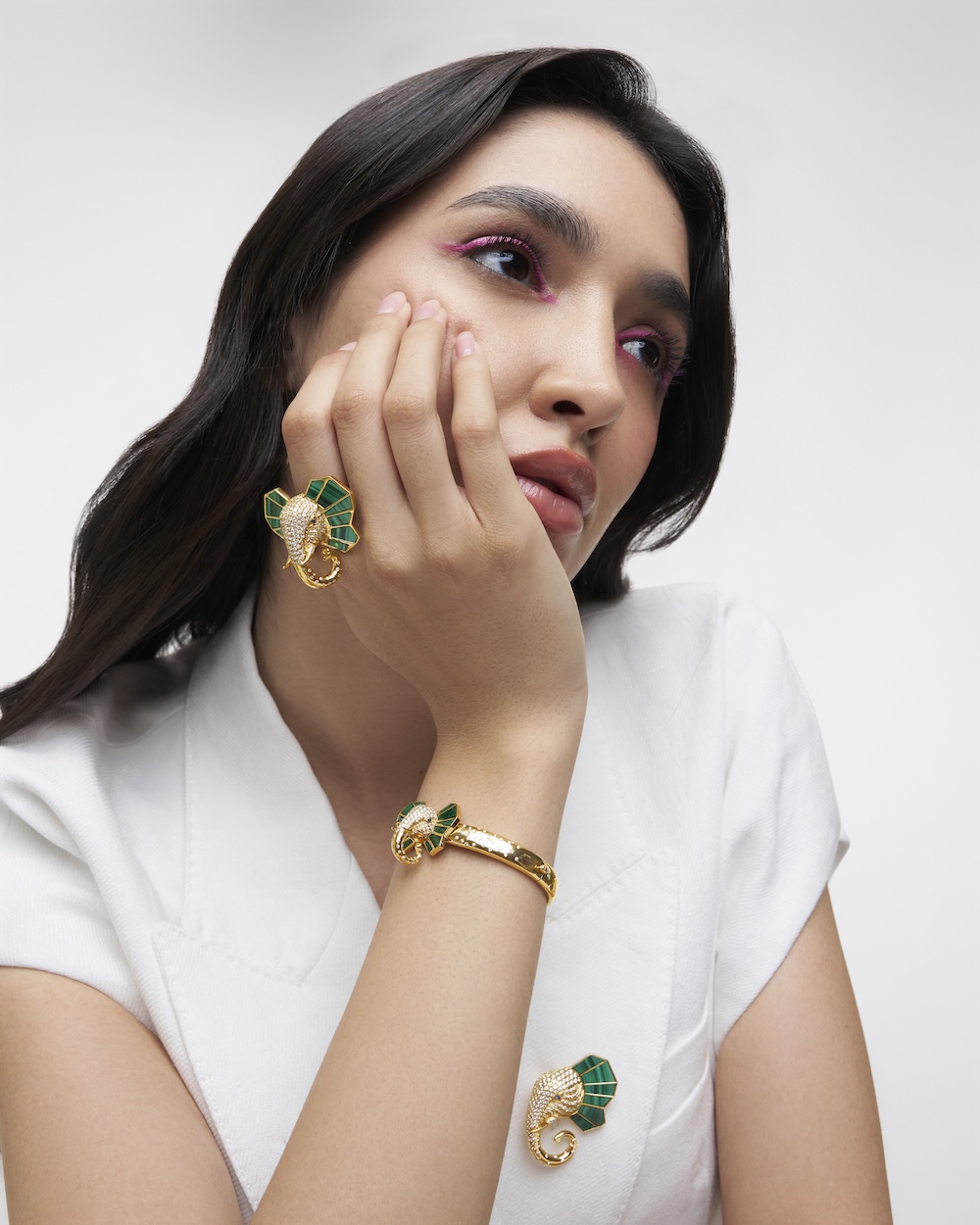
Dubai-based TRYYST has built a reputation for creating fine jewellery that feels youthful, personal and effortlessly wearable. At the center of the brand sits the Terra collection, inspired by the symbolism, wisdom and beauty found throughout the natural world.
Its newest chapter, Terra Butterflies, introduces the butterfly as a symbol of transformation, renewal and freedom. Crafted using precious metals, diamonds and vibrant gemstones, the collection speaks to themes of personal growth and individuality, making it particularly resonant for a season defined by movement and reinvention.
Discover our SHE BUILDS episode with Pooja Javeri-Shah, founder of Tryyst, to be watched here.
For more info, Tryyst.com
Samra Jewellery
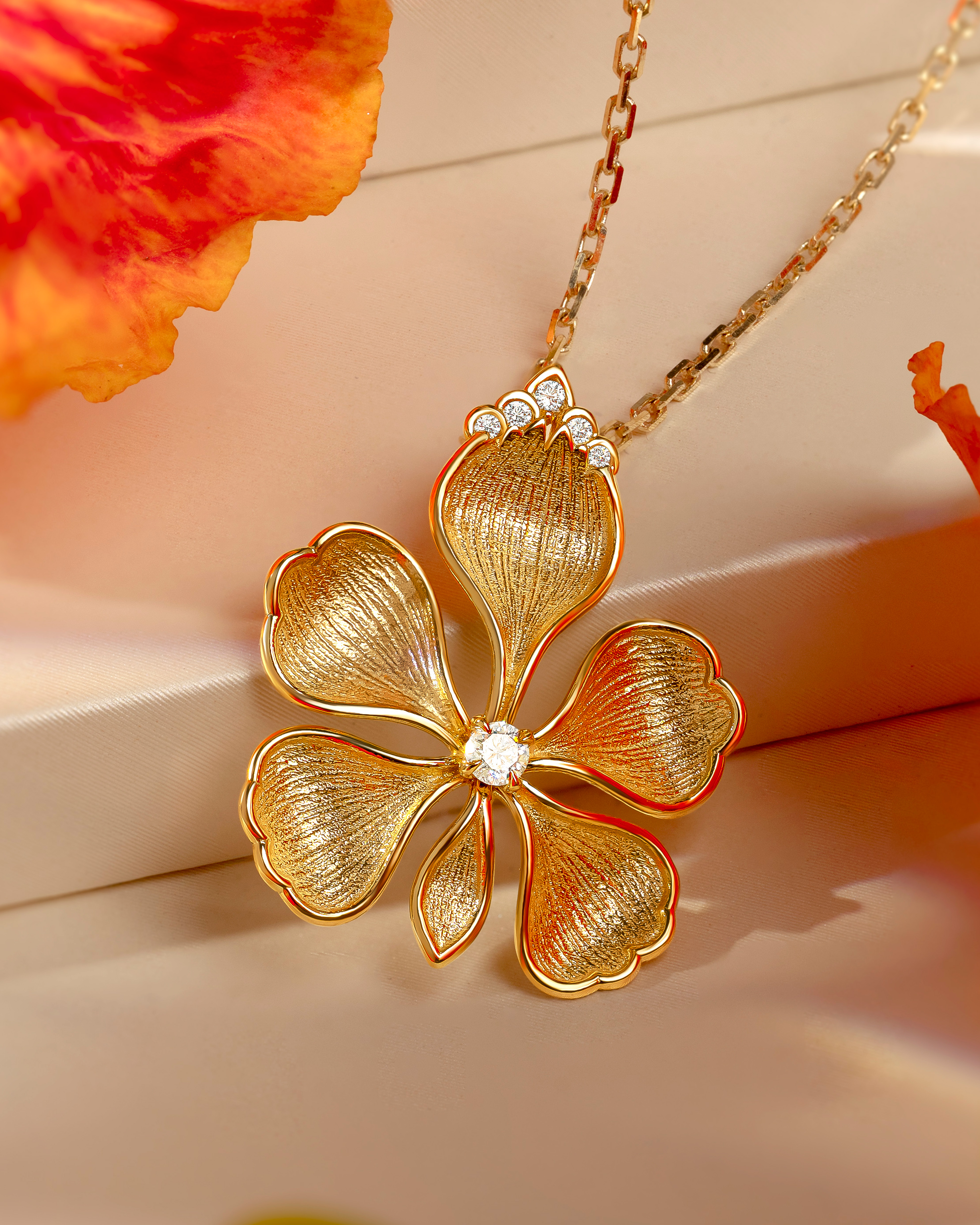
Some pieces capture a moment while others capture a place.
For Samra Jewellery, The First Bloom does both. Designed by Creative Director Katia Samra, the collectible pendant pays tribute to Dubai's iconic Flame Tree season through a delicate composition of 18-karat gold and natural diamonds.
The piece transforms one of the city's most fleeting and beautiful natural phenomena into a permanent keepsake, allowing wearers to carry a fragment of Dubai's landscape and memory with them long after the blooms themselves have disappeared.
As summer unfolds, these are the brands reminding us that what we wear, stack, gift and surround ourselves with can still carry meaning. In a world increasingly defined by speed and disposability, perhaps true luxury lies in choosing objects, experiences and stories that stay with us long after the season ends.
More info on Samra.com
The Fashion Brand We Can't Stop Wearing
All By Kai
Born in Abu Dhabi, All By Kai approaches athleisure through a lens of storytelling, travel and lived experience. The brand's collections feel deeply personal, drawing inspiration from the moments, places and emotions that shape modern life.
Defined by elevated basics, thoughtful tailoring and versatile silhouettes, All By Kai creates pieces that move seamlessly between work, travel and everyday life. In many ways, it represents what contemporary dressing increasingly looks like: functional, beautiful and designed to adapt to the realities of modern living.
More info on Instagram.com/AllbyKai
MINIAAR
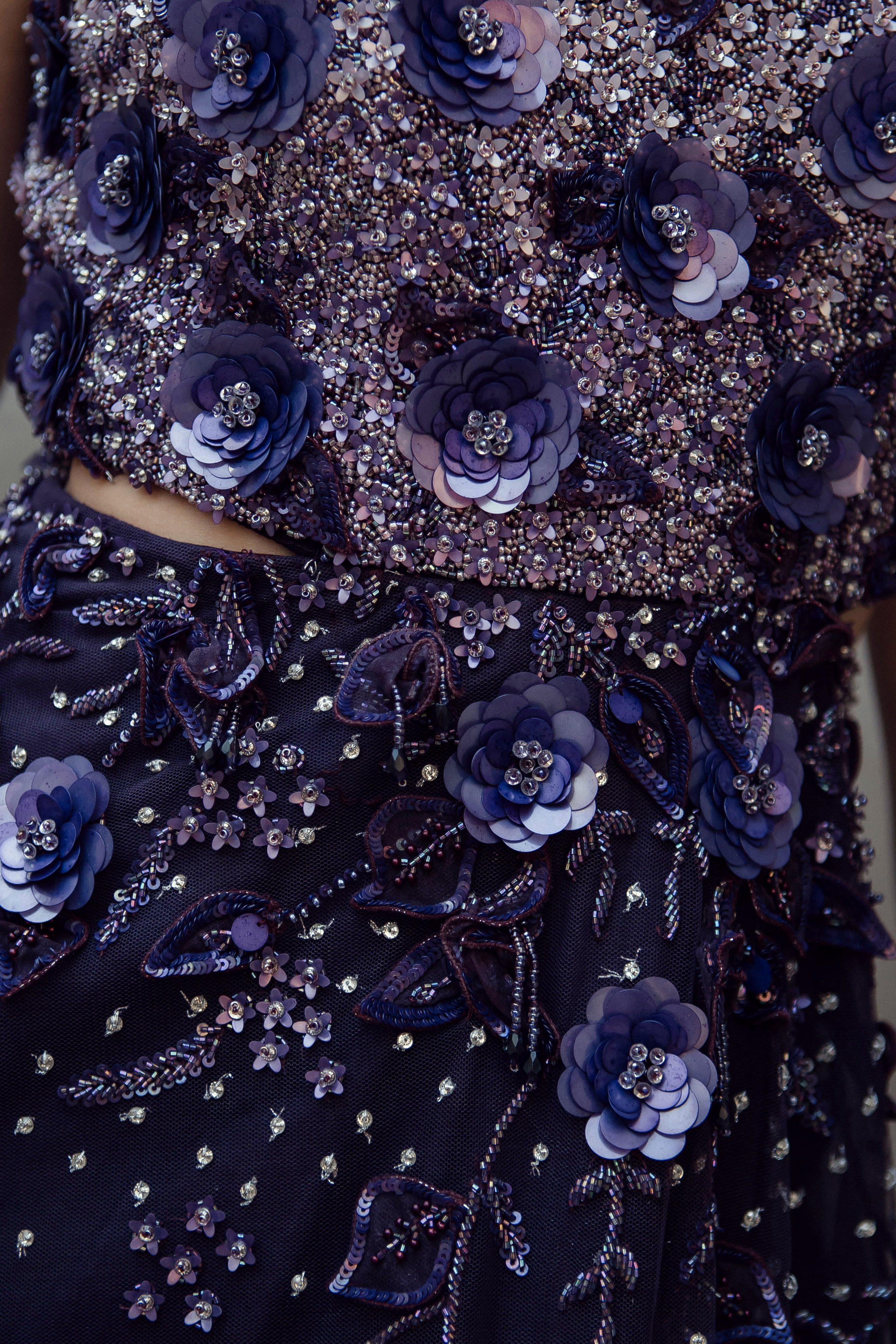
Few brands understand modern dressing quite like Dubai-based label MINIAAR. Built around the principles of craftsmanship, versatility and conscious design, the brand has established itself as one of the region's most compelling luxury fashion labels.
Its couture and ready-to-wear collections balance sculptural silhouettes with effortless wearability, resulting in pieces that feel timeless rather than trend-driven. Designed for women who value both individuality and functionality, MINIAAR embodies the kind of purposeful luxury that increasingly defines contemporary fashion.
More info on Miniaar.com
How Istituto Marangoni Dubai Is Shaping the Next Generation of Creative Talent in the Middle East
For many of us working in fashion and culture today, there is often a defining institution, mentor, or experience that quietly set everything in motion. For JDEED's founder, Cynthia Jreige, that place was Istituto Marangoni Paris, where studying Fashion Design before continuing at London College of Fashion laid the foundations for a career that would later evolve into journalism, publishing, and cultural storytelling.
It is perhaps why witnessing the growth of Istituto Marangoni in the Middle East feels particularly significant. As Dubai continues its ambitious journey toward becoming one of the world's leading creative capitals, institutions like Istituto Marangoni Dubai are helping shape not only the region's future workforce, but also its emerging creative identity.
For Roberto La Iacona, Institution Director of Istituto Marangoni Dubai, the role of creative education today extends far beyond teaching technical skills.
"The city's ambition to become the global capital of the creative economy is already cultivating a generation of young creatives who are confident, internationally minded, and ready to bring new perspectives to industries that are evolving at extraordinary speed," he tells JDEED. "Creative education sits at the centre of that vision."

In Roberto's view, preparing the next generation of designers, creatives and entrepreneurs requires a fundamentally different approach to education than it did even a decade ago.
"It is no longer enough to teach technique alone, as students today need critical thinking, problem solving, curiosity, collaboration and fluency with new technologies if they are to navigate a constantly changing world."
This philosophy has become increasingly relevant in a region undergoing profound economic and cultural transformation. Aligned with the UAE's E33 agenda and Higher Education Strategy 2030, Istituto Marangoni Dubai is focused on preparing students not only for today's industries, but for professions that are still taking shape.
"We're proud to be working with a generation of young creatives who can draw inspiration from UAE traditions, channel international influences and combine them with Italian craftsmanship in a forward-thinking and unique creative voice that the region is now exporting to the world," Roberto explains.
If there is one aspect that distinguishes creative education from many traditional academic paths, it is proximity to the industry itself. For Roberto, exposure to practitioners and creative leaders remains one of the most powerful components of a student's education.
"Direct industry access is essential, and in my view, it is the single most powerful complement to academic learning," he says. "You can study theory in great depth, but until you sit with someone who has created collections, directed campaigns or built brands at the highest level, you cannot fully appreciate what this industry asks of you."
That access has become a cornerstone of the Marangoni experience. Students currently benefit from mentorship by internationally renowned figures including filmmaker and photographer Luca Finotti, architect and designer Ferruccio Laviani, visual artist Emiliano Ponzi and business strategist Giovanni Pungetti, whose collective experience spans some of the world's most influential luxury houses and creative institutions.
"This kind of exposure is transformative," Roberto says, pointing to the institution's 91% employability rate one year after graduation, according to Doxa. "For our students in the UAE, this proximity to global creative leaders, paired with local industry partnerships through projects with Cartier, Bvlgari and Madame Arabia, turns their education into a real head start upon entering the workforce."
This year marked another milestone for the Dubai campus when three undergraduate students presented their work during Milan Design Week 2026, becoming the first students from Istituto Marangoni Dubai to participate in one of the world's most prestigious creative events.
"We're proud to be working with a generation of young creatives who can draw inspiration from UAE traditions, channel international influences and combine them with Italian craftsmanship in a forward-thinking and unique creative voice that the region is now exporting to the world,"
For Roberto, the significance of such experiences cannot be overstated.
"You cannot overstate what that means for a young creative: to stand in that room, alongside the leading voices of contemporary design, and contribute your own work to the conversation."
He believes that these experiences provide something classrooms alone cannot.
"Students return with a sharpened sense of where their work sits in the global landscape, a network they have built themselves, and a new level of ambition and confidence," he explains.

This combination of academic learning and international exposure has contributed to Istituto Marangoni's growing global recognition, including its recent ranking among the top 50 institutions worldwide in Art & Design in the QS World University Rankings by Subject 2026.
Yet as the fashion and creative industries become increasingly competitive, conversations around student wellbeing have become equally important. Creative careers can be exhilarating, but they can also be emotionally demanding, particularly for young people navigating both personal identity and professional ambition simultaneously.
Roberto acknowledges this challenge openly.
"The creative industries are deeply rewarding, but they are also demanding, and the pressure on young people to perform, to find their voice, to compete globally, to keep pace with rapid change, can be significant."
At Istituto Marangoni Dubai, support extends beyond academic performance. The institution offers counselling and coaching services, collaborative workspaces, and community-led activities ranging from movie nights and yoga sessions to design gatherings across Dubai's creative ecosystem.
"We truly believe creativity grows when students feel supported, recognised, and free to take risks," Roberto says. "That's the kind of environment we aim to create for every cohort that joins us."
Perhaps one of the strongest indicators of the changing creative landscape in the Gulf came earlier this year, when more than 150 teenagers and their families attended the institution's open day in Dubai.
For Roberto, this reflects a broader cultural shift happening across the region.
"We are witnessing a generational change in how creative careers are perceived," he explains. "Just a few years ago, design, fashion and visual arts may not always have been the first paths families encouraged their children to pursue."
Today, however, as creative industries continue to grow across the GCC and beyond, attitudes are evolving.
"Families are recognising that a career in fashion, design or visual arts is among the most exciting and globally mobile paths available to young people today," he says. "The questions we hear from parents focus on future-facing practicalities such as employability rates, internships, industry partnerships and where their child's degree can take them."
For those of us who have experienced the impact of a creative education firsthand, perhaps this shift feels long overdue. What institutions like Istituto Marangoni Dubai are helping demonstrate is that creativity is no longer simply a passion to pursue on the side. In the Middle East's rapidly evolving cultural economy, it is increasingly becoming one of its most valuable currencies.
More info on IstitutoMarangoni.com
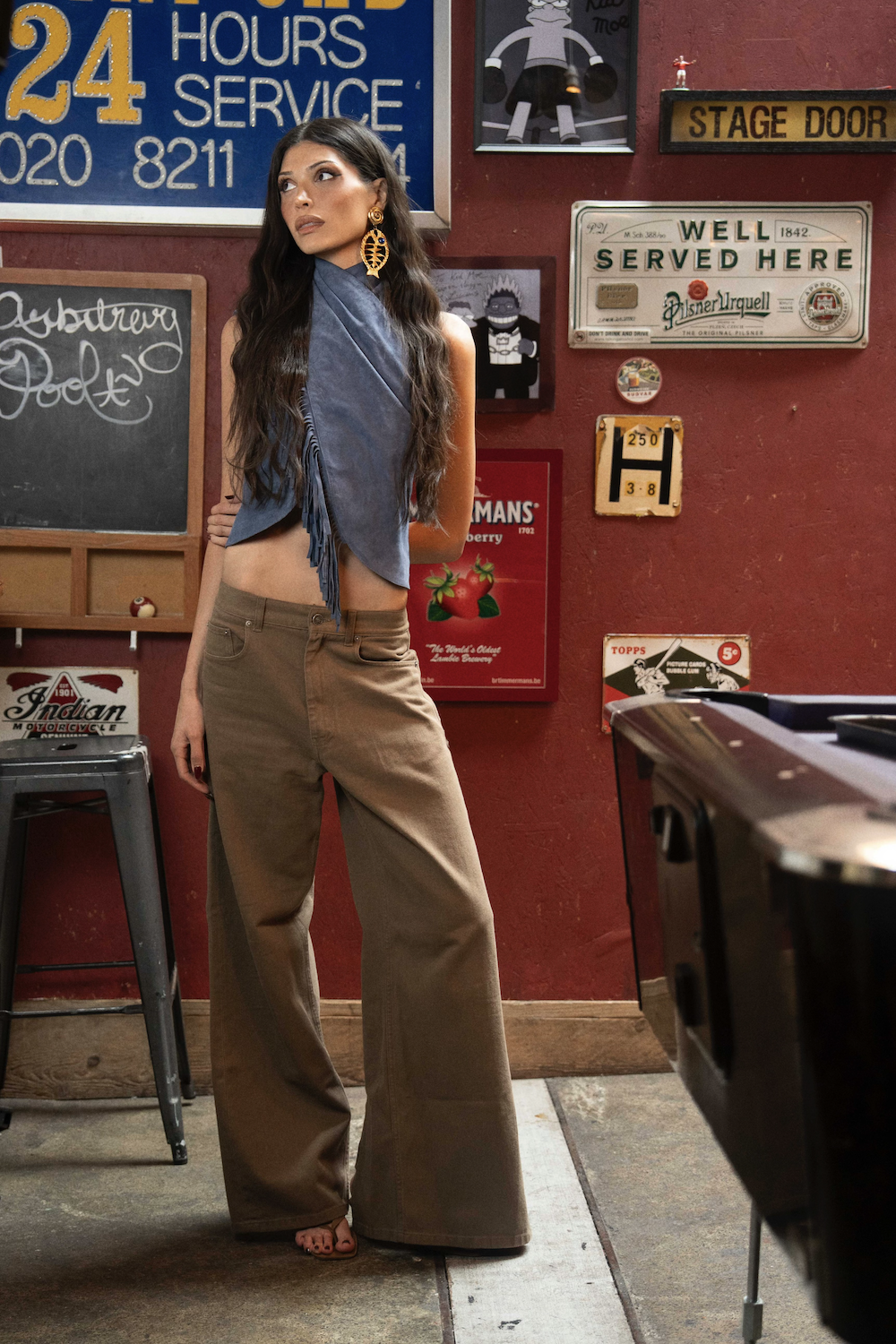
FAME Collective and Double A Are Reimagining Egyptian Craftsmanship Through Intention, Heritage and Female Creativity
At a time when fashion increasingly rewards speed, choosing to slow down can feel radical. This idea sits at the heart of the new collaboration between FAME Collective and Egyptian luxury leather house Double A, a partnership that feels less like a commercial venture and more like a conversation between two women who share a common belief: that the objects we choose to wear and live with should carry meaning, memory and a sense of place.
For Lara Jabara, founder of FAME Collective, the connection with Double A founder Ayah did not begin with a product. It began with a story.
"There wasn't one defining moment that sparked the partnership," Jabara explains. "It was an instant alignment of values. We both believe in celebrating Arab craftsmanship, in preserving heritage, and in creating things that carry meaning long after the moment of purchase."
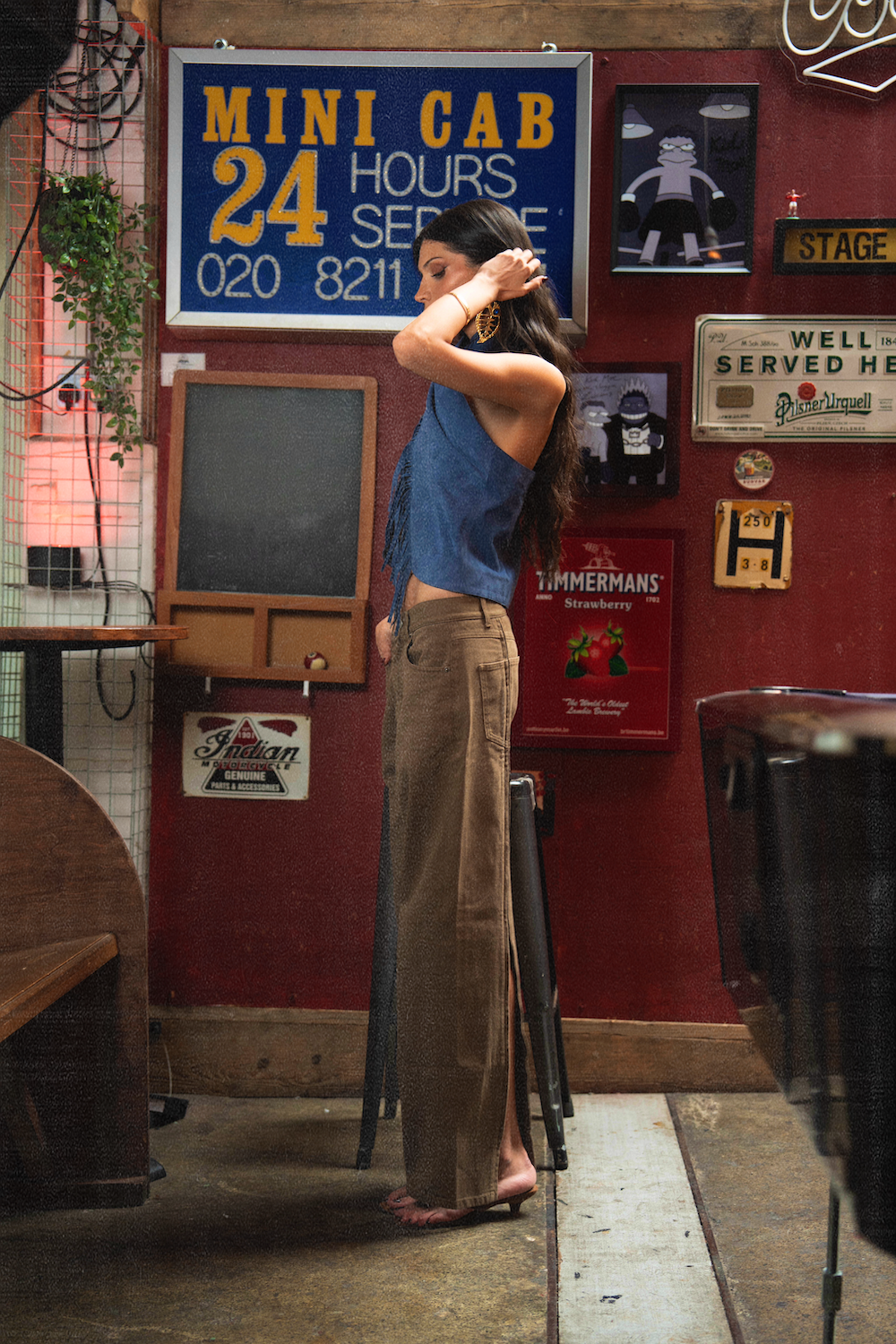
That philosophy has become increasingly central to a new generation of creatives across the Middle East. As conversations around sustainability, cultural preservation and intentional consumption continue to evolve, many designers are turning away from trend cycles and toward something more enduring: craftsmanship, storytelling and community.
For Double A, whose leather craftsmanship is rooted in a family tradition passed down through generations, this approach has always been fundamental. Rather than treating heritage as a marketing tool, the brand treats it as a living practice, one that requires both preservation and reinterpretation.
The resulting capsule collection draws deeply from Egyptian history while remaining unmistakably contemporary. During the design process, Jabara immersed herself in the origins of leather craftsmanship in Egypt, tracing its historical role in the creation of armour and protective garments worn by warriors. The concept of protection gradually emerged as the emotional foundation of the collection.
Equally compelling is the collection's use of silver, a material that has long been associated across cultures with protection, healing and the warding off of negative energy. Incorporated subtly throughout the designs, silver becomes less an embellishment than a quiet gesture toward memory, ritual and sanctuary.
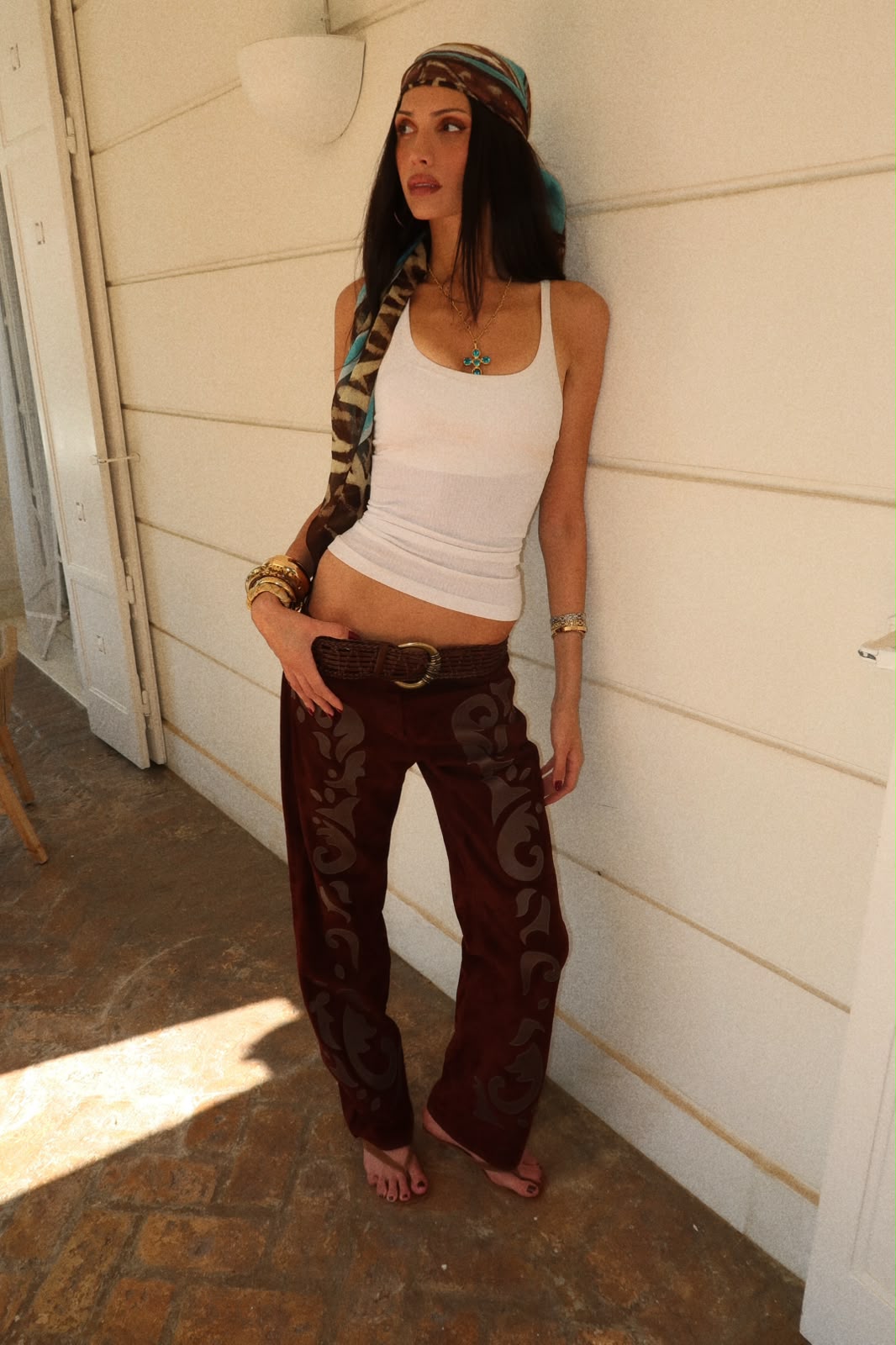
What makes the collaboration particularly resonant is that it resists the temptation to over-explain itself. The references are present, but never literal. The symbolism unfolds gradually, allowing craftsmanship to remain at the forefront while deeper narratives reveal themselves over time.
This approach reflects the wider philosophy that has shaped FAME Collective since its inception. By championing female creatives across the MENA region, the platform has consistently asked consumers to consider not only what they are buying, but also who they are buying from and why.

In an era where heritage is increasingly flattened into aesthetics and cultural references are often consumed faster than they are understood, collaborations such as this one offer an alternative. They invite us to engage with fashion and design more intentionally, to recognise the histories embedded within objects, and to appreciate the women who continue to preserve, reinterpret and carry those histories forward.
The Double A x FAME Collective collection is ultimately not only about leather, silver or craftsmanship. It is about continuity. About choosing to build slowly. And about understanding that some of the most meaningful objects are those that carry stories long after the moment of purchase has passed.
See more, on FameCollective.com
.jpg)
Where the World Pauses: Assouline Lands at Hamad International Airport
There is something quietly poetic about an airport; that liminal space where the world compresses into a single terminal, where a stranger beside you might be heading to Tokyo while you are bound for Beirut.
It is a place of anticipation, of transition, of the particular alertness that comes with knowing you are, for a few hours, between lives. And it is precisely here, in the Central Concourse of Hamad International Airport, that Assouline has chosen to plant its flag.
The Travel Series Kiosk — a world-first for the legendary Parisian publishing house — is no ordinary airport shop. Dressed in Assouline's signature red and anchored by oversized book spines rendered at monumental scale, it announces itself as a destination within a destination. Books on Marrakech, Tokyo, the Côte d'Azur, and beyond line the shelves alongside candles, totes, and carefully curated gifts; each one an invitation to travel twice: once in the imagination, and once on the plane.
.jpg)
Prosper Assouline, who co-founded the house with Martine Assouline in Paris in 1994, puts it simply: the airport felt inevitable. "A city within a city that never sleeps, opening onto every destination in the world," he describes Hamad. "It is the very DNA of our Travel collection: to journey across the world without ever leaving home."
That instinct — to find the whole world in a single room — is something Assouline has perfected over three decades and more than 2,000 published titles. The kiosk at Hamad is the latest expression of that philosophy, brought to life in partnership with Qatar Duty Free, which has quietly become one of the most ambitious curatorial forces in global travel retail. More than 200 outlets fill the terminal, but it is the world-first concepts — the exclusive, the unexpected — that define QDF's character. The Assouline kiosk sits squarely within that tradition.
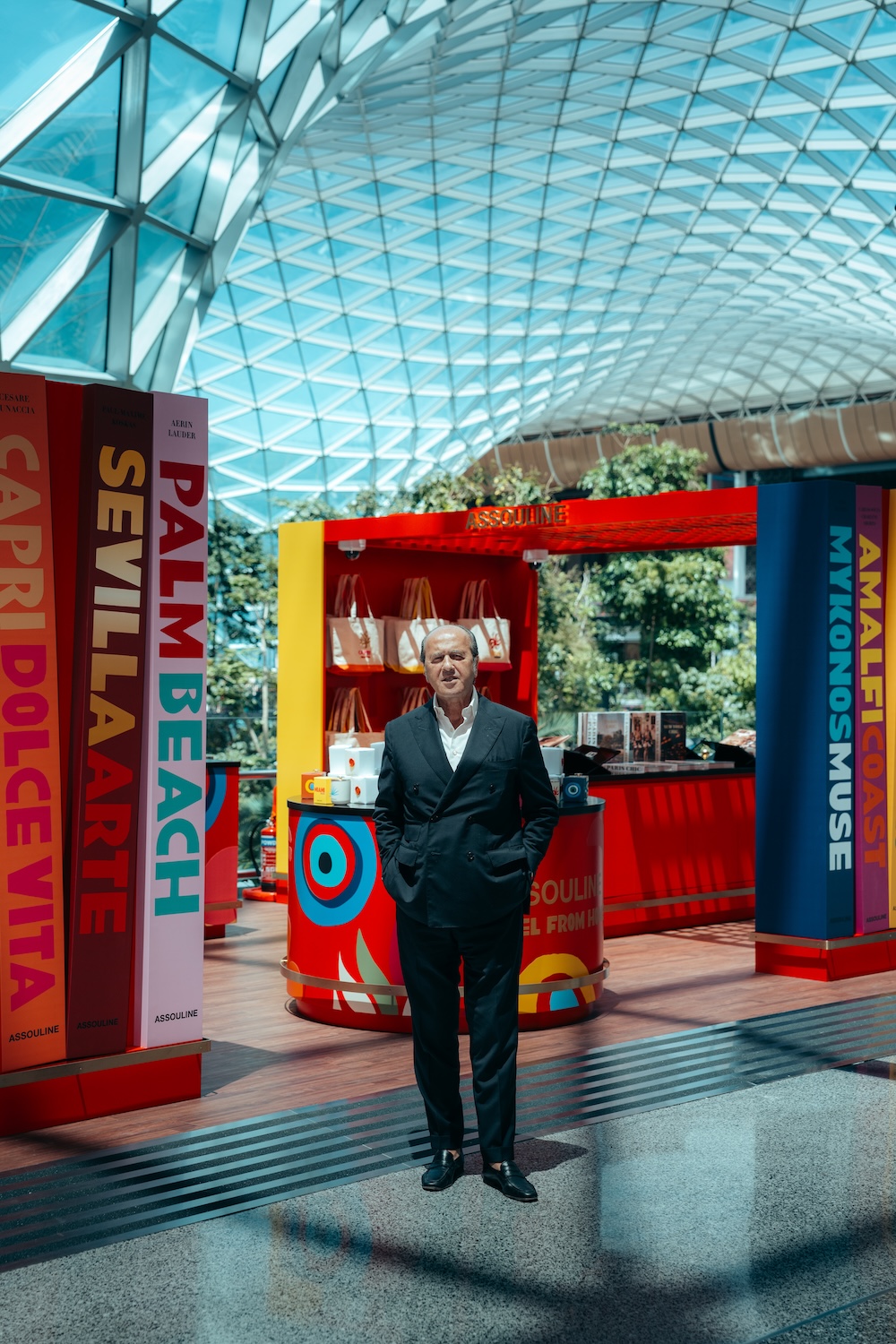
For the Arab traveller passing through Doha — and there are few airports in the world more central to that journey — the collaboration carries its own resonance. Assouline's catalogue has long celebrated Arab culture, from titles on the architecture of the Gulf to the fashion houses of Beirut. To find those spines glowing red in the heart of Hamad feels less like retail and more like recognition.
The kiosk is open 24 hours, beside the Orchard in the Central Concourse — which is to say, it is there whenever you need it: at 6am before a red-eye, or at midnight when the terminal grows still and the impulse to disappear into a beautiful book becomes, for a moment, irresistible.
Assouline Travel Series Kiosk, Central Concourse, beside Orchard, Hamad International Airport, Doha. Open 24/7.
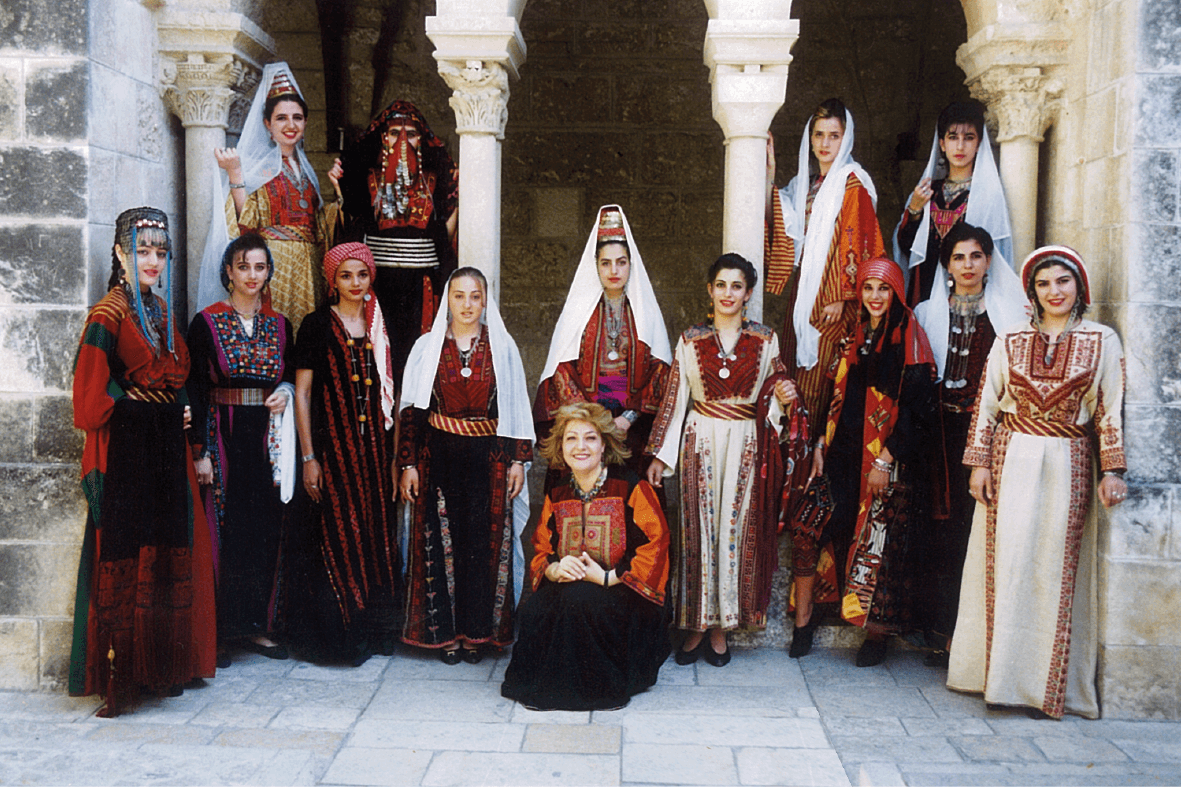
Adding Culture to Your Cart: From Heritage to Aesthetic
Get rid of Nazar at 50% off! At least that is what is promised by the hundreds of evil-eye keychains piled next to the cashier at several major retailers. Nearby, an Instagram-friendly, ‘boho-chic’ cafe serves coffee beneath a gently swaying dreamcatcher, recontextualizing a spiritual object as decor.
We witness these scenes so often that we are now numb to them. The ‘aesthetic-core’ and algorithm-dependent trend cycle dictate our perception of objects so deeply that symbols and customs that hold spiritual meaning, lineage, and political significance have gradually moved from community contexts into the trend cycle. What once grounded a group in its ancestry now carries a price tag and circulates through lifestyle branding. This raises an important question: has culture become a commodity?
By Malavika Suresh
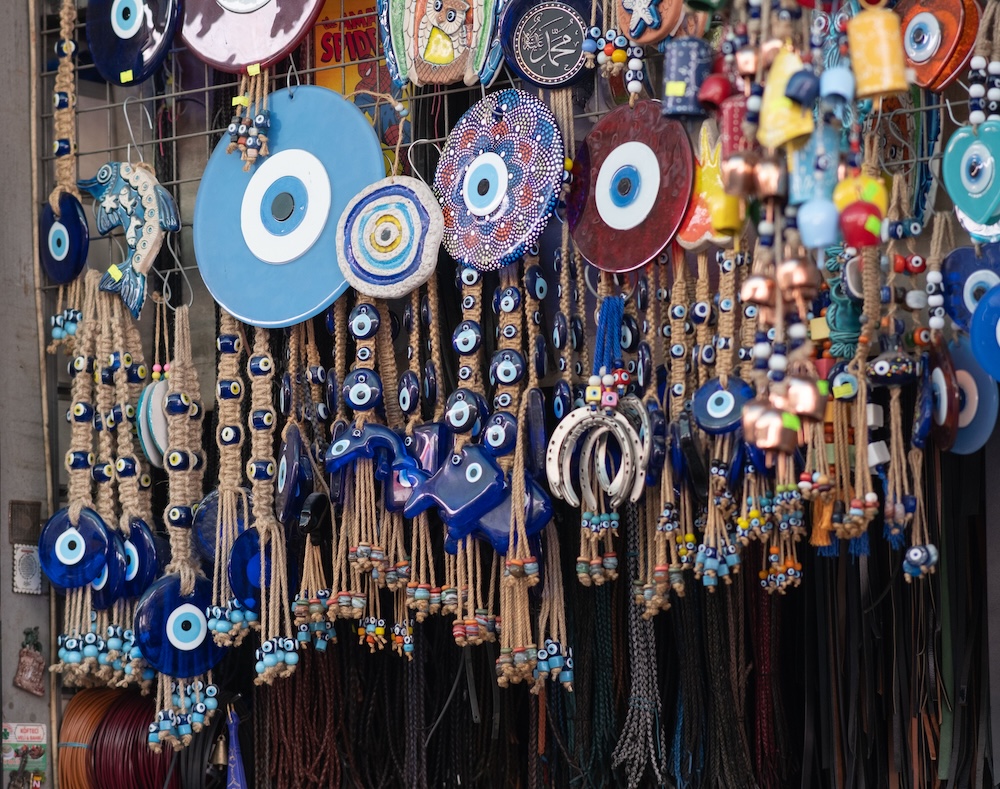
Contemporary capitalism has discovered that identity can be a lucrative product. It can be marketed and monetised, abstracted from its origins, and reframed for aesthetic consumption. Capitalism has perfected the system of taking complex, lived experiences and molding them into an aesthetic shorthand. As Jia Tolentino states in Trick Mirror: Reflections on Self-Delusion,
“Capitalism has no land left to cultivate but the self. Everything is being cannibalized—not just goods and labor, but personality and relationships and attention.” As capitalism does so, our perception and relationship with objects have fundamentally altered. Anthropologist Arjun Appadurai, in The Social Life of Things: Commodities in Cultural Perspective, suggests that objects must not be understood as static objects divorced from any context, “…for their meanings are inscribed in their forms, their uses, their trajectories.” However, in a world mediated by consumerism, the only context that seems to matter is profitability. For example, traditional embroidery, stitched by artisans who carry generations of knowledge, resurfaces on runways with limited recognition of its historical and cultural roots. Or, they are replaced by synthetic, factory-made versions to maximise profit margins. Sacred tattoos that once mapped ancestry or spiritual belonging are now frequently described as decorative graphics. Heritage, in this context, becomes a marker of taste rather than lineage. Culture is no longer something you inherit. It is something you can buy.
The means through which cultural commodification occurs follows a lucrative pattern. It identifies sources of meaning, extracts what is visually or emotionally resonant, and repackages it for consumption. The evolution of Yoga in the West is a textbook example of a cultural practice being reframed for aesthetic consumption. Originally a complex spiritual, ethical, and physical system rooted in ancient Indian philosophy, yoga has been abstracted into a multi-billion-dollar wellness industry.
- The extraction: The focus shifts from a path toward liberation (moksha) to one toward stress relief and positive vibes for the professional class.
- The product: The identity of the yogi is now signalled through $120 leggings, branded mats, and aestheticized studio spaces that often strip away the Sanskrit terminology or traditional chanting to make it more marketable.
- The result: A sacred practice becomes a status symbol. The consumer is not just buying a class. They are buying an identity that suggests they are more mindful, affluent, and enlightened than others.
Under this framework, spiritual practices, once embedded in collective rituals and belief systems, are being translated through the language of lifestyle branding. The danger here is not only the loss of cultural context but the idea that spirituality functions within the market, not outside of it. A cultural symbol’s or practices’ value becomes inseparable from its ability to sell.
We are drawn to consumerism and the commodification of culture because it promises immediate results. By stripping cultural practices of their friction—the years of study, the communal accountability, and the often uncomfortable confrontation with oneself—capitalism provides a frictionless version that fits into a 45-minute lunch break or a curated Instagram feed. This is clearly evidenced in the modern "mindfulness" industry, where the Buddhist practice of sati is abstracted into a scalable tool for corporate productivity. By reducing cultural and spiritual objects to those that guarantee instant positivity, alignment, and balance, they are detached from the time, transmission, and communal participation required for true benefit. Under this capitalist reframing, mindfulness is stripped of its original ethical foundations, becoming instead a subscription-based product designed to help the individual optimize their performance within the very systems that cause their stress.
The aim of the producer is to make complex practices scalable, reproducible, and endlessly adaptable to consumer desires. Consequently, mindfulness apps are scaled to millions; the "sale" thrives because the product promises balance without requiring the consumer to question systemic issues like exploitative labor conditions. What emerges is not a rejection of the original belief system, but its transformation into a lifestyle category that thrives not on meaning, but on the transaction itself.
This is not to suggest that the mere adoption of these practices or use of objects rooted in foreign cultures is inherently wrong and must be halted. There are definitely worthy aspects to using the teachings of mindfulness to reduce stress, taking a Yoga class to improve health, or believing in and wearing an evil eye necklace to ward off Nazar. The issue is not in the practice or its adoption, but in the way they are packaged as products and sold, entirely divorced from their origins and recontextualized into goods that offer instant gratification and enhance your personal brand or aesthetic.
The commodification of culture into products does not exist in a vacuum of neutrality. There are clear power dynamics between communities whose cultural expressions are extracted and those who profit from their circulation. As Edward Said argued in Culture and Imperialism, “The power to narrate, or to block other narratives from forming and emerging, is very important to culture and imperialism…” These narratives often mirror broader histories of occupation, colonialism, and economic inequality, where the ability to sell culture is granted to those with institutional power rather than to those who have lived, protected, and sustained it. As a result, cultural symbols travel freely in global markets while the people behind them remain constrained by the very systems that render their heritage profitable.
A significant example of such power dynamics is the commodification of the Palestinian Tatreez, which carries centuries of storytelling, identity, and resistance. Across Palestinian villages, specific patterns and stitches historically communicated a woman’s origins and community, functioning not only as decorative elements but also as historical records. As Palestinians have faced continued erasure and marginalisation, elements of Tatreez have been removed from their political and cultural context and repackaged as a marketable aesthetic and sold as a form of ‘traditional chic’ to Western audiences, often without acknowledgement of their origins. In this process, cultural meaning is translated into commercial value, and heritage is treated as a resource to be branded and sold. Tasnim Alwa 'l's Stolen Threads: The Appropriation of Palestinian Embroidery by Israeli Designers, published by The Tatreez Institute, highlights how several designers over the past 70 years, with direct connections to occupying forces, use Palestinian embroidery, Bedouin textiles, and regional motifs while marketing their products as “Israeli craftsmanship.” What is marketed as aesthetic exchange or appreciation is, in fact, the result of a broader process of commodification, in which Palestinian cultural labour is detached from its history and resold under a different national identity. The aestheticisation of culture, here, is a repetition of the dispossession of memory, of identity, and of the dignity of the people whose craft is co-opted.
The concern of commodifying culture is not merely cultural appropriation but the risk of the complete replacement of meaning. When cultural designs and symbols are recast as fashion statements, sacred practices as wellness trends, and ritual objects as lifestyle enhancements, the depth of belief is substituted with vague notions of ‘vibes’ or aesthetic cohesion. This results in what philosopher Jean Baudrillard, in Simulacra and Simulation, calls the "precession of simulacra," a state in which the image of a thing precedes the reality, eventually replacing the original cultural reference altogether. It leads to a cultural dissonance in which communities recognize their heritage yet no longer identify with it. What emerges from this process is a paradox where the more widely these symbols circulate, the less they seem to belong to the people who created them.
As cultural objects are absorbed into consumer culture, their ability to hold memory or meaning diminishes. What remains is what Baudrillard would call a "simulation", a familiar, marketable visual trace, increasingly detached from the emotional and cultural worlds that once sustained it. In such a world, culture is no longer something to live, share, or pass down but something to browse, buy, and discard with the next trend cycle. In reducing culture to consumable aesthetics, we risk severing the connection between people and their own histories, making heritage a decorative accessory rather than a living, evolving force.
Addressing the commodification of cultural heritage requires more than awareness. It demands intentional action. Both institutions and individuals must challenge the capitalistic market logic that turns heritage into a trend, ensuring that traditions are preserved, respected, and properly contextualised rather than merely sold for aesthetic appeal. As consumers, we can approach cultural products with curiosity and respect, learning about their histories rather than treating them as mere decoration. Additionally, educators, journalists, and cultural institutions must take the responsibility of amplifying the voices of those whose knowledge and creativity have historically been marginalised, resisting the temptation to flatten heritage into a trend. By fostering relationships rooted in reciprocity, accountability, and storytelling, we can move toward a landscape where culture is celebrated rather than reduced to aesthetic consumption.
Humanity is culture and culture is humanity. In preserving and respecting culture and heritage, and in maintaining their complexity, we are protecting ourselves. By resisting the urge to flatten traditions into simple, easy-to-consume products, we safeguard the communal depth and historical continuity that give life meaning beyond the marketplace. To honor a practice is to refuse its reduction to a lifestyle category, ensuring that our heritage remains a living, breathing testament to our collective identity rather than a mere inventory of consumable trends.
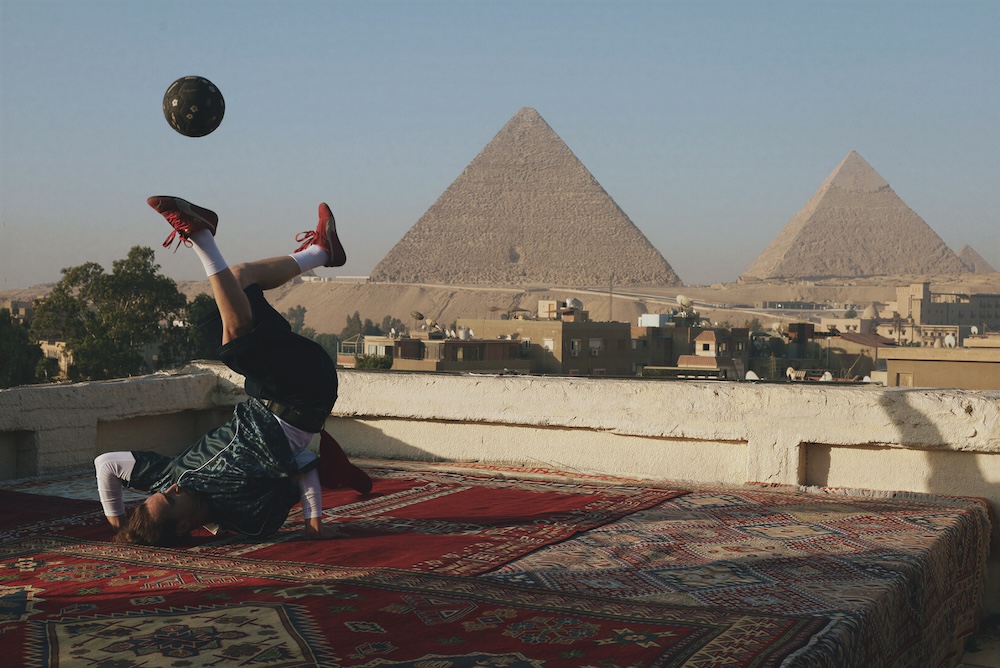
Kahhal 1871 Is Taking Egyptian Craftsmanship to the World Stage Through Football Culture
The 2026 FIFA World Cup has just started and brands across the world are looking for ways to enter the conversation; but few are doing it quite like Kahhal 1871.
Egypt's oldest handcrafted rug house has never been a brand interested in following the expected path. Instead of athletes, sponsorship deals, or football merchandise, Kahhal 1871 has chosen to explore what football represents culturally: creativity, discipline, identity, and self-expression. The result is Woven for the World Stage, a campaign that places handcrafted Egyptian rugs at the centre of freestyle football culture, creating a dialogue between two practices built on years of dedication and mastery.
And we love that this campaign refuses to treat heritage as something static.
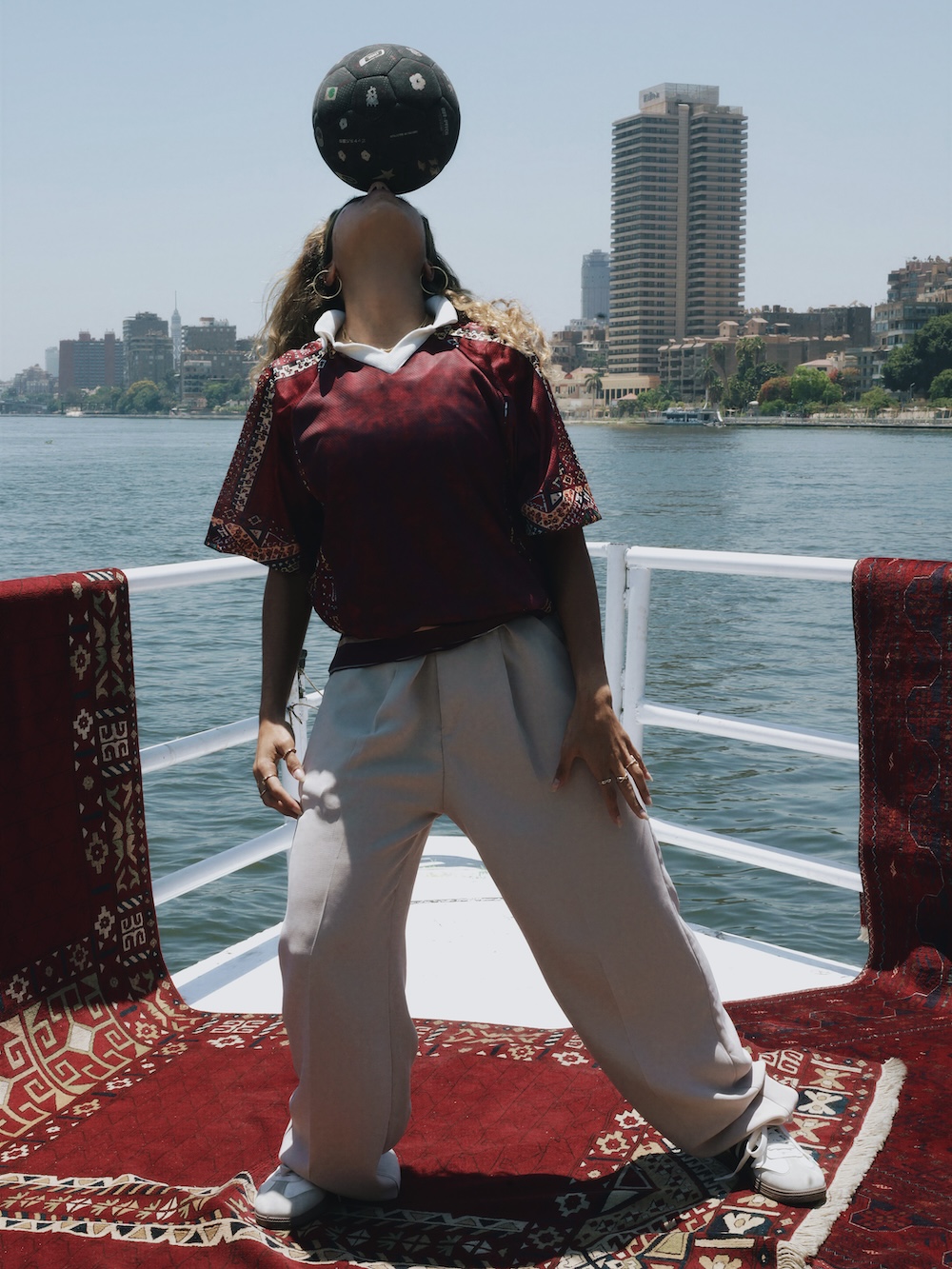
For many heritage brands, the temptation is to look backwards. Kahhal 1871 has taken the opposite approach, asking how a 150-year-old craft can remain relevant by engaging with the culture being created today. Through a series of films and photographs featuring male and female freestyle footballers, the campaign positions craftsmanship within contemporary youth culture, allowing tradition and modernity to coexist rather than compete.
The imagery unfolds across some of Egypt's most recognisable settings. Footballers perform on Kahhal rugs laid across Cairo's streets, aboard feluccas sailing the Nile, and against the backdrop of Al-Muizz Street and Khan El Khalili. Throughout every scene, movement surrounds the rug while the rug itself remains constant, becoming a symbol of continuity, skill and cultural memory.
There is something particularly interesting about the choice of freestyle football rather than the professional game. Unlike traditional football, freestyle is intensely personal. It is about individuality, technique and creative expression. In many ways, it mirrors craftsmanship itself.
Each movement is refined through repetition. Each performance is the result of years of practice. The parallels with rug making become surprisingly natural.
"We're not interested in preserving heritage by freezing it in time," says Mohamed El Kahhal. "The way you keep heritage alive is by allowing it to evolve. The products themselves haven't changed. The craftsmanship hasn't changed. What changes is the context."
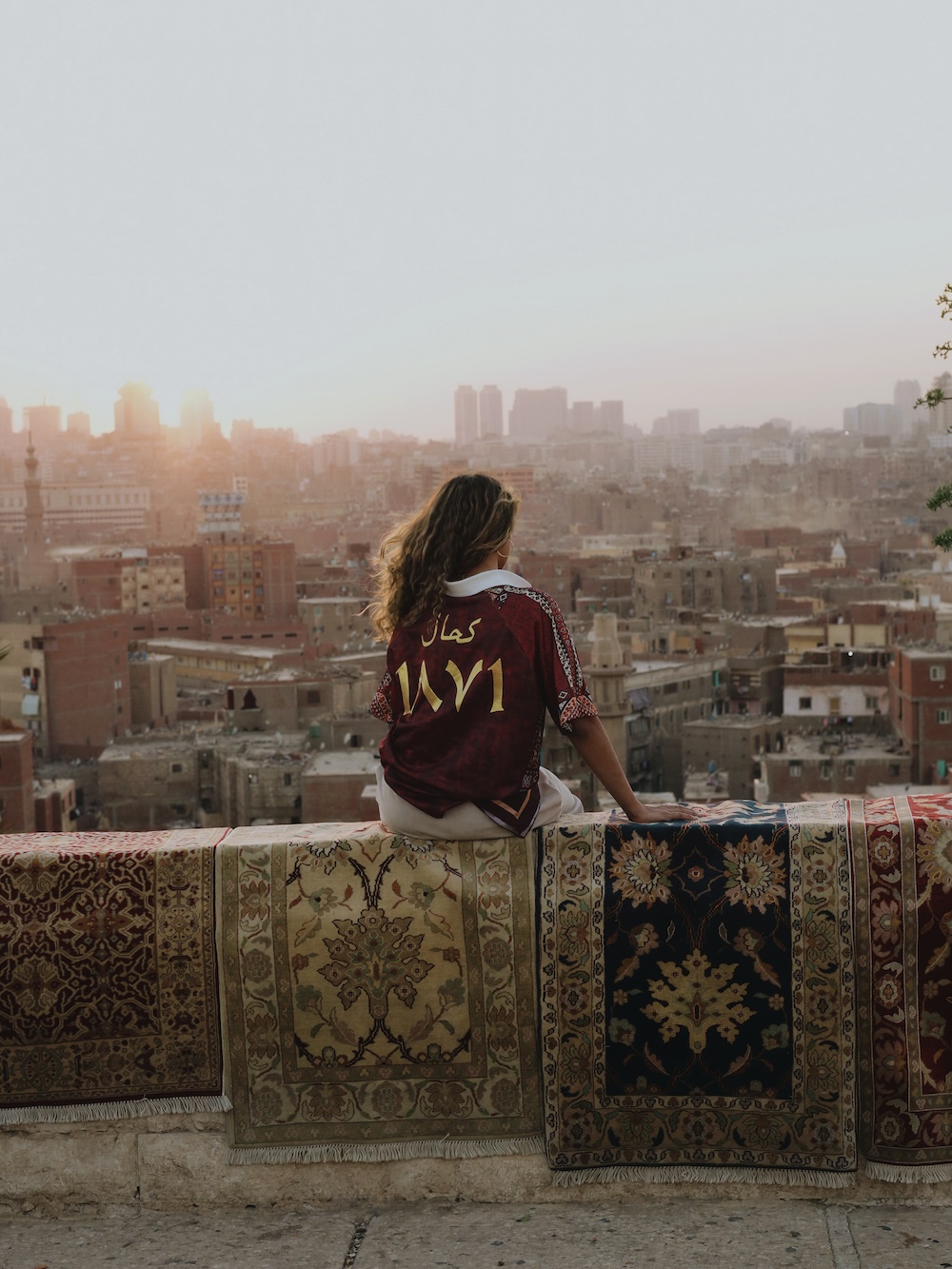
That philosophy feels increasingly relevant today. Across fashion, design and culture, some of the most exciting conversations are taking place around how traditional practices can engage with contemporary audiences without losing their authenticity. Rather than diluting heritage, projects like Woven for the World Stage demonstrate how culture remains alive when it is allowed to participate in the present.
The campaign also builds on a wider vision that has become central to Kahhal 1871's recent evolution. Last year, the brand introduced itself to a younger audience through skateboarding culture. This season, football becomes the lens through which it explores community, movement and global connection. Both initiatives share a common thread: placing craftsmanship in environments where audiences might least expect to find it.
At the heart of the project is the idea of the rug as a stage. Removed from private interiors and placed into public space, these handcrafted pieces become active participants in the story rather than decorative objects. They carry history, labour and artistry into new cultural contexts, inviting audiences to see them differently.
As football takes centre stage globally until July 19th, Kahhal 1871 reminds us that mastery exists in many forms. Some performances happen on the pitch and others are woven by hand, passed between generations, and continuously reimagined for the future.
More on Kahhal1871.com
%20copy.jpg)
Between the Oasis and the Archive: Mohammad Alfaraj × Latifa AlBokhari on Photography as Cultural Memory in Al Ahsa
Al Ahsa is often described as an oasis, a place of water, agriculture, and generosity rising from the desert. But for photographers Mohammad Alfaraj and Latifa AlBokhari, it is also a place shaped by time’s quiet pressure, by rituals that soften, traditions that thin, and moments that vanish almost as soon as they appear.
Mohammad describes the emotional atmosphere of the region as one shaped by an awareness of impermanence. “By default, you have that feeling that everything is slowly fading or going away,” he says. “And the people celebrate everything fully because they understand that.” He calls it a kind of “joyful morbidity,” where joy and loss are not opposites but companions, where “the funerals are as celebratory and communal as the weddings.”
Latifa’s connection to Al Ahsa is rooted in return rather than constant presence. Growing up, she visited frequently with her family, forming what she calls “some of my favorite core memories.” What stayed with her was not only the landscape, but the way people inhabit it. “The nature of Hassawi people molded the way I see and interact with others,” she says, recalling elders telling stories and poems, and being surrounded by farms, water, and family. “It makes you appreciate everything around you, and see a story in everything and everyone there.”
Words/Soraya Durand
Artist, Witness, Archivist
Both photographers resist being defined by a single role. Latifa sees her practice as existing somewhere between presence and preservation. “I feel like I am a little bit of all three,” she says. “I’m witnessing so many changes around me, where traditions and rituals I grew up with are fading away, and as a photographer I’m documenting them fully aware that those will be archives for the future.”
Mohammad frames his role in more tactile terms. “A scavenger,” he says, describing his approach to photography. “Someone who searches, finds, and collects, but in an inclusive way. To document, archive, and bear witness to the land, people, animals, plants, stones, and objects.” His archive is not limited to human life alone. It extends to the entire ecology of Al Ahsa.
For both, the act of photographing is less about capturing a perfect image and more about remaining present long enough for something honest to reveal itself.
The Everyday
Latifa is drawn to what history tends to overlook. “Monumental moments are mostly documented,” she says. “They’re rarely lost. But those quieter, intimate moments are easily forgotten and taken for granted, even though they hold more continuity and feel more real.”
Mohammad’s lens follows a similar logic, but through rhythm rather than stillness. Lately, he has been documenting the daily choreography of the city and surrounding villages. “In the morning, farmers go to the farms, students to schools, people to their jobs,” he says. “Everyone is like a bird, waking up and chattering, looking for what’s theirs in this life. And by the afternoon, everyone goes back to their nest.”
Latifa places these moments within a rapidly changing visual landscape. “Change is happening so fast in Saudi,” she reflects. “It is visually changing right in front of us. The best way to preserve what we see around us is through images or videos.”
Discover the whole story in JDEED 12..
Amina Muaddi’s Cruise 26 Collection Is a Celebration of Joy, Femininity and Escape
Few accessories brands have managed to maintain the same sense of excitement season after season, but Amina Muaddi continues to surprise us with each new release.
Perhaps it is because her designs never lose sight of the woman at the centre of the story. They are glamorous without feeling detached, playful without sacrificing sophistication, and always infused with a sense of confidence that has become synonymous with her name.
For Cruise 2026, Muaddi invites us into a world of colour, fantasy and unapologetic femininity. At a moment when fashion often leans towards restraint, the designer chooses joy instead, embracing embellishment, craftsmanship and a touch of escapism.
The collection opens with an electric yellow ombré flower, hand-painted in enamel and featured on the new Vittoria thong sandal. Bright, bold and impossible to ignore, the motif sets the tone for a collection that explores freedom, travel and the emotional shift that comes with stepping away from everyday life. It is a collection built around the feeling of a summer escape, one that reconnects you with your surroundings, your body and yourself.
Named after model and friend of the house Vittoria Ceretti, the Vittoria slipper is adorned with colourful enamel flower charms that feel playful yet refined. Elsewhere, leather flowers bloom across the Janis thong, while the sleek Justine slipper introduces a delicate metal toe ring finished with a Swarovski crystal. The detail is particularly noteworthy, having inspired the custom sandal Muaddi designed for Rihanna's appearance at the 2026 Met Gala.
The designer's signature Camelia motif also returns in a softer, more delicate form. The new Mini Camelia slipper arrives in gingham, coral satin and cappuccino tones, while the Camelia bag is reimagined in seasonal finishes including dramatic mint feathers. The Vittoria clutch, wrapped in pleated satin, continues the collection's romantic spirit.
Among the standout updates are new heel heights for the Juliette and Gigi styles, which now arrive in 70mm and 95mm versions following their popularity last season. Meanwhile, leopard lace and crystal mesh bring a fresh dimension to the Felicia sling, a style named after Muaddi's mother and one that reflects the personal touches woven throughout the collection.
The result is a collection that feels both optimistic and intimate. It celebrates the pleasures of dressing up while remaining deeply connected to craftsmanship. Every flower charm is hand-painted and each new hardware detail has undergone months of development, reinforcing Muaddi's commitment to creating pieces that are as considered as they are desirable.
As Muaddi herself explains, "This season I wanted to let my imagination run free and design a bubble of unabashed joy and femininity. The flower motifs, playful hardware and bold colour palette pay homage to women's sensibility and incredible power of creation."
It is exactly this balance of fantasy and precision that keeps us coming back. Every season, Amina Muaddi reminds us why she remains one of fashion's most exciting voices, and Cruise 2026 is no exception.
More on AminaMuaddi.com
Skin Deep: Amina Lula Wants You to Understand Your Skin
The founder of Skin Deep on why beauty literacy matters more than any routine , and what it means to build a platform that puts science before the scroll.
Amina Lula is not interested in telling you what to buy. Which, in an industry built almost entirely on telling you what to buy, is a fairly radical position. The founder of Skin Deep — a platform dedicated to beauty and wellness literacy — came to this work through curiosity rather than commerce, through Clubhouse rooms during COVID lockdowns and a career in fashion that kept pulling her back to skincare, and through a growing conviction that the beauty industry was generating enormous amounts of noise and very little actual understanding. "There's real fatigue around being told what to do without understanding why," she tells JDEED. "That feedback is what informs how we build Skin Deep."
The platform she has built sits at an unusual intersection: rigorous and warm, scientific and deeply personal. It is the kind of beauty conversation you might have with a knowledgeable friend — one who has actually read the studies, who grew up watching her mother use qasil and black seed and turmeric, and who understands that both of those things matter equally.
How it started
The origin story of Skin Deep is, like a lot of the best ideas, one that emerged from a specific moment in time. During COVID, Lula and her sister found themselves on Clubhouse, drawn naturally into beauty and skincare conversations. What started as informal hosting grew into something more substantive — rooms with dermatologists, doctors, beauty industry leaders, honest discussions about ingredients and skin health and the misinformation quietly circulating through the wellness space.
"Those conversations resonated deeply, and we built a meaningful community around them. That was the moment I realized there was a real appetite for thoughtful, informed dialogue in beauty."
— Amina Lula, Founder of Skin Deep
When COVID ended and Lula found herself reassessing her career, Skin Deep felt, she says, like "the most natural extension of everything I cared about." What she cared about, and still does, is the space where culture, biology, and evidence meet in daily care — and how rarely that space is occupied with any real honesty.
On what the beauty industry keeps getting wrong
Ask Lula what she hears most from her community and the answer is immediate: confusion. Not indifference, not disengagement — confusion. People are overwhelmed, she explains, by conflicting information, product saturation, and routines that have been handed to them without context.
"One of the biggest concerns we hear is simply: what actually works? With constant new ingredients, technologies, changing regulations, and faster trend cycles, people often don't know what to trust. What was considered a 'holy grail' ten years ago may no longer be relevant or effective today."
— Amina Lula
The Skin Deep response to this is not to simplify, but to educate. "Our role isn't to instruct, but to provide clarity so people can make informed decisions that suit their context." It is a distinction that sounds subtle but changes everything about how the platform operates — the difference between being told what to do and being given the tools to decide for yourself.
Even while building a career in fashion, skincare was never just a surface-level interest. It was something she kept returning to, questioning, testing, trying to understand beyond the usual language of beauty. The turning point came during a moment of global pause.
“My sister and I joined Clubhouse at a time when everyone was creating rooms and having open conversations, and we naturally gravitated toward beauty and skincare discussions,” she explains. “We started hosting rooms, inviting dermatologists, doctors, and beauty industry leaders, and having honest, in-depth conversations about skin health, ingredients, and misinformation in the space.”
Those conversations did not just stay conversations.
“They resonated deeply, and we built a meaningful community around them. That was the moment I realized there was a real appetite for thoughtful, informed dialogue in beauty.”
What followed was not a brand built on aesthetics, but on intention. “Skin Deep exists to advance beauty and wellness literacy,” Lula says. “We focus on understanding how products work, how practices evolve, and where culture, biology, and evidence intersect in daily care.”
It is a philosophy that quietly rejects the speed of the industry.
“We don’t chase novelty or aesthetics for their own sake. We curate products and ideas that earn their place through evidence, relevance, and long-term effectiveness.”
THE POUCH
Skin Deep's first physical product — an insulated beauty bag designed to protect skincare, fragrance, supplements, and makeup from heat and humidity — says a lot about how Lula thinks. It is not a serum or a cream or anything that requires you to trust a new ingredient. It is a functional object that solves a real problem, particularly in the Gulf.
"The design is pared back, the function is precise, and the intelligence is built in. It's about preserving product performance through thoughtful design."
— Amina Lula
To know more, see JDEED 12 in print, out late June and read more info on ThinkSkinDeep.com
Meet the New Neutral: Minotti Brings Brown Back
There is something somewhat reassuring about brown right now. Not the brown of dated wood-panelled living rooms or that particular shade of 1970s corduroy, no. Something warmer, more considered: espresso and cocoa deepening into chocolate, lifting into caramel and tan, settling finally into the soft amber of walnut.
After years of cool, pale, endlessly grey interiors, brown turns out to be exactly what a lot of us have been craving.
Designers have been noticing the shift for a while. The move away from the icy minimalism that dominated the last decade has been gradual but unmistakable; a growing appetite for spaces that feel grounded and textured. Brown, in all its warm plurality, is one of the answers. It adds depth without heaviness, character without chaos. Layered well, it does something that grey never quite managed: it makes a room feel like somewhere you actually want to stay.
Minotti, whose work has always sat at the intersection of Italian craft and architectural thinking, is leaning fully into this shift across its latest collections. At the Minotti Dubai flagship on Beach Road in Jumeirah, the full palette is on display: warm upholstery, Canaletto walnut finishes, bronze accents and sculptural forms that together make the case for brown as the defining interior tone of this moment. We went through the key pieces.
Start with the sofa
If you are going to commit to warm tones in a room, the sofa is where it begins. The Bézier seating system — designed by Marcio Kogan of Studio MK27 — is one of those pieces that manages to be both quietly architectural and genuinely inviting at the same time. Its fluid, rounded volumes are inspired by the parametric curves developed by French engineer Pierre Bézier, and in warm upholstery tones, it anchors a living space without ever feeling heavy.
Bézier Seating System & Coffee Table
Design: Marcio Kogan / Studio MK27
The modular configuration opens into island-like compositions; generous, relaxed, made for gathering. Paired with the Bézier coffee table in light brown Canaletto walnut veneer, the composition shows exactly how brown can move through both upholstery and natural material without becoming monotonous.
The art of layering
Brown works best when it isn't asked to do everything alone. The most interesting rooms using this palette tend to layer tones — darker shades anchoring the base, caramels and tans lifting the midground, off-white or cream keeping the whole thing from closing in. The Coupé seating system by Giampiero Tagliaferri understands this instinctively. Its overlapping rounded volumes and tone-on-tone stitching are a masterclass in softness — the 1960s and 70s aesthetic reference is clear, but filtered through a lens that feels entirely contemporary.
.jpg)
Coupé Seating System
Design: Giampiero Tagliaferri
Rounded forms, layered volumes, understated craftsmanship, it's the kind of sofa that elevates any room.
Libra Armchair
Design: Giampiero Tagliaferri
A sculptural accent piece in leather or fabric, built from overlapping padded volumes that play with the balance between seat, backrest and headrest. Place it in a corner with good light and it becomes the most interesting thing in the room.
Where structure meets warmth
Not every piece in a warm interior needs to be soft. The contrast between rounded upholstery and more geometric, architectural forms is part of what gives the palette its tension, and its staying power. The Riley seating system by Hannes Peer brings exactly this: precise, structured, with vertical quilting that adds rhythm without decoration.
Riley Seating System
Design: Hannes Peer
Riley introduces structure where the softer pieces introduce warmth. The vertical quilting is the kind of detail you notice gradually, which we love.
Andrée Coffee Table
Design: Hannes Peer
Inspired by the facades of 1970s Milanese architecture, the Andrée pairs glazed ceramic surfaces with chrome-plated brass trims. Against warm upholstery, the reflective quality of the brass introduces just enough contrast to keep the palette from feeling heavy.
Stage Side Table
Available in Canaletto walnut-stained light brown or glossy Moka lacquer, it's a small piece that extends the palette without demanding attention.
On staying power
The question with any colour trend is always: will it last? Brown's return feels different from a passing mood. It is rooted in something more durable; a broader shift toward materiality, toward interiors that feel grounded and considered rather than aspirationally spare. Grey was always a little bit about avoiding commitment. Brown, in the way Minotti is using it, is the opposite: a deliberate choice, a room that knows what it wants to be.
That, ultimately, is what good interior design does. Not just fills space, but creates a feeling of warmth.
More on MinottiDubai.com

Your Sign to Sleep Better: Expert Advice with The White Company
With everything going on, rest has quietly become the most radical form of self-care. Here's how to actually reclaim it.
Nobody is sleeping well right now. Not really. You go to bed exhausted and somehow end up wide awake at 2am, brain fully operational, replaying everything from the news to unanswered messages to that one conversation you should have had differently. It's become so common that most of us have stopped noticing it's a problem: we've just accepted this low-grade tiredness as the baseline of modern life.
But it doesn't have to be. Sleep debt is real, and so is the toll it takes; on clarity, on mood, on the body's ability to process stress. During moments when daily life feels overwhelming, quality rest isn't a luxury; it's actually the most useful thing you can do for yourself. Comments from Dr Sophie Bostock, founder of The Sleep Scientist, help us understand what's actually getting in the way — and we're looking into The White Company, whose bedroom edit is among the most thoughtful we've seen, for the objects that help make rest feel possible again.
It Starts With Consistency
Before anything else, even before the linen, the candles, the temperature hacks — Dr Bostock's most foundational advice is also the least glamorous: go to bed and wake up at the same time every day. The science behind it is hard to argue with.
"Our sleep cycle is just one of many 'circadian' or 24-hour rhythms within the body. The greater the consistency of our sleep-wake timing, the better we become at anchoring our internal body clocks so the body functions efficiently."
— Dr Sophie Bostock, The Sleep Scientist
Consistency is the anchor everything else builds on. Once that's in place, the environment aka the room, the fabric, the ritual — starts to do its work.
Dr Bostock is clear on this: a warm bedroom is one of the most underestimated enemies of good sleep (...) the ideal bedroom temperature, she says, sits around 16–18°C.
The Foundation: What You Sleep Beneath
It turns out the fabrics we sleep under matter far more than most of us realise. Natural fibres like cotton and linen regulate body temperature through the night in a way synthetics simply can't; keeping you in the narrow thermal range your body needs to reach deep, restorative sleep rather than the light, restless kind.

Symons Bed Linen Collection
Pillowcases from AED 325 · Duvet Cover from AED 1,245
1000-thread-count Egyptian cotton, finished with a double row of cording, now that's the kind of linen that turns a bed into a proper destination. For warmer sleepers, The White Company's Pure Linen Collection in EUROPEAN FLAX® offers breathable comfort year-round.
Temperature: Cooler Than You Think
Dr Bostock is clear on this: a warm bedroom is one of the most underestimated enemies of good sleep. The body needs to drop roughly 1°C to enter the deep, slow-wave sleep that genuinely restores us — and the ideal bedroom temperature, she says, sits around 16–18°C. Cooler than most of us keep our rooms, particularly in this part of the world.
The practical fix is layering lighter bedding rather than relying on one heavy duvet, so you can adjust through the night without fully waking yourself up.
Colville Matelassé Bedspread
From AED 480
Woven in Portugal from a cool cotton-hemp blend using the traditional French matelassé technique — a quietly beautiful layering piece that earns its place on the bed in every season.
The Wind-Down Ritual
The hour before sleep matters more than most of us give it credit for. Screens keep the nervous system alert — the blue light reads as daylight, the content reads as something to respond to. What the body actually needs in the lead-up to sleep is the opposite: soft light, a slower pace, some signal that the day is genuinely over.

Sleep Candle
AED 130
Lavender, chamomile, clary sage, cedarwood, these notes chosen for their genuinely calming properties. A candle that does exactly what it promises, which is rarer than it sounds.
"Light is the key cue that synchronises our internal rhythms every morning."
— Dr Sophie Bostock. Getting outside early is one of the simplest, highest-impact things you can do for your sleep tonight.
The Details That Actually Add Up
Sleep is, at its core, a sensory experience, and the small things shape it more than we tend to admit. A pillowcase that pulls at your skin, pyjamas that are a degree too warm, hair tucked in a way that creates pressure through the night: none of it is dramatic, but all of it adds up. These aren't indulgences; they're just the actual conditions of rest.

Silk Hair & Skin Beauty Pillowcase
AED 435 · Silk Skinny Sleep Scrunchies AED 130
19-momme silk that reduces friction, supports the skin's moisture balance overnight, and keeps hair intact. The kind of upgrade that, once made, you genuinely won't want to undo.
Cotton Seersucker Drop Shoulder Pyjama Set
AED 460
Lightweight, breathable, easy. The boxy drop-shoulder cut means nothing is pulling or bunching. Getting into bed in these feels like the reward a long day deserves.
Start the Morning Right
One of Dr Bostock's more counterintuitive pieces of advice: the most important thing you can do for tonight's sleep happens tomorrow morning. Get into natural daylight as early as you can. Light is the primary cue that resets the body's internal clock — without it, the whole system drifts, leaving you sluggish through the day and restless at night. Ten minutes outside before the day takes over. We live in a region with no shortage of sun — it's worth using.
None of this is a transformation, really; it's more about consistency, temperature, fabric, a candle, fifteen minutes without a screen. Small things that, together, create the conditions your body has been asking for. Right now, when everything else demands so much, sleep might just be the most worthwhile thing to protect.
The White Company is available at The Dubai Mall, in collaboration with Al Tayer. More on TheWhiteCompany.com

Are we all having a career crisis?
A few weeks ago, creator Jessi Jean who built her following in only 4 months, reportedly generated more than $1.2 million through her "Yap On Camera" challenge.
The story spread quickly online, partly because of the figure attached to it and partly because of what she had built her audience talking about in the first place: career confusion, uncertainty and the feeling that adulthood rarely unfolds according to plan.
The success of that challenge felt strangely symbolic of the moment we are living through.
For years, the internet rewarded certainty. The people who attracted attention appeared to have everything figured out. They had the perfect career trajectory, the perfect morning routine, the perfect five-year plan. Increasingly, however, the people resonating with audiences are the ones willing to admit they are still figuring things out themselves.
That shift says something about the wider culture.

For many millennials and older Gen Zs, adulthood has coincided with an almost uninterrupted period of disruption. A global financial crisis, a pandemic, inflation, rapid technological change, political instability, multiple wars, the rise of artificial intelligence and growing uncertainty about the future of work.
The result is a generation that often feels caught between ambition and unpredictability.
This does not mean people have given up on success. If anything, surveys suggest the opposite. Deloitte's latest global study found that millennials remain deeply invested in professional growth and personal development. Yet nearly half say they do not feel financially secure, while an overwhelming majority say purpose and meaning are essential to job satisfaction. Only a small percentage view reaching senior leadership as their primary career goal. The traditional markers of success are being reassessed in real time.
The Middle East adds another layer to this conversation.
Across the Gulf, there is a palpable sense of momentum. Saudi Arabia continues to transform at extraordinary speed. The UAE remains a magnet for entrepreneurs, creatives and professionals from around the world. New industries are emerging and new opportunities are appearing. Young people are participating in economic and social change on a scale that would have seemed unimaginable a decade ago.
Yet optimism does not necessarily eliminate uncertainty.

Many young professionals in the GCC are navigating rising costs of living, rapidly evolving industries and growing questions around the future impact of AI on employment. Deloitte's 2025 survey found that more than three-quarters of millennials believe artificial intelligence will significantly affect the way they work within the next year, while more than 60% worry it could eliminate jobs altogether.
Across the Levant, the conversation often feels heavier.
Questions around career progression and purpose exist alongside questions of stability, mobility and belonging. For some, uncertainty is not about choosing between two job offers. It is about deciding whether to stay in a city they love, move abroad, or imagine a future somewhere else entirely.
The past two years have only intensified those feelings. The war in Gaza, the ongoing humanitarian catastrophe in Sudan, economic crises across multiple countries and the broader instability affecting the region have created a backdrop that is impossible to ignore. Even for those living far from these events, they arrive daily through family conversations, social media feeds and personal connections.
Perhaps that is why so many people describe feeling exhausted despite functioning perfectly well.
Life continues. People continue to build companies, create art, get married, move cities and make plans. Yet all of it unfolds against a backdrop that often feels profoundly uncertain.
What strikes the most is that people are not responding by lowering their ambitions but they're responding by redefining them. Success is increasingly measured through flexibility rather than permanence. Through purpose rather than prestige and through the ability to adapt rather than the ability to predict.
Maybe that is why Jessi Jean's story resonated so widely. It was never really about a creator making millions of dollars online. It was about someone publicly admitting that uncertainty exists and discovering that millions of people felt exactly the same way.
Perhaps what we are witnessing is not a generation in crisis. Perhaps we are witnessing a generation learning how to build meaningful lives without the guarantees that previous generations once assumed would be there.
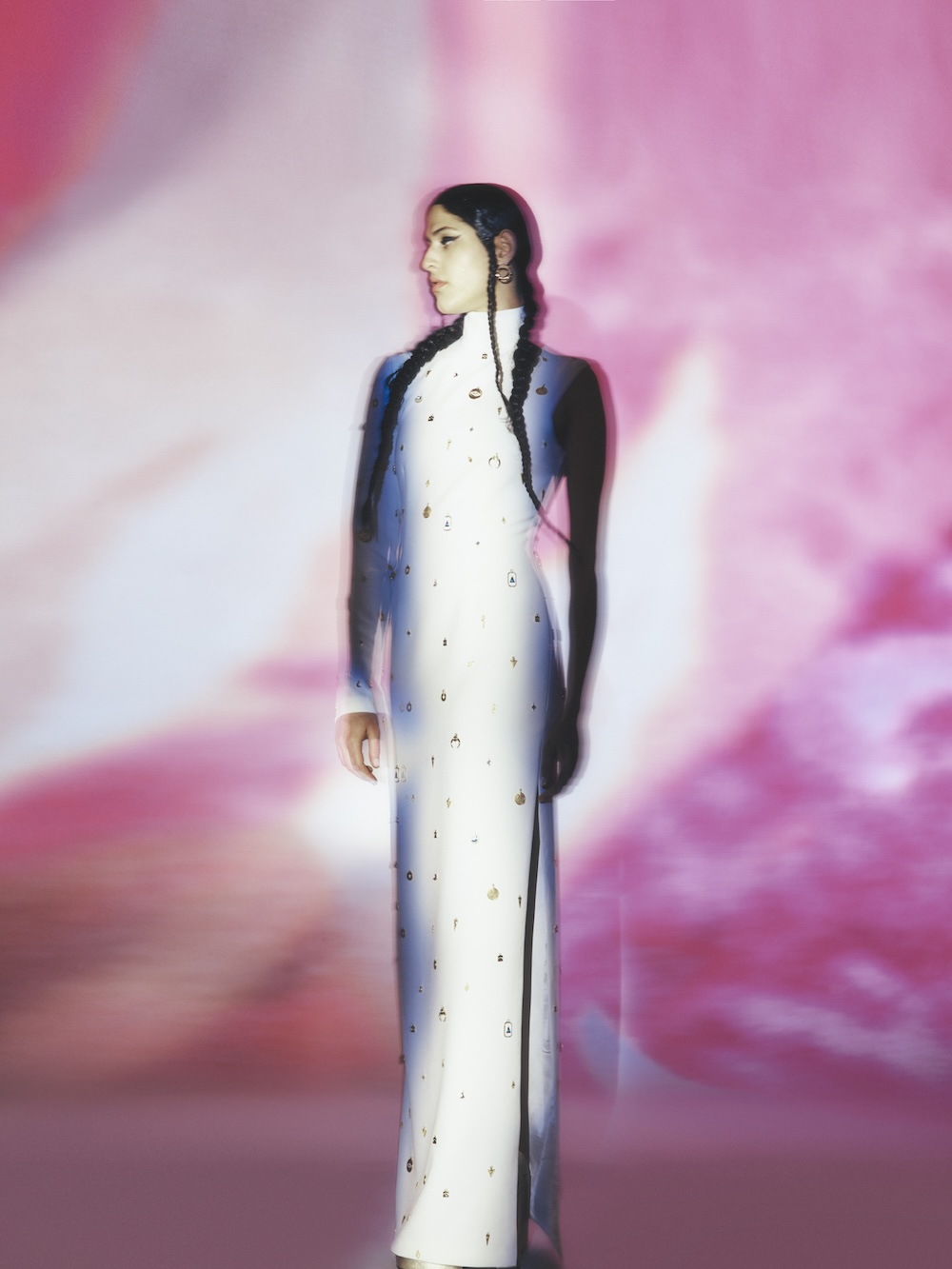
Fashion Trust Arabia Goes To Mayfair, Brings Its Boldest Emerging Designers to London
London has long been a city that absorbs ambition. This June, it absorbed something else entirely: the creative force of a new generation of designers from the Arab world, gathered under the banner of Fashion Trust Arabia for a week of mentorship, retail, and celebration at the very heart of the British fashion establishment.
The week opened on June 2nd with an intimate cocktail reception co-hosted by Megha Mittal and Tania Fares, co-founder and co-chair of Fashion Trust Arabia. The room at Harrods brought together a constellation of names from across fashion and culture — among them Christopher Kane, Harris Reed, Dilara Findikoglu, Hamish Bowles, Nicky Hilton, and Roksanda Ilinčić — all gathered in support of a mission that goes well beyond glamour.

"Supporting emerging talent goes far beyond visibility — it is about creating real opportunities, fostering mentorship, and helping designers build sustainable businesses."
Tania Fares, Co-Founder, FTA
That mission took on tangible form on June 5th, when Harrods — FTA's longstanding retail partner — hosted a breakfast celebrating the in-store launch of four winning collections. It marked the fourth consecutive year that the Knightsbridge institution has opened its doors to FTA's talent, a partnership that continues to offer something rare: genuine commercial access on a global stage.
This year's winners span the full breadth of fashion: Youssef Drissi's Late For Work took the Ready-to-Wear award, Ziyad Buainain claimed Eveningwear, Leila Roukni's Talel won Accessories, and Farah Radwan's FYR was honoured for Jewelry. Their collections are now available both in-store and on harrods.com, reaching an audience that is by definition international.
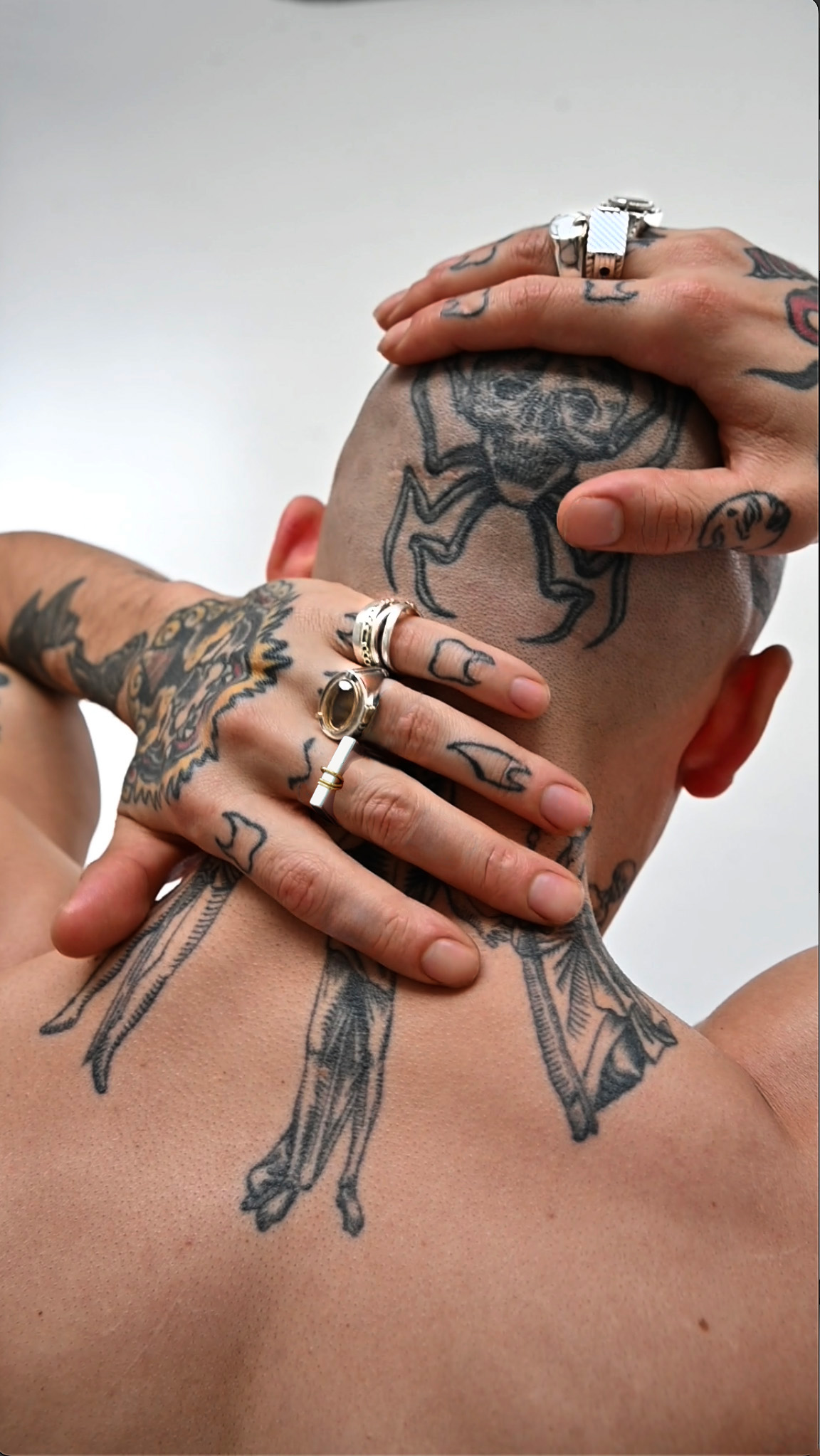
But the week's most lasting offering may have been the mentorship programme that ran from June 2nd to 4th — a series of sessions with voices like Emilia Wickstead, Sabrina Elba, and Kenya Hunt, covering everything from retail strategy and branding to wellbeing and creative development.
Poppy Lomax, Head of Buying at Harrods, put it plainly: the collaboration is not a traditional endorsement. "We want to not only provide a stage to showcase these incredibly deserving designers to our global clientele, but to support them through mentorship and advice as they continue to grow and develop."

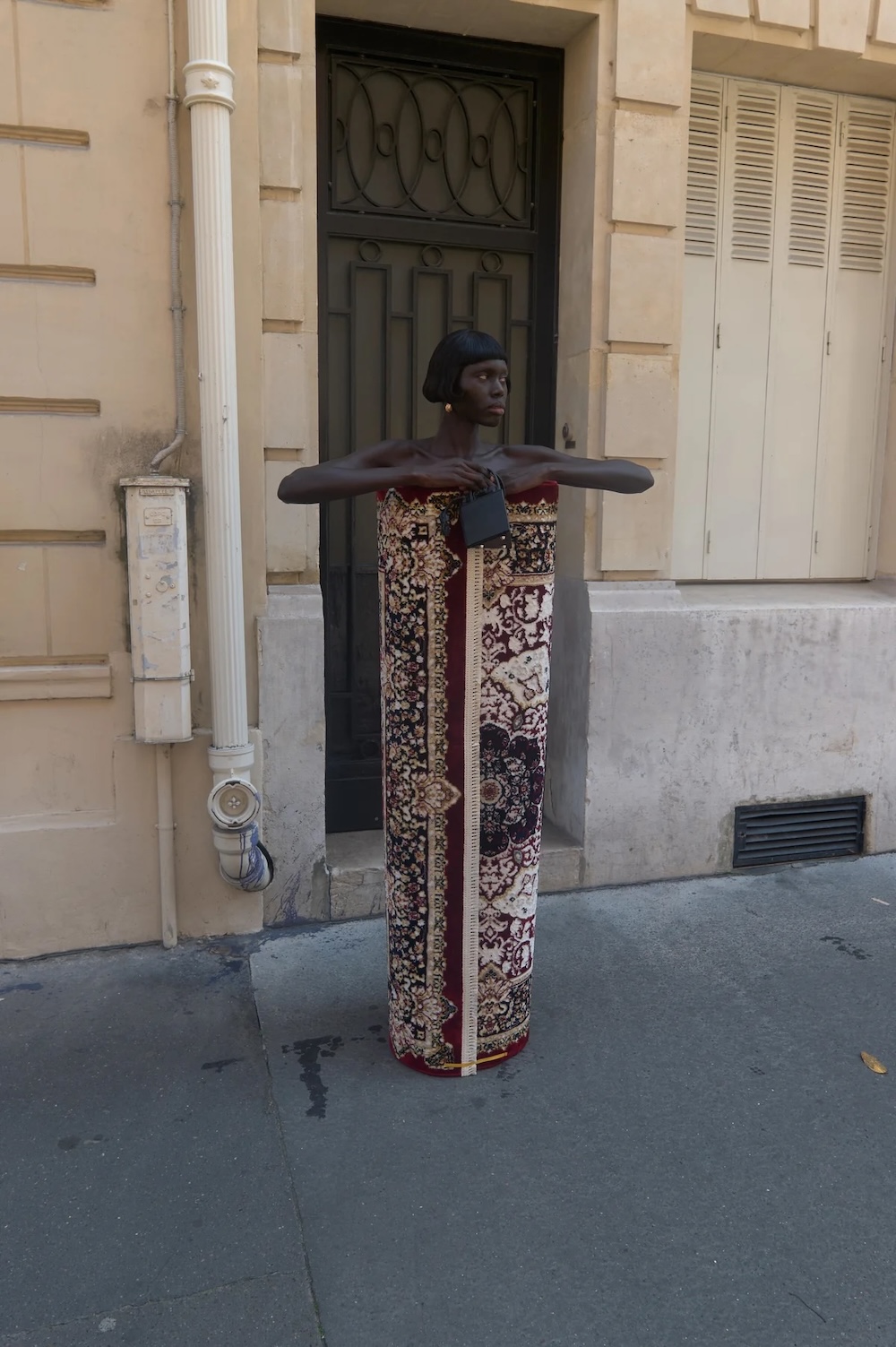
Founded in 2018 as a non-profit dedicated to supporting emerging MENA designers through financial grants and international exposure, FTA has steadily built one of the most meaningful pipelines between regional fashion talent and global industry infrastructure. London 2026 is not a debut — it is a deepening. And for the designers who walked through Harrods' doors this June, the world that awaits is considerably closer than it was before.
More on Fashiontrustarabia.com
.jpeg)
Jihan Opens in Paris, Celebrating African and West Asian Design Through Culture and Community
Paris got itself a new concept store, one that approaches retail not as a destination in itself, but as a starting point for cultural exchange. Launching in Le Marais this June, Jihan arrives with a proposition that feels increasingly relevant in a moment when fashion, design and publishing are becoming inseparable from broader conversations around identity, heritage and community.
Founded by Egyptian duo Mariam El Gendy with Youssef El Sayed as Director of Business Development, the project brings together a carefully curated selection of brands from across Africa and West Asia while creating a space for dialogue through film, literature, music and archival practices.
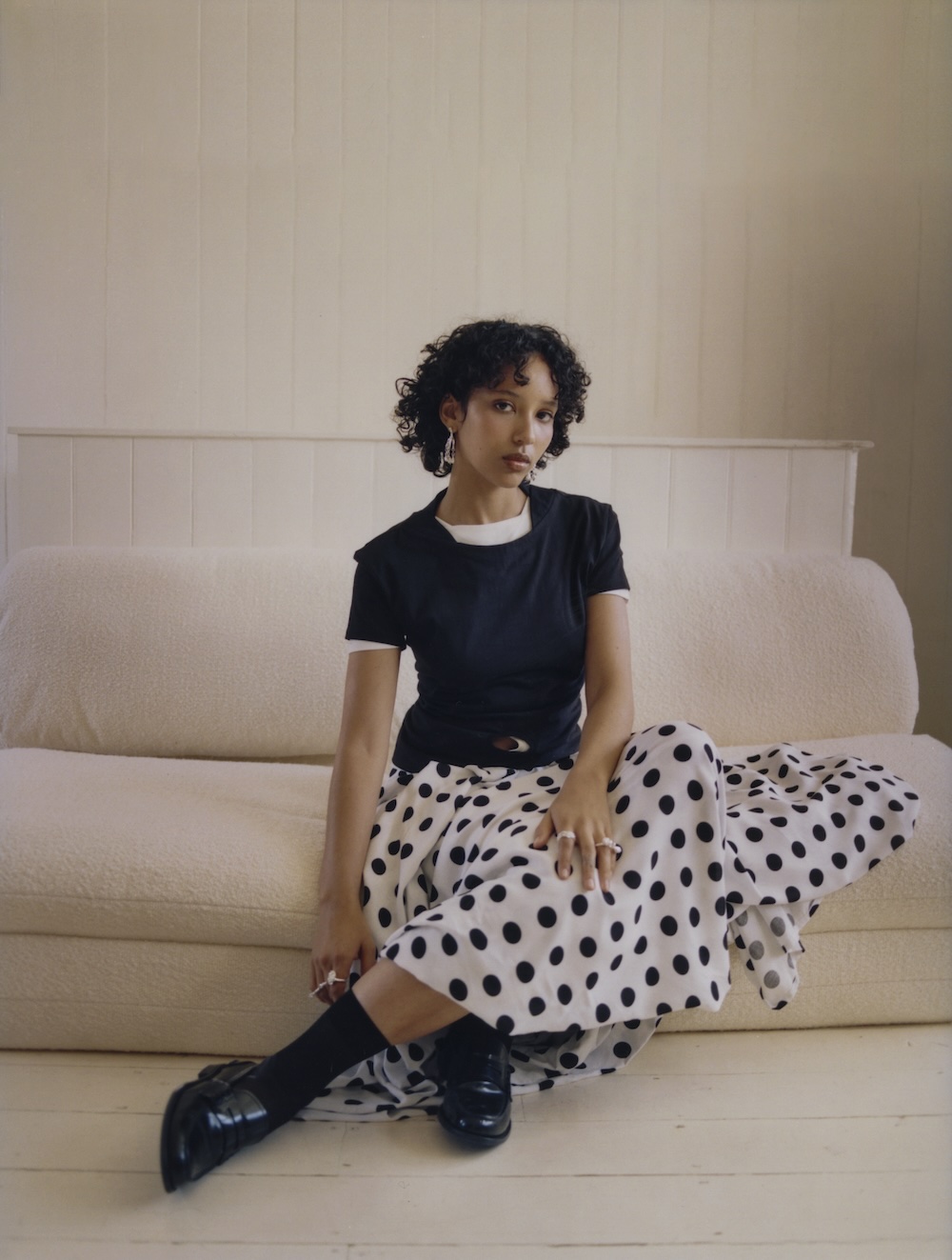
The inaugural edition, titled Chapter I, unfolds as the first installment in what the founders describe as an ongoing city-to-city narrative. Housed in the heart of Paris's Marais district, the space features a mix of established and emerging names spanning fashion, beauty, accessories, jewelry and homeware. Among them are labels including Super Yaya, Renaissance Renaissance, Paria Farzaneh, Rescha, Kotn and Kaia Olive Oil, reflecting a geographic and creative landscape that extends far beyond conventional regional categories.
Photography has always played a central role in shaping cultural memory, and Jihan's visual identity is introduced through a campaign shot by photographer Dexter Navy, whose imagery captures the project's contemporary outlook while remaining grounded in the communities and stories that inspire it.
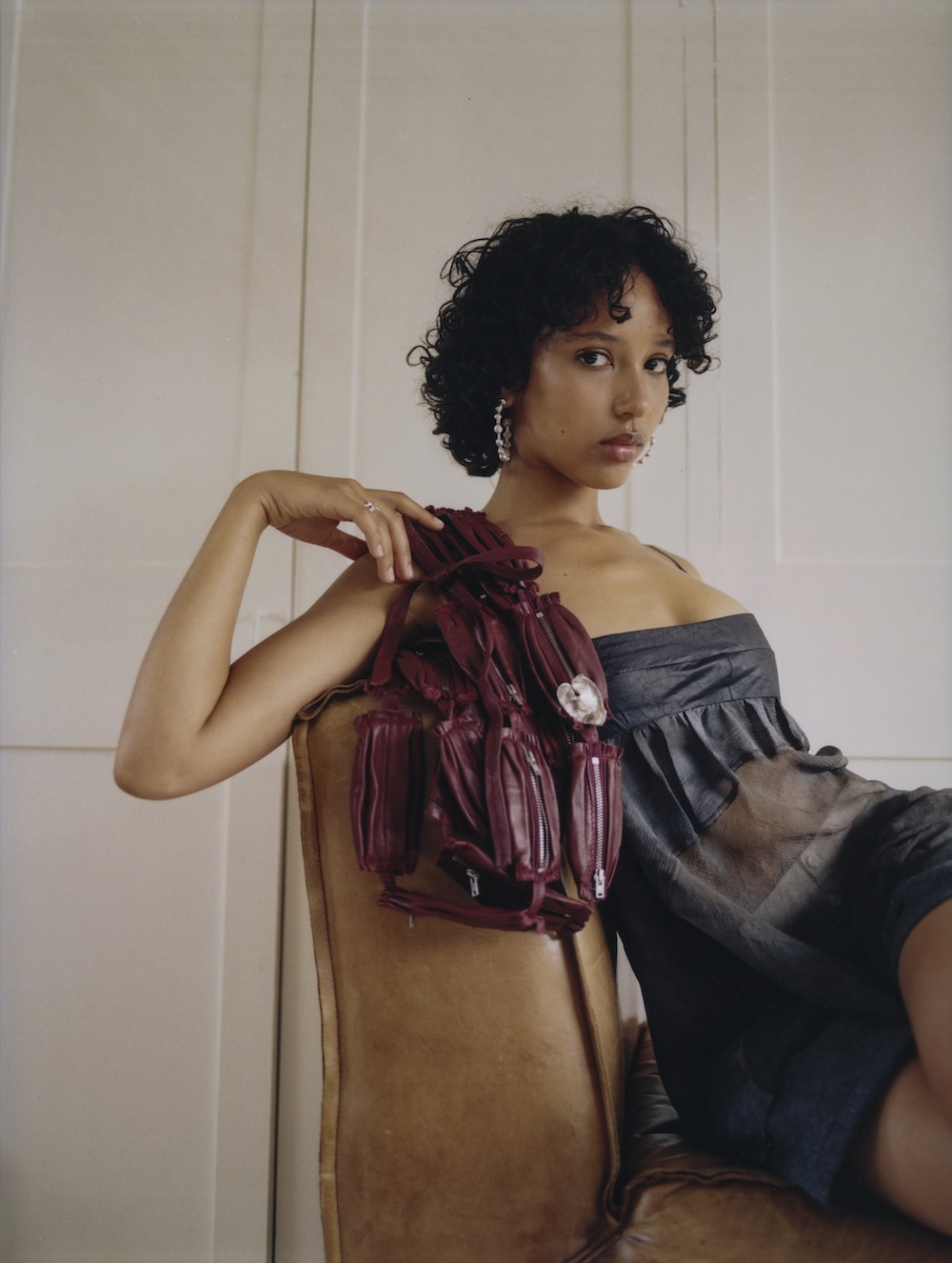
What distinguishes Jihan from many retail concepts is its commitment to programming. Through Worldly Matters by Jihan, the founders transform the space into an active cultural venue, hosting screenings, reading rooms, listening sessions and conversations that engage with questions of memory, migration, history and creative production. The opening month includes a film screening curated by SHASHA Movies examining political and cultural shifts in Egypt, an interactive reading room with HIKMA dedicated to preserving Mesopotamian histories, a residency with STORM Books, and a listening session hosted by London-based DJ and NTS Radio resident Cheb Mimo.

The project also reflects a growing shift among a new generation of founders who see commerce and cultural stewardship as interconnected rather than separate pursuits. From its inception, Jihan has committed five percent of its profits to organizations supporting women's economic independence. For its first chapter, the platform is partnering with Egypt's Misr El Kheir Foundation, supporting women artisans through training programs and sustainable economic opportunities.
For El Gendy, whose background spans documentary and editorial photography, and El Sayed, who works at the intersection of branding and cultural strategy, Jihan feels like the natural evolution of years spent building relationships across creative communities. Rather than presenting African and West Asian creativity through the lens of trend or novelty, the platform approaches these regions as living ecosystems of ideas, craftsmanship and contemporary cultural production.
In a city filled with concept stores, Jihan's ambition is not simply to sell objects. It is to create a space where objects, stories and people can exist in conversation with one another, offering a more expansive view of what retail can become.
Cover/Mariam El Gendy

Your Guide to Supporting Arab Teams at the 2026 World Cup
The last World Cup changed the conversation around Arab football. When Morocco reached the semi-finals in Qatar, becoming the first Arab and African nation to do so, millions of fans across the region experienced something they had never seen before.
It was more than a sporting achievement. It felt like a shift in perception, proof that Arab teams could compete with the very best on football's biggest stage.
Four years later, the region arrives at the World Cup with even greater representation. Eight Arab nations will compete across the United States, Canada and Mexico, each carrying its own ambitions, challenges and storylines. Some arrive with genuine hopes of reaching the latter stages of the tournament. Others are simply thrilled to be making history. Together, they make this one of the most exciting World Cups Arab fans have ever had the chance to follow.
Morocco: Carrying the Region's Expectations
No Arab team enters the tournament under a brighter spotlight than Morocco.
After their historic run in 2022, the Atlas Lions are no longer viewed as outsiders capable of causing the occasional upset. They are now considered one of the strongest teams outside Europe's traditional powerhouses and South America's elite. Their group stage campaign begins with a blockbuster fixture against Brazil before matches against Haiti and Scotland. While reaching another semi-final remains an enormous challenge, few teams will be eager to face Morocco this summer.
Fixtures
- June 13: Morocco vs Brazil
- June 24: Morocco vs Haiti
- June 27: Morocco vs Scotland
Egypt: Salah's Moment
For many fans, Egypt's campaign revolves around one question: can Mohamed Salah finally deliver a defining World Cup performance?
Egypt arrives at this World Cup with a squad that blends experience, emerging talent and one of the most recognisable names in world football.
While Mohamed Salah will inevitably attract much of the attention, this Egyptian side is no longer defined by a single player. Omar Marmoush has established himself as one of Europe's most exciting attacking talents, while a strong domestic core, led by players from Al Ahly and Zamalek, gives the team a level of cohesion that few national sides can match.
Having reached the Africa Cup of Nations semi-finals and navigated a strong qualifying campaign, Egypt arrives in North America with ambitions that extend beyond simply participating. Drawn alongside Belgium, New Zealand and Iran, the Pharaohs will believe they have a genuine opportunity to reach the knockout stages and remind the world why they remain one of African football's most successful nations.
Fixtures
- June 15: Egypt vs Belgium
- June 21: Egypt vs New Zealand
- June 26: Egypt vs Iran
Jordan: The Story Everyone Will Follow
Every World Cup produces a team that captures the imagination of neutral fans and Jordan has all the ingredients to become that team.

Making its first-ever World Cup appearance, Al Nashama arrive after a remarkable rise through Asian football. Led by Mousa Al-Tamari, Jordan enters a group featuring Austria, Algeria and Argentina. The odds may not be in their favour, but history has shown that first-time participants often bring a unique energy to the tournament. If there is one Arab team capable of becoming everyone's second favourite this summer, it might just be Jordan.
Fixtures
- June 16: Jordan vs Austria
- June 22: Jordan vs Algeria
- June 27: Jordan vs Argentina
Algeria: A Team Built for the Big Occasion
Algeria has been handed one of the tournament's most entertaining groups.

A clash against Argentina immediately grabs attention, but the all-Arab encounter against Jordan could prove equally fascinating. The Desert Foxes arrive with a talented squad, plenty of World Cup experience and the type of passionate support that can transform any stadium into home territory. If they can navigate a difficult group, they have the quality to trouble stronger opponents in the knockout rounds.
Fixtures
- June 16: Algeria vs Argentina
- June 22: Algeria vs Jordan
- June 27: Algeria vs Austria
Saudi Arabia: Never Underestimate Them
Saudi Arabia learned in Qatar that one result can become part of football history forever.

Their stunning victory over Argentina remains one of the greatest World Cup upsets ever recorded, and while recreating that moment will not be easy, the Green Falcons have shown they thrive when expectations are low. Drawn alongside Uruguay, Spain and Cape Verde, Saudi Arabia faces a difficult road but remains one of the region's most experienced World Cup nations.
Fixtures
- June 15: Saudi Arabia vs Uruguay
- June 21: Saudi Arabia vs Spain
- June 26: Saudi Arabia vs Cape Verde
Qatar: Building on Experience
Qatar returns to the World Cup with a very different perspective than it had in 2022.

Back then, the pressure of hosting weighed heavily on the team. This time, they arrive as experienced participants looking to build on what they learned during that historic tournament. Matches against Switzerland, Bosnia and Herzegovina and Canada offer a genuine opportunity to compete for qualification.
Fixtures
- June 13: Qatar vs Switzerland
- June 24: Qatar vs Bosnia and Herzegovina
- June 27: Qatar vs Canada
Tunisia: The Tournament Specialists
Tunisia rarely receives the same attention as some of its neighbours, yet it continues to qualify for major tournaments with remarkable consistency.

The Eagles of Carthage have built a reputation as one of Africa's most resilient sides and will once again look to frustrate more fancied opponents. Their matches against Sweden and the Netherlands could produce some of the tournament's most intriguing surprises.
Fixtures
- June 14: Tunisia vs Sweden
- June 20: Tunisia vs
- June 25: Tunisia vs Netherlands
Iraq: A Long-Awaited Return
Few stories will resonate across the Arab world quite like Iraq's return to football's biggest stage.

Drawn against France, Norway and Senegal, Iraq faces one of the toughest groups in the competition. Yet for many supporters, qualification itself already feels like a victory. The opportunity to see Iraq back among the world's elite after years of challenges gives their campaign a significance that extends far beyond football.
Fixtures
- June 16: Iraq vs Norway
- June 22: Iraq vs France
- June 26: Iraq vs Senegal
The Matches You Shouldn't Miss
While every fixture carries importance, a handful already stand out as must-watch events.
Morocco versus Brazil will provide an early indication of whether the Atlas Lions can repeat their heroics from Qatar. Egypt versus Belgium offers Salah a chance to make a statement against one of Europe's strongest sides. Jordan versus Algeria guarantees an emotional all-Arab encounter, while Saudi Arabia versus Spain promises another opportunity for a giant-killing performance.
And then there is Jordan versus Argentina.
A first-time World Cup participant facing the reigning world champions is exactly the kind of fixture that reminds us why people fall in love with football in the first place.
Whether you're supporting your home nation, following your favourite players or simply looking for an underdog to adopt for the summer, Arab football will have no shortage of stories worth following over the next six weeks.
A Small Pouch With a Bigger Purpose: How Sorbē, Creative Space Beirut and Phenomenal Women Came Together
Some of the most meaningful objects are the ones that come with a story. The kind rooted in real people, real communities and a shared belief that creativity can create opportunity.That's what drew us to Nour Arida's Sorbē's latest collaboration with Creative Space Beirut and Phenomenal Women.
At first glance, it's a pouch: beautifully made, practical and designed to hold your everyday essentials. But spend a little time learning about how it was made, and it quickly becomes clear that it represents something much bigger. The project brings together three organisations that, while operating in different spaces, share a common belief in the power of education, craftsmanship and economic independence.
For many people in Lebanon's creative community, Creative Space Beirut has become one of the country's most inspiring success stories. Founded as a free fashion school, it was built on a simple but powerful idea: talent should never be limited by circumstance, social class or financial means. Over the years, the school has helped launch the careers of some of Lebanon's most promising young designers, creating opportunities that might not otherwise have existed.
The pouch was produced by Creative Space Beirut alumna Aline Seukunian and her team, a detail that feels particularly meaningful. It is a reminder that education has a ripple effect. What begins in a classroom can become a career, a business or a way for someone to support themselves and those around them.
The collaboration also shines a light on the work of Phenomenal Women, an initiative supporting women who have survived violence and sexual violence as they rebuild their lives through employment and financial independence. Their involvement adds another layer to the story, highlighting the importance of creating opportunities that extend beyond immediate support and contribute to long-term stability and empowerment.
For Sorbē, the skincare brand built by Lebanese entrepreneur Nour Arida around the idea of care, the partnership feels like a natural extension of its values.
"We believe financial independence is a right, not a luxury," reads the message accompanying the project. "It means safety, choice and dignity."
It's a sentiment that resonates particularly strongly today. In a region where many women continue to face economic and social barriers, access to education, fair pay and meaningful work remains transformative.
What we love most about this collaboration is that it doesn't position impact as an abstract concept. You can see exactly where the support goes and you can directly see the people involved: there's a clear understanding of the chain of hands behind the final product.
In an era of endless consumption, there is something refreshing about buying an object that carries genuine meaning. As the note tucked inside each pouch explains, "This is a pouch. And it carries a story of women building their own ground to stand on."
That's a story worth carrying.
Arab Cinema Week Returns to Dubai With Perhaps Its Most Personal Edition Yet
Every year, Arab Cinema Week arrives as a reminder of just how rich and varied contemporary Arab filmmaking has become. While mainstream conversations around the region often remain dominated by politics and conflict, the films selected by Cinema Akil continue to reveal something far more nuanced: deeply personal stories about family, love, memory, displacement, resilience and the everyday realities that shape life across the Arab world.
Returning to Cinema Akil from June 5 to 11, Arab Cinema Week celebrates its fifth edition with a programme that feels particularly timely. Bringing together nine films from ten Arab countries, this year's selection is united by a common thread: an exploration of memory, both personal and collective, and the ways in which individuals continue to navigate identity and belonging amid social, political and emotional upheaval.

What makes this year's programme especially compelling is its strong focus on Lebanese cinema. Several of the featured films engage directly with questions that have long occupied Lebanese artists and filmmakers: how do we preserve memory in a country shaped by repeated cycles of loss, transformation and reinvention? How do we document stories that risk disappearing? And what role can cinema play in safeguarding fragments of personal and collective history?
Lana Daher's Do You Love Me? offers one answer. Constructed through more than seventy years of found footage, home movies and archival material, the documentary pieces together an intimate portrait of Beirut while simultaneously reflecting on the absence of official archives and the fragile nature of cultural memory itself. Nicolas Khoury's Souraya, Mon Amour approaches remembrance through a more personal lens, following actress and dancer Souraya Baghdadi as she revisits her life with the late filmmaker Maroun Baghdadi, one of Lebanon's most influential cinematic voices. Meanwhile, Cyril Aris' A Sad and Beautiful World brings the conversation into the present, exploring love, uncertainty and the difficult choices facing a generation attempting to build a future in contemporary Beirut.
The programme's interest in memory extends far beyond Lebanon. Across the selection, filmmakers repeatedly return to questions of inheritance, whether political, emotional or cultural. In My Father and Qaddafi, director Jihan K. transforms her search for answers surrounding her father's disappearance under Muammar Qaddafi's regime into a deeply personal investigation into grief, justice and intergenerational trauma. Zain Duraie's Sink examines the emotional strain placed on a family confronting mental illness, while Calle Malaga, directed by Maryam Touzani, reflects on ageing, autonomy and the emotional ties that bind people to places they have called home for decades.
One of the most significant aspects of this year's edition is its spotlight on Sudanese storytelling. At a time when Sudan's cultural production deserves greater visibility, both Khartoum and Cotton Queen offer audiences an opportunity to engage with stories emerging directly from Sudanese experiences. While Khartoum presents a portrait of a city navigating revolution, conflict and uncertainty through the lives of its residents, Cotton Queen follows a young girl confronting questions of tradition, development and self-determination within a rural community. Together, the films reflect the diversity of Sudanese narratives and the growing strength of its cinematic voice.
The festival's visual identity also deserves attention. Created by Lebanese artist Adra Kandil, this year's artwork feels almost cinematic in itself. Built around fragments of Beirut's past and viewed through the windshield of a moving car, the image weaves together archival references, vintage photography and urban landscapes to create a meditation on longing, displacement and return. The iconic Rivoli Cinema anchors the composition, transforming the poster into both a tribute to Beirut's cinematic history and a reflection on the role cinema continues to play in preserving collective memory.

Five years after its launch, Arab Cinema Week has evolved into far more than a film programme. It has become an important meeting point for filmmakers, artists and audiences interested in the stories shaping the region today. As Cinema Akil founder Butheina Kazim notes, it has grown into "a living archive of the region's cinematic voice," creating a space where conversations can continue long after the credits roll.
At a moment when so many filmmakers across the Arab world are interrogating questions of identity, memory and belonging, this year's programme feels particularly resonant. These are films that ask audiences to look closely, to listen carefully and to engage with the complexities of lived experience. More importantly, they remind us that some of the region's most powerful stories are often found not in grand narratives, but in the intimate details of everyday life.
More on CinemaAkil.com
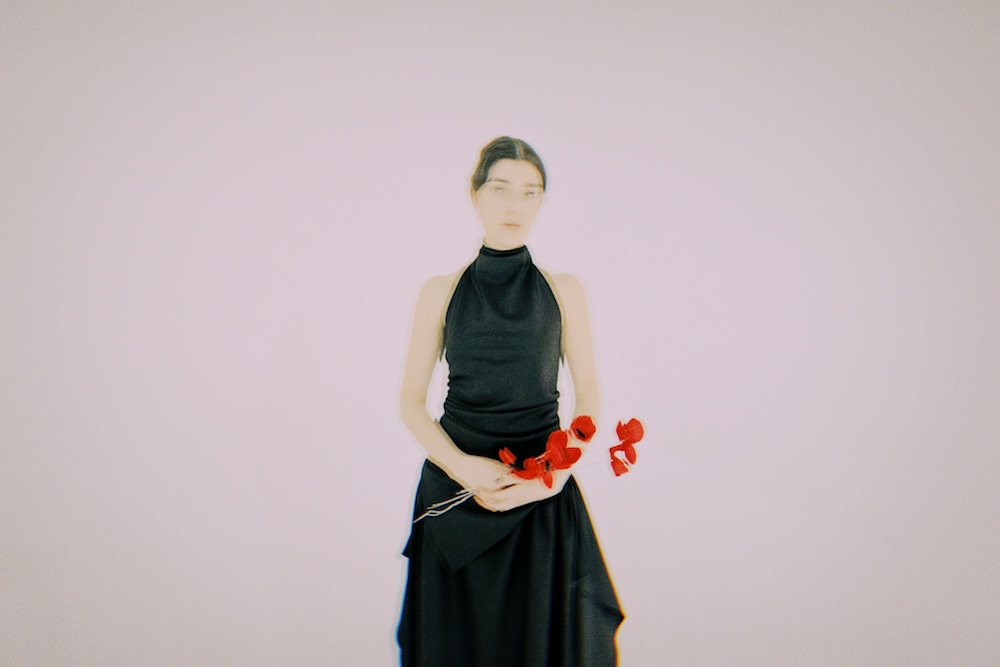
AMER’s ‘Bittersweet’ Captures the Emotional Landscape of Lebanon Today
To understand AMER’s latest collection, you first have to understand where it was created. Designed in Lebanon during a period marked by war, displacement and uncertainty, Bittersweet is deeply rooted in the emotional realities of everyday life.
The Fall/Winter 2026/27 collection reflects a country living between grief and hope, exhaustion and resilience, asking what it means to continue creating, dreaming and preserving identity when everything around you feels fragile.
Created by Lebanese designer Ahmed Amer, the collection explores bitterness as an honest reflection of lived experience. Fear, loss, anger and emotional weight are all present throughout the work. Yet sweetness remains there too, appearing in quieter ways through memory, connection, beauty and the determination to keep moving forward. As the designer describes it, the collection exists in the space between voice and echo, mourning and hope, erasure and remembrance.
Rather than offering escapism, Bittersweet feels like a reflection of contemporary Lebanon itself.
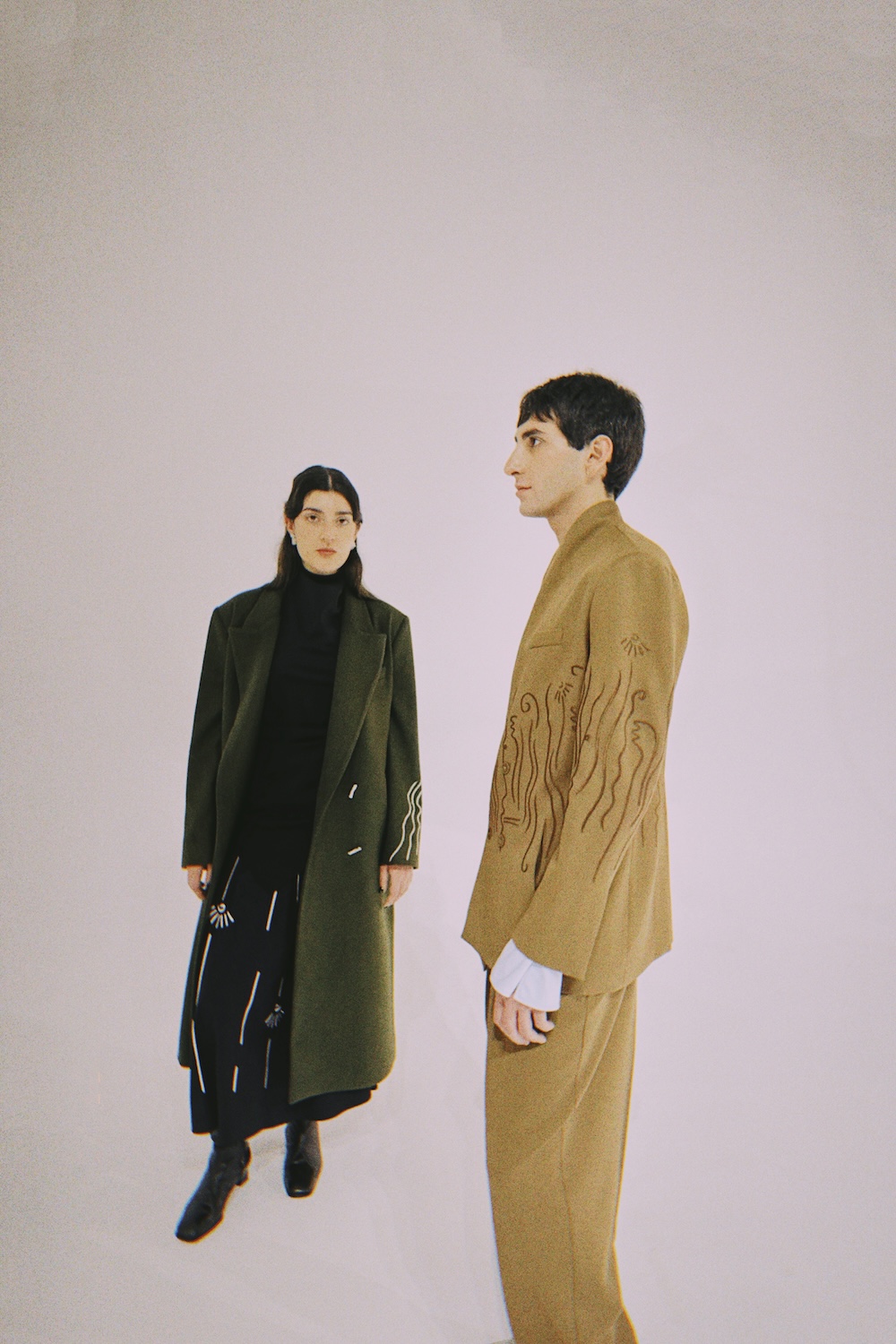
The collection draws from the visual language of daily life. Cigarette smoke lingering outside cafés, the ritual of coffee, olives shared around a table, rusted architecture, dark nights, shadows, tattoos and dreams all become references woven into the garments. The colour palette mirrors that emotional landscape, moving through earthy tones, deep reds, ash-like hues and shades inspired by Beirut’s streets and skies.
At the centre of the collection are poppy flowers, a symbol that carries particular significance throughout the work. Blooming across the landscapes of South Lebanon, they represent remembrance, fragility, healing and the persistence of beauty despite loss.
The motif extends beyond the clothes themselves into the accompanying imagery, developed in collaboration with Lebanese photographer and visual artist Nasri Sayegh. Together, the two creatives built a poetic visual narrative around the collection, allowing the flowers to take on multiple emotional meanings.
“Through these images, Nasri expressed his own position and emotions, playing around with poppy flowers as symbols of loss, anger, love, bitterness and sweetness,” Amer explains.
Their collaboration is rooted in a shared history that predates the collection itself. The pair first met during the Beirut revolution in 2019, a moment that shaped an entire generation of Lebanese artists, designers and photographers.
“Looking back now, I feel it was the beginning of a beautiful connection and understanding between us,” says Amer.
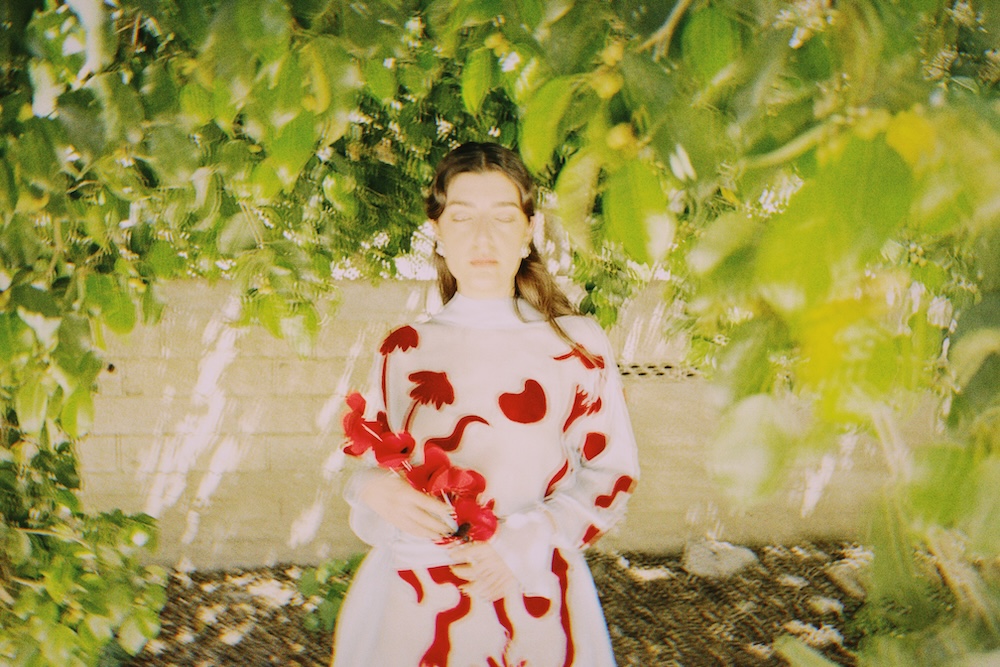
That mutual understanding is visible throughout the campaign. The images feel intimate and deeply personal, capturing the emotional tension that runs through the collection while leaving room for interpretation. Rather than illustrating the garments, they expand the story behind them.
Craftsmanship also plays a central role in Bittersweet. Levantine straight-stitch embroidery, patchwork and colour blocking are used throughout the collection as tools for storytelling. Layering becomes a metaphor for preservation and reconstruction, reflecting the fragmented realities that inspired the work while celebrating regional techniques that continue to be passed down through generations.
The collection itself unfolds in two chapters.
The first was developed before the war intensified, shaped by a quieter form of bitterness that had already become embedded within daily life. It speaks to emotional numbness, unanswered questions and the routines people create to navigate uncertainty. The second chapter emerged after the escalation of conflict, when displacement, loss and collective grief transformed the emotional framework of the collection entirely. What began as a personal reflection evolved into something much broader, carrying the weight of shared experience and collective memory.
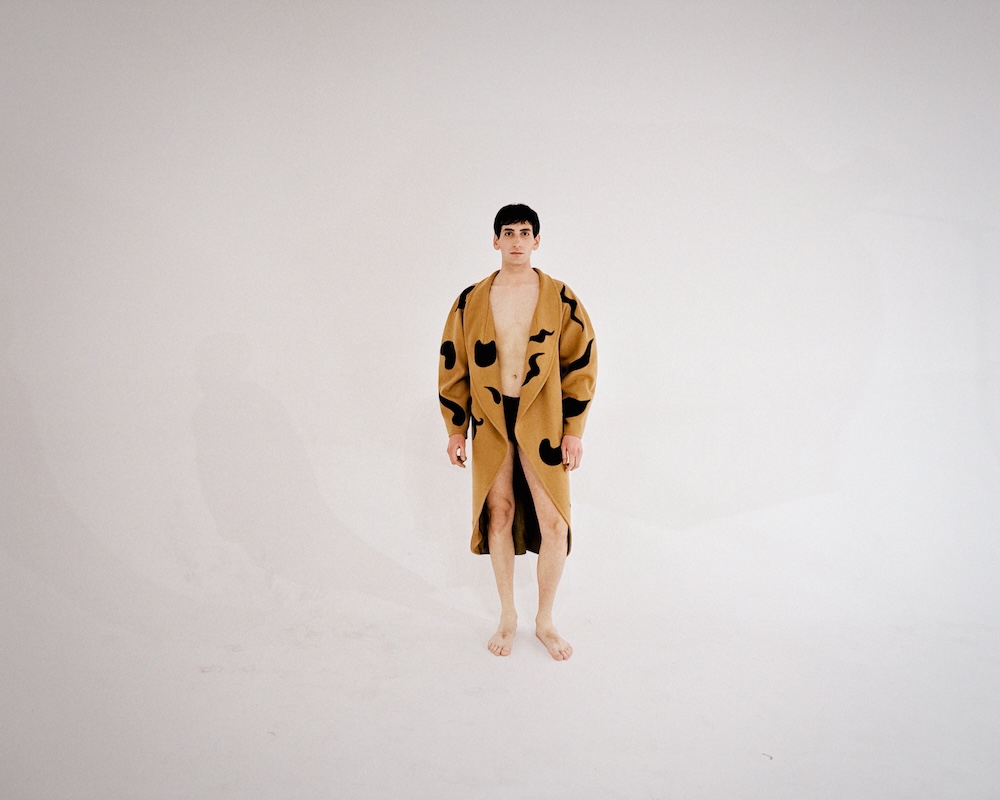
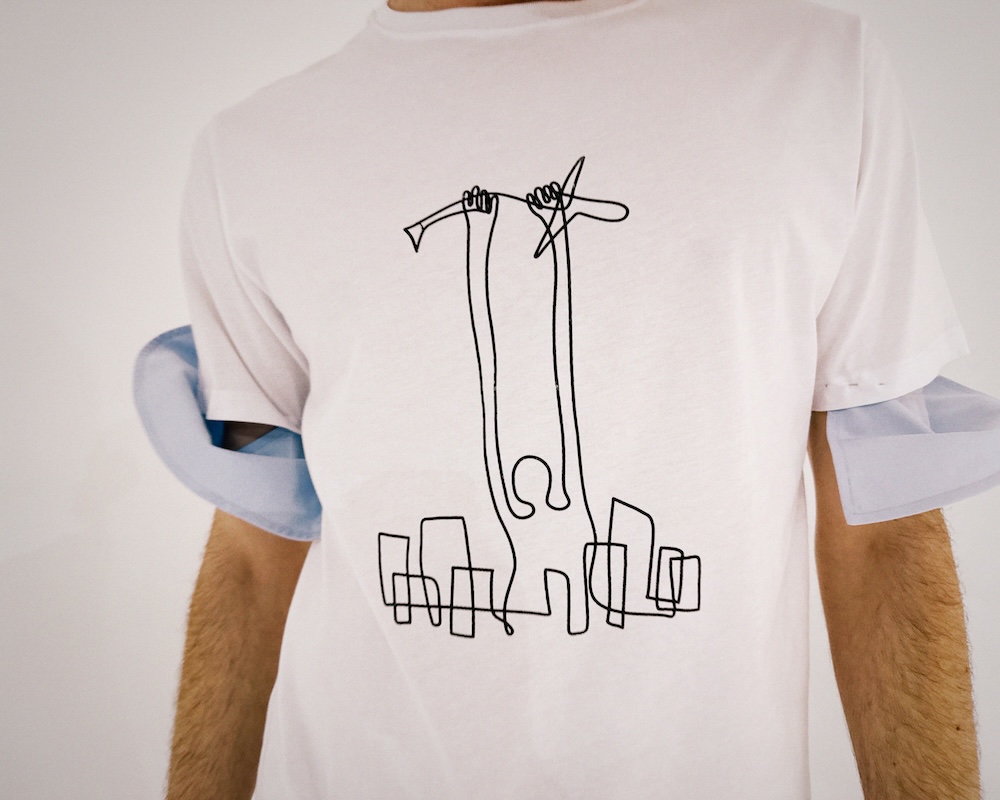
What makes Bittersweet resonate is its refusal to simplify those emotions.
The collection acknowledges contradiction as part of everyday life. It understands that grief and hope often coexist. That resilience can exist alongside exhaustion. That preserving culture and identity sometimes begins with something as simple as continuing to create.
In a fashion landscape increasingly driven by speed and spectacle, Bittersweet feels refreshingly sincere. It documents a moment, a place and an emotional reality with honesty, creating space for reflection rather than distraction.
For AMER, fashion becomes more than clothing. It becomes a way of remembering, preserving and bearing witness.
More on Amer.co.lb

The Burn Room Wants to Change the Way Abu Dhabi Thinks About Fitness
For years, wellness was marketed as a destination. A number on a scale. A before-and-after photo. A challenge completed in 30 days. Today, the conversation feels very different.
People are talking about nervous system regulation, recovery, sleep quality and longevity with the same enthusiasm they once reserved for calorie counts and cardio sessions. Wellness is becoming less about chasing an aesthetic and more about building a life that feels sustainable.
Among them is The Burn Room, the design-led wellness studio founded by Emirati entrepreneurs Meerah Al Matrooshi and Alia Al Mazrouei. Since opening in late 2025, the concept has introduced a new approach to boutique fitness in the UAE, combining Lagree, Hot Pilates, Hot Yoga and integrated red light therapy under one roof.
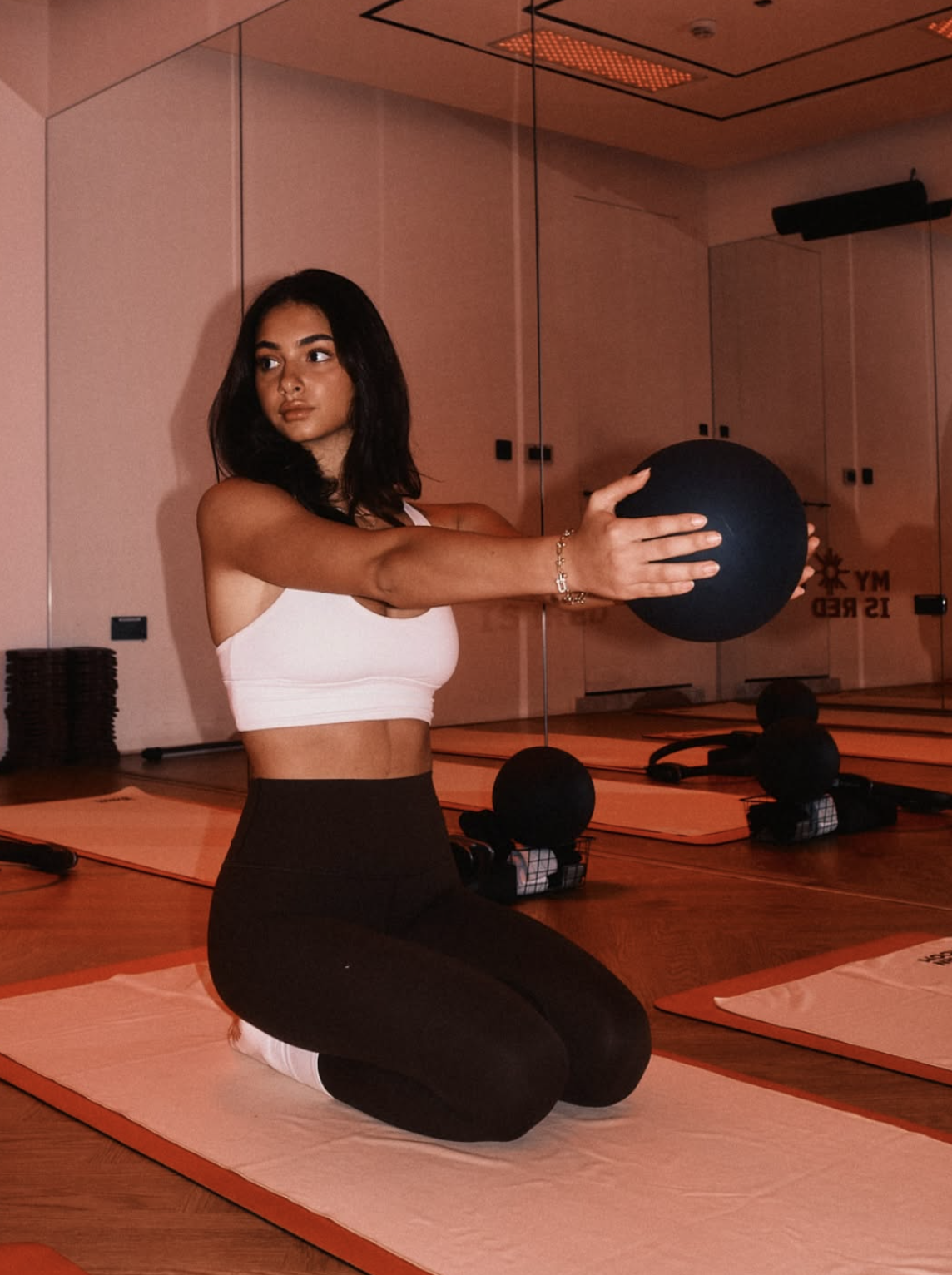
"Abu Dhabi has evolved tremendously over the past few years," the founders tell JDEED. "There is a much deeper awareness around wellness now, not just aesthetically, but holistically. People are becoming more intentional about how they move, recover and take care of themselves long term."
That evolution is impossible to ignore.
Across the UAE, wellness has become one of the fastest-growing sectors, with new concepts emerging almost weekly. Yet many continue to focus primarily on intensity, pushing harder, sweating more and chasing visible results as quickly as possible.
The Burn Room takes a different approach. "We felt there was space for a concept that blended high-performance training with recovery in a way that felt elevated, immersive and sustainable," the founders explain. "The Burn Room was created for people who want to challenge themselves, but also understand the importance of restoration and balance."
What makes the concept particularly interesting is that recovery isn't treated as something separate from the workout itself. It's built directly into the experience.
While red light therapy has become increasingly popular among beauty enthusiasts, athletes and wellness insiders for its potential benefits on circulation, recovery and skin health, The Burn Room integrates it into the training environment rather than positioning it as a standalone treatment.
For the founders, that decision was intentional.
"Recovery is often treated as an afterthought in the fitness industry, but we saw it as something equally important to performance itself," they say. "We wanted people to experience intensity and restoration simultaneously."
It's a philosophy that reflects a wider shift happening throughout the wellness world. The most forward-thinking concepts are no longer asking people to choose between performance and recovery. They're recognising that one cannot exist sustainably without the other.
"Modern wellness is becoming more intelligent, more intentional and more sustainable," the founders explain. "Red light therapy aligned naturally with our philosophy because it supports recovery, circulation, muscle repair and overall wellbeing."
For beauty enthusiasts in particular, the overlap feels especially relevant. The growing conversation around wellness increasingly recognises that healthy skin, energy levels, recovery, stress management and movement are deeply interconnected rather than existing as separate categories.
Yet perhaps the most interesting thing about The Burn Room has little to do with technology.
It has to do with mindset.
"Modern wellness is becoming more intelligent, more intentional and more sustainable,"
From the beginning, the founders never intended to create another boutique fitness studio focused solely on physical transformation: "the Burn Room was never meant to be just another fitness studio," they say. "We wanted to create a space that people emotionally connected to."
That emotional connection sits at the centre of the experience. "Movement impacts confidence, mental clarity, discipline and energy just as much as it impacts the body physically," they explain. "There is something incredibly powerful about walking into a space that shifts your mindset the moment you enter."
It's a perspective that resonates strongly with how wellness is evolving globally. Increasingly, people are seeking spaces that support their mental wellbeing alongside their physical health. "The emotional aspect of wellness was always central to the vision because we believe strength starts internally before it becomes visible externally."
That philosophy extends to the community they are building; while many fitness concepts focus heavily on performance metrics, The Burn Room's founders speak just as passionately about connection: "community and connection were always at the core of what we were building," they say. "We wanted to create a space where people feel supported, motivated and genuinely connected to one another through movement and shared experience."
They describe a culture built around consistency rather than competition. "There is something very powerful about walking into a room where everyone is pushing themselves together, encouraging each other and showing up consistently, not just for fitness, but for themselves."
Perhaps that's why concepts like The Burn Room feel particularly relevant right now: the future of wellness isn't necessarily harder workouts, stricter routines or more extreme transformations but it may simply be a more balanced relationship with movement itself.
One where recovery matters as much as performance, where strength includes resilience and where wellness becomes about creating a lifestyle people can actually sustain.
More info on Instagram, @burnroom.ae
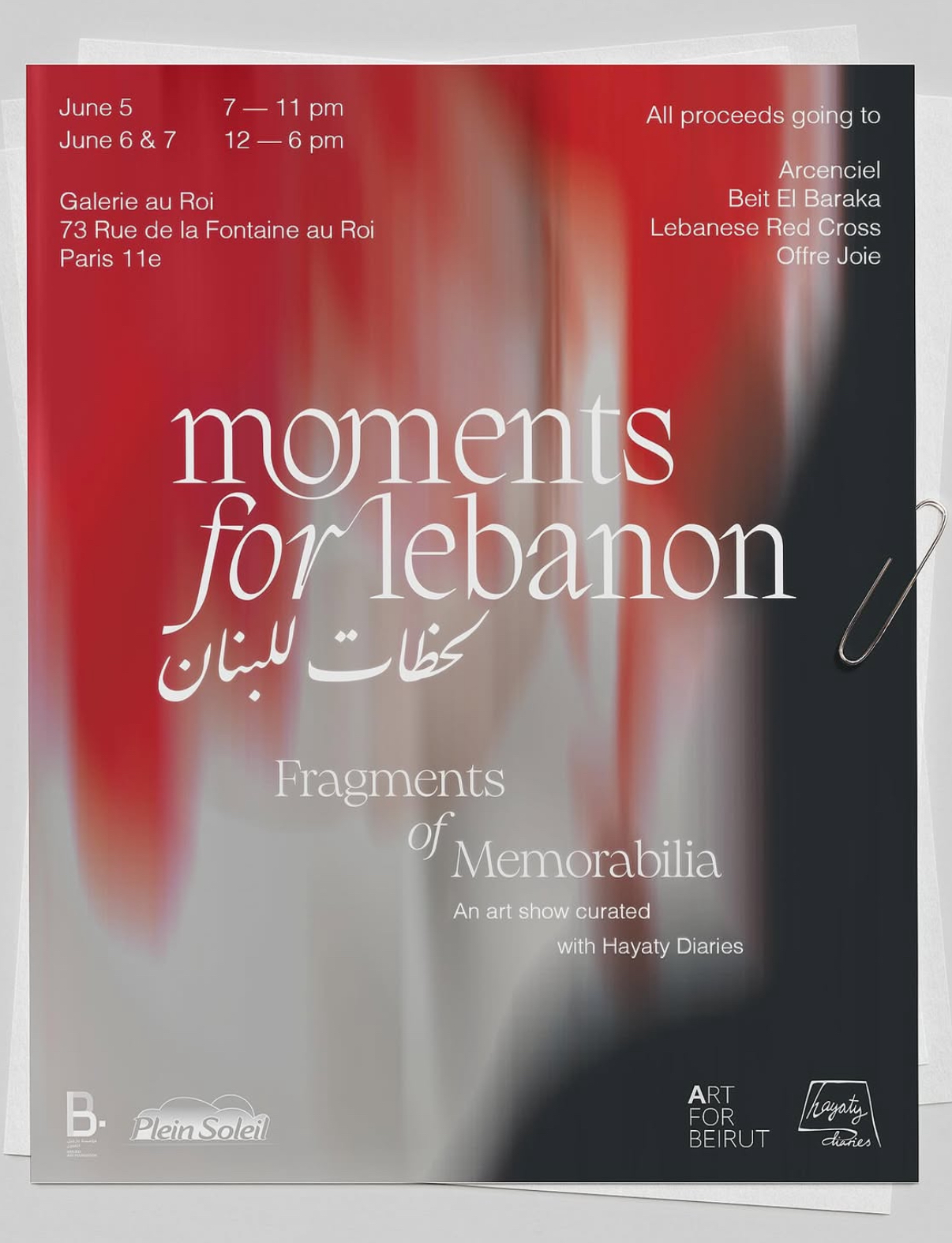
Moments for Lebanon Returns to Paris, Turning Art Into an Act of Solidarity
For many Lebanese living abroad, home rarely exists as a single place. It lives in fragments, in a family photograph or perhaps in a scent that instantly transports you back to childhood.
Sometimes it exists through a familiar song playing unexpectedly in another city. A conversation, a recipe, a building, a memory. Pieces collected over time and carried across borders.
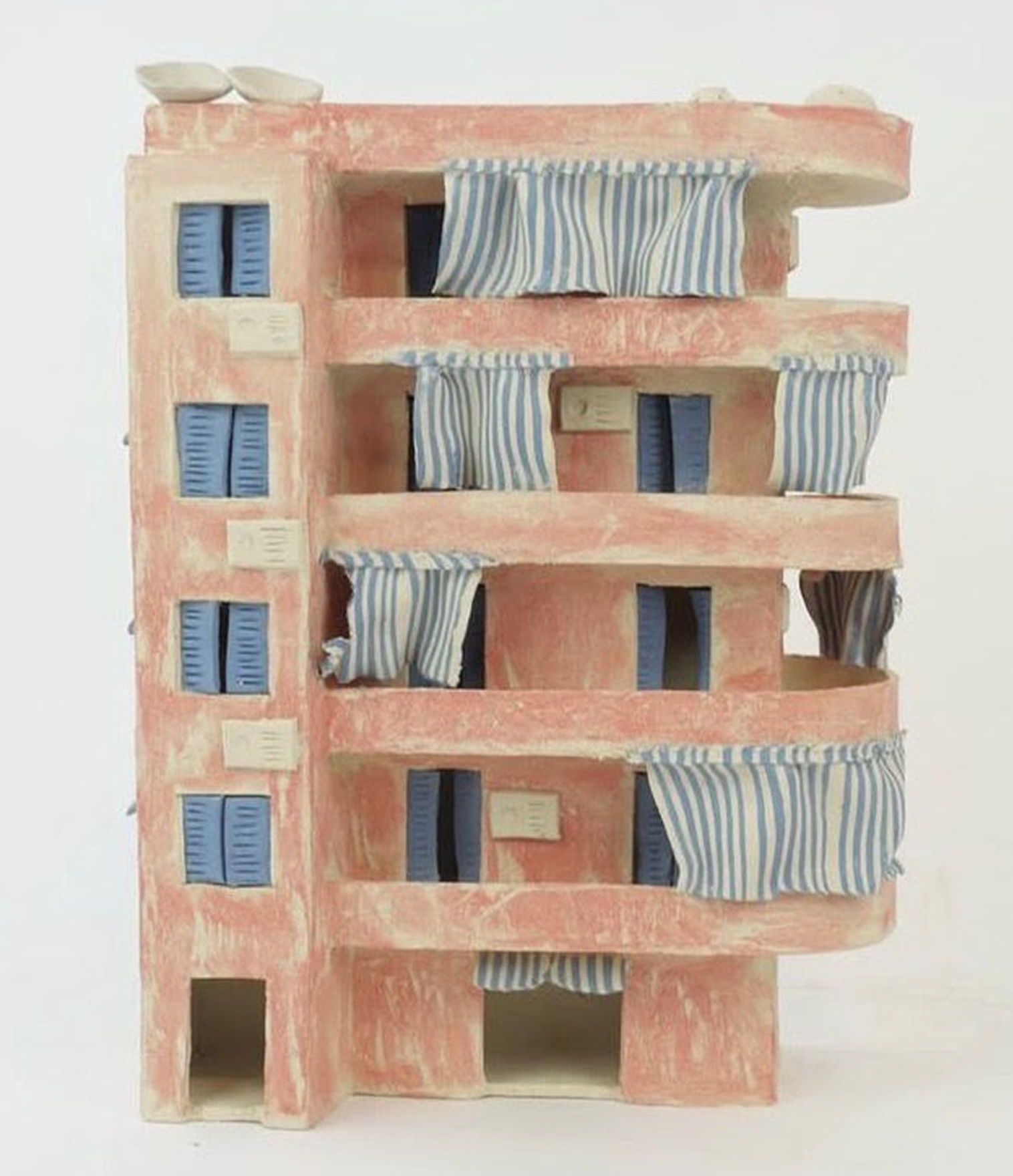
That idea sits at the heart of Moments for Lebanon, the Paris-based art and humanitarian initiative returning this June for its second edition. Bringing together artists, collectors and members of the Lebanese diaspora, the event uses art as a way to support communities in Lebanon while creating space for reflection on memory, identity and belonging.
Following a successful first edition in 2024, which welcomed around 1,000 visitors and raised €73,000 for Lebanese charities, Moments for Lebanon is once again transforming creativity into collective action. This year's edition will take place from June 5 to 7 at Galerie Au Roi in Paris' 11th arrondissement.
The exhibition, titled Fragments of Memorabilia, explores the ways in which memory shapes our understanding of home. For those living between countries, cultures and identities, belonging is often fluid rather than fixed. It can be found in objects, rituals, language, architecture, photographs and emotions that remain long after physical distance has set in.
It's a theme that feels particularly resonant for Lebanon and its global diaspora.
More than 90 artists from around the world will participate in this year's exhibition, contributing over 140 works spanning photography, painting, illustration, installation and mixed media.
Among the participating artists are names including Joana Hadjithomas and Khalil Joreige, Dima Srouji, Zena Assi, Tom Young, Diana Bou Salman, Yasmina Hilal and many others whose practices explore questions of place, memory and cultural identity.
The sale will also feature works by acclaimed photographers Fouad El Khoury and Rania Matar, whose work has long documented the complexity, beauty and emotional landscape of Lebanon and its people.
At the centre of the exhibition is a collective installation titled Fragments, bringing together more than 100 small-scale works into a single composition. Individually, each piece tells its own story. Together, they create a visual conversation about memory, displacement, resilience and home.
Visitors will also be able to purchase larger works, with the exhibition extending beyond the gallery through live programming and performances throughout the weekend. Following the event, the catalogue will remain available online for two additional months, allowing supporters around the world to continue contributing to the initiative.
What makes Moments for Lebanon particularly meaningful is that every artwork sold carries an impact beyond the gallery walls. All proceeds from the exhibition will support four organisations providing essential humanitarian assistance across Lebanon: Beit El Baraka, Lebanese Red Cross, arcenciel and Offrejoie.
Together, these organisations provide food assistance, healthcare, shelter, disability support, education and emergency relief to vulnerable communities affected by displacement and ongoing instability throughout the country.
At a time when headlines move quickly and attention often shifts elsewhere, initiatives like Moments for Lebanon serve as a reminder that solidarity can take many forms. Sometimes it looks like a donation, sometimes ike a photograph and sometimes it looks like a room filled with people who may live thousands of kilometres away from Lebanon but continue to carry pieces of it with them every day.
That is what we believe makes this exhibition so moving: it reminds us that memory is not passive but is something we preserve, share and pass on. Through art, those fragments become stories. Through community, those stories become action. And through collective effort, they become hope.
More on Instagram, @Moments_____forlebanon
The Dubai Nail Spot Beauty Girls Can’t Stop Talking About
At some point over the last few years, nail appointments stopped being simple beauty maintenance and became an entire personality trait.
Girls are planning vacation nails months in advance. Pinterest boards are filled with chrome finishes, Japanese manicures and hyper-specific shades described as things like “espresso martini brown” or “rich girl nude.” Entire TikTok feeds are now dedicated to close-up videos of hands holding matcha lattes purely to show off nail art.
And let's be real, Dubai might be one of the cities taking nails the most seriously right now...which explains why March14 Residence has developed such a loyal following among beauty obsessives in the city.
Founded by celebrity beauty expert Ruby Barreau, the space feels less like a traditional salon and more like entering the beauty girl version of a concept store. The energy inside is very “girls who save nail inspiration at 2am.”
The first thing you notice is the colour selection. There are more than 1,900 shades inside the Nail Art Theatre, which honestly feels slightly dangerous for anyone who struggles making decisions.
You walk in wanting a simple nude manicure and suddenly find yourself debating between five different versions of translucent pink while holding up your hands under three separate lighting angles.
But beyond the visual overload, what actually makes March14 interesting is the focus on healthier formulations. Every single colour inside the salon is non-toxic and created around cleaner ingredients without sacrificing performance or longevity.
And in a city where girls are getting their nails done almost religiously, that matters. The nail art itself is where things become slightly insane.
The technicians at March14 are doing the kind of detailed work that genuinely makes you question how human hands are physically capable of creating it. Tiny sculptural flowers, 3D textures, chrome finishes, delicate illustrations, dramatic extensions, Russian manicures so precise they almost don’t look real.
Some sets honestly belong framed in a gallery somewhere. And what’s refreshing is that the salon doesn’t push one aesthetic. Whether you’re the type of girl who wants barely-there soap nails or full maximalist nail art that can be seen from across the table at dinner, both somehow make sense here.
Then there’s the Catseye manicure, which has basically become the beauty equivalent of an “it girl” bag online.
If your algorithm currently consists of glossy magnetic nails moving dramatically under flash photography, March14 is probably already somewhere on your saved list. The salon has become particularly known for the trend because the technique is actually done properly. The magnetic finish looks dimensional and reflective instead of flat, which, surprisingly, a lot of salons still get wrong.
It’s the kind of manicure people immediately grab your hand to inspect halfway through dinner.
What also makes the space stand out is that underneath all the aesthetics and TikTok-worthy nail art, there’s still a genuine focus on nail health. The salon works with systems designed to minimise long-term damage and protect the natural nail, even with more dramatic sets and extensions.
Because realistically, beauty girls want both: the insane nails and healthy nail beds underneath them.
Spread across two floors, March14 Residence also includes hair, tanning, lashes and brows, alongside a private VIP level catering to high-profile clients.
But what makes the space resonate goes beyond luxury. It understands something beauty culture has become increasingly centred around: people don’t just want services anymore: they want experiences and places that feel inspiring, social and slightly escapist for a few hours.
And right now in Dubai, few places understand beauty girl culture better than this one.
More info on March14-beauty.com

OFFLINE EDITIONS Made Dubai’s Creative Scene Log Off for a Second
At this point, most people in creative industries spend more time talking through screens than in actual rooms together, ideas happen in voice notes, networking happens on Instagram stories.
Entire friendships somehow exist only through reactions, reposts and “we should grab coffee soon” messages that never actually happen (hmmmm...guilty!) Which is exactly why OFFLINE EDITIONS_01 feels so timely right now.
Launching at gooder in Alserkal Avenue, the new Dubai-based platform is essentially asking one simple question: what happens when the region’s creatives finally put their phones down and meet in real life again?
Well the answer sounds pretty good.
Created by Sosai Events, ECHO Agency and gooder, OFFLINE EDITIONS brought together creatives, media people, founders, marketers, hospitality figures and cultural voices for a full day built around conversation, workshops and community. But unlike the overly corporate networking events everyone secretly dreads attending, this was much more plugged into how Dubai’s creative scene actually exists today.
A little chaotic, a little overstimulated, very online, slightly burnt out..and very hungry for real connection again.
“Collectively as an industry, we’ve all turned to each other in these unpredictable times in an attempt to understand how the other one is coping,” said Helena Devincenti, founder and CEO of ECHO Agency. “It was through all of these offline conversations that we ultimately realized the impact we could have by creating a common space for these conversations to be shared openly and honestly.”
That idea of honesty sits at the centre of the event. We're not talking performative networking or LinkedIn energy but actual conversations.
The programming itself reads like a who’s who of Dubai’s media and creative industries right now. Panels ranged from conversations about responsible communication and storytelling during uncertain times to discussions around hospitality, community culture and content creation in the algorithm era.

Speakers included names from GQ Middle East, Snapchat, Adidas, AB Talks, AD Middle East and more, alongside creatives and founders helping shape culture across the region right now.
What made the line-up interesting is that it feels less focused on polished success stories and more interested in the realities of building creative careers today. Between pressure, uncertainty, oversaturation and the constant need to stay visible online, it can be a lot.
All the things nobody really admits publicly but everyone discusses privately over coffee. Then there were the workshops, which felt very “cool creative girl in Dubai who owns too many Pinterest boards.”
Cake decorating with Groovy Bakes, tiled planter-making with Artful, creative direction and set design workshops with Studio Limbo, visual storytelling sessions with Rice Middle East or hosting workshops by Sosai and Yellowblock...basically, the kind of programming that makes you suddenly consider becoming “more artistic” for approximately 48 hours. The all-day activations and F&B line-up also felt dangerously tempting, with concepts including Yellowblock, Snoopy Circle, DRVN Coffee and Fynd all part of the experience.
So even if you arrived “just for one panel,” chances are you’ somehow were still there six hours later holding an iced coffee and discussing branding trauma with strangers you now consider friends.
What also made OFFLINE EDITIONS stand out is that it understands something many industries are currently struggling with. People are exhausted by constant visibility.
Everyone is producing content, everyone is building personal brands, everyone is online all the time. Somewhere in the middle of that, creativity itself can start feeling transactional instead of human. OFFLINE EDITIONS felt like an attempt to bring some humanity back into the room.
Or at the very least, remind people what eye contact feels like again.
This Might Be Dubai’s Cutest Eid Pop-Up Yet
If your ideal weekend involves iced matcha, charm bracelets, cool girl brands, ceramics, candles, Sephora touch-ups and spending way too much money on things you absolutely convinced yourself you “needed,” then clear your schedule immediately.
Because Curated Playlist is basically turning Eid shopping into a full-blown lifestyle experience this weekend.
Running from May 22 to 24 at Mihbash in Jumeirah, the latest edition of Curated Community Pop-Ins feels less like a traditional market and more like the kind of Pinterest-coded gathering every Dubai girl secretly wishes existed year-round.
Think garden pop-up meets creative sleepover energy.
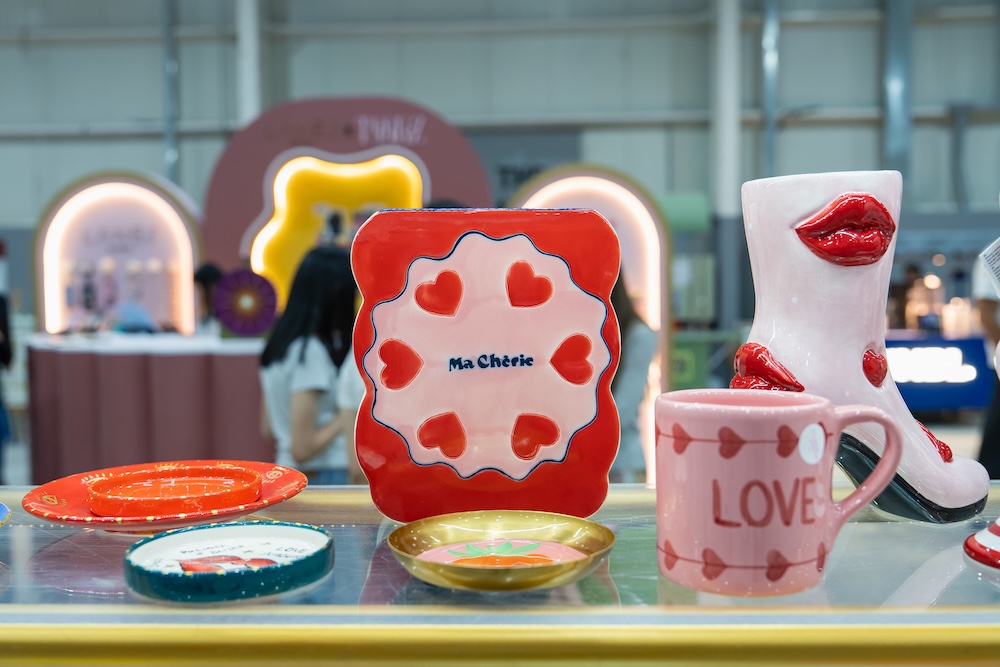
Set across Mihbash’s intimate glasshouse and outdoor garden spaces, the three-day event brings together a seriously good mix of regional fashion, beauty and lifestyle brands alongside immersive workshops and community experiences designed around Eid gifting, creativity and discovery. And yes, Sephora is officially part of it this year.
Which honestly makes perfect sense considering the event already feels like a physical manifestation of every beauty girl’s saved Instagram folder.
Visitors can browse brands including Peach Jam, Naya, Little Olives, Amyrilli, Stardust, Zoyeh Studio, Anjus Fine Jewelry, Rai, Common Kin, Ethereal PJ’s and Taraash Maison among others, making it the perfect excuse to discover smaller regional brands before everybody else inevitably does.
But honestly, the workshops are where things get dangerously tempting.
There’s Palestinian ceramic painting with Crystal Cottage for the artsy girls, candle-making and live candle bars with Studio Kinza for the girls romanticising their apartments, embroidery personalisation with Lunaloom, charm workshops with Black Pearl Studio, plus Stardust’s summer pieces workshop for anyone currently trying to become “that girl” before summer officially starts.

Basically, every corner sounds like content waiting to happen.
What also makes Curated Playlist feel different from typical pop-ups is that it genuinely understands community culture in Dubai right now.
People aren’t only looking to shop anymore. They want experiences. Spaces to meet people. Things that feel personal, creative and slightly offline for a few hours. Somewhere between a market, a social gathering and a creative hangout is exactly where this event lands.
Founded by Ghalia Gharbawi and Ingy Mansour, Curated Playlist has built a reputation around supporting local creatives and emerging brands while creating experiences that feel warm, social and aesthetically addictive all at once.
In a city where everything can sometimes feel overly polished or transactional, that softer community-focused energy is probably why people keep coming back.
So whether you’re hunting for last-minute Eid gifts, looking for your next hyperfixation hobby, planning a girls’ day out or simply wanting somewhere cute to spend the weekend, this might genuinely be one of Dubai’s coolest Eid plans. Just don’t expect to leave empty-handed.
More info on Instagram, here
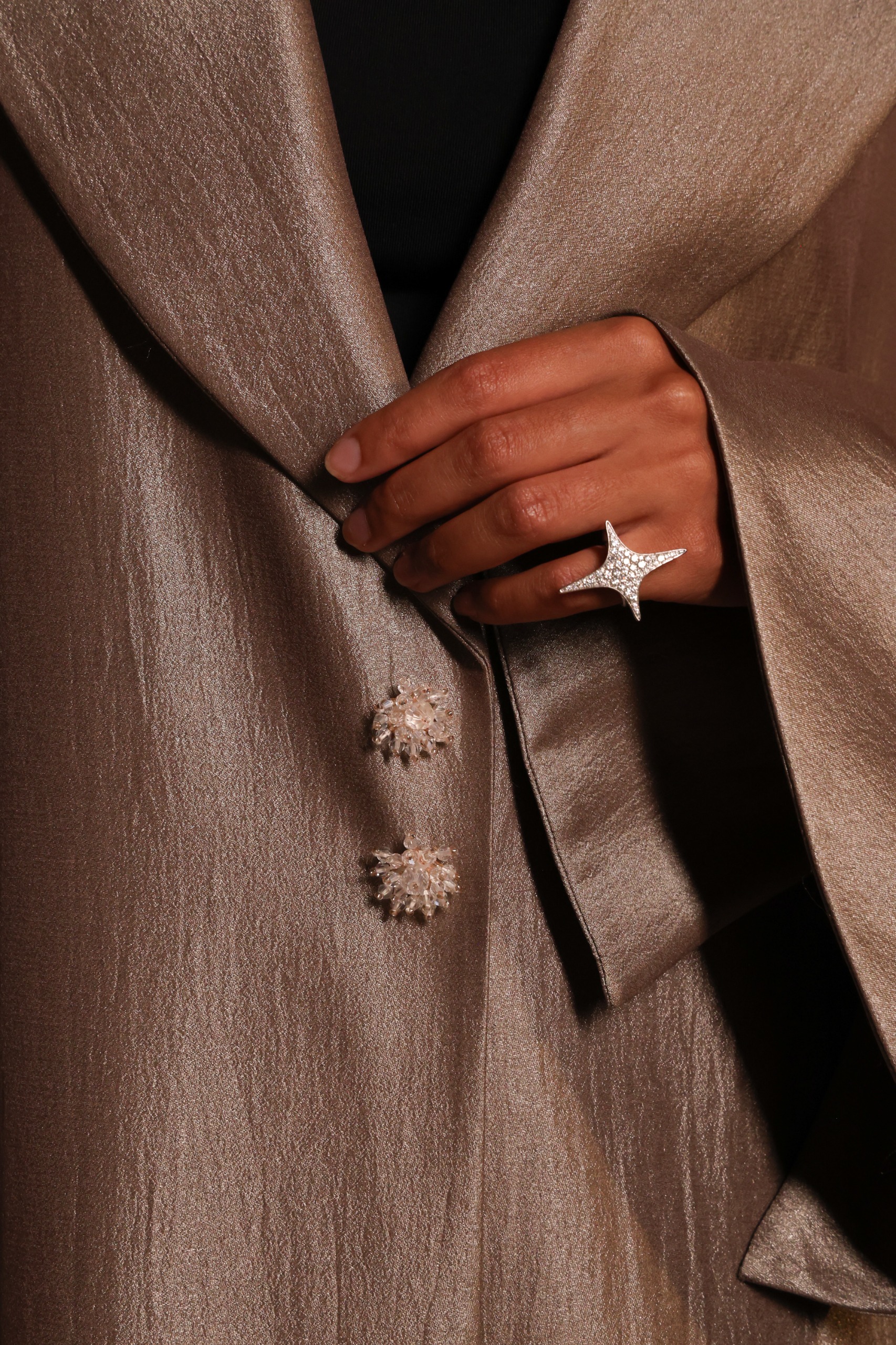
10 Khaleeji Designers and Founders Defining the Region’s New Creative Era
For a long time, conversations around Arab fashion and design were often reduced to trends, aesthetics or spectacle. Today, a new generation of Emirati founders is shifting that narrative entirely.
What makes these women interesting is not simply what they create, but the way they think. Across jewellery, wellness, floral design and lifestyle, they are building brands rooted in emotion, identity and storytelling rather than chasing formulas. Their work feels personal and layered, deeply connected to the realities of modern life in the Gulf while still speaking to a global audience.
That’s exactly why they matter right now.
Teel Floral Studio

Founded by Emirati entrepreneurs Noora Al Suwaidi and Mahra Al Balghouni, Teel Floral Studio approaches floristry less as decoration and more as emotional storytelling. Their arrangements feel sculptural, soft and highly intentional, balancing colour, texture and movement in a way that transforms flowers into something almost cinematic. In a region where luxury often leans maximalist, Teel’s quieter and more thoughtful aesthetic immediately stands out. The duo have quickly become names to watch for the way they bring intimacy and emotion into design.
More on their website, here
Gigi

There’s a reason Gigi Dubai has become one of Dubai’s most talked-about wellness spaces. Founded by Emirati entrepreneur Ghaliya Ahli, Gigi reflects the new direction wellness is taking across the Gulf, one where movement, community and design exist together. Bringing the Lagree method to Dubai, the studio feels less like a traditional fitness concept and more like a cultural space where aesthetics, energy and connection matter equally. It captures a broader shift happening across the region, where women-led wellness brands are redefining what luxury lifestyle means for a younger generation.
Discover more on their Instagram, here
LAKI by Dalia

Abu Dhabi-based designer Dalia Jeiroudi approaches jewellery with a sense of playfulness that feels refreshing within fine jewellery today. Through LAKI by Dalia, she creates highly expressive pieces built around colour, individuality and storytelling. Vibrant gemstones, bespoke details and emotionally driven designs sit at the centre of her work, reflecting a more personal approach to luxury that younger consumers increasingly gravitate toward. Her jewellery feels celebratory without losing sophistication.
Discover more on their website, here
Mariyeh Ghelichkhani
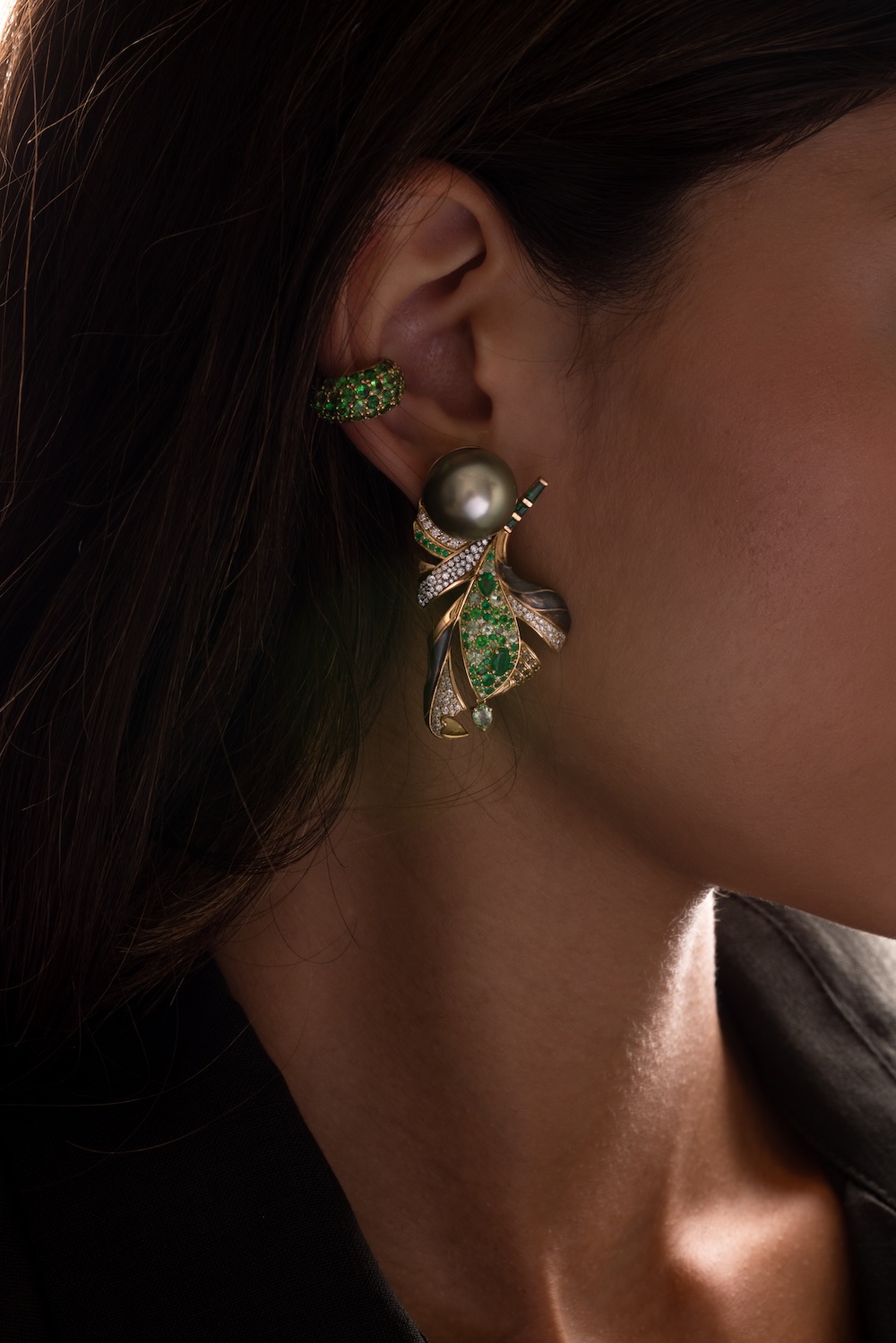
For Emirati designer Mariyeh Ghelichkhani, jewellery carries memory as much as beauty. Raised around rare gems and craftsmanship through her father’s legacy, her work feels deeply introspective and emotionally layered. Spirituality, travel and cultural immersion all shape her creative language, resulting in pieces that move beyond traditional forms into something much more fluid and soulful. At a moment where consumers increasingly seek emotional connection in what they buy, her work resonates because it feels genuinely personal.
More on their website, here
House Janolo
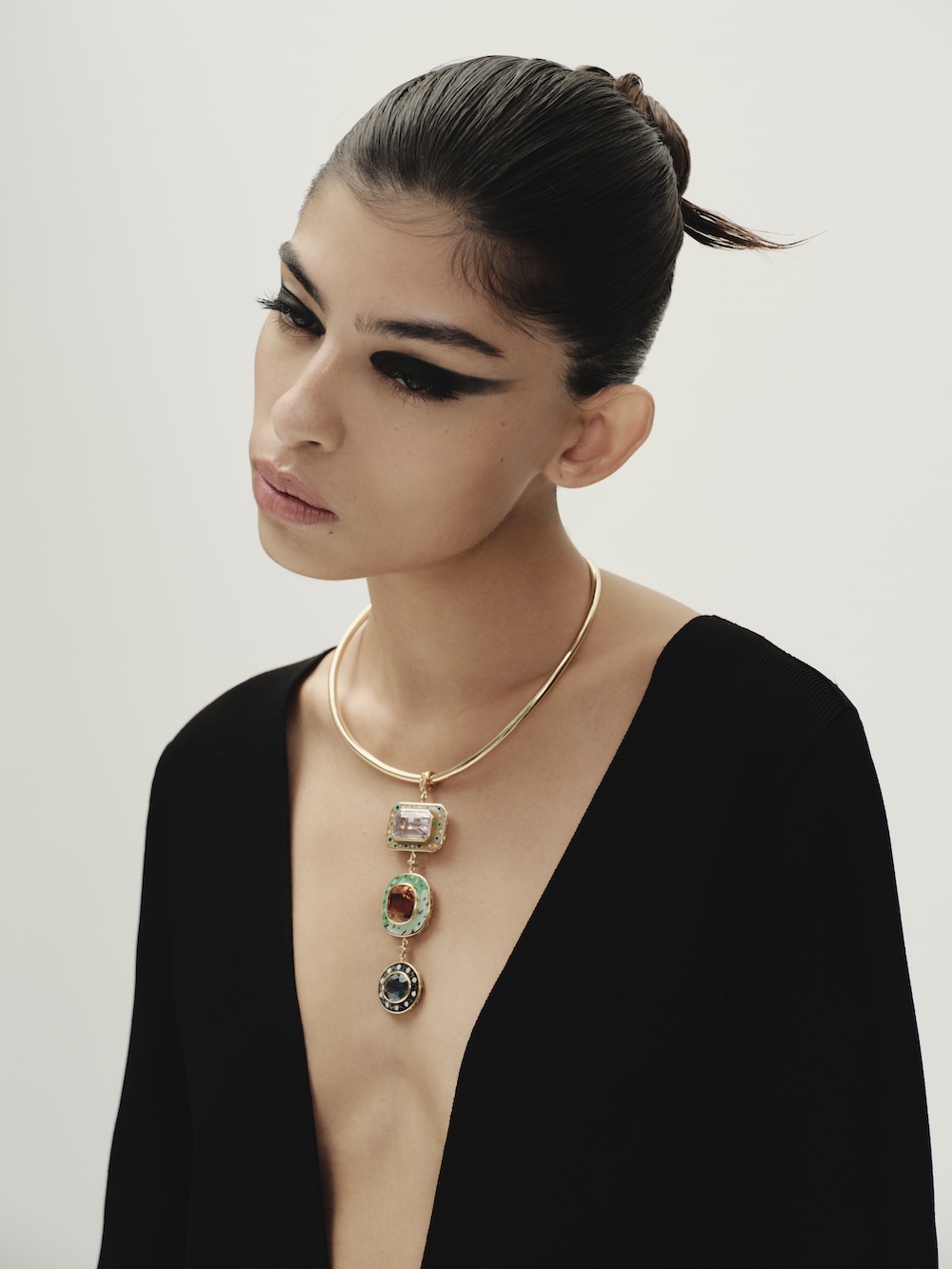
Living between Abu Dhabi and New York, sisters Oloof and Dujanah Jarrar bring a beautifully dual perspective to House Janolo. Their work balances boldness with restraint, softness with precision, creating jewellery that feels modern while still emotionally rich. There’s an instinctive confidence to their designs that mirrors the new generation of Middle Eastern women themselves, globally aware yet deeply connected to identity and heritage. House Janolo feels particularly exciting because it avoids overexplaining itself. The pieces speak for themselves.
More on their website, here
Kayaa Jewels
As a fifth-generation diamantaire, Aashna Sanghvi grew up inside the world of fine jewellery. But with UAE-based Kayaa Jewels, she is reshaping what that world can look like for a younger audience through her focus on lab-grown diamonds and conscious luxury. Sustainability, accessibility and modern storytelling sit at the centre of the brand, reflecting how significantly luxury consumption is shifting globally. Kayaa understands that today’s consumers still want beauty and craftsmanship, but they also want transparency and intention.
More on their website, here
TOi Fine Jewelry
With TOi Fine Jewelry, Aisha Bin Hendi is exploring what jewellery looks like in a generation increasingly shaped by wellness, technology and hyper-personalisation. Her recent fine jewellery covers for WHOOP and OURA rings perfectly capture that intersection, transforming wearable tech into pieces of personal style. Handcrafted with enamel, diamonds and precious materials, the concept feels particularly relevant in today’s world where fashion and technology continue collapsing into each other. Through TOi, Aisha is creating a distinctly modern Emirati perspective on luxury.
More on their Instagram, here
LYLA K.
There’s an architectural quality to the work of Layla Kubba that makes LYLA K. instantly recognisable. Drawing inspiration from celestial forms, Middle Eastern heritage and sculptural design, her jewellery balances strength and softness beautifully. Each piece feels intentional and emotionally charged without becoming overly sentimental. In many ways, LYLA K. reflects the broader evolution of contemporary regional jewellery itself, elegant, self-assured and increasingly global in its design language.
More on their website, here
Rosetta Fine Jewellery
Under the vision of Pooja Chordia, Rosetta Fine Jewellery has cultivated an aesthetic built around quiet elegance and timeless craftsmanship. The brand draws from both Eastern and Western influences, creating pieces that feel refined without becoming trend-driven. What stands out most is the emotional quality behind the work. These are pieces designed to hold memory and meaning rather than exist purely as status symbols, which perhaps explains why Rosetta feels particularly aligned with where luxury is moving today.
More on their website, here
Charmaleena

Saudi sisters Hala and Leena El Khereiji have built Charmaleena around emotion, storytelling and lived experience. Their designs feel intimate and deeply human, often inspired by moments of love, growth and personal transformation. At a time when consumers increasingly crave authenticity from the brands they support, Charmaleena’s emotional honesty feels powerful. The sisters are part of a wider movement of female founders across the region proving that luxury can carry both craftsmanship and vulnerability at the same time.
More on their website, here
Together, these founders represent far more than beautiful products. They reflect a generation of women reshaping the creative identity of the Gulf itself, one that feels more nuanced, emotionally intelligent and globally influential than ever before.

Is Lebanese Woman-Owned Brand 'Good again' The Future of Acne-Safe Skincare?
At this point, skincare has become exhausting. Every week seems to introduce a new acid, a stronger active, a more complicated routine, another product promising “glass skin” while somehow leaving people’s skin barriers completely destroyed in the process.
Beauty today often feels less like self-care and more like a full-time commitment. Which is probably why 'Good again' feels interesting right now. Instead of encouraging people to do more to their skin, the Lebanese-founded brand is built around a surprisingly simple idea: maybe healthier skin starts with less chaos.
Created by award-winning Creative Director Pia Haddad after more than 15 years in advertising, 'Good again' was born from observing just how overwhelmed people had become, especially in beauty. Too many products. Too many steps. Too many promises. And honestly, she’s not wrong.

As someone constantly surrounded by beauty launches, trending ingredients and endless skincare routines online, it’s hard not to notice how complicated skincare culture has become. People are layering exfoliants, serums, treatments and actives almost aggressively, often while still struggling with breakouts, inflammation and sensitivity anyway.
Pia’s perspective came from somewhere much more practical.
As a weight lifter constantly moving between gyms, long work days, stress, sweat and daily exposure to bacteria, she began paying closer attention to how overlooked hygiene and skin inflammation actually were within skincare conversations.
“We’re layering acids, serums and treatments on inflamed skin while completely ignoring one of the most obvious triggers around us,” Pia says. “Good again started from this idea that maybe better skin isn’t about doing more. Maybe it starts with keeping skin clean.”
And honestly, that feels surprisingly refreshing in today’s skincare landscape. At the centre of the brand is hypochlorous acid, an ingredient that has quietly existed for years within hospitals, wound care and dermatology clinics. Naturally produced by the human body to fight bacteria and calm inflammation, the molecule has recently started gaining traction within beauty circles, particularly among people dealing with acne-prone or reactive skin.
Pia saw an obvious gap.
“Why are we spending fortunes on skincare while ignoring the bacteria we come into contact with every single day?” she says.

Phones. Gym equipment. Keyboards. Airplanes. Hands touching faces constantly without thinking. The concept behind Good again became straightforward: good skin starts clean. Minimal formulas. Acne-safe ingredients. No unnecessary fragrance. No overloaded routines designed to overwhelm consumers into buying more products they probably don’t need.
Instead, the brand focuses on skincare that fits into actual everyday life.
The hero product, Worth the Hype, is a purifying facial spray formulated with hypochlorous acid and designed to be used throughout the day, after workouts, during travel, over makeup or whenever skin feels irritated and inflamed.
From there, the brand expanded into a full “skincare-on-the-go” system. Take the Plunge focuses on hydration through hyaluronic acid and ceramides, while Tone It Down introduces salicylic acid and PHA in a gentler, more simplified format. The entire philosophy feels intentionally anti-overcomplication.
Not skincare designed around perfection but skincare designed around functionality.

What also makes 'Good again' stand out is the tone of the brand itself. It feels self-aware, direct and refreshingly human at a time when beauty marketing often swings between sterile clinical language and impossible perfection.
Pia was very intentional about that: “I didn’t want to create another aspirational beauty brand that makes people feel bad about themselves,” she says. “I wanted to create products people genuinely use. Products that become part of their day. Products that make skin, and people, feel good again.”
Built in Lebanon by a female founder with a background in storytelling and branding, Good again feels representative of a wider shift currently happening in beauty, one where consumers are becoming less interested in excess and more interested in trust, simplicity and products that genuinely fit into real life.
And honestly, after years of skincare becoming increasingly complicated, that mindset almost feels revolutionary.
More on ItsGoodAgain.com

Asteri and the Rise of A-Beauty Are Changing What Beauty Looks Like in the Arab World
Living in the Gulf means accepting a few universal truths. Your hair will lose the battle against humidity. Your iced coffee will melt in approximately four minutes. And your makeup? Unless it’s genuinely built for this region, it probably won’t survive the day.
For years, beauty products marketed as “long-wear” rarely understood what women in the Middle East were actually dealing with. Forty-degree heat, endless humidity, weddings that last until 3am, outdoor events, workdays that turn into dinners, and makeup routines expected to survive all of it.
Middle Eastern women adapted because they had to. Now, beauty brands from the region are finally building products around real life here instead of expecting women to adapt to formulas created somewhere else.
And honestly, that’s what makes Asteri Beauty feel so relevant right now.

Three years after launching in Saudi Arabia, the brand has grown from an online beauty platform into one of the Gulf’s fastest-growing beauty names, with 13 retail locations across the GCC and launches inside Ulta Beauty in the UAE and Kuwait.
But beyond the expansion, Asteri feels part of something much bigger happening in beauty right now: the rise of A-Beauty. If K-Beauty became known for skincare innovation and French beauty mastered effortless chic, A-Beauty feels built around endurance.
Asteri describes it as beauty created specifically for the realities of the Middle East, products developed for diverse skin tones, extreme climates and women who need makeup to genuinely perform.
As someone who has experienced foundation sliding off her face halfway through a Dubai summer lunch, I immediately understood the assignment. The brand’s “desert-proof” philosophy might sound dramatic until you realise the products are literally tested in heat, humidity and even sauna conditions. And honestly? That feels less like marketing and more like a public service for Gulf women.
Because surviving a humid August wedding in Dubai deserves its own category of cosmetic science.
Founded by Saudi entrepreneur Sara Al Rashed, Asteri was inspired by sisterhood and a desire to create a beauty brand reflecting modern Arab women outside tired stereotypes. You can feel that perspective throughout the brand.
The aesthetic feels elevated but approachable. The formulas lean high-performance while still feeling skin-friendly. And perhaps most importantly, there’s an understanding that beauty in this region isn’t just about looking polished. It’s cultural. Emotional. Social. Sometimes even survival.
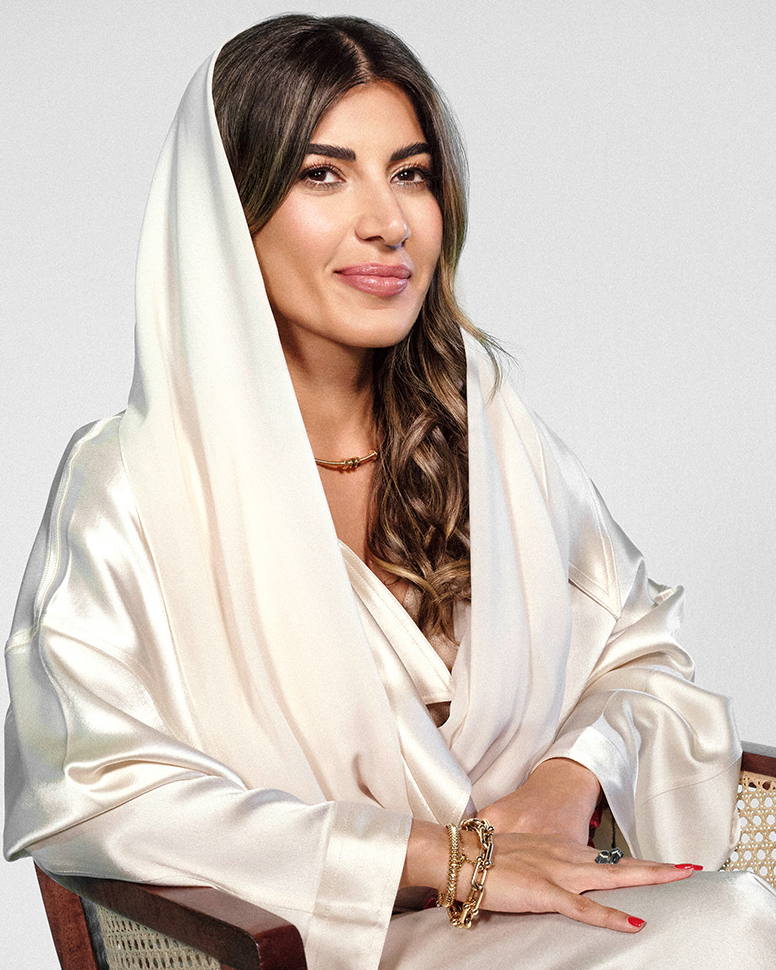
Beauty here happens at family gatherings, late dinners, weddings, airports, beach clubs, office meetings and during summer heat that honestly feels personally offensive. Your makeup needs range.
What also makes Asteri interesting is how strongly it reflects the direction Gulf beauty consumers are moving toward overall. People are asking more questions now. Ingredients matter, sustainability matter, longevity matters. Consumers want products that work, but they also want brands that feel aligned with their values.
Asteri becoming a certified B Corporation feels particularly important within that shift.
The brand focuses on vegan formulas, cruelty-free standards, microplastic-free ingredients and more conscious production without sacrificing the thing Middle Eastern women care about most: performance. Because no matter how sustainable a lipstick is, if it disappears after one iced latte, we're simply not interested.
Over the past few years, beauty trends have slowly stopped flowing in only one direction.For a long time, the region consumed global beauty trends without really seeing itself reflected in them. Now, brands born in Riyadh, Dubai and across the GCC are beginning to shape the conversation internationally too.
And really, it was only a matter of time.Because if there’s one thing Middle Eastern women understand better than almost anyone else, it’s how to make beauty last.
More on AsteriBeauty.Com

Tiny House Music Wants SWANA Artists to Finally Get Paid Properly
Across the SWANA music scene, there’s no shortage of talent. The region has spent the last few years producing some of the most exciting independent artists globally, musicians building loyal audiences from Beirut to Berlin, Cairo to Paris, often without the machinery traditionally associated with the music industry.
What’s been missing, however, is infrastructure. Behind the streams, sold-out shows, and viral moments sits a less glamorous reality that many artists struggle with: publishing rights, royalty collection, intellectual property, and the complicated business of actually getting paid for the music they create.
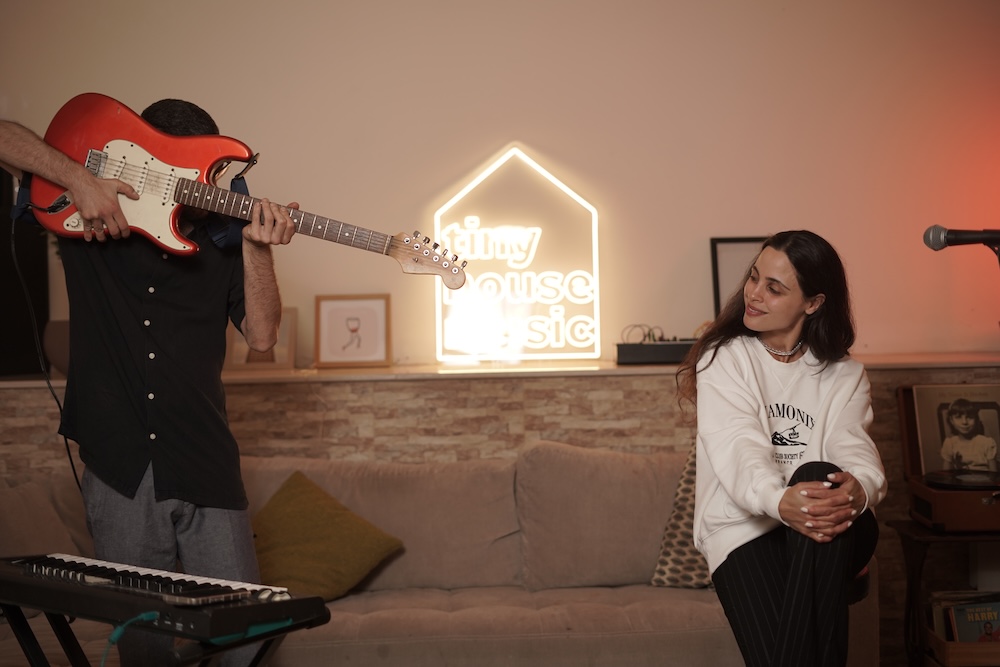
For a long time, most independent artists in the region simply learned to survive without it. Songs travelled worldwide while the people behind them often had little understanding of how publishing worked or what revenue they were entitled to collect. That’s the gap Tiny House Music is trying to close.
Founded by Lebanese artist and producer Etyen, also known as Samer Etienne El Chami, Tiny House Music began in 2019 under Thawra Records before gradually expanding into publishing, licensing, distribution, neighbouring rights, and release management.
Today, the company works with artists including Bu Kolthoum, Khansa, Blu Fiefer, Mayssa Jallad, and SANAM, while continuing to support emerging voices across the region.
.JPG)
This May, THM takes things a step further with the launch of its new publishing administration platform, described as the first initiative of its kind in the region specifically designed for independent music creators.
The idea is simple, although long overdue: Give artists the tools to properly register, manage, protect, and monetise their compositions while maintaining ownership of their work. The platform allows musicians and songwriters to track royalties globally, better understand where their income comes from, and navigate publishing rights without needing to decode an industry that often feels intentionally inaccessible.
This project is deeply personal; El Chami speaks openly about spending years trying to understand intellectual property on his own after starting out independently in 2012, describing publishing as a steep learning curve that ultimately led to lost income and missed opportunities. Tiny House Music, in many ways, grew directly from that frustration.
And honestly, that experience is familiar to almost every independent artist in the region.
.jpg)
The SWANA scene has always had creativity and it always has always had audiences. What it hasn’t always had is the kind of support system that allows artists to build sustainable careers instead of constantly operating in survival mode.
Publishing may not sound particularly glamorous compared to touring, visuals, or releasing music, but anyone who works in the industry knows it quietly shapes everything. Ownership, infrastructure and long-term sustainability all matter and especially now, as artists from the region continue to establish themselves globally on their own terms.
Tiny House Music understands that empowering artists isn’t only about helping them release music but about making sure they can actually build a future from it.
More on TinyHouse-Music.com

“You’d Look Better Thinner”: The Rise of GLP-1 Pressure in Arab Families
There’s a specific kind of comment many Arab women grow up hearing so often that it almost becomes background noise.
“You gained weight.”
“You looked better before.”
“You should lose a few kilos before the wedding.”
“Watch what you eat.”
Sometimes it comes from relatives, sometimes from strangers. Increasingly, women say it’s even coming from doctors.
And now, with the rise of GLP-1 medications like Ozempic and Mounjaro becoming culturally normalised online, that pressure is taking a new shape, one that many women say is quietly affecting their relationship with food, health, self-worth and even their bodies themselves.
By Cynthia Jreige
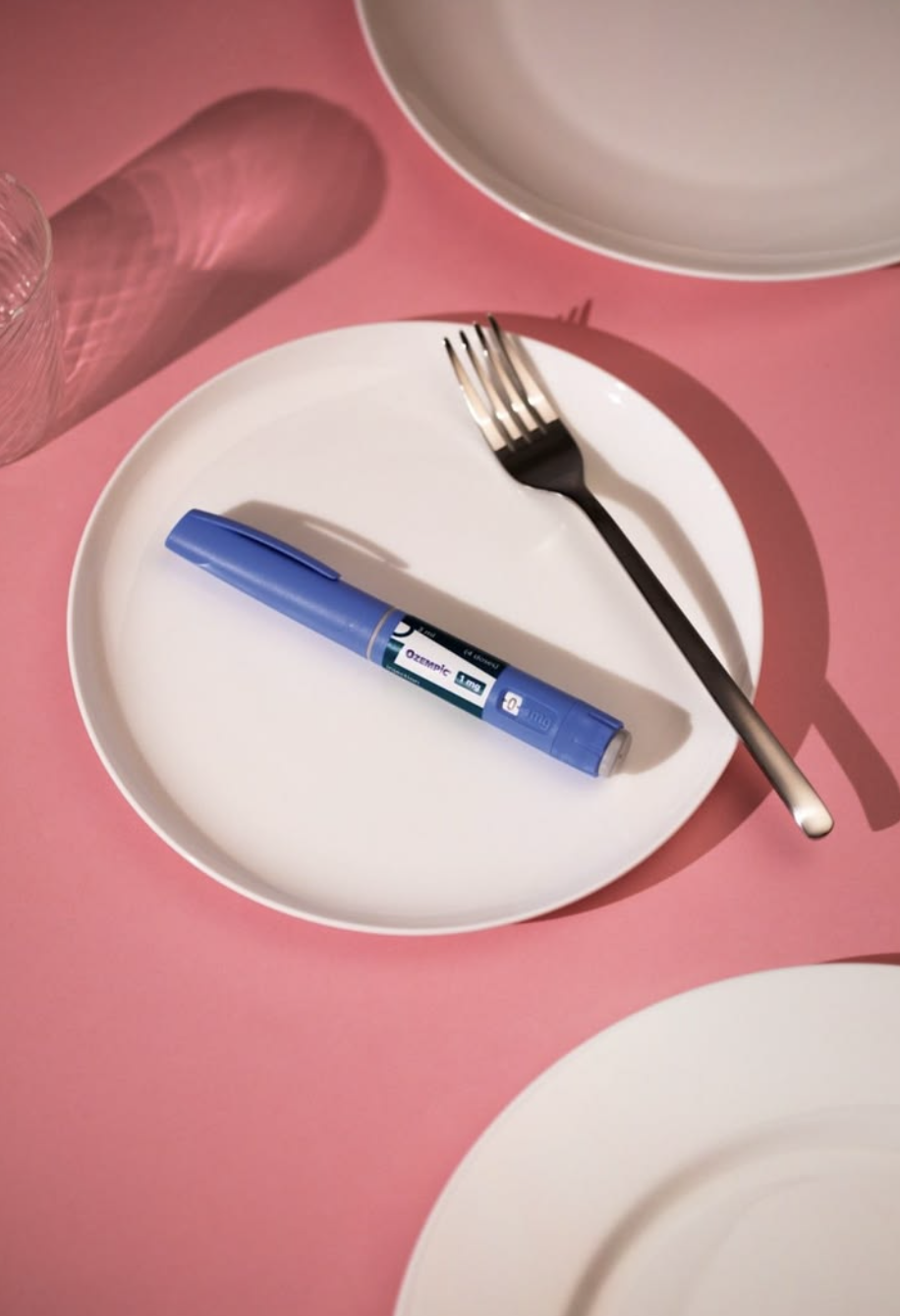
What’s perhaps most alarming is how casual these conversations have become.
Tala Fakhouri, a fitness coach who openly spoke to JDEED with permission to use her name, says the current glorification of rapid weight loss within wellness culture has started crossing dangerous lines.
“As fitness trainers, we’re supposed to represent discipline, health, balance and realistic standards,” she explains. “Not contribute to the pressure and unhealthy expectations people already struggle with every day.”
She pauses before adding something many people in the industry privately admit but rarely say publicly.
“Lately, it’s honestly disappointing to see trainers and fitness influencers jumping on GLP-1 medications as a shortcut, and it very obviously shows. Even worse, recommending or giving them to clients without proper medical supervision.”
For Tala, the issue isn’t the medication itself.
“There’s nothing wrong with it being taken as medically supervised treatment when it’s truly needed,” she says. “But as trainers, we need to stay in our lane, act responsibly and remember why we’re here. People trust us. We should be helping them build healthy lifestyles, not selling them more insecurities.”
For one woman who preferred to remain anonymous, the pressure around weight became deeply tied to her experience living with PCOS.
“Ever since I was diagnosed with PCOS and gained weight in 2021, I’ve constantly been told by my family that I’ve gotten bigger,” she says.
Initially, GLP-1 medication was prescribed medically through her endocrinologist after gaining 10 kilos due to hormonal changes linked to PCOS. But over time, she says things shifted psychologically.
“I felt pressured to maintain a certain physique. Despite working out, I always felt like I needed an extra push to stay around a size 36, which honestly isn’t realistic.”
What hurt most, she explains, was realising how much praise became tied to thinness.
“My mother praises me when I’m thinner, and it almost feels like the most important quality about me,” she says. “In our society, one of the worst things you can be isn’t a horrible person, it’s fat.”
Years later, she found herself turning back to Mounjaro before her wedding.
“I took it to lose five kilos and look slimmer, despite my husband constantly reassuring me and me actually feeling fine,” she admits. “But I still felt like I needed to be skinny for my wedding.”

And that feeling, the idea that women must minimise themselves before major life moments, feels painfully familiar across generations of Arab women. Another woman who spoke anonymously described how conversations around her body became so normalised growing up that criticism almost felt expected.
“In Arab culture, and honestly most cultures when you’re a woman, discussions about your body happen very casually,” she says. “I’ve always been criticised for my body, even when I was 58 kilos, which is 25 kilos ago.”
Despite living with PCOS and taking antidepressants that made weight loss more difficult, she says both relatives and doctors repeatedly focused on her appearance rather than her wellbeing.
“My parents constantly told me to watch what I eat, work out and lose weight,” she explains. “Doctors used to suggest Glucophage for weight loss, but over the last two years, that shifted into suggesting, or more accurately pushing, GLP-1s.”
What shocked her most was who those recommendations were coming from.
“My psychiatrist of a year and a half suggested it to me, which led me to file a complaint and change doctors,” she says. “A dermatologist once suggested it when I went in for eczema. I had literally gone there for a cream.”
At one point, she admits she seriously considered taking the medication out of desperation.
“About a year ago, I fell into a really dark place where I convinced myself I should take it because I was so unhappy with my body,” she says. “But I snapped out of it pretty quickly once I realised the side effects would probably make me feel even worse.”
What stayed with her wasn’t just the pressure to lose weight, but what that pressure implied about her value.
“The way it manifested in my head was this fear that if I didn’t lose weight, I’d be undesirable to romantic partners,” she says. “And that’s very tied to the pressure that exists in Arab families.”
Part of what makes the GLP-1 conversation so emotionally complex is that these medications can genuinely be life-changing for people with insulin resistance, diabetes or serious health conditions. Many women interviewed for this piece were careful to make that distinction.
The issue is what happens when medication slowly shifts from medical treatment into cultural expectation.
When “Have you tried Ozempic?” replaces “How are you?” When thinness becomes positioned as discipline, desirability, success and self-control all at once. And when women begin feeling guilty for existing naturally in bodies that fluctuate, soften, change or simply refuse to shrink.
Both women ultimately returned to the same message: autonomy.
“Your body is your own,” one says. “You should be able to decide for yourself, without pressure or bias, what you need and what you don’t.”
She pauses before adding something that feels radical precisely because of how simple it is.
“I’ve been trying to practice neutrality with my body. This is my body. It functions well. It’s carried me through so many experiences. How I look in a swimsuit or tight dress should not determine my worth as a daughter, friend or partner.”
And honestly, maybe that’s the conversation Arab families need to start having more often. Not how women can become smaller, but why so many grew up believing they had to.
.jpg)
Gucci Took Over Times Square for Cruise, Makes New York Feel Cinematic Again
There are very few places in the world louder than Times Square..which is exactly why Gucci choosing it as the backdrop for its latest Cruise presentation felt so interesting. Because indeed, what a challenge. How do you create intimacy, elegance, and identity in one of the most visually overwhelming places on earth?
Somehow, Gucci managed to do exactly that.

Staged directly in the middle of Times Square, GucciCore transformed the city’s endless screens and flashing billboards into part runway, part cinematic installation, part love letter to New York itself. Before the show even began, massive digital displays across the square flickered with fictional Gucci worlds: Gucci Gym, Gucci Automobili, Gucci Pets, Palazzo Gucci, Gucci Life. It felt playful, surreal and slightly chaotic in the best possible way, like stepping inside a luxury fever dream shaped by decades of pop culture and city mythology.
And honestly, it worked because New York has always been part of Gucci’s story.
The House opened its first store outside Italy there back in 1953, and according to Demna, bringing the show to the city felt like “a homecoming for the brand.”


But this wasn’t a nostalgic recreation of old New York glamour. It felt more observational than that. More human.
What made the collection compelling was the way it approached the idea of a “Gucci person.”
Instead of building fantasy characters entirely detached from reality, Demna imagined the kinds of people you’d actually pass walking through Manhattan. Stockbrokers in sharp pinstripes. Women wrapped in oversized shearling coats worn with studied indifference. Downtown skaters in slouchy denim and soft tailoring. Philanthropists in sculptural gowns. People from Madison Avenue, Harlem, Soho and Brooklyn all colliding visually the same way they do in the city itself.
“There’s a plurality of styles that intersect like the streets of the city,” Demna explained in his show notes.
That idea translated beautifully on the runway. The collection moved between sharp businesswear, dramatic outerwear, glamorous evening pieces and stripped-back wardrobe staples without feeling disconnected. Instead, it felt like watching fragments of New York life stitched together through Gucci’s lens.
And underneath all the maximalism, there was something surprisingly pragmatic happening too.


Demna described GucciCore as an attempt to create “a core wardrobe of staple pieces that form the foundation of the House’s stylistic language.”
The perfect trench. The classic business suit. The pencil skirt. The peacoat.
But of course, this is still Gucci, so practicality came layered with extravagance. Technical outerwear lined in shearling. Circular duvet stoles in monogrammed leather. Croc-effect sequins, feather embroidery, crystal fringes extending into menswear.


Even the accessories carried that tension between functionality and fantasy.
The iconic Horsebit transformed into stirrup-shaped heels on severe leather boots, while handbags arrived in rich jewel tones, worn-in patinas and oversized slouchy silhouettes that felt simultaneously luxurious and lived-in.
The feeling that Gucci wasn’t trying to escape the chaos of New York, but fully immerse itself inside it. The noise, the contradictions, the glamour, the people constantly reinventing themselves while walking the same streets.
In many ways, that’s always been what Gucci does best. It absorbs culture rather than observing it from afar.
More on Gucci.com

Inside Soulland’s World: Jacob Kampp Berliner on Youth Culture, Dubai and Creating From Instinct
There’s something refreshing about speaking to Jacob Kampp Berliner, founder of Soulland, because he talks about fashion the way musicians talk about records or skaters talk about spots.
Less like an industry, more like a world you grow into through instinct, references, and community.
That probably explains why Soulland has always existed slightly outside traditional fashion systems. Since its early beginnings in Copenhagen, the brand has built a loyal following by sitting comfortably between street culture, music, art, skateboarding, and Scandinavian minimalism without ever fully belonging to one category.

“When I started, that intersection felt more instinctive than defined,” Berliner tells JDEED. “It came from where I was spending time, around music, graffiti, skateboarding and people creating things without thinking too much. Fashion was more about what the people I was inspired by were wearing and how you could dress to stand out in your own circles.”
You can still feel that energy in the brand today. Soulland never really chased the polished, inaccessible version of luxury fashion. It always felt tied to real people and subcultures, to scenes that existed before algorithms flattened everything into aesthetics.
Berliner is aware of how much that landscape has changed.
“Today, that intersection has become more visible, but also more fragmented,” he says. “Everything moves faster, and there’s a tendency for culture to become surface-level. For me, it’s still about maintaining a sense of depth. It’s not just referencing music or youth culture visually, but understanding the mindset behind it, the independence, the experimentation, the way communities form around shared ideas.”
That sense of exchange feels particularly relevant as Soulland expands into the Middle East with its first regional store in Dubai, a city Berliner seems genuinely fascinated by, not from a commercial standpoint alone, but culturally.
“Dubai is often described as a melting pot, but what interested me more is that it’s a place where different identities remain visible while still interacting with each other,” he explains. “There’s a tension between global influence and local context that feels very active here. It’s not resolved, and that’s what makes it interesting.”

Fashion brands often approach the region with a preconceived narrative, arriving with the intention of “introducing” themselves to an audience that, in reality, has long been shaping its own creative language. Berliner seems conscious of avoiding that dynamic entirely.
“I think the most important thing is to avoid positioning ourselves as something that needs to be introduced into the region,” he says. “There’s already a strong and evolving creative ecosystem here. For us, it’s about listening and understanding how that ecosystem operates, and finding ways to engage with it that feel natural.”

That openness probably comes from his own background. Before fashion became a business, it was connected to graffiti and youth culture, environments built around experimentation and self-definition rather than approval.
“Graffiti, and youth culture more broadly, is about instinct, about creating without overthinking, and about existing slightly outside established systems by creating your own reality,” Berliner says. “That mindset stays with you. We simply work from the idea of what inspires us. Nothing is impossible, that’s the mindset we start with every morning.”

And maybe that’s ultimately why Soulland still resonates after all these years. Even as the brand grows globally, there’s still a sense that it’s being shaped from inside the studio rather than inside a boardroom.
“As things grow, we’ve actually become even more focused on being in the studio, creating, and having fun,” Berliner says. “We create for ourselves, and if people connect with it, that’s great.”
He pauses before adding something that feels increasingly rare in fashion today: “Not every opportunity needs to be pursued. Sometimes it’s more important to protect the integrity of what you’re building than to expand too quickly. We’ve never been in a hurry.”
In an industry obsessed with scale, speed, and constant visibility, that might be the most radical thing of all.
More info on Soulland.com
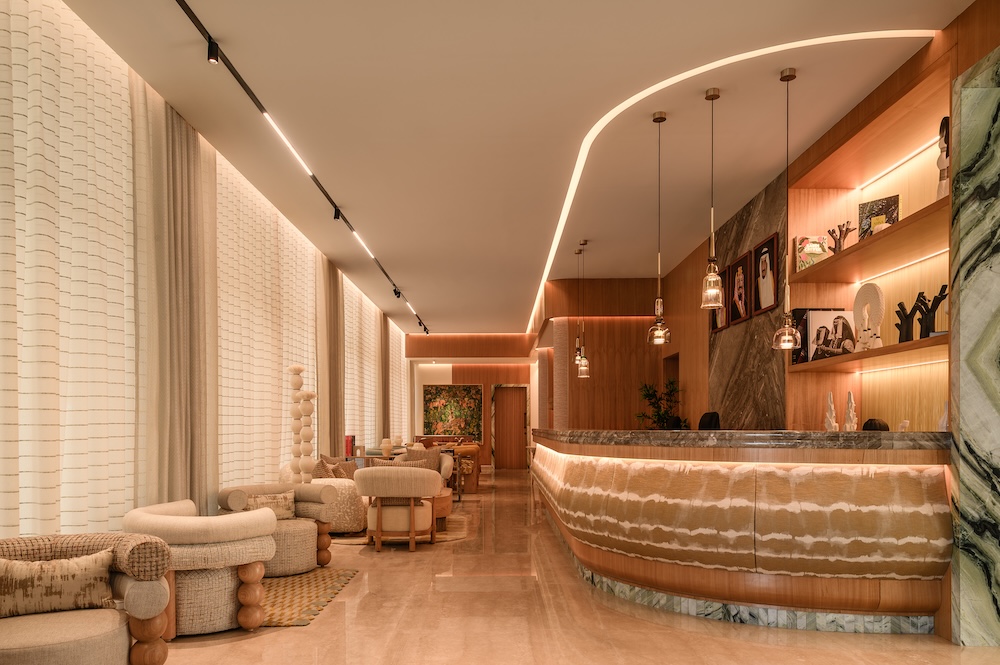
Fanaya: Our Home Away From Home in Jeddah
There are hotels you stay at, and then there are hotels you settle into almost instantly. The kind where, within a few hours, you stop feeling like a guest altogether. That’s exactly what happened to us at Fanaya Hotel Jeddah.
Tucked along Jeddah’s North Corniche, perfectly positioned between the city’s calmer coastal rhythm and its growing creative energy, Fanaya feels less like a conventional hotel and more like the beautifully designed home of someone with impossibly good taste. The kind of place where every object feels considered, every corner intentional, every detail quietly curated without trying too hard.
From the moment we arrived, there was a softness to the experience. Warm lighting, earthy textures, neutral tones inspired by sand and sea, spaces that immediately slow you down after the intensity of the city outside. Even with its modern design language, the hotel still feels deeply tied to Jeddah itself. We totally fell in love with the custom carpets too - would have been a bit hard to pack one in our bags but we wouldn't have said no.
The name “Fanaya” comes from the Arabic concept of the fana’, a traditional courtyard designed for gathering, conversation, and exchange. That spirit runs through the entire property. Rather than feeling cold or overly polished, the hotel feels lived in, creative, and deeply human, a place built around connection as much as aesthetics.
Location-wise, it’s difficult to do better. The hotel sits just steps from the Red Sea and minutes from some of Jeddah’s key addresses, while still maintaining a sense of calm that feels increasingly rare.

The suites lean into apartment-style living, complete with kitchens and spacious layouts, which only reinforces that home-away-from-home feeling. But what truly stayed with us was the atmosphere. Mornings by the water, slow coffees, evenings returning to a space that somehow managed to feel both design-led and comforting at once.
There’s also something refreshing about the fact that Fanaya is homegrown. In a region where luxury hospitality often leans heavily international, the hotel feels proudly connected to Saudi culture and Jeddah’s evolving creative landscape: art, design, architecture, community, it all comes together naturally and we're here for it.
At a time when many boutique hotels can feel interchangeable, Fanaya has personality. It has warmth. It has soul.
And honestly, leaving was difficult; and that's how you know you'll be back.
More on FanayaHotels.com

L’Atelier Nawbar and L’Alingi Blur the Line Between Jewellery and Handbags
This collab seemed meant to be. With L’Atelier Nawbar and L’Alingi, the connection feels natural, two brands with distinct visual languages meeting somewhere between object, adornment, and art.
The result is a capsule collection that treats handbags less like accessories and more like collectible pieces. Jewellery escapes the body, handbags become sculptural, and the boundary between the two begins to dissolve.
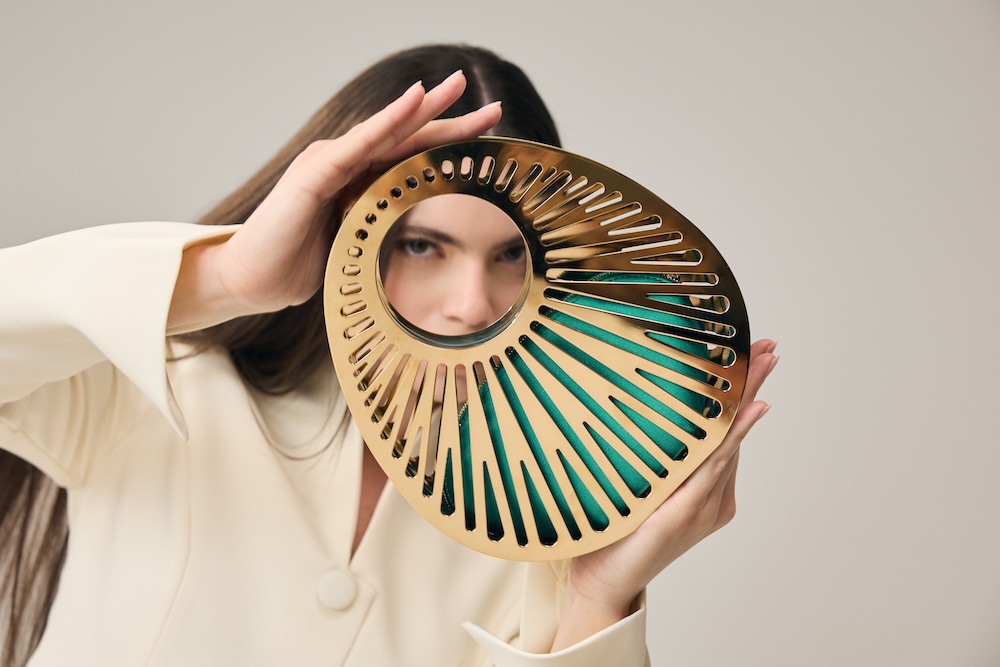
At the centre of the collaboration are the Atom Bag and Ray Bag, playful yet precise designs inspired by chemistry and the cosmos. Curved metallic handles echo the permanence of fine jewellery, transforming what could have been a simple evening bag into something far more tactile and expressive.
There’s also a strong sense of duality running through the collection. Beirut meets London. Heritage meets experimentation. Craftsmanship meets colour and irreverence.
What makes the collaboration particularly compelling is that neither brand loses itself within the other. L’Atelier Nawbar’s storytelling rooted in fine jewellery remains intact, while L’Alingi’s playful approach to bags and occasion dressing continues to shape the collection’s energy.
.jpg)
Instead of merging aesthetics completely, the collaboration explores transformation: jwellery becomes structural handbags take on the delicacy of precious objects meant to be worn, held, and remembered.
The colour palette reinforces that sense of escapism, bold turquoise, deep crimson, reflective metallics, shades that feel optimistic, almost cinematic.
In a moment where accessories increasingly sit at the intersection of fashion and object design, L’Atelier Nawbar x L’Alingi understands something important: people no longer just want pieces they can wear but they want pieces that set them apart.
More on Lalingi.com and LatelierNawbar.com
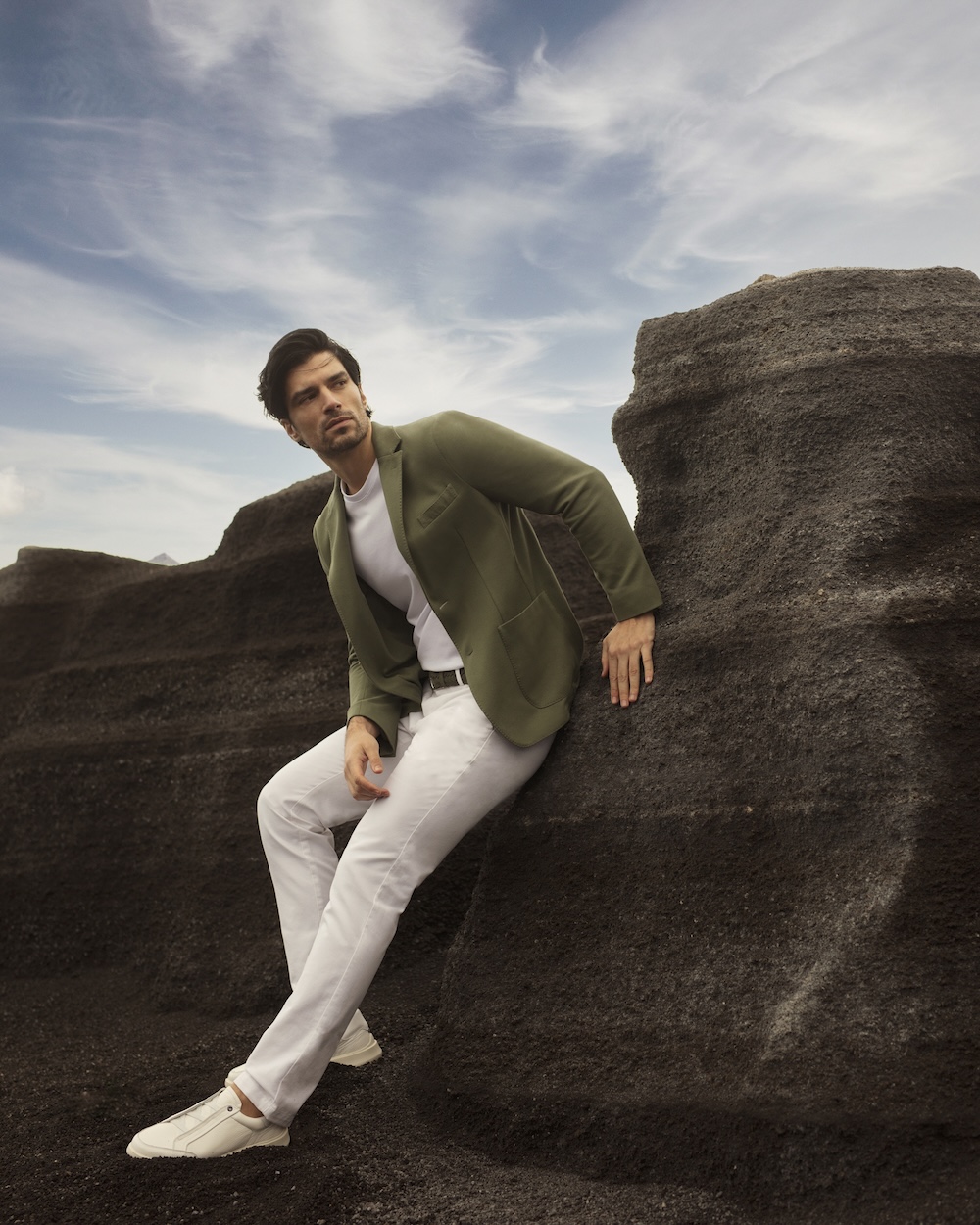
Sacoor Brothers Reimagines Modern Menswear Through the Four Elements
For Spring/Summer 2026, Sacoor Brothers approaches menswear through something more instinctive than trend forecasting: Earth. Water. Air. Fire.
Titled The Essence of the Elements, the collection unfolds through four distinct chapters, each exploring a different rhythm of dressing, from grounded tailoring and natural textures to lighter silhouettes designed for movement, travel, and warmer climates.

But beneath the concept sits a more relevant conversation about how men actually want to dress today.
Luxury, here, is less about excess and more about ease. The collection leans heavily into natural fibres, cotton, linen, refined blends, fabrics chosen not just for appearance, but for the way they behave on the body. Jackets soften, trousers loosen slightly, shirts are designed to breathe rather than constrain.
The strongest chapter might be Earth, where earthy neutrals, soft greens, indigo, and chocolate tones ground the collection in something understated but confident. Tailoring feels intentional rather than formal, reflecting the broader shift happening in menswear right now, away from strict codes and toward versatility.
Elsewhere, Water introduces fluidity through lighter constructions and nautical-inspired stripes, while Air strips things back further, leaning into pale tones, pure linens, and silhouettes that feel almost weightless.

Then comes Fire.
The collection’s Resort capsule closes the season with a more expressive energy, relaxed coordinated sets, sun-faded tones, beachwear, and tailoring designed less for the office and more for movement. There’s a noticeable ease running through it all, but the precision remains.
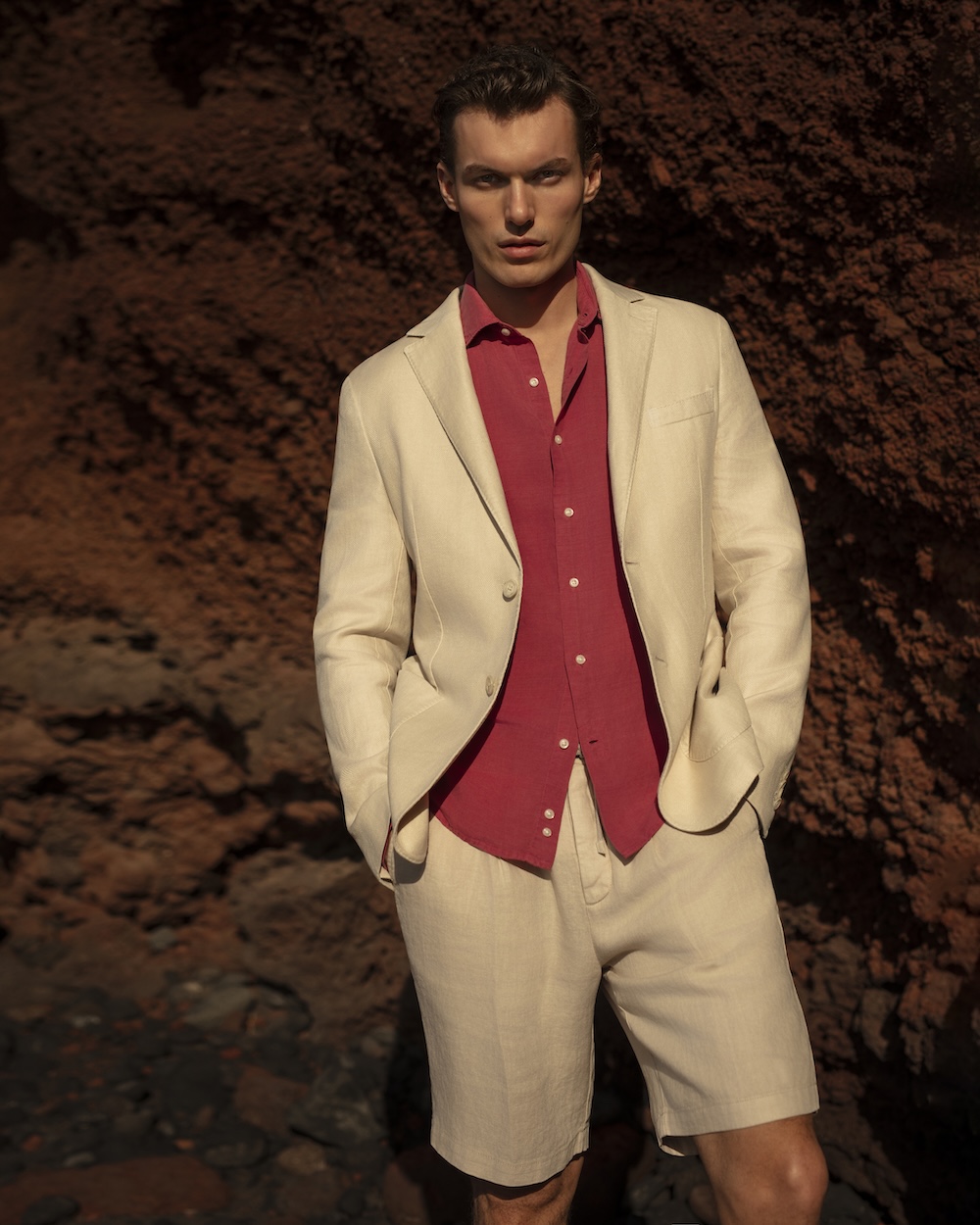
What Sacoor Brothers has always understand particularly well remains there this season: modern masculinity no longer exists within one setting. Today’s wardrobe moves between cities, climates, meetings, travel, and downtime often within the same day, and clothing has to adapt accordingly.
With The Essence of the Elements, Sacoor Brothers responds to that shift not through reinvention, but refinement, creating a collection that feels wearable, considered, and quietly confident without trying too hard.
More on SacoorBrothers.com
.jpg)
Miu Miu’s Tales & Tellers Heads to Shanghai, Where Fashion Becomes Performance
This June, Miu Miu brings back Tales & Tellers for a third iteration, this time landing in Shanghai after previous editions in Paris and New York. But calling it an “event” barely captures what it actually is.
Envisioned by Miuccia Prada and conceived by interdisciplinary artist Goshka Macuga, the project exists somewhere between installation, performance, cinema, and fashion. It doesn’t sit within one discipline, which is precisely the point.
Presented at the Shanghai Exhibition Center on June 6 and 7, Tales & Tellers continues Miu Miu’s ongoing fascination with storytelling, particularly the stories women tell, inhabit, perform, and reconstruct.
.jpg)
At its core are the films from Miu Miu Women’s Tales, the House’s long-running cinematic platform that has, over the years, invited female directors to explore femininity through their own lens. Around them orbit artistic interventions drawn from Miu Miu runway shows spanning Spring/Summer 2022 to Spring/Summer 2025, creating a layered dialogue between fashion image, moving image, and physical space.
The result feels intentionally fluid and nothing is entirely fixed. The installation evolves depending on the city, the architecture, the audience moving through it. In Shanghai, that conversation takes on another dimension entirely, unfolding within one of the city’s most historic cultural landmarks while engaging with a generation increasingly shaping global conversations around art, fashion, and identity.
There’s also a strong curatorial voice behind the project. Convened by Elvira Dyangani Ose, curator and artistic director of the Public Art Abu Dhabi Biennial, and developed alongside theatre and opera director Fabio Cherstich, Tales & Tellers approaches fashion less as product and more as cultural language.
And perhaps that’s what makes Miu Miu feel particularly relevant right now; at a time when so much of fashion is reduced to speed, virality, and endless imagery, Tales & Tellers insists on something slower. More immersive and more intellectual, even emotional.
Not just clothes to consume, but stories to step inside.
More on MiuMiu.com

The Anxiety Disorder Nobody Talks About Enough: Living Through the Isolation of DPDR
I kept waking up hoping reality would feel… real again.
But every morning, the second I opened my eyes, the fear was already there. It started from minute zero of the day.
It’s hard to explain, but the world around me felt separated from me by some kind of invisible veil. Things in my surroundings almost looked artificial, like cardboard sets rather than real life. My feelings became distant too. I knew who and what I loved, but in those moments, that love felt far away, almost unreachable. I wasn’t emotionless, just numb in a way that made everything feel muted.
By Cynthia Jreige

DPDR, short for Depersonalisation and Derealisation Disorder, is a dissociative condition usually triggered by intense anxiety, chronic stress, panic attacks, or trauma. Depersonalisation creates a sense of detachment from yourself, as though you are observing your own thoughts, body, or emotions from the outside. Derealisation, on the other hand, affects the way you perceive the world around you, making places, people, and situations feel dreamlike, distant, foggy, or unreal. The terrifying part is that you still know logically that reality is real, but emotionally and physically, your brain struggles to connect to it.
It’s nearly impossible to explain DPDR to someone who has never experienced it, even to many of the psychologists and psychiatrists I turned to for help. You are inside your mind, but at the same time, you don’t fully feel there. You look in the mirror and you recognise your reflection, you know logically that it’s you, but you don’t connect to it. You look at your hands knowing they are your hands, yet they suddenly feel like nothing more than moving flesh and bones that could belong to anyone.
I genuinely don’t think I’ve ever lived through anything more isolating than depersonalisation and derealisation. Even growing up as the only obese child throughout all my school years, not a chubby kid in sight besides me, did not compare to the loneliness of DPDR. You want to scream, cry, disappear, because nothing around you feels like it could possibly make you feel better again.
What many people don’t realise is that DPDR is often the brain’s way of protecting itself after trauma. It disconnects you from the outside world because everything has become too overwhelming to process. The problem is that while your brain thinks it’s protecting you, you end up feeling trapped inside yourself.

And then comes the exhausting part: pretending. Because how do you explain to someone that you are physically present, yet mentally feel absent? That you know you are a human being, but your own identity suddenly feels abstract and unfamiliar?
Now imagine trying to run a business, attend meetings, build an empire, and continue showing up every day while deep down you feel completely detached from reality. Imagine feeling like you’re living on a movie set while anxiety paralyses you so intensely that too much noise, too much light, or too many people can make you feel like you’re about to die.
For me, it built up over years, but one major traumatic event in 2015 triggered the beginning of my DPDR experience. Today, I can thankfully say I’m almost on the other side of it, but I also know something in me changed forever after understanding what this kind of mental illness feels like. Healing took time, patience, grounding techniques, forcing myself to reconnect with reality over and over again, and above all, acceptance. Because acceptance is such a huge part of overcoming anything.
But grieving who I was and looking forward to who I am and am becoming didn't come easy; some days I still wish I was able to go back to a place where these feelings didn't exist. Because the truth is, they do come back, sometimes when something identified or unidentified triggers me. I just learnt to tell my brain that we're safe. During Mental Health Month, I wanted to share my story because God knows I prayed for answer and a community to turn to when I was in the thick of my troubles. And please no matter what you do, do NOT believe these forums that will tell you you're stuck forever. You're not.
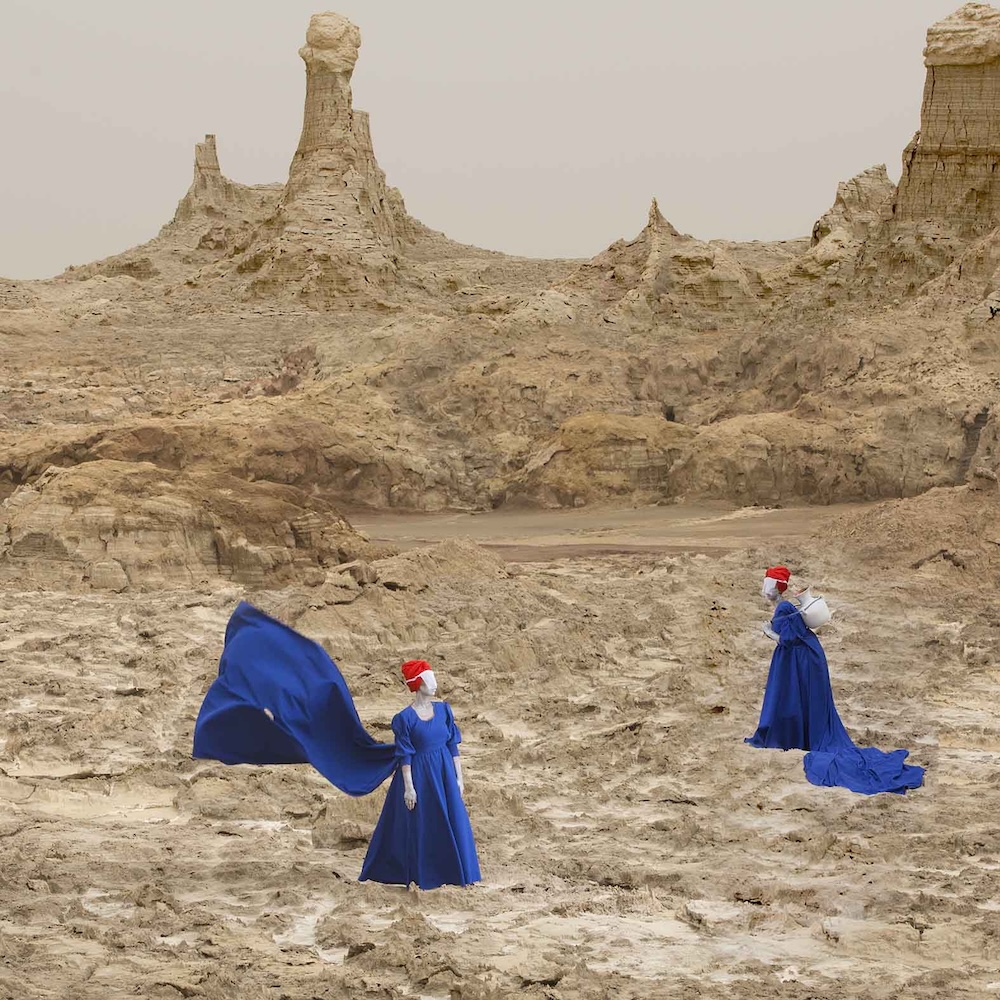
Art Dubai Is Back This Month and This Edition Feels Different
Twenty years in, the region's most important art fair is doing something it has never done before. And entry is free.
Art Dubai turns 20 this year. And while the milestone alone would be reason enough to pay attention, what is happening at Madinat Jumeirah from 15 to 17 May isn't just a celebration but ab actual statement.
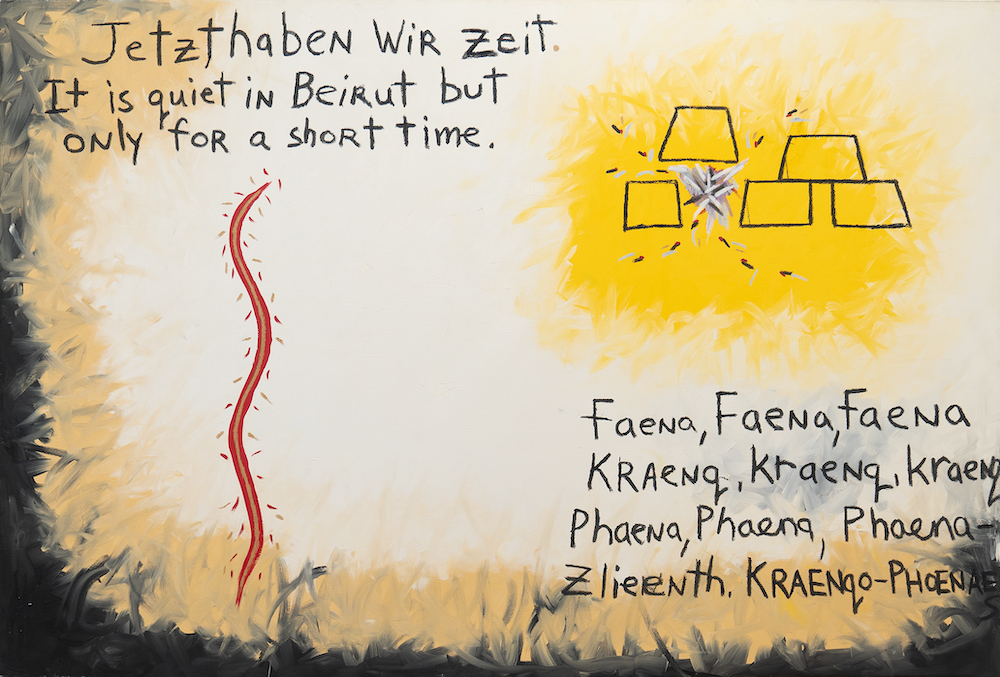
This is a special edition, modified in format, but in no way diminished in ambition. Around 75 presentations from commercial galleries, institutional participants and partners, 60% of which are drawn from the region. Free entry for everyone. And a programme that reads like a greatest hits of everything Dubai's cultural scene has quietly been building towards for two decades.
Executive Director Benedetta Ghione put it plainly: "Art Dubai's story is Dubai's story." This edition, she says, is about demonstrating the resilience of the UAE's cultural scene and the power of what happens when galleries, artists and institutions come together. Especially right now, when that role of convening feels more important than ever.
The galleries
Over 45 gallery presentations spanning contemporary, modern and digital practices, bringing together international names who have been committed to this region for decades alongside first-time exhibitors stepping into the Art Dubai family for the first time. In a move that signals genuine care for the ecosystem, this edition also introduces an innovative risk-sharing model where gallery booth costs are payable based on success. In a challenging climate for the art market globally, that matters.
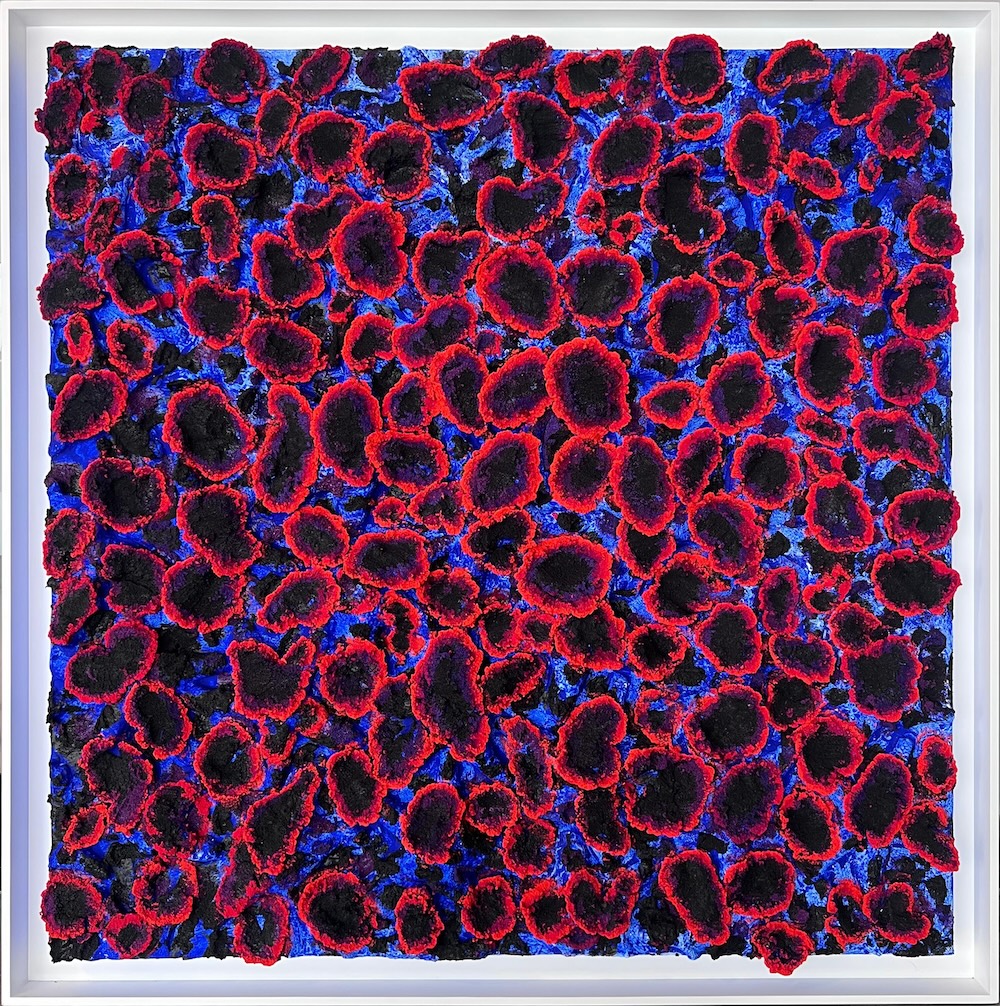
The programme
This is where it gets genuinely exciting. Alongside the gallery presentations, the special edition is packed with large-scale installations, commissions, performances, screenings and daily talks. Here is what to know:
Made Forward, a major presentation from the Dubai Collection, the city's first institutional collection of modern and contemporary art, will be one of the anchors of the fair. Alongside it, the Barjeel Art Foundation brings an exhibition of modern Arab art from its collection, and the Sharjah Art Foundation contributes a performance-led programme that is worth planning your visit around.
The 20th edition of Art Dubai's flagship Global Art Forum, commissioned by Shumon Basar and titled Before and After Everything, promises to be one of the most compelling conversations of the year.
Site-responsive artworks and large-scale installations will be integrated across the entire fair, with works by Khalid Al Banna, Hashel Al Lamki, Rashid Bin Shabib and Ahmed Bin Shabib, Rami Farook, Kevork Mourad, Yaw Owusu, Neda Razavipour and Sudarshan Shetty. A moving image programme co-curated with Alserkal Avenue will be screened across both venues.
Further collaborations with Art Jameel, National Pavilion UAE at La Biennale di Venezia, Ministry of Culture and House of Arts round out what is already a remarkably full programme for three days.
Curatorial Director Alexie Glass-Kantor described the guiding thread behind the programming as "things we do together," and that spirit comes through in every part of this edition. The focus is on connection, on encounter, on spending time with work in ways that feel open rather than prescribed.
The details
Art Dubai Special Edition runs 15 to 17 May at Madinat Jumeirah, with a VIP preview on 14 May. Entry is free for all visitors. For the full participant list and programme, head to artdubai.ae.

HINDAMME And AlUla's Master Artisans Just Dropped a Collection That Took 7,000 Years to Make
The new limited-edition collection from HINDAMME and AlUla's Madrasat Addeera is a collaboration that feels it was always meant to exist.
Saudi fashion label HINDAMME, led by designer Mohammed Khoja, has joined forces with more than 26 artisans from Madrasat Addeera, the Arts AlUla creative centre housed in what was once the region's very first girls' school. The result is a collection of abayas and shirts that does not just reference heritage, it carries it forward in the most literal, handmade, deeply intentional way possible.
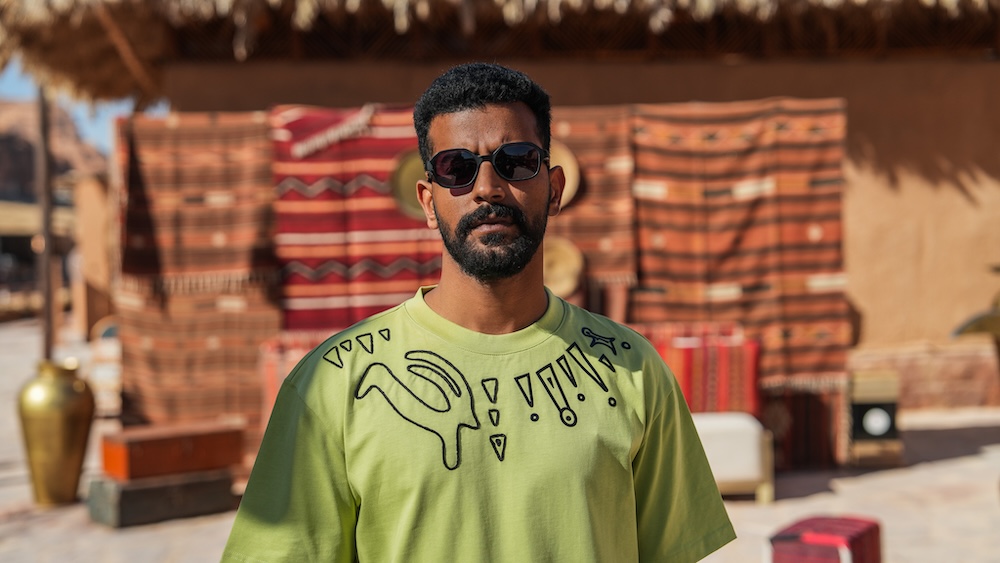
Each piece took between one and two months to complete. Let that sit for a moment in a world of fast fashion and overnight drops.
The collection draws from AlUla's more than 7,000 years of continuous human heritage, and it shows in every detail. Petroglyphs from Jabal Ikmah, AlUla's open-air library of ancient inscriptions, appear as motifs alongside illustrations of indigenous flora and fauna including the moringa plant and the Arabian oryx. The techniques are just as considered: block printing, hand embroidery, silk-screen printing and metalwork, all developed directly with the artisans whose knowledge and hands brought each design to life.
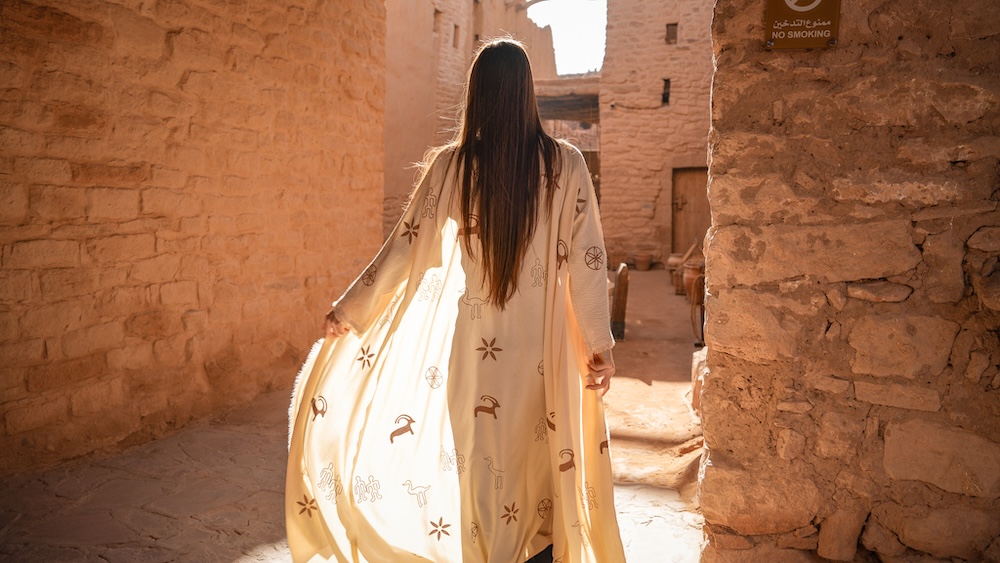
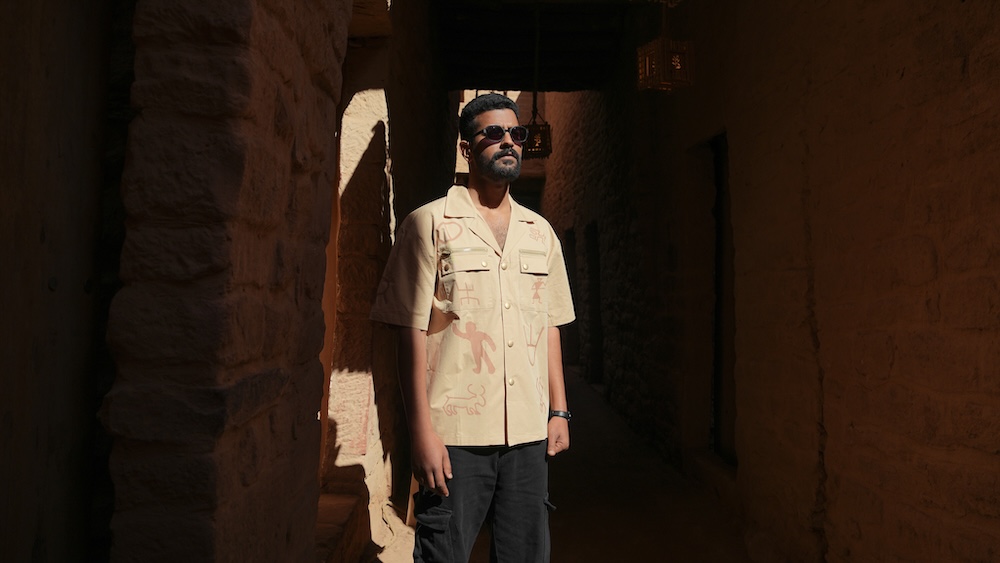
Khoja, who has been drawing from AlUla as a source of inspiration since a 2019 collection exhibited at the National Museum of Saudi Arabia, describes the place as somewhere history feels alive, layered and deeply present. This collection is his way of proving that heritage is not something to preserve behind glass but something to evolve, wear and carry forward. The building itself added a layer of emotional depth he did not anticipate: knowing that Madrasat Addeera was once the region's first girls' school made the act of creating there feel charged with something bigger than fashion.
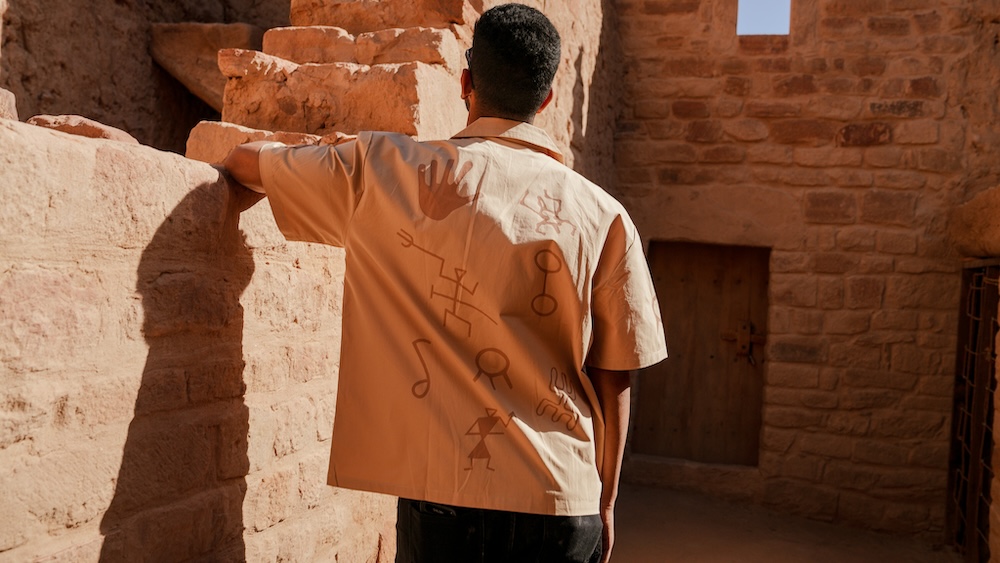
Textiles artisan Mona Al Joud, who worked on the collection, put it simply: "This collection is a letter from the people of AlUla to Saudi and the world. A lot of love, precision and intention go into each stitch and cut."
That comes through. This is slow fashion in the truest sense, not as a trend or a marketing angle, but as a genuine commitment to craft, community and the kind of beauty that cannot be rushed.
The collection is available now at Madrasat Addeera and online at madrasataddeerastore.com.

Everything You Need to See at Cinema Akil This May
Dubai's favourite independent cinema is having a moment and the May lineup is proof. If you have not made Cinema Akil part of your regular rotation yet, this is your sign.
May's programme is the kind of lineup that reminds you why independent cinema exists in the first place: to show you the films that actually have something to say.
Here is everything happening this month.
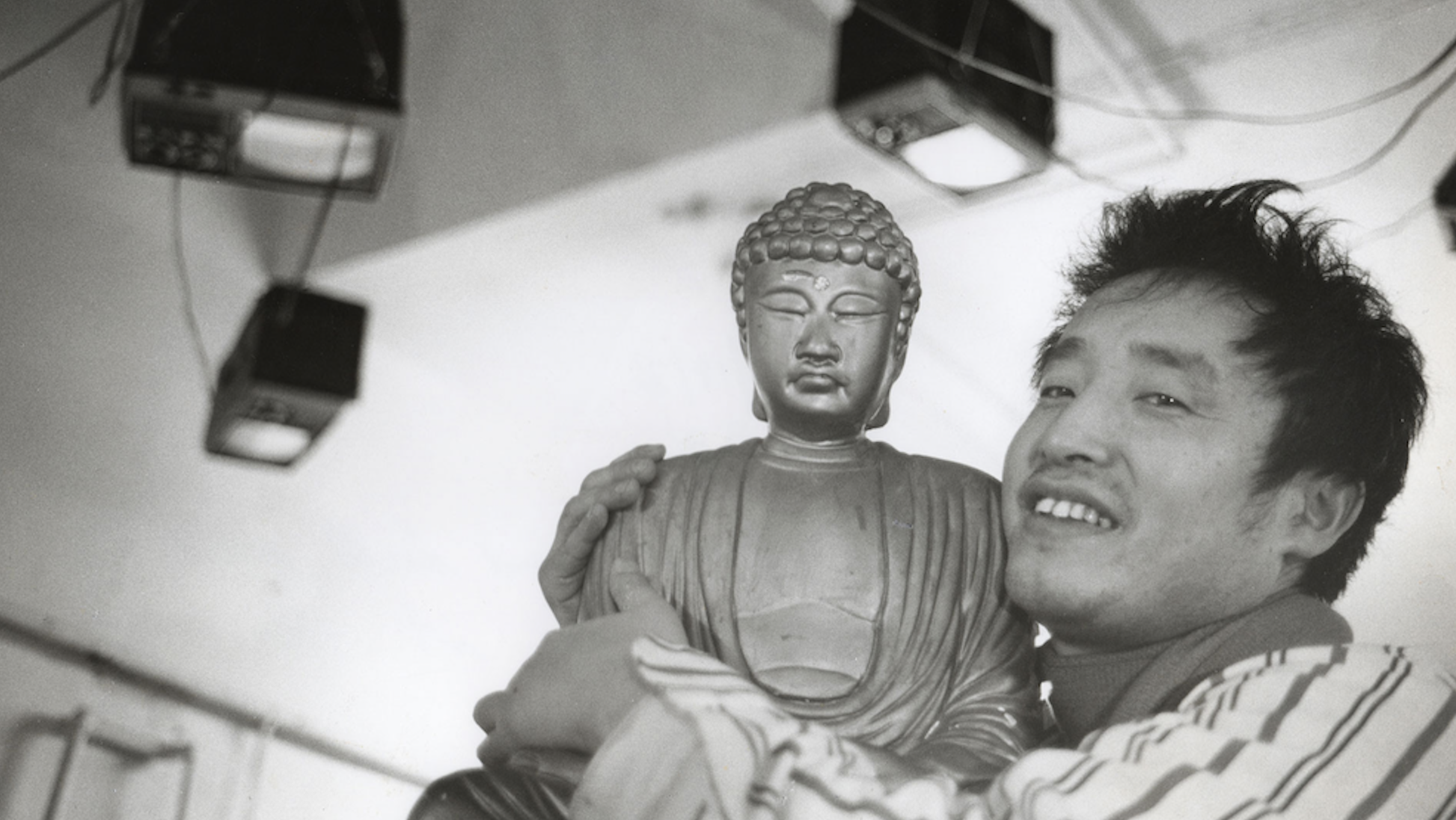
The big screens
Michael (2026), directed by Antoine Fuqua, traces the life of Michael Jackson from his early days in the Jackson 5 all the way to his ascent as the most iconic entertainer the world has ever seen. The ambition, the artistry, the complexity behind the legend. This is the kind of film that demands to be seen in a cinema.
And yes, Miranda Priestly is back. The Devil Wears Prada 2 (2026), directed by David Frankel, picks up with fashion's most formidable force navigating the collapse of the magazine industry. Former assistant Emily Charlton, now running her own luxury brand, re-enters the picture. The power dynamics have shifted. The drama has not.


The films that will stay with you
Sirat (2024), directed by Oliver Laxe, follows a father and son searching for a missing daughter across Morocco, their journey cutting through rave culture and turning slowly into something much more elemental. A test of endurance, of hope, of what love actually looks like when it has nowhere left to go.
Palestine 36 (2025), directed by Annemarie Jacir, is set in 1936 British Mandate Palestine and follows a young man navigating identity and resistance as unrest builds around him. Essential, urgent, and exactly the kind of film that Cinema Akil was built to platform.

Sentimental Value (2024), directed by Joachim Trier, reunites two sisters with their estranged filmmaker father. A quiet, aching film about memory, distance, and everything that gets inherited without being chosen.
All That's Left of You (2024), directed by Cherien Dabis, follows a mother recounting generations of displacement and trauma leading to her son's confrontation at a West Bank protest. One of the most important films on this list.
Yard Screenings for Art Month at Alserkal Avenue
Cinema Akil is also bringing three extraordinary films outdoors for Art Month at Alserkal Avenue, and this selection alone is worth clearing your schedule for.
Adnan: Being and Time (2025), directed by Marie Valentine Regan, is an expressionistic portrait of the incomparable Etel Adnan, exploring her life, art, and reflections on time and what it means to truly endure.
Nam June Paik: Moon Is the Oldest TV (2023), directed by Amanda Kim, is a vibrant, joyful chronicle of the visionary artist widely regarded as the father of video art. If you have ever been moved by an installation, this is the origin story.
And then there is The Color of Pomegranates (1969), directed by Sergei Parajanov. A film that does not tell so much as conjure. A poetic, visually intoxicating retelling of the life of Armenian poet Sayat-Nova, built entirely from symbolic dreamlike tableaux. One of cinema's great works, under the open sky.
Coming soon
Arab Cinema Week returns for its 5th edition in early June 2026. Details on the programme, the souk and all activities are dropping soon. Watch this space.
All screenings and tickets at cinemaakil.com
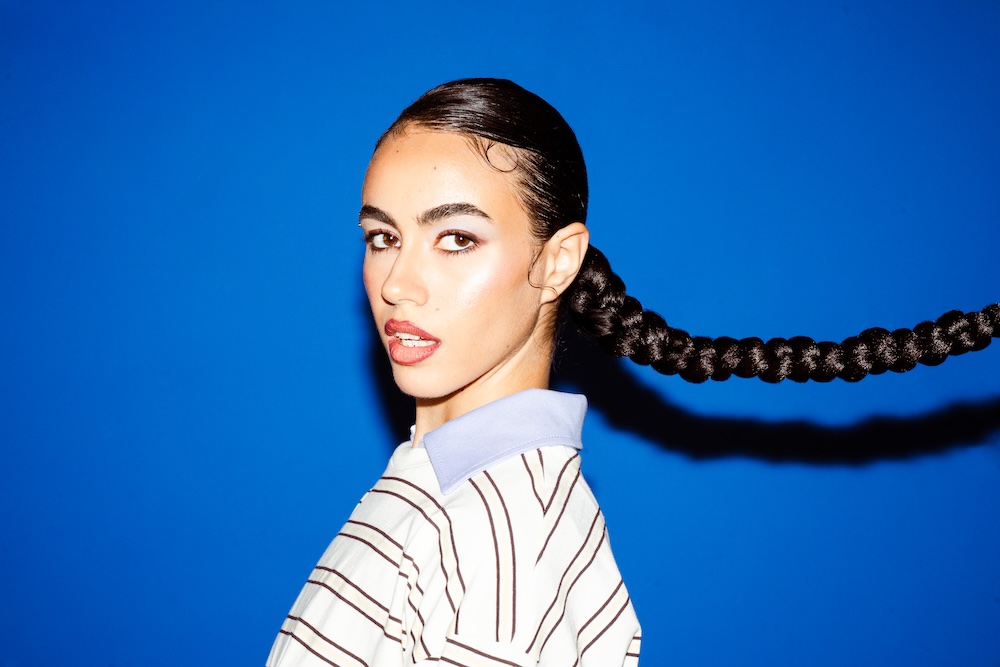
nour Returns With “Alo?!”, The Pop Anthem That Flips The Script
If you have been following nour for a while, you know she does not do anything halfway. She is the kind of artist who makes you feel seen in the most uncomfortably specific way, the one whose songs you send to people without explanation because the explanation is already in the lyrics.
Her recent run of releases has been exactly that: emotionally raw and deeply honest.
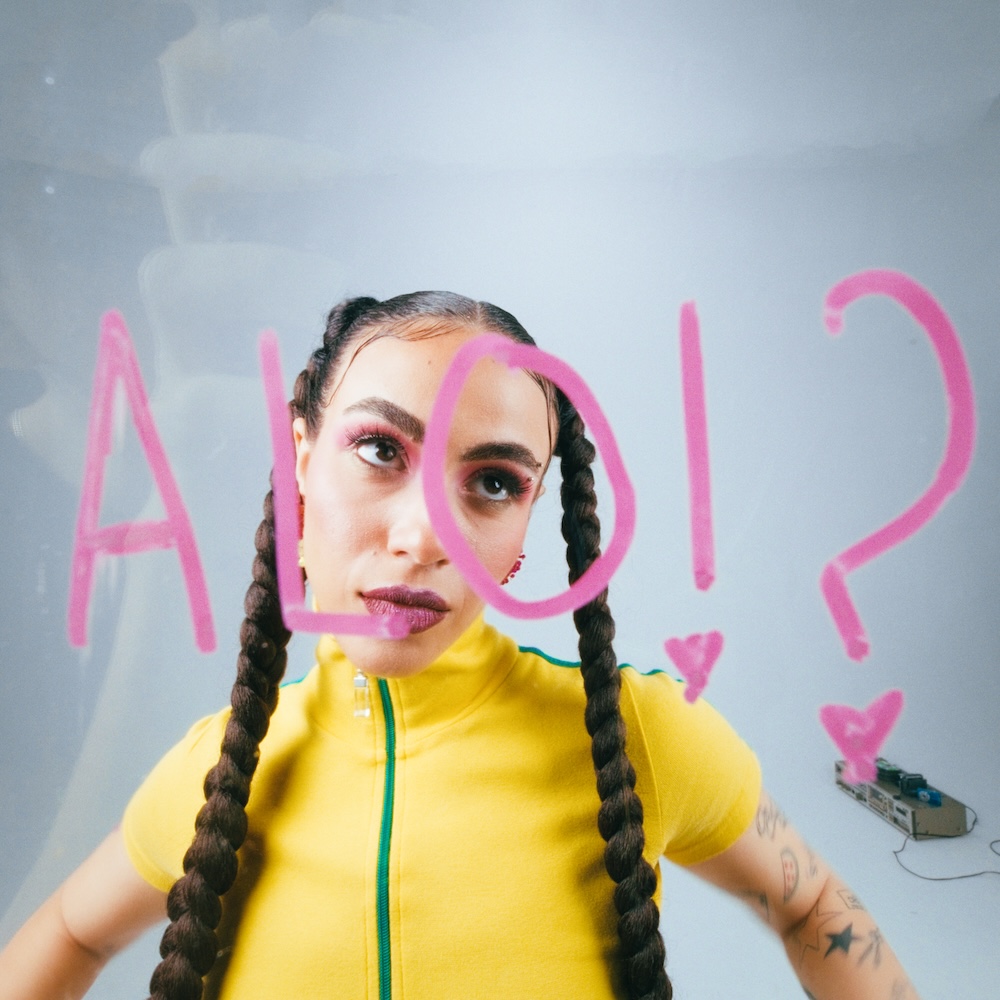
So "Alo?!" hits differently. Not because it is a departure from who she is, but because it shows you a side of her that feels just as true and a whole lot more fun.
The new single is a breakup song that has absolutely no interest in being sad about it. The production is electric and playful, light in the best possible way, and carries the same carefree energy that made early nour hit "Wana" so infectious. But this is a sharper, louder, more self-assured version of that. She has grown into her confidence and it shows in every layer of the track.
The standout line says it all: "هو انت مشيت؟ طب طز فيك". Not a question or a plea but just clarity. The kind of clarity that only comes when you have genuinely stopped caring, and it feels like freedom rather than loss. Isn't that the best feeling?
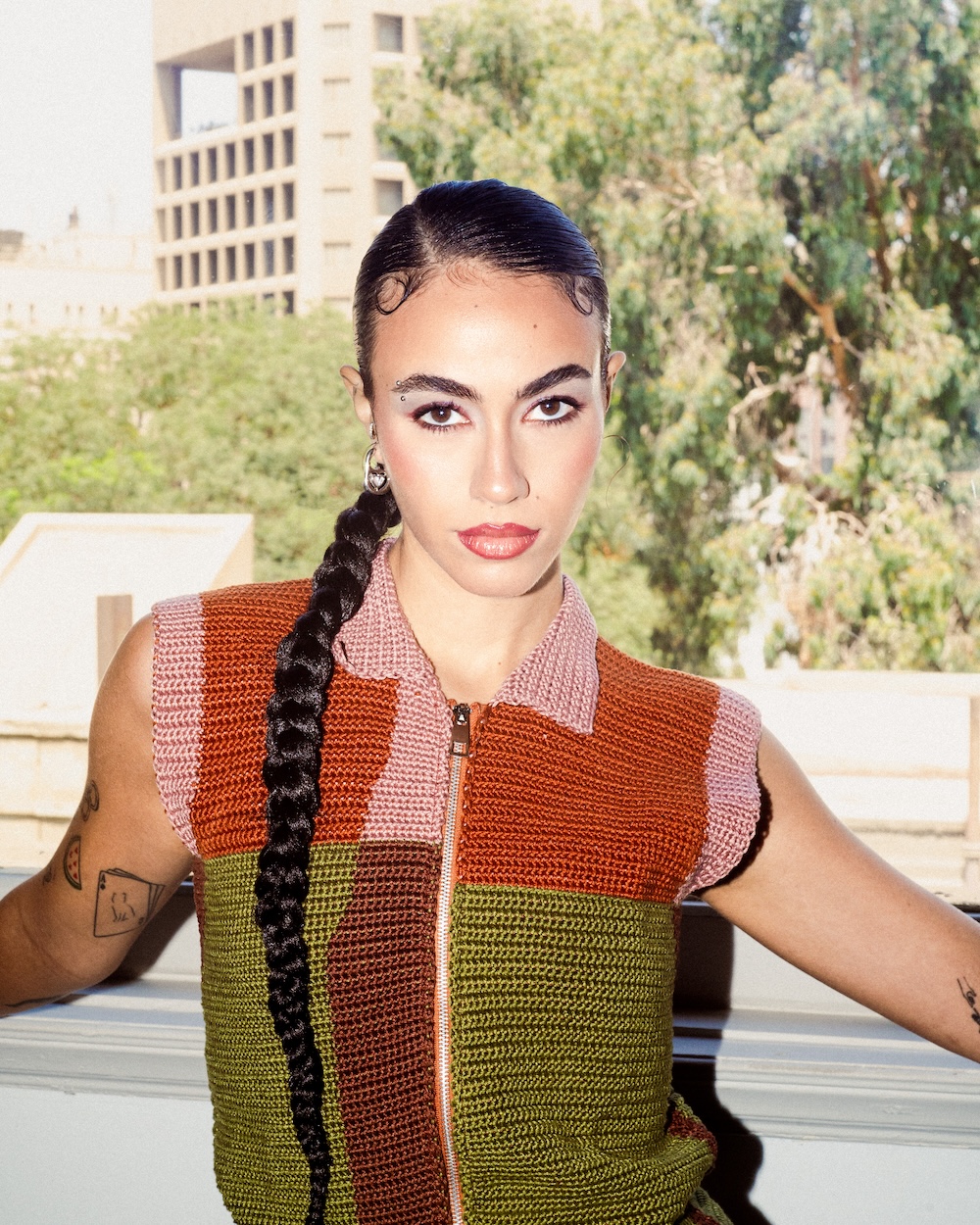
That is what makes this record work. nour has always been defined by her honesty, her ability to say exactly what she feels without softening the edges for anyone. On previous releases that honesty looked like vulnerability. On "Alo?!" it looks like indifference, and she wears it just as well.
As an artist she has always existed in multiple worlds at once: the dreamy synth-pop songwriter and the high-energy DJ performing under her alias R4wlight, fusing Arabic melodies with funk, soul and dream-pop in a way that feels both nostalgic and completely of this moment. "Alo?!" lives in that same duality. It is the song for the girl who cried to the last album and is now absolutely fine, thank you very much, and dancing about it.
Not every ending needs to be heavy. Sometimes you close the chapter, put on something loud, and just move. nour just gave you the soundtrack for that.
"Alo?!" is out now, listen to it, here
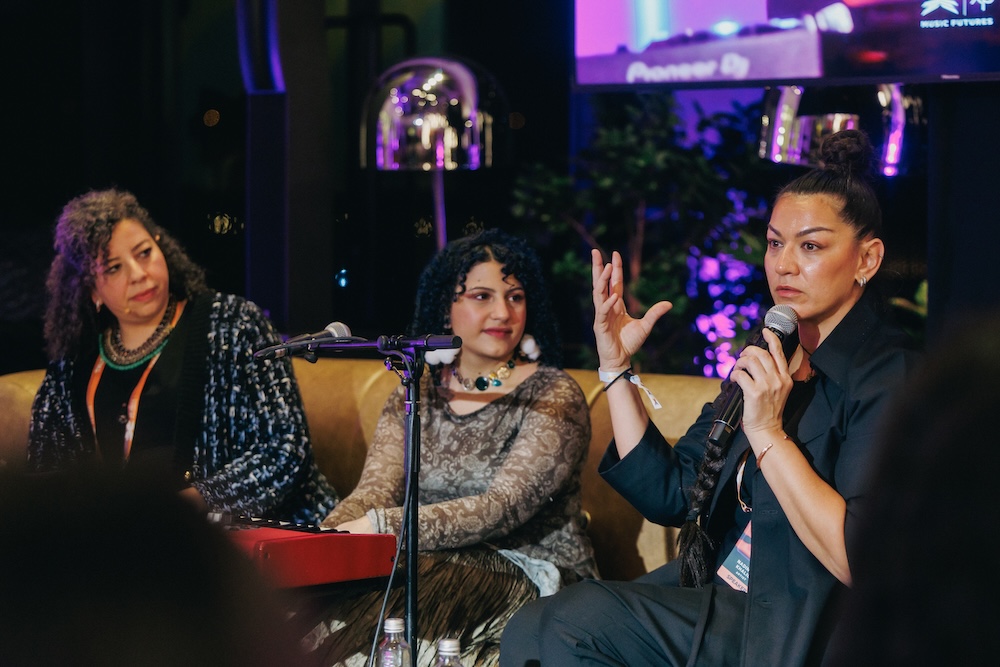
MDLBEAST Foundation's HUNNA Program Wants to Find You and Help You Change the Industry
The 2026 mentorship program is open for applications, and if you are a woman in music in the MENA region, this one is worth your full attention.
There is a version of the music industry in this region that looks very different from the one that exists today. More women behind the decks, at the mixing boards, in the boardrooms, in the booking conversations. HUNNA has been working towards that version since day one and in 2026, it is moving faster than ever.
The MDLBEAST Foundation has officially opened applications for the HUNNA 2026 Mentorship Program, and this year the initiative is entering what feels like its most ambitious chapter yet. Not just a mentorship program anymore, but a full platform for education, advocacy, and structural change across the regional music ecosystem. Applications are open for both mentees and mentors, which means whether you are just finding your footing or you have been in the industry long enough to bring someone else up with you, there is a place for you here.
Since launching, HUNNA has supported over 100 women across the region through mentorship, leadership courses, and industry programming. The numbers matter, but what matters more is what those women are doing now. Alumni like Haya AlHejailan, now working as both an artist and a live booking manager, Nazli Reda who went on to become a live sound engineer, and Soumaya Laghiti, artist and songwriter, are not just success stories. They are proof that the program's model actually works and that when you give talented women in this region the right access and the right people in their corner, they go on to build careers that did not previously exist here.
The 2026 edition is also introducing something new: an educational hub designed to expand access to learning, mentorship and professional opportunities at every stage of a career. Think of it as a living resource that grows with its community, where this year's mentees become next year's mentors, and the network compounds over time.
Beyond the individual, HUNNA is also stepping into an advocacy role, working directly with organisations and industry stakeholders to push for better gender balance across events, teams and the broader music landscape. This is not just about creating opportunities for women within the existing system. It is about changing the system itself.
The program's core offer includes a mentorship program, masterclasses and workshops, exchange programs and residencies, and access to a growing regional network of artists and professionals. Past mentors have included Sarah El Miniawy, cultural strategist and founder of Simsara Music, Christina Lazic, DJ and producer, Salam Kmeid, senior executive at Anghami, and Celine Hitti, Head of Artist Services MENA at Believe, the kind of people who can actually open doors, not just talk about what is behind them.
The MENA music scene is at an inflection point. The infrastructure is being built in real time, and the decisions being made right now about who gets access, who gets credited, and who gets a seat at the table will shape what this industry looks like for the next decade. HUNNA understands that, and it is one of the few initiatives in the region doing something concrete about it.
If that sounds like something you want to be part of, applications are open now.
Apply at mdlbeastfoundation.com or follow the MDLBEAST Foundation on Instagram for updates.
Kayali Partners With 'Calm' App For Mental Health Awareness Month
There’s something shifting in the way we talk about mental health. It’s no longer just about reacting when things fall apart.
It’s about building small, intentional moments into everyday life, moments to pause, to breathe, to recalibrate before reaching that breaking point; and especially in times like now when everything feels uncertain.
This May, that shift takes a more tangible form. With Mental Health Awareness Month as its backdrop, KAYALI has partnered with Calm on a global, thoughtful initiative that doesn't scream campaign.
For every purchase made on KAYALI.com throughout the month, customers receive three months of Calm Premium access, opening the door to guided meditations, sleep stories, and tools designed to support emotional wellbeing, no minimum spend, no barrier to entry.
For Mona Kattan, this collaboration feels personal. Long before it became part of a broader conversation, mental health was something she openly navigated, integrating mindfulness and self-care into her daily life.
That philosophy has always been embedded in KAYALI. Fragrance, here, isn’t just about how you smell, it’s about how you feel. It's a ritual, a mood, a moment of connection with yourself.
This initiative extends that idea further.
It's giving you permission to slow down in a world that constantly pushes you forward; to step away, even briefly, without feeling like you’re falling behind. Permission to take your mental health seriously, not just when things become overwhelming, but as part of your everyday rhythm.
And especially now: the expectation to always be available, productive, connected...leaves very little room to simply exist without purpose.
Through KAYALI Cares, the brand’s broader initiative around community and wellbeing, this partnership becomes part of a larger conversation, one that moves beyond beauty and into something more lasting.
At JDEED, this is something we believe in deeply. Mental health isn’t separate from creativity, from work, from how we show up in the world. It’s the foundation of it. And while there’s no single way to care for it, there is value in the small things, the moments of pause, the rituals we return to.
This is your reminder to let yourself breathe.
Tito El Khachab Built Sandbox One Right Decision at a Time
Twelve editions in, the founder of Egypt's most respected electronic music festival talks about protecting energy, building trust, and why the Arab world is only just getting started. If you have ever been to Sandbox Festival, you already know it feels different from everything else.
If you have not, you have almost certainly heard someone who has try and fail to explain exactly why. Tito El Khachab, the Egyptian producer, entrepreneur and DJ who built it from scratch in 2012, has a way of describing it that makes the whole thing feel inevitable in retrospect.
By Cynthia Jreige

"Egypt chose us as much as we chose Egypt,"
"Looking back it felt inevitable," he says. "But it was very much one step at a time. There was no grand plan. There was just a belief that if you build something real, the right people will find it and will want to connect with it."
That belief became a one-day event, then a series, then the first three-day edition in 2015, and then something that now draws over 7,000 attendees from more than 50 countries each year to El Gouna on Egypt's Red Sea coast. Twelve consecutive editions later, Sandbox is one of the most respected independent festival platforms in the world, programming artists who headline Berghain, Fabric and De School, all while maintaining full editorial and financial independence.
The way Tito tells it, none of that was accidental.
"I noted that electronic music had not found its crowd and space in this region, and that festivals with strong human connections are rare," he explains. "I wanted to build a curated, boutique gathering that grows slowly and selectively, where the crowd is as important as the lineup."

That last line is the key to understanding everything Sandbox is. In a festival landscape that often prioritises spectacle and scale, Tito has built something closer to a community, and he protects it fiercely.
"We've never grown faster than the experience could sustain," he says. "The discipline starts before anyone arrives, in the pricing, the early-bird structure, how we communicate, who from the talents we invite back, the pre-selection process. None of it is accidental. When you consistently make decisions that signal what Sandbox is about, you naturally attract people who believe in those same things, and gradually filter out people who aren't. The trust between a festival and its community is built through years of consistent choices, most of which nobody outside the team ever sees."
Part of that trust is built on what Sandbox refuses to do. No VIP sections. And on brand partnerships, Tito is equally deliberate.
"VIP sections break the thing that makes a great night possible, the communication between everyone in the room. When you separate people into tiers, you kill the energy," he says. "In this region, festivals with strong human connections are rare. If a festival is simply programmed to draw, it becomes the equivalent of a social media feed, run by algorithms. Sandbox was built as the opposite of that from day one, and that's not something we're willing to trade away."
Then there is the setting itself. El Gouna is not just a backdrop. It is part of the experience in a way that cannot be replicated.
"Egypt chose us as much as we chose Egypt," Tito says. "El Gouna gave us something no other location could, the desert, the water, and a natural, open-air environment that becomes part of the experience itself. Guests don't just attend the festival, they inhabit a place for three days. That changes everything about how people experience it."
The sound design is built around that environment too. "The stages are separated by purpose-built sandbanks, thousands of truckloads of sand sculpted each year, and so each one has its own sonic world. You can stand between two stages and hear neither bleed into the other. That level of care is what distinguishes the experience for both guests attending and also talent who look for an infrastructure that honors their craft."

On the bigger picture, Tito is measured but quietly excited about what is happening across the region right now.
"I think we are at the beginning of something rather than the middle of it," he says. "The European calendar is saturated. Artists and audiences are looking for experiences that offer something with new energy. North Africa, and Egypt specifically, offers that. The setting, the crowd, the music culture that has grown here, all of it is distinct and all of it travels internationally in a way that people are only now starting to understand. Sandbox has tried to be part of nurturing that and reflecting it back to the world. The world definitely notices."
Earlier this year, Sandbox expanded beyond Egypt with the launch of Sandbox Selects in Dubai. It is a one-day showcase format, intimate by design, and the first step in a careful global expansion that Tito insists will follow the same rules as everything else he has built.
"We are growing carefully, and we are selective," he says. "The same philosophy that has guided every decision at Sandbox applies to how we expand, gradually, on our own terms, never faster than the experience can sustain. The moment we start making decisions based on what the market wants rather than what we believe in, it's over. We're aware of that line."
Twelve editions in, that line is holding.
You Need To Recharge: The Shams Club Palm Springs Retreat Is Calling Your Name
“It was an incredible experience. It left me inspired, energized and connected,” this is what Mariam Hattab said after Shams Club's Creative Retreat in Mexico City just earlier this year. “It was a magical time with true attention to detail. The insights were personalized, smart and intuitive.”
Mariam had come in as an entrepreneur; she began her membership with Shams Club seeking connections with other creative entrepreneur and creator founders and that's exactly what she found.
By Halluma Seklani

As creatives, we’ve all had those aha moments. They can be small ones that accumulate over time or sometimes they come as a single revelation that reorientates everything and sets the track to all of your creative endeavours. Those moments matter and can be crucial especially in the beginning of growing something real. Kindling that spark is exactly what Shams Club Creative Retreats are all about.
"A membership to Shams Club opens the door to a community built specifically for creatives from the SWANA region and Arab diaspora, wherever they’re based"
Shams Club is a SWANA based cultural and global hub for creative entrepreneurs and creator founders. It was Co-Founded by Lena Kouri from Between East, Yasmine Rasool from WAASTAA, and Anousha from Joy Culture. The platform is a gathering ground for creatives in all stages of their careers from makers, thinkers, story tellers, artists, etc.
A membership to Shams Club opens the door to a community built specifically for creatives from the SWANA region and Arab diaspora, wherever they’re based. Members get access to: IRL meetups where members get to meet and connect in person; creative sessions offer direct access to established entrepreneurs or founders where they can learn from the hard-won experience; Announcement feeds give the community a chance to share their work, opportunities or events; job opportunities connect members with roles and projects that actually fit a creative career; Special member discounts for brands, and so much more. With global group chats and direct DM’s where you can reach members one-to-one.

"We built Shams Club because we wanted to fill a room of creative entrepreneurs that were similar to us. One where we can grow alongside other founders and help guide new opportunities for our new members and community. Mexico City showed us what's possible when you put the right people together, Palm Springs is us doing that again. It's somewhere our members can slow down, share their work, and leave with something real." — Lena Khouri & Yasmine Rasool, Co-Founders, Shams Club and Anousha, Founder of Joy Culture.
What to expect
Here’s the rundown of everything you need to know. Running from Sunday May 31st to Wednesday June 3rd, the retreat draws 6 creative entrepreneurs from pivotal stages of their journeys to Palm Springs, California. The theme (because, let’s be real, we all love a theme) is Creative Recharge. What does that mean? This retreat is all about dialling it down, taking a step back, moving with intention and pairing that slowness with productivity and, of course, community.
You’ll begin every morning with wellness practitioner Anousha guiding the group through fascial movement and meditation. This acts as a deliberate uncrutching from the urge to doomscroll, check emails and jump straight into the day's work. Communal breakfasts follow, prepared by a private chef, to ensure you're fueled and ready to start the day. By the time the first workshop starts, the retreat has already done the most important work of turning creative strangers into colleagues and colleagues into collaborators.

The programming itself moves between learning and application. By setting a 30-60-90 day business plan, attendees can leave the retreat with a concrete roadmap that gives them clarity to actually execute when they’re back at their desks. A session on pitching led by Shams Club Co-Founder Lena Khouri, breaks down what actually makes a bid land whether for brand partnerships, investors or creative collaboration. Then an open portfolio evening where attendees can present their work to the room, to showcase their work and receive real feedback, in real time from people who get it. One to one peer sessions, pre-matched by values and goals, ran concurrently along other discussions on brand voice, operations, scaling, and so much more. The retreat closes on Wednesday with a farewell session before an optional exploring of Joshua Tree and the wider Palm Springs area. The Shams Club crew will have staggered 30 day, 60 day, and 90 day post-retreat catch up calls with all the attendees to keep the momentum going and offer further support if needed.
“Personally, this retreat truly shifted something for me. It gave me the chance to connect and share my art with people I truly admire and respect in such a supportive, uplifting space. The thoughtful structure and one-on-ones with each organizer offered real, tangible guidance, and time to explore Mexico City added another layer of inspiration,” says Yasmin Souza about how impactful the first Shams Club retreat was. “I’m deeply grateful for the genuine relationships that grew from this retreat. Being surrounded by creatives with shared goals and encouragement didn’t just motivate me, it shifted my perspective and how I see my own work and path forward."
If you are building something and you have been waiting for the right room to walk into, this is it. To find out more or apply visit the Shams Club website here: www.joinshamsclub.com/palmsprings.
Your Jewellery Deserves a Vitrine And House of Samra Is Literally Giving You One
A luxury jewellery house just opened its boutique doors to Emirati designers, and all you need to apply is an Instagram DM.
If you've been sketching jewellery designs in your notes app, layering your own pieces for photoshoots, or quietly building a collection that nobody outside your inner circle has seen yet... this one's for you.
House of Samra, one of the UAE's most recognisable fine jewellery brands, just announced the Emirati Talent Showcase, a proper, curated programme designed to give Emirati jewellery designers a real platform. Not a competition. Not a mood board collab. An actual vitrine inside their flagship boutiques.
"Supporting local talent is not a gesture — it is a responsibility."— Katia Samra, Creative Director, House of Samra
So, What Does This Actually Mean for You?
Selected designers get their collections showcased inside Samra's boutiques; that's Dubai Mall, Mall of the Emirates, Dubai Hills Mall, and Dubai Festival City Mall. We're talking prime retail real estate, in front of a high-end, international clientele. The kind of exposure that usually takes years to build.
The initiative is happening in collaboration with Dubai SME (Mohammed Bin Rashid Establishment for Small and Medium Enterprises), which means this isn't just a feel-good campaign, there's institutional weight behind it. Think of it as a launchpad with the right people already paying attention.
This all matters now: the UAE's creative scene has been building momentum for years, but access to premium retail space has always been the bottleneck. A luxury brand like Samra opening its vitrines to emerging Emirati talent is genuinely rare and it signals a bigger shift in how the region's fashion and jewellery ecosystem is evolving.
For young designers who've been told to "build your following first" or "wait until you have more pieces," this is the opportunity that skips a few steps.
How to Apply
The application process is refreshingly simple: send your portfolio via Instagram DM to @samrajewellery.
That's it. No lengthy forms, no agency middleman. Just you, your work, and a direct line to one of Dubai's most respected jewellery houses.
For more information, visit samra.com or follow @samrajewellery on Instagram.

Taste Lives Here: Inside Jessica Cox's Dubai Apartment
It all started when Jessica, the very cool Dubai-based Founder of Talent & Strategy Agency Imaginary Friends moved into her own space in Dubai and took us, her followers, along for every step of the decorating process; from her Facebook Marketplace finds to her custom-made furniture. I remember thinking: dang! immaculate taste.
I even subscribed to her channel, where she would share newly listed pieces on the OG Meta platform.
In a world where fishbone dining chairs and Scandi decor feel omnipresent, coming across interiors that are truly individualistic is a visual treat. We wanted to learn more about Jessica’s inspirations, as well as her do’s and don’ts.
Welcome to our first "Taste Lives Here" where we ask the coolest people to show us their interiors
By Cynthia Jreige
Photography: @jullzbek
JESS'S ID
Name: Jessica Cox
Location: Dubai
Job: Influencer Strategy and Management
When did you realize you loved interiors and decorating?
When i moved out of the family home and had a blank canvas to work with. It felt like a new opportunity to express myself.
What’s been the most fun decorating your own place?
Being creative with balancing aesthetic and function.. and also finding ways to create little luxuries for myself even in a small space.
What are mistakes you learned from?
Working with custom builders in Dubai is not for the weak...even some of the most legitimate looking ones can be scammers.
You have to have every design element confirmed in writing, with drawings - never trust that their vision is aligned with yours.
What are the top places you looked at for furniture?
Facebook Marketplace has been my goldmine! But also La Brocante for vintage and second hand and H&M Home are some of my favourites. The CB2 outlet as well!

What’s a random purchase that you can’t live without?
Probably the waterproof bench in my shower. It has made my showers even longer but sooo much more lush.
What are some regional interior designers / architects whose work you admire?
There’s so many good ones! Omar Al Gurg's style is great. Nada Debs. Super Studio Official!
What makes a house a home?
Displaying your personality in a tasteful medium. Sometimes it’s not about screaming Eat, Pray, Love on your doormat or artwork - but creating a space that exudes hospitality, comfort and spirituality using texture, scent, subtle accessories to communicate a message.
Top 3 favourite designers?
All time is impossible to choose but i’ll give you the 3 at the top of my wishlist:
Lighting designer duo - Loney Abrams and Johnny Stanish (Wretched Flowers)
Katie Kohls' insane pebble mirrors
Whoever is behind @sidequeeste phenomenal steel work

What’s your advice to someone wanting to decorate their own home now and who’s struggling?
Nesting is a primal instinct, embrace the difficulties and use it as an opportunity to learn about yourself on a deeper level. When you make mistakes, don’t under-utilize returning items or reselling them. if you hate something - look at it as an opportunity to reinvent and refine and learn to express yourself again and again.
Follow Jess on Instagram, here


