Art Basel Qatar 2026 : Doha Steps Onto the Global Cultural Stage

In February 2026, Doha will open a new chapter in contemporary culture as Art Basel Qatar unveils its inaugural edition. Anticipation has been building for months, and with good reason.
The fair arrives not simply as another stop on the global art calendar, but as a defining moment for the Middle East’s cultural landscape, placing Doha at the crossroads of regional storytelling and international dialogue.
At the heart of this first edition are 84 artists and 87 galleries from 31 countries, supported by a deeply ambitious Special Projects program that transforms the city itself into an extended exhibition. Curated by Wael Shawky in collaboration with Vincenzo de Bellis, the program introduces nine monumental sculptures, installations and performances distributed across Msheireb Downtown Doha, weaving art into the rhythm of urban life.
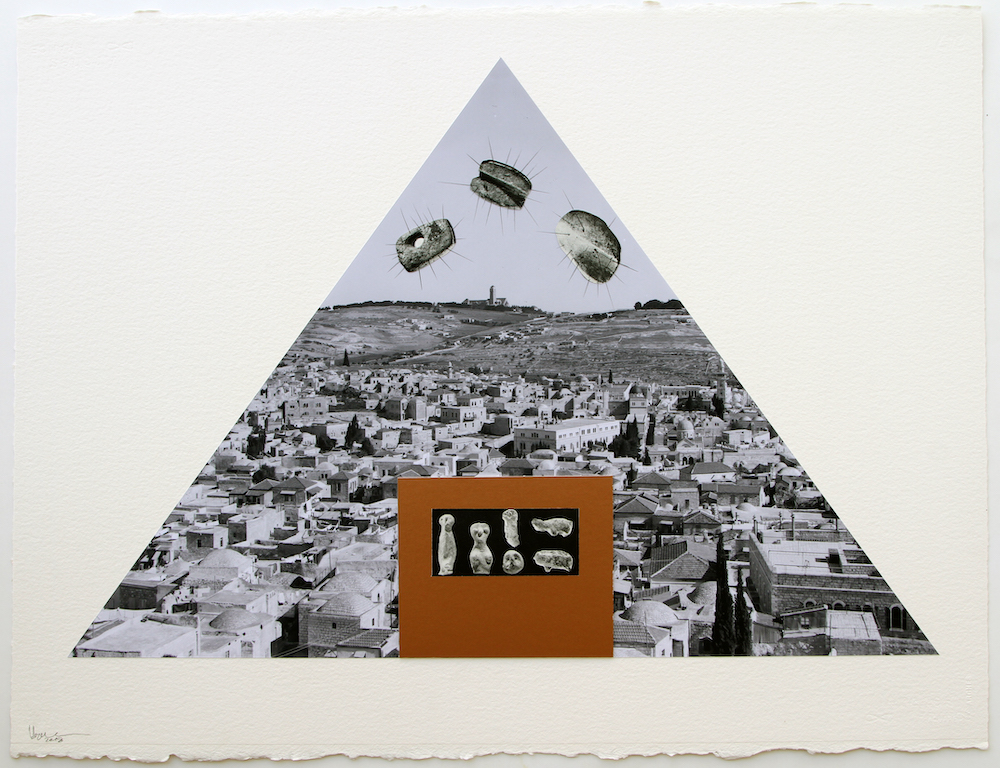
Anchored by the fair’s thematic focus, Becoming, these projects examine transformation in its many dimensions. Personal, political, ecological and spiritual shifts all find expression in works that refuse to sit neatly within traditional formats. Instead, Art Basel Qatar positions the city as both canvas and collaborator, inviting visitors to move through an environment where contemporary art is not simply viewed but experienced.
When the City Becomes the Exhibition
The selection of Special Projects forms a compelling blend of voices and artistic languages.
Mexican artist Abraham Cruzvillegas expands his celebrated autoconstrucción philosophy into one of his most ambitious public sculptures to date, exploring reinvention as a cultural and personal inheritance.
At M7, Bruce Nauman floods the theatre with a vast projection of Beckett’s Chair Portrait Rotated, dissolving the boundaries between architecture, movement and perception. Nearby, Hassan Khan’s Little Castles and Other Songs unfolds through a bespoke digital sound system, drawing visitors into a shifting emotional landscape shaped by uncertainty and global flux. The conversation continues with Khalil Rabah, whose installation Transition, among other things assembles fragments of domestic and institutional structures to probe how memory and identity occupy physical space. Above the district, Nalini Malani turns the façade of M7 into a stop-motion cosmos with My Reality is Different, a haunting universe animated by displacement, mythology and collective trauma.
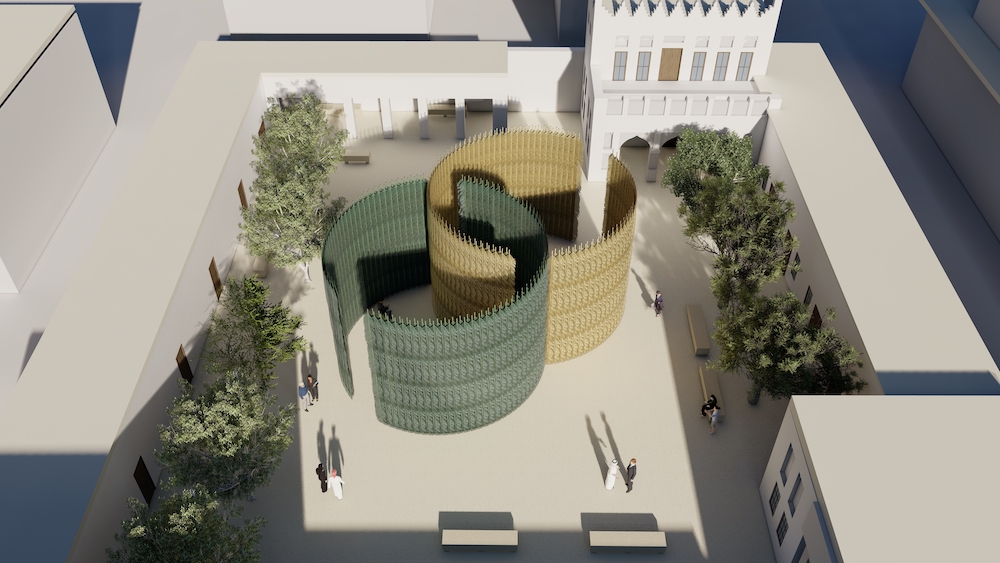
Further along, Nour Jaouda imagines a waystation built from steel, suspended textiles and layered drawings, a site where emotion quietly overrules geography. Rayyane Tabet introduces a contemplative pavilion in What Dreams May Come, evoking the simple gesture of resting beneath a palm tree and offering the city a moment of stillness. Completing the constellation, Sumayya Vally’s In the Assembly of Lovers reinterprets Islamic public architecture through a continuously shifting communal space shaped by movement, poetry and the act of gathering.
The performance collective Sweat Variant stages a durational choreography exploring the gestures of holding and witnessing, transforming physical endurance into emotional dialogue.
Together, the projects form an urban choreography that invites audiences to wander, encounter and reflect. Doha becomes an active participant in the artistic process, its public spaces reimagined as sites of possibility.
Inside the Galleries: A New Centre of Gravity
%20Bouthayna%20Al%20Muftah-%20photograph%20by%20Robin%20Augustine%20.jpg)
Within the fair itself, the Galleries sector draws a sophisticated portrait of contemporary art across the MENASA region and beyond. More than half of the participating artists represent the cultural geographies that Art Basel Qatar seeks to spotlight, establishing the fair as a new anchor within the Art Basel network.
Highlights include focused presentations by Etel Adnan, political and ecological inquiries by Ali Cherri, documentary reflections by Ahmed Mater, and new works by Mona Hatoum and Marlene Dumas. The sector also features conceptual investigations by Mohamed Monaiseer, transformations of form by Philip Guston, object-based systems by Hassan Sharif, and expansive narratives from Simone Fattal, Shirin Neshat, Lynda Benglis, Sophia Al-Maria and others.
Here, regional modernism, diasporic memory and experimental contemporary practices coexist, offering an unusually layered view of artistic production today.
A Wider Cultural Season Across Qatar
Coinciding with Art Basel Qatar is an extensive calendar of exhibitions and public programs across Qatar Museums institutions.
From the expansive we refuse_d exhibition at Mathaf and the retrospective of I. M. Pei at ALRIWAQ, to Rirkrit Tiravanija’s large-scale installation in MIA Park and the immersive celebration of MF Husain at Katara, the city-wide programming enriches the fair with parallel narratives. The 3-2-1 Qatar Olympic and Sports Museum brings a cultural lens to design through Sneakers Unboxed, while public artworks by Richard Serra, Olafur Eliasson and regional artists extend the experience into Doha’s urban fabric.
A Fair Rooted in Place and Looking Forward
Art Basel Qatar 2026 arrives with the clarity of a cultural landmark in the making. It reimagines the role of an art fair, positioning Doha not only as a host city but as a site of artistic experimentation, civic engagement and regional storytelling. In its inaugural edition, the fair does more than present art. It proposes a new way of encountering it, one shaped by transformation, proximity and place.
Doha stands at the beginning of a cultural horizon that feels expansive and distinctly its own. Art Basel Qatar, in its first gesture, has already ensured the world is watching.
More on ArtBasel.com

.png)