Why Is Authenticity Only Applauded When It Fits The Narrative?
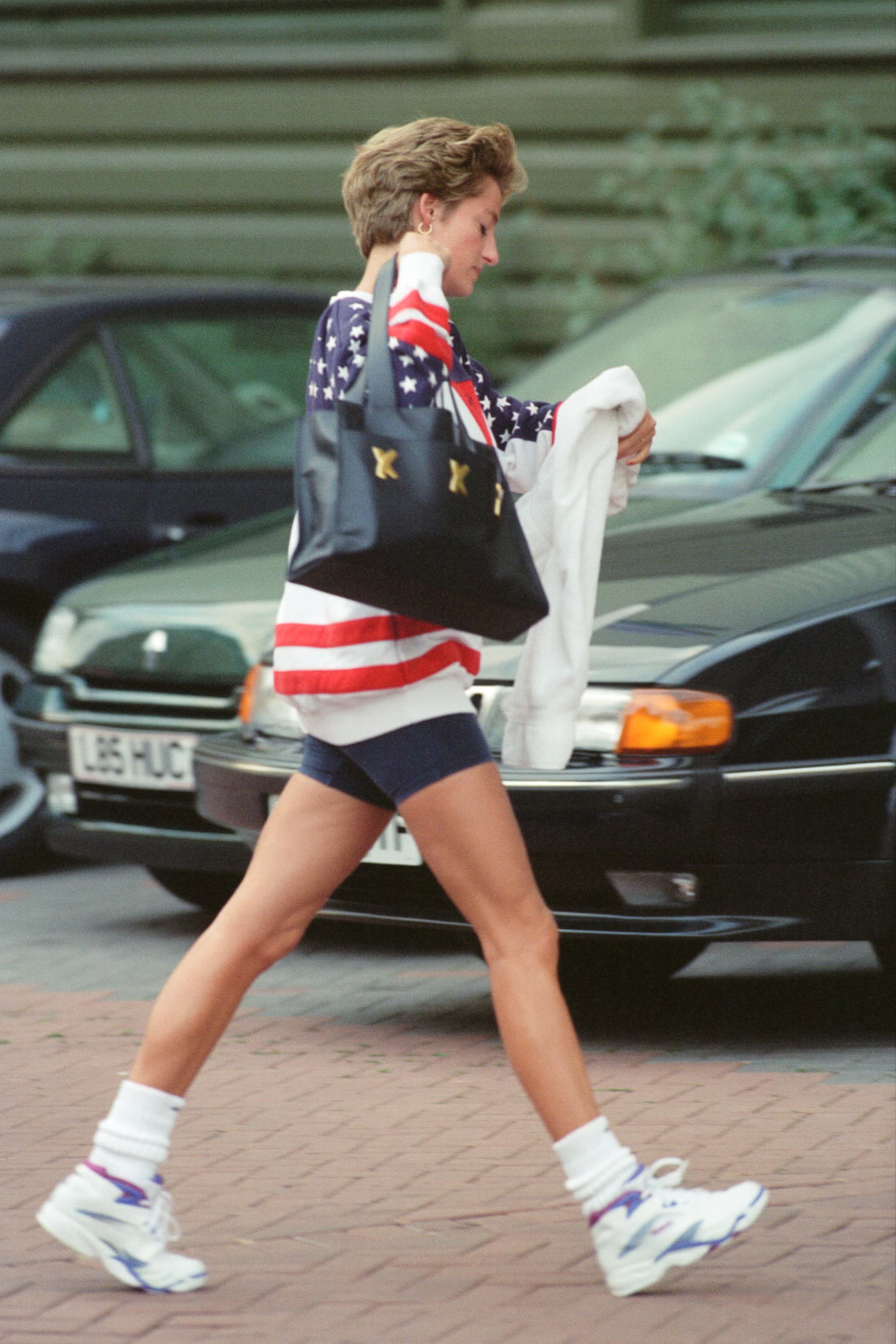
Authenticity has become the latest trend: applauded, marketed, packaged, sold. But only as long as it fits neatly within a narrative designed for us, not by us.
Every day, we’re bombarded with products promising to shape us into our “best selves.” A face cream that erases time. A gym membership that rewires discipline. GLP-1s that melt away the parts of us we were told to hide. Each one marketed like a passport to a new identity: shinier, smoother, smaller.
A life where insecurities magically vanish and we emerge as an improved, invisible version of ourselves.
But hold on.
Do we even want that?
By Cynthia Jreige
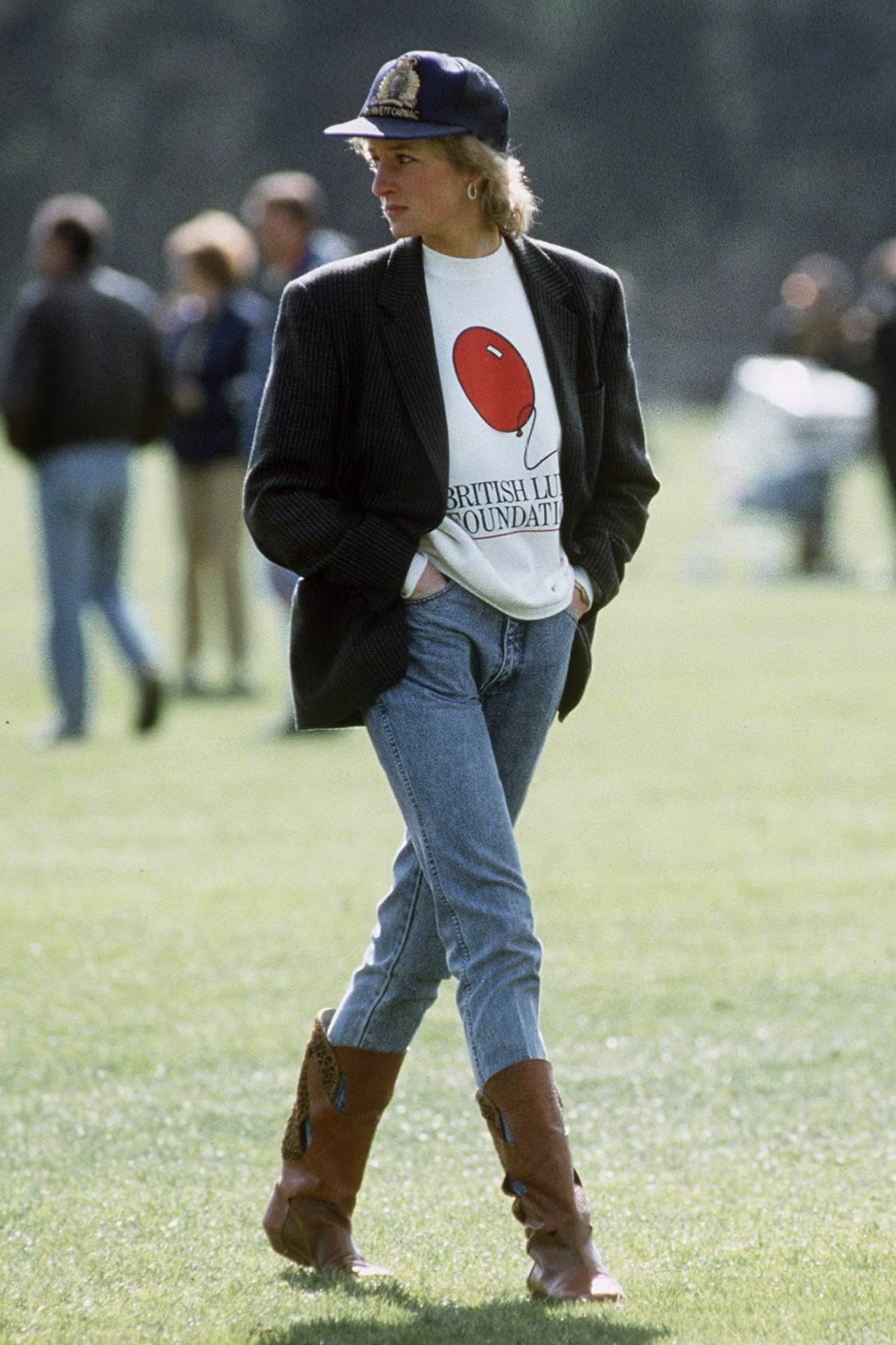
Between persuasive branding and the constant hum of self-optimization culture, it’s easy to forget to ask the question. We follow the script on autopilot, convinced that transformation is the only way forward. But the paradox is clearer than ever: be your best self, but only the version we’ve pre-approved. Look how you’re sold to look. Feel what you’re told to feel.
Where, then, does the real “you” sit in all of this?
Because being truly authentic—living by your own desires, your own beliefs, your own contradictions—rarely fits the commercial blueprint. Saying no when everyone else is nodding yes. Wearing blue in a world committed to yellow. Choosing a life that doesn’t photograph easily.
We’re encouraged to journal, manifest, meditate, “be ourselves.” But not too much. Not too loudly. Not in ways that might disrupt industries built on manufacturing insecurity. After all, radical self-acceptance doesn’t exactly boost quarterly sales.
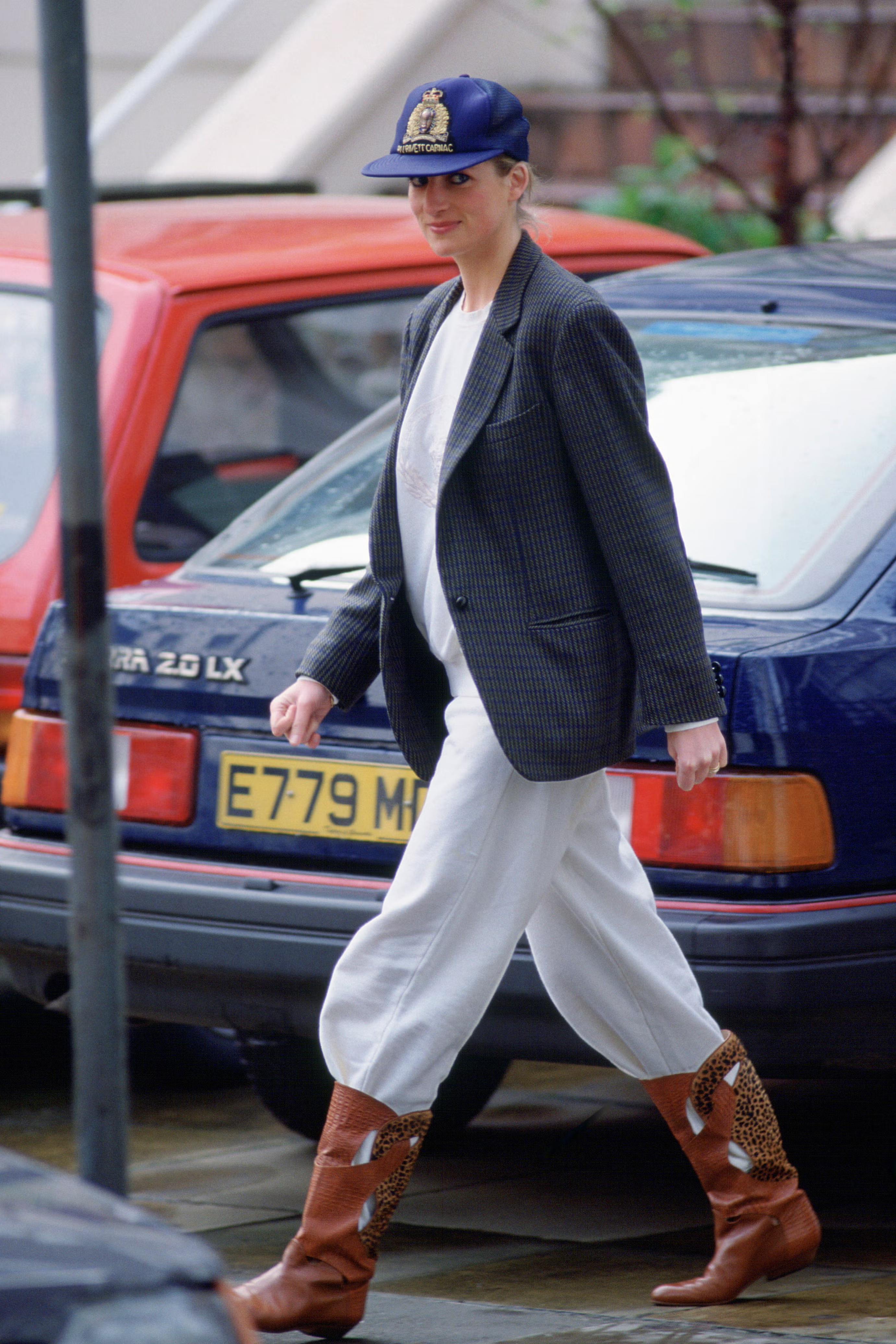
And perhaps this rise in curated authenticity isn’t just cultural — it’s symptomatic. Recent studies show that self-confidence and well-being among younger generations remain strikingly fragile. The Deloitte 2025 Gen Z & Millennial Survey reports that only 52% of Gen Z and 58% of Millennials describe their mental well-being as “good” or “very good” (1). Meanwhile, a 2025 global report by EY reveals that young adults aged 18–34 are navigating life with “a more sophisticated set of instruments” but also heightened uncertainty around identity, self-expression, and personal confidence (2)
In a world where image is currency, the pressure to perform a version of confidence rather than experience the real thing, keeps rising.
Look at social media: a universe overflowing with purchased followers, inflated likes, synthetic engagement. The irony is almost artistic. The very posts preaching “self-love” are often the most curated, the most edited, the most unreal.
Who are we trying to impress?
What are we performing?
And how does distorting who we are—even digitally—serve us in the long run?
Here’s the uncomfortable truth: authenticity makes people uneasy. It mirrors back their own fears, their own insecurities, their own silent longing to be free. It’s easier to dismiss an unapologetic person than to confront the parts of ourselves we’ve muted.
This isn’t a call for chaos or boundary-less living. Society needs structure; community needs care.
But imagine how different things would feel—how much lighter—if we were genuinely supported in showing up as we are. If authenticity wasn’t a marketing trend but a cultural norm. If being real wasn’t radical.
Maybe the real revolution is this:
To stop performing.
To stop shrinking.
To stop editing ourselves into oblivion.
(1): Deloitte
(2): EY Global Generation Research
Cover: Mirrorpix / Getty Images

More news

.jpeg)

.png)