
Holding Ground in Uncertain Times: Our Chat With Mindset Coach Nour Bachir
As Lebanon and parts of the Gulf navigate the emotional weight of war and instability, many people are searching for ways to stay grounded while the news cycle grows heavier by the day. Anxiety, grief, and uncertainty have become shared experiences across the region, prompting deeper conversations about mental resilience and the role of community in moments of crisis.
For Lebanese, Dubai-based mindset coach Nour Bachir, these moments of collective tension are precisely when emotional support becomes most essential. Through her initiative Bedaya, meaning “a beginning,” Bachir is working to create spaces where people can pause, process, and reconnect with themselves and others.
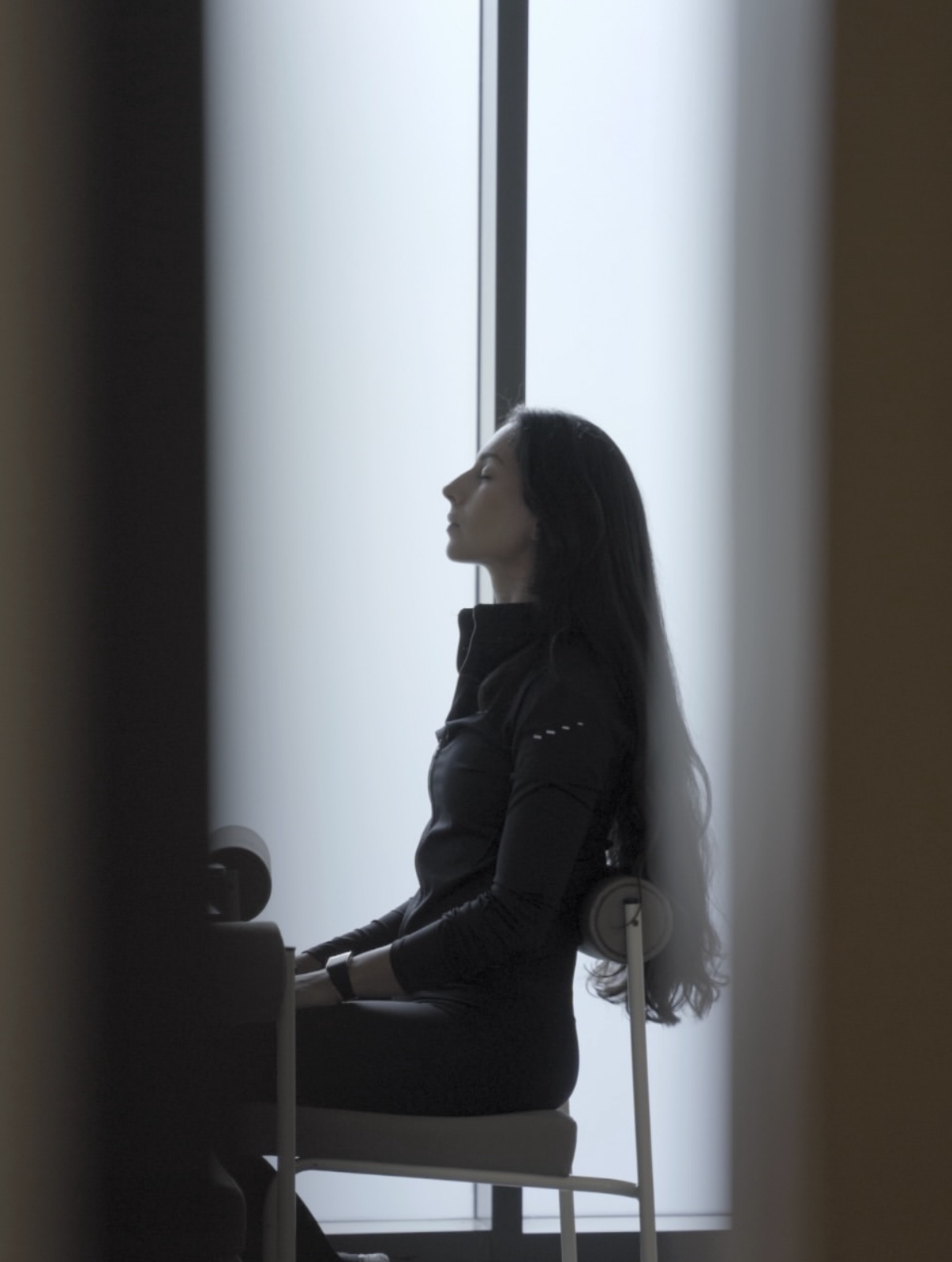
“Every transformation, every moment of genuine change, begins somewhere; and I wanted to create a space that honored that threshold,” she says.
The idea for Bedaya grew from what Bachir repeatedly observed around her: individuals who seemed outwardly functional but internally adrift. In fast-moving cities across the Gulf, productivity often eclipses emotional wellbeing, leaving many people feeling isolated despite constant digital connection.
“People who were educated, motivated, and doing ‘all the right things’… and yet still feeling fundamentally disconnected,” she explains. “They had access to information but lacked integration. They had motivation but no sustained structure.”
In a region currently grappling with conflict and uncertainty, those feelings can intensify. Fear and anxiety are often interpreted as signs of personal weakness, but Bachir encourages a different understanding.
“Fear, anxiety, and overwhelm are natural stress responses; they are the body doing exactly what it was designed to do,” she says. “The work is not to silence them, but to regulate them.”
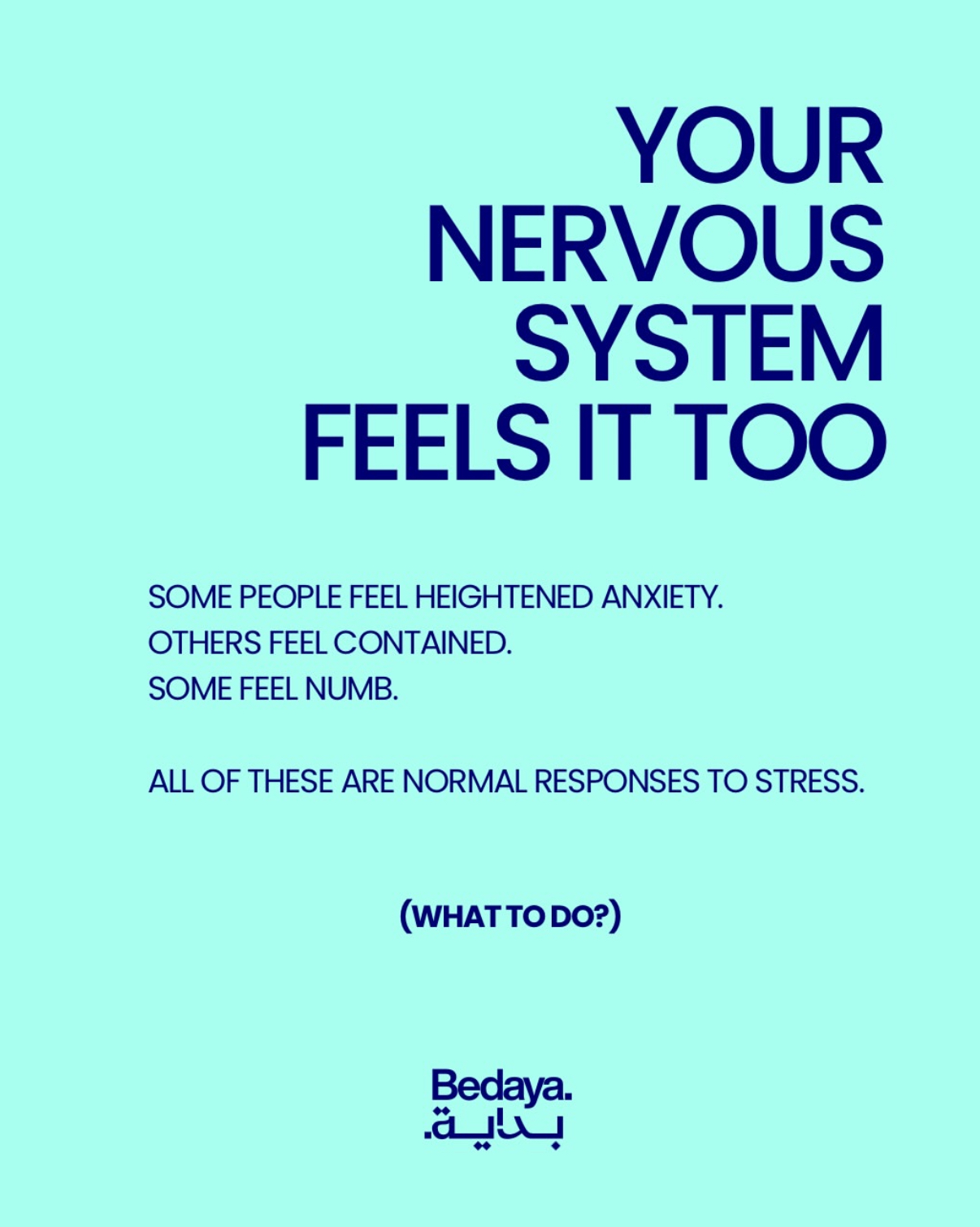
Part of that regulation begins with simple physical practices. Breathwork, movement, and stepping away from constant information streams can help the nervous system regain balance. In periods of crisis, she says, boundaries around media consumption are particularly important.
“You do not need to be informed every hour to be a caring or responsible person. Set intentional windows for consuming news and protect the rest of your time.”
Yet perhaps the most powerful antidote to uncertainty is human connection. When people retreat into isolation, distress often deepens. Reaching out, even briefly, can interrupt that spiral.
“Connect with someone real. Not a feed, not a comment section; a voice, a face, a person who knows you,” Bachir says. “Co-regulation is a biological reality. We calm down in the presence of safe others.”
That philosophy is also what inspired Bachir to offer free 30-minute psychological support sessions during this period. The goal is not to solve everything in one conversation, but to create a moment of relief and perspective.
“There is a particular kind of weight that comes from carrying something alone and in silence,” she explains. “Often, the most powerful thing a first conversation does is simply interrupt that silence.”
Even a short conversation, she adds, can change how someone experiences the rest of their week.
“Thirty minutes is enough time to do something genuinely meaningful: to feel heard, to name what has been circling without a name, and to walk away with at least one concrete thing to hold onto.”
In moments when the external world feels chaotic, resilience is often misunderstood as emotional toughness. For Bachir, it is something more nuanced.
“Resilience is not the absence of being affected,” she says. “It is the capacity to be moved without being swept away.”
Ultimately, the message she hopes people carry through this period of uncertainty is both simple and profound: connection is not optional: it is essential.
“Asking for help is not weakness. It is one of the most courageous and self-aware things a human being can do.”
And sometimes the first step toward stability is simply reaching out.
“You do not have to have it figured out before you make contact. You just have to take one step toward connection. That step… is where every beginning starts.”
More info on Bedayamena.com





.png)