Proximities Exhibition Brings the UAE to South Korea
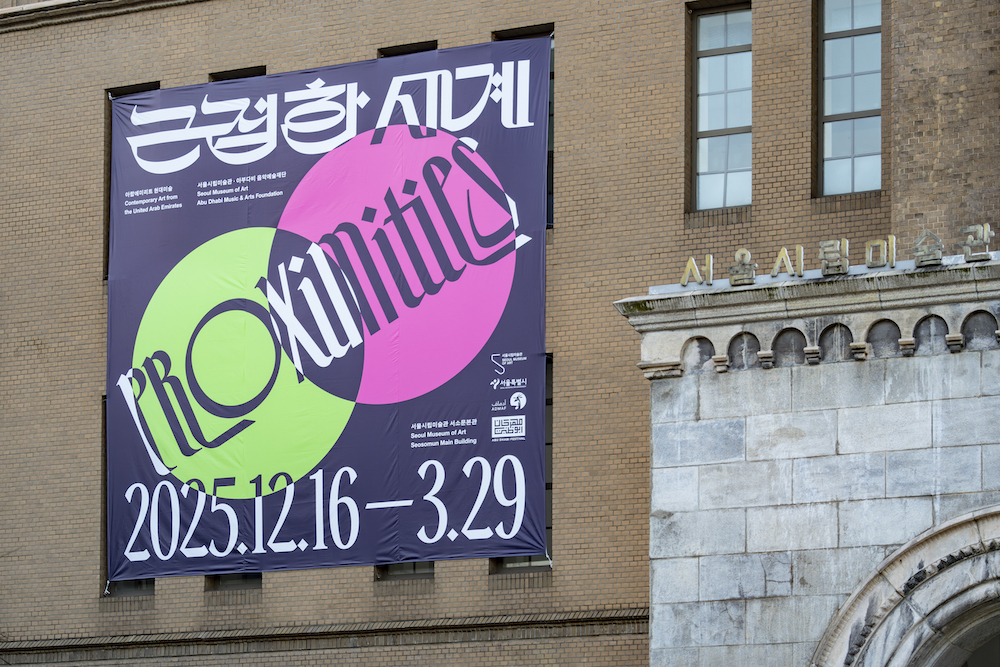
In partnership with the Abu Dhabi Music & Arts Foundation (ADMAF), the Seoul Museum of Art (SeMA) presents ‘Proximities’; a new exhibition that brings contemporary art from the United Arab Emirates to Seoul.
Curated by Eunju Kim and Maya El Khalil, ‘Proximities’ is the second exchange project between SeMA and the ADMAF. It builds upon the success of ‘Layered Medium: We Are in Open Circuits’, shown at Manarat Al Saadiyat back in May 2025, showing contemporary South Korean art in the UAE, promoting transnational dialogue and cultural understanding between the two countries.
By Robert McKelvey
.jpg)
This subsequent exhibition – the largest of its kind yet – assembles a multigenerational selection of over 40 UAE-based artists in the South Korean capital, showing works that range from the 1980s to the present day. The show examines the tensions between regional and global identity, offering visitors valuable insight into the complex and highly mutable nature of today’s international society from alternate perspectives.
“While the nation of the UAE officially coming together in 1971 is quite recent, this has always been a place of movement, very connected to the outside world,” El Khalil told Jdeed. “Today, the population of the UAE is about ten-percent Emiratis; the rest are foreigners. When you have a place with such a rich history and diversity of people, it becomes a place that is very prone to intense communication, exchange and creativity.”
“The hybridity of the region and how different cultures merge is at the heart of the identity of the UAE,” explained Kim. “In Korea, we are a very homogeneous nation, so how I would present the UAE to Korean audiences was one of the first questions that I asked myself. We decided to host three different generations of UAE artists to show the viewer how these people live in this modern world, and the commonalities that can be found, through their own eyes. We wanted to help Korean audiences recognise and identify the society of this region, and then to go further; to understand their world and their thoughts.”
Each of the exhibition’s three sections centre upon a distinct type of encounter. The artist-curators of each section were asked to respond to themes that resonate with their own creative practices, selecting peer works that lend additional points-of-view to spark further contemplation and discussion. These sections are then linked by satellite works, creating engaging connections where additional approaches to cultural navigation can emerge organically.
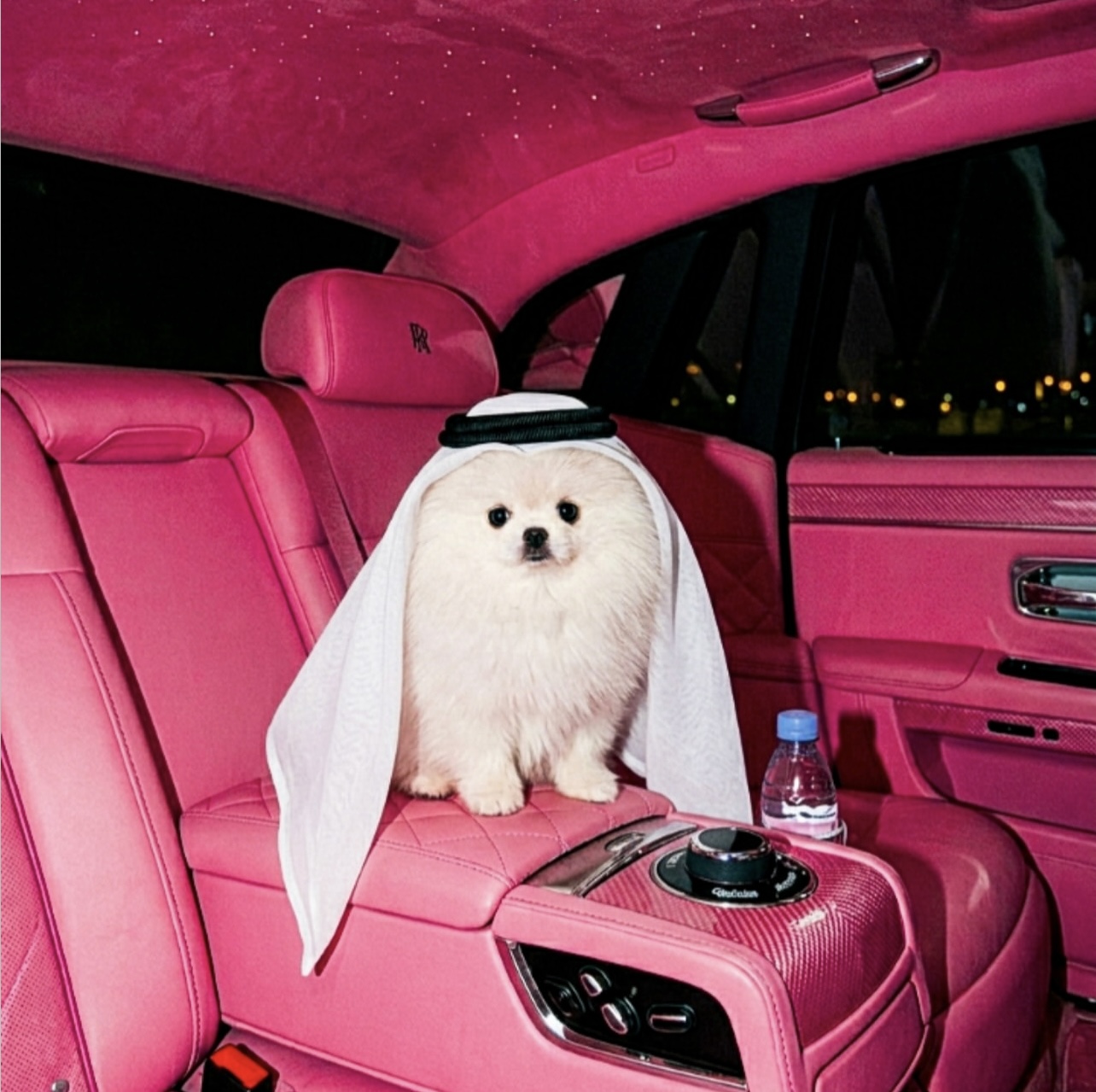
The first section – titled ‘A Place for Turning’, and overseen by photographer Farah Al Qasimi – combines the familiar and unfamiliar, exploring the relationship between comfortable mundanity and intimate secrecy within domestic life, producing multifarious imaginary realities. Blending 1990s Gulf pop culture aesthetics with a sense of the uncanny, it confronts how rapid urban development and societal shifts infiltrate the home, transforming familiar spaces in unexpected ways, revealing unspoken truths through changes within the social landscape.

Multidisciplinary artist Alaa Edris is exhibiting several pieces as part of this section, including ‘School’, a single-channel video work that documents a performance in which Edris recreates an impulsive childhood act of breaking discarded fluorescent lightbulbs in an abandoned school; a commentary on the transmission of knowledge. This is accompanied by ‘Kharareef – Fables from the Trucial State', another video work that blends archival material and footage captured by Edris into dreamlike narratives that refer to folktales of jinn told by mothers to their children to educate and discipline them. Meanwhile, her ‘The Seven Jinnat Of The Trucial States’ are simultaneously self-portraits, and a visual documentation of the oral traditions of the UAE.
“Something that connects all cultures are folk stories,” said Edris. “Many of these are very similar across different cultures. By presenting the mythology of the UAE, I'm hoping that visitors in Korea might see how our cultures are similar. I think having a strong visual can help people. It's definitely an easier gateway, more so than works that are more text-based or subtle, especially when language can be a barrier.”
.jpg)
The second section – ‘Recording Distance, Not Topography’, by Cristiana de Marchi and Mohammed Kazem – investigates spatial relations in flux through works that engage with notions of place, challenging the assumed neutrality of traditional cartography and navigation. Movement is presented as a complex transition of status rather than a simple shift in location, highlighting the societal and emotional gaps created by shifting borders.
“We were really looking at this idea of displacement and belonging,” said de Marchi. “That's why we selected works which make use of coordinates, maps and even compasses; elements that are usually referencing specific locations. At the same time, we were ready to disrupt that sense of stability.”
.jpg)
De Marchi’s own ‘The Atlas of the Impossible’ – filmed across various locations, including a former market, a public garden and a traditional domestic home – traces themes of individual life, migration and loss, while also exploring the possibilities of new beginnings and connections. The choreography adapts to the history and atmosphere of each location, while the audio responds to breath, pauses and stillness, inviting the audience to imagine how far – physically and emotionally – these bodies have travelled.
The final section – ‘That Thing, Amphibian’ – sees trio Ramin Haerizadeh, Rokni Haerizadeh and Hesam Rahmanian come together to explore works by the younger generation of Emirati artists who also have other professions, existing ‘amphibiously’ between two environments, revealing the intersections between art and civic structures, institutional context and independent practices within the UAE.
.jpg)
Artist Shaikha Al Ketbi also works as a creative director for the Salama bint Hamdan Al Nahyan Foundation, based in Abu Dhabi. In her work ‘Sigh’, she takes on the role of a bizarre, otherworldly creature that arrives in the middle of the desert in a bathtub. Thus begins her adventure exploring an abandoned park, interacting with the objects in a ritualistic manner. Through these disjointed interactions, she investigates subconscious images rooted in childish memory, unfolding into wider reflection on introspection.
“This video is the first episode of this character that I’m performing as,” explained Al Ketbi. “I specifically love places of recreation and play, because these kinds of spaces are disappearing in the UAE. I love wandering in these spaces by myself but, when I try to embody a specific character, I react to the space very differently.”
‘Proximities’ will run at the Seoul Museum of Art (SeMA) until March 29, 2026.

.png)