Yasmina Hilal on Photography, Imperfection and Finding Her Place in Nike’s The Archetypes

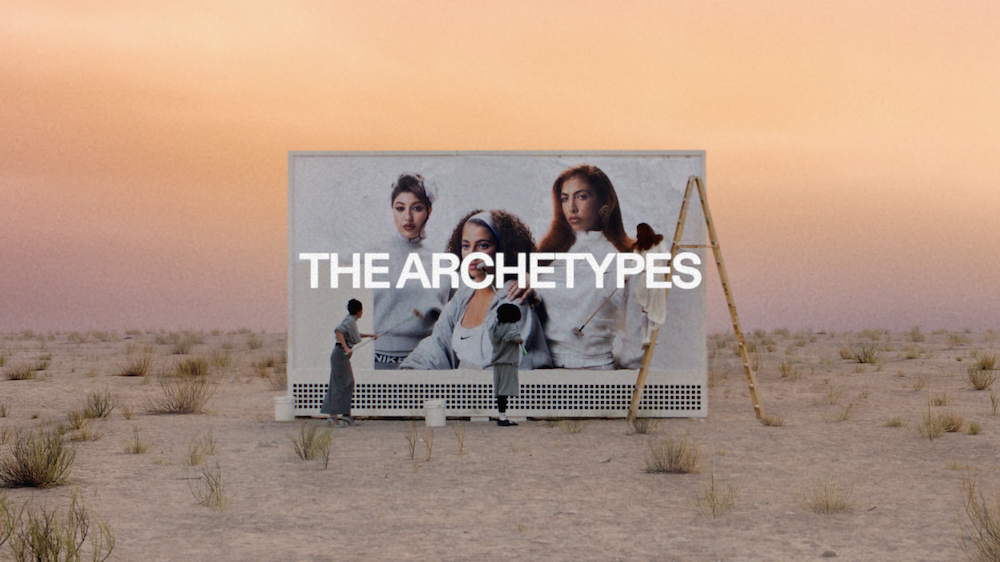
In Nike's The Archetypes, directed by Pam Nasr, photographer Yasmina Hilal finds herself on the other side of the lens. We spoke to her about imperfect images, the women who inspire her and why analogue photography still matters.
Yasmina Hilal was taking photographs before she was old enough to remember doing it. Her first portrait, taken before the age of four, was of her parents standing beside a horse. She only discovered it later, when her father showed her the photograph.
“I don't even remember or recall it, but my father showed it to me, and it's a beautiful picture of both of them standing next to a horse,” she tells JDEED.
“I think that was the initial thing: having these memories within your family that capture moments, and they're quite everlasting, even though the memory is fleeting.”
It's a lovely place to begin a conversation with a photographer whose work is so concerned with people, memory and the less predictable parts of being human.
“My relationship with photography has evolved because, as you grow, your eye changes, and the way you see things and do things changes as well. So the photography aspect is still very familiar, but the storytelling has definitely evolved.”
Now, for Nike's The Archetypes, a film directed by Pam Nasr featuring women working across sport and culture in the region, Hilal has found herself doing something a little different: being the person everyone else is looking at. And she wasn't particularly nervous about it.
“I actually quite enjoyed being in front of the camera rather than behind it,” she says. “It was quite interesting to see how people view the subject.”
Having explored self-portraiture before, Hilal wasn't entirely unfamiliar with the experience. But The Archetypes presented a particularly amusing situation: she was being filmed playing a photographer, while actually photographing a family.
“This one was very interesting because it was depicting the archetype of a photographer while I was taking a portrait of the family in the video,” she explains.
“It was a very interesting dynamic: I was there, in front of the camera, trying to be as present as possible, and just looking at everyone looking at me was quite an interesting experience. I do think that also teaches you a lot about how to photograph the other person.”
The film also introduced her to women whose work exists in entirely different creative and professional worlds. Alongside Hilal, The Archetypes features Saudi footballer Seba Tawfiq and musician Lella Fadda.
“I think this was one of the coolest projects that I've been on, especially meeting these beautiful women who come from different cultural backgrounds,” she says.
Talking about Tawfiq, Hilal immediately recognises something of her younger self. “We have Seba in sports. She's one of the top football players, and at such a young age, she's so dedicated and loves what she does. It kind of reminded me of myself when I was younger, in a way, and that anyone can be in a male-dominated field.”
For Hilal, seeing women pursue their ambitions in spaces that haven't always welcomed them is worth celebrating: “I think it's beautiful to see, especially because she's coming from Saudi Arabia. We have to shine a light on these women who are doing great things for the community.”

She also speaks warmly about her fellow cast member's music. “And then there's Laila's beautiful music and her sensitivity to life. I think that's what made it special: working with these women who are powerhouses in what they do. I really hope that, in a way, this helps young dreamers to keep going.”
Away from the Nike set, our conversation turns to the kind of photography Hilal wants to make, particularly at a time when so much of what we see has been carefully constructed to appear perfect.
Her answer is refreshingly uninterested in perfection. “I do think it's the environment that I'm in that makes me feel like it's very important to show authenticity and the cynicism in the world we live in, because I don't feel like I can live in a place where everything is just a straight path. For me, that's not living, and that's not portraying what I actually want to show.”
She continues: “I think what's beautiful is showing the mistakes and the things that aren't completely perfect, especially because I live in a place where life isn't perfect, and uncertainty is the only thing that we actually know.”
It's also an approach that informs the way she photographs women. Rather than treating her subjects as images to be perfected, Hilal is interested in how comfortable they feel and whether they recognise themselves in the result.
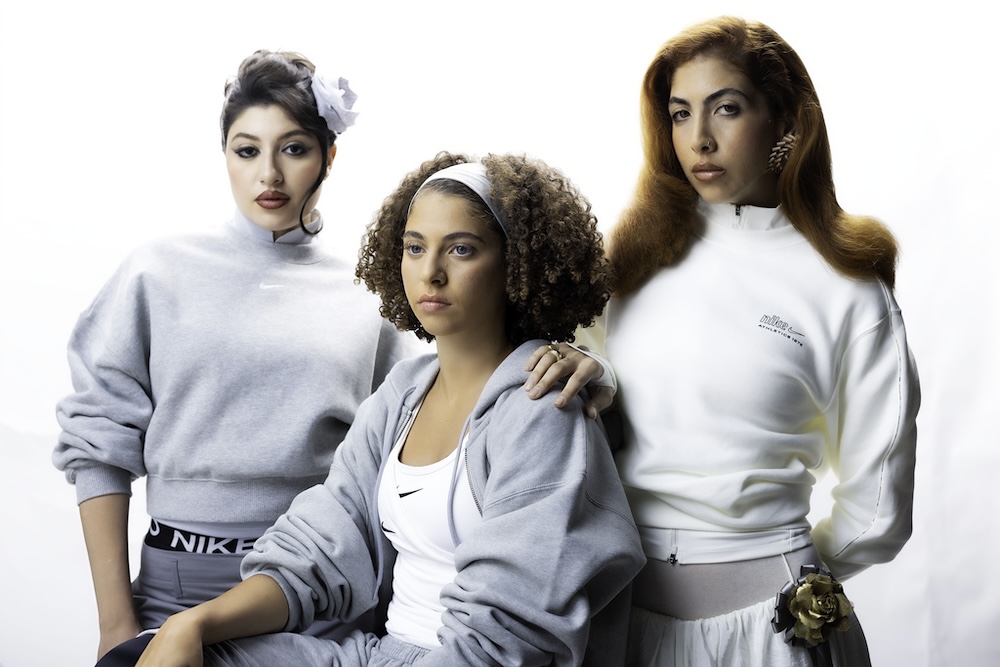
“As a female photographer, when it comes to photographing women, my priority is their comfort,” she says.
“Of course, women have always been photographed through someone else's gaze, and I do think it's important that we have female voices depicting our culture and ourselves, so it makes it more understandable, I guess.”
She doesn't necessarily see her work as an exercise in challenging conventions for the sake of it. Her starting point is much simpler: understanding the person she's photographing.
“I don't necessarily have to challenge something, because I'm showing what it is, with its real beauty and imperfections as well. I think it comes from a place where I understand the other person too. That's what I find important when it comes to photographing women.”
It's an interesting perspective at a moment when photography itself is changing so rapidly. With AI-generated images becoming increasingly convincing, we ask Hilal what makes a photograph meaningful when almost anyone can produce a seemingly flawless image.
“When it comes to AI right now, it's taking a lot of jobs and making things online look like perfect images, where you can't really tell if it's an image that a camera took or something digitally composited.”

Her response isn't to abandon photography's older methods. Quite the opposite. “I do believe that the way I work is a lot about the analogue medium and the beauty and tactility of using your hands and the process of that.”
For Hilal, the physical act of making an image remains important. The handling of materials, the imperfections and the unpredictability of the process are things she doesn't want to lose: “When we're in a place where we see so much of this fake stuff, photography has authenticity. That's how I perceive things.”
It's perhaps fitting, then, that her experience with The Archetypes involved surrendering some of the control she's accustomed to having behind the camera. She got to see how someone else approached her as a subject, while spending time with women whose ambitions reminded her of her own.
And although the technology surrounding photography has changed considerably since that first portrait of her parents, her interest in the people being photographed hasn't.
The storytelling, as she says, has evolved. The curiosity is still there.
More on Nike.ae

More news