US BEKS: Who Gets to Define What Uzbekistan Looks Like?
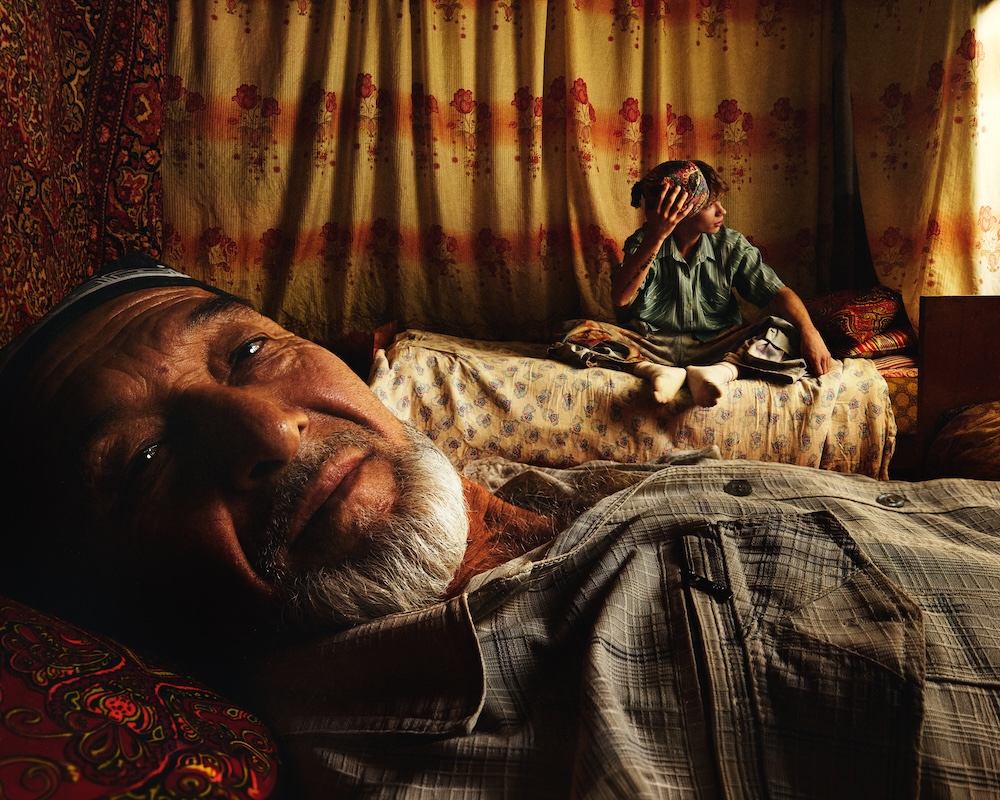
Through fashion, photography and the intimate spaces of a traditional Uzbek home, creative directors Kamí Akhmed, Francisco Narciso and César Augusto offer a portrait of a country whose identity refuses to fit into a single image.
What does it mean to look Uzbek? It's a question that becomes increasingly difficult to answer the longer you spend with US BEKS, a photographic editorial conceived by Tashkent-based creative director Kamí Akhmed alongside photographer and creative director Francisco Narciso and fellow creative director César Augusto.
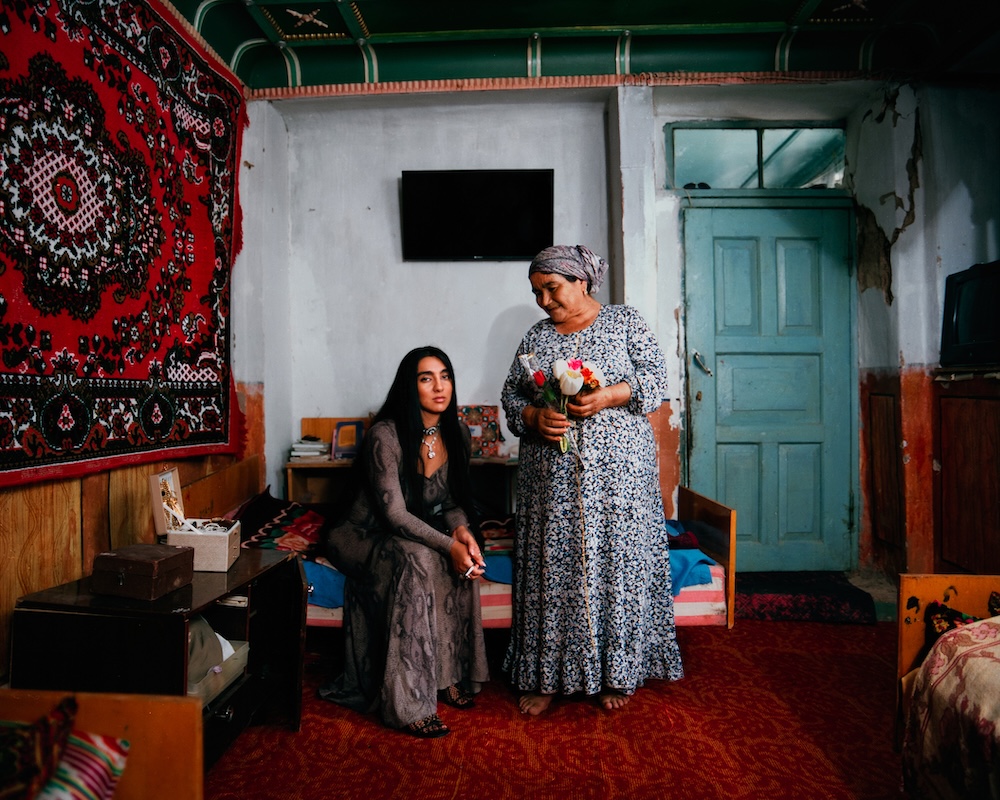
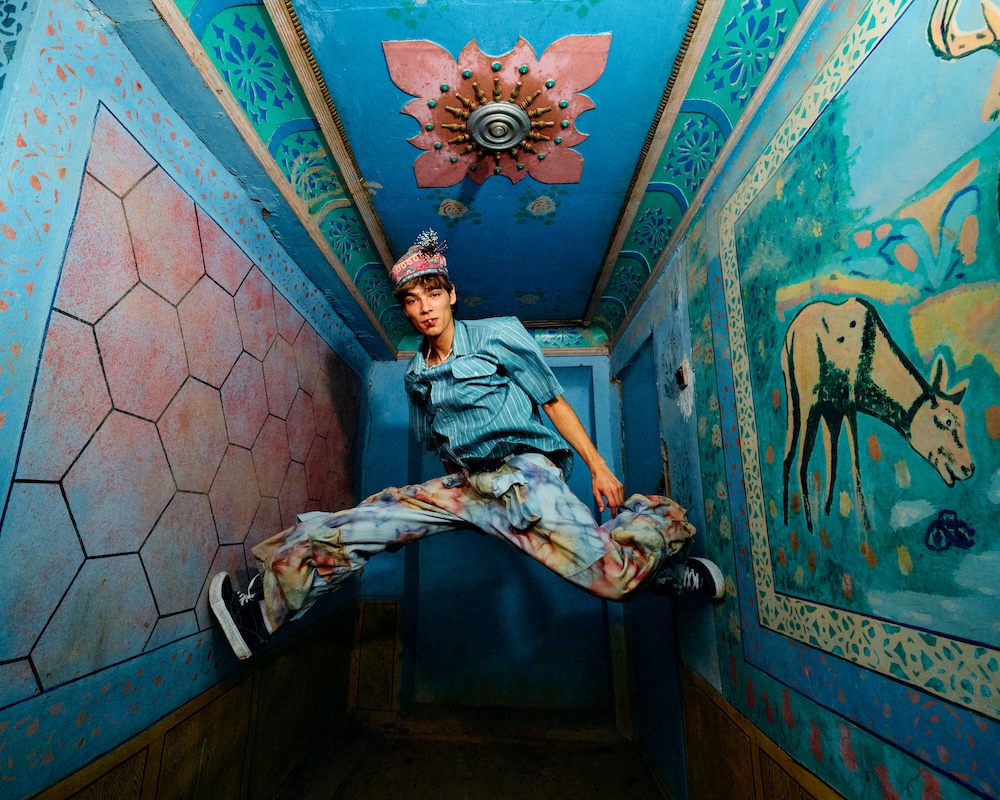
Across a series of richly composed photographs, young people share space with older generations. Contemporary fashion appears against ornate carpets, faded walls and brightly painted ceilings. A woman in a colourful dress stands inside a modest kitchen, surrounded by watermelons, traditional bread and the objects of everyday domestic life. Elsewhere, two young men occupy a weathered architectural space, while another figure moves through a narrow, vividly blue corridor.The images are full of contrasts, although they never feel forced. There is something cinematic about them, a sense that we have arrived in the middle of stories already unfolding.
At the centre of it all is a simple proposition: there is no single way to be Uzbek.
A Different Way of Seeing Uzbekistan
The project began with Narciso's curiosity about creative communities beyond the places and cultural circles he already knew.
That curiosity eventually led him to Uzbekistan, where he discovered Akhmed through social media. Their initial conversation developed into a collaboration, with Augusto joining to help shape the project's narrative. Crucially, US BEKS was developed with a local creative team and informed by conversations in Tashkent about identity, language, tradition and the country's layered history.

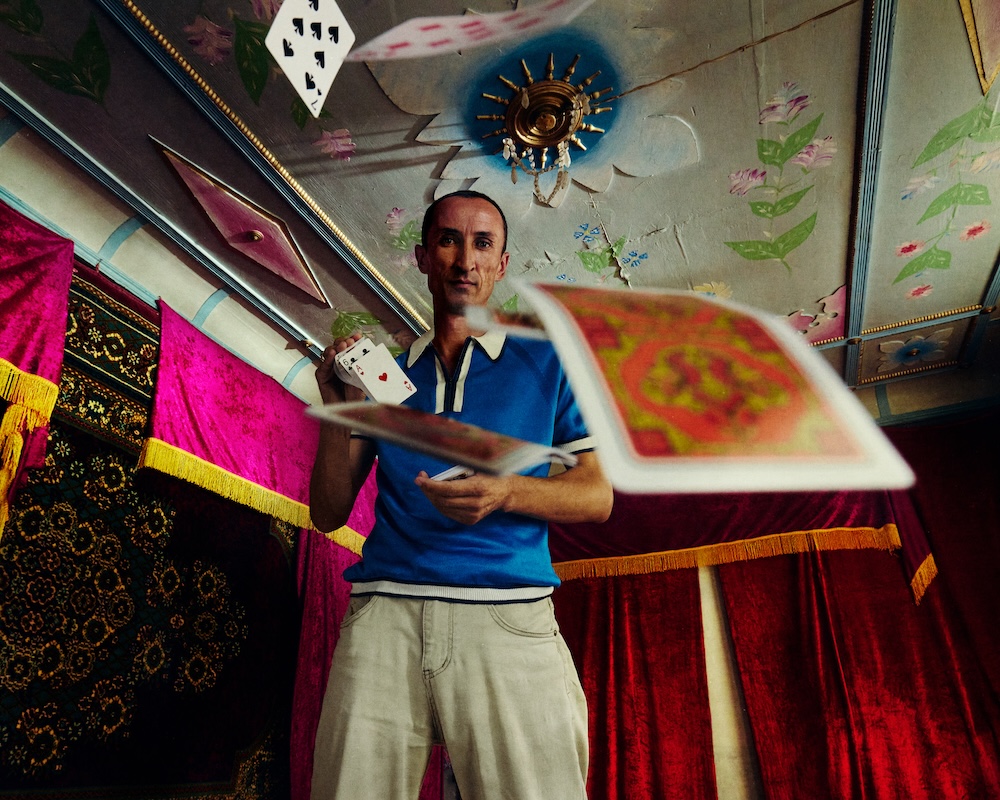
For Akhmed, whose practice explores contemporary Uzbek identity through fashion and visual storytelling, the project offered an opportunity to consider how Uzbekistan might represent itself today. The country's cultural identity has been shaped by centuries of movement, exchange and political change, from its Silk Road history through the Soviet period to independence and contemporary life.
Those histories are present in the photographs, sometimes through unmistakable cultural references, sometimes through details that might initially escape notice. The visual concept takes inspiration from kurok, the traditional Uzbek practice of joining pieces of fabric to form a larger composition.
It's an apt reference for a country whose identity has been shaped by people of different backgrounds, ethnicities and histories. The editorial applies that principle to photography. Each person, garment, room and object becomes a fragment of a larger portrait. An old Uzbek house provides the setting. Its patterned carpets, decorative ceilings, curtains and worn furniture create an environment where traces of different generations coexist.
In one photograph, a young woman stands between two doorways, with large bundles of cotton occupying the space behind her. Cotton has played a significant role in Uzbekistan's economic and social history, and its placement between two younger figures suggests the inheritance of a complicated past. Another image unfolds around an eyvan, a covered, open-sided space traditionally connecting a house with its courtyard. Its turquoise-painted surfaces and hand-painted decorative scenes become as visually compelling as the people occupying it. These interiors are integral to the storytelling; their architecture and objects carry histories of their own.
Some of the editorial's most compelling images explore the relationship between generations.
In a small kitchen, a younger woman stands inside while an older woman remains beyond the doorway. Traditional non bread, watermelon and domestic utensils fill the room. The composition draws attention to the role historically assigned to young brides within the household, while the younger woman's expression introduces a suggestion of resistance or changing expectations.
Elsewhere, a woman stands in a doorway while a man lies on a bed, absorbed in his phone. The room belongs visually to another era, yet the familiar gesture of scrolling immediately places the scene in the present. There is humour and tension in these moments, as well as a recognition that cultural change rarely happens neatly.
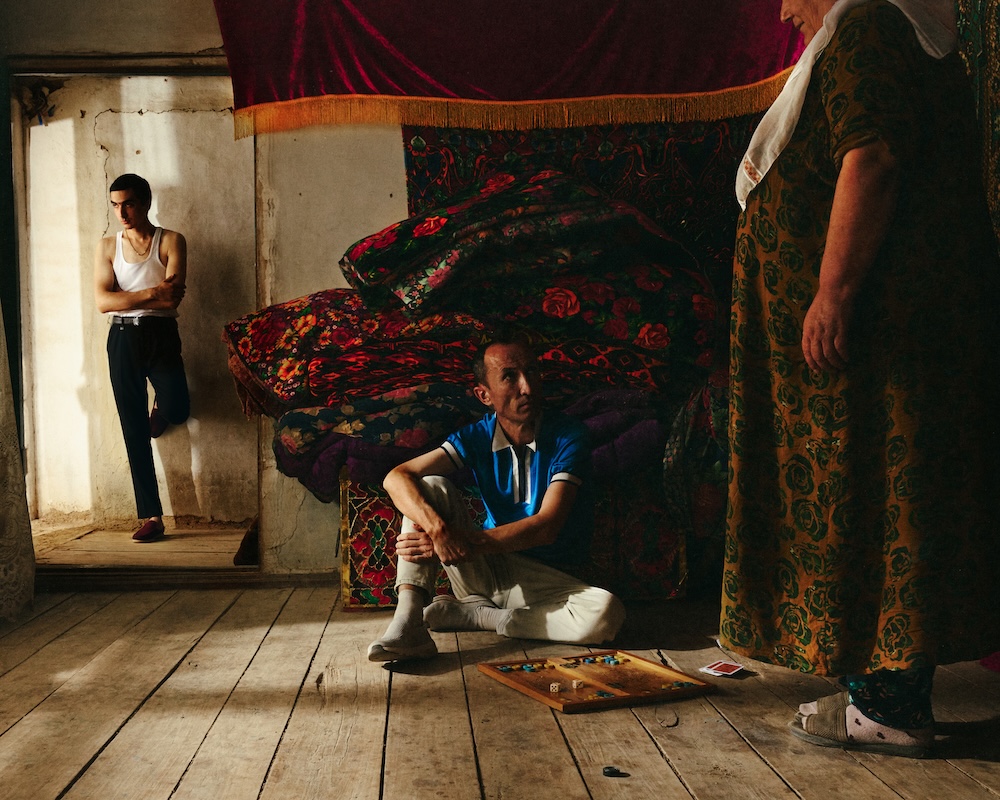
A further image shows a young man seated on the floor beside a traditional board game, with an older woman standing nearby and another young figure looking towards the light outside. The photograph allows different generations to occupy the same space while suggesting that their ideas of the future may not be identical.
Akhmed's styling moves between contemporary silhouettes, patterned fabrics, casual clothing and more expressive fashion pieces. Rather than separating fashion from its surroundings, the editorial allows garments to interact with the colours, textures and architecture of the house.
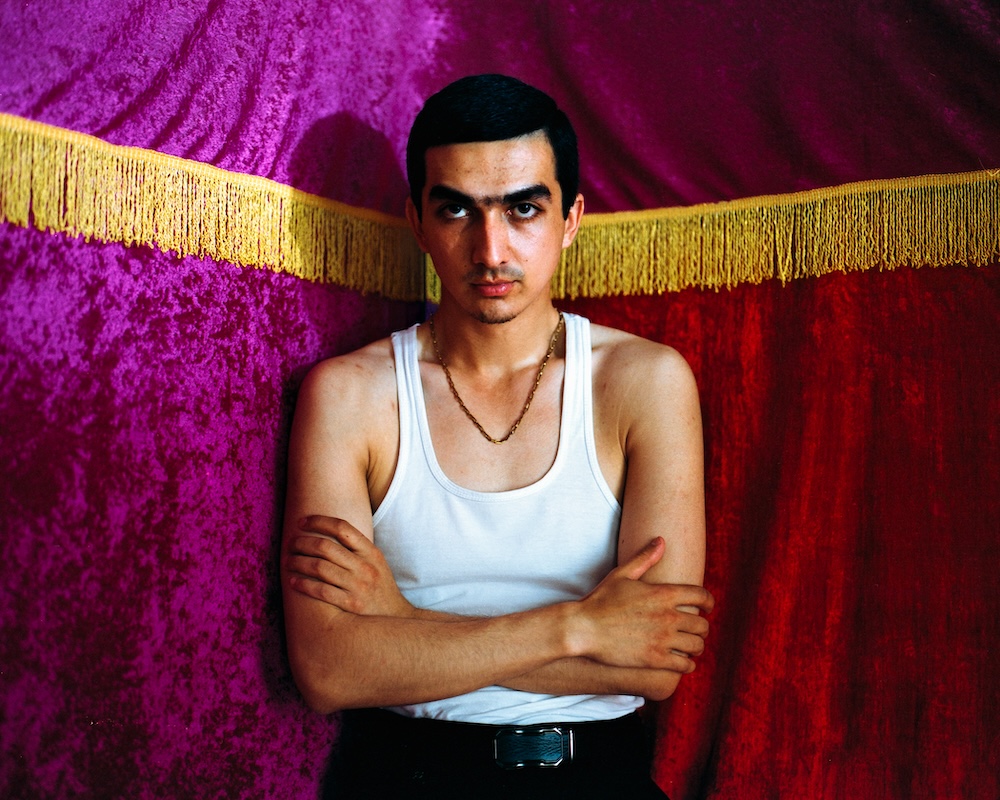
A grey dress stands against intricate red carpets, a bright printed dress punctuates the blue walls of a kitchen, a young man in a white vest is photographed against magenta fabric trimmed with gold fringe; these combinations give the images their distinctive visual rhythm.
The approach also challenges a familiar expectation placed on fashion imagery from countries with strong craft traditions: that cultural identity must always be expressed through recognisable heritage garments. Here, identity is present in the entire image. It lives in the architecture, the gestures, the domestic objects and the relationships between the people photographed.
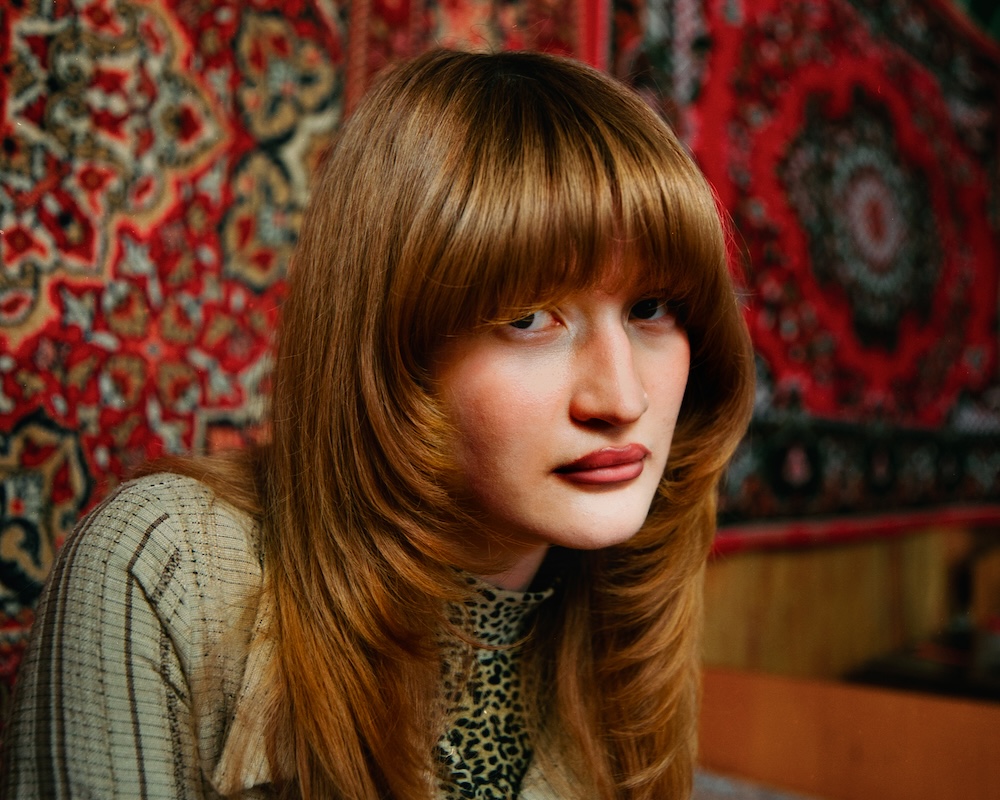
Perhaps the editorial's clearest statement comes through two portraits presented together. One shows a dark-haired young man against a richly coloured textile backdrop. The other features a red-haired young woman photographed in front of a traditional carpet. Their appearances suggest different backgrounds, yet both are Uzbek.
The juxtaposition addresses the central question of US BEKS: who gets to decide what a national identity should look like?
The title itself separates the sound of “Uzbeks” into “US” and “BEKS”, emphasising the idea of different individuals belonging to a shared culture. That idea runs through the entire project, from the youngest subjects to an older man photographed beneath a crescent moon, his portrait carrying references to age, experience and cultural memory.
For Narciso, whose wider photographic practice focuses on understanding communities through the people who inhabit them, the project also reflects the value of collaboration across cultural perspectives. For Akhmed, it contributes to an evolving visual language for contemporary Uzbekistan, one that can acknowledge inherited traditions while making space for new expressions of identity.
The photographs leave room for contradiction, individuality and change. And perhaps that is what makes US BEKS feel so contemporary: it allows a country to be seen through the many people who call it home.
Creative Direction: Kamí Akhmed, César Augusto and Francisco Narciso
Photography: Francisco Narciso
Art Direction & Styling: Kamí Akhmed
Talent: Aleksandr Lebedenko, Madina Rashinov, Ravshan Ibragimov, Safina Atadjanova and Saidkhon Sobirjonov
Makeup: Elmira Haydarova
Styling Assistant: Mariyam Sakhobova
Camera Technician: Igor Mazurkiewicz
Gaffer: Aziz Rustamov
Sparks: Asxat Zulfikqarov and Burxan Quttibayev
Location Manager: Vohid Mirzamatov
Instagram: @meningismimkamilla · @franarciso


.png)