
Adding Culture to Your Cart: From Heritage to Aesthetic
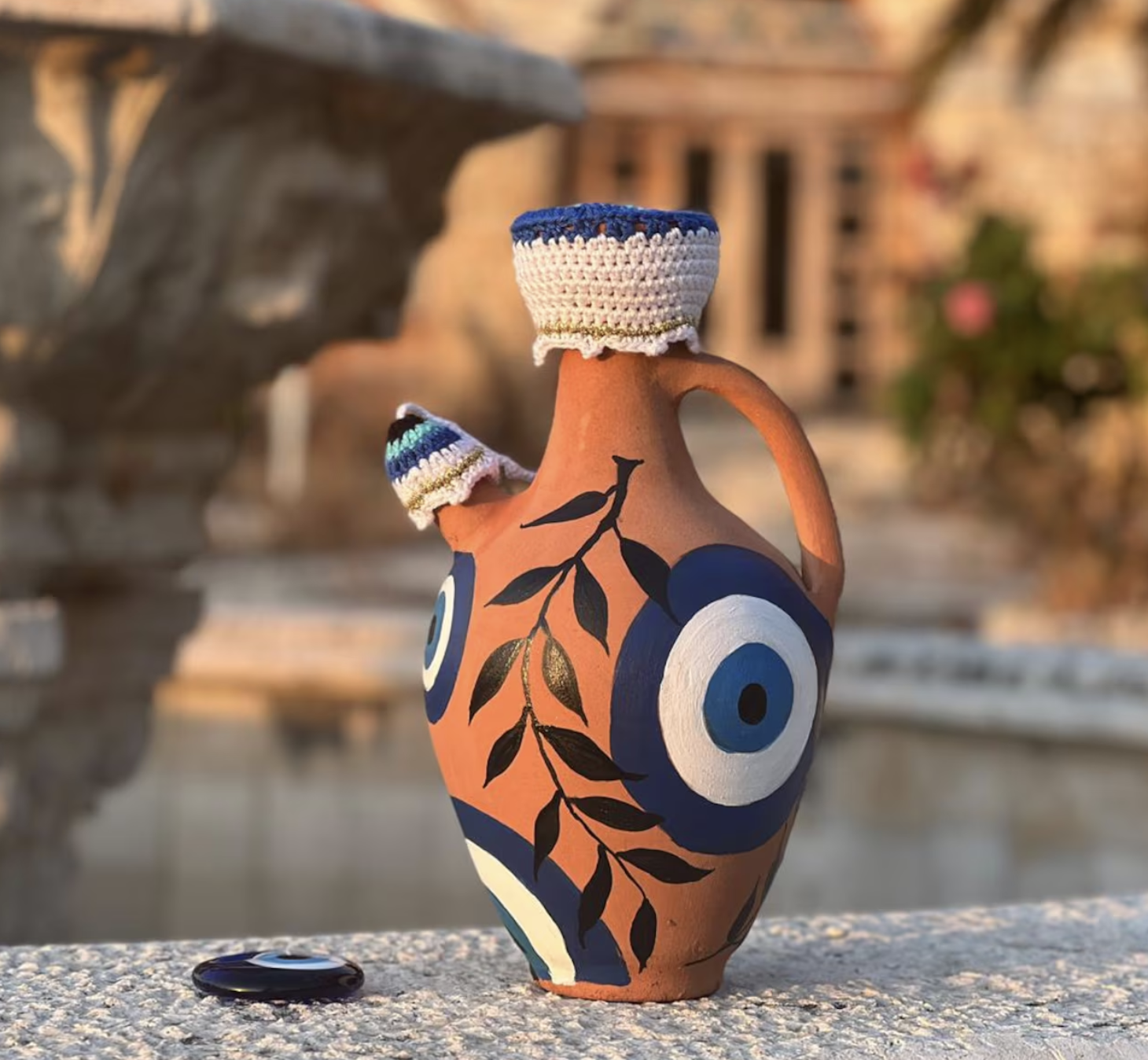
Get rid of Nazar at 50% off! At least that is what is promised by the hundreds of evil-eye keychains piled next to the cashier at several major retailers. Nearby, an Instagram-friendly, ‘boho-chic’ cafe serves coffee beneath a gently swaying dreamcatcher, recontextualizing a spiritual object as decor.
We witness these scenes so often that we are now numb to them. The ‘aesthetic-core’ and algorithm-dependent trend cycle dictate our perception of objects so deeply that symbols and customs that hold spiritual meaning, lineage, and political significance have gradually moved from community contexts into the trend cycle. What once grounded a group in its ancestry now carries a price tag and circulates through lifestyle branding. This raises an important question: has culture become a commodity?
By Malavika Suresh

Contemporary capitalism has discovered that identity can be a lucrative product. It can be marketed and monetised, abstracted from its origins, and reframed for aesthetic consumption. Capitalism has perfected the system of taking complex, lived experiences and molding them into an aesthetic shorthand. As Jia Tolentino states in Trick Mirror: Reflections on Self-Delusion,
“Capitalism has no land left to cultivate but the self. Everything is being cannibalized—not just goods and labor, but personality and relationships and attention.” As capitalism does so, our perception and relationship with objects have fundamentally altered. Anthropologist Arjun Appadurai, in The Social Life of Things: Commodities in Cultural Perspective, suggests that objects must not be understood as static objects divorced from any context, “…for their meanings are inscribed in their forms, their uses, their trajectories.” However, in a world mediated by consumerism, the only context that seems to matter is profitability. For example, traditional embroidery, stitched by artisans who carry generations of knowledge, resurfaces on runways with limited recognition of its historical and cultural roots. Or, they are replaced by synthetic, factory-made versions to maximise profit margins. Sacred tattoos that once mapped ancestry or spiritual belonging are now frequently described as decorative graphics. Heritage, in this context, becomes a marker of taste rather than lineage. Culture is no longer something you inherit. It is something you can buy.
The means through which cultural commodification occurs follows a lucrative pattern. It identifies sources of meaning, extracts what is visually or emotionally resonant, and repackages it for consumption. The evolution of Yoga in the West is a textbook example of a cultural practice being reframed for aesthetic consumption. Originally a complex spiritual, ethical, and physical system rooted in ancient Indian philosophy, yoga has been abstracted into a multi-billion-dollar wellness industry.
- The extraction: The focus shifts from a path toward liberation (moksha) to one toward stress relief and positive vibes for the professional class.
- The product: The identity of the yogi is now signalled through $120 leggings, branded mats, and aestheticized studio spaces that often strip away the Sanskrit terminology or traditional chanting to make it more marketable.
- The result: A sacred practice becomes a status symbol. The consumer is not just buying a class. They are buying an identity that suggests they are more mindful, affluent, and enlightened than others.
Under this framework, spiritual practices, once embedded in collective rituals and belief systems, are being translated through the language of lifestyle branding. The danger here is not only the loss of cultural context but the idea that spirituality functions within the market, not outside of it. A cultural symbol’s or practices’ value becomes inseparable from its ability to sell.

We are drawn to consumerism and the commodification of culture because it promises immediate results. By stripping cultural practices of their friction—the years of study, the communal accountability, and the often uncomfortable confrontation with oneself—capitalism provides a frictionless version that fits into a 45-minute lunch break or a curated Instagram feed. This is clearly evidenced in the modern "mindfulness" industry, where the Buddhist practice of sati is abstracted into a scalable tool for corporate productivity. By reducing cultural and spiritual objects to those that guarantee instant positivity, alignment, and balance, they are detached from the time, transmission, and communal participation required for true benefit. Under this capitalist reframing, mindfulness is stripped of its original ethical foundations, becoming instead a subscription-based product designed to help the individual optimize their performance within the very systems that cause their stress.
The aim of the producer is to make complex practices scalable, reproducible, and endlessly adaptable to consumer desires. Consequently, mindfulness apps are scaled to millions; the "sale" thrives because the product promises balance without requiring the consumer to question systemic issues like exploitative labor conditions. What emerges is not a rejection of the original belief system, but its transformation into a lifestyle category that thrives not on meaning, but on the transaction itself.
This is not to suggest that the mere adoption of these practices or use of objects rooted in foreign cultures is inherently wrong and must be halted. There are definitely worthy aspects to using the teachings of mindfulness to reduce stress, taking a Yoga class to improve health, or believing in and wearing an evil eye necklace to ward off Nazar. The issue is not in the practice or its adoption, but in the way they are packaged as products and sold, entirely divorced from their origins and recontextualized into goods that offer instant gratification and enhance your personal brand or aesthetic.
The commodification of culture into products does not exist in a vacuum of neutrality. There are clear power dynamics between communities whose cultural expressions are extracted and those who profit from their circulation. As Edward Said argued in Culture and Imperialism, “The power to narrate, or to block other narratives from forming and emerging, is very important to culture and imperialism…” These narratives often mirror broader histories of occupation, colonialism, and economic inequality, where the ability to sell culture is granted to those with institutional power rather than to those who have lived, protected, and sustained it. As a result, cultural symbols travel freely in global markets while the people behind them remain constrained by the very systems that render their heritage profitable.
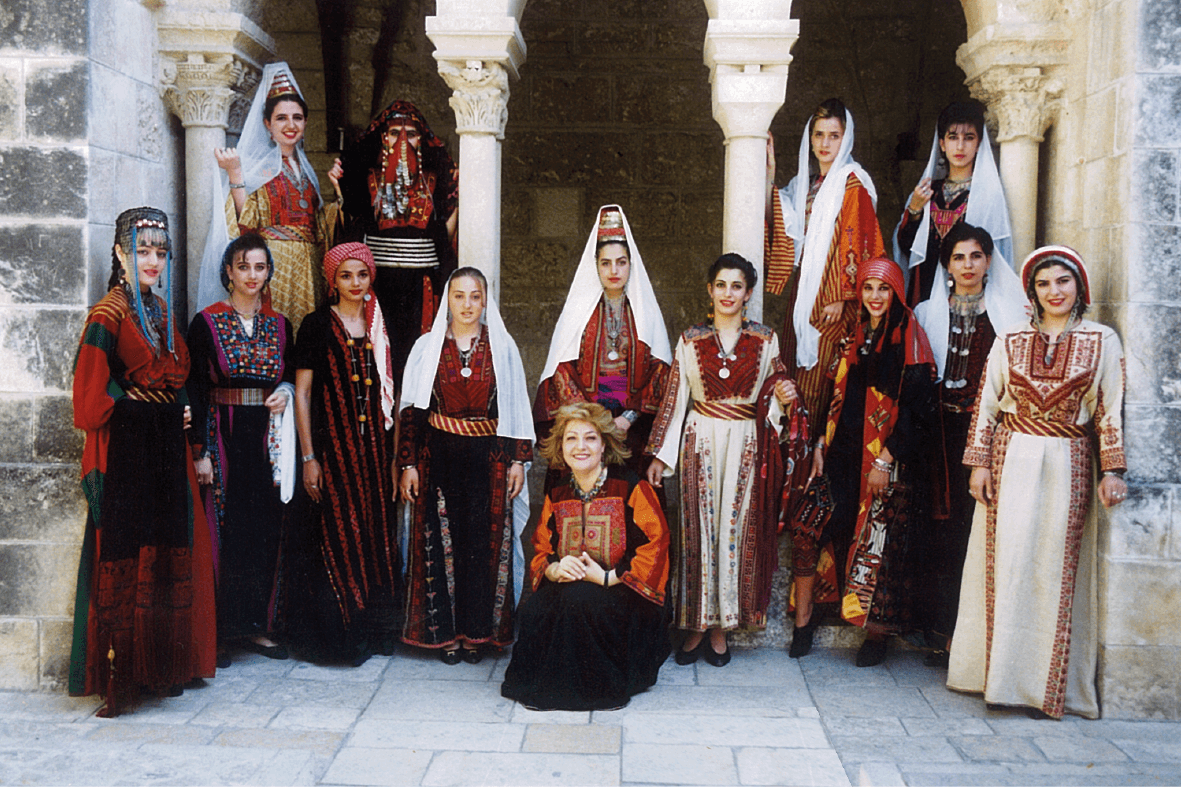
A significant example of such power dynamics is the commodification of the Palestinian Tatreez, which carries centuries of storytelling, identity, and resistance. Across Palestinian villages, specific patterns and stitches historically communicated a woman’s origins and community, functioning not only as decorative elements but also as historical records. As Palestinians have faced continued erasure and marginalisation, elements of Tatreez have been removed from their political and cultural context and repackaged as a marketable aesthetic and sold as a form of ‘traditional chic’ to Western audiences, often without acknowledgement of their origins. In this process, cultural meaning is translated into commercial value, and heritage is treated as a resource to be branded and sold. Tasnim Alwa 'l's Stolen Threads: The Appropriation of Palestinian Embroidery by Israeli Designers, published by The Tatreez Institute, highlights how several designers over the past 70 years, with direct connections to occupying forces, use Palestinian embroidery, Bedouin textiles, and regional motifs while marketing their products as “Israeli craftsmanship.” What is marketed as aesthetic exchange or appreciation is, in fact, the result of a broader process of commodification, in which Palestinian cultural labour is detached from its history and resold under a different national identity. The aestheticisation of culture, here, is a repetition of the dispossession of memory, of identity, and of the dignity of the people whose craft is co-opted.
The concern of commodifying culture is not merely cultural appropriation but the risk of the complete replacement of meaning. When cultural designs and symbols are recast as fashion statements, sacred practices as wellness trends, and ritual objects as lifestyle enhancements, the depth of belief is substituted with vague notions of ‘vibes’ or aesthetic cohesion. This results in what philosopher Jean Baudrillard, in Simulacra and Simulation, calls the "precession of simulacra," a state in which the image of a thing precedes the reality, eventually replacing the original cultural reference altogether. It leads to a cultural dissonance in which communities recognize their heritage yet no longer identify with it. What emerges from this process is a paradox where the more widely these symbols circulate, the less they seem to belong to the people who created them.
As cultural objects are absorbed into consumer culture, their ability to hold memory or meaning diminishes. What remains is what Baudrillard would call a "simulation", a familiar, marketable visual trace, increasingly detached from the emotional and cultural worlds that once sustained it. In such a world, culture is no longer something to live, share, or pass down but something to browse, buy, and discard with the next trend cycle. In reducing culture to consumable aesthetics, we risk severing the connection between people and their own histories, making heritage a decorative accessory rather than a living, evolving force.
Addressing the commodification of cultural heritage requires more than awareness. It demands intentional action. Both institutions and individuals must challenge the capitalistic market logic that turns heritage into a trend, ensuring that traditions are preserved, respected, and properly contextualised rather than merely sold for aesthetic appeal. As consumers, we can approach cultural products with curiosity and respect, learning about their histories rather than treating them as mere decoration. Additionally, educators, journalists, and cultural institutions must take the responsibility of amplifying the voices of those whose knowledge and creativity have historically been marginalised, resisting the temptation to flatten heritage into a trend. By fostering relationships rooted in reciprocity, accountability, and storytelling, we can move toward a landscape where culture is celebrated rather than reduced to aesthetic consumption.
Humanity is culture and culture is humanity. In preserving and respecting culture and heritage, and in maintaining their complexity, we are protecting ourselves. By resisting the urge to flatten traditions into simple, easy-to-consume products, we safeguard the communal depth and historical continuity that give life meaning beyond the marketplace. To honor a practice is to refuse its reduction to a lifestyle category, ensuring that our heritage remains a living, breathing testament to our collective identity rather than a mere inventory of consumable trends.

.jpeg)


.png)