Coffee Cups, Evil Eyes, and the Things That Keep Us Going
When I was a child, I’d watch my grandmother read my father’s coffee cup, trying to see his future in the dregs inside. She’d tilt it this way and that, the black swirls speaking to her in images only she could decipher. It felt like magic to me - the kind passed down through women who knew things without ever explaining how.
Now, I realise it wasn’t magic at all. It was a man trying to make sense of a future he couldn’t see, and a woman trying to give him a story soft enough to hold. I thought she was telling him what would happen. What she was giving him was really much simpler: a moment of clarity in a life that rarely offered any. A few sentences to hold onto. Whether it came true was beside the point.
By Mariam Shour
This was my first lesson in how people survived uncertainty. A skill we’ve all been forced to practice these past few years. Because when life stops making sense, answers are the last thing you’ll find, but rituals are always right there, waiting to be used again. We trace patterns in cups, hang charms on doorknobs, light incense in the corners of new rooms. We whisper prayers our mothers whispered, and their mothers whispered, that no one remembers even learning. From the outside, these things look like heritage. From the inside, they’re coping mechanisms. Comfort wrapped in centuries-old practice.
Coffee cup readings travelled from Ottoman kitchens into our living rooms. The evil eye has been feared by everyone from the Greeks to the Phoenicians. And bakhoor predates almost every religion here; it blessed ships, soothed spirits, and covered the smell of whatever the neighbours were cooking.
These rituals didn’t survive because they were poetic or sacred. They survived because humans have always needed tools, even imaginary ones, to point at fear, envy, illness, or uncertainty and say, “Okay, I’m doing something. This should help.”
When we moved into our new home, my mum walked in with her little baggie filled with bakhoor stones like an on-call cleanser. She grabbed a bowl, lit the coal, and waved the smoke into every corner, protecting my family and I in the process.
In the West, they call it “cleansing the energy,” buying palo santo kits, and saging their homes. Here, we’ve been doing the same thing forever - only it actually smells good. They talk about manifesting; we read coffee cups. They wear crystals; we wear evil eyes. Different vocabulary, same instinct: everyone is just trying to feel a little safer in their own skin and space.

My mother wasn’t trying to purify the future of the house. She wasn’t trying to guarantee that our next ten years would be blessed and blissful and financially stable (though I wouldn’t have complained). She was simply lightening the present - settling the energy, marking the beginning, making a strange space feel familiar.
And when I’m feeling tired, heavy, or carrying the kind of sadness we sometimes don’t know how to name - she’ll place a hand on my head and start praying. There’s something ancient and comforting about someone speaking the heaviness away. And now, without thinking, I find myself doing the same with my own children.
Maybe this is how heritage actually survives: not through museums or textbooks, but through emotional muscle memory, passed down through generations. A gesture that outlives logic.
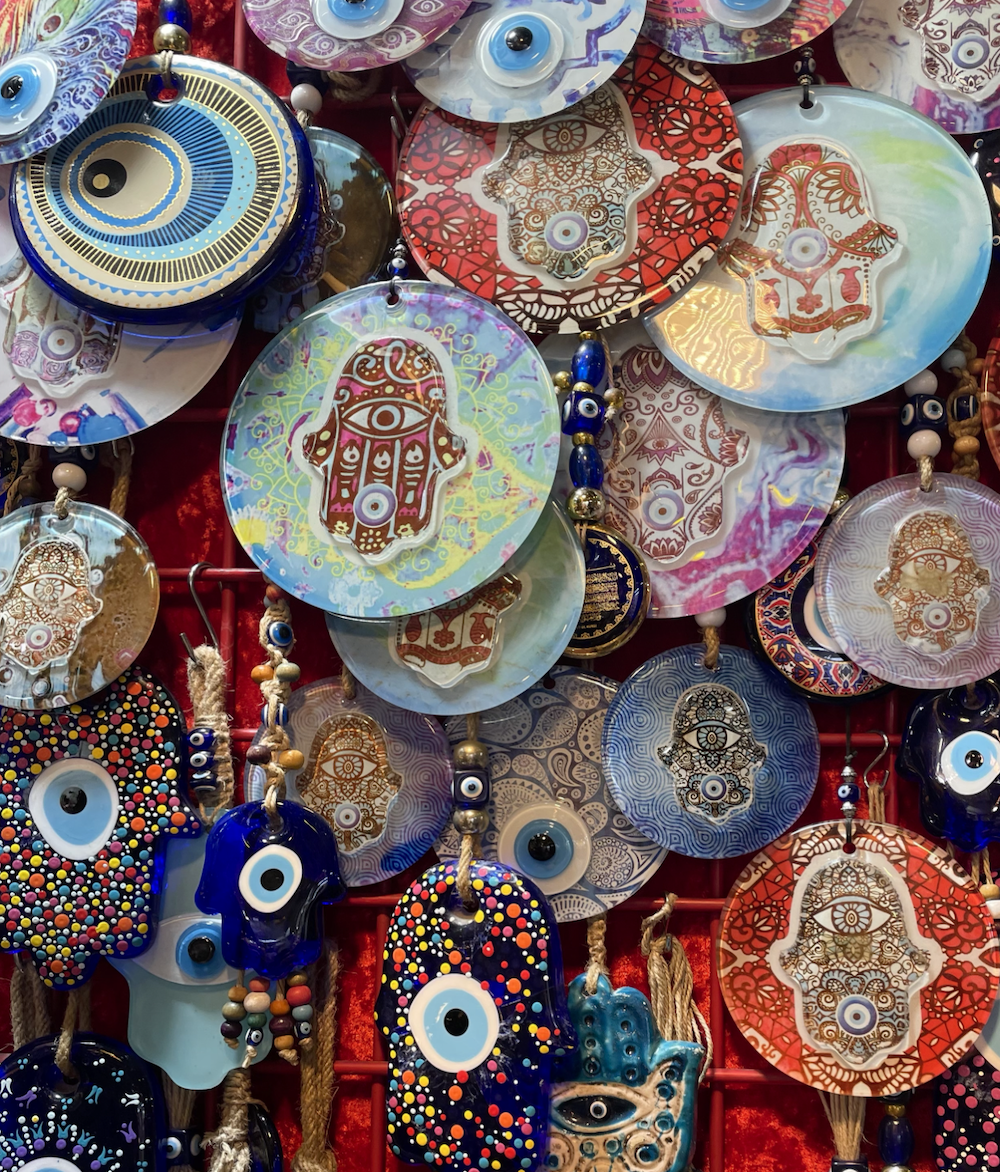
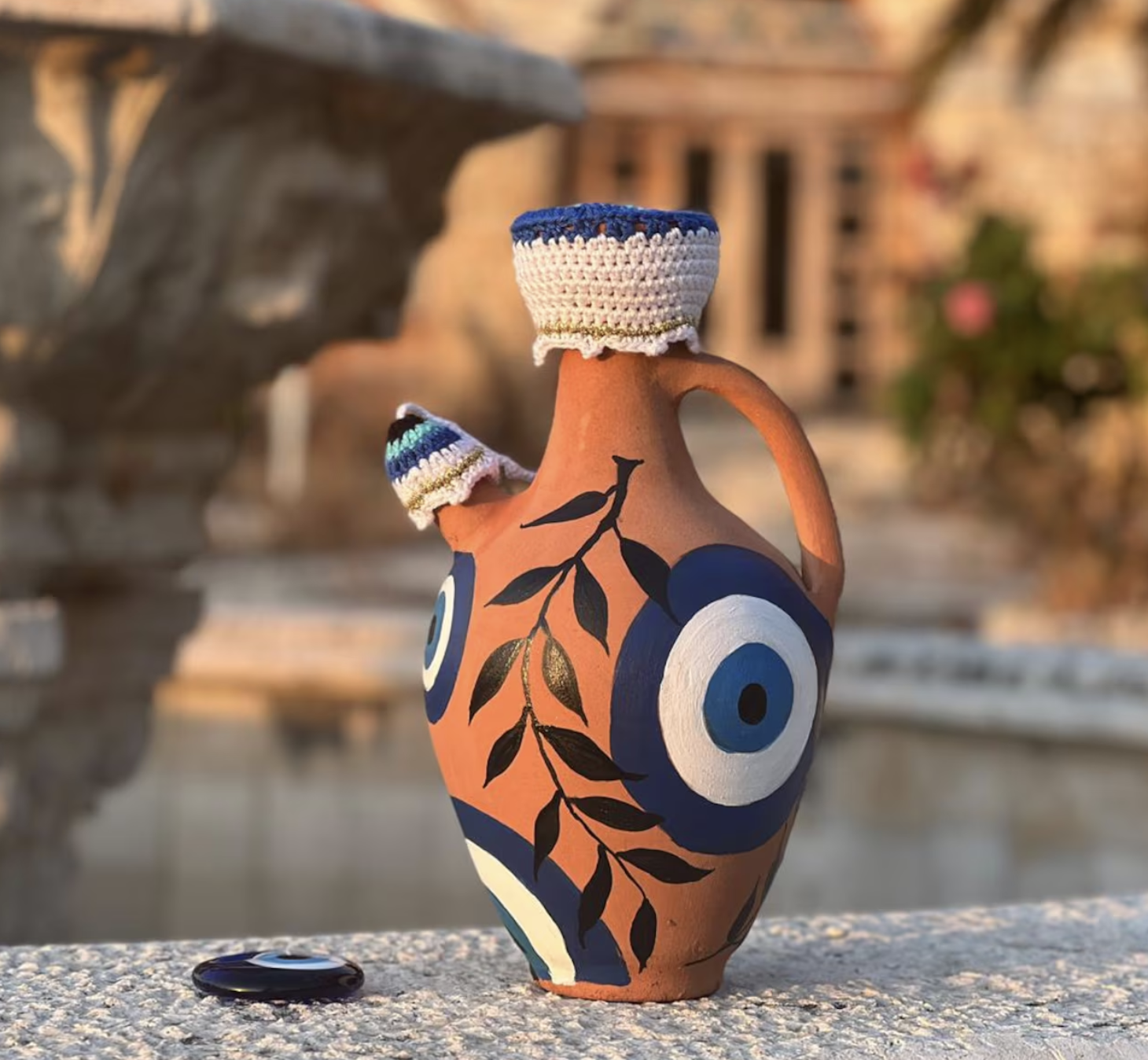
Every Arab household has at least one evil eye talisman somewhere. A necklace, a bracelet, a keychain, a giant one hanging in the hallway, one dangling from the car mirror, bouncing dramatically with every pothole. Even the people who swear they don’t believe in any of this still wear one “just in case.” You know, for science.
And if the charm breaks, a small bead snapping off, that’s suddenly proof that something was “too strong.” We joke about it, but replace it immediately. We call them decorative, cultural, aesthetic - but deep down, we know they’re tiny shields. Not for the future. For right now. For the feelings we don’t want to explain, the envy we pretend isn’t there, the heaviness we drag around.
And maybe that’s why these rituals linger. Not because they point us forward, but because they hold us together right now. We like to say our heritage shapes our future, but I think we reach for these old gestures because today is the part no one knows how to manage. The ground keeps shifting. The world keeps asking too much of everyone, especially of our children. And in the middle of all that, we need something older and slower to remind us that people have been overwhelmed before, and still found a way through.
So the rituals continue, not as prophecy but as relief. We light incense not to bless what’s ahead, but to ease what hurts now. We read coffee cups not to see tomorrow, but to feel less lost today. We hang the evil eye because we’re still hoping - stubbornly, irrationally - that we can keep the worst away.
And maybe that’s always been enough.
.jpeg)

.png)