How the Breek Became a Levantine Design Icon
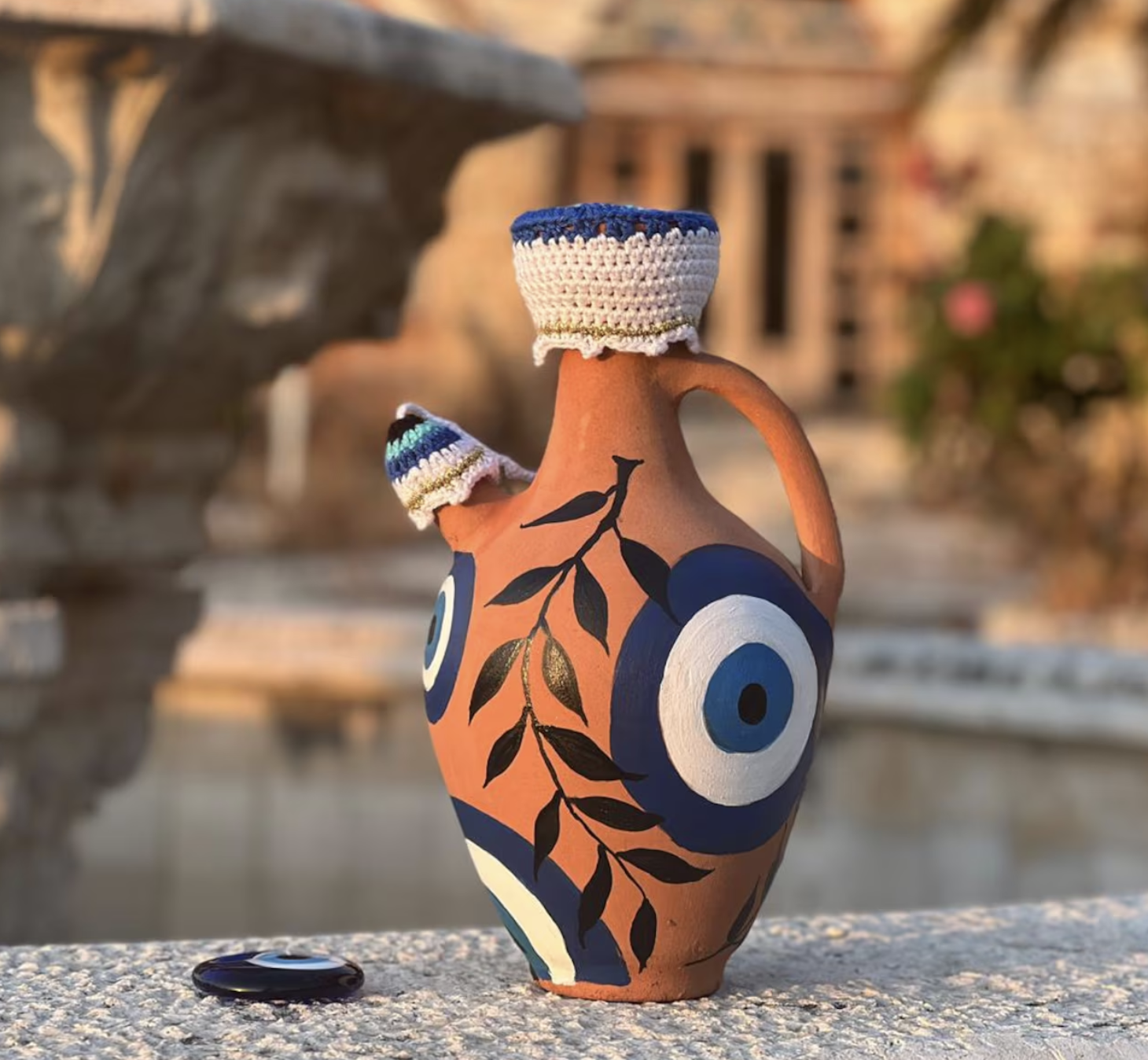
There are certain objects that feel so familiar you never really stop to wonder where they came from, because they were simply always there: in your grandparents’ house, on the table during long summer lunches, somewhere in the village, or sitting on a shelf waiting for someone brave enough to actually use them.
For many Lebanese, the breek is one of them. Your Teta would often reach out to grab it, remove the piece of crochet protecting its top and help you quench my thirst as you'd tilt your head backwards.
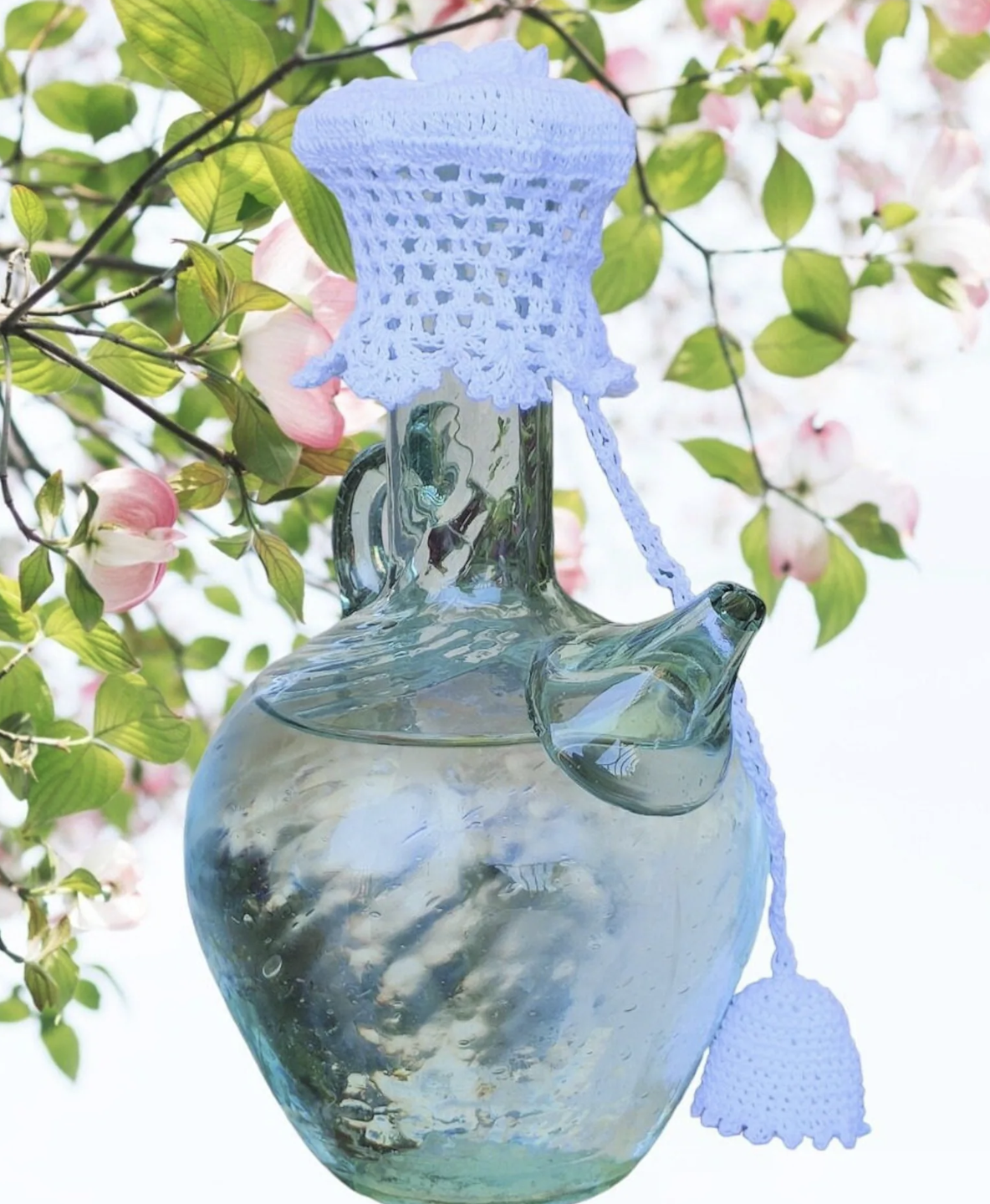
You probably remember the shape before you remember the name: the rounded body, the handle, the narrow spout stretching upwards and, if you grew up around one, the slightly chaotic ritual of attempting to drink from it without touching it with your lips—or pouring half of its contents down your shirt.
Because drinking from a breek was never simply drinking water, no: there was technique involved. You started close to your mouth, became increasingly confident, raised it a little higher, and before long someone was inevitably attempting to drink from what felt like half a metre away while everyone else watched.
It is such a distinctly familiar Lebanese image that we started wondering about something we had somehow never really questioned before: where did the breek actually come from? The answer, as is often the case with objects that have existed for generations, is considerably more complicated—and more interesting—than simply calling it Lebanese.
So, What Exactly Is a Breek?
Known as the breek, briq or ibriq (إبريق), the vessel is instantly recognisable for its rounded body and elongated upward-facing spout, which allows water to be poured directly into the mouth without the drinker ever having to touch the vessel with their lips, making it particularly practical at a time when one breek might be shared between several people around a table or out in the fields.
The Arabic word ibriq itself has a much broader history and can refer to different forms of pitchers and jugs across the region, but in Lebanon it became closely associated with this very particular silhouette and, perhaps even more importantly, with this particular way of drinking. It was functional, communal and surprisingly clever, but over time it also became something else: one of those everyday objects so deeply embedded in Lebanese life that we stopped noticing how unusual it actually was.
Until you hand one to someone who has never used it before.
How Far Back Does It Go?
This is where the story becomes fascinating, because the breek is often casually described as a Phoenician invention, and while that makes for a wonderfully neat origin story, history is rarely quite that cooperative.
Archaeological excavations along the Lebanese coast have revealed an extraordinarily sophisticated tradition of pottery and vessel-making stretching back thousands of years, and specialised jugs and spouted vessels appear throughout the material culture of ancient communities in the region. Archaeological research from sites including Sidon and Sarepta has documented the importance and diversity of Phoenician pottery, which was produced locally and circulated throughout the Mediterranean.
Research into the breek itself has also pointed to a vessel illustrated in Patricia Bikai's The Phoenician Pottery of Cyprus, dated to approximately 1050–850 BCE, whose form bears a striking resemblance to the object we recognise today, while other breek-like forms have been associated with material going as far back as the Early Bronze Age.
But resemblance doesn't necessarily prove continuity. We don't know that those ancient vessels were used in precisely the same way, nor can we confidently draw an uninterrupted line between a Phoenician vessel from three thousand years ago and the breek your grandparents kept at home.
So, no, we're not going to tell you that the Phoenicians definitely invented the breek.
What we can say is perhaps more interesting: the shape we recognise belongs to an incredibly old regional language of making, storing and drinking, with forms resembling it appearing in this part of the world thousands of years ago.
Before Glass, There Was Clay
Today, the breek many of us immediately picture is made from glass, often with that slightly greenish tint and tiny imperfections that somehow make it even more beautiful, but for much of its history the object was made from unglazed earthenware, and this wasn't simply because clay happened to be available.
The material actually did some of the work. Unglazed clay is porous, meaning that a very small amount of water can pass through the walls of the vessel and evaporate from its exterior surface; as that evaporation takes place, heat is removed and the water remaining inside stays cooler than it otherwise would.
In other words, long before anyone was opening the refrigerator every five minutes during a Lebanese August, there was the breek.
It's the sort of beautifully simple design solution that feels almost surprisingly contemporary now: local material, no electricity, no plastic and no complicated technology, just an understanding of how a material behaves and a form developed around everyday life. Lebanon's pottery traditions produced a whole vocabulary of vessels for carrying, storing and drinking water rather than one standardised object. In places such as Rashaya, for example, traditional pottery included different forms of ibriq, kuz and dawraq, each responding to slightly different domestic needs. There was also a larger relative of the breek known as the awafi, which could carry more water and was traditionally used by people working in fields and orchards.
Eventually, the breek moved from clay into glass, and this is where we arrive at the version many Lebanese today probably recognise most immediately.
That evolution feels particularly appropriate in Lebanon, because glassmaking itself has an extraordinarily long history along the eastern Mediterranean coast, while artisanal glassblowing traditions continued much later in places including Sarafand and Tripoli, where craftspeople have kept techniques of hand-forming glass alive.
The material changed the breek completely without really changing its identity. Suddenly, water became visible through the vessel. The silhouette became lighter and more delicate. Shades of green, turquoise, blue and amber entered the equation, while the bubbles, variations and imperfections created during traditional glassmaking meant that no two handmade pieces necessarily looked exactly alike.
And for us, this is probably where the breek becomes especially interesting as a design object, because remove it from the context of nostalgia for a second and actually look at it: it's quite strange.
The proportions are unusual. The spout is exaggerated. The handle and neck seem almost sculptural. It doesn't really resemble the anonymous carafes that now populate restaurants and homes around the world, and that distinctiveness is precisely what makes it feel so relevant again today.
We spend an enormous amount of time talking about objects having identity, and the breek has had one all along.
There Was Also an Art to Drinking From It
Of course, none of this is necessarily what you were thinking about as a child. You were mostly thinking about whether you could get the water into your mouth.
The genius of the long spout was that you didn't need to place your lips against it, which meant several people could drink from the same vessel without drinking directly from the same surface, but what began as practicality inevitably became something considerably more entertaining.
You held the breek slightly above your mouth and tilted it until the stream reached you. Once you'd mastered that, you moved it further away. Then higher. And higher again. Accounts of the tradition even recall children competing to see who could drink while holding the breek furthest from their mouths without spilling.
Which feels completely believable.
There is something very specific about memories like these, because they aren't the grand traditions we usually document when we talk about heritage. Nobody necessarily sits you down and explains that drinking from a breek is part of your cultural inheritance. You simply watch someone else do it, try it yourself, probably make a mess, and eventually learn. And then, one day, you realise you haven't done it in years.
From Kitchen Essential to Design Object
The breek isn't as ubiquitous in Lebanese homes as it once was, for fairly obvious reasons. Refrigeration changed the way we cooled water, individual drinking glasses became standard, bottled water became omnipresent and the objects we used every day inevitably changed with the way we lived.
But what is particularly interesting is that the breek didn't simply disappear.
Instead, its meaning changed.
What was once an ordinary utilitarian object slowly became something associated with memory, craftsmanship and identity. Old versions are kept rather than discarded, contemporary glassmakers continue producing them, restaurants use them because of the instant visual connection they create with Lebanon, and designers have returned to the silhouette precisely because it is so recognisable.
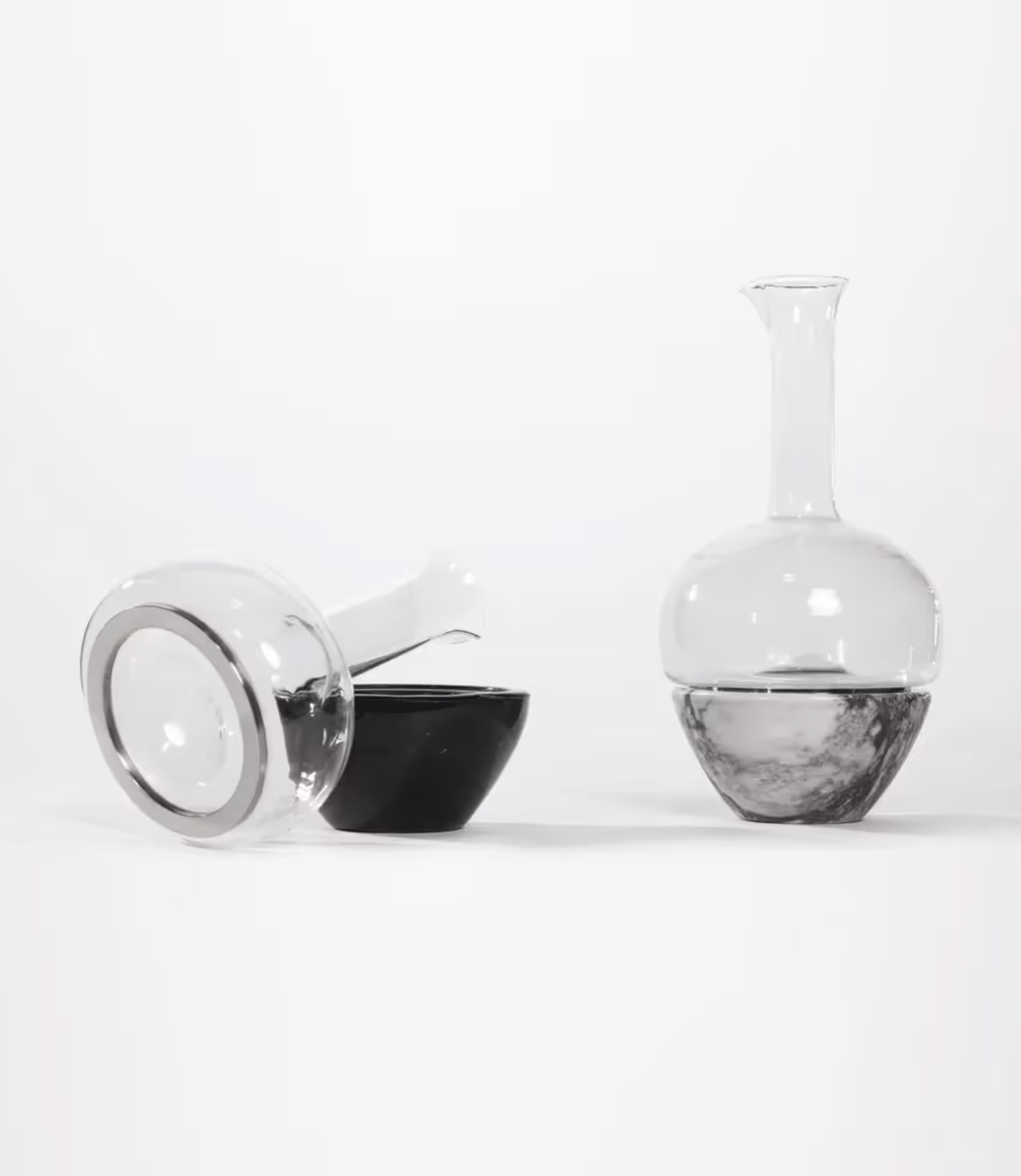
Contemporary interpretations have taken the familiar form and played with scale, material and function, turning the breek into something that can sit comfortably within a modern interior without stripping away the characteristics that make it identifiable in the first place.
And maybe that's why we're particularly drawn to it now. At JDEED, we're constantly interested in what happens when heritage stops being treated as something fragile that needs to sit behind glass and instead becomes something we can actually use, reinterpret, wear, eat from, drink from and play with.
The breek feels like exactly that kind of object.
We're increasingly looking back at the things that surrounded us growing up—the fabrics, glasses, chairs, tiles, coffee cups, food packaging and household objects that once seemed completely ordinary—and realising that they tell us as much about where we're from as the monuments and artefacts we're taught to call heritage.
The breek happens to tell that story particularly beautifully: an ancient-looking form that remained useful for generations, changed materials as the world around it changed, developed its own rituals and somehow became unmistakably familiar without most of us ever stopping to ask why. And now that we've properly looked at it again? We kind of want one on our table.
.jpeg)



.png)