How Istituto Marangoni Dubai Is Shaping the Next Generation of Creative Talent in the Middle East
For many of us working in fashion and culture today, there is often a defining institution, mentor, or experience that quietly set everything in motion. For JDEED's founder, Cynthia Jreige, that place was Istituto Marangoni Paris, where studying Fashion Design before continuing at London College of Fashion laid the foundations for a career that would later evolve into journalism, publishing, and cultural storytelling.
It is perhaps why witnessing the growth of Istituto Marangoni in the Middle East feels particularly significant. As Dubai continues its ambitious journey toward becoming one of the world's leading creative capitals, institutions like Istituto Marangoni Dubai are helping shape not only the region's future workforce, but also its emerging creative identity.
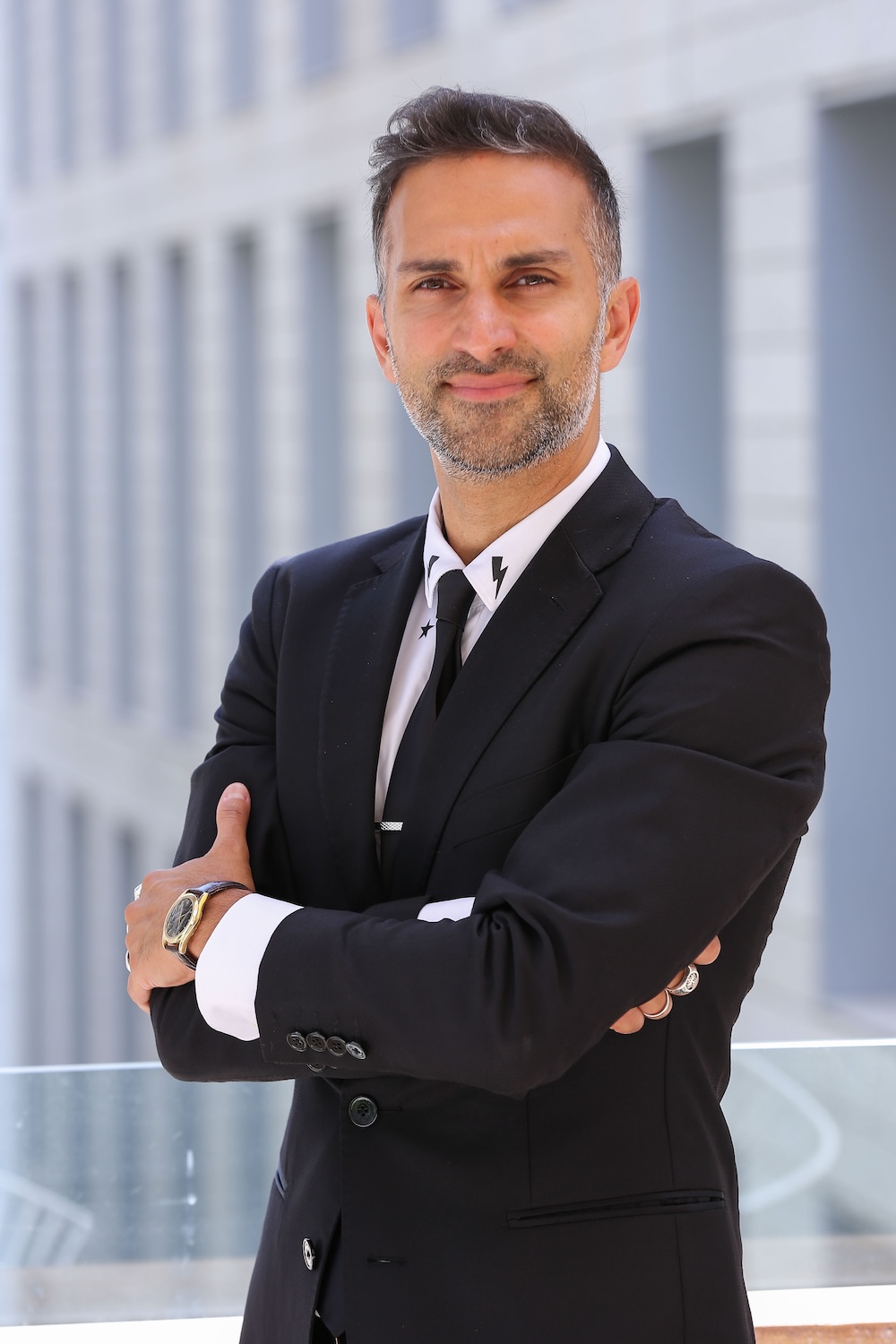
For Roberto La Iacona, Institution Director of Istituto Marangoni Dubai, the role of creative education today extends far beyond teaching technical skills.
"The city's ambition to become the global capital of the creative economy is already cultivating a generation of young creatives who are confident, internationally minded, and ready to bring new perspectives to industries that are evolving at extraordinary speed," he tells JDEED. "Creative education sits at the centre of that vision."

In Roberto's view, preparing the next generation of designers, creatives and entrepreneurs requires a fundamentally different approach to education than it did even a decade ago.
"It is no longer enough to teach technique alone, as students today need critical thinking, problem solving, curiosity, collaboration and fluency with new technologies if they are to navigate a constantly changing world."
This philosophy has become increasingly relevant in a region undergoing profound economic and cultural transformation. Aligned with the UAE's E33 agenda and Higher Education Strategy 2030, Istituto Marangoni Dubai is focused on preparing students not only for today's industries, but for professions that are still taking shape.
"We're proud to be working with a generation of young creatives who can draw inspiration from UAE traditions, channel international influences and combine them with Italian craftsmanship in a forward-thinking and unique creative voice that the region is now exporting to the world," Roberto explains.
If there is one aspect that distinguishes creative education from many traditional academic paths, it is proximity to the industry itself. For Roberto, exposure to practitioners and creative leaders remains one of the most powerful components of a student's education.
"Direct industry access is essential, and in my view, it is the single most powerful complement to academic learning," he says. "You can study theory in great depth, but until you sit with someone who has created collections, directed campaigns or built brands at the highest level, you cannot fully appreciate what this industry asks of you."
That access has become a cornerstone of the Marangoni experience. Students currently benefit from mentorship by internationally renowned figures including filmmaker and photographer Luca Finotti, architect and designer Ferruccio Laviani, visual artist Emiliano Ponzi and business strategist Giovanni Pungetti, whose collective experience spans some of the world's most influential luxury houses and creative institutions.
"This kind of exposure is transformative," Roberto says, pointing to the institution's 91% employability rate one year after graduation, according to Doxa. "For our students in the UAE, this proximity to global creative leaders, paired with local industry partnerships through projects with Cartier, Bvlgari and Madame Arabia, turns their education into a real head start upon entering the workforce."
This year marked another milestone for the Dubai campus when three undergraduate students presented their work during Milan Design Week 2026, becoming the first students from Istituto Marangoni Dubai to participate in one of the world's most prestigious creative events.
"We're proud to be working with a generation of young creatives who can draw inspiration from UAE traditions, channel international influences and combine them with Italian craftsmanship in a forward-thinking and unique creative voice that the region is now exporting to the world,"
For Roberto, the significance of such experiences cannot be overstated.
"You cannot overstate what that means for a young creative: to stand in that room, alongside the leading voices of contemporary design, and contribute your own work to the conversation."
He believes that these experiences provide something classrooms alone cannot.
"Students return with a sharpened sense of where their work sits in the global landscape, a network they have built themselves, and a new level of ambition and confidence," he explains.
This combination of academic learning and international exposure has contributed to Istituto Marangoni's growing global recognition, including its recent ranking among the top 50 institutions worldwide in Art & Design in the QS World University Rankings by Subject 2026.
Yet as the fashion and creative industries become increasingly competitive, conversations around student wellbeing have become equally important. Creative careers can be exhilarating, but they can also be emotionally demanding, particularly for young people navigating both personal identity and professional ambition simultaneously.
Roberto acknowledges this challenge openly.
"The creative industries are deeply rewarding, but they are also demanding, and the pressure on young people to perform, to find their voice, to compete globally, to keep pace with rapid change, can be significant."
At Istituto Marangoni Dubai, support extends beyond academic performance. The institution offers counselling and coaching services, collaborative workspaces, and community-led activities ranging from movie nights and yoga sessions to design gatherings across Dubai's creative ecosystem.
"We truly believe creativity grows when students feel supported, recognised, and free to take risks," Roberto says. "That's the kind of environment we aim to create for every cohort that joins us."
Perhaps one of the strongest indicators of the changing creative landscape in the Gulf came earlier this year, when more than 150 teenagers and their families attended the institution's open day in Dubai.
For Roberto, this reflects a broader cultural shift happening across the region.
"We are witnessing a generational change in how creative careers are perceived," he explains. "Just a few years ago, design, fashion and visual arts may not always have been the first paths families encouraged their children to pursue."
Today, however, as creative industries continue to grow across the GCC and beyond, attitudes are evolving.
"Families are recognising that a career in fashion, design or visual arts is among the most exciting and globally mobile paths available to young people today," he says. "The questions we hear from parents focus on future-facing practicalities such as employability rates, internships, industry partnerships and where their child's degree can take them."
For those of us who have experienced the impact of a creative education firsthand, perhaps this shift feels long overdue. What institutions like Istituto Marangoni Dubai are helping demonstrate is that creativity is no longer simply a passion to pursue on the side. In the Middle East's rapidly evolving cultural economy, it is increasingly becoming one of its most valuable currencies.
More info on IstitutoMarangoni.com

.png)