Ces XC: Connecting The Dots Between The Real And The Imagined
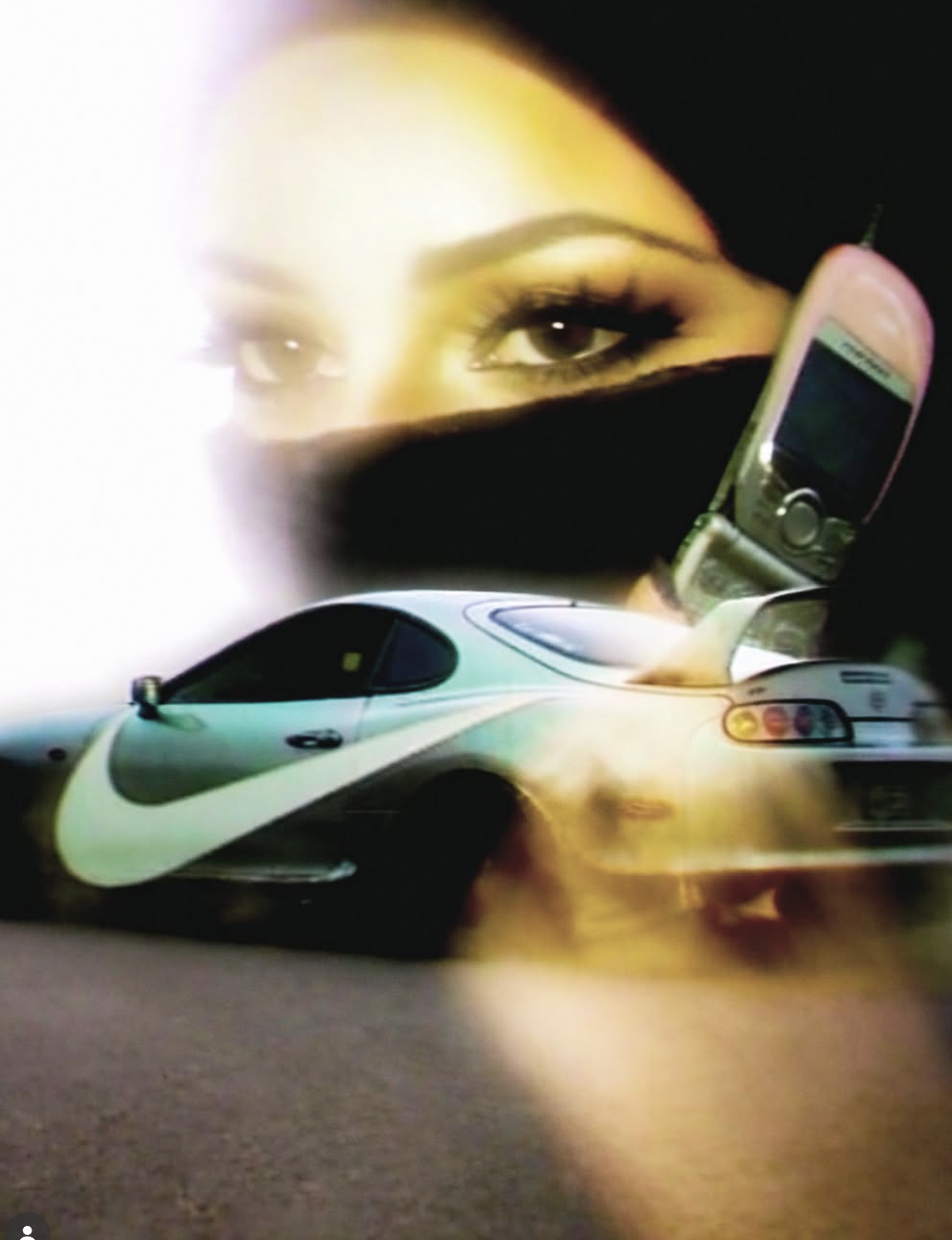
Istanbul-based visual artist Ces XC doesn't just make images, he builds worlds. Over more than a decade behind the camera and inside graphic design, he's developed a visual language fluent in football shirts and Mediterranean sunlight, chrome and VHS grain, luxury and longing, treating each as an emotional code rather than a still life.
In recent years, AI has become part of that language too, not as a shortcut, but as an extension of a photographic instinct built long before the technology existed. Ahead of his latest work across campaigns, editorials, and physical installations, we spoke to Ces XC to talk about where photography ends and generation begins and why, for him, that question stopped mattering a long time ago.
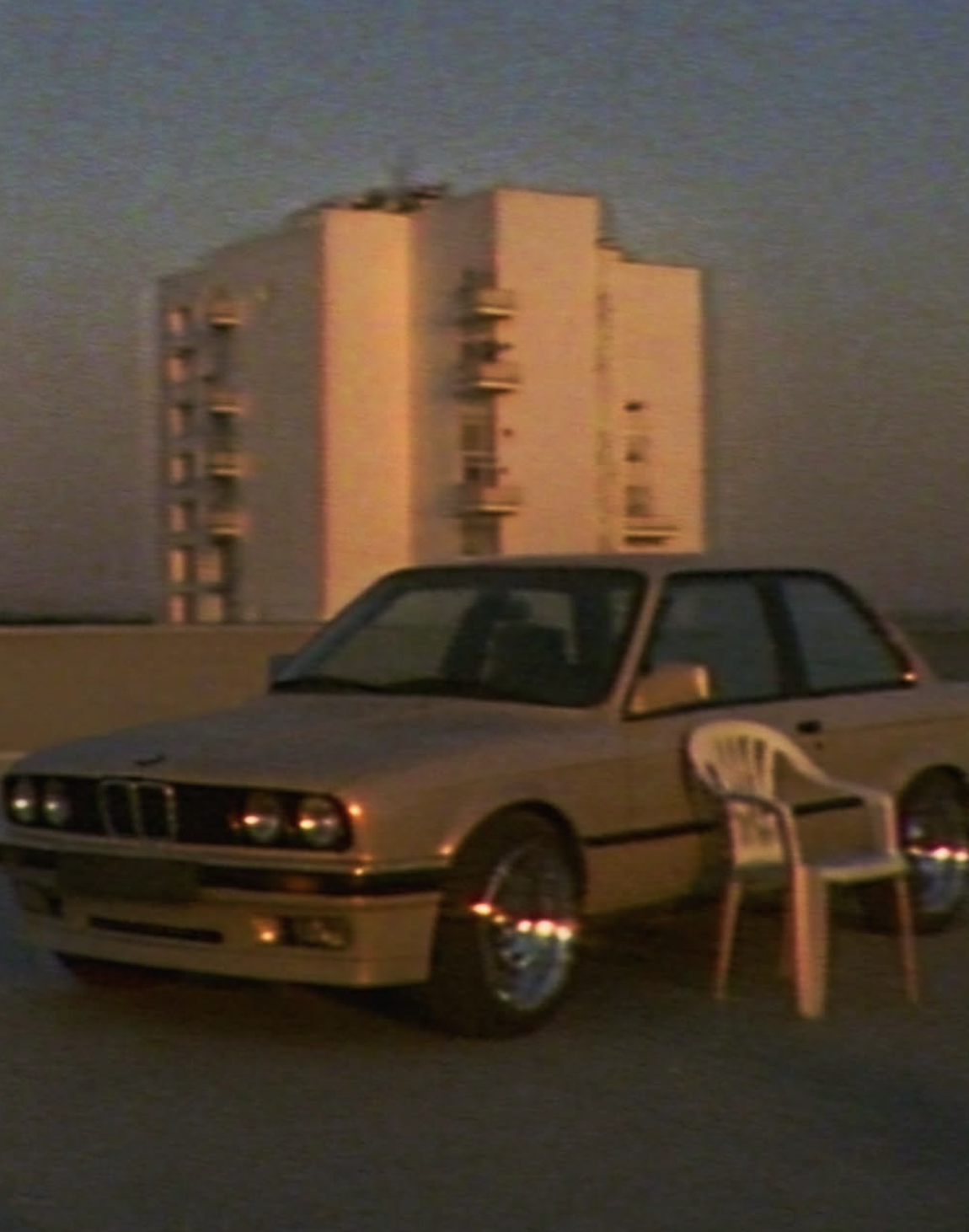
Your work blends original photography with AI-generated elements until the line blurs completely. Where does that boundary actually sit for you creatively — is there a point where "real" versus "imagined" stops mattering?
For me, there isn't really a fixed boundary anymore, but that doesn't mean the origin of an image is unimportant. I spent more than ten years working with photography and graphic design before AI became part of my process, so photography still forms the foundation of how I see. It taught me about light, composition, texture, imperfection, timing, and — most importantly — how an image can carry an emotion. In many of my works, the original photograph is still the skeleton, while AI allows me to extend it into places that would be difficult or sometimes impossible to reach physically.
I don't use AI to escape reality; I use it to stretch reality. Sometimes that means adding something surreal to a photograph, changing the environment around a subject, or combining references that would never normally exist in the same frame. My approach has always been about "connecting the dots", bringing together photography, fashion, sport, music, street culture, cars, architecture, memory, and imagination until they become part of one visual language.
At a certain stage, I stop thinking about which part is photographed and which part is generated. What matters then is whether the final image feels emotionally believable. Something can be completely imaginary and still feel true. At the same time, something can be technically real but emotionally empty. So for me, "real" and "imagined" stop mattering when the image begins to exist as its own world. The final work should not feel like a demonstration of technology. It should feel like a memory from somewhere you may never actually have been.
Identity, youth culture, sport, and luxury all surface across your work, alongside something as physical as Mediterranean life. What's the thread connecting those for you? Is it the tension between the emotional and the material, or do you see them as the same thing?
I don't really see the emotional and the material as separate things. Objects can carry an incredible amount of emotion, especially within youth culture. A football shirt, a pair of sneakers, a car, a motorcycle, a piece of jewellery, or even a certain logo can represent belonging, ambition, status, rebellion, or a specific period in someone's life. These things may be material on the surface, but the relationships we build with them are deeply personal.
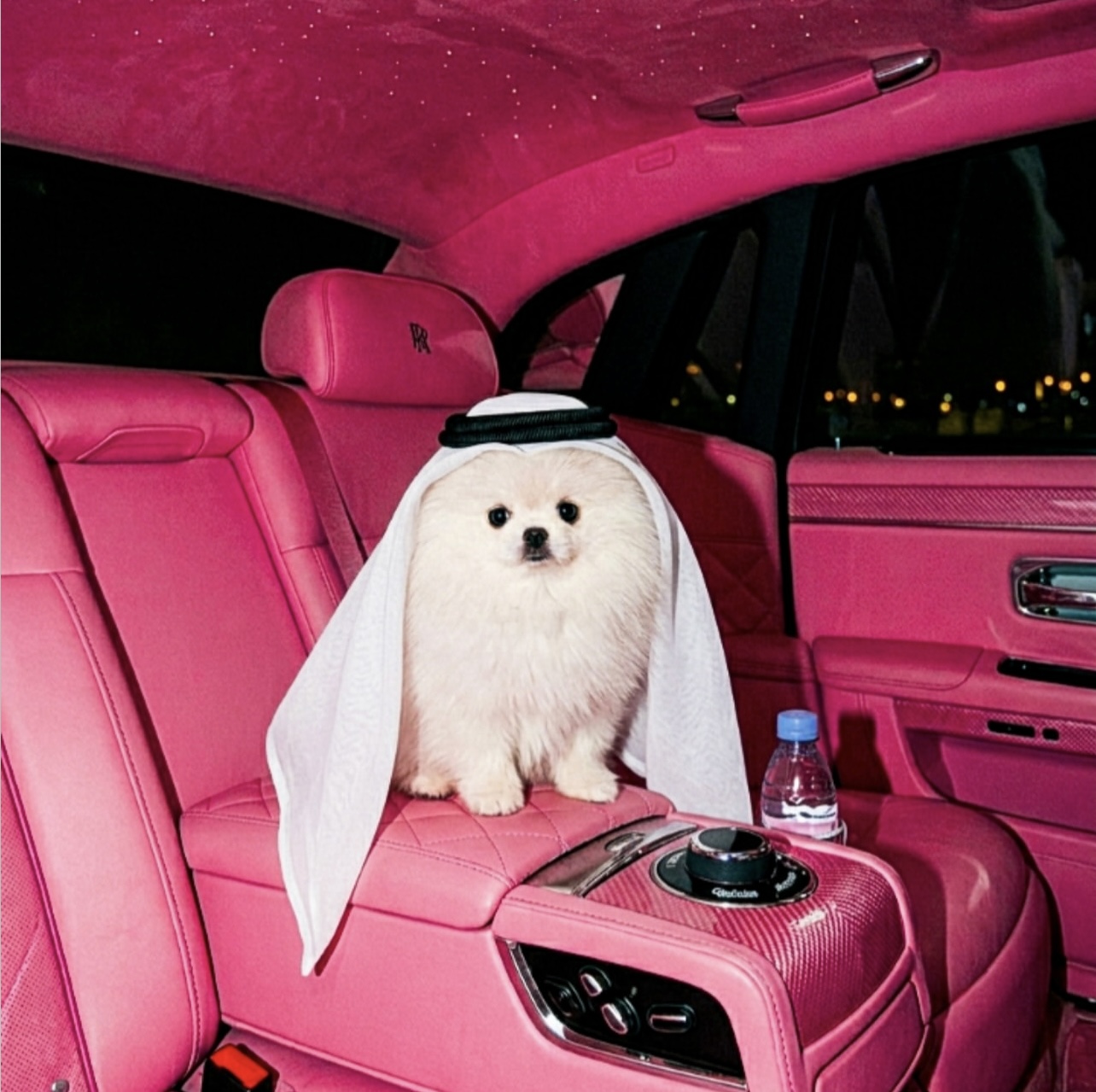
Sport is especially powerful because it contains both identity and community. It can tell you where somebody comes from, who they represent, and what they dream about. Luxury functions in a similar way in my work, but I'm not only interested in luxury as wealth. I'm interested in the desire around it — how an ordinary object can become mythological, how chrome, jewellery, a car, or a branded piece of clothing can become part of someone's identity. Mediterranean life gives all of those symbols a physical environment. There is sunlight, heat, salt, concrete, white walls, the sea, scooters, outdoor spaces, summer evenings, and people living very close to the street. That physicality keeps the images from becoming too sterile or purely conceptual. Even when I create something surreal, I want the viewer to almost feel the temperature of the scene.
The connecting thread is desire: the desire to belong, to transform yourself, to escape, to be seen, or to create your own identity. The material objects become emotional codes. That is why a sports jersey, a luxury car, and a Mediterranean sunset can naturally exist in the same image for me, they are all communicating different parts of the same human feeling.
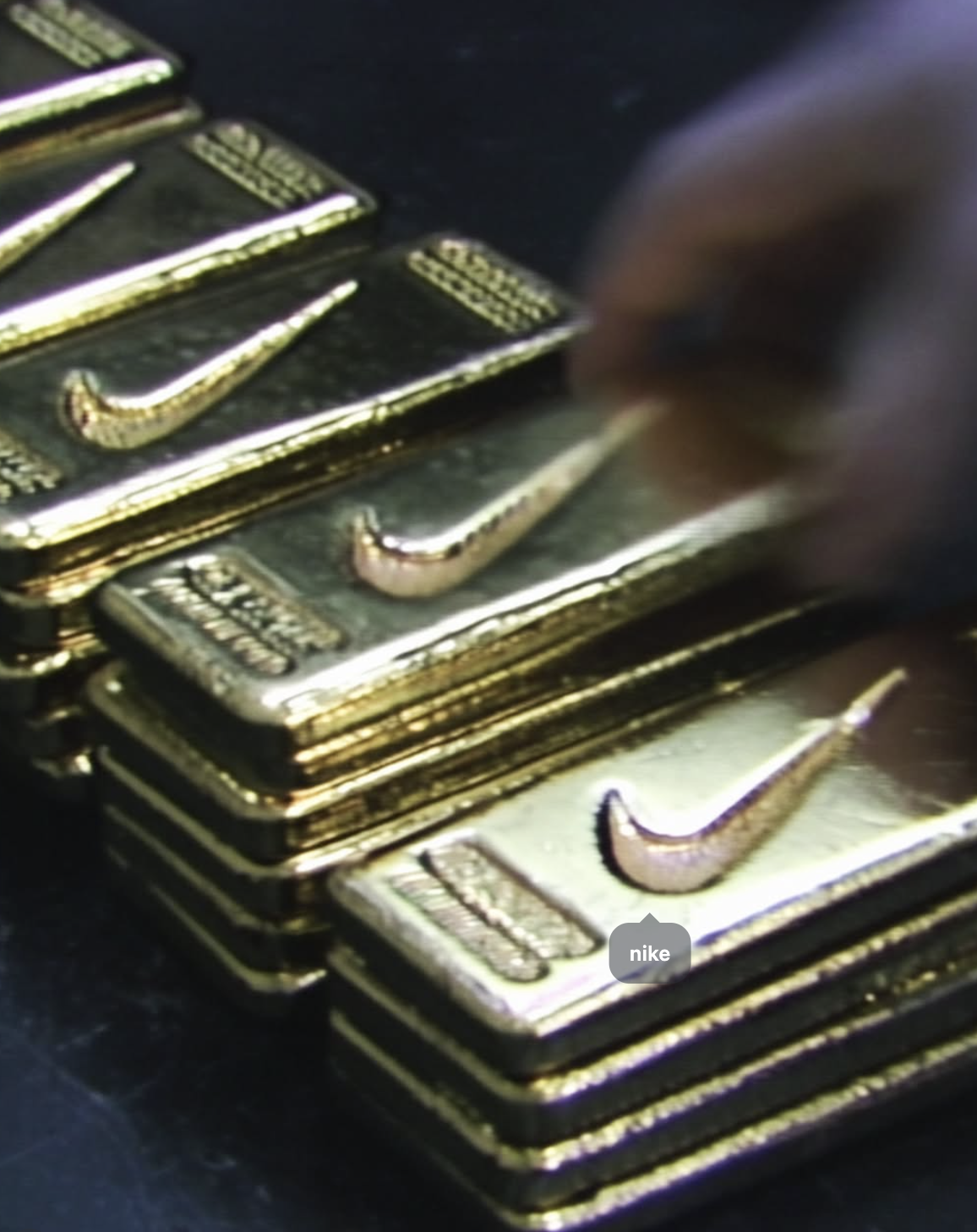
Your images are dreamlike but stay emotionally grounded — a hard balance to strike. How do you know when a surreal world has gone from "striking" to "too far," losing the emotional truth underneath it?
A surreal element works when it intensifies the feeling that is already inside the image. It becomes too much when it starts competing with that feeling. If the first thing the image communicates is simply, "Look what I can generate," then I usually know I have gone too far. Technology or technique should never become more important than the atmosphere. I often ask myself whether the image would still contain something meaningful if the most obviously surreal element were removed. Would the composition, light, character, gesture, or mood still hold my attention? If the answer is no, then the image is probably relying too heavily on the trick. The surrealism has to be supported by an emotional structure underneath it.
I also think imperfection is extremely important. I'm attracted to analogue photography, harsh flash, VHS textures, film grain, low-resolution imagery, and moments that feel accidental because they leave space for memory. A perfectly polished image can sometimes feel more artificial than an impossible image with the right texture and emotional weight. I want the viewer to feel as though the scene was discovered, not simply manufactured.
A lot of it comes down to editing and instinct. The first idea is often the loudest, but not necessarily the strongest. I try to look at the image again after the initial excitement disappears. If the surreal element still feels connected to the world and gives the image another emotional layer, I keep it. If it only looks clever or spectacular, I pull it back. The impossible detail should feel strangely natural, almost as if it had always belonged there.
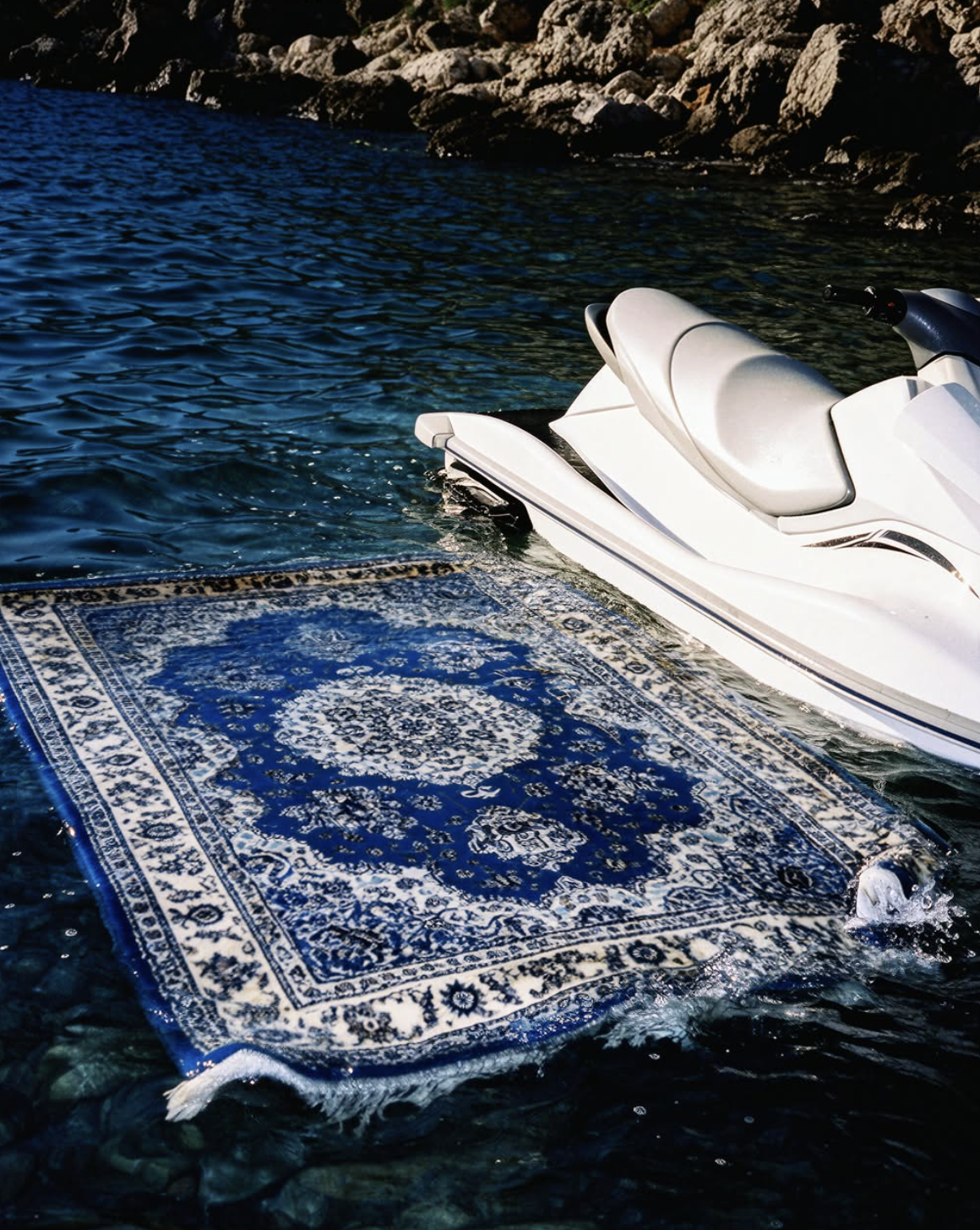
Istanbul sits at its own cultural crossroads, yet Mediterranean life keeps surfacing in your imagery. How much of that visual language comes from lived geography, and how much is a constructed, imagined version of it?
It comes from both. Istanbul has shaped the way I understand contrast. It is a city where different histories, cultures, social classes, and visual languages constantly overlap. You can see something extremely old next to something completely contemporary, or a luxury car parked beside a worn building. The city can feel European, Asian, Middle Eastern, Mediterranean, traditional, and global at the same time. Growing up around those contradictions taught me that very different symbols can exist naturally within one frame.
The Mediterranean side of my work is connected to lived experiences;, the quality of the sunlight, the sea, the heat, the architecture, the streets, the colours, and the way life happens outside. Those details stay in your visual memory. Even when I'm not consciously trying to create a Mediterranean image, they often return through the light, the atmosphere, or the physical feeling of the scene.
But I'm also not trying to document a single, geographically accurate Mediterranean reality. I construct my own version of it. It may contain Istanbul, the Aegean coast, memories of summer, global youth culture, fashion imagery, cars, music videos, and places that only exist in my imagination. It becomes an emotional geography rather than a specific location on a map.
I sometimes think Istanbul gives my work its contradictions, while the Mediterranean gives it its temperature. One creates the tension, and the other creates the feeling. I'm not interested in producing a perfect postcard version of either one. I want to build a personal mythology from what I have lived, what I remember, and what I wish could exist.
You've moved between campaigns, editorials, installations, and physical spaces for international brands and cultural institutions. What's the biggest misconception people still have about bringing AI into that kind of creative process — versus what it actually adds?
The biggest misconception is that AI is the idea, the execution, and the finished work all at once; that you press a button, receive an image, and the creative process is finished. In reality, the first output is almost never the work. AI can create possibilities, but it cannot decide which possibility belongs to your visual language. That still requires taste, experience, direction, editing, and a clear understanding of what you are trying to communicate.
My background in photography and graphic design is still present in every decision I make. I think about composition, lighting, colour, typography, texture, brand identity, and how a series of images works together. For a campaign, it is not enough to create one interesting visual. You may need ten or twenty images that all feel consistent, while the product, logo, and identity remain accurate. For an installation or physical space, you also have to consider scale, materials, colour reproduction, viewing distance, and how the image interacts with its environment. AI does not remove any of those responsibilities.
What it adds is freedom and speed in exploration. It allows me to test more directions and build worlds that might require enormous budgets or complicated production methods if they were created entirely in-camera. But speed does not mean lowering the quality bar. In some cases, AI actually creates more work, because there are more possibilities to evaluate and refine.
I see AI as another lens — a lens capable of looking beyond the limits of the physical world. It does not replace photography, design, or creative direction; it expands the space in which they can operate. The technology gives me more ways to connect the dots, but it cannot decide which dots are meaningful. That authorship still comes from the artist.
Discover more on cesxcommercial.com

.png)