Sarah Khorbtli Talks Les Benjamins x Apple, Creativity and Cultural Heritage
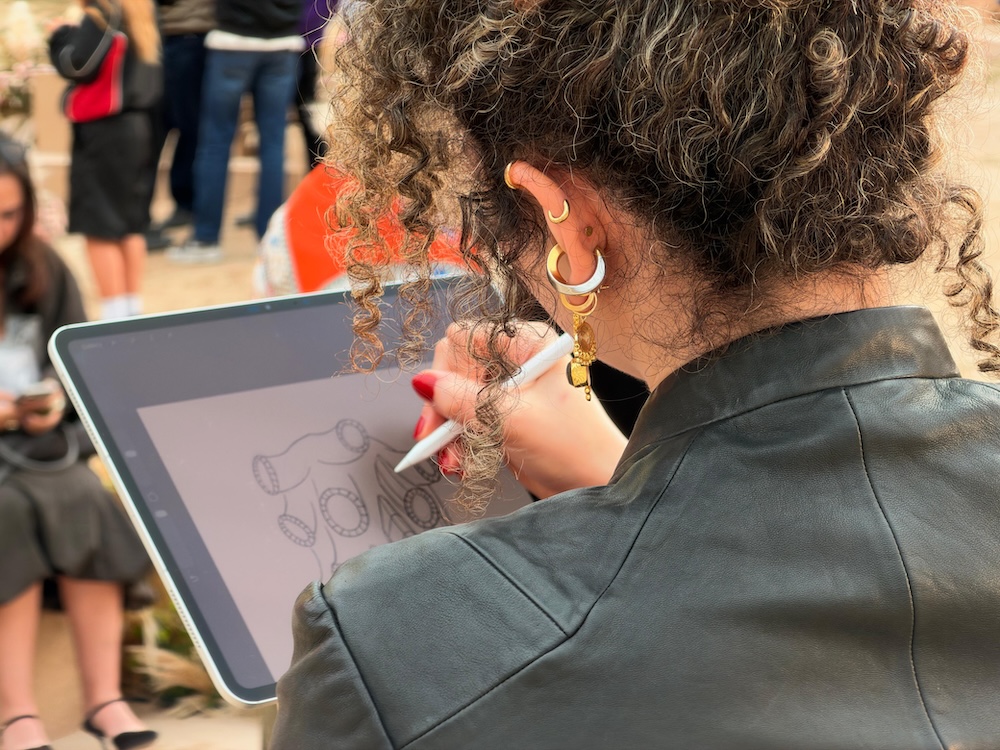
For its 15th anniversary, the Istanbul-based label has turned Türkiye's extraordinary landscape into a fashion spectacle of hot-air balloons, bold colours and Anatolian heritage. JDEED speaks exclusively to Syrian-American visual artist Sarah Khorbtli about the project, creative freedom and why technology will never replace the human experience.
At sunrise in Cappadocia's Rose Valley, three enormous hot-air balloons in neon green, yellow and pink float above the region's otherworldly rock formations. Below, models prepare for a fashion show that looks considerably different from the usual runway presentation. This is From Earth to Sky, the latest project by Les Benjamins, celebrating 15 years of the Istanbul-based brand founded by Bünyamin Aydın.

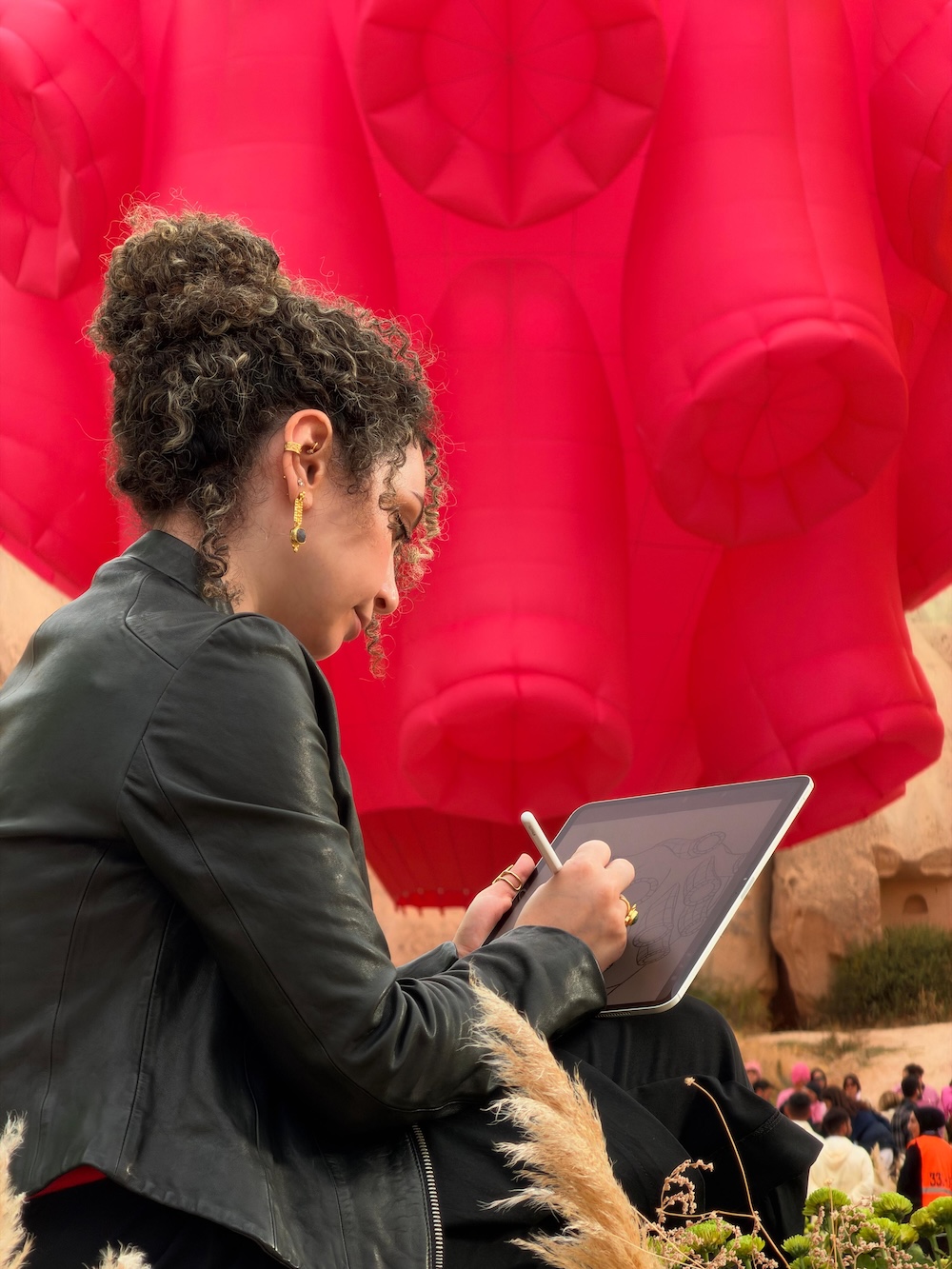
Part fashion show, part visual experiment, the project brings together Anatolian heritage, contemporary design and technology, with Apple's iPad Pro and Apple Pencil Pro playing an important role in its development. The final film, directed by French filmmaker Neels Castillon, was shot on iPhone 18 Pro Max.
The setting is spectacular, but it wasn't chosen simply for its photogenic qualities. Cappadocia's distinctive landscape, native flowers and colours informed the collection itself, from its silhouettes to the three custom-built balloons hovering above the valley.
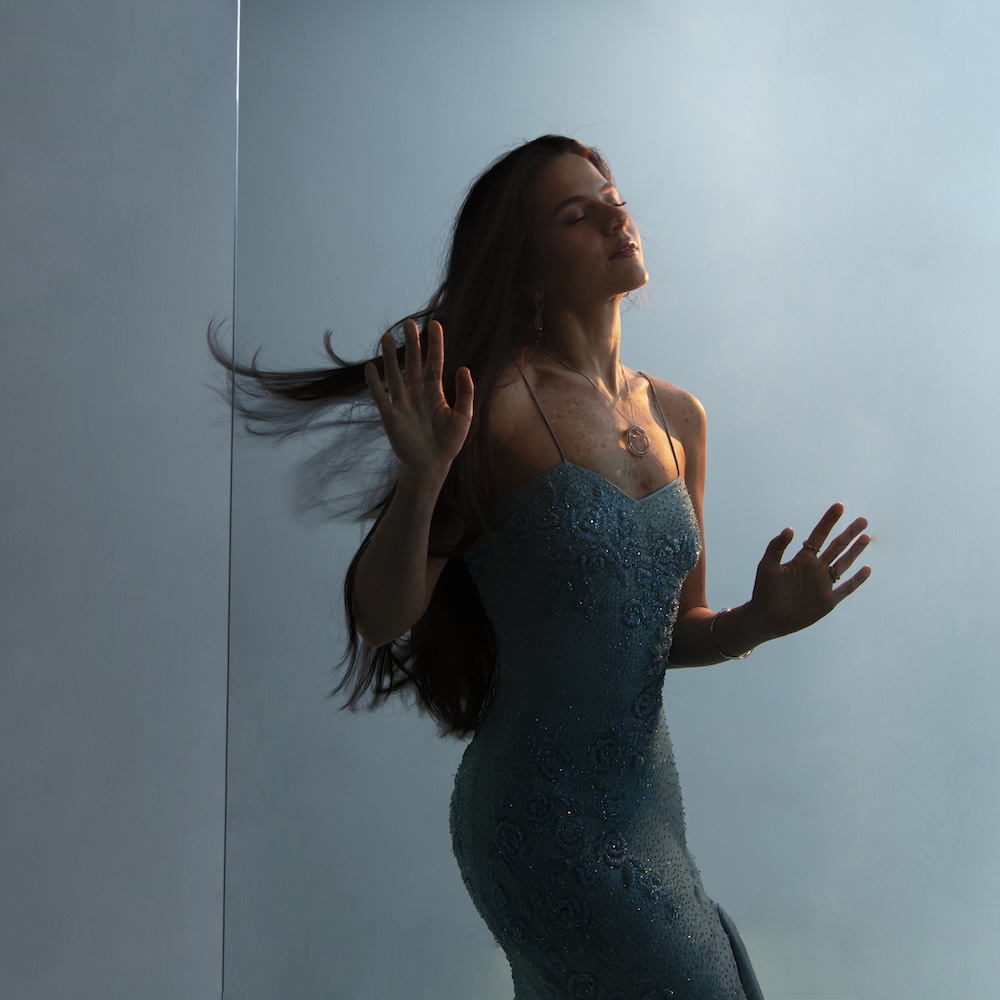
For Sarah Khorbtli, the Syrian-American visual artist and storyteller who was involved in the project, the experience offered something she hadn't encountered before.
“I love seeing moulds break. I'd never seen anything like this: a fashion show in such a natural setting, in such vivid colours, with a story that ties it all together.”
Speaking exclusively to JDEED, Khorbtli reflects on the creative process behind From Earth to Sky, the importance of cultural identity and the possibilities that technology has opened up for artists.
From the Landscape to the Collection
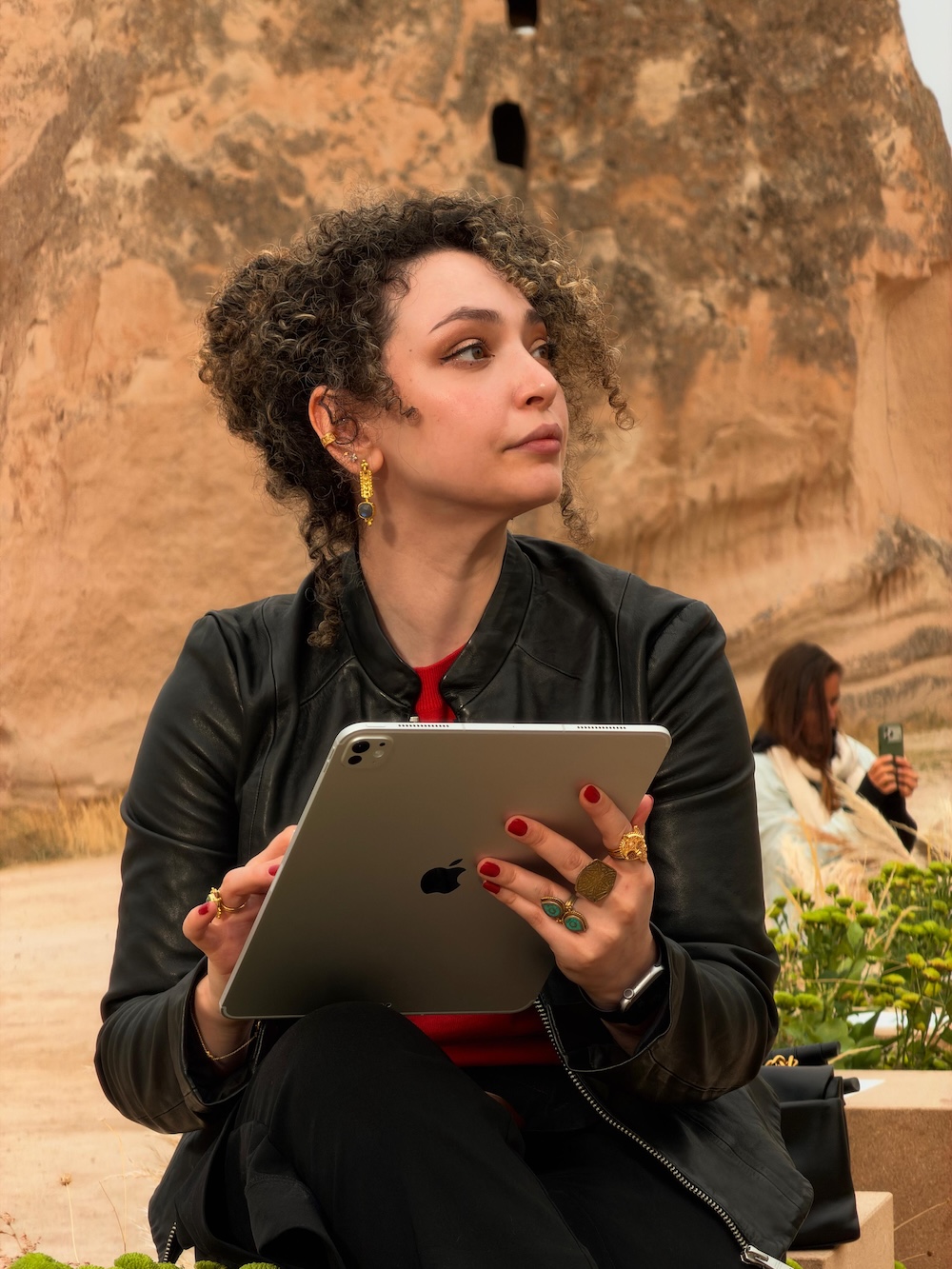
The idea for From Earth to Sky began taking shape during a research trip to Cappadocia in early 2026. Aydın spent time documenting the region using iPad Pro, Apple Pencil Pro and iPhone 17 Pro Max, capturing photographs and 4K video of its unusual terrain.
Among the details that caught his attention were three native flowers: the spiky green Echinops, delicate pink trumpet-shaped flowers and wild yellow tulips. Their colours and forms became the foundation for 10 looks and the three custom hot-air balloons that would eventually appear in the show. The result is an unusually direct relationship between landscape and clothing. Rather than treating Cappadocia as a dramatic location in which to present an unrelated collection, Aydın made the environment part of the design process.
For Khorbtli, it was precisely this relationship between place and creative expression that made the project so interesting: “The place itself is what made it all feel surreal. Those vivid colours and psychedelic shapes would have looked cool anywhere else, but not surreal.”
She adds: “And when surrealism meets beauty, it instantly sparks ideas I've never had before, and the motivation to make something new.” It's easy to understand the appeal. Cappadocia already looks like an exercise in experimental set design, with its sculptural rock formations, extraordinary colours and balloons drifting across the sky. Here, those familiar elements become part of a contemporary fashion narrative.
For Aydın, cultural identity has always been central to Les Benjamins.
Born in Germany and raised between different cultural influences, the designer describes his upbringing as a combination of “German discipline and Turkish heart.” It's a duality that continues to shape the brand's approach to fashion, combining contemporary silhouettes with Turkish textiles, Anatolian references and influences drawn from the historic Silk Road.

“The canvas is the West; the paint is the East,” Aydın says of his design philosophy.
In From Earth to Sky, those influences appear through a distinctly futuristic visual language, where traditional references coexist with unconventional presentation techniques and experimental technology.
Khorbtli understands that balancing act particularly well. As a Syrian-American creative working in the region, she has developed a visual practice that draws on different cultures without feeling the need to explain every reference.
“It's so beautiful, and in a way it reminds me of myself,” she says of the Les Benjamins project. “I live and work in a very modern world, but I still love bringing heritage from my roots into my work, even when it shows up in a modern way.”
For her, representing cultural identity doesn't necessarily mean relying on immediately recognisable motifs: “I'm not afraid of using symbolism that isn't obvious, or of it not being understood or recognised right away.”
Her approach is informed by close observation and an interest in the details that often escape attention.
“I'm a very observant person and I dive deep into details, so I notice things most people walk past. I grew up between different places and cultures, and that gave me a perspective of my own.”
It's an interesting point, particularly in an industry where cultural storytelling can sometimes become overly dependent on familiar visual references.
Khorbtli's perspective suggests that identity can be expressed through much more personal choices, even when those references aren't immediately apparent to everyone: “Most of my audience are artists too, and they appreciate seeing things from a different angle.”
How the iPad Became Part of the Creative Process
Technology played a significant role in bringing From Earth to Sky together.
Throughout the project's development, Aydın used the M5-powered iPad Pro as a portable creative workspace, assembling photographs, fabric references and sketches in Apple's Freeform app. Rather than keeping the research and design process separate, the digital workspace allowed ideas to evolve together and be shared with collaborators as the collection progressed: “Freeform allowed me to bring my team into my creative journey instead of simply giving them finished ideas,” Aydın explains.
The iPad's multitasking capabilities also enabled him to move between sketches in Procreate, photographs from Cappadocia and research in Safari, while files were exported for the wider team.
For a designer who rarely works from a conventional desk, portability became a significant advantage. “It's the ultimate workstation on the go,” Aydın says. “That gives me freedom.”
Khorbtli has experienced a similar shift in her own practice. Working across illustration, animation and visual storytelling, she remembers a time when the technology available to her often dictated what she could create. “It changed a lot. At university I made almost everything by hand. Later I learned animation on my old laptop, but it was very limiting, and I used to find ways around the software just to make high-resolution or detailed work.”
Today, she sees technology as a way of removing some of those practical limitations: “Today these powerful tools work in my favour, and that has changed my game completely. I can focus on the idea and the craft instead of worrying about storage or what the device can handle.”
The ability to work wherever inspiration strikes has become particularly important: “I have everything with me wherever I go, and that's what made this project in Cappadocia possible.”
For creatives whose work moves between physical environments, digital tools and different collaborators, that flexibility can fundamentally change the way a project develops.
When Everyone Can Make Beautiful Images, What Makes an Artist Original?
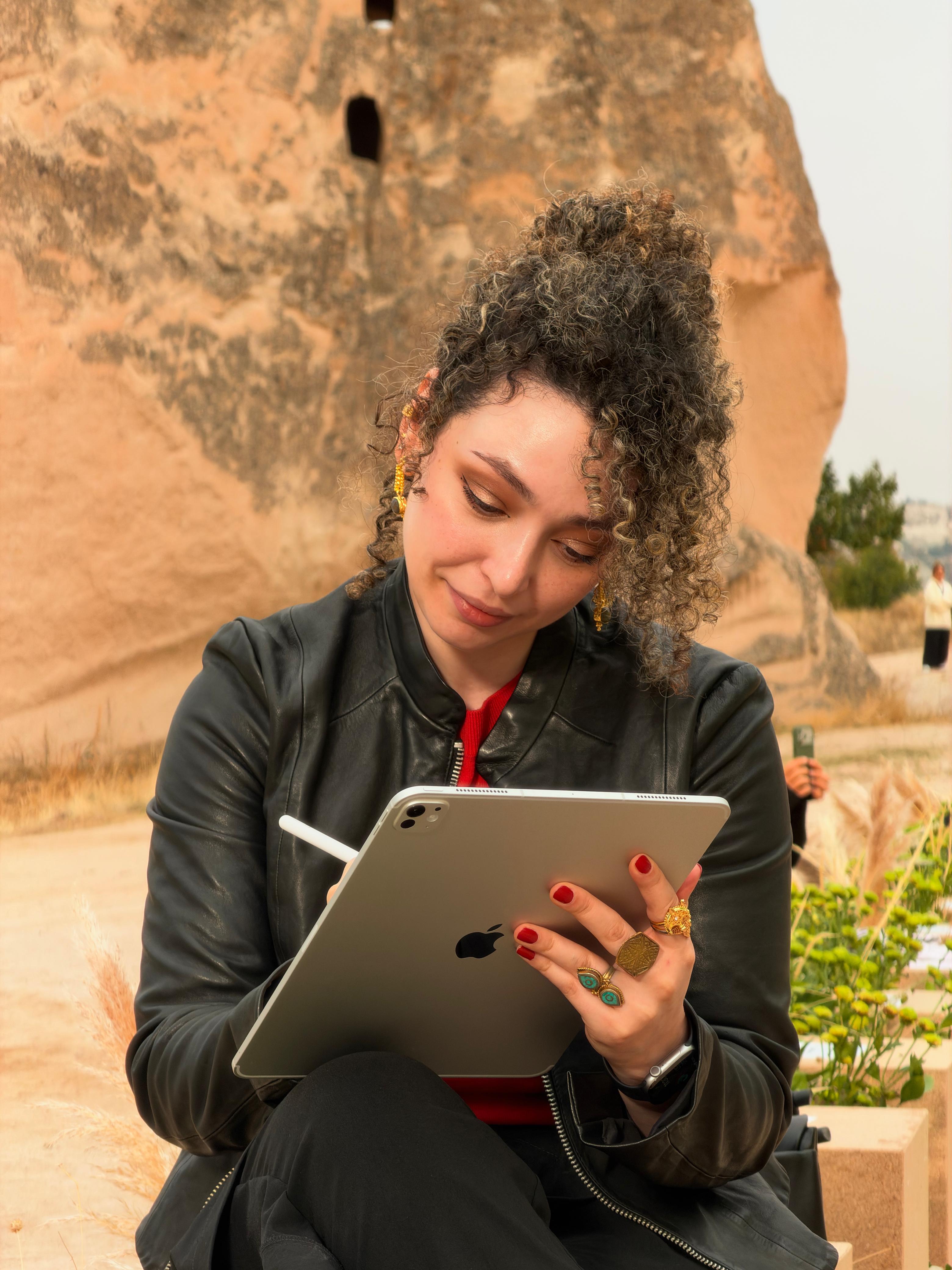
With artificial intelligence and increasingly sophisticated creative tools making high-quality visual production more accessible, it's difficult to ignore the questions surrounding originality. For Khorbtli, the answer has less to do with the technology itself and more to do with the person using it: “Impressive visuals are easy to make now, so what will truly stand out is the person behind them: their process, their story and their personal experience.”
It's a perspective that feels particularly relevant to a project like From Earth to Sky, where the final images are undeniably striking, but much of their meaning comes from the research, cultural references and decisions that shaped them. “Right now it's not about the result, it's all about the process,” Khorbtli continues.
And while she's enthusiastic about the creative possibilities offered by new technologies, she doesn't believe they can replace the experiences that inspire the work in the first place. “The one thing technology can't replace is living the experience yourself. Being in the room, feeling inspired and deciding what matters to you.”
She concludes: “The tools help me get there faster, but the reason to make the work has to come from me.”
Aydın's research in Cappadocia began with the physical experience of a place: its landscape, colours, flowers and cultural history. Technology helped him document, develop and communicate those ideas, eventually translating them into an ambitious fashion presentation. For Khorbtli, the experience reinforced something that remains central to her own creative practice: personal perspective matters.
Fifteen years after launching Les Benjamins, Aydın has found a new way to bring his cultural influences into conversation with contemporary fashion; and with three brightly coloured balloons floating above Cappadocia, he has certainly found a memorable way to celebrate.
'From Earth to Sky'; is a Les Benjamins project created with iPad Pro and Apple Pencil Pro and filmed on iPhone 18 Pro Max by Neels Castillon.
More on Apple.com