At Fendi, Maria Grazia Chiuri Lets the Body Do the Talking
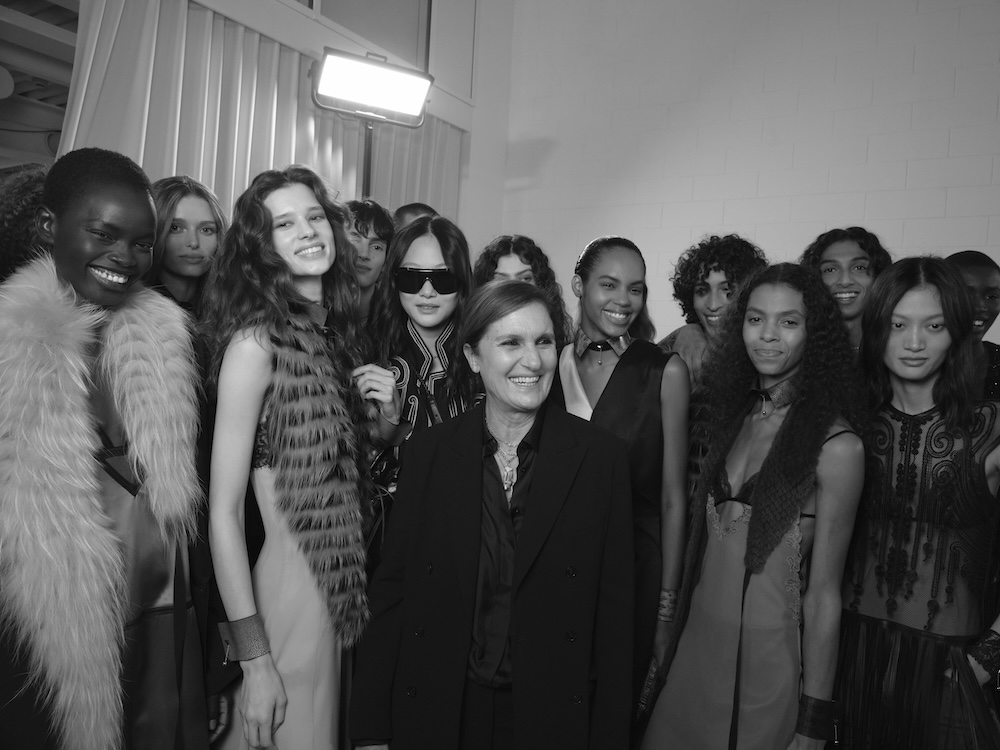
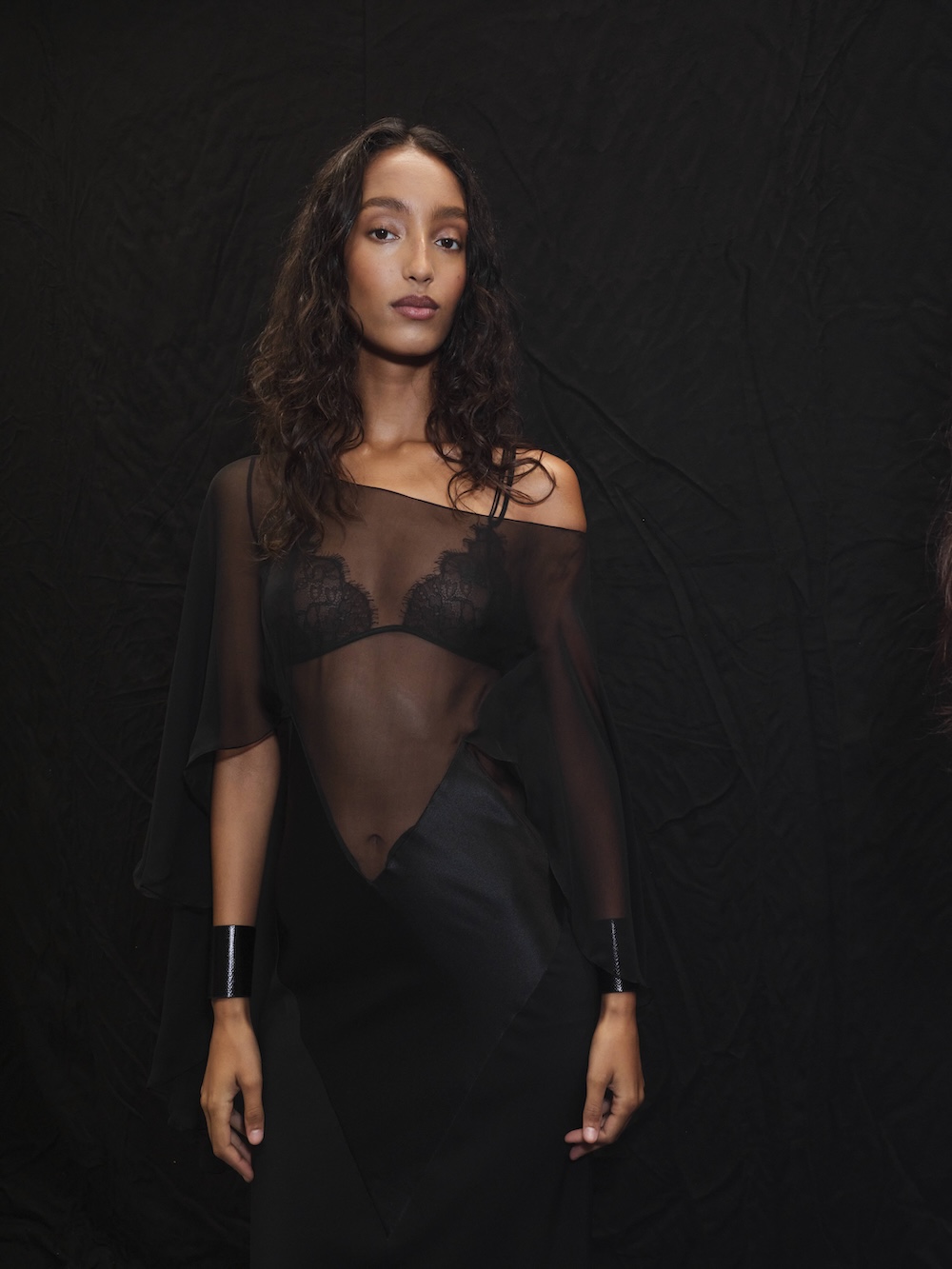
For her Spring/Summer 2027 collection at Fendi, Maria Grazia Chiuri began somewhere unusually intimate: with underwear. Bras, slips, dressing gowns and the pieces normally hidden beneath everything else were brought into view, layered and decorated with lace, embroidery and colour.
It was a fitting starting point for a collection preoccupied with the relationship between clothes and the bodies inside them, and with how much of ourselves we choose to reveal. Chiuri's premise is that the contemporary body can be both strong and fragile, masculine and feminine, individual and connected to another. Clothes become a porous second skin rather than armour, responding to the person wearing them rather than attempting to control them.
For a house as historically associated with polished Roman glamour as Fendi, that made for an interesting proposition and quite frankly, we're here for it.
Chiuri treated undergarments as an “interstitial layer,” something capable of concealing and revealing at the same time. Lace, embroidery and colour heightened their presence rather than disguising them, giving lingerie the confidence of clothes intended to be seen.
A dressing gown, meanwhile, was quite literally taken onto the street. But the sensuality wasn't particularly precious. There was humour here too, helped considerably by Raffaella Carrà, the Italian pop icon who became one of the collection's cultural touchstones (Trust me, you know her: "A far' l'amore commincia tu...." )
Carrà's significance goes beyond the fabulous stage wardrobe. Her combination of performance, sexuality and independence gave Chiuri a reference for a femininity that could enjoy being looked at while remaining entirely in control of the terms and that distinction matters.
Mirrors provided another recurring idea. Chiuri looked to Luciano Fabro's Cubo di specchi (Mirror Cube), while also referencing the multiplied bodies of Carrà, Adriano Celentano and the dancers in Prisencolinensinainciusol. On the runway, the mirror became a physical presence, forcing the audience to see themselves alongside everybody else; which took me aback a little at first: I needed a second and my wise neighbor to understand this was our reflections and not the people sitting across us (blame it on MFW fatigue...)
It turned looking, fashion's favourite activity, back onto the spectator. The idea worked particularly well alongside a collection concerned with bodies rather than an idealised singular silhouette. Instead of proposing one Fendi woman, or even separating the Fendi woman from the Fendi man, Chiuri allowed different identities to occupy the same visual language.
In the collection, Punk Meets Bourgeois, and Nobody Has to Pick
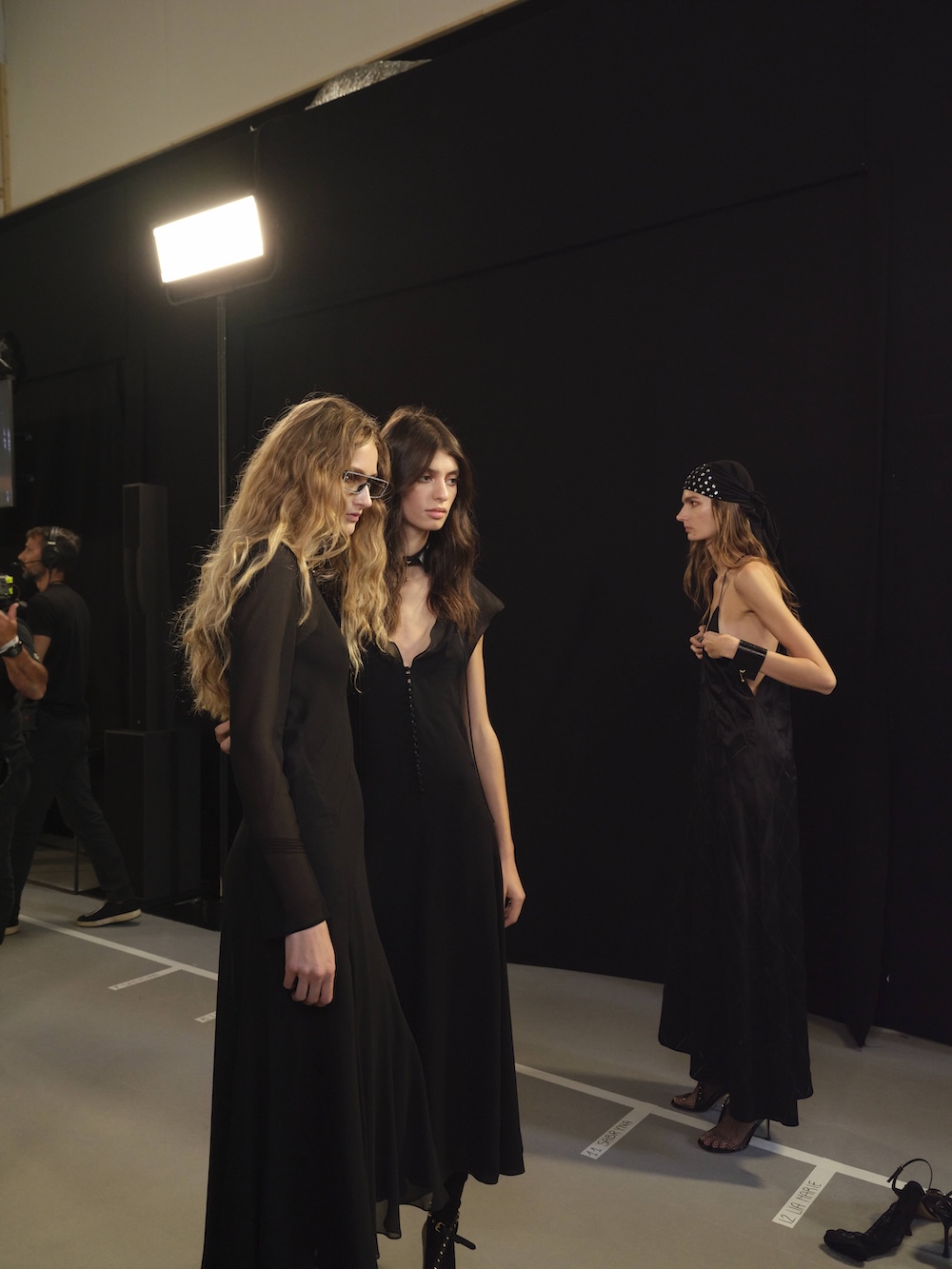
The clothes followed that refusal to categorise. Gloss met matte. Silk met animal print. Lace sat beside embroidery and intarsia. Velvet appeared with parchment, and punk collided with bourgeois codes. Pieces shifted through different lengths, weights and degrees of transparency, sometimes piling one language on top of another.
Then there were the jewel shoes, because intellectual discussions about the body needn't preclude wanting something fabulous on your feet. What could have become a collection overloaded with references instead found its energy in those collisions. The contrasts weren't there simply to create visual tension. They reinforced Chiuri's broader argument that clothes, like the people wearing them, don't necessarily need to belong to a single category.
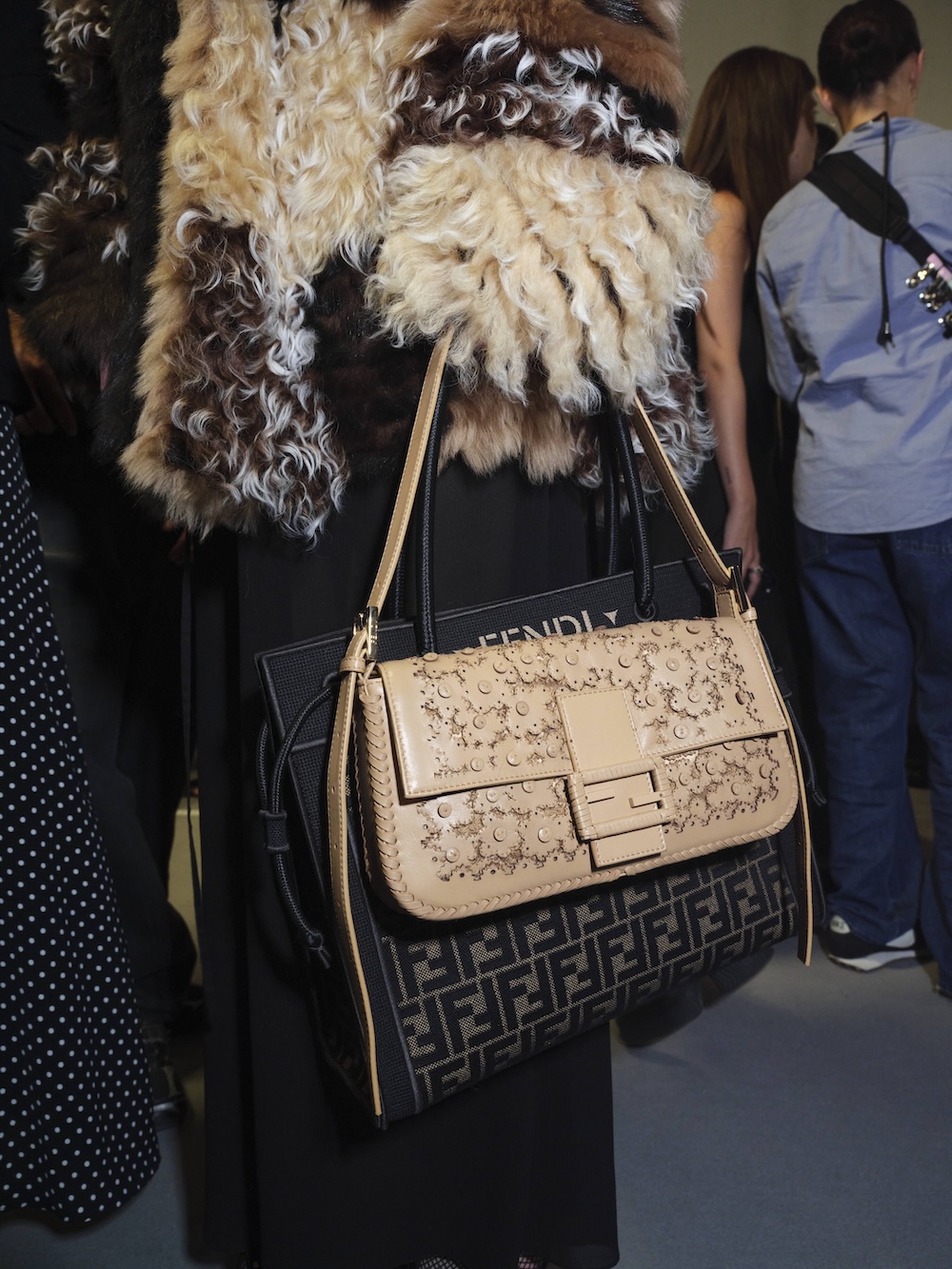
That becomes clearest in the relationship between menswear and womenswear. Rather than borrowing a stereotypically masculine piece to make a woman look powerful, or softening menswear to make it feminine, Chiuri removes the hierarchy altogether. Men and women share fabrics, layers, sensuality and decoration on equal terms.
Fendi Without the Rules
The press notes finish with two ideas that perhaps say more about the collection than anything else: “There are no hierarchies. There are no conformities.”
That's an ambitious proposition for fashion, an industry that has traditionally been very good at creating both. For Spring/Summer 2027, Chiuri's Fendi feels most convincing when it allows those rules to become blurry: underwear and outerwear, masculine and feminine, bourgeois polish and punk irreverence, the private act of looking at yourself and the public experience of being seen by everyone else.
It is sensual without making sensuality its only subject, decorative without losing its intelligence, and occasionally strange enough to keep things interesting. Most importantly, the body doesn't have to squeeze itself into the Fendi fantasy; this time, Fendi moves around the body.
More on Fendi.com


.jpg)

.png)