“You’d Look Better Thinner”: The Rise of GLP-1 Pressure in Arab Families

There’s a specific kind of comment many Arab women grow up hearing so often that it almost becomes background noise.
“You gained weight.”
“You looked better before.”
“You should lose a few kilos before the wedding.”
“Watch what you eat.”
Sometimes it comes from relatives, sometimes from strangers. Increasingly, women say it’s even coming from doctors.
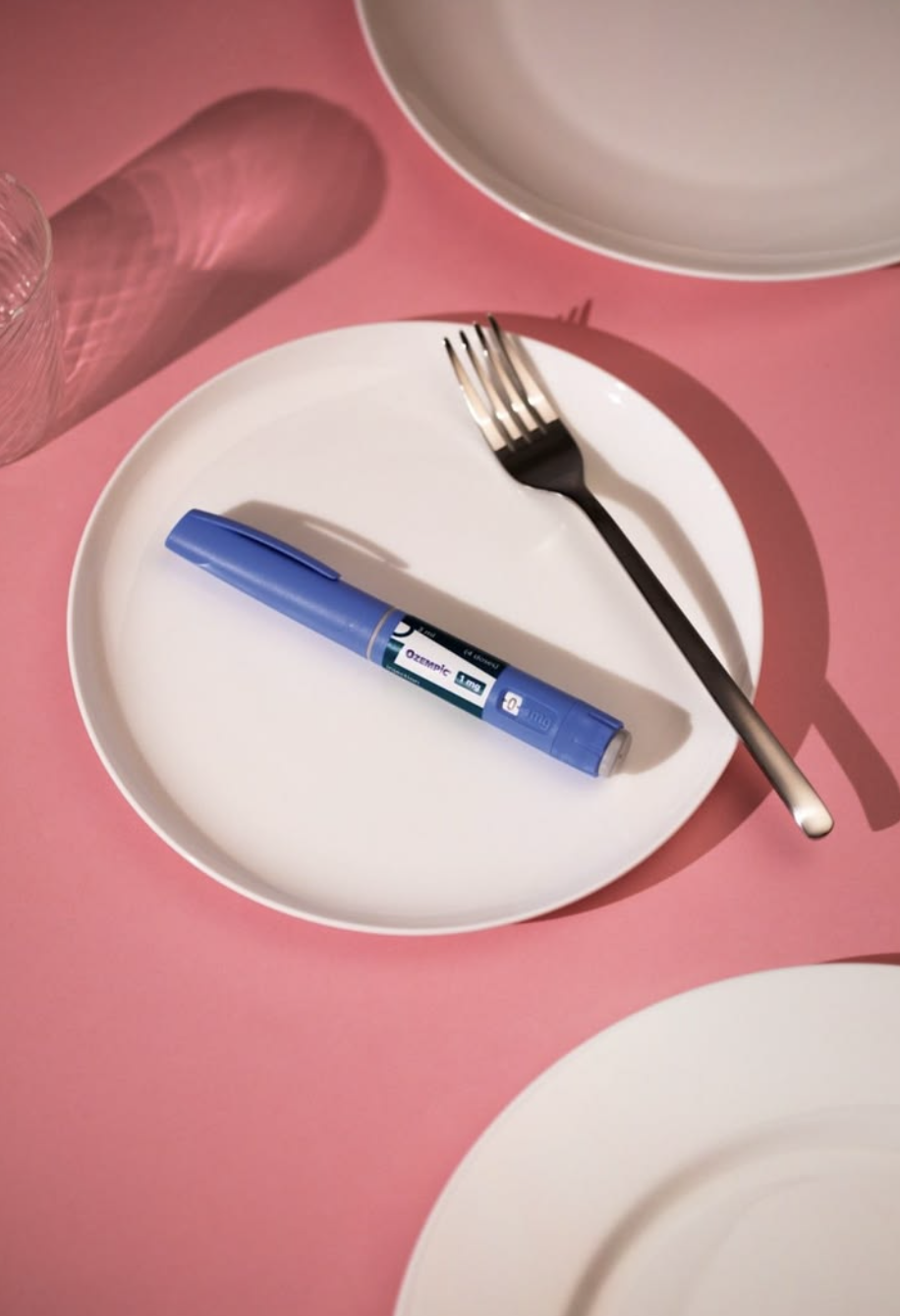
And now, with the rise of GLP-1 medications like Ozempic and Mounjaro becoming culturally normalised online, that pressure is taking a new shape, one that many women say is quietly affecting their relationship with food, health, self-worth and even their bodies themselves.
By Cynthia Jreige
What’s perhaps most alarming is how casual these conversations have become.
Tala Fakhouri, a fitness coach who openly spoke to JDEED with permission to use her name, says the current glorification of rapid weight loss within wellness culture has started crossing dangerous lines.
“As fitness trainers, we’re supposed to represent discipline, health, balance and realistic standards,” she explains. “Not contribute to the pressure and unhealthy expectations people already struggle with every day.”
She pauses before adding something many people in the industry privately admit but rarely say publicly.
“Lately, it’s honestly disappointing to see trainers and fitness influencers jumping on GLP-1 medications as a shortcut, and it very obviously shows. Even worse, recommending or giving them to clients without proper medical supervision.”
For Tala, the issue isn’t the medication itself.
“There’s nothing wrong with it being taken as medically supervised treatment when it’s truly needed,” she says. “But as trainers, we need to stay in our lane, act responsibly and remember why we’re here. People trust us. We should be helping them build healthy lifestyles, not selling them more insecurities.”
For one woman who preferred to remain anonymous, the pressure around weight became deeply tied to her experience living with PCOS.
“Ever since I was diagnosed with PCOS and gained weight in 2021, I’ve constantly been told by my family that I’ve gotten bigger,” she says.
Initially, GLP-1 medication was prescribed medically through her endocrinologist after gaining 10 kilos due to hormonal changes linked to PCOS. But over time, she says things shifted psychologically.
“I felt pressured to maintain a certain physique. Despite working out, I always felt like I needed an extra push to stay around a size 36, which honestly isn’t realistic.”
What hurt most, she explains, was realising how much praise became tied to thinness.
“My mother praises me when I’m thinner, and it almost feels like the most important quality about me,” she says. “In our society, one of the worst things you can be isn’t a horrible person, it’s fat.”
Years later, she found herself turning back to Mounjaro before her wedding.
“I took it to lose five kilos and look slimmer, despite my husband constantly reassuring me and me actually feeling fine,” she admits. “But I still felt like I needed to be skinny for my wedding.”

And that feeling, the idea that women must minimise themselves before major life moments, feels painfully familiar across generations of Arab women. Another woman who spoke anonymously described how conversations around her body became so normalised growing up that criticism almost felt expected.
“In Arab culture, and honestly most cultures when you’re a woman, discussions about your body happen very casually,” she says. “I’ve always been criticised for my body, even when I was 58 kilos, which is 25 kilos ago.”
Despite living with PCOS and taking antidepressants that made weight loss more difficult, she says both relatives and doctors repeatedly focused on her appearance rather than her wellbeing.
“My parents constantly told me to watch what I eat, work out and lose weight,” she explains. “Doctors used to suggest Glucophage for weight loss, but over the last two years, that shifted into suggesting, or more accurately pushing, GLP-1s.”
What shocked her most was who those recommendations were coming from.
“My psychiatrist of a year and a half suggested it to me, which led me to file a complaint and change doctors,” she says. “A dermatologist once suggested it when I went in for eczema. I had literally gone there for a cream.”
At one point, she admits she seriously considered taking the medication out of desperation.
“About a year ago, I fell into a really dark place where I convinced myself I should take it because I was so unhappy with my body,” she says. “But I snapped out of it pretty quickly once I realised the side effects would probably make me feel even worse.”
What stayed with her wasn’t just the pressure to lose weight, but what that pressure implied about her value.
“The way it manifested in my head was this fear that if I didn’t lose weight, I’d be undesirable to romantic partners,” she says. “And that’s very tied to the pressure that exists in Arab families.”
Part of what makes the GLP-1 conversation so emotionally complex is that these medications can genuinely be life-changing for people with insulin resistance, diabetes or serious health conditions. Many women interviewed for this piece were careful to make that distinction.
The issue is what happens when medication slowly shifts from medical treatment into cultural expectation.
When “Have you tried Ozempic?” replaces “How are you?” When thinness becomes positioned as discipline, desirability, success and self-control all at once. And when women begin feeling guilty for existing naturally in bodies that fluctuate, soften, change or simply refuse to shrink.
Both women ultimately returned to the same message: autonomy.
“Your body is your own,” one says. “You should be able to decide for yourself, without pressure or bias, what you need and what you don’t.”
She pauses before adding something that feels radical precisely because of how simple it is.
“I’ve been trying to practice neutrality with my body. This is my body. It functions well. It’s carried me through so many experiences. How I look in a swimsuit or tight dress should not determine my worth as a daughter, friend or partner.”
And honestly, maybe that’s the conversation Arab families need to start having more often. Not how women can become smaller, but why so many grew up believing they had to.

.jpeg)

.png)