The 'Special Occasion Syndrome': Why We Keep Waiting for Later

There is a quiet habit many of us carry without ever really questioning it, a way of moving through life that feels almost instinctive.
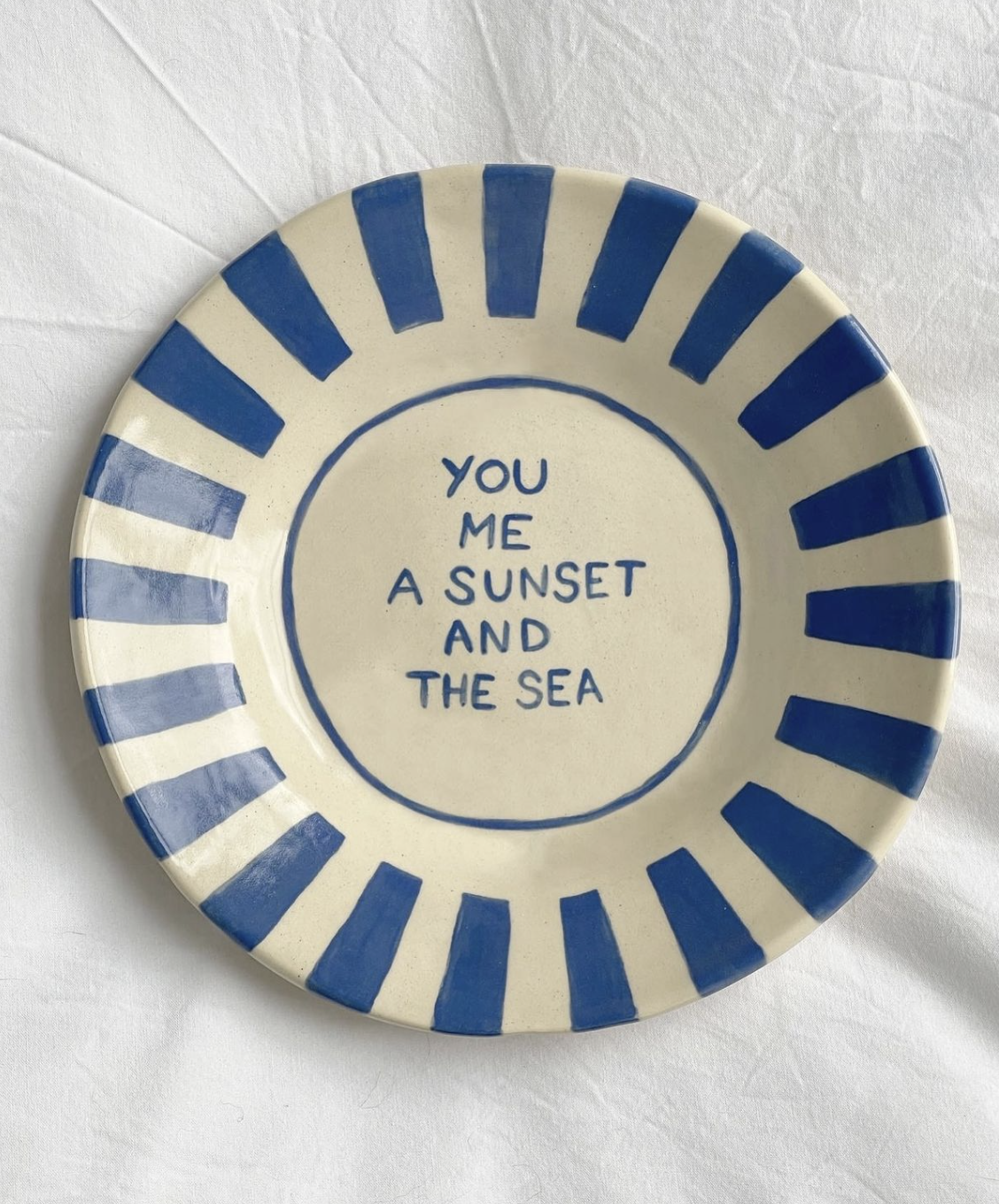
We save the nice things, the dress that feels too special for an ordinary day, the plates that remain untouched in cupboards, the perfume that is only used when something important happens, all carefully set aside as if their value depends on the moment they are attached to. We tell ourselves we are waiting for the right time, for an occasion that will justify using them, for a version of life that feels worthy enough.
But what if that moment never arrives in the way we imagine it?
By Cynthia Jreige

In regions where uncertainty is not an abstract concept but something that quietly shapes the rhythm of everyday life, this habit begins to take on a different meaning. In Lebanon, in Palestine, and increasingly across the Gulf, the future is not always something that stretches out predictably ahead, but something that can shift quickly, sometimes overnight, reshaping plans, expectations, and even the sense of what comes next. What once felt distant can suddenly become immediate, and timelines that once seemed stable can dissolve without warning.
Under these conditions, the idea of a “special occasion” begins to blur, losing its clear edges and its sense of certainty.
Psychological research has long explored how uncertainty reshapes the way we think, feel, and imagine the future. Work on what is known as intolerance of uncertainty, particularly by psychologist Michel Dugas and later synthesized by R. Nicholas Carleton, suggests that when the future feels unpredictable, people experience heightened anxiety and find it increasingly difficult to plan long term or rely on what has not yet happened. Neuroscientific research by researchers such as Alexander Grupe and Jack Nitschke further shows that the brain often reacts more strongly to uncertain threats than to known ones, keeping the mind in a continuous state of anticipation, as if it is always preparing for something just beyond reach.
In that constant state of anticipation, the future becomes harder to hold onto as something stable or guaranteed, and begins instead to feel fragile, conditional, and constantly shifting.
And yet, many of us continue to wait.
We wait for stability, for clarity, for a sense of reassurance that life has settled enough to allow us to fully enjoy it, as though joy itself requires permission from circumstances that may never fully align. In doing so, we quietly push moments of pleasure further away, placing them somewhere in the future, as if they belong to a later version of ourselves rather than the present one.
In places shaped by instability, this kind of waiting carries a different weight, because saving things for later is no longer simply a personal habit or a harmless form of discipline, but begins to resemble a way of living as though the present moment is temporary, incomplete, or somehow not deserving of being fully experienced.
But perhaps the opposite is true.
Perhaps in environments where time feels uncertain and the future cannot always be relied upon, the present becomes the only space that is truly available, the only place where something can actually be lived, worn, used, and felt in its entirety.
Wearing the nice dress on an ordinary day, using the good plates without justification, opening the bottle you were saving for later, these gestures may seem small, almost insignificant at first glance, but within this context they begin to take on a quiet and deeply personal significance. They are not acts of indulgence, but of grounding, small ways of reclaiming the present from the habit of postponement.
Because in regions where the future is not always guaranteed, the most meaningful shift may not lie in resilience or endurance, but in permission, the permission to experience life as it is, rather than waiting for it to become something else.
And perhaps that is what makes something truly special, not the occasion itself, but the decision to stop waiting for one.
.jpeg)

.png)