The Future Of Fashion, Made In Lebanon: Inside ALBA MODE’s 10th Anniversary Show
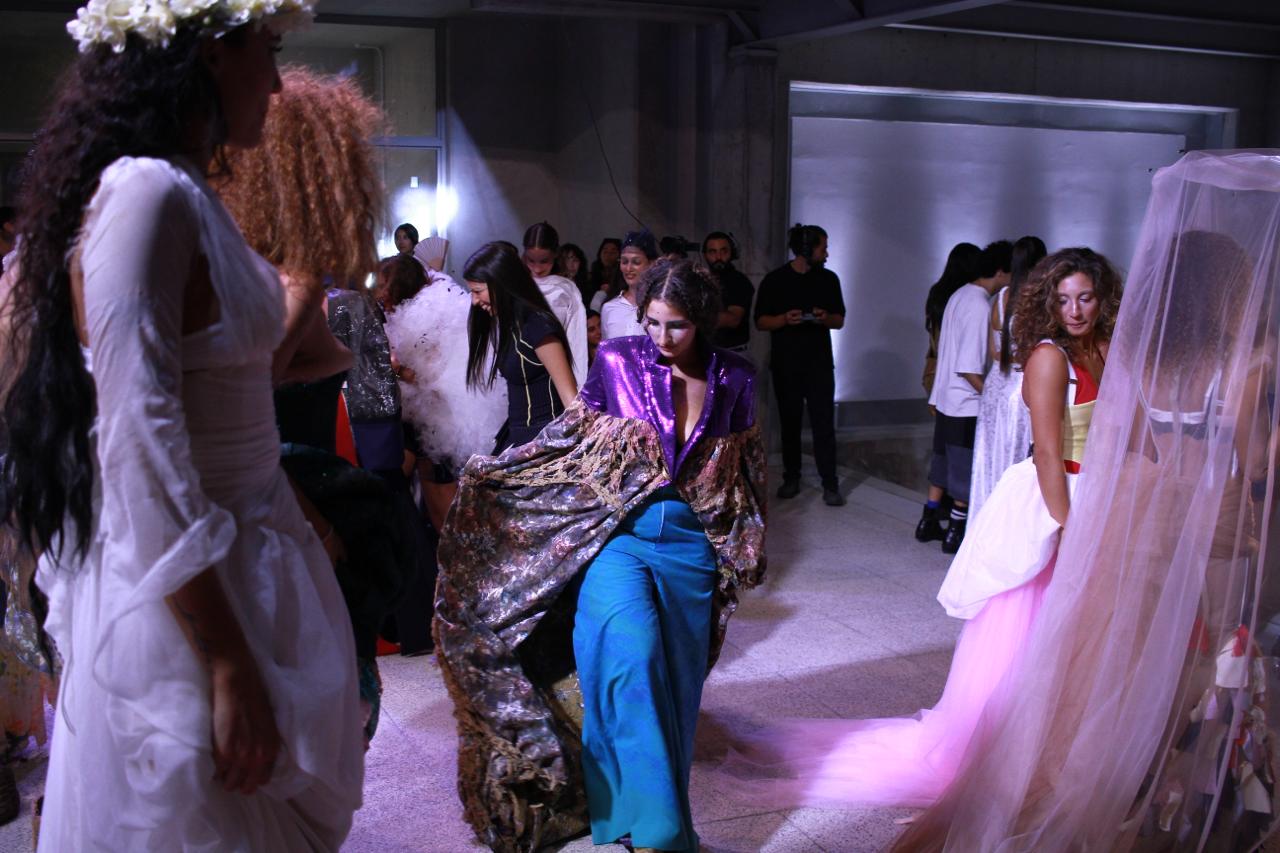
Ten years, twelve graduating designers and more than 600 people turning up to see what Lebanon’s next generation of fashion creatives have been working on. For its tenth anniversary, ALBA MODE, the fashion programme of the Académie Libanaise des Beaux-Arts at the University of Balamand, brought its annual fashion show back home.
After taking over AHM last year, the school returned to its newly renovated and extended ALBA campus in Beirut, filling it with students, designers, artists, industry people, families and plenty of fashion.
And this year was a particularly big one. Founded in 2016, ALBA MODE began its second decade with its largest graduating class yet: twelve students, compared with the four or five graduate collections typically presented in previous years.
For anyone interested in what young Lebanese designers are thinking about right now, the evening offered a pretty good answer. There wasn't one collective aesthetic or neatly packaged idea of what Lebanese fashion should look like. Instead, we got twelve completely different worlds dealing with everything from heritage and childhood to capitalism, spirituality, identity and self-sabotage.
One thing we like about ALBA MODE's show is that you don't only meet the students once everything looks polished. The evening began with first-year students taking apart and reconstructing striped shirts and experimenting with felt-making. Second-year students pushed things further, presenting projects that included trousers designed around a specific persona, dresses created for Lebanese designers they had personally researched and met, jackets imagined for fictional worlds and knitwear made using unconventional materials.
Then came the graduate; ewach of the twelve collections arrived with its own soundtrack, silhouettes, materials, imagery and atmosphere, making the runway feel more like a succession of individual stories than one conventional graduate show.
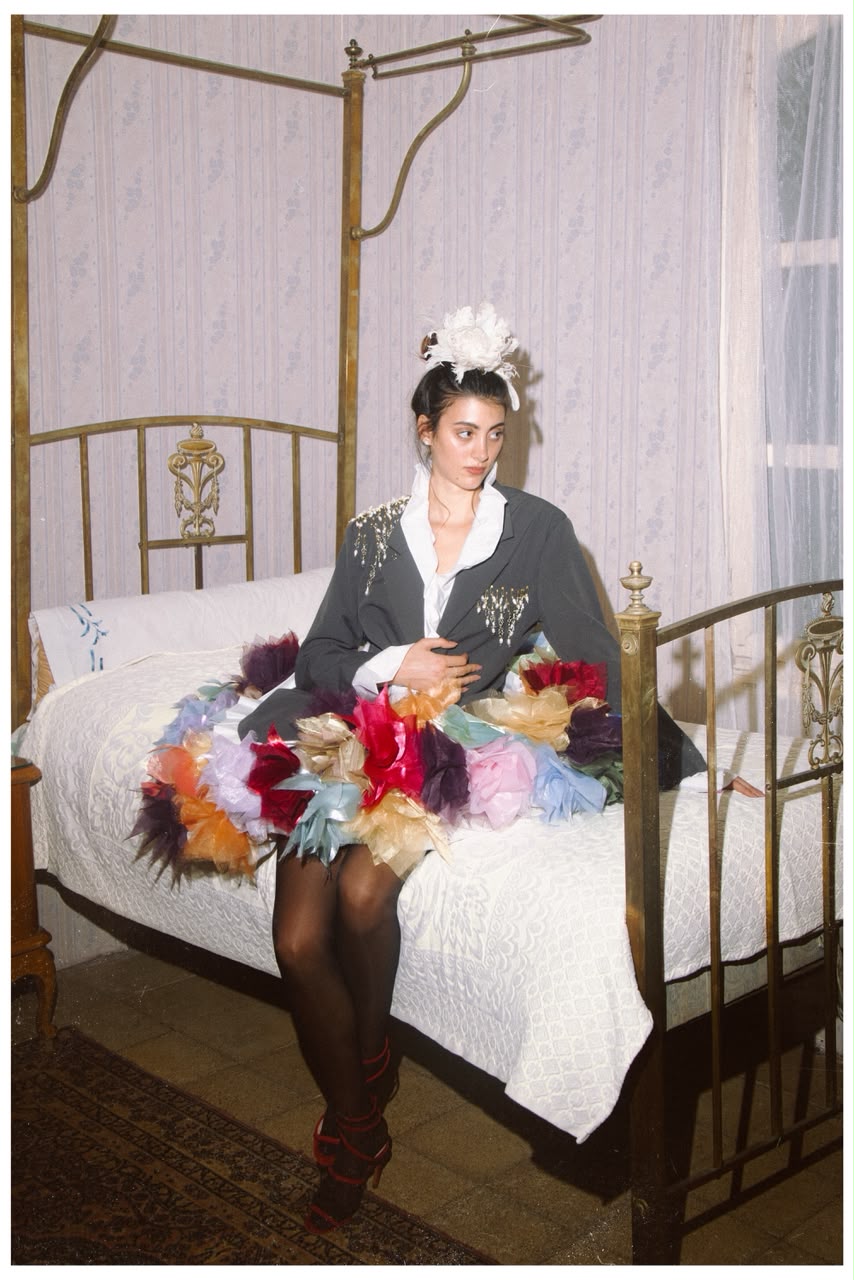
Several designers went back to childhood to figure out where they wanted to go next. Mia El Khazen's Memory Lane began with the women in her family and the elegance, joy and playfulness she remembers growing up around. Humble and unexpected materials were transformed into something more precious, turning overlooked details into a collection about femininity and memory.
For anyone interested in what young Lebanese designers are thinking about right now, the evening offered a pretty good answer. There wasn't one collective aesthetic or neatly packaged idea of what Lebanese fashion should look like. Instead, we got twelve completely different worlds dealing with everything from heritage and childhood to capitalism, spirituality, identity and self-sabotage.
One thing we like about ALBA MODE's show is that you don't only meet the students once everything looks polished. The evening began with first-year students taking apart and reconstructing striped shirts and experimenting with felt-making. Second-year students pushed things further, presenting projects that included trousers designed around a specific persona, dresses created for Lebanese designers they had personally researched and met, jackets imagined for fictional worlds and knitwear made using unconventional materials.
Then came the graduate; ewach of the twelve collections arrived with its own soundtrack, silhouettes, materials, imagery and atmosphere, making the runway feel more like a succession of individual stories than one conventional graduate show.
Several designers went back to childhood to figure out where they wanted to go next. Mia El Khazen's Memory Lane began with the women in her family and the elegance, joy and playfulness she remembers growing up around. Humble and unexpected materials were transformed into something more precious, turning overlooked details into a collection about femininity and memory.
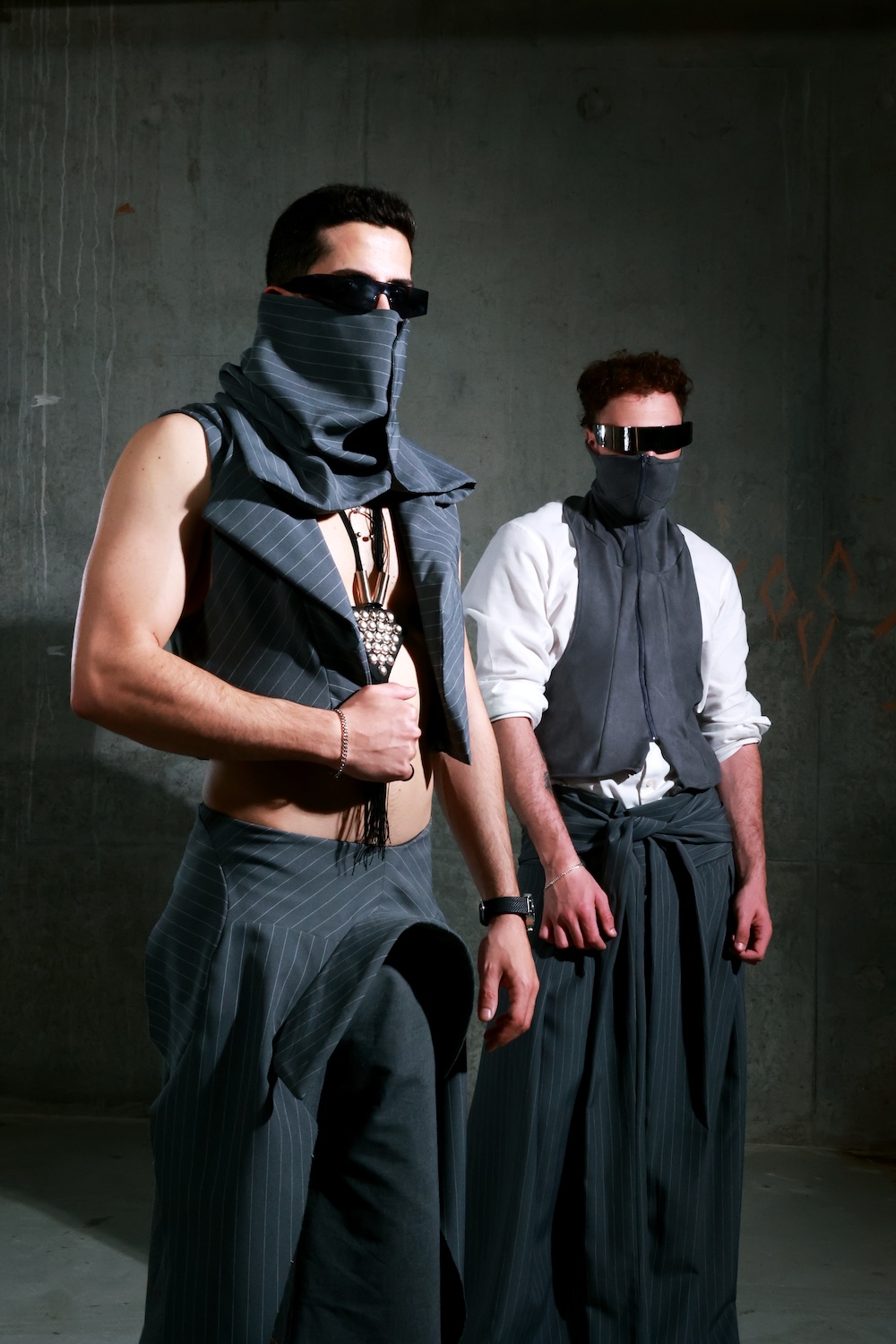
For Ivana Rebeiz, the memory was watching her mother move constantly between events, dress codes and different roles. Her collection, Triality, questions why our clothes, and perhaps our identities, need such rigid categories in the first place. Daywear meets eveningwear, tailoring meets sparkle and masculine and feminine codes happily occupy the same wardrobe.
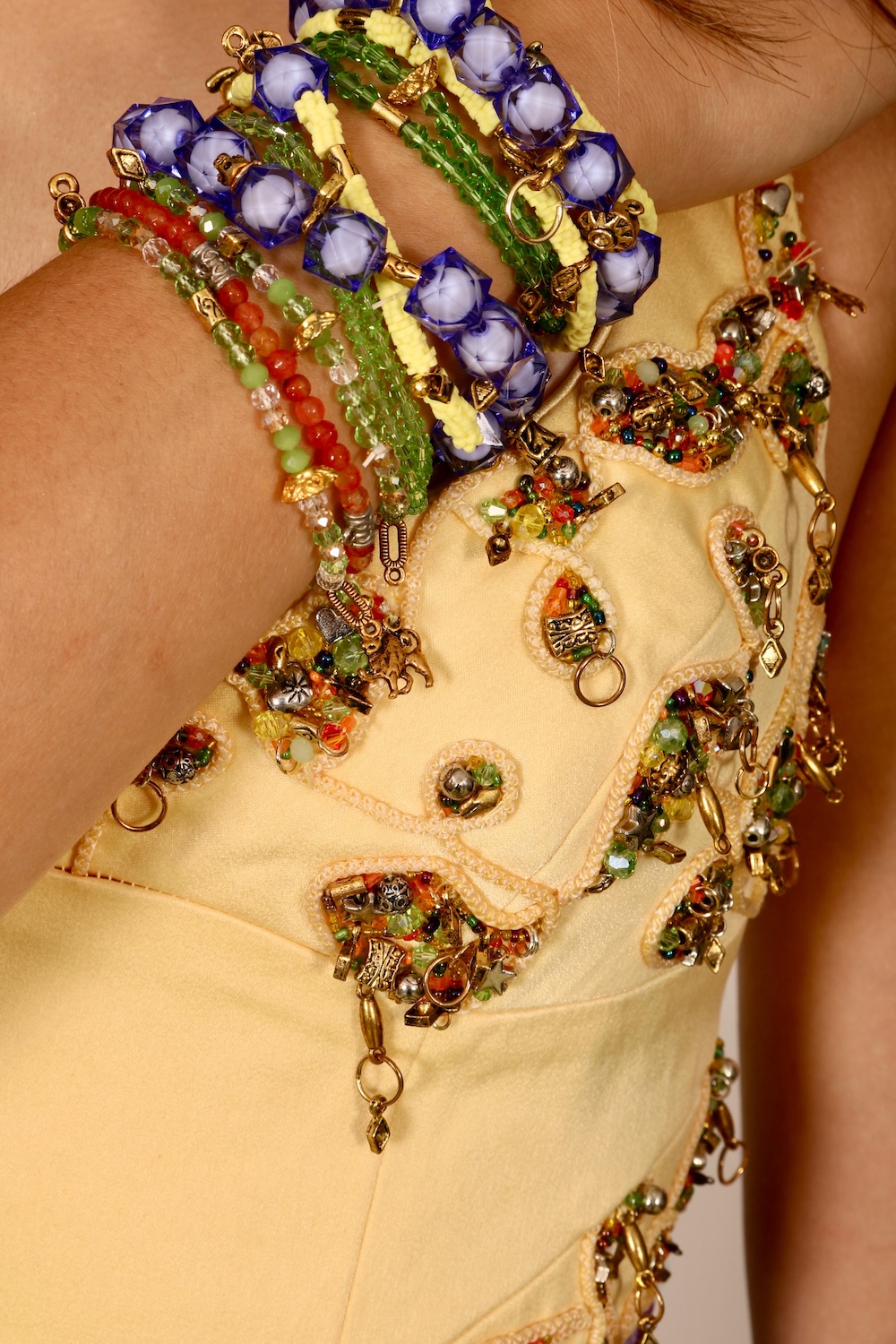
Then there was Vanessa Hanna's Twinkles, which sounds almost exactly like the inside of a particularly imaginative child's brain: Winx, performers, iridescent costumes, chandeliers, stained glass and moonlight bouncing off water. Hanna connected that fascination with regional ornamentation and craft, using reflective surfaces and movement to recreate that feeling of seeing something magical for the first time.
One of the most interesting questions facing young designers in Lebanon is what to do with heritage when you don't necessarily want to make clothes that look like they belong to the past.
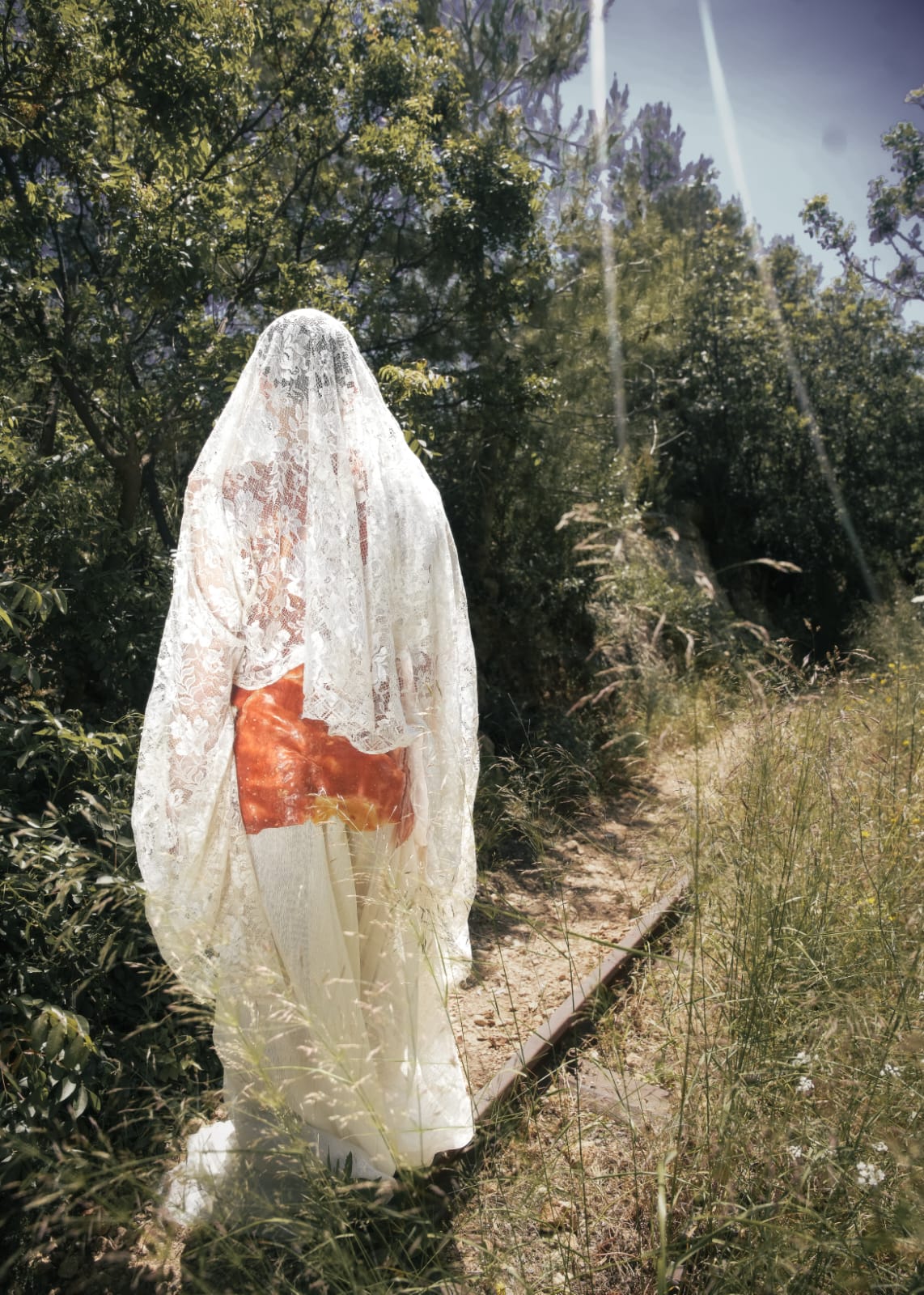
Yara Massaad tackled that directly. Having grown up in a Lebanese village before encountering the more globalised environment of university and city life, Massaad used her collection هوة to bring those two experiences together. Inspired by her mother, traditional clothing and local craft, she reworked Lebanese silhouettes and volumes through contemporary streetwear.
It's a conversation we keep returning to at JDEED because heritage becomes much more interesting when designers are allowed to mess with it, question it and make it theirs.

Fashion Can Be Uncomfortable Too
Not every collection was particularly interested in nostalgia.
Marlyne Miskawi's Unowned takes on the 9-to-5 and the strange contradiction of contemporary working life: we're supposedly free, yet so much of our existence is structured around productivity. Exaggerated silhouettes express restriction and repetition, while Miskawi deliberately chose painfully slow techniques including crochet, knitting and weaving as a response to a culture obsessed with doing everything faster.
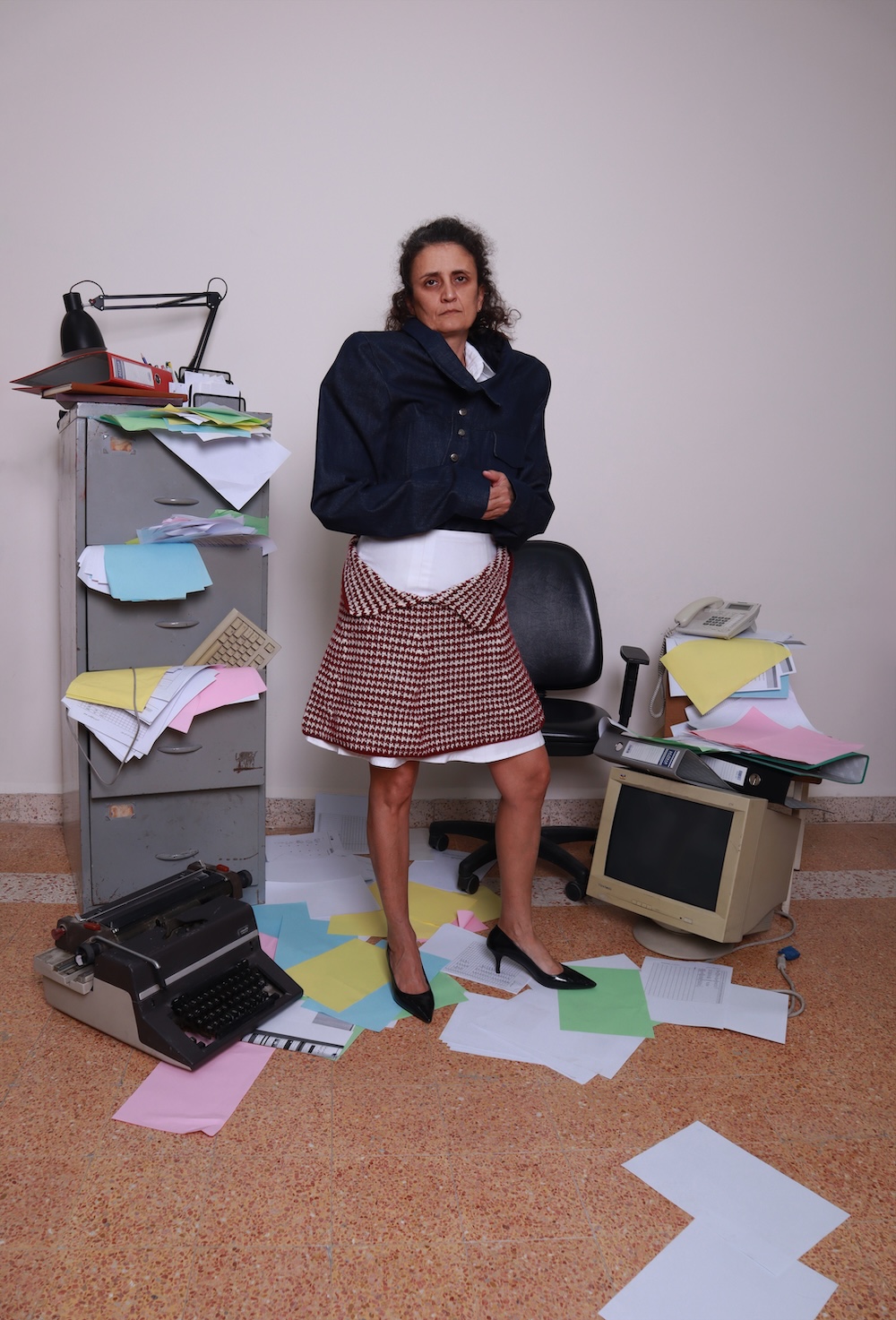
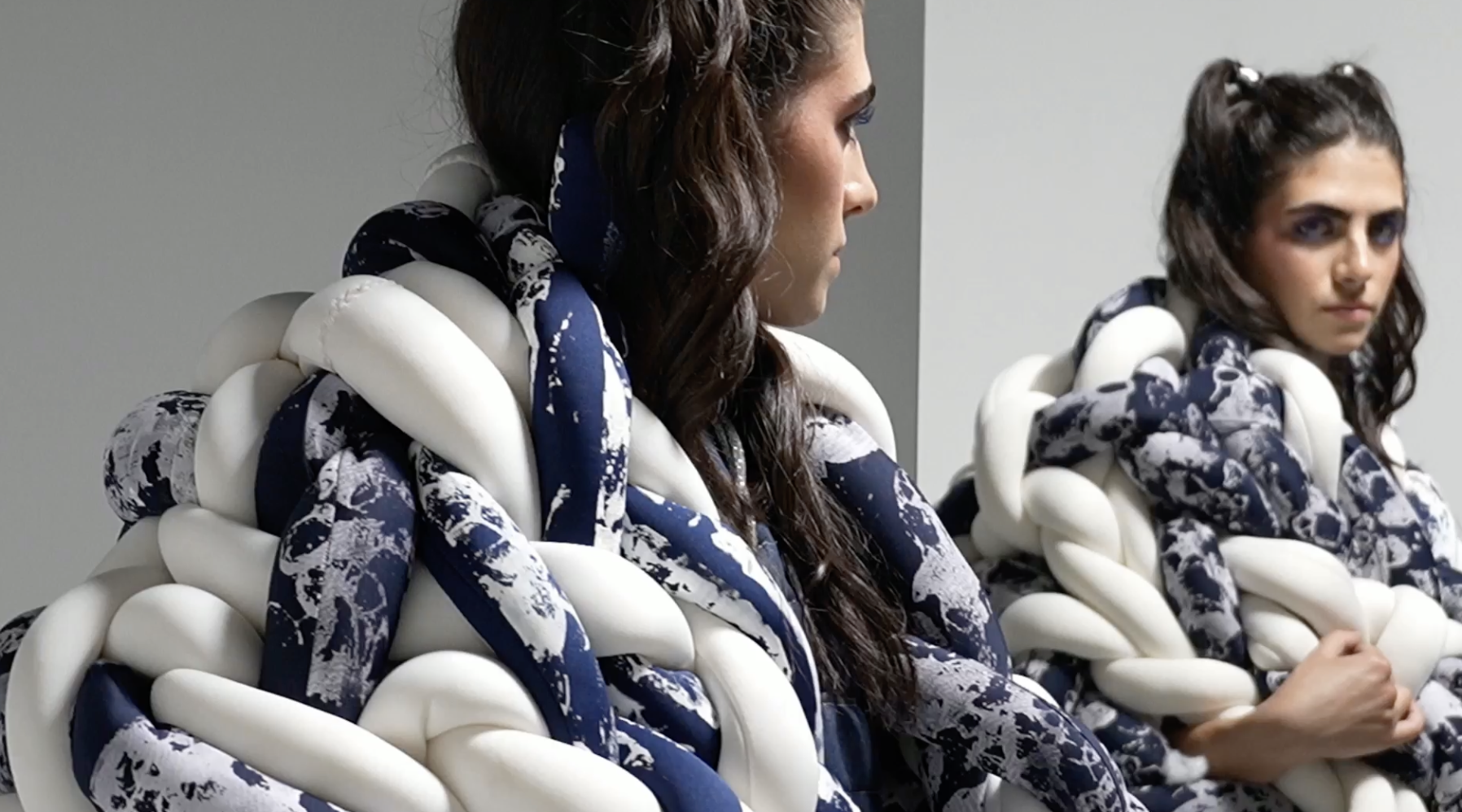
We particularly like the irony of spending hours painstakingly crocheting something to make a point about productivity.
Hiba Attieh's Atrapada, meanwhile, looks at something equally familiar: the comfort zone. Her collection follows the point at which the bubble we've built to protect ourselves begins to suffocate us, and when stepping into something unknown becomes preferable to remaining safely stuck.
And Dimitri Faraj's Masquerade explores the strange freedom that can come from hiding. Set within the imagined world of a masked ball, the collection asks whether concealing our identity can sometimes give us permission to reveal parts of ourselves we'd normally be too afraid of showing.
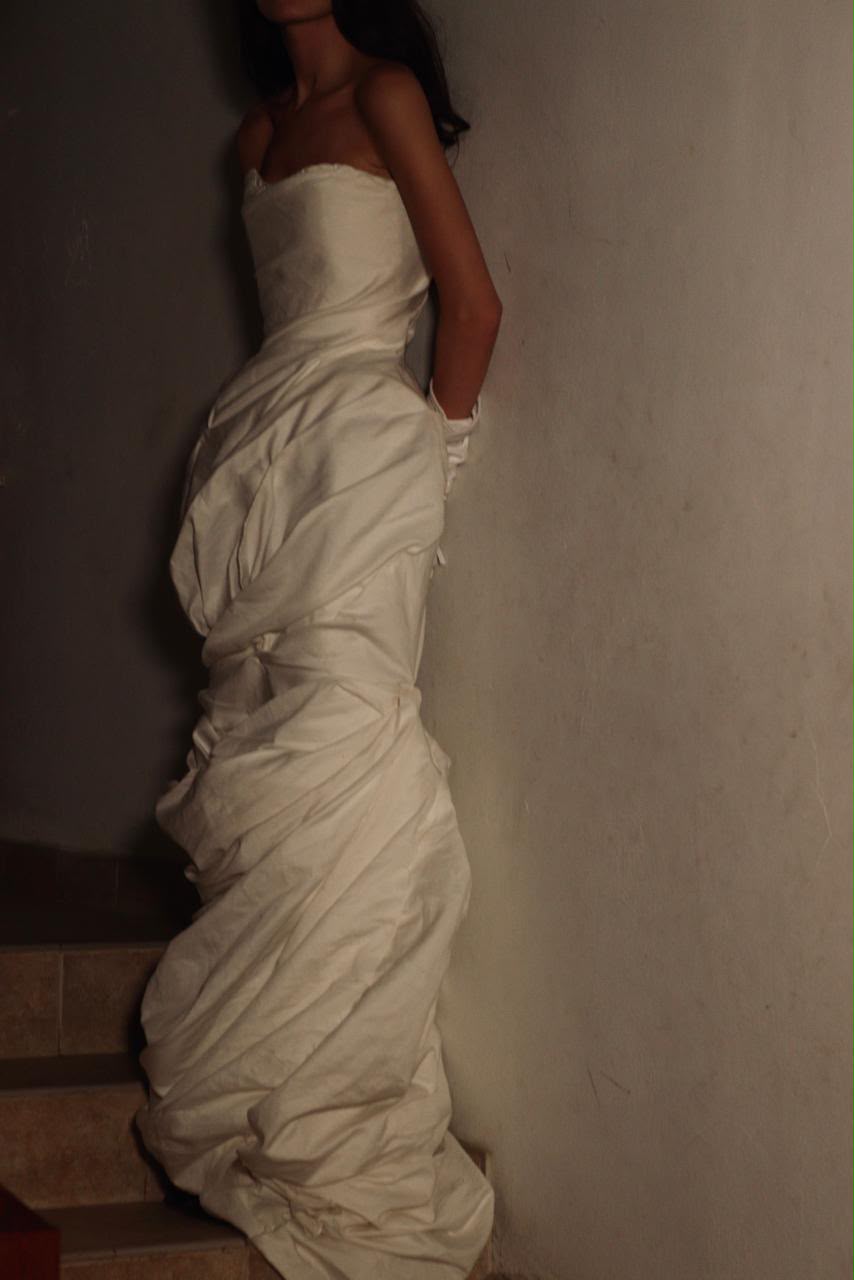
The graduate show really gave all it got to this runway.
Sophie Saad's For My Final Act approached graduation almost literally as the end of a chapter, exploring spirituality, femininity, energy and ideas around the divine and the self. Different materials became metaphorical “skins”, and then a stilt walker appeared on the runway, transforming the collection's finale into an actual performance.
Emile Maroun went in another direction entirely with Self Sabotage. Inspired by the fear of wanting to do and become everything at once, and then becoming paralysed by that ambition, Maroun looked towards obsessive women in cinema including Black Swan, Pearl and Kill Bill.
Naturally, his first model arrived on a motorcycle. We approve.
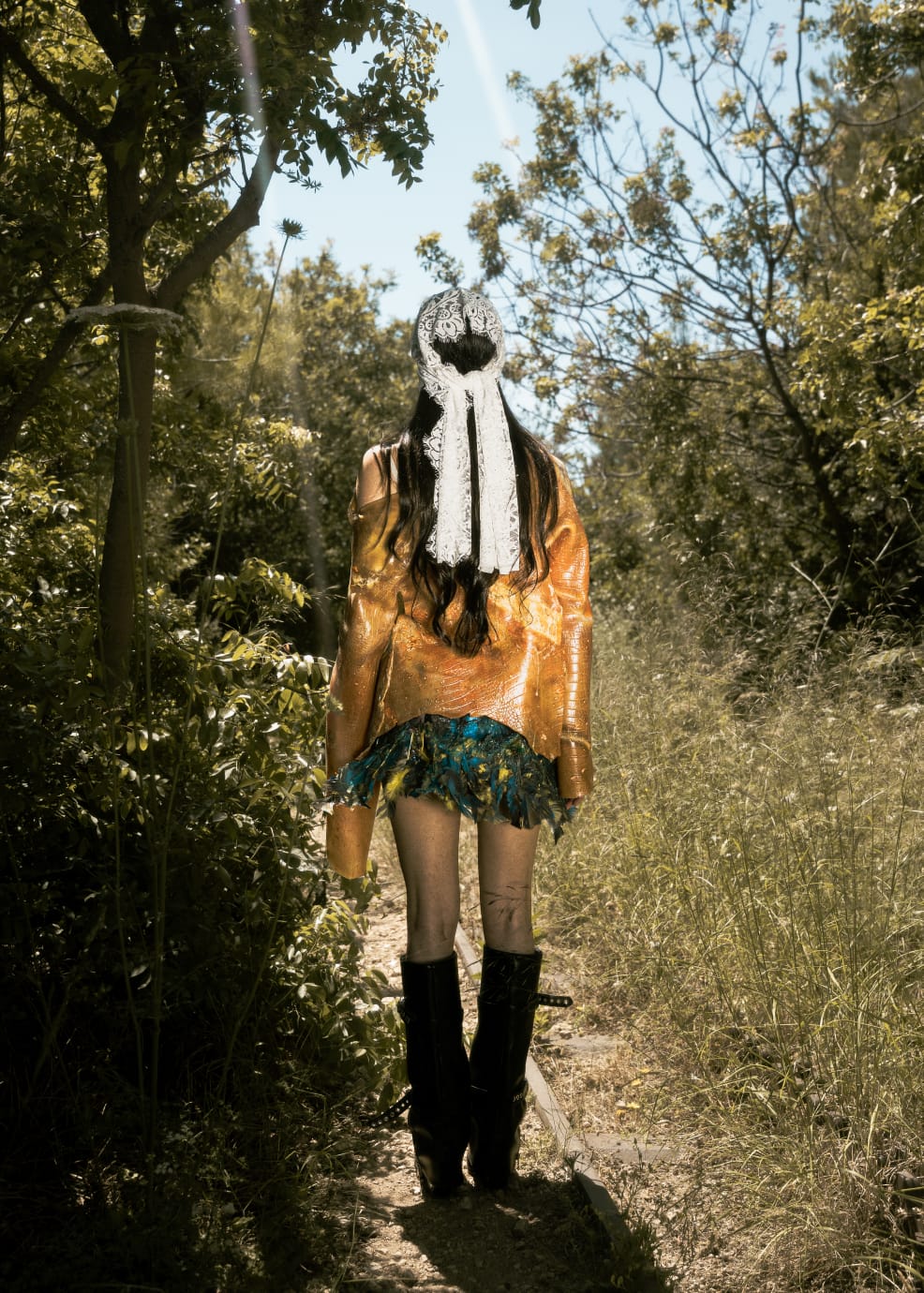
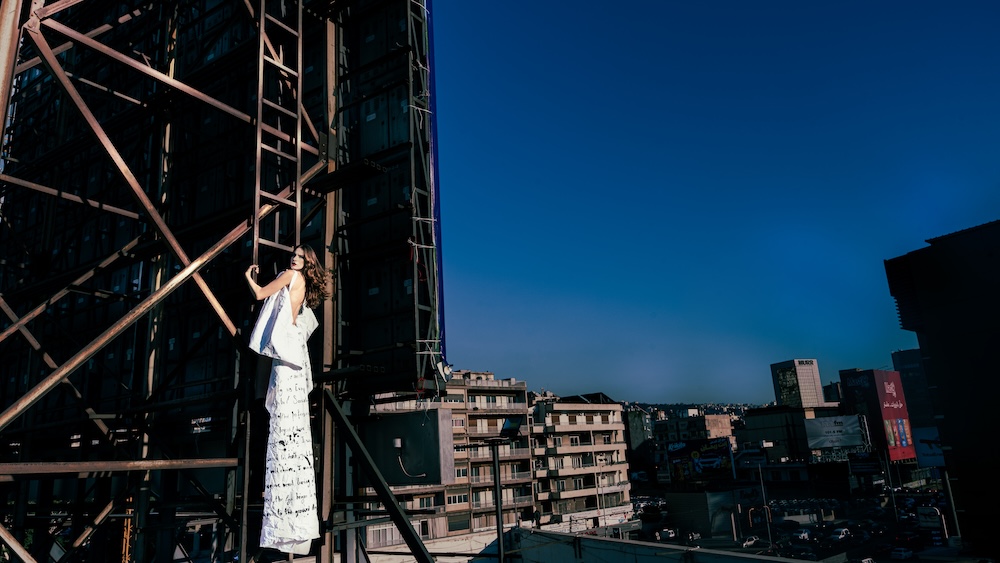
Elsewhere, Christina Malek's Strata explored what happens when urban routine makes us stop noticing the natural world, using colour, texture and structure to bring traces of nature back into city life.
Yasmina Dakhlallah's Métamorphoses took inspiration from a childhood fascination with insects and their strange colours, patterns and transformations. The atelier itself becomes a kind of cocoon, with familiar fashion-making tools reappearing as unexpected structures and details within the garments.
.PNG)
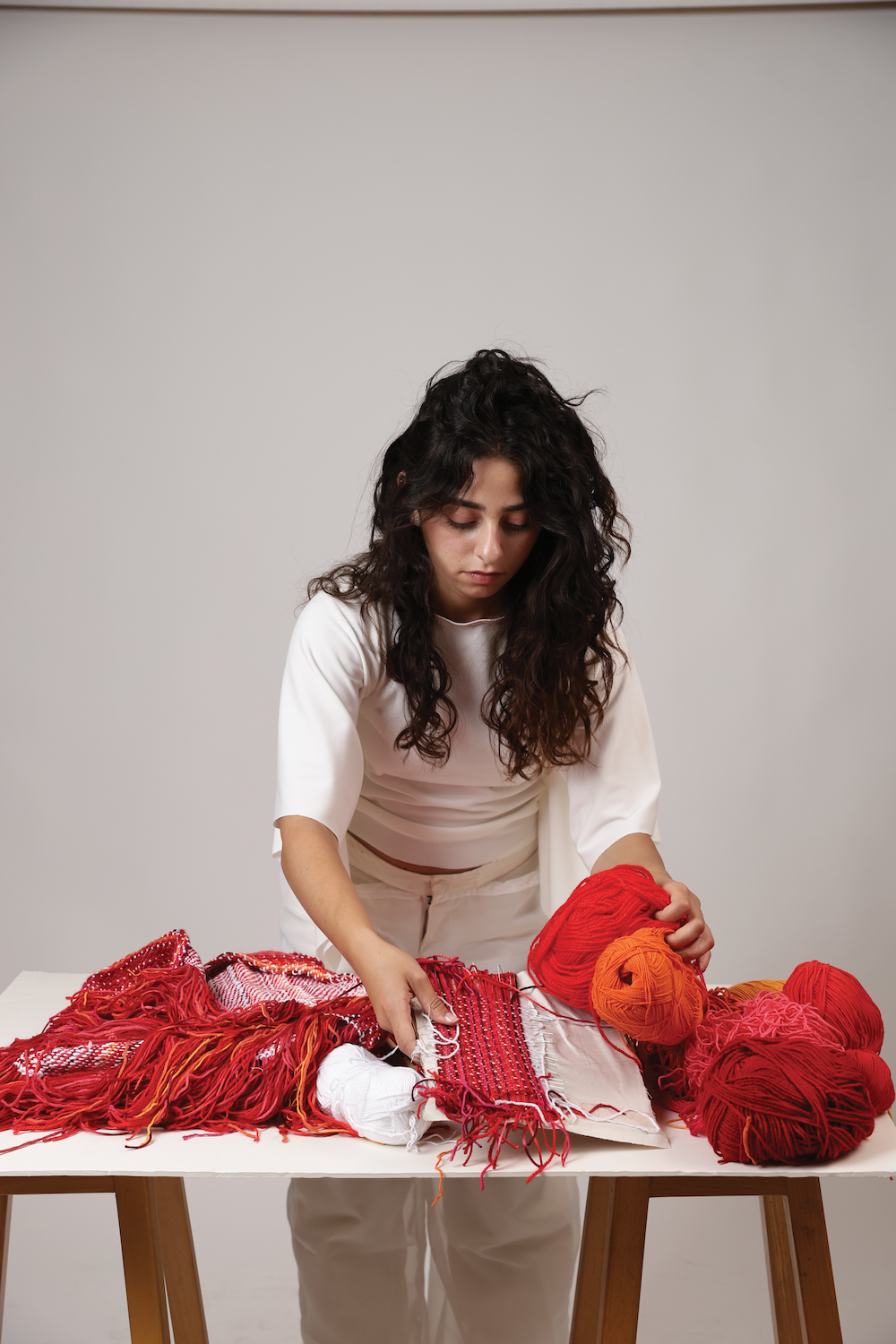
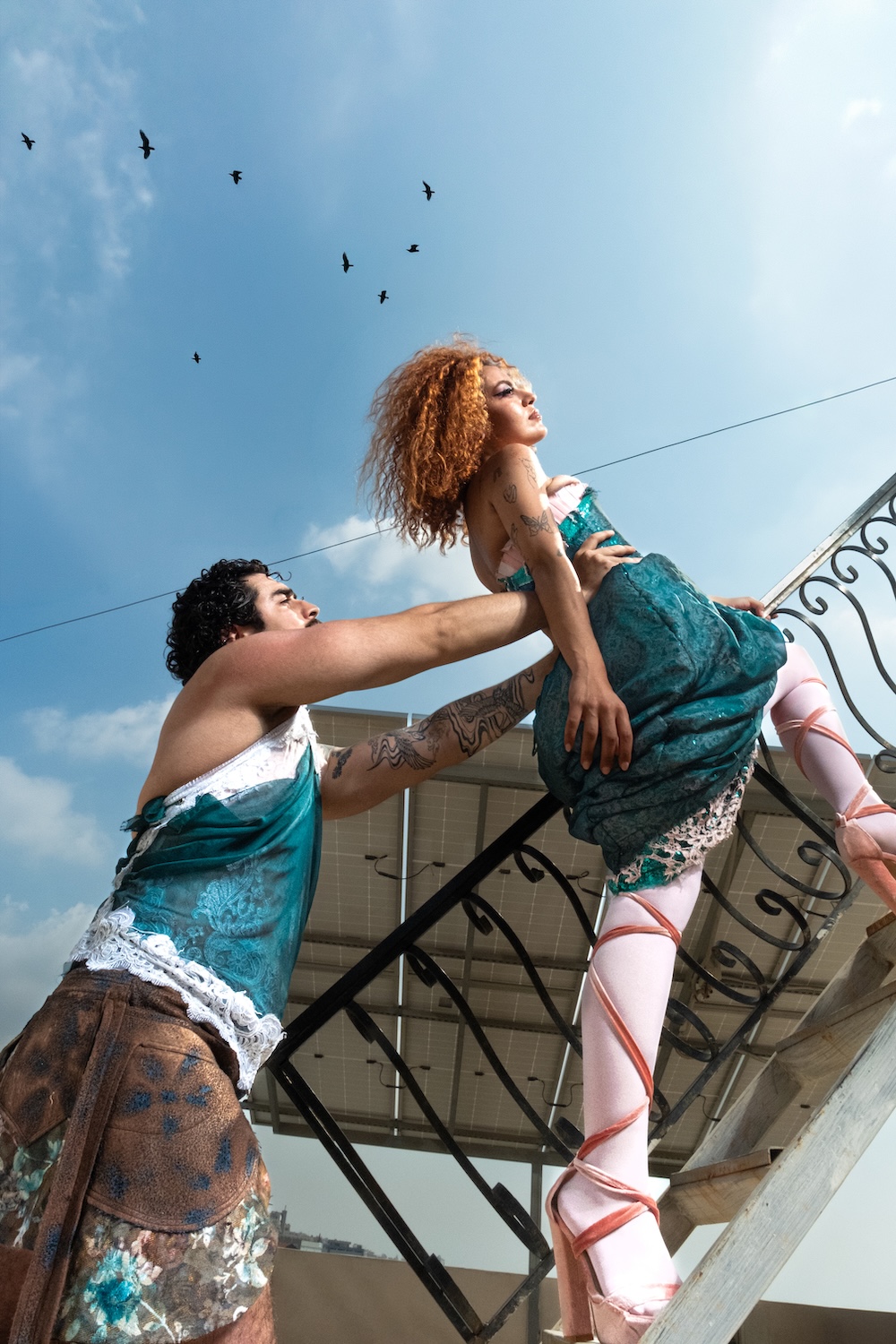
And Charbel Najjar's Dysmoreفكِ deliberately looked towards things we're taught to find ugly. Unwanted fabrics were burned, ripped, painted and layered, transforming discarded materials into surfaces that celebrate imperfection and vulnerability rather than attempting to hide either.
Twelve students, twelve completely different answers to what fashion can be.
Perhaps the nicest thing about ALBA MODE's anniversary wasn't simply that its graduating class had grown from four or five students to twelve; it was how little those twelve collections looked like one another.
The programme combines design with technical development, textile experimentation, image-making and individual creative research, but its students aren't being pushed towards a recognisable “ALBA look”. Instead, they're encouraged to develop their own vocabulary and then learn the technical and visual skills necessary to communicate it.
That feels particularly important in Lebanon right now; fashion education shouldn't produce twelve versions of the same designer. And judging by an evening that moved from Lebanese villages to office cubicles, childhood fantasy, insects, spirituality, motorcycles and a person walking down the runway on stilts, there doesn't seem to be much danger of that happening here.
More on ALBA.edu.lb

.png)