At Salone del Mobile 2026, Fashion Houses Step Beyond Fashion
.jpg)
Beyond just a Design Fair, Milan during Salone feels like a literal takeover, and designers aren't the only one participating.
Fashion houses are reshaping what design week looks like, and more importantly, what their role within it can be. This year, the shift is even clearer. The focus is on the perspective even more than the product iteself; these brands are literally staging a new world.
Here's a tour of nine Maisons that adding their zest to the world of Mobile.
Dior Maison
.jpg)
At Dior, the starting point is heritage, and it evolves from there.
Installed inside Palazzo Landriani, the House presents its Corolle lamps, designed by Noé Duchaufour-Lawrance, a subtle nod to the iconic New Look silhouette introduced in 1947. The reference unfolds through form rather than nostalgia, soft, structured, almost botanical.
The scenography draws from the gardens of Christian Dior’s childhood home in Granville, reinterpreted through a layered installation that moves between organic and graphic. It doesn’t feel like a display. It feels like stepping into a memory, reconstructed with precision.
More on Dior.com
Hermès

With Hermès, the installation becomes a study in rhythm. Designed by Charlotte Macaux Perelman and Alexis Fabry, the space is structured through thirty rectangular columns, arranged in a way that creates both order and movement. You don’t just look at it, you move through it, following lines, pauses, and shifts in perspective.
There’s a subtle repetition to it, echoing the gesture of the artisan. The same movement, refined over time. The same precision, applied again and again.
Objects appear almost incidentally along the way: a cashmere throw, a leather marquetry box, hammered metal pieces catching light at different angles. They’re not isolated but rather sit within the architecture, part of a larger composition of texture, colour, and material.
What emerges is something closer to a landscape than a display.
More on Hermes.com
Loro Piana
.jpg)
At Loro Piana, the focus shifts inward. Presented at the Cortile della Seta, Studies, Chapter I: On the Plaid turns something as familiar as a plaid into a full design language.
Rather than introducing a new object, the House studies one, deeply. Twenty-four plaids are displayed as individual pieces, each exploring a different construction, technique, or material. Together, they form something closer to an index than a collection.
There’s a quiet rigor to it: fibres, yarns, raw materials are shown alongside finished pieces, revealing the process rather than hiding it. Vicuña, baby cashmere, linen, wool, everything sits within the same conversation, not competing, just existing in variation.
More on LoroPiana.com
Ferragamo
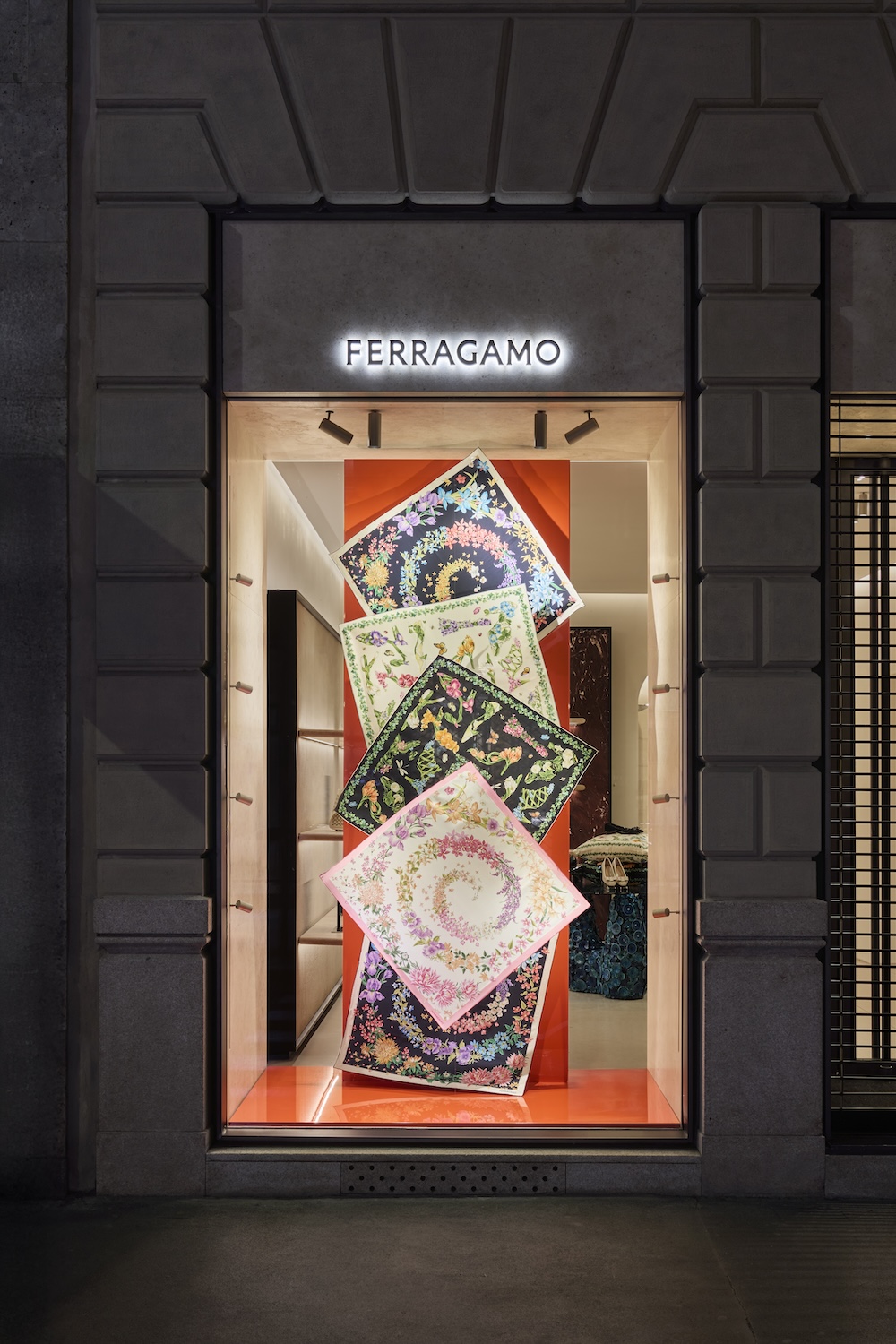
Across the city, Ferragamo takes a lighter approach.
At its boutique, silk becomes the medium. The Floating Silk Garden transforms scarves into something almost immaterial, suspended mid-air, drifting through the space like petals.
Rooted in archival prints, florals and references to the Gancini symbol, the installation turns heritage into movement. Material becomes atmosphere.
More on Ferragamo.com
Chloé

With Chloé, the focus isn’t just on re-edition, it’s on what that re-edition represents.
The return of the Tomato Chair, originally designed in 1970, feels less like a nostalgic gesture and more like a statement. Its soft, rounded, almost exaggerated form challenges the idea of structure altogether, inviting a more instinctive, physical relationship with design.
Under Chemena Kamali, the piece finds a natural place within the Maison’s current language. There’s a continuity in the way Chloé approaches softness, fluidity, and ease, not as aesthetic choices, but as a way of thinking about how objects are lived with.
Reworked in naturally tanned leather and produced on a made-to-order basis, the chair retains its original spirit while gaining a new clarity through material and colour.
More on Chloe.com
Bottega Veneta
.jpg)
At Bottega Veneta, the focus stays on material, but pushes it somewhere new. In collaboration with artist Kwangho Lee, the House presents Lightful, a woven light installation that builds on its signature intrecciato language while moving into a more experimental space.
Leather strips are reworked into suspended forms, shaped by hand into organic structures that shift with light and shadow. There’s a sense of tension between control and spontaneity, the precision of craft meeting the unpredictability of material.
What makes it land is the process behind it. Lee worked closely with artisans at the House’s atelier, translating traditional techniques into something more sculptural, almost abstract.
Beyond the object itself, the craft is pushed just far enough to become something else.
More on BottegaVeneta.com
Gucci

With Gucci, it’s less about looking back and more about how memory moves.
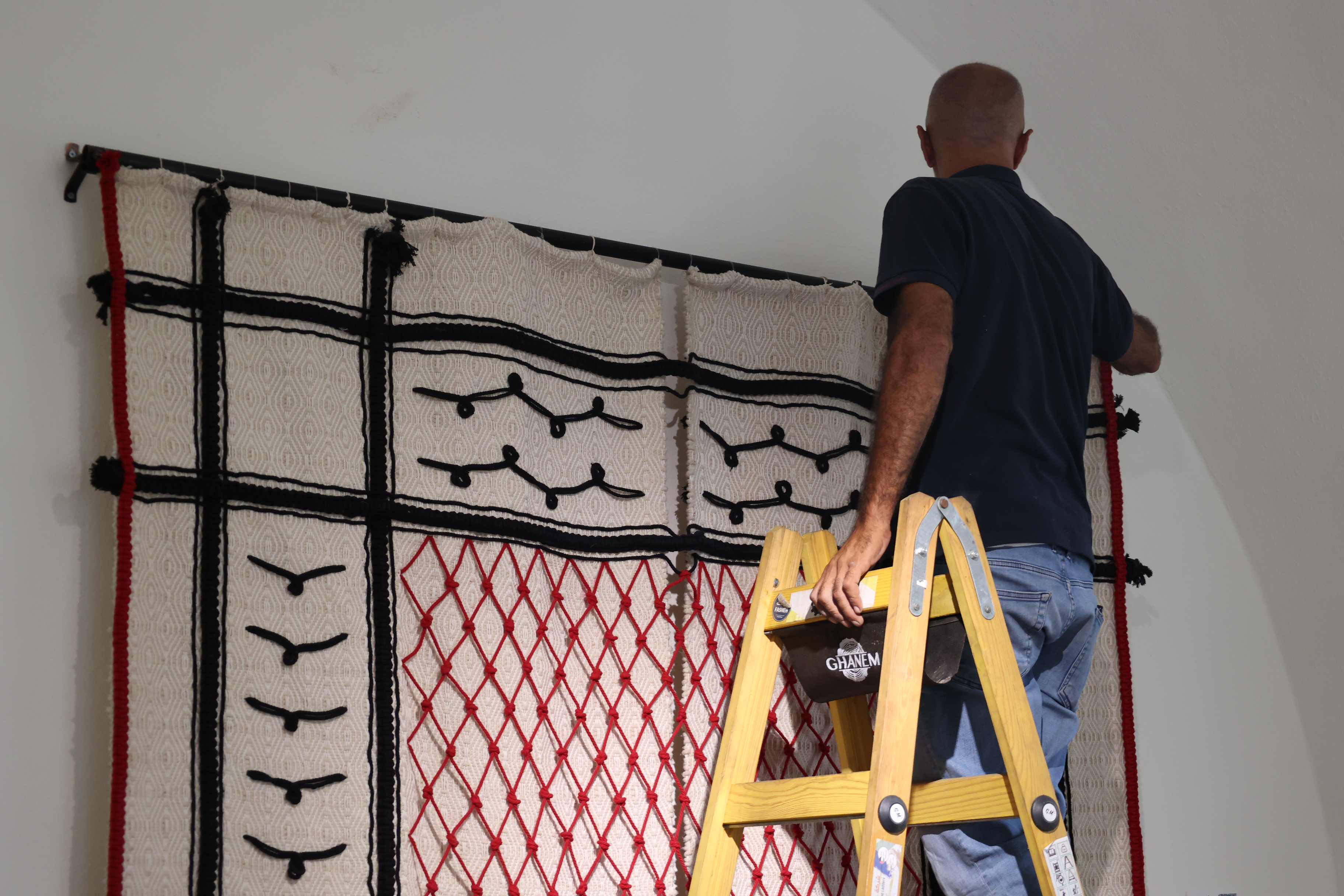
Curated by Demna, Gucci Memoria unfolds as a layered narrative rather than a traditional retrospective. At its core are twelve large-scale tapestries, each translating a defining moment in the House’s history into a visual scene, from its Florentine origins to its more recent creative eras. But the exhibition doesn’t sit still.
The iconic Flora motif expands into a full environment, shifting from print into space, while smaller details, like vending machines dispensing drinks tied to fictional personas, introduce an unexpected sense of play.
What comes through is not a fixed identity, but something constantly evolving.
More on Gucci.com
Prada
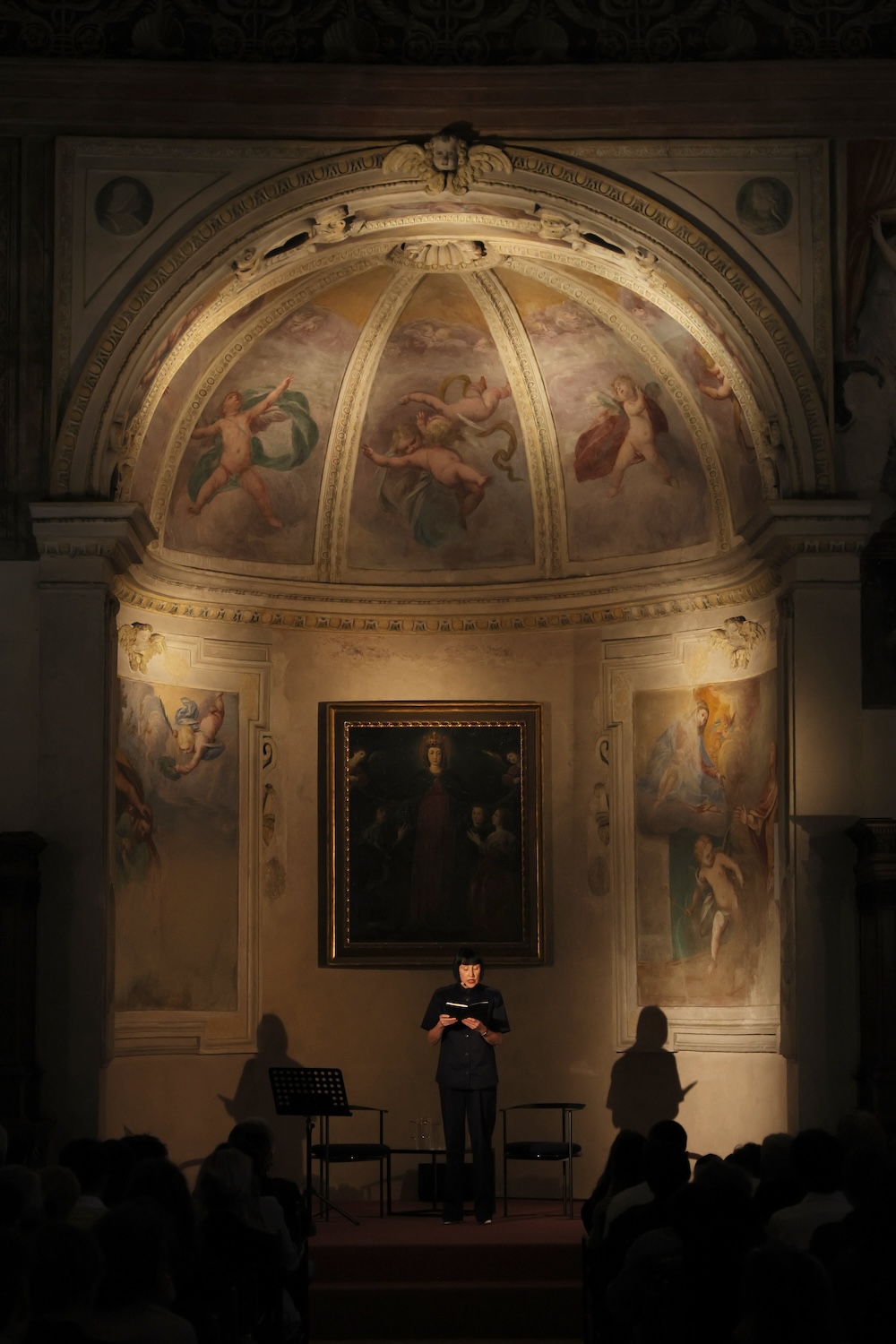
At Prada, the focus shifts away from objects entirely. Prada Frames returns not as an installation, but as a symposium, this year under the theme In Sight. Curated by Formafantasma, it explores image-making as something far more complex than aesthetics, looking at how images shape perception, politics, and even what we consider to be real.
Across a series of talks and conversations, the programme moves through topics like algorithmic vision, the environmental cost of digital imagery, and the blurred line between truth and representation.
Set within the historic Santa Maria delle Grazie, the experience feels deliberately contrasting, Renaissance architecture meeting contemporary discourse. More than just design as form, it’s about how we see, and what that does.
More on Prada.com
Jil Sander
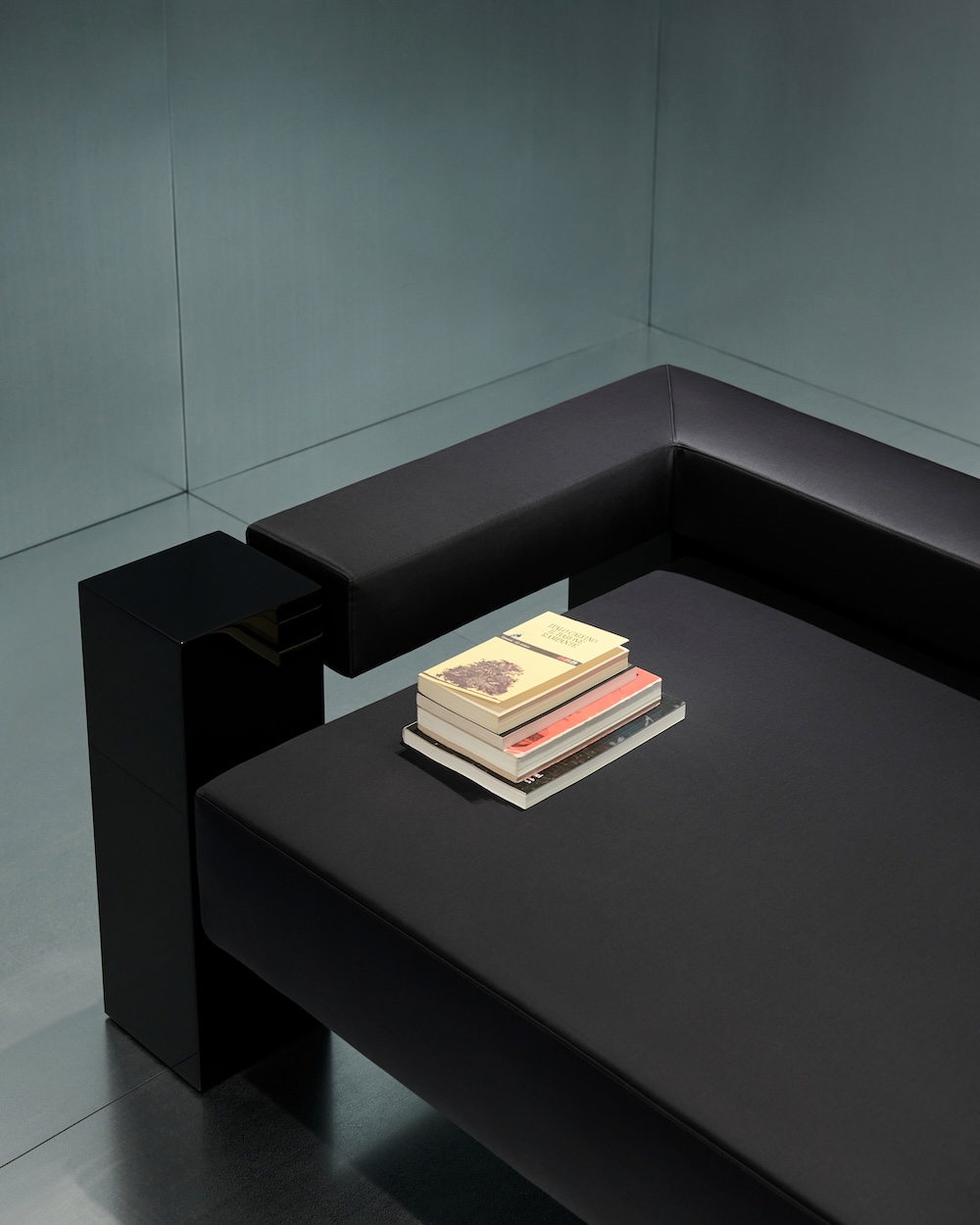
With Jil Sander, the gesture is quieter.
Reference Library, created with Apartamento, brings together 60 books selected by creatives across disciplines, presented in a minimal, almost ritualistic space. Visitors are invited to slow down, to read, to handle objects with care. In a week somewhat defined by spectacle, it feels almost radical.
More on JilSander.com


.png)