Tito El Khachab Built Sandbox One Right Decision at a Time
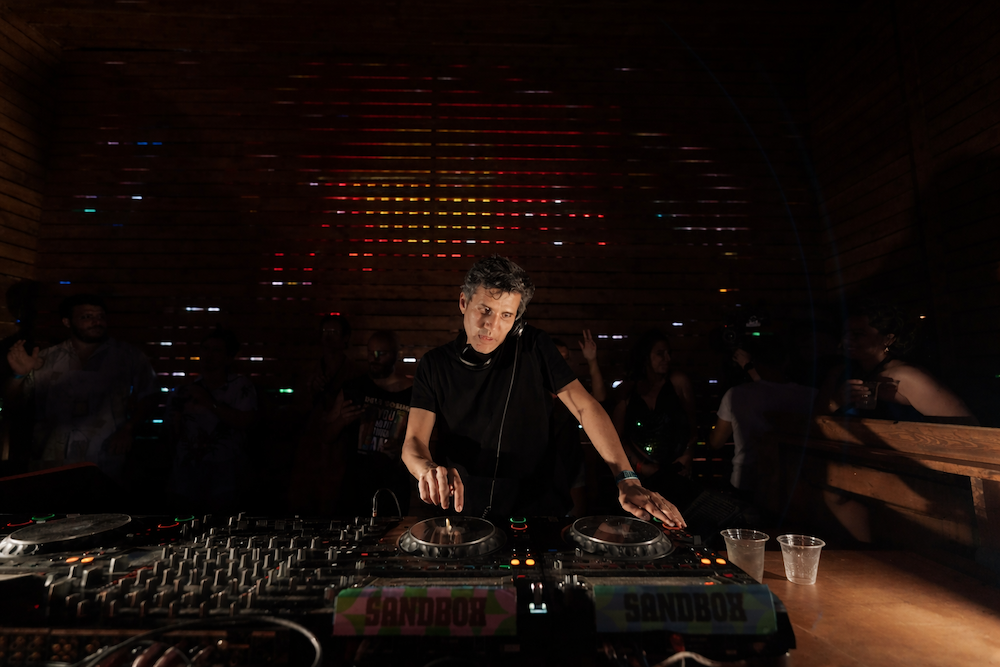
Twelve editions in, the founder of Egypt's most respected electronic music festival talks about protecting energy, building trust, and why the Arab world is only just getting started. If you have ever been to Sandbox Festival, you already know it feels different from everything else.
If you have not, you have almost certainly heard someone who has try and fail to explain exactly why. Tito El Khachab, the Egyptian producer, entrepreneur and DJ who built it from scratch in 2012, has a way of describing it that makes the whole thing feel inevitable in retrospect.
By Cynthia Jreige

"Egypt chose us as much as we chose Egypt,"
"Looking back it felt inevitable," he says. "But it was very much one step at a time. There was no grand plan. There was just a belief that if you build something real, the right people will find it and will want to connect with it."
That belief became a one-day event, then a series, then the first three-day edition in 2015, and then something that now draws over 7,000 attendees from more than 50 countries each year to El Gouna on Egypt's Red Sea coast. Twelve consecutive editions later, Sandbox is one of the most respected independent festival platforms in the world, programming artists who headline Berghain, Fabric and De School, all while maintaining full editorial and financial independence.
The way Tito tells it, none of that was accidental.
"I noted that electronic music had not found its crowd and space in this region, and that festivals with strong human connections are rare," he explains. "I wanted to build a curated, boutique gathering that grows slowly and selectively, where the crowd is as important as the lineup."

That last line is the key to understanding everything Sandbox is. In a festival landscape that often prioritises spectacle and scale, Tito has built something closer to a community, and he protects it fiercely.
"We've never grown faster than the experience could sustain," he says. "The discipline starts before anyone arrives, in the pricing, the early-bird structure, how we communicate, who from the talents we invite back, the pre-selection process. None of it is accidental. When you consistently make decisions that signal what Sandbox is about, you naturally attract people who believe in those same things, and gradually filter out people who aren't. The trust between a festival and its community is built through years of consistent choices, most of which nobody outside the team ever sees."
Part of that trust is built on what Sandbox refuses to do. No VIP sections. And on brand partnerships, Tito is equally deliberate.
"VIP sections break the thing that makes a great night possible, the communication between everyone in the room. When you separate people into tiers, you kill the energy," he says. "In this region, festivals with strong human connections are rare. If a festival is simply programmed to draw, it becomes the equivalent of a social media feed, run by algorithms. Sandbox was built as the opposite of that from day one, and that's not something we're willing to trade away."
Then there is the setting itself. El Gouna is not just a backdrop. It is part of the experience in a way that cannot be replicated.
"Egypt chose us as much as we chose Egypt," Tito says. "El Gouna gave us something no other location could, the desert, the water, and a natural, open-air environment that becomes part of the experience itself. Guests don't just attend the festival, they inhabit a place for three days. That changes everything about how people experience it."
The sound design is built around that environment too. "The stages are separated by purpose-built sandbanks, thousands of truckloads of sand sculpted each year, and so each one has its own sonic world. You can stand between two stages and hear neither bleed into the other. That level of care is what distinguishes the experience for both guests attending and also talent who look for an infrastructure that honors their craft."

On the bigger picture, Tito is measured but quietly excited about what is happening across the region right now.
"I think we are at the beginning of something rather than the middle of it," he says. "The European calendar is saturated. Artists and audiences are looking for experiences that offer something with new energy. North Africa, and Egypt specifically, offers that. The setting, the crowd, the music culture that has grown here, all of it is distinct and all of it travels internationally in a way that people are only now starting to understand. Sandbox has tried to be part of nurturing that and reflecting it back to the world. The world definitely notices."
Earlier this year, Sandbox expanded beyond Egypt with the launch of Sandbox Selects in Dubai. It is a one-day showcase format, intimate by design, and the first step in a careful global expansion that Tito insists will follow the same rules as everything else he has built.
"We are growing carefully, and we are selective," he says. "The same philosophy that has guided every decision at Sandbox applies to how we expand, gradually, on our own terms, never faster than the experience can sustain. The moment we start making decisions based on what the market wants rather than what we believe in, it's over. We're aware of that line."
Twelve editions in, that line is holding.

.png)