The Arab Pantry, Rewritten: The Creative Minds Shaking Things Up

Something is shifting, and it’s happening in the most familiar place: the kitchen. Across the region and its diaspora, a new generation of Arab founders — many of them women — are returning to food not to preserve it exactly as it was, but to see what it can become.
What they’re building sits somewhere between memory and intention, where staples we’ve always known are being reintroduced with a new kind of clarity.

Olivié
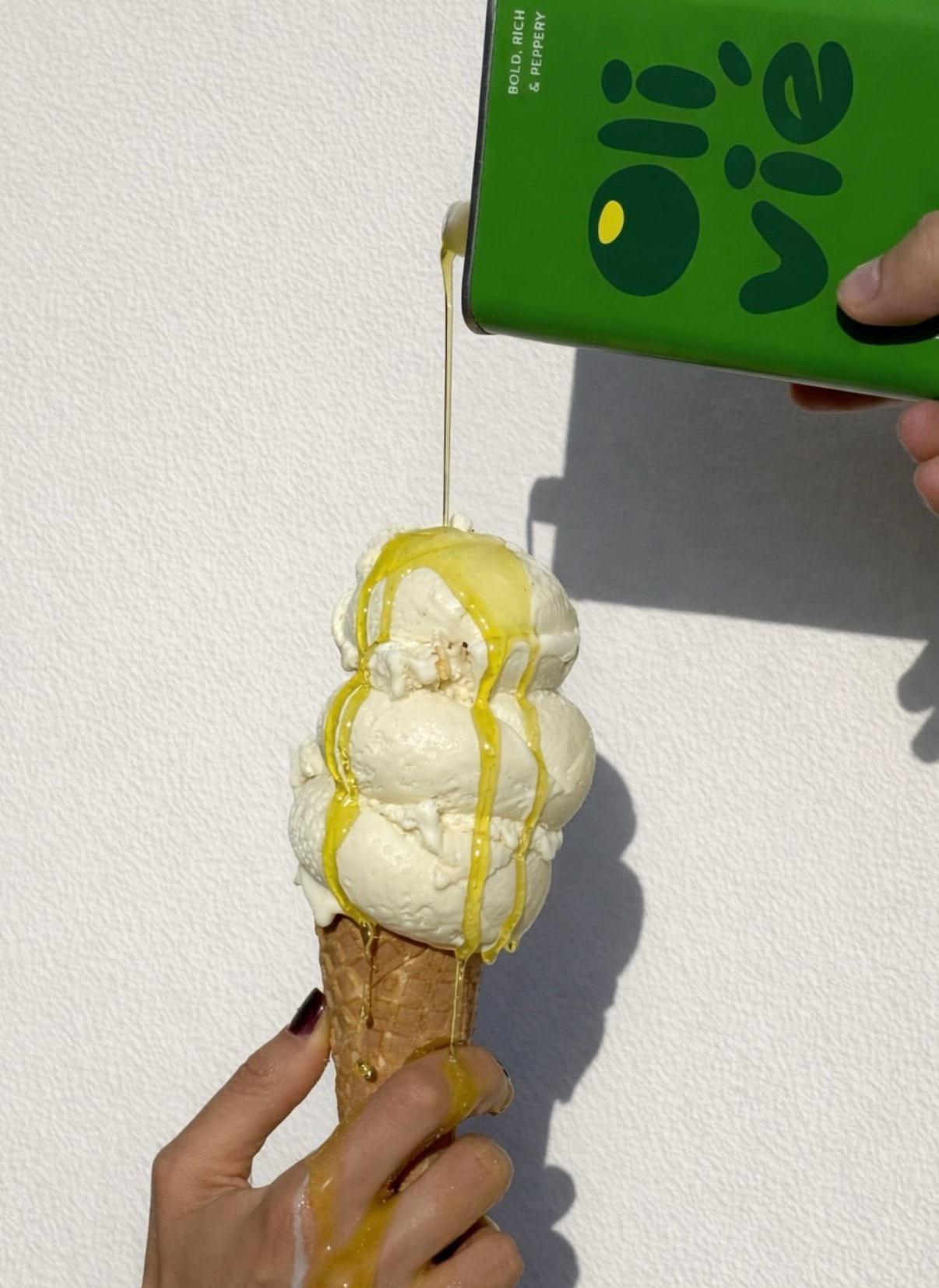
Olivié belongs to a new wave of brands treating olive oil with the same attention usually reserved for wine or perfume. The focus is on origin, sourcing, and transparency, bringing the product back to its roots while elevating how it’s experienced. It reflects a broader shift in how younger founders are approaching food: not as background, but as something worth understanding. Something worth choosing deliberately.
More info, here
Ya Albi
Ya Albi is deeply personal. Founded by Palestinian-American designer Yasmeen Abouremeleh and her mother, the brand was never just about olive oil. It was about continuity.
Growing up between the US and Palestine, Abouremeleh understood early on that food carried meaning beyond the plate. Olive oil was care, ritual, identity. Today, Ya Albi works directly with farmers in the West Bank, turning each bottle into something that connects land, memory, and diaspora in a tangible way. We're also absolutely obsessed with her merch, ranging from cute tees to keyholders and even the most cutesy (yes we hate this word too) disposable camera you've ever seen.
More info, here
Hayati Goods

Hayati Goods is deeply personal, in a way that feels immediately clear once you understand where it comes from. Founded by Palestinian-American Yasmine Borno, the brand started with a simple but pointed observation: Arabic food was often reduced, mislabelled, or stripped of its identity, especially in Western markets.
After nearly a decade working in the food industry, Borno saw a gap for something that felt both modern and true to its origins. “Hayati,” meaning my life in Arabic, isn’t just a name, it’s a reflection of how the brand was built, around the food she grew up with, from za’atar manakeesh to long, shared breakfasts rooted in family and routine.
The brand launched with a Palestinian-style green za’atar, but the intention goes beyond a single product. It’s about giving Arabic pantry staples the visibility they’ve rarely had, presenting them with care, design, and context, without diluting what they are.
There’s also something quietly assertive in how Hayati positions itself. Not trying to make Arabic food more “accessible,” but insisting on naming it correctly, owning it fully, and letting it exist on its own terms.
In that sense, it sits at the heart of this new wave.
More info, here
Picklini

Picklini starts from something familiar: pickles, the kind that have always been on the table, passed around without much thought. But here, they’re given a new kind of attention. The brand builds around a simple idea, taking something deeply rooted in regional food culture and treating it with the same care, identity, and presence as anything else in the pantry.
There’s a sense of playfulness to it, from the tone to the product itself, but it’s grounded in intention. The pickles are made without sugar, preservatives, or additives, keeping them close to the way they’ve always been prepared, just presented differently.
What stands out is how naturally it sits between nostalgia and now. It doesn’t try to reinvent the product, and it doesn’t over-explain it either. It simply reframes it, turning something everyday into something you notice again.
In the same way as the rest of this list, it’s less about changing tradition.
More info, here
Táche

Táche brings a different kind of product into the conversation, but the intention feels familiar. Founded by Iranian-American Roxana Saidi, the brand started from something deeply personal: pistachios, a staple in her upbringing, both culturally and at the table.
What began as homemade pistachio milk in 2015, during California’s drought, quickly evolved into something more considered. Saidi wasn’t just looking for an alternative to dairy, but for something that felt aligned with both taste and sustainability, pistachios requiring significantly less water than almonds while offering a richer, more distinct flavor.
Launched in 2020, Táche became the first brand to position pistachio milk as a category of its own, moving away from the expected almond and oat landscape.
But beyond that, it reflects something larger.
Like many of the brands in this list, it starts from a cultural reference point and builds outward. Taking something familiar within Middle Eastern and Persian households and reframing it for a global audience, without losing its origin in the process. Now we desperately need a regional point of sale.
More info, here
Good Girl Snacks

Good Girl Snacks isn’t just about pickles, it’s about reframing an entire category. Founded by Leah Marcus and Yasaman Bakhtiar, two best friends with Middle Eastern roots, the brand came out of a simple realization: the snack aisle felt outdated, and no one was speaking to their generation.
What started as an observation quickly turned into something bigger. Both founders, coming from Persian, Egyptian, and Tunisian backgrounds, grew up with pickles as a staple, something present at every table, but rarely given much attention.
With Good Girl Snacks, they decided to change that. Their now-viral “Hot Girl Pickles” take that familiarity and push it forward, through bold flavors like honey harissa or turmeric dill, and a branding language that feels unapologetically current.
But what really defines the brand isn’t just the product, it’s the perspective. It’s about taking something that’s always existed within Middle Eastern food culture and making it visible again, but this time through a lens that speaks to a younger, global audience.
More info, here
Switch Foods

Switch Foods approaches the same conversation from a different angle. Founded in the UAE by Edward Hamod, the brand looks beyond presentation and asks what happens when you rethink the ingredients themselves. By creating plant-based versions of regional staples like kebab and shawarma, it taps into familiar flavors while responding to a growing demand for more sustainable food systems. It’s a shift that doesn’t reject tradition, but adapts it, allowing it to evolve alongside changing habits.
They've also had a collaboration with Al Safadi running for a few years now, and all we can say it's that we've tried and approved. The hummus b lahme with Switch meat is just absolutely phenomenal. Please do yourself a favor and get it for lunch.
More info, here

.png)