Meet Shwi, Paris’s New Love Letter to the Lebanese Farrouj
Paris doesn't exactly have a shortage of Lebanese food. From institutions that have been around for decades to a new generation of Levantine restaurants, you don't have to look particularly hard to find hummus, tabbouleh or a good shawarma in the city.
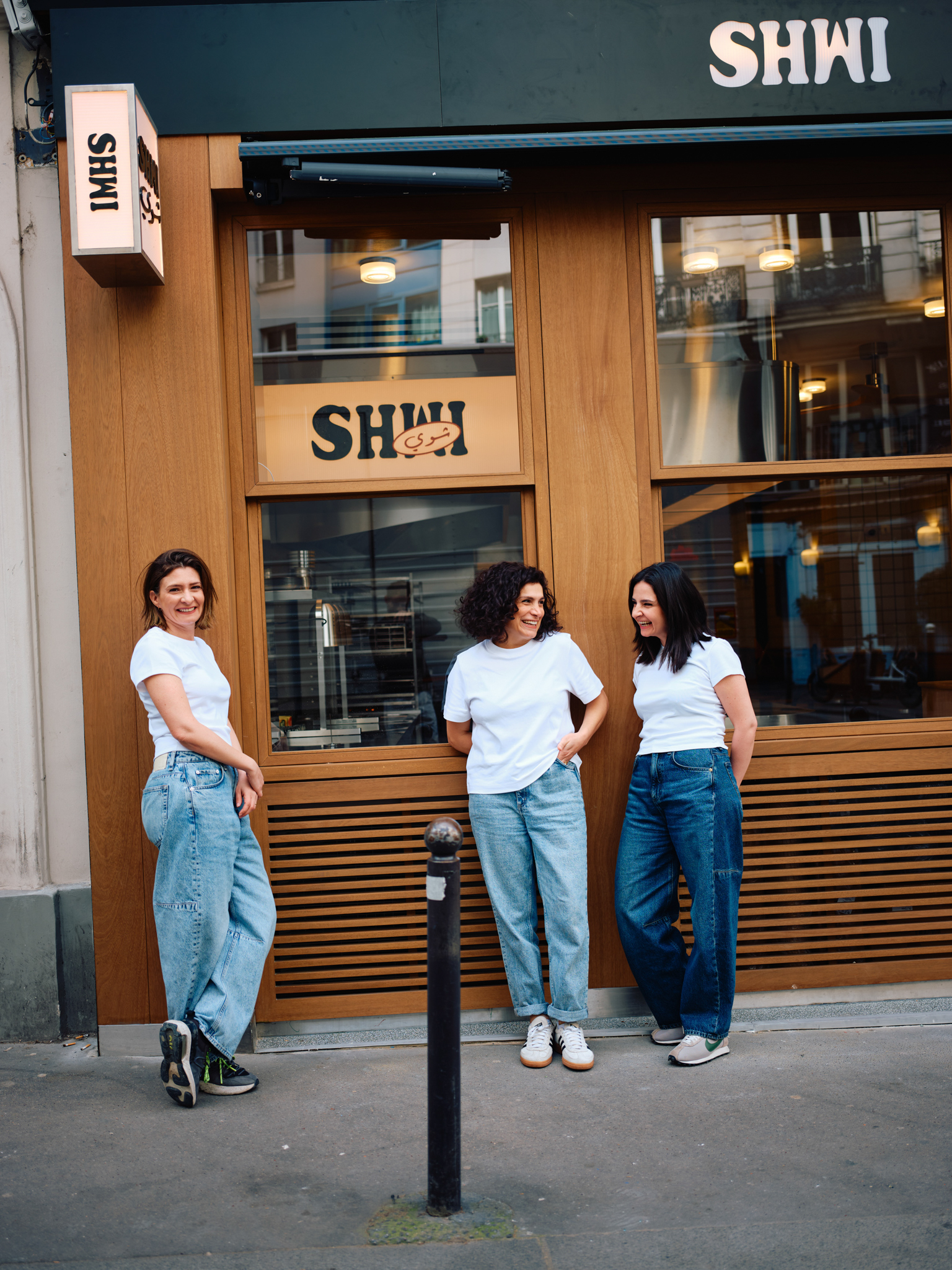
But Shwi is interested in something a little different. Following the success of Kubri, its second Paris concept takes something incredibly familiar to anyone who grew up in or around Beirut and builds an entire restaurant around it: farrouj meshwi.
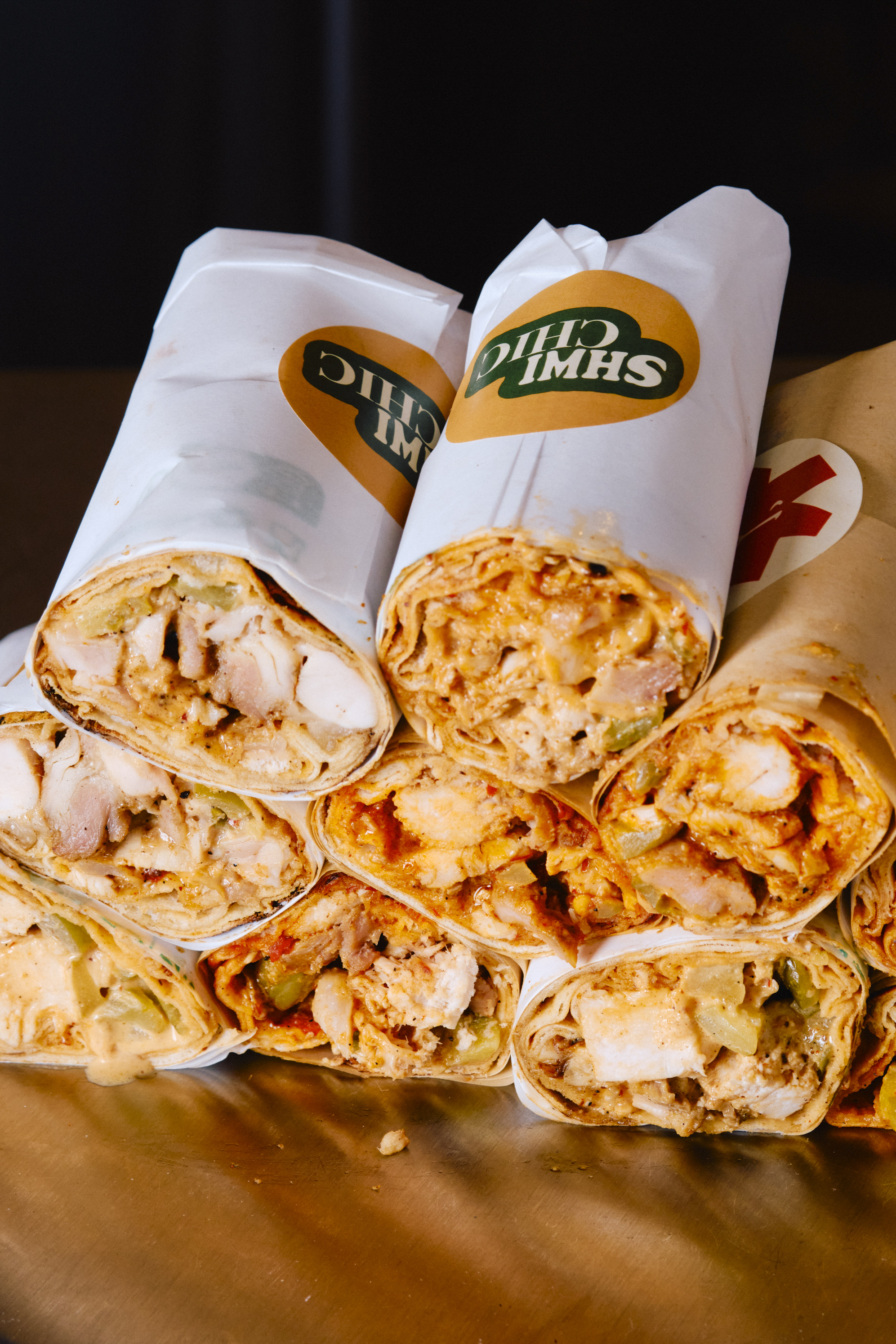
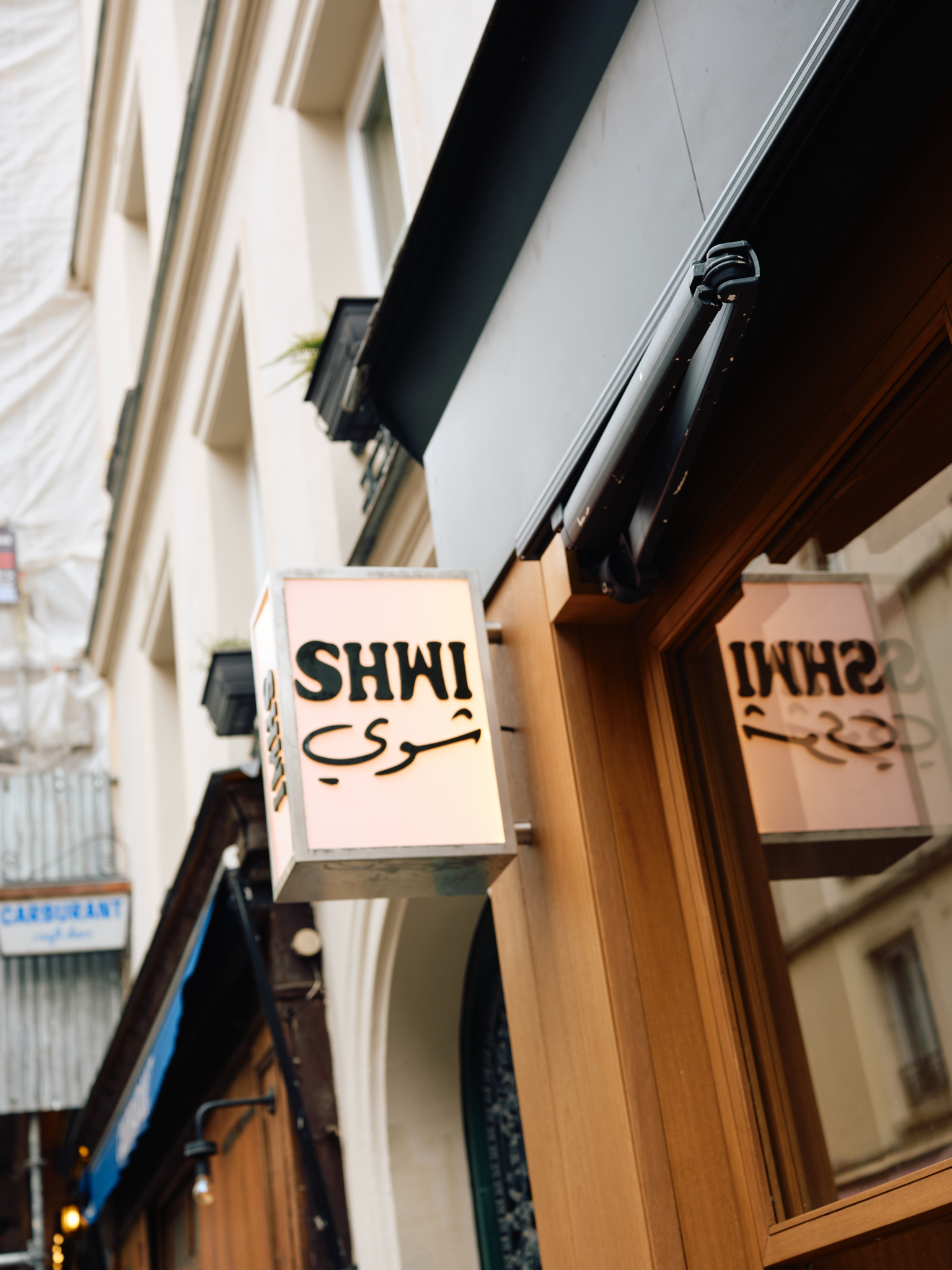
The food isn't being reinvented. In fact, that's precisely the point. The chicken, toum, pickles and flavours are meant to taste exactly as they would back home. Instead, Shwi is rethinking everything around them, replacing the nostalgic, folkloric version of Lebanon often presented abroad with something younger, urban and much closer to the Beirut its founders actually know.
We spoke to Ingrid Chehlaoui, co-founder of Kubri and Shwi, about making Lebanese grilled chicken sexy in Paris, why authenticity doesn't have to mean nostalgia, and the exact order we should all be getting when we visit.
From Kubri to Shwi
Before Shwi, there was Kubri. “Kubri was our first move into the Parisian market, the first time we put Lebanese food forward in a way that was fun and contemporary rather than traditional,” Chehlaoui tells JDEED.
Introducing that idea to Paris took some time. “People needed to understand what ‘creative Lebanese cuisine’ actually meant, and how to place us in a market that didn't really have a reference point for what we were doing.”
Once Kubri found its audience and the team had time to stabilise the restaurant, they were ready to think about what could come next. And according to Chehlaoui, another Lebanese concept was always part of the plan.
“From the beginning, our vision was bigger than one restaurant: we wanted to show Parisians that Lebanese food and culture could be cool, modern, contemporary. A second concept was never really a question of if, it was always going to happen, and it was always going to be Lebanese.”
This time, however, they wanted to move away from the restaurant format and towards something quicker and closer to the casual spots found all over Beirut.
“We knew we wanted to explore QSR (quick service restaurants), something closer to the snacks and quick spots you find in Beirut.”
The initial idea was to explore mashawi more broadly, but the conversation kept coming back to one thing.
“At some point it just clicked: Lebanese grilled chicken, Beirut style, simply didn't exist in Paris and chicken is the most consumed protein in the world. It's universal and approachable, it was never going to be a hard sell.”
The hard part? “The real challenge was making Lebanese grilled chicken sexy.” Challenge accepted.
Beirut, Minus the Postcard
Shwi arrives in a Paris where Lebanese and Levantine food is already everywhere, particularly around Canal Saint-Martin.
“Canal Saint-Martin and honestly, plenty of other areas of Paris is already saturated with Lebanese and Levantine addresses,” Chehlaoui says. “It's one of the most consumed, and most popular ‘ethnic’ cuisines in the city at this point.”
But while the food might be good, she felt the way Lebanon was being presented alongside it often looked strangely familiar.
“A lot of those addresses are doing good food, but wrapping it in something very cliché, very folklore. The decor, the ambiance, the whole experience leans hard into a traditional, heritage, postcard version of Lebanon.”
Shwi deliberately strips that away.
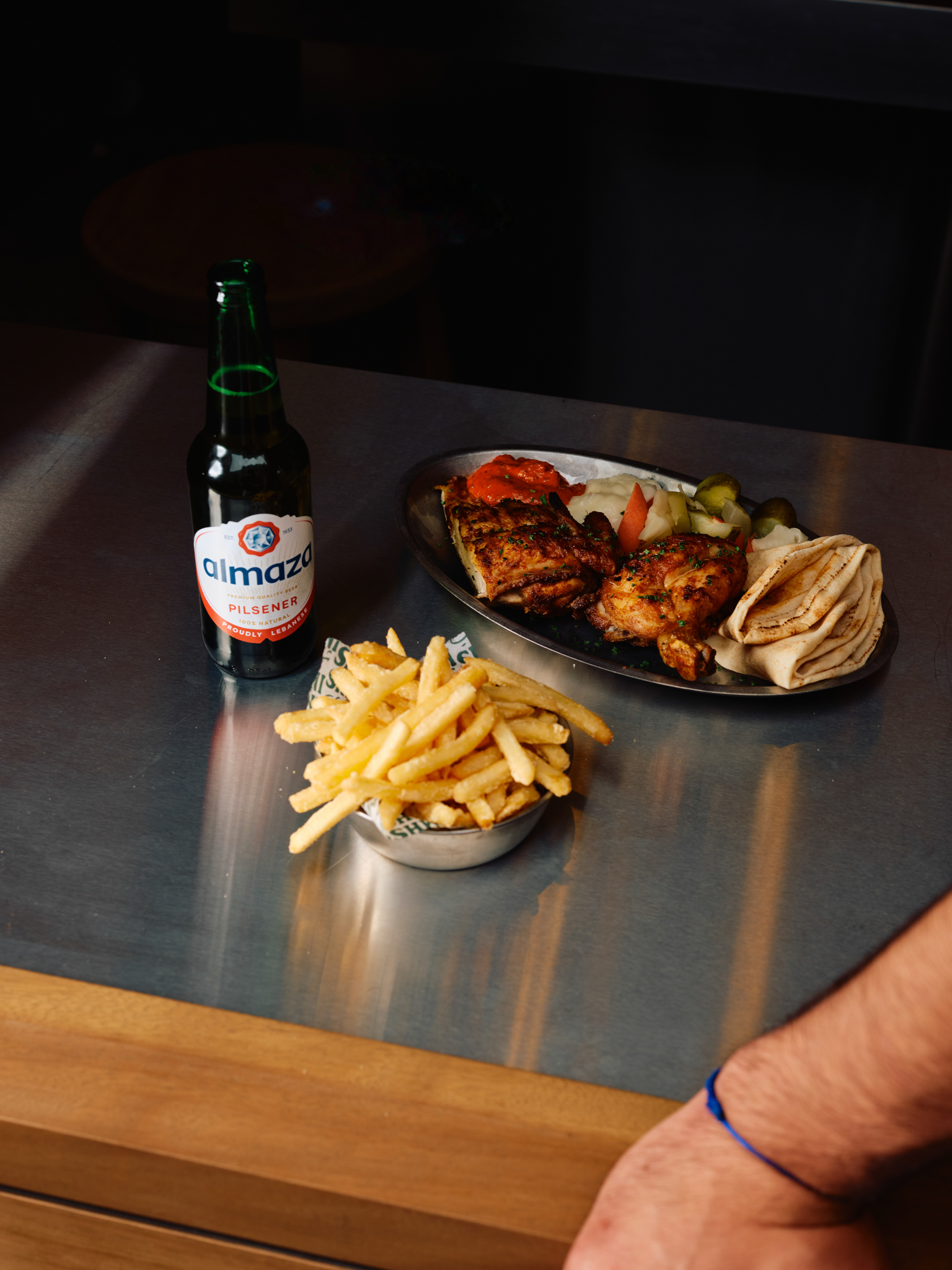
“The one thing we kept 100% authentic, untouched, non-negotiable, are the flavors.”
And Chehlaoui is very specific about what that means.
“What you eat at Shwi is exactly what you'd eat off at any farrouj meshwi shop in Beirut, and that’s exactly how we want people to experience it. Everything else, the space, the branding, the energy, we built to feel current, not nostalgic.”
That distinction feels important. Lebanese food doesn't need to be changed to make it contemporary. Sometimes it's simply the way we present our culture that needs catching up.
So What Does a Modern Farrouj Shop Look Like?
For Chehlaoui, “modern” isn't one big gesture.
“‘Modern’ and ‘youthful’ come through in the layers of detail we built into the experience. It's a lot of small, deliberate choices stacking together.”
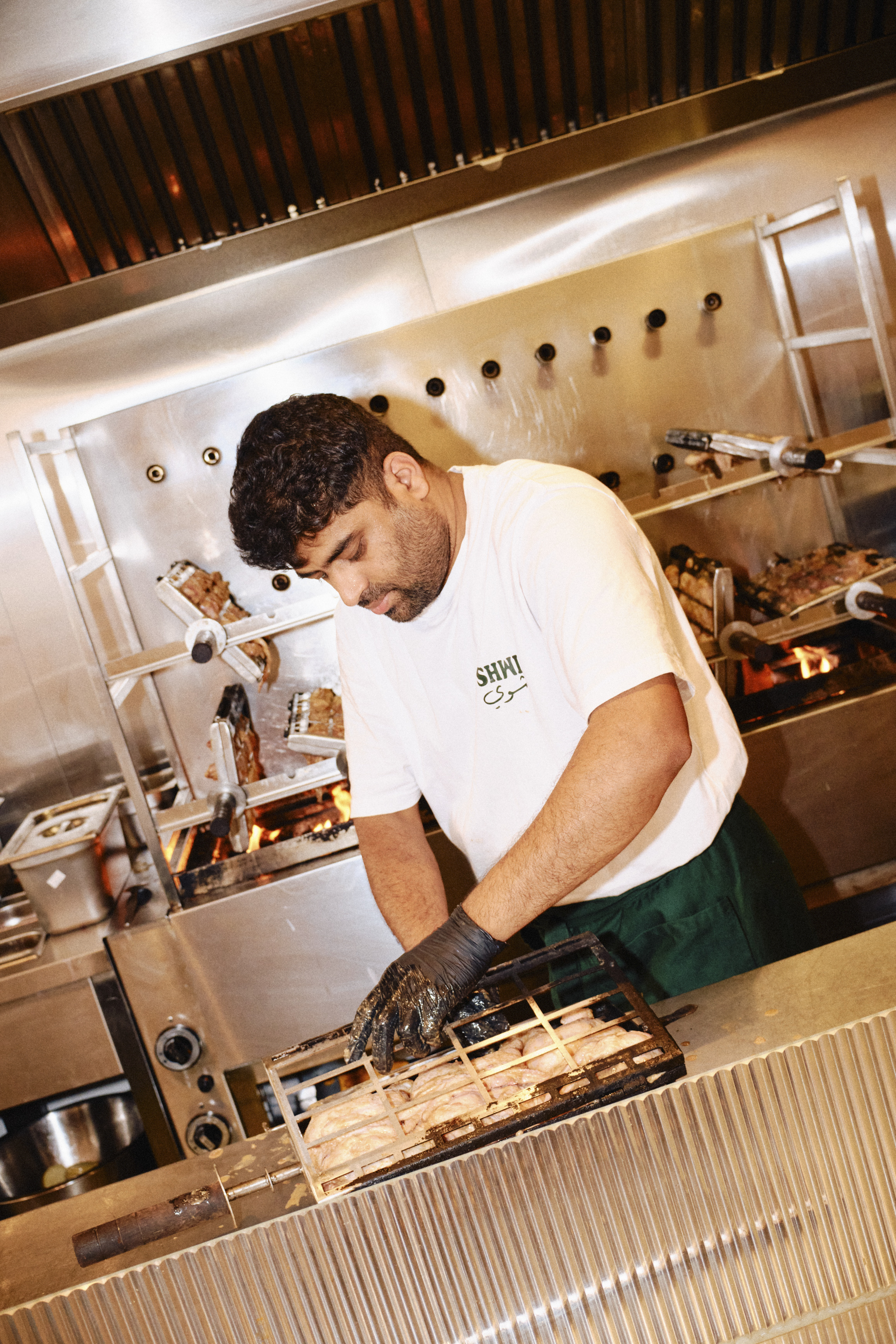
The music mixes modern Arab and Western hip-hop and R&B tracks, while the interiors borrow from a New York deli sensibility, with Lebanese references kept subtle rather than literal. The grill itself sits directly in front of customers.
“The grilling itself happens right in front of the customer, facing them directly, almost like sitting at a Japanese robata counter.”
Even the branding was designed to avoid falling back on nostalgia.
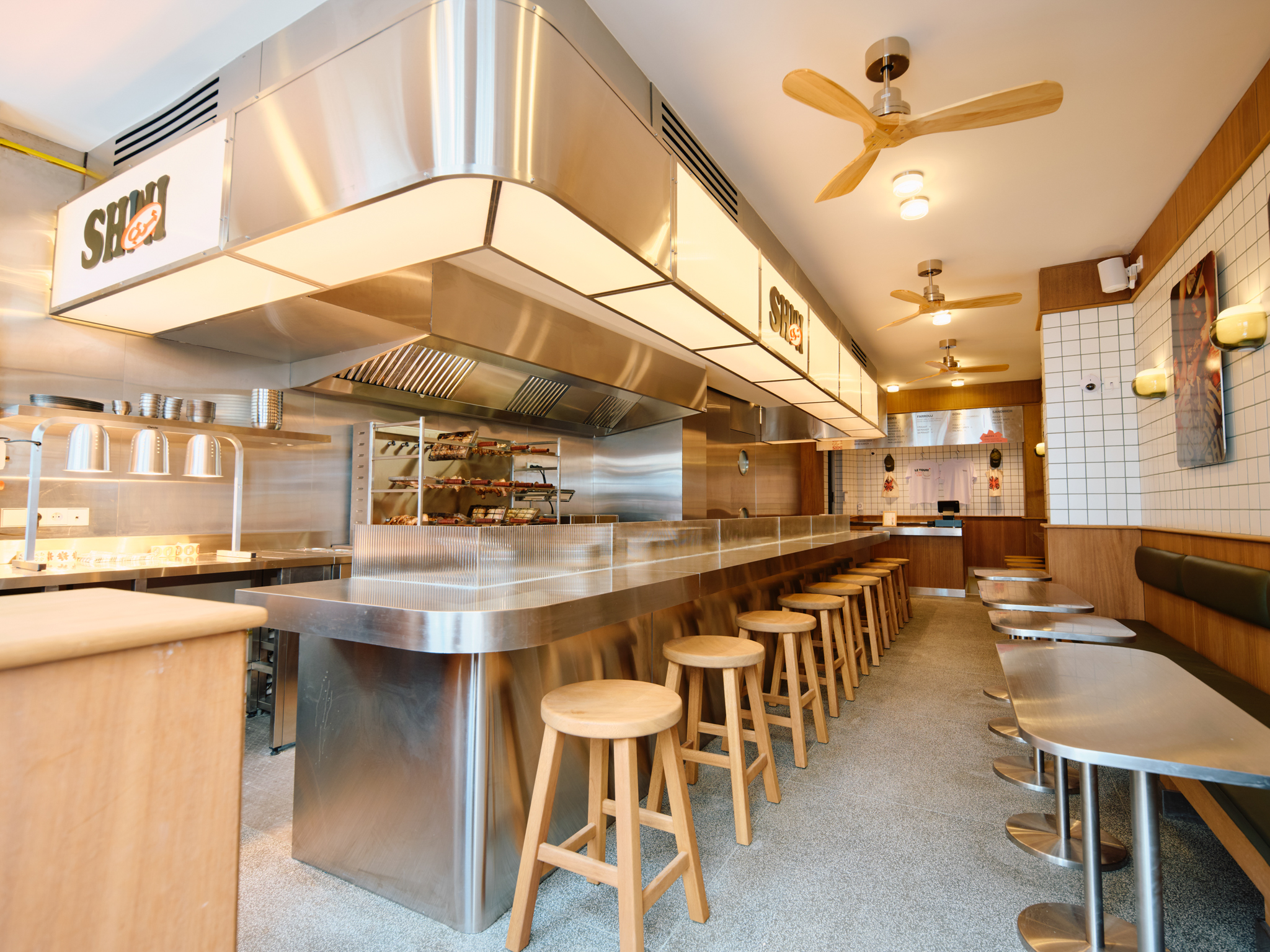
“The branding is built to feel authentic, eclectic without tipping into nostalgia: it's rooted in an urban, street vibe rather than a traditional, classic one.”
There is also something we particularly love about the people behind that visual world: Shwi's brand identity was developed entirely by Lebanese women, with Nour Abou Jaoude leading the artistic direction and Samar Keyrouz designing the interior.
For Chehlaoui, that choice was an important part of creating an identity that genuinely felt like Shwi. “Working with Lebanese creatives wasn't incidental, it’s a big part of why the brand feels as strong and specific as it does.”
So, What's Next?
For a concept that has only been open a few months, Shwi has already had quite the introduction to Paris. “We opened four months ago and got hit with volumes we weren't fully ready for operationally,” Chehlaoui admits. “It's been a rollercoaster.”
So while more locations in Paris or even expansion beyond France might seem like the obvious next move, there isn't a master plan being rolled out just yet.
“We haven't had the opportunity to zoom out and think about the next few years. So we don't have a defined answer yet, we are still discussing.”
What she does know is that whatever happens next won't be rushed. “Whatever we decide, we'll do it as well as we possibly can! We'd rather move deliberately and get it right than rush any decision.”
Fair enough. First, survive the queues.
Naturally, we couldn't talk this much about farrouj without asking Chehlaoui to give us the definitive Shwi order. Quarter, half or whole chicken? Spicy or classic? Toum or Shwi sauce? Thankfully, she didn't make us choose between the sauces.
“Our honest answer: half a chicken, classic (not spicy). Both sauces on the side, toum and Shwi sauce. Pickles, a lot of them. Tabbouleh and batata meshwiyyé.”
And her final piece of advice? “An empty stomach, preferably.” We couldn't agree more.

.png)